
Signs of Overwatering Plants: What to Check Before You Water
Wilting, yellowing, leaf drop, and slow growth can occur when a plant stays too wet. Before adding water, check moisture around the roots and look for trapped runoff.
Persistent wetness together with declining growth or soft, decaying roots is more concerning than a yellow leaf by itself.
Wet soil does not prove root rot, and dry soil does not explain every wilt. Work through the pot, recent conditions, and the plant itself before deciding whether to water, inspect the roots, or begin a rescue.
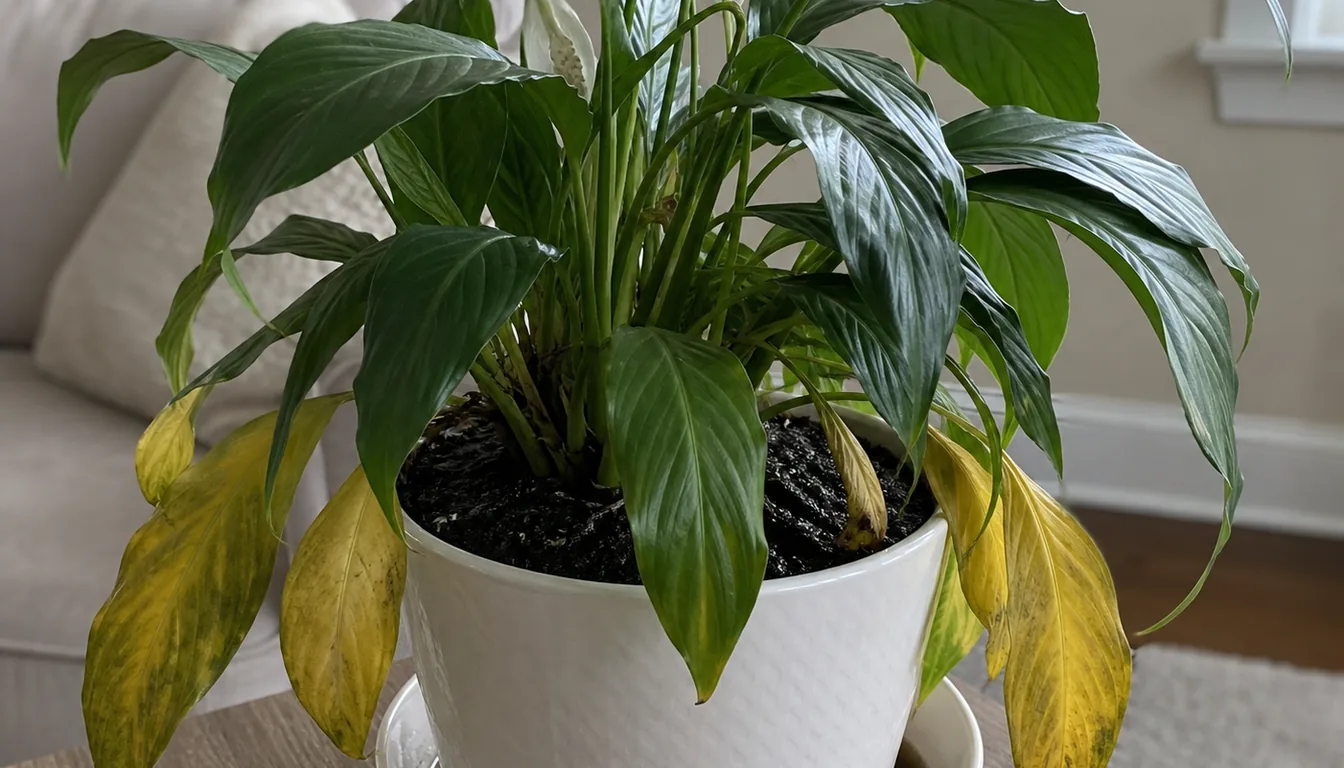
At a glance
Which signs make overwatering more likely?
Look for a combination of symptoms and conditions.
Yellowing leaves, wilting despite moist mix, unexpected leaf drop, and weak growth all justify a moisture check. Soft or collapsing tissue at the stem base increases the urgency.
None of these signs is exclusive to overwatering.
Roots need oxygen as well as water.
A root zone that remains waterlogged restricts air and can damage roots, reducing their ability to supply the leaves. Several disease organisms also thrive in wet conditions.
This explains why adding water to an already wet, declining plant can worsen the problem.
| What you notice | What it may suggest | What to check next |
|---|---|---|
| Wilting while the root zone stays wet | Waterlogged roots, root disease, or another problem limiting uptake | Drainage, recent heat, and root condition if decline persists |
| Yellowing or falling leaves | Moisture stress, but also other care problems | Which leaves are changing, recent conditions, and deeper moisture |
| Soft, darkened stem base or collapsing roots | Significant tissue damage | Inspect promptly and assess healthy tissue remaining |
| Blisters that become corky leaf patches | Possible edema, a water-balance disorder | Moisture, humidity, airflow, and whether the marks fit that disorder |
| Algae or frequent fungus gnats at the pot | Conditions supporting surface growth or larvae | Moisture below the surface and the actual source of the gnats |
Edema happens when water uptake exceeds the leaves' ability to lose water. It can leave raised or corky marks, especially underneath leaves.
High humidity can contribute, so these marks do not prove that the roots are rotting. Similar-looking spots can have other causes.
A freshly watered pot is expected to be moist. Concern rises when the mix remains wetter than suits the species and the plant deteriorates.
There is no fixed number of damp days that establishes root rot in every pot.
How should you check the pot?
Start with the easy checks before disturbing roots.
Lift a nursery pot out of its decorative cover and look for collected water. Check the saucer and whether drainage holes are present and unobstructed.
A dry surface can conceal wetter material below.
Feel into accessible mix near the roots and compare the pot's weight with how it feels when drier. If deeper moisture is uncertain, a wooden stick can help: damp wood or adhering moist particles show water is present.
Use it gently rather than forcing through a dense root ball. One clean stick or a finger touching dry surface grit is not enough to judge the entire container.
Consider what happened before the symptoms.
Was the plant watered repeatedly, exposed to prolonged rain, moved into lower light, or transferred to a much larger pot? A plant watered yesterday after severe drought may have wet soil today even though drought caused the original damage.
The sequence helps prevent the wrong diagnosis.
- Identify the plant and its normal moisture needs
- Check the root zone below any dry crust or decorative topdressing
- Look inside the saucer or cover pot and check drainage outlets
- Compare recent watering, rain, light, temperature, and repotting with the start of symptoms
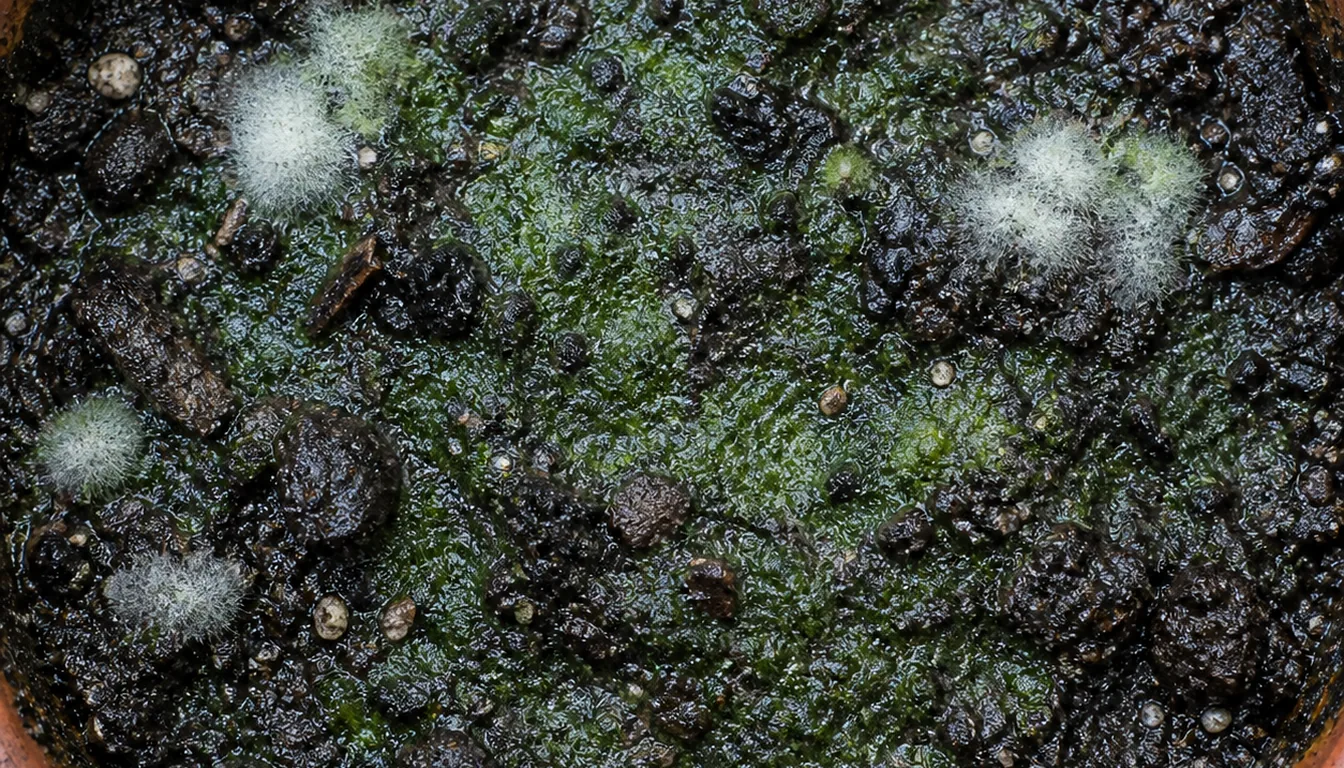
Algae and fuzzy growth are surface clues, not a test for root rot.
Fungus gnats often breed in damp, organic potting mix, but small flies can also come from drains. Find the breeding site before blaming every nearby plant.
A white crust can be mineral deposits rather than mold, so look at its texture and location instead of treating every white patch alike.
What else can cause the same symptoms?
A wilted plant may be losing water faster than its roots can replace it without having been overwatered. On a hot, windy afternoon, some outdoor plants droop even when soil moisture is adequate and regain firmness as conditions cool.
Check moisture before giving them another soak; persistent wilt or worsening damage still needs investigation.
A genuinely dry root ball makes thirst more likely, but it does not rule out damaged roots, pests, or disease.
Likewise, potting mix may be unevenly wet. Water can run around a shrunken central root ball and leave it dry while surrounding material feels moist.
Other causes deserve attention when the moisture history does not fit.
Excess fertilizer salts can damage roots and produce leaf-tip browning, poor growth, or wilt. Low light can contribute to yellow lower leaves and weak growth.
Sudden strong sun, cold exposure, and dry air can also damage foliage. Check for insects, webbing, sticky residue, or expanding spots rather than adjusting water alone.
The position of the first yellow leaf is useful history, not a rule that separates thirst from excess water. Both moisture problems can cause leaf loss, and plants differ in how they respond.
A few aging lower leaves on an otherwise vigorous plant may not indicate a watering problem at all.
When should you inspect the roots?
Inspect a manageable container plant when it keeps declining in persistently wet mix, has a soft stem base, or remains unexplained after the simple checks. Do not repeatedly unpot a healthy plant merely because its soil is moist after watering.
Large outdoor plants and established beds need site assessment rather than an attempt to lift the whole root system.
Support the root ball and ease it out of the container if it will release safely.
Loosen a flexible pot if needed; do not yank the stems. Look at the exposed roots, lower mix, and crown before deciding whether further disturbance is necessary.
Newly potted or lightly rooted plants may have loose mix even when no rot is present.
Healthy roots are generally firm and intact.
Many are pale, but some species naturally have tan, brown, or reddish roots. Potting material can also stain them.
Dark color alone is not a reason to cut a root off.
Soft, mushy roots, tissue that collapses easily, and an outer layer that slips away leaving a thin core are stronger signs of decay. A bad odor may accompany rot, but its absence does not establish health.
Dry, brittle roots can instead reflect severe drying or other injury.
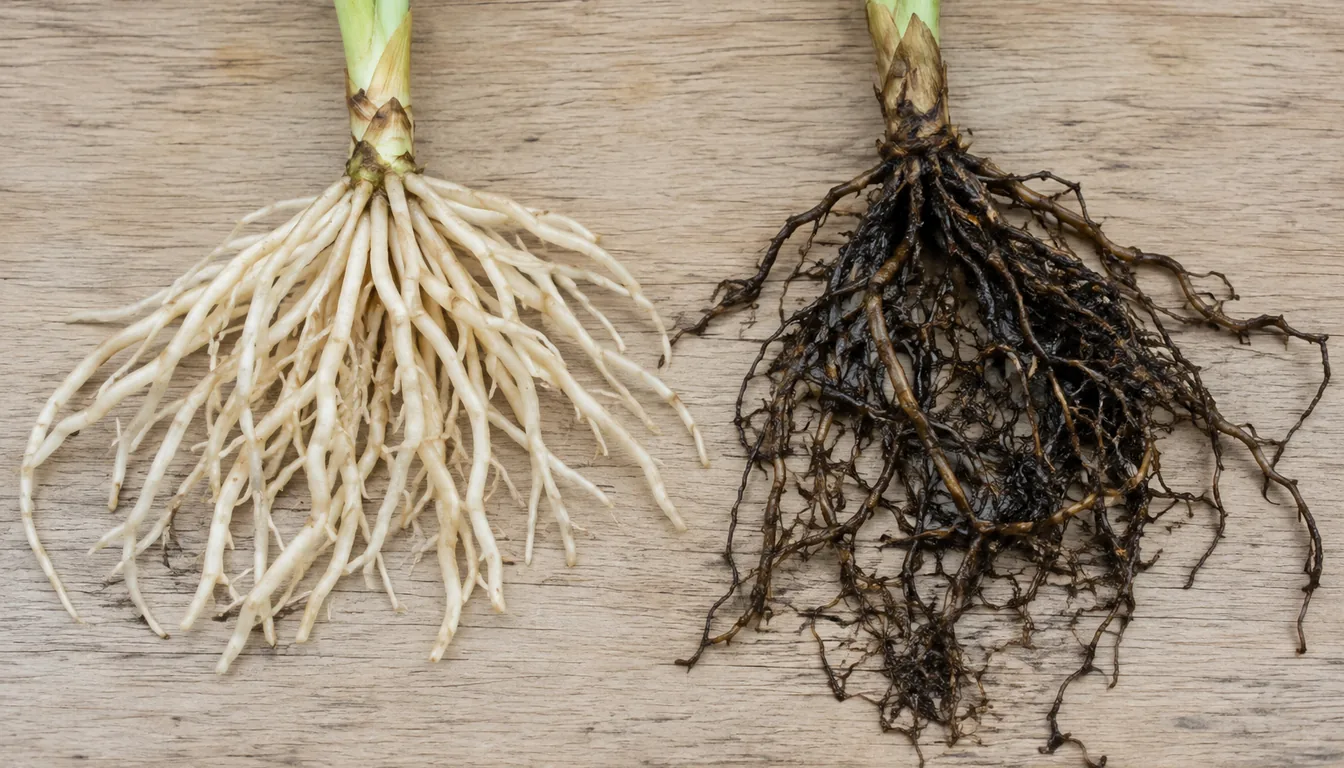
More reassuring
Firm, intact roots with healthy growing tips where the plant is actively growing. Compare their appearance with the species and check that the surrounding mix suits it.
More concerning
Collapsing or mushy tissue, widespread root loss, or decay extending into the stem base. Assess the amount of healthy tissue left and investigate the cause.
These observations can identify root deterioration, but they usually cannot identify the pathogen. A diagnostic clinic can distinguish disease from other damage when the answer affects treatment, especially for a valuable plant or repeated losses.
Take clear photos and record care history; ask the clinic how to submit a sample before cutting away or discarding all affected material.
What should you do after the checks?
If the pot is excessively wet, stop adding water and empty trapped runoff. Keep it in conditions appropriate for its species.
Do not place it in intense sun or beside a heater to force the mix dry, and do not add fertilizer as a treatment for unexplained yellowing.
A plant with an intact base, no continuing decline, and a pot that drains may only need closer monitoring and an adjusted watering routine. Moist soil by itself does not call for root trimming.
Let moisture fall to an appropriate level for that plant, rather than withholding water until every species is bone dry.
If the roots are decaying or the base is collapsing, move from observation to a rescue assessment.
Recovery depends on the species, extent of damage, growing conditions, and healthy tissue remaining. Some plants can recover from limited root loss; others may be better discarded or propagated from a healthy portion.
There is no reliable percentage of pale roots or recovery deadline that settles every case.
Keep a suspect plant's runoff, used mix, and tools from spreading material to other pots. Use clean equipment and fresh suitable mix if a rescue requires repotting.
For the actual root assessment, pot choice, and aftercare, follow the guide to fixing an overwatered plant.
Seek local extension or diagnostic-clinic help if the cause stays unclear, decline continues after sensible corrections, or several plants develop similar damage. A photograph of the whole plant, close views of affected tissue, root-zone findings, and a watering timeline make that discussion more useful.
Which conditions make excess moisture more likely?
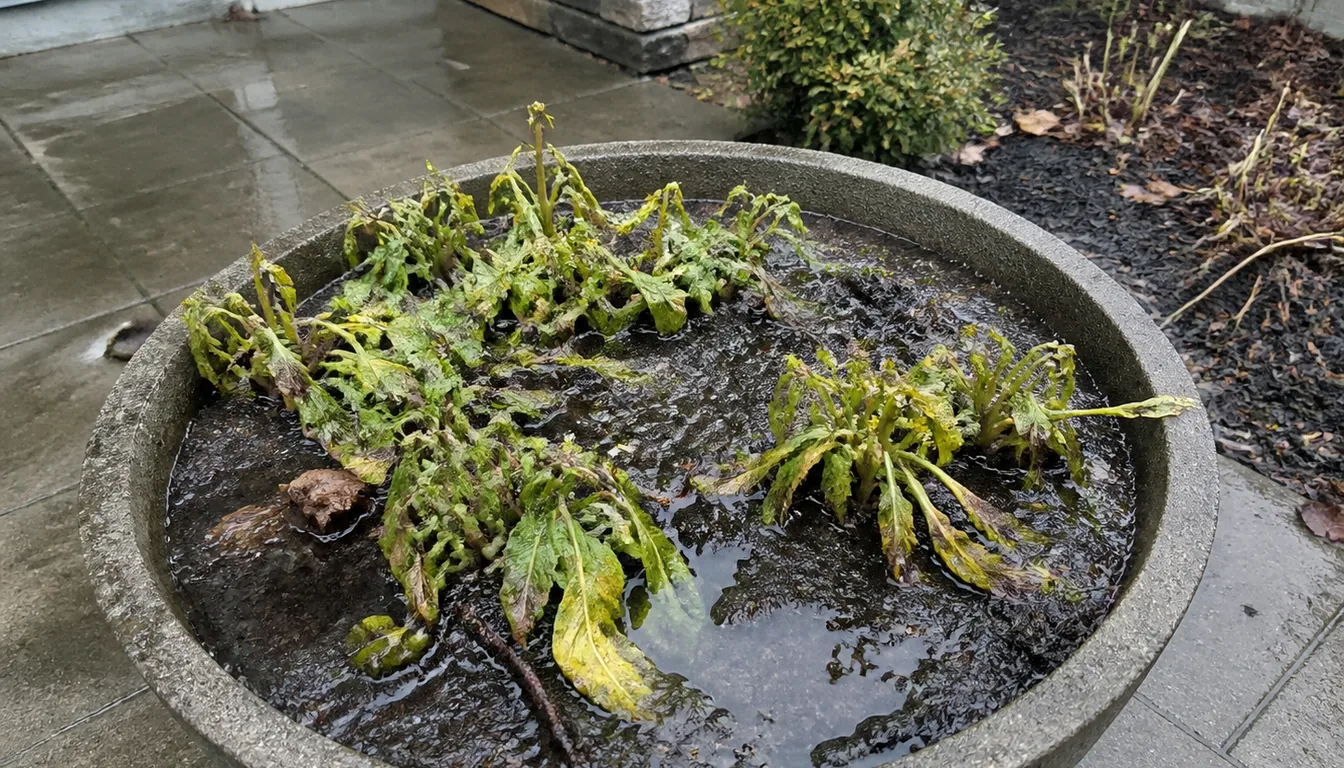
Repeated watering can keep a pot too wet, but the container and growing conditions matter too. Inspect the arrangement that holds water around the roots rather than assuming the watering can is the only cause.
| Setup | Why it matters | Next step |
|---|---|---|
| Runoff in a cover or saucer | Mix may stay wet | Empty it and let the inner pot drain |
| Pot without holes | Excess water has no outlet | Use a pot that drains |
| Oversized pot or dense, old mix | Mix may dry slowly | Check pot size and choose a suitable mix |
| Less light or growth | Water use may fall | Check moisture before watering |
| Rain or irrigation on a poorly drained site | Roots stay waterlogged | Stop unneeded irrigation and improve drainage |
Outdoor waterlogging needs attention to the site.
Check whether containers can discharge freely and whether water collects in low areas. Do not assume pot feet will solve a saturated garden bed.
Repeated flooding may require drainage work or plants better suited to the location.
Once the problem is resolved, use reminders to check the plants instead of automatically watering them. For container plants that need water, moisten the root zone appropriately and allow excess to drain.
Match the drying between waterings to the species, root system, and conditions. A moisture-loving foliage plant and a resting desert cactus should not receive the same rule.
Frequently Asked Questions
Can an overwatered plant look dry?
Yes.
Damaged roots may fail to supply the leaves even when the mix is wet.
Check deeper moisture, drainage, and recent conditions; inspect roots if decline persists or tissue is collapsing.
Does wet soil always mean root rot?
No.
Moisture after watering is normal, and some plants need more consistent moisture than others.
Persistent wetness together with declining growth or decaying roots is more concerning than a single damp-soil check.
Are brown roots always dead?
No.
Healthy root color varies by species, and potting mix can stain roots.
Firmness and intact tissue matter.
Mushy, collapsing roots or an outer layer slipping away are stronger evidence of decay.
Should I repot as soon as a leaf turns yellow?
No.
Check moisture, drainage, exposure, and the pattern of damage first.
Repotting and root trimming can add stress when they are not needed.
Persistent decline, unsuitable mix, or confirmed decaying roots requires a more careful assessment.
Sources & References
- Root Rots on Houseplants - University of Wisconsin Horticulture
- Diagnosing Houseplant Problems Related to Poor Culture - Iowa State University Extension
- Watering Indoor Plants - University of Maryland Extension
- Winter Indoor Plant Problems - University of Maryland Extension
- Wilting of Vegetable Plants - University of Maryland Extension
- Identifying Water Stress in Container-Grown Plants - Virginia Cooperative Extension
- Oedema - Royal Horticultural Society
- How to Help a Poorly Houseplant - Royal Horticultural Society
- Fungus Gnats - University of Maryland Extension
Related Guides
A Drought Tolerant Plant Is Not Drought Tolerant Yet
Colorado State puts it in one sentence. Drought tolerant plants are not drought tolerant until…
11 min read
An Overwatered Tree Hides It for a Year, Then Thins
A tree gives you almost no warning. Colorado State says the symptoms of root problems may appear…
12 min read
Best Time to Water Flowers for Stronger Blooms
Watering flowers at the wrong time does more damage than skipping a day.
10 min read
Best Time to Water Indoor Plants: Morning or Evening?
Morning is the better default for watering indoor plants.
6 min read
Best Time to Water Plants for Healthier Roots
Watering at the wrong time wastes water and stresses plants, even if you are generous with the…
11 min read
Deep Watering vs Frequent Watering: What Roots Need
Deep watering usually serves established lawns, vegetables, trees, and shrubs better than repeated…
17 min read