
Pet-Safe Houseplants for Cats and Dogs
Compare houseplants listed as non-toxic to cats and dogs, distinguish lily hazards, and plan for chewing, pot treatments, and suspected exposure.
At a glance
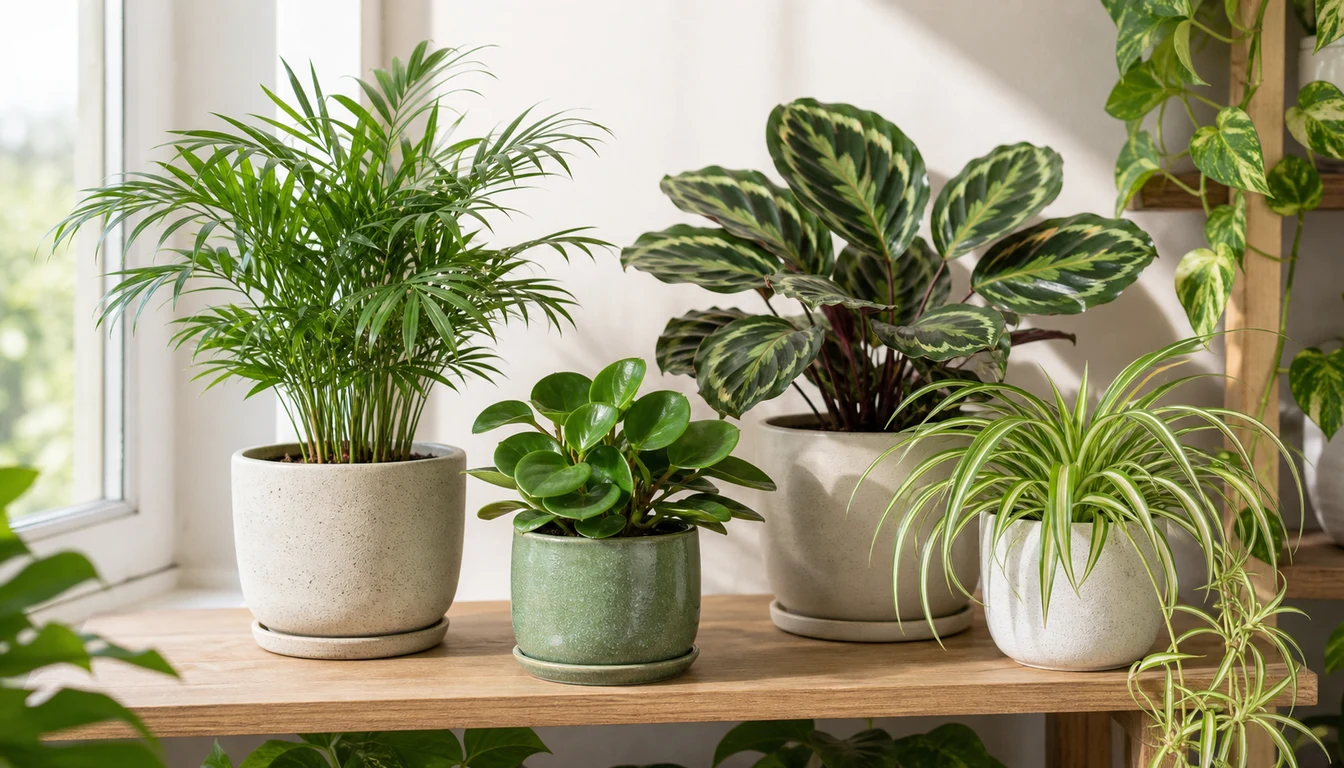
Parlor palm, spider plant, cast iron plant, areca palm, Boston fern, and baby rubber plant have ASPCA non-toxic listings for cats and dogs. The scientific name matters, especially when a shop label says only palm, fern, or rubber plant.
A non-toxic listing helps with plant selection, but it does not make leaves pet food or cover fertilizers and sprays. The choices below separate that evidence from room placement and explain when an exposure needs veterinary advice.
What Does Pet Safe Actually Mean on a Plant Tag?
A source-listed non-toxic plant has an explicit listing for a named animal. A plant absent from a database is unknown, even if another gardening page has no poison warning. ASPCA describes its list as incomplete, so a missing entry cannot clear an unfamiliar plant.
The scope matters in the other direction too. A listing for cats and dogs does not automatically cover birds, rabbits, or concentrated products made from the plant. Even non-toxic plant material can cause digestive upset when eaten.
“Pet-safe” is therefore useful shorthand for choosing plants with a supported non-toxic listing, not a promise that every encounter is harmless. Species identity, access to the pot, and any products applied to it still affect the decision.
Which Houseplants Are Listed as Non-Toxic to Cats and Dogs?
These are specific plant listings, rather than a claim that all members of a genus are interchangeable. Each ASPCA record linked in the sources names cats and dogs as non-toxic recipients.
| Plant | Botanical identity | Selection detail |
|---|---|---|
| Parlor palm | Chamaedorea elegans | A palm name alone is insufficient. Sago palm has a very different toxicity record. |
| Spider plant | Chlorophytum comosum | Dangling plantlets can extend far below the basket and into a pet's reach. |
| Cast iron plant | Aspidistra elatior | Broad upright leaves leave the soil surface and pot accessible when placed on the floor. |
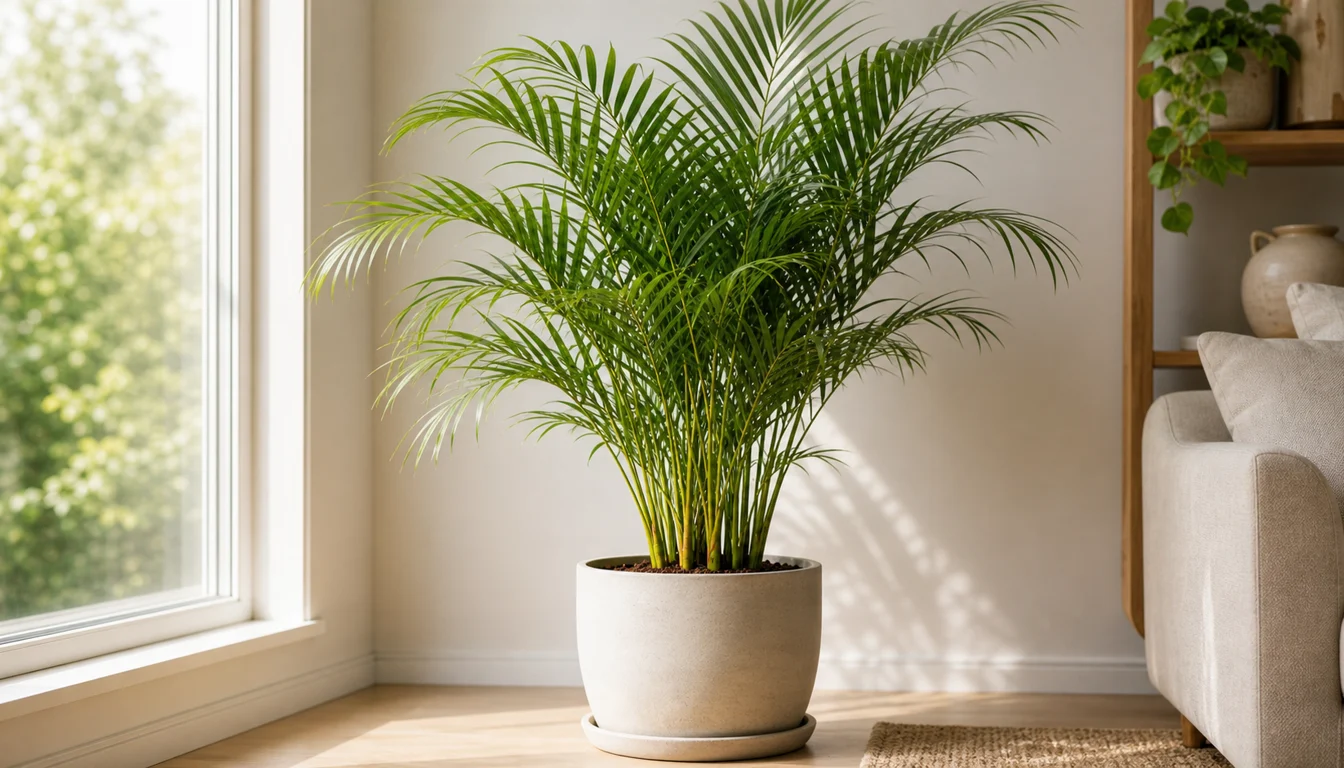
| Areca palm | Dypsis lutescens | Allow for the reach of arching fronds as well as the pot's footprint. |
| Boston fern | Nephrolepis exaltata 'Bostoniensis' | Match the Boston fern identity, rather than assuming every plant sold as a fern has this listing. |
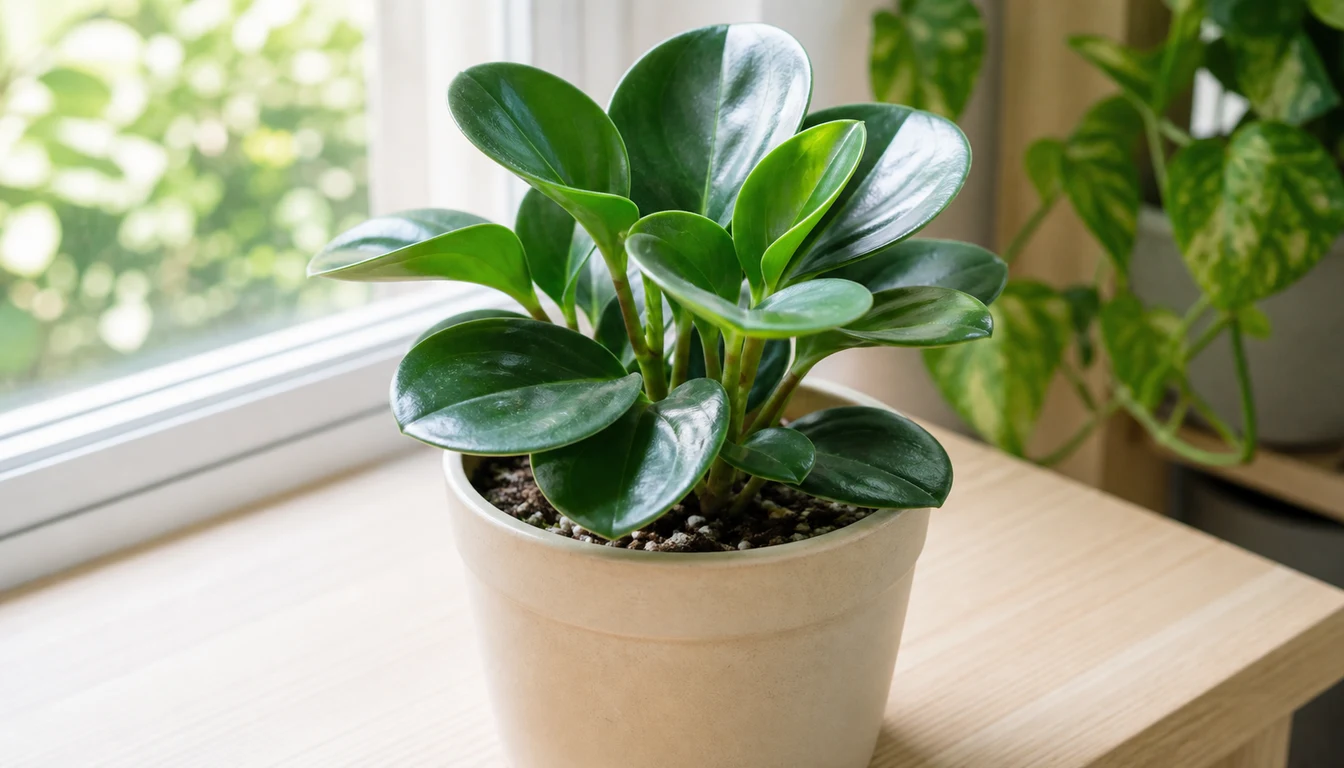
| Baby rubber plant | Peperomia obtusifolia | This record supports this species, not every peperomia or every plant called rubber plant. |
ASPCA's Boston fern record uses the spelling “Nephrolepis exalta bostoniensis.” NC State identifies 'Bostoniensis' as a cultivar of Nephrolepis exaltata, which connects that record to the familiar Boston fern name.
A plant sold as prayer plant or calathea needs its own species check. The absence of one from this selection is not a toxic classification. It means this list does not supply the evidence needed to recommend that particular plant on safety grounds.
The useful choice is a correctly identified plant whose light, space, and watering needs also fit your room. A non-toxic plant placed in a dark corner simply to hide it from a pet still needs a suitable growing position.
Which Common Houseplants Carry the Real Risk?
A toxicity label does not describe one predictable illness. Different plants injure different tissues, and a list cannot tell you how much your pet swallowed or what treatment it needs.
| Plant or group | Supported concern | Why the distinction matters |
|---|---|---|
| True lilies (Lilium) and daylilies (Hemerocallis) | Severe kidney injury in cats after small exposures, including pollen or vase water | A cat's possible exposure needs immediate veterinary attention, even before signs appear. |
| Sago palm (Cycas revoluta) | Cycasin poisoning can cause liver damage, liver failure, and death in cats and dogs | A palm-like appearance does not make it a substitute for parlor or areca palm. |
| Pothos, philodendron, peace lily, and related oxalate-containing houseplants | Chewing releases irritating crystals that cause oral pain, drooling, vomiting, or swallowing trouble | Most exposures are less severe than lily poisoning, but rare throat swelling can interfere with breathing. |
| Aloe vera | ASPCA lists saponins and anthraquinones, with vomiting, lethargy, and diarrhea among the signs in cats and dogs | Information about purified gel does not make chewing a whole leaf safe. |
These are examples of different hazards, not a low-to-high ranking for deciding whether to call. The amount, plant identity, animal, and symptoms all matter. Absence of drooling cannot prove that a pet did not swallow part of a plant.
The heartleaf philodendron profile explains that plant's oxalate hazard. Similar mouth irritation in another species does not establish an identical outcome for every exposure.
For a home with cats, avoiding true lilies and daylilies, including cut bouquets, removes a particularly serious source of exposure. Sago palm is also a poor choice where cats or dogs could reach it. Keeping another toxic plant requires reliable exclusion from the animal, rather than faith in a shelf height.
How Do You Tell a True Lily From a Peace Lily?
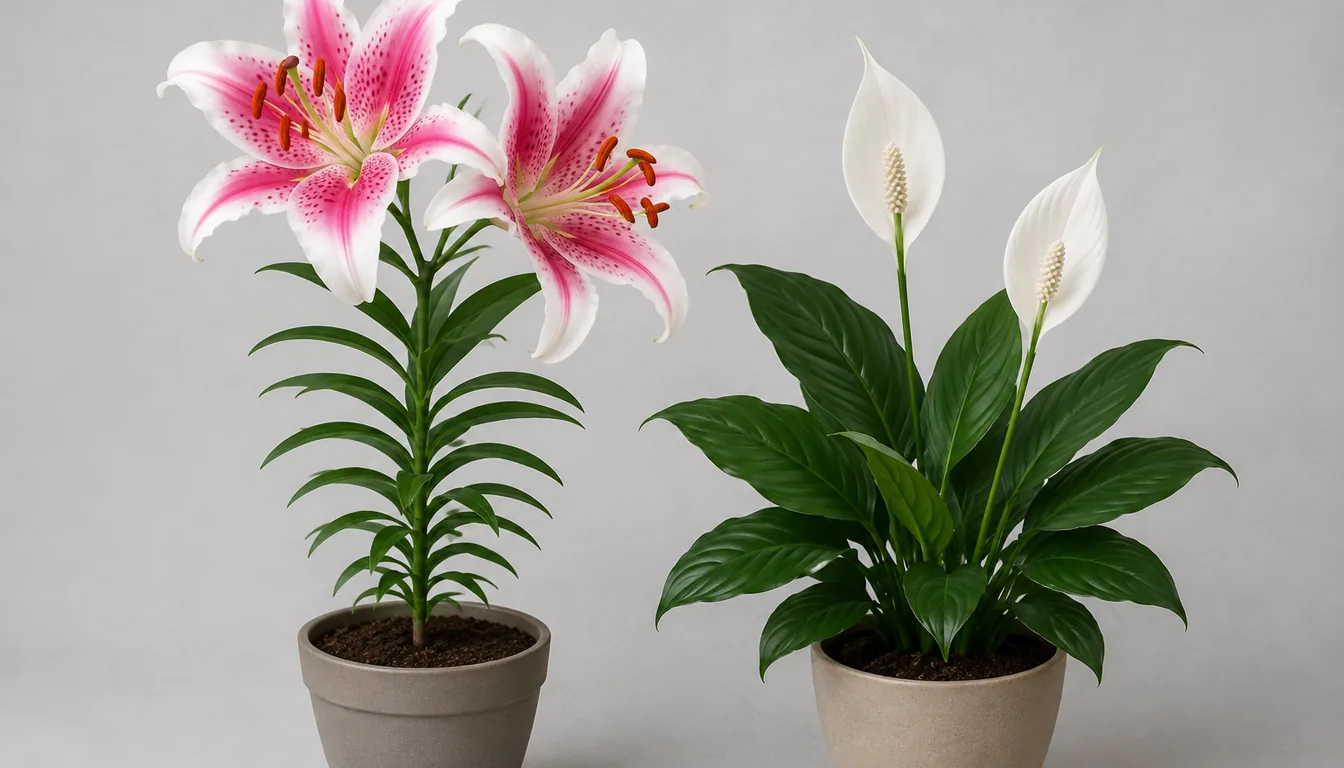
A true lily is Lilium. A peace lily is Spathiphyllum, an unrelated plant with a different toxic effect. Both warrant veterinary advice after suspected ingestion.
The pictured true lily has six petal-like segments around projecting stamens. The peace lily has a white bract, called a spathe, around a central flower spike. That visible difference is a useful identification clue when flowers are present, but an illustration cannot identify every leaf, bulb, or mixed bouquet.
FDA also warns about daylilies, Hemerocallis, which share the severe kidney hazard for cats. Pollen on fur can be swallowed during grooming, and vase water can carry the risk too. Dogs that eat true lilies or daylilies may develop stomach upset, although FDA distinguishes this from the kidney failure seen in cats.
Peace lily releases irritating calcium oxalate crystals when chewed. It is not the same kidney-poisoning exposure, but painful swelling or trouble swallowing still deserves professional advice. Difficulty breathing is an emergency. The shared word lily should never be used to dismiss an exposure or decide to wait.
Will Your Pet Actually Leave the Plant Alone?
A non-toxic listing cannot predict your pet's behavior. Some animals investigate dangling leaves or dig in potting mix, while others ignore a plant. Previous lack of interest is useful observation, not a guarantee after the plant moves or grows.
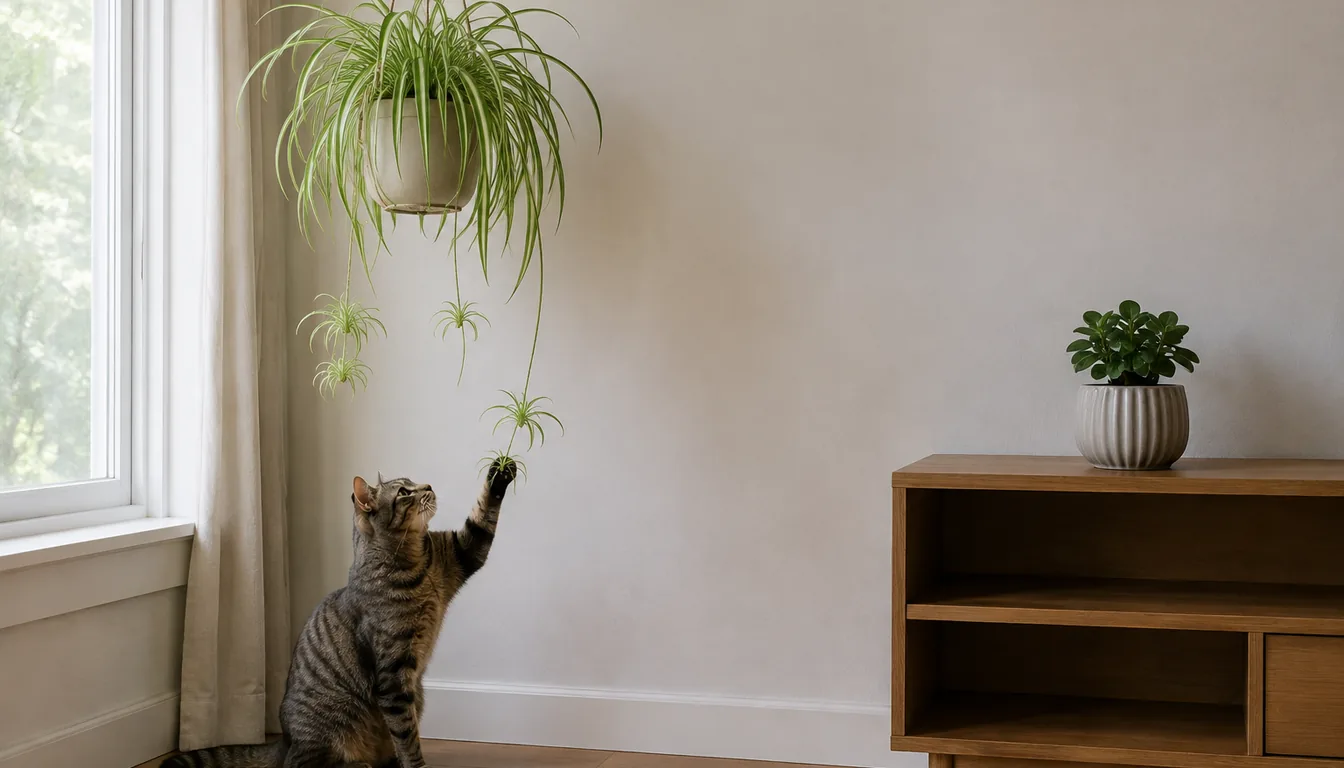
A spider plant illustrates the placement problem. Its basket may be high, while its runners hang within reach. A cat pulling a runner can also put force on the basket or hook, so the support and the lowest reachable growth both matter.
Broad leaves do not prove that a plant will be ignored. A compact plant still needs a stable pot, and a larger floor plant exposes soil and any loose surface decorations. Raising the pot only helps if the pet cannot reach it from nearby furniture.
Where in the Room Does the Plant Belong?
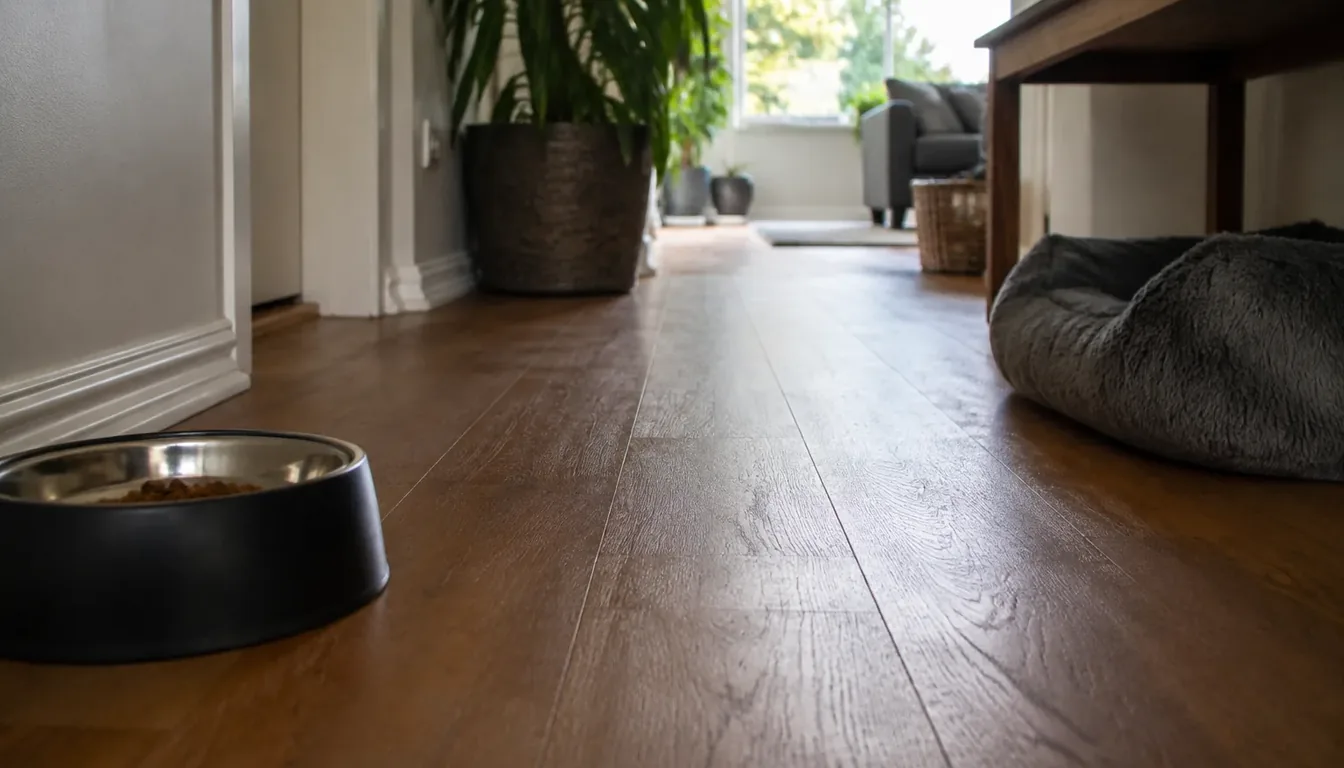
A useful position gives the plant appropriate light while limiting the animal's access. Bowls, beds, favorite windows, furniture, and doorways help reveal where a pot could be reached or knocked over.
For a climbing cat, distance from the floor is only part of the picture. A chair beside a high shelf can create a route to leaves that seemed inaccessible. Fallen leaves and cuttings can also bring a high plant back to floor level.
Putting a non-toxic plant beside a toxic one does not make the shared shelf safe. A closed room that the pet cannot enter offers a clearer barrier than simply placing two pots farther apart, provided everyone in the household maintains that separation.
- Check access from furniture and windowsills, including the ends of trailing stems.
- Keep pots clear of busy doorways and secure hanging supports for a watered plant's weight.
- Keep fallen leaves and pruning waste away from pets.
- Confirm that an access barrier remains effective when doors open or furniture moves.
If safe separation leaves a plant without suitable light or ordinary care becomes difficult, a different plant or location is a more workable choice.
What Else in the Pot Can Reach Your Pet?
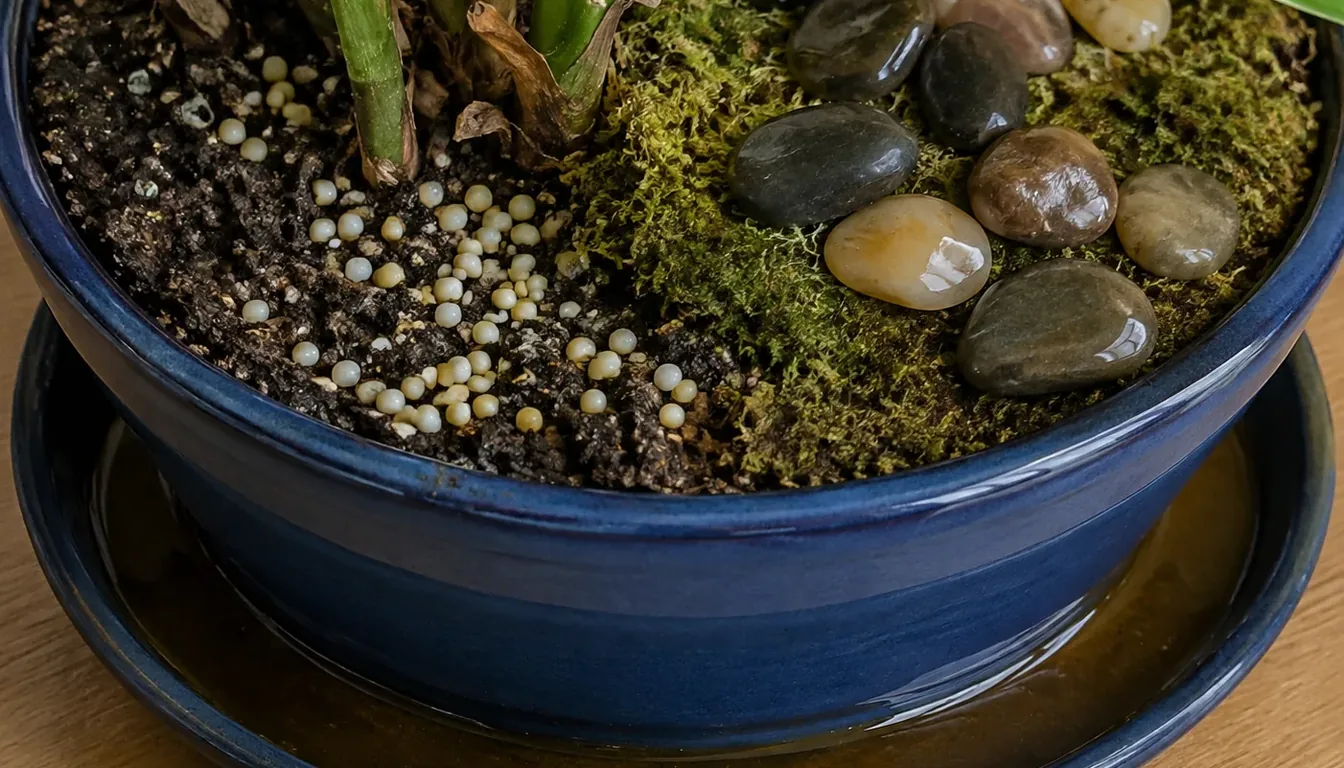
Plant toxicity and product exposure are separate questions. Fertilizer, pesticide residues, spilled potting mix, and loose decorations can remain accessible even when the plant itself has a non-toxic listing.
Loose granules and small stones are reasons to prevent digging or mouthing the pot surface. Saucer water is also accessible and may contain material washed from the pot. Emptying excess drainage water and preventing pets from drinking it avoids treating that water as a second drinking bowl.
For a spray or soil treatment, the product label controls access and waiting requirements. Dry-looking leaves do not establish that every product is safe for a pet to contact. EPA advises keeping pets away from treated areas as directed on the label and retaining products in their original containers.
The same distinction applies to neem products around pets. A plant's non-toxic status does not approve a spray, a concentration, or a use that its label does not cover. Treatment away from food and water bowls also reduces opportunities for contamination.
What Should You Do the Moment a Pet Chews a Plant?
If a pet may have eaten a toxic or unidentified plant, prompt veterinary or poison-control advice comes before a prolonged identification search. A pet can look well before an exposure causes visible illness.
- Prevent more exposureMove the pet away from the plant and keep other animals away from fallen pieces or spilled water.
- Get help promptlyContact your veterinarian or ASPCA Poison Control at (888) 426-4435. For breathing difficulty, seizures, or unresponsiveness, seek emergency veterinary care immediately.
- Gather details without delaying careHave a plant photo or tag, the time, possible amount, and the pet's weight and symptoms available if you can. Say when the identity or amount is uncertain.
- Follow the advice givenDo not induce vomiting or give home remedies unless directed by the veterinarian or poison service. Keep any relevant product packaging for identification.
The U.S. ASPCA line operates around the clock, and a consultation fee may apply. Outside the United States, a local veterinarian can direct you to the appropriate poison service. After the immediate concern is addressed, changing access to the plant helps prevent another exposure.
Recommended Plants
5 houseplants worth considering.
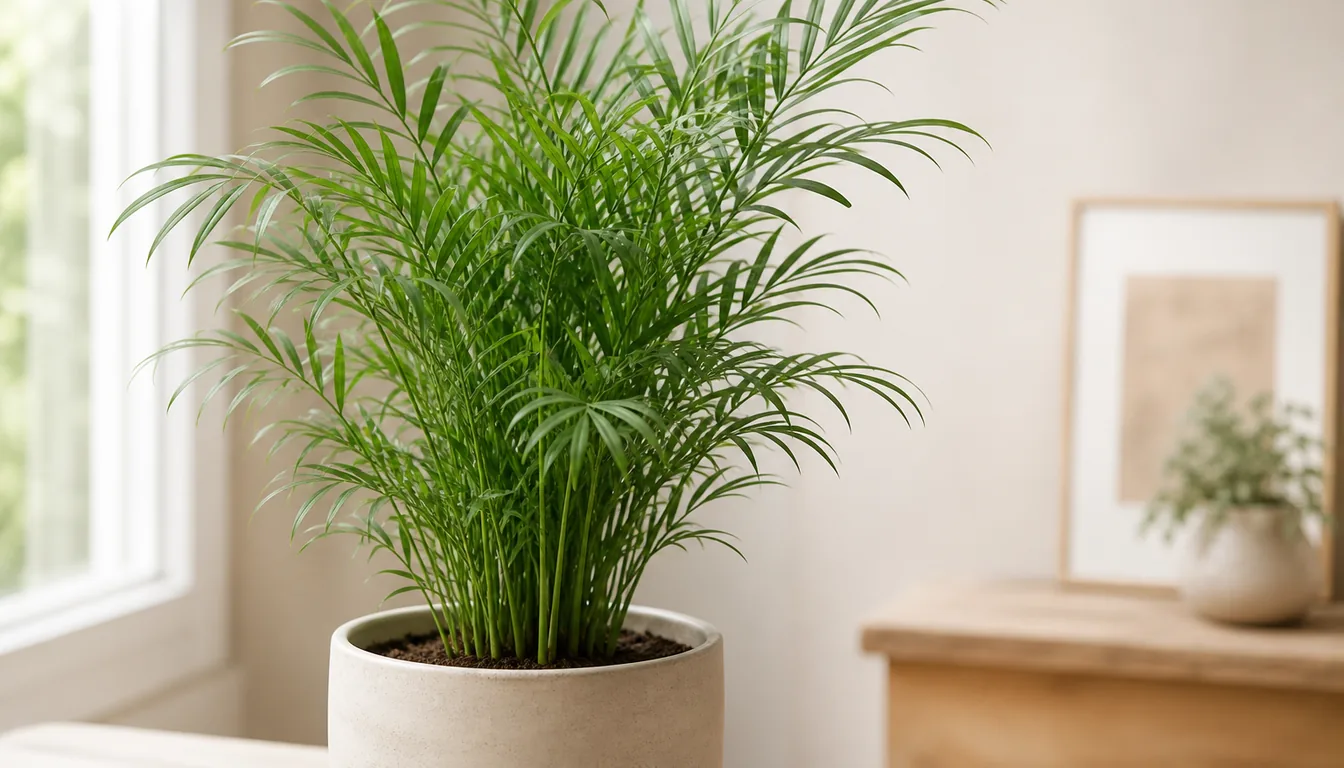
Parlor Palm
Parlor Palm is a slow understory palm with slender stems and soft pinnate fronds.
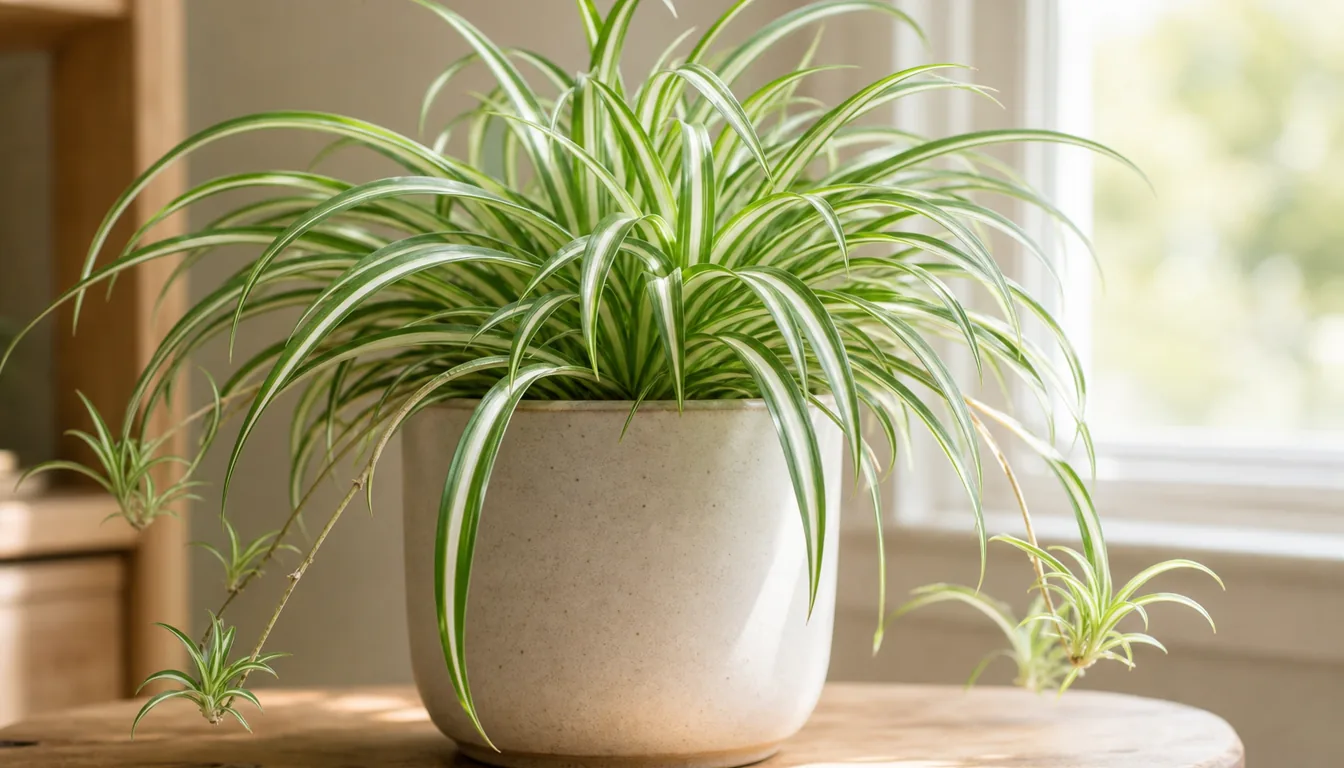
Spider Plant
A spider plant is a forgiving, pet-safe houseplant that sends out runners with baby plantlets when light, roots, and…
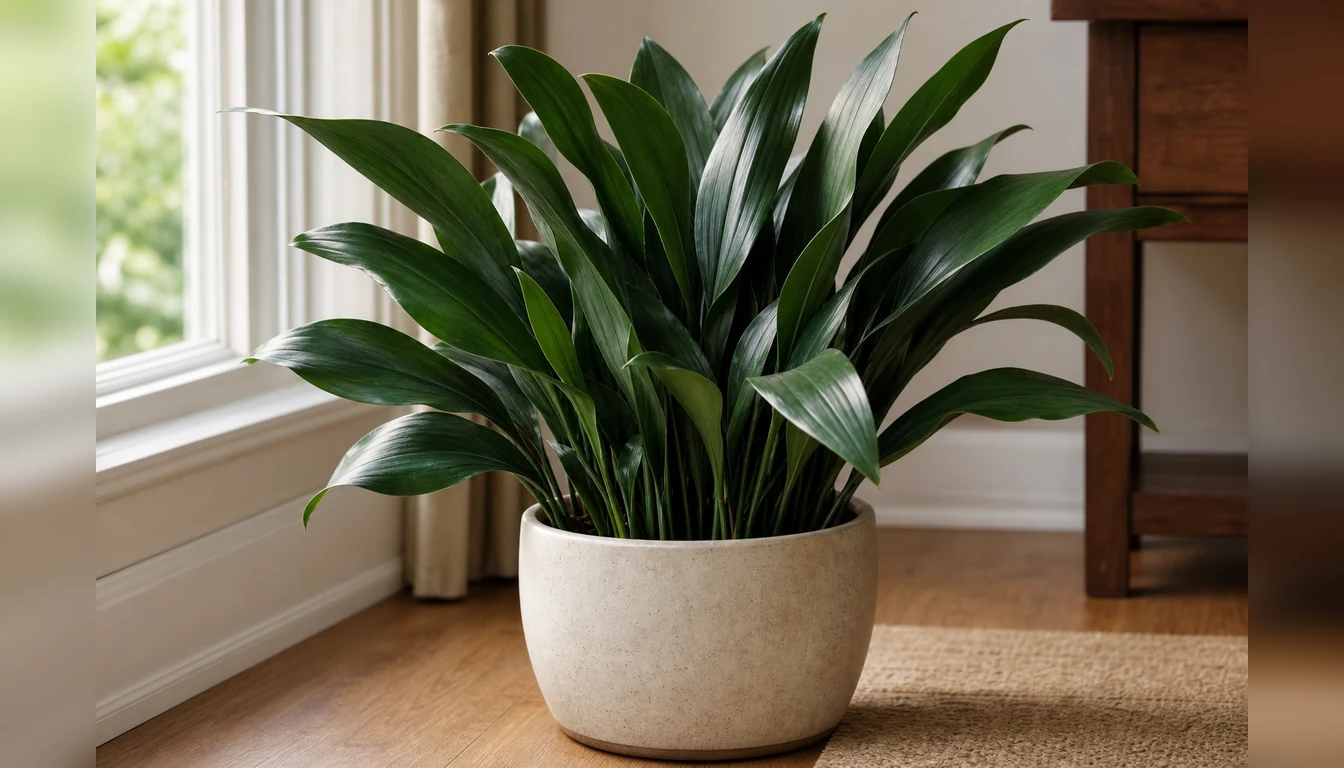
Cast Iron Plant
Cast Iron Plant shrugs off low light and irregular watering better than almost any other houseplant.
Areca Palm
Areca Palm is a cane-form indoor palm for bright filtered light and lightly damp soil, especially when you want soft…
Baby Rubber Plant
Baby Rubber Plant is a compact Peperomia with glossy, water-storing leaves and upright fleshy stems.
Sources & References
- Toxic and Non-toxic Plants: Boston Fern | ASPCA
- Toxic and Non-toxic Plants: Parlor Palm | ASPCA
- Toxic and Non-toxic Plants: Spider Plant | ASPCA
- Toxic and Non-toxic Plants: Cast Iron Plant | ASPCA
- Toxic and Non-toxic Plants: Areca Palm | ASPCA
- Toxic and Non-toxic Plants: Baby Rubber Plant | ASPCA
- Toxic and Non-toxic Plants: Sago Palm | ASPCA
- Toxic and Non-toxic Plants: Aloe | ASPCA
- Toxic and Non-Toxic Plants
- These Houseplants Can Cause Trouble for Your Pets | ASPCA
- NC State, Nephrolepis exaltata and Bostoniensis cultivar
- FDA, Lovely Lilies and Curious Cats: A Dangerous Combination
- ASPCA, My Pet Ate Something! When Should I Seek Help?
- EPA, Read the Label First: Protect Your Pets