
How Does Indoor Plant Care Change Through the Year?
An indoor plant care calendar is most useful as a reminder to recheck conditions, rather than a set of dates for watering or feeding. Daylight changes through the year, but heating, air conditioning, window temperature, and the plant’s own growth can change its needs too.
For many foliage houseplants near windows in temperate climates, spring brings stronger growth and winter brings slower drying. A plant near a heater, under effective grow lights, or entering a species-specific flowering cycle may follow a different pattern.
The useful question each season is what has changed at this plant’s leaves and roots. The answer determines which jobs need attention and which can wait.
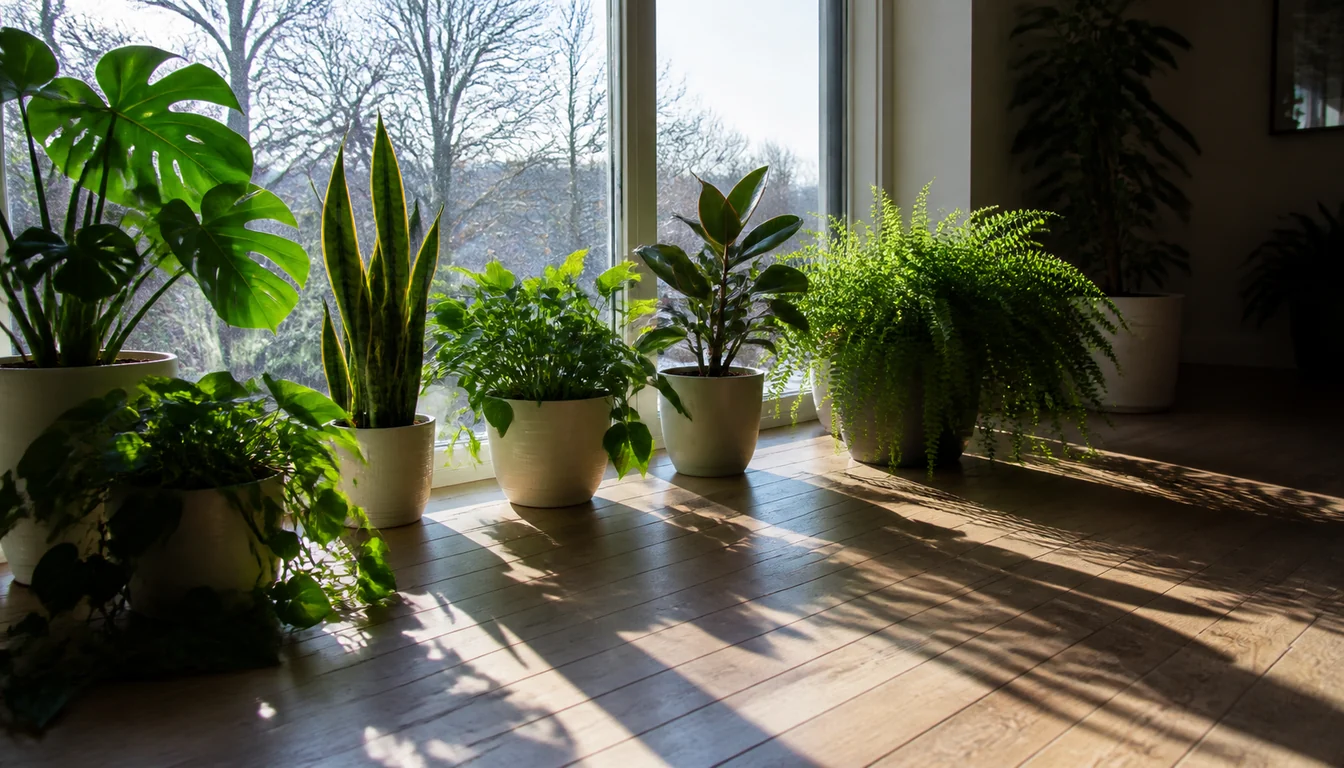
At a glance
What Changes Inside Through the Year?
Light is one important seasonal change, but it is not the only one. A room thermostat does not describe the temperature of a leaf touching cold glass or a pot directly above a radiator. Heating and air conditioning can also change humidity and drying around the plant.
Window light depends on orientation, nearby trees, overhangs, curtains, and the sun’s position. Lower winter sun may reach farther into a room, while a summer overhang shades the same spot. That does not establish that every plant receives less light in winter or that a bright-looking room supplies enough light at each leaf.
| What changes | Useful observation | What it cannot prove alone |
|---|---|---|
| Day length and sun angle | Duration and position of direct light on the leaves | That every window follows the same seasonal pattern |
| Heating or cooling | Temperature and relative humidity near the plant | That a comfortable room thermostat guarantees safe foliage temperatures |
| Plant and root growth | New growth, crowding and changes in drying | That every new leaf requires fertilizer immediately |
| Pot or growing mix | Drainage, moisture retention and root condition | That the old watering interval still fits after repotting |
A short note about watering dates, growth, and a move to another window can explain a change more usefully than a month name. An observation at one hour is only a snapshot, so the period of light across the day matters too.
A Seasonal Overview for Window-Grown Houseplants
This overview describes common patterns for foliage houseplants in a temperate Northern Hemisphere home. It gives reasons to inspect the plant, not permission to apply every task. Local conditions and species requirements take priority.
| Typical season | What may change | Water and feeding | Other useful checks |
|---|---|---|---|
| Spring | Longer days and renewed growth | Reassess drying and nutrient need as growth develops | Gradual light changes, root crowding and healthy material for propagation |
| Summer | Strong light, warmth or outdoor exposure | Drying may speed up, but air conditioning and shade can change the result | Heat, direct-sun injury, drainage and pests on plants spending time outdoors |
| Fall | Shorter days, heating starts or plants return indoors | Reassess the interval before repeating a summer routine | Inspect returning plants, hidden saucer water and changing window exposure |
| Winter | Less daylight in many rooms, dry heated air and cold glass | Slower-growing plants often need less water and fertilizer | Moisture below the surface, foliage near glass, heat sources and continuing pest activity |
A plant that remains healthy in its existing pot does not need a spring repot merely because the season changed. Likewise, a problem with roots or a damaged container needs assessment when it appears, even outside the usual spring work period.
How Should Watering Change?
Water leaves the pot through evaporation and plant use. Lower light and slower growth can lengthen the interval, while heat and dry air may increase water loss. These effects can occur together, so neither fall nor winter guarantees that every pot will dry more slowly.
Pot weight and moisture within the growing mix help establish when water is needed. The relevant depth depends on the roots, container, and plant. A shallow seedling cell, a large foliage-plant pot, and a drought-tolerant succulent cannot all be judged by the same knuckle-depth test.
- Compare the pot’s weight with its weight after watering and drainage
- Check moisture gently at an appropriate depth, without repeatedly probing roots
- Look for changes in growth, root crowding, temperature or light
- Empty water that collects in a saucer or decorative outer pot
- Record the interval to notice a trend, without turning it into an automatic watering date
A dry surface can cover a wet lower root zone. Conversely, a plant close to a heat source may dry faster than another across the room. Wilting also occurs with root damage, so a wet, wilting plant needs a root and drainage assessment rather than another automatic drink.
When Does Feeding Need to Change?
Active growth increases nutrient demand, but growth alone does not reveal how much fertilizer is already present. A newly purchased plant or fresh mix may contain nutrients, including a slow-release fertilizer charge. The species, light, roots, and product directions all affect whether more is useful.
Fertilizer does not replace light. When poor light or unhealthy roots limit growth, extra fertilizer does not remove that limit. Unused salts can accumulate in the mix, and excessive concentrations make it harder for roots to take up water.
There is no single half-strength, every-two-to-four-weeks schedule for every product and houseplant. A general extension example needs its original context, while the actual fertilizer label establishes its formulation and use directions. Plants growing slowly usually need less added fertilizer than the same plants growing vigorously.
Winter is not an automatic feeding ban for a healthy plant actively growing in suitable light. Equally, one leaf opening is not proof that feeding is due. A white crust, browning tips, or poor growth calls for a review of fertilization, water, drainage, and roots before adding more. Those signs do not diagnose a nutrient shortage by themselves.
How Do Heating and Cold Windows Affect Plants?
A sunny windowsill can combine useful light with difficult temperatures. Foliage near cold glass and roots above a heater experience different conditions from the center of the room. Damage can also have other causes, so the location and symptoms need to be considered together.
Warmer, drier air can increase water loss from leaves. That does not mean extra root-zone water will fix low humidity, especially when the pot is already wet. A thermometer and humidity reading near the foliage make the exposure easier to assess.
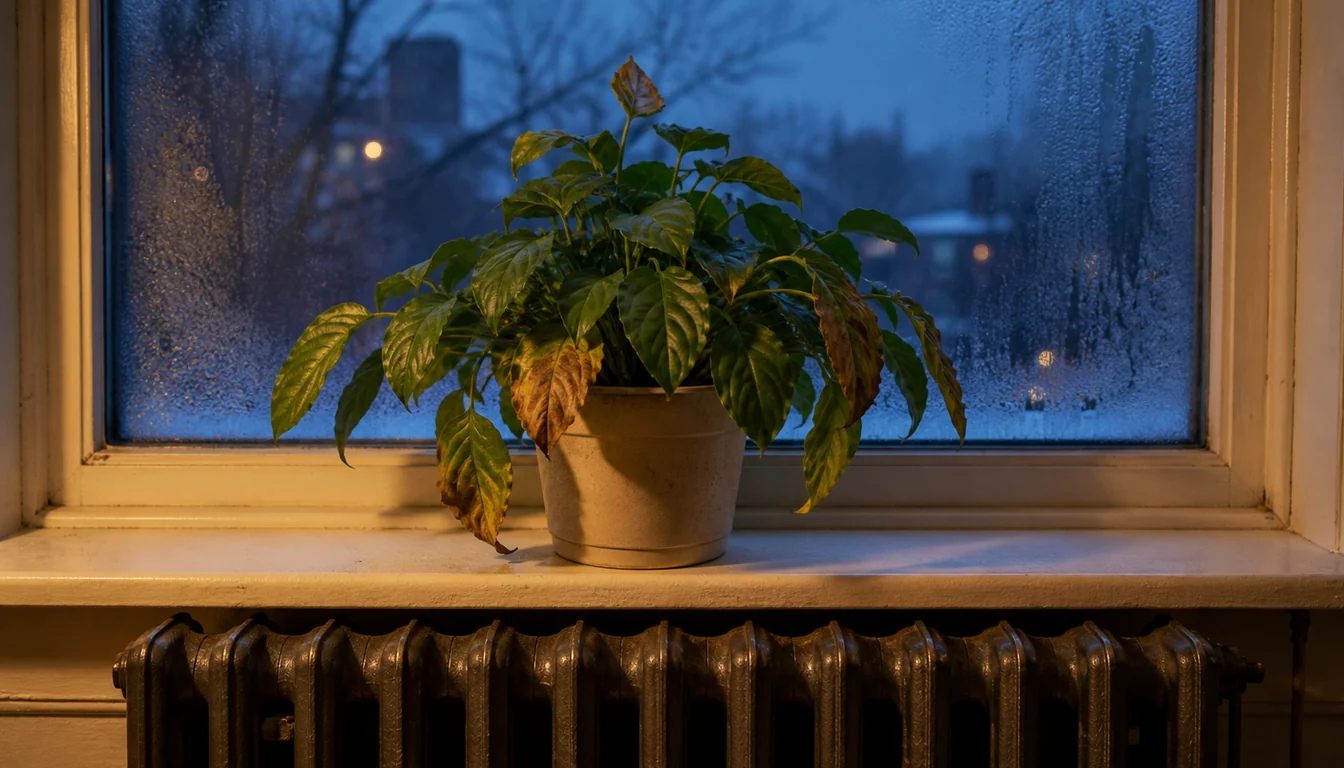
- Keep foliage from touching cold window glass
- Move the plant out of direct heater or air-conditioner airflow
- Recheck light after moving it away from a difficult window position
- Keep any humidity tray water below the pot base
- Assess the plant’s humidity needs before changing the whole room
Grouping plants and evaporation trays may alter conditions close to foliage, but they do not guarantee a particular humidity level. A humidifier can add moisture more consistently when the plant needs it, with actual room readings guiding its use. Misting has only a short-lived effect and is not a dependable way to maintain humidity through a heating season.
Which Pest Checks Continue All Year?
Indoor pests do not arrive only in their assigned season. New plants, summered-out pots, and existing infestations can introduce or maintain them at any time. Seasonal conditions change what deserves closer attention, but they do not replace regular inspection during routine care.
| Condition or change | What to inspect | Why it matters |
|---|---|---|
| New or returning plant | Leaf undersides, joints, pot rim and growing mix | Pests or developing stages may arrive with the plant |
| Hot, dry conditions | Fine stippling, live mites and leaf undersides | These conditions can favor spider mites |
| Persistently moist mix | Small flies near pots and larvae in the medium | Fungus gnats breed in moist organic material |
| Sticky leaves or cottony clusters | Insects around veins, shoots and leaf joints | Sap-feeding pests require identification before treatment |
A new arrival kept apart from the collection is easier to observe. Extension recommendations for isolation provide a precautionary period, not a guarantee that every pest has become visible. Continued checks matter after the plant joins the others.
A seasonal symptom is still a symptom, not a diagnosis. Pale leaves, browning tips, and wilt can reflect roots, water, light, or other causes as well as pests. Treatment depends on what is actually found.
What Changes With Grow Lights, Climate, or Plant Type?
A timer controls lamp duration. It does not hold temperature, humidity, root health, plant size, or incoming window light constant. Useful light also depends on intensity, distance, and coverage, so identical timer settings cannot guarantee a steady growth rate or an unchanging watering interval.
Flowering can depend on the duration of darkness as well as suitable growing conditions. Holiday cacti are one example, which is why extending artificial light into the night can conflict with a flowering treatment. An all-purpose foliage-plant lighting schedule is not a flowering prescription for every species.
Succulent does not mean one winter routine. Christmas cacti come from humid tropical forests and differ from desert cacti. RHS advises reduced watering during their rest periods without letting the mix dry out completely. A blanket instruction to keep every cactus dry and cool all winter misses those distinctions.
Southern Hemisphere seasons reverse relative to the Northern Hemisphere, but shifting every task six months does not account for climate, windows, heating, or the species. Near the equator, day-length changes may be smaller while cloud cover, wet and dry seasons, or indoor cooling still change growing conditions. The local environment and plant response remain the useful basis for the calendar.
Sources & References
- University of Georgia Extension, Growing Indoor Plants with Success, Bulletin 1318
- University of Minnesota Extension, Lighting for Indoor Plants and Starting Seeds
- University of Illinois Extension, Houseplants: Get Started
- University of Minnesota Extension, Spring Houseplant Care
- Royal Horticultural Society, How to Grow Christmas Cactus
- Colorado State University Extension, Managing Houseplant Pests
Related Guides
Best Butterfly Garden Plants for a Complete Habitat
The best butterfly garden plants do two different jobs. Host plants feed caterpillars, while nectar…
15 min read
Best Fall-Blooming Flowers for Color Near Frost
A bed that still carries flowers in October usually was planned before temperatures fell.
9 min read
Best Fast-Growing Trees for Shade and Privacy
The best fast-growing tree is the one whose mature crown, roots, climate range, and maintenance…
16 min read
Best Fragrant Flowers for Every Yard and Season
The best fragrant flowers depend on climate, light, space, and the hours you use the yard.
15 min read
Best Full-Sun Perennials for Hot, Bright Beds
The best full-sun perennials are the ones that match the bed's soil moisture and drainage, local…
14 min read
Best Ground Cover Plants for Sun, Shade, and Slopes
The best ground cover is a plant that survives the site and performs the job without escaping into…
18 min read