Monstera Deliciosa vs Monstera Adansonii
Same genus, two different plants, and Monstera Adansonii never grows up into Monstera Deliciosa. One is a big-leaf floor plant, the other a small-holed trailing vine, and the care is nearly the same for both.
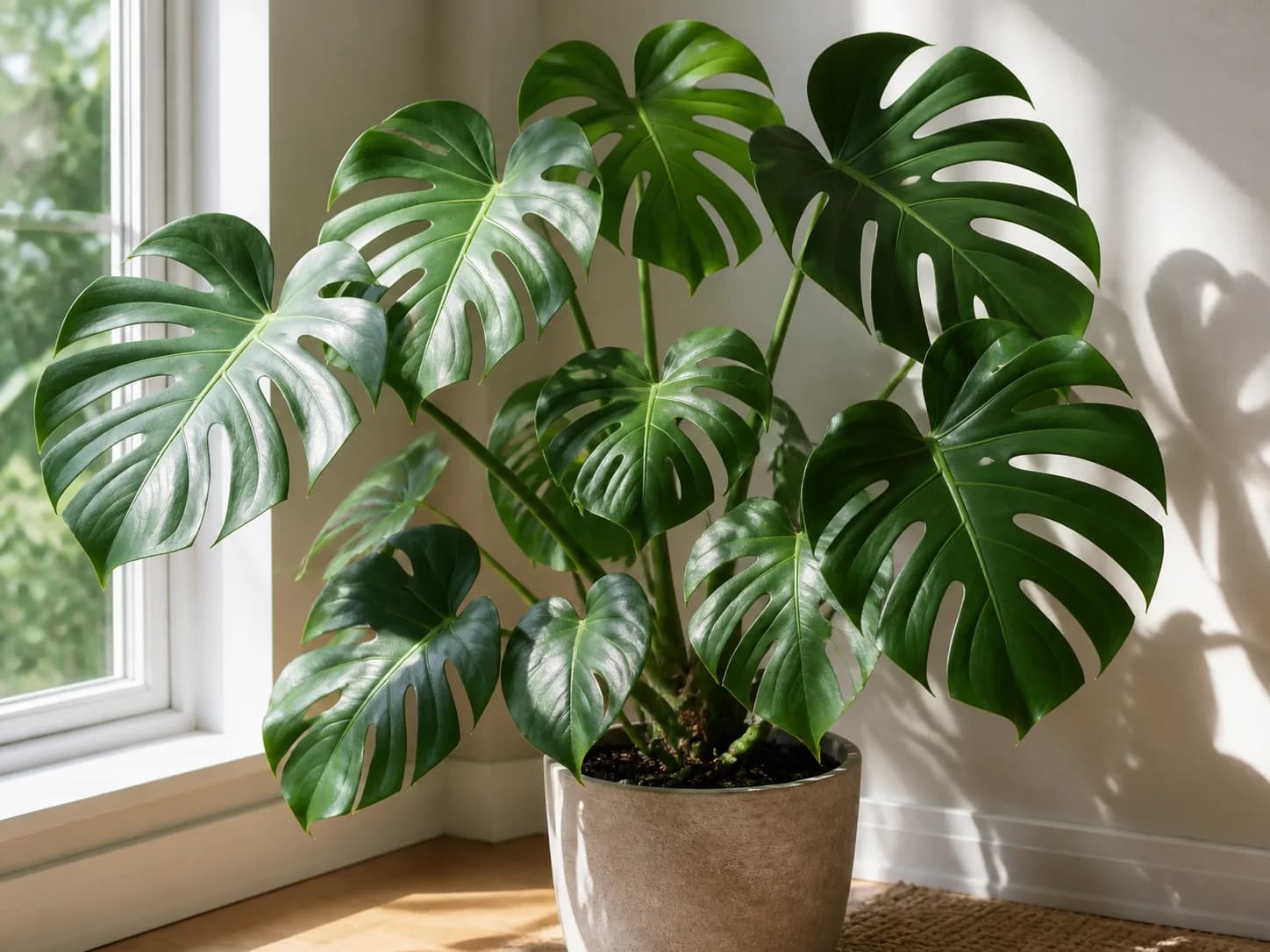
Monstera deliciosa
Monstera adansonii
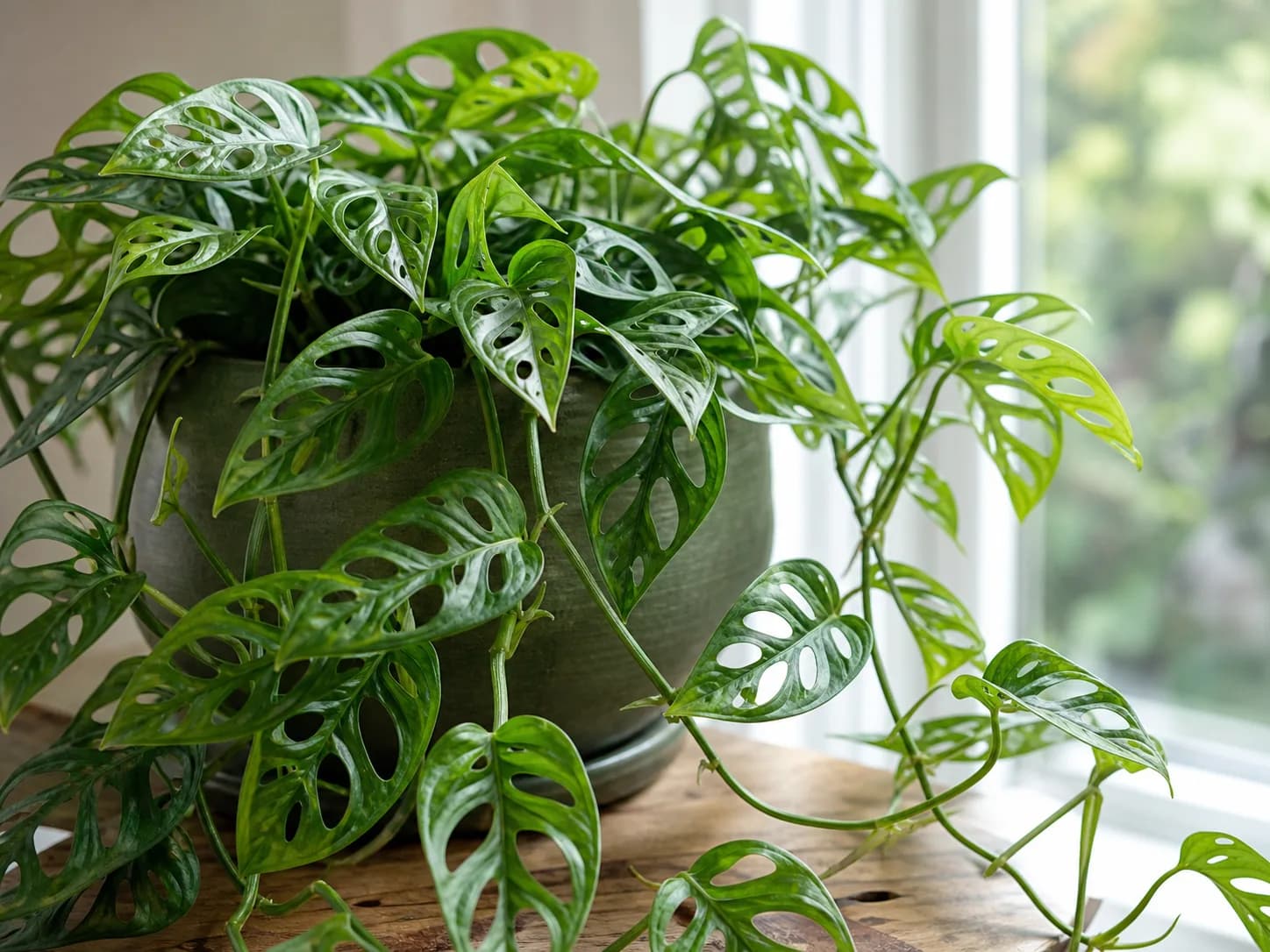
Monstera Adansonii
ruleDecision Summary
Both of these are true Monsteras, so they want the same things. Give either one bright indirect light, water when the top inch or two of soil dries, and normal room humidity. Because the care lines up this closely, the pick is not a contest over which plant is easier to keep alive. You can grow Monstera Deliciosa with the same watering can and window as its smaller cousin. The lacy Monstera Adansonii asks for nothing different.
The most common mistake is expecting one to turn into the other, and it never happens. Monstera Adansonii keeps small holes that stay fully enclosed inside each leaf, which gives it that lacy, Swiss-cheese look for life. Monstera Deliciosa makes larger splits that open toward the leaf edge as the plant matures, so an old leaf almost looks torn. That single trait, enclosed holes versus edge-opening splits, tells them apart and never changes with age.
So the choice comes down to scale, leaf character, and how you want to train the plant. Deliciosa grows into a broad floor plant with bold, architectural leaves. Adansonii stays a slim vine you can drape from a shelf or run up a small pole. Decide by the space you have and the look you want, not by which one is harder to grow.
How to Use This Guide
Match your primary use case first, then review the side-by-side specs table. The use-case cards explain where one option has a practical advantage; if your situation is different, let the specs and tradeoffs guide the choice.
Since the care is nearly identical, choose by scale and leaf. Pick Monstera Deliciosa when you want a big-leaf floor anchor with splits that open to the edge. Pick Monstera Adansonii when you want a small-holed vine for a shelf or a hanging basket. Just do not expect one to turn into the other, because they stay different plants for life.
KnowTheYard Editorial Team
Source-backed editorial note
compare_arrowsSpecific Use Cases
The following use cases focus on scenarios where the tradeoff actually matters. Each card names the stronger fit for that situation and explains the catch.
A winner only applies when that scenario matches your conditions. If neither scenario fits, check the side-by-side specs for the more relevant constraints.
Expecting one to become the other
The myth, bustedWinner: Neither, they stay different plants
Monstera Deliciosa makes big leaves whose slits open all the way to the edge as it matures, so an older leaf can look deeply cut. That edge-opening habit is built into the plant from the start. A young Deliciosa with plain leaves is still a Deliciosa, just not grown up yet.
Monstera Adansonii keeps its holes fully enclosed inside the leaf, like windows punched in the middle. Those holes never migrate to the edge, no matter how old or large the vine gets. It will not become a Deliciosa, because the two were never the same plant.
A floor showpiece
Anchoring a roomWinner: Monstera Deliciosa
Monstera Deliciosa is built to anchor a room from the floor. Mature leaves can span a foot or more, and one plant fills a corner the way a small tree would, much like an upright fiddle leaf fig. Give it a wide pot and a sturdy pole and it becomes the main event.
Monstera Adansonii can grow large over time, but the leaves and vines stay slim. It reads as texture rather than a bold centerpiece. Set it on the floor alone and it tends to look thin instead of commanding the space.
Shelves and hanging baskets
Growing up highWinner: Adansonii
Monstera Deliciosa outgrows a shelf fast. The stems thicken, the leaves get heavy, and the plant wants floor space within a year or two. Perching it up high is a short-term arrangement at best.
Monstera Adansonii is happy trailing off a shelf or spilling from a hanging basket. The thin vines drape naturally and the small holed leaves stay in scale up high, similar to how arching spider plants fill a hanging spot.
Restyling and re-training later
Changing your mindWinner: Adansonii
Monstera Deliciosa locks in its direction as the stems thicken. Once a thick stem sets on a pole, redirecting it risks snapping the stem, and repotting a large staked plant takes real muscle.
Monstera Adansonii stays easy to redirect. The thin, flexible vines loop onto a new trellis or pole without a fight, so you can restyle it season to season, much like training flexible philodendron vines.
Close-up leaf character
Bold cuts or fine laceWinner: Split, it depends on the look you want
Monstera Deliciosa gives you bold, architectural leaves. Up close the deep edge slits and glossy surface look sculptural, the kind of foliage that reads well in photos and from across the room.
Monstera Adansonii offers delicate lacework instead. The many small enclosed holes make a fine, airy pattern that rewards a close look, softer and more intricate than the Deliciosa's broad cuts.
paymentsCost & Upkeep
Long-term cost extends beyond the purchase price. Factor in ongoing inputs, replacement risk, equipment, and time so the cheaper option at checkout does not become the more expensive one to keep.
For Monstera Deliciosa and Monstera Adansonii, the real cost difference usually shows up after purchase: water, soil, fertilizer, pruning, replacements, and how easily the plant or system recovers from mistakes.
ecoMonstera Deliciosa
- check_circleStarter plants in small nursery pots often run $15–$30, so getting in the door is cheap.
- check_circleOne mature plant fills a corner on its own, which saves you from buying several smaller plants to cover the same space.
- check_circleCuttings with a couple of nodes root well, so you can make backups or gifts instead of rebuying.
- cancelA large floor pot, saucer, and sturdy moss pole add $40–$100 once the plant outgrows its starter container.
- cancelRehoming it into bigger, heavier pots every 1–3 years means more mix to buy and a plant that is hard to move.
ecoMonstera Adansonii
- check_circleSmall hanging baskets or 4-inch pots usually cost $10–$25, a little less than a Deliciosa starter.
- check_circlePruning for fullness hands you free cuttings, so one plant can fill a trellis or a long shelf.
- check_circleEasy propagation means you rarely need to buy another vine just to fill a thin spot.
- cancelTo make a real impact you often buy several small plants, which can cost more than one big Deliciosa.
- cancelSmall pots dry out fast, so watering comes around more often, worth checking your watering schedule in summer.
ecoResource Fit
The greener pick is usually the plant that fits your space without a fight. A Monstera Deliciosa crammed into a small room gets moved, pruned back, and repotted more than it should, which wastes pots and potting mix. Matched to a room it can actually fill, it settles in and stays put for years.
Monstera Adansonii is the easier plant to keep going without buying more. A few cuttings root in water on a windowsill, so you can refill a thin patch or share with a friend instead of ordering a new plant. That home propagation cuts down on shipping and plastic pots over time.
Neither plant needs special gear or constant replacing, and both sit comfortably among your other indoor houseplants. Pick the one that suits your space and you will buy less over the years.
Adansonii holes stay sealed inside the leaf. Deliciosa splits open toward the edge with age, and neither ever changes.
A mature Deliciosa wants floor space and a wide pot. Adansonii stays a slim vine for a shelf or hanging basket.
Deliciosa shows bold, architectural leaves. Adansonii makes fine, airy lacework that rewards a close look.
Deliciosa's thick stems lock direction once set. Adansonii's thin vines redirect onto a new pole with ease.
Deliciosa needs a bigger pot every 1 to 3 years as it bulks up. Adansonii steps up in smaller increments.
Both want the same bright indirect light and the same watering rhythm, so care will not pick the winner for you.
table_chartSide-by-side Specs
Read the care rows first, then set them aside. Monstera Deliciosa and Monstera Adansonii want nearly the same light, the same watering rhythm, and the same middling humidity. If one thrives on your windowsill, the other will too, so care will not pick the winner for you.
The rows that actually decide it are mature size, leaf hole type, growth form, and how easily you can train the plant. Deliciosa grows up and out into a floor anchor, while Adansonii stays a slim vine you can drape or redirect. Do not over-index on watering and humidity, because the real gap here is size and shape.
Source Notes
Metrics summarize published care ranges and common cultivar behavior. Individual performance varies by cultivar selection, microclimate, and management intensity. Consult our methodology for source standards and update practices.
| Metric | Monstera Deliciosa | Monstera Adansonii |
|---|---|---|
| park Mature size | 6–8 ft, broad spread | 3–5 ft, slim vines |
| biotech Leaf hole type | Splits open to leaf edge | Holes enclosed inside leaf |
| account_tree Growth form | Upright climber | Trailing vine |
| content_cut Support | Needs a sturdy moss pole | Light trellis or hangs free |
| home Apartment fit | Best in larger rooms | Fits small spaces |
| light_mode Light (indoors) | Bright to medium indirect | Bright to medium indirect |
| water_drop Watering frequency | When top 1–2 inches dry | When top 1–2 inches dry |
| pets Pet toxicity | Toxic if ingested | Toxic if ingested |
| eco Propagation ease | Easy from stem cuttings | Very easy from cuttings |
| air Humidity preference | Fine at 40–60% | Fine at 40–60% |
| potted_plant Styling flexibility | Locks direction, hard to redo | Redirects easily anytime |