verifiedSource Reviewed
Aloe Vera: Easy Succulent Houseplant Care
Aloe barbadensis miller
Family: Asphodelaceae
wb_sunnyLight
Bright light, 4–6 hours direct sun indoors if possible
water_dropWater
Low; water deeply, then allow soil to dry at least halfway
heightHeight
12–24 in tall in containers
publicZone
Outdoors in Zone 10-12; indoors anywhere
airAir Quality
Air Quality Note
Native Region
Arabian Peninsula and arid regions of North Africa
biotechA Succulent Built Around Its Gel
Aloe vera (botanical name *Aloe barbadensis miller*) survives prolonged drought because each of its thick, fleshy leaves is essentially a water reservoir. The clear gel filling those leaves is about 99% water held in a mucilaginous matrix — this is the adaptation that lets the plant go weeks between waterings without wilting. It also means that waterlogged soil is lethal: roots that can't breathe rot quickly in a plant that is not built to process constant moisture.
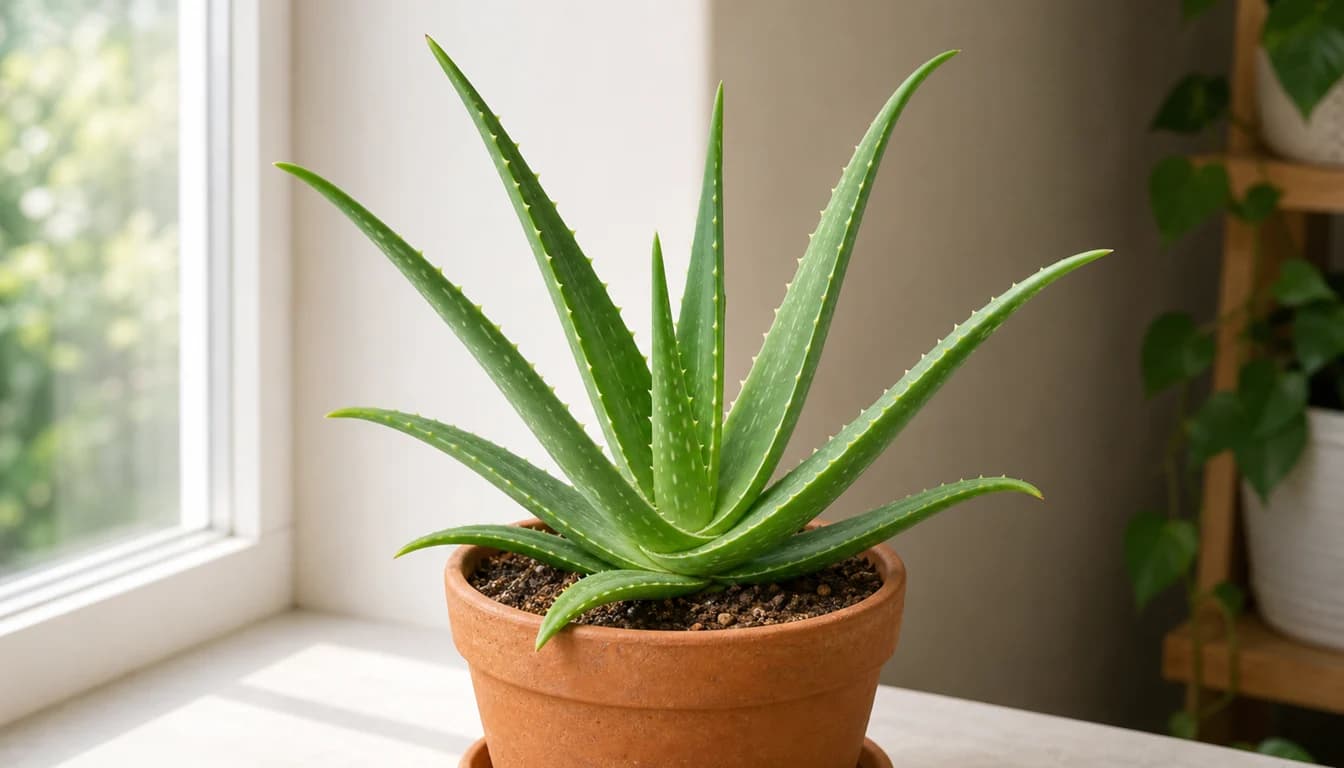
Aloe vera grows in a compact rosette from a central base, pushing leaves outward and upward in a fountain shape. As the plant matures, it produces pups — small offsets that emerge from the root zone around the base. These pups are genetically identical to the parent and develop their own root systems, making vegetative propagation very simple.
Indoors, most plants stay 12–24 inches tall in containers. Flowers are rare without bright light and a slightly root-bound pot, but plants in south-facing windows occasionally push a tall spike with tubular yellow blooms. The drought-tolerance of Aloe vera is similar in principle to Snake Plant, though the mechanisms differ: Snake Plant stores water in its rhizomes, while Aloe vera stores it in leaf tissue.
That leaf anatomy is why gel harvest and plant care belong in the same guide. The plant stores water for survival, while people only use one cleaned inner layer.
infoTwo layers inside the leaf
Slice an Aloe vera leaf and you'll find two distinct layers: the outer green skin, a thin yellow latex layer just under the skin, and the clear inner gel. The gel is useful for minor skin applications; the yellow latex is a known laxative and irritant — rinse leaves well before harvesting gel and discard that yellow layer.
paletteWhich Aloe Vera to Buy
Start with the reason you want the plant. A gel-use Aloe Vera and a decorative spotted aloe can share the same sunny shelf, but they are not interchangeable when you plan to harvest leaves.
Aloe barbadensis miller is the plant sold as Aloe vera at every garden center and hardware store — pale green leaves with light spotting when young, upright rosette form, and the clear inner gel people actually use. If the label says "Aloe vera" without a cultivar name, this is almost always what you're getting.
Compact and dwarf varieties — often labeled 'Minibelle' or sold as "dwarf aloe" — stay under 8 inches tall and fit comfortably on a windowsill without needing much pot space. These are the better option for a small apartment window rather than a standard Aloe vera that can spread 12–18 inches wide in a few years.
Decorative hybrid aloes with dramatic spots, stripes, or red-edged leaves are sold widely in nurseries and behave similarly in containers — same light and water needs — but are usually grown for appearance rather than gel use. If gel harvest is part of why you want the plant, stick with labeled Aloe vera or Aloe barbadensis miller: the gel chemistry and concentration are specific to this species.
Plant Problem — See AlsoAloe Vera Brown SpotsBrown spots on **Aloe vera** leaves are a common problem for indoor gardeners. They usually come from two distinct sourc
chevron_rightwb_sunnyLight: Bright but Not Scorching
Aloe vera is a desert plant that naturally grows in full sun for most of the day, but glass magnifies and concentrates heat — so an indoor aloe in a south window gets more intense light than the same plant on a shaded ledge outdoors. Bright direct light for 4–6 hours daily, ideally through a south or west window, is the indoor target.
Too little light is the most common and easiest-to-miss aloe problem indoors. A plant in dim conditions produces pale, thin leaves that lean and stretch toward the nearest window; the rosette loses its compact upright shape and the leaves droop sideways under their own weight. If your aloe looks "floppy," light is the first thing to check before adjusting water or soil.
Too much unfiltered afternoon sun through glass can cause brown, papery burn patches — not on acclimated plants, but consistently on aloes moved from a dim spot to full direct sun without transition time. The fix is a gradual increase over 1-2 weeks rather than an abrupt jump. This same hardening-off period is essential before moving any indoor aloe outdoors for summer.
If you use grow lights, position the fixture 8–12 inches above the plant and run for 12–14 hours daily to approximate what a bright south window provides. Full-spectrum LED grow lights at this distance reliably maintain compact rosette shape when natural light is insufficient.
- check_circleBest placement: south or west window with 4–6 hours of direct sun through glass.
- check_circleFloppy, pale, or leaning leaves mean the plant needs more light — move it before adjusting watering.
- check_circleBrown crispy patches after moving to a brighter spot = acclimation needed; step up gradually over 2 weeks.
- check_circleOutdoors in summer: start in bright shade, not direct sun, and increase sun exposure over 7-10 days.
Email Updates
Join the KnowTheYard update list
Zone-specific advice, seasonal reminders, and new plant guides — no filler.
water_dropWatering: How Dry Is Dry Enough
Read the leaves before you read the calendar. A firm, upright Aloe Vera with cool soil does not need a drink, even if two weeks have passed.
The most common piece of advice — "water aloe rarely" — is vague enough to cause both overwatering and underwatering. The more useful rule: water deeply when the soil has dried out at least halfway down the pot. Push a finger or a wooden skewer to the midpoint — if it comes out with soil particles stuck to it, wait. If it comes out clean and dry, water.
When you do water, water completely: pour until liquid runs freely from the drainage holes, then empty the saucer within 15 minutes. This deep-then-dry cycle is how Aloe vera evolved to drink — brief but thorough saturation followed by a long dry period. Shallow, frequent watering creates perpetually moist soil at the root zone, which is exactly what causes rot.
In a bright south window in summer, that cycle typically runs every 14–21 days. In winter, the same plant in reduced light may go 4–6 weeks between waterings without any ill effect — growth slows dramatically and water use drops accordingly. The drooping aloe guide covers how to distinguish overwatering from underwatering when leaves have already lost their firm, upright shape.
Overwatering shows as: leaves that feel soft or mushy near the base, a slight brown discoloration at the leaf base where it meets the stem, soil that stays wet for more than 3 weeks, and sometimes a faint sour smell. Underwatering shows differently: leaves become thin and slightly curled inward along their length, lose their firm plumpness, and the pot feels very light when lifted.
- 1Test soil at mid-pot depth — water only when it feels dry at that level.
- 2Water thoroughly until liquid drains from the bottom, then discard the runoff.
- 3Let soil dry at least halfway before the next watering — usually 2–4 weeks depending on season and light.
- 4Cut watering frequency roughly in half during low-light winter months.
Use the list as a check before adding water; the warning below matters most when a drooping plant tempts you to water wet soil again.
warningOverwatering looks like underwatering at first
A plant with rotting roots can't take up water — so it droops and looks thirsty even though the soil is wet. Always check soil moisture before adding more water to a drooping aloe.
Comparison — See AlsoSnake Plant vs Aloe Vera
chevron_right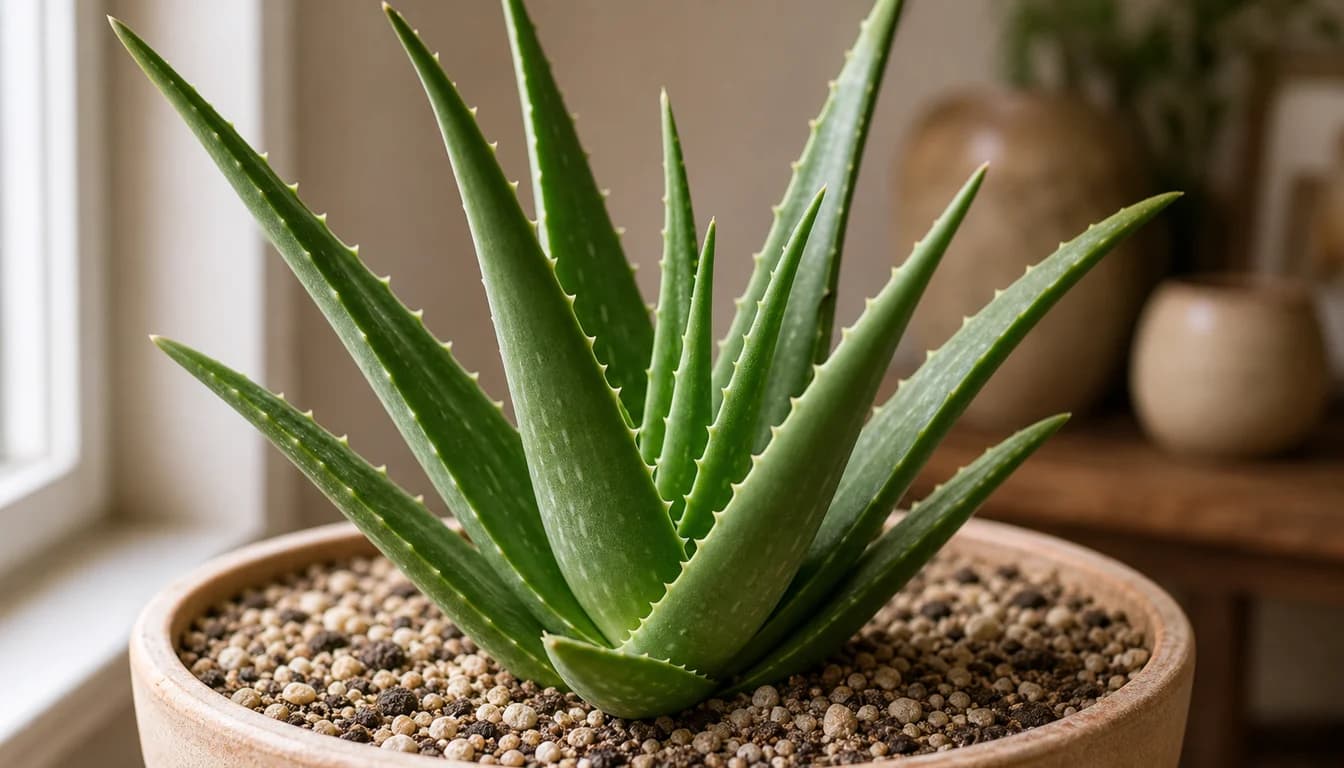
potted_plantSoil and Drainage: The Real Secret to Healthy Aloe
The potting mix has to protect the crown from staying wet. Aloe Vera stores water in its leaves, so the roots need air more urgently than constant moisture.
Correct watering frequency matters far less than correct soil. An Aloe vera in a gritty, fast-draining mix can tolerate moderate overwatering because the water moves through quickly and roots dry out within hours. The same plant in dense standard potting mix can rot on the same watering schedule because moisture sits against the roots for days. Soil type is the primary variable — everything else adjusts around it.
The target blend: 50% cactus/succulent soil and 50% perlite or coarse horticultural sand. The cactus soil provides minimal organic matter; the perlite or sand keeps large pores open so water moves through fast and roots drain within 2-4 hours of watering. Pre-bagged cactus soil alone is often too moisture-retentive for Aloe vera — it still needs the added grit to drain fast enough.
Terracotta pots are the best choice for Aloe vera because the clay is porous and actively wicks moisture away from the root zone. Plastic and glazed ceramic hold moisture significantly longer. Choose a pot only 1–2 inches wider than the root ball — oversized pots hold a large volume of wet soil that surrounds roots for too long between waterings. Proper drainage holes are non-negotiable; decorative pots without holes should have a nursery pot inside them.
Poor drainage shows up first as yellowing leaves and then as softening at the leaf base — by that point root rot has usually set in. Repot into fresh gritty mix annually if the existing mix has compressed or if you've had repeated overwatering issues. Roots that have gone brown and mushy should be trimmed back to healthy white tissue before repotting.
Recommended mix50% cactus soil, 50% perlite or coarse horticultural sand
pH rangeSlightly acidic to neutral, around 6.0–7.0
Best pot typeTerracotta with drainage holes — clay wicks moisture and dries faster than plastic
Repotting frequencyEvery 2–3 years, or when roots circle the pot or crowded pups push out of the soil
account_treeSeparating and Repotting Pups
Aloe vera propagates almost exclusively through pups — the small offsets that emerge from the root zone around the base of the parent plant. Wait until pups have at least 3–4 leaves of their own and some visible roots before separating them; pups without their own root system struggle to establish after separation and often rot.
Lift the whole plant from its pot so you can see the base clearly. Work on newspaper or a tarp. Gently tease away soil from the connection point between pup and parent — the attachment is usually at the rhizome just below the soil surface. Cut pups free with a clean knife or pruners, taking a small section of connecting root tissue with each pup.
Set the separated pups in a dry, shaded spot for 24–48 hours before potting. This brief drying period lets the cut surfaces callus over, significantly reducing the chance of rot when the pup is placed in moist soil. Don't skip this step — fresh cut surfaces on succulents are highly vulnerable to fungal rot before they seal.
Pot each pup in a container just 1–2 inches wider than its root ball, using the same gritty succulent mix you'd use for Jade Plant or cactus. Hold off on watering for 5–7 days after potting, then water lightly. Full rooting and establishment takes 4–6 weeks; the pup is established when you feel gentle resistance when you lightly tug a leaf.
- check_circleWait until pups have 3–4 leaves and visible roots before separating.
- check_circleLet cut surfaces dry for 24–48 hours before potting — this callusing step prevents rot.
- check_circleUse a pot with a drainage hole; label pups with the separation date.
- check_circleHold off on watering for 5–7 days after potting, then water lightly.
Guide — See AlsoAir Purifying Plants for Cleaner Indoor AirLearn how to pick, place, and care for air purifying plants so they help your indoor air instead of just looking pretty.
chevron_rightpest_controlPests: Less Common Than You Think
Healthy Aloe vera in bright light and fast-draining soil is surprisingly pest-resistant compared to moisture-loving tropical houseplants. The thick, bitter leaves are not attractive to most insects, and the dry soil prevents the fungus gnat populations that plague overwatered plants. When pests do appear, it's usually a signal that soil moisture or crowding conditions have become favorable to them.
Mealybugs are the most common Aloe vera pest. They hide inside the crown — the tight center of the rosette where new leaves emerge — and can be easy to miss until a cottony white mass appears. They also establish at the soil line around roots (root mealybugs), which are harder to detect but cause the same stunted, discolored growth. Dab visible colonies with a cotton swab soaked in 70% isopropyl alcohol, then spray with insecticidal soap at weekly intervals for 3–4 weeks.
Scale insects show as fixed tan or brown shell-like bumps along the lower leaf surfaces and outer leaf edges. They are slow to establish on aloe's tough leaves but can build up unnoticed. Scrape off manually with a fingernail or soft brush, then treat with isopropyl alcohol and soap spray as with mealybugs.
Fungus gnats in the soil almost always mean the top layer is staying moist too long. The larvae feed on organic matter and fine root tips; the fix is a better watering schedule rather than repeated spray treatments. Let the soil dry completely several inches deep before the next watering and the population crashes within a few weeks. The fungus gnat guide covers sticky traps and BTi soil drenches for established infestations.
lightbulbEnvironment first, spray second
Fix light, watering, and air circulation before reaching for pest treatments. A healthy Aloe vera in correct conditions resists most pest pressure on its own — insecticide spray on a stressed, overwatered plant rarely fixes the underlying problem.
calendar_monthMoving Outdoors and Back In
Aloe Vera changes more when you move it than when the calendar changes. The risky moments are the first week outdoors in spring and the first week back inside before cold nights.
Spring is the time to repot, separate pups, and start a light feeding schedule. Use a diluted, low-nitrogen fertilizer at half the label rate once a month from April through August — something like a 5-10-10 or balanced cactus fertilizer from the options in the indoor plant fertilizer guide. Overfeeding is more harmful than underfeeding for this plant; extra salts in the soil cause leaf tip browning.
Summer is when Aloe vera benefits most from outdoor placement. Move it outside once nighttime temperatures consistently stay above 50°F, but harden it off first: start in bright shade for a week, then give it more morning sun gradually over 7–10 days before placing it in its full-sun summer spot. Jumping from dim indoor light to outdoor sun in a single step causes sunburn patches that won't heal on existing leaves.
Fall is the critical window for bringing plants back indoors. Move Aloe vera inside before nighttime temperatures drop below 45°F — a single frost-level night kills the exposed outer leaves, and a hard freeze kills the whole plant. Before moving it in, thoroughly inspect every leaf surface and the soil for hitchhiking pests. Rinse the leaves with a gentle spray and let them dry before the pot crosses the threshold, so you don't import spider mites, scale, or mealybugs to your other houseplants.
Winter care is simple: the brightest window available, water every 4–6 weeks when the soil is completely dry halfway down, and no fertilizer until spring. Aloe vera stores enough energy in its leaves to coast through winter at reduced light without any special intervention.
- 1Spring: Repot rootbound plants, separate pups, start half-strength monthly fertilizer.
- 2Summer: Move outdoors after hardening off; water every 2-3 weeks in heat; full sun after acclimation.
- 3Fall: Bring in before nights drop below 45°F; inspect and rinse for pests before moving indoors.
- 4Winter: Brightest window available, water every 4-6 weeks, no fertilizer.
Guide — See AlsoBest Herbs to Grow Indoors for Real Harvests, Not Spindly PotsChoose indoor herbs that can actually produce in your light, temperature, and container setup, then match each one to th
chevron_righthealth_and_safetyThe Gel, the Latex, and Pet Safety
Safety questions around Aloe Vera are really about which layer of the leaf someone touches or eats. The clear gel, the yellow latex, and the whole leaf do not carry the same risk.
The clear inner gel of Aloe vera — the part you reach after cutting through the skin and the yellow layer beneath it — is what most people use on minor skin irritations and mild burns. This inner gel is generally considered safe for external use on intact, uninfected skin. It is not a replacement for medical treatment on serious wounds, infected areas, or surgical incisions.
The yellow latex layer just under the green skin is a different matter entirely. This layer contains aloin, a compound with strong laxative properties that also irritates skin and mucous membranes. When harvesting gel at home, slice the leaf lengthwise, let the yellow latex drain away for a few minutes, then scoop only the clear gel. Rinse the gel before use to remove residual latex.
Aloe vera is toxic to cats and dogs if eaten. The plant components — both the latex and the gel in quantity — cause vomiting, diarrhea, and lethargy in pets. Even a small amount of the yellow latex is a stronger irritant than the clear gel. Keep the plant on a high shelf or in a room your pets don't access freely. Spider Plant is a non-toxic alternative with easy care if you have cats or dogs that chew plants.
For human children, Aloe vera is mildly toxic if chewed or swallowed in leaf form — the same laxative and irritant effects apply. Commercial aloe gel products are processed and tested to remove aloin; home-harvested gel is not. Keep the plant out of reach of toddlers who might chew leaves, and store any harvested gel in the refrigerator for no more than 1 week.
warningNot safe for pets
If your pet ate Aloe vera leaves and shows vomiting, diarrhea, or lethargy, contact your vet. Bring a sample of the leaf if possible. The ASPCA classifies Aloe vera as toxic to cats, dogs, and horses.
eco
Keep Exploring
Related Plants
 Houseplants
Neon Pothos
Neon Pothos is the color-first pothos: its bright yellow-green leaves look best in medium to bright indirect light. Grow it like a durable vine, but judge s
 Houseplants
Peperomia Obtusifolia
Baby Rubber Plant (Peperomia obtusifolia) is a compact, thick-leaved houseplant with glossy dark green foliage that thrives on a light touch. Despite the common
 Houseplants
Air Plant
Air plants are living sculptures that thrive without soil, anchoring to driftwood, rocks, or shells while drawing moisture from the air. Their silvery-green ros
quiz
Frequently Asked Questions
How often should I water Aloe vera indoors?expand_more
Water when the soil is dry at least halfway down the pot — push a finger or wooden skewer to mid-pot depth and water only when it comes out dry. That typically means every 2–4 weeks in spring and summer, and every 4–6 weeks in winter. Overwatering is the most common reason aloe plants die.
Why are my Aloe vera leaves thin and curling inward?expand_more
Thin, inward-curling leaves mean the plant is underwatered — it has depleted the water reserves in its leaf tissue. Water thoroughly until excess drains from the bottom, let it drain completely, and then resume your normal check-before-you-water routine. Leaves should firm back up within a week.
Why is my Aloe vera drooping and floppy?expand_more
Flopping or drooping leaves can mean either too little light or, paradoxically, overwatering. A plant with rotting roots can't take up water, so it droops and looks thirsty even though the soil is wet. Check soil moisture first — if it's wet and has been for more than 3 weeks, overwatering is the likely cause. If the soil is dry and the leaves look pale and stretched, the plant needs more light.
Can I use the gel from my Aloe vera plant on my skin?expand_more
Yes — the clear inner gel is what most people use on minor skin irritations and sunburn. Slice the leaf lengthwise, let the yellow latex layer (just under the green skin) drain away for a few minutes, then scoop only the clear gel. That yellow layer is a laxative and irritant — rinse the gel well before applying it to skin.
Is Aloe vera safe for cats and dogs?expand_more
No. Aloe vera is toxic to cats and dogs — both the yellow latex layer and the gel in quantity can cause vomiting, diarrhea, and lethargy. Keep the plant out of reach, or if your pets regularly chew plants, choose a non-toxic alternative like Spider Plant instead.
How do I propagate Aloe vera?expand_more
Wait until pups (small offsets at the base) have at least 3–4 leaves and their own roots, then lift the whole plant, separate the pups with a clean knife, and let the cut surfaces dry for 24–48 hours before potting. Plant each pup in gritty succulent mix and hold off on watering for 5–7 days to let cut ends callus over.
menu_book
Sources & References
- 1.Aloe Vera, Missouri Botanical Garden Plant Finderopen_in_new
- 2.Growing Aloe Vera Indoors, Clemson Cooperative Extensionopen_in_new
- 3.Succulents and Cacti as Houseplants, University of Minnesota Extensionopen_in_new
- 4.Aloe Vera, Missouri Botanical Garden Plant Finderopen_in_new
- 5.Aloe Vera, University of Florida IFAS Extensionopen_in_new
- 6.Indoor Plant Care: Succulents and Cacti, Clemson Cooperative Extensionopen_in_new
- 7.Poisonous Plants for Dogs and Cats, ASPCAopen_in_new