Pest Controlschedule12 min
How to Treat Spider Mites on Houseplants
Step-by-step, home-friendly plan to find, knock back, and prevent spider mite infestations using washing, labeled soaps or oils, quarantine, and safe repeat schedules.
Spider mites are tiny but destructive-left unchecked they cause stippling, webbing, and rapid loss of vigor. This guide gives a practical, stepwise routine you can do at home: identify clear signs, start with a washing, choose labeled insecticidal soap or horticultural oil when needed, repeat treatments on a safe schedule, and use quarantine and sanitation to stop reinfestation.
pest_controlWhat you’ll do
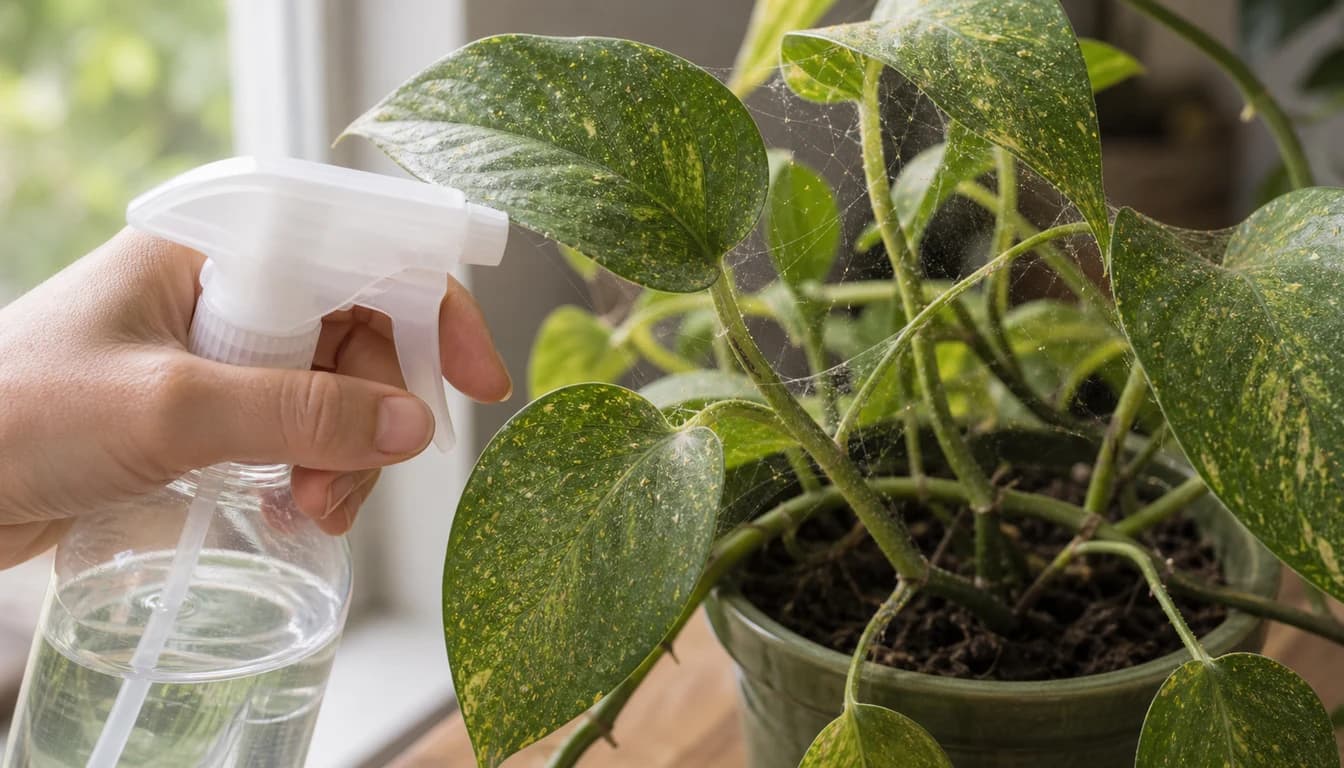
Spider mites are tiny arachnids that feed by piercing leaf cells; the two unmistakable signs are stippling on leaves (tiny pale dots that coalesce into yellowing) and fine webbing on undersides of leaves and between stems.
Start with a quick severity check so you know whether a water-only approach will suffice or whether you need labeled products and basic indoor plant care adjustments.
Severity checklist: look for visible webbing, heavy stippling across many leaves, and leaf drop. If you see only a few speckled leaves and no webbing, a water spray and increased humidity can often stop a small population.
Warning: Spider mites reproduce quickly in warm, dry conditions. Address the first signs promptly to avoid a larger infestation that needs stronger controls. This guide walks you through an initial inspection and setup, a washing and removal routine, choosing between insecticidal soap and horticultural oil, safe application steps, how often to repeat treatments, and quarantine and sanitation steps to protect nearby plants. First-step action: give each infested plant a thorough water spray to dislodge mites before applying any labeled product.
pest_controlInitial assessment
Before you treat, isolate the affected plant and inspect every plant nearby; mites spread easily between pots. Move the infested plant to a sink, tub, or outdoors if weather and plant tolerance allow and consider post-treatment feeding based on recovery needs described in feeding after stress.
Quick visual test: tap a discolored leaf over a sheet of white paper and look for tiny moving dots so small you might miss them without magnification; a 10-20x hand lens or phone camera zoom helps.
Look where mites like to hide: check the undersides of leaves, leaf axils, and new growth. Webbing often appears first on the undersides or along petioles.
Decide treatment intensity: no webs and few leaves affected = start with water spray; webs or many leaves affected = plan for washing plus a labeled soap or oil application.
Tip: Take a photo of the worst leaves. Comparing over time shows whether your treatment is reducing stippling and webbing. Tools to gather now: a strong spray bottle or hose nozzle, a soft-bristled brush or old toothbrush, towels, a clean tray or basin, labeled insecticidal soap or horticultural oil (read labels for indoor/houseplant safety), and disposable gloves, especially if you care for plants with very sensitive foliage types.
Use the checklist to separate setup from treatment so you do not move mites between pots while gathering supplies.
- fiber_manual_recordGather Tools: spray bottle, towels, and labeled products (soap or oil).
- fiber_manual_recordInspect Plant Conditions: underside of leaves and stems for stippling and webbing.
- fiber_manual_recordPrepare Treated Plants: isolate if possible to limit spread during treatment.
Guide — See AlsoHow to Get Rid of Fungus Gnats for GoodStep‑by‑step, practical methods to eliminate fungus gnats in houseplants and seedlings, fix the soggy soil that attracts
chevron_rightpest_controlStep-by-step action
The core approach combines mechanical removal (wash and prune) with contact treatments that require good coverage. Follow this order to maximize safety and efficacy and take extra care on thin-skinned leaves like those found on some delicate leaf surfaces.
- 1Move and quarantine: isolate the plant away from others and place a towel or tray under it to catch washwater.
- 2Initial wash: use a strong, targeted spray of lukewarm water to dislodge mites. Aim the spray at the undersides of leaves and the crown; repeat until the runoff looks clearer. For compact foliage, gently support leaves to avoid breaking them.
- 3Prune heavily infested parts: remove and dispose of heavily webbed or brown leaves in sealed trash-do not compost them. Cutting back reduces population and improves subsequent spray coverage.
Once the plant is cleaner, switch from removal to contact coverage.
- 1Choose and apply a contact product: when washing alone is insufficient, apply either insecticidal soap or horticultural oil labeled for indoor use. These products kill mites by contact and must coat mites directly; avoid applying oil to plants with known sensitivity such as many succulent sensitivity without a small test patch.
Insecticidal soap: mix and spray to thoroughly wet both sides of all leaves and stems. Soap acts quickly but has no residual effect-repeat treatments are essential.
Horticultural oil: works by smothering mites and can have short residual activity; always follow label concentration and temperature limits.
Now handle timing and follow-up so eggs do not restart the infestation.
- 1Spray technique: apply in the morning or evening, not in direct hot sun or on drought-stressed plants. Coat undersides, leaf axils, and new growth; use a spray bottle or low-pressure sprayer for even coverage.
- 2Post-treatment rinse (optional): some sensitive plants may benefit from a light rinse 6-12 hours after treatment if label allows. For most houseplants, leave the product on as the label directs to maximize contact time.
Repeat treatments are the difference between a temporary knockdown and actual control.
- 1Repeat: plan for at least 2-3 applications spaced per label directions-commonly every 7-10 days-until no active mites or new stippling appears for two consecutive checks.
That final check keeps the repeat schedule tied to actual mite activity, not just the calendar.
Tip: If you treat multiple plants, do the most infested last and disinfect gloves and tools between plants to avoid moving mites around.
Use the recap below as a treatment-day check before you put the plant back with the rest of your collection.
- fiber_manual_recordWash the plant with a strong spray of water to reduce populations.
- fiber_manual_recordApply labeled insecticidal soap or horticultural oil according to label directions.
- fiber_manual_recordCover both top and undersides of leaves; repeat as needed and monitor.
Email Updates
Join the KnowTheYard update list
Zone-specific advice, seasonal reminders, and new plant guides — no filler.
pest_controlDon’t undermine control
Some common errors slow or reverse progress. Avoid them to make your treatment plan work the first time.
- fiber_manual_recordSkipping undersides of leaves: mites hide there; failure to coat undersides is the single biggest reason treatments fail.
Using broad-spectrum miticides unnecessarily: these can kill predatory mites and other beneficials and may lead to future flare-ups or resistance issues-this is similar to the plant-health tradeoffs seen when overcorrecting for soil problems like overwatering risks.
- fiber_manual_recordTreating in bright, hot conditions: oils and soaps can burn leaves when applied in hot sun; always follow label timing for temperature and light.
- fiber_manual_recordExpecting one treatment to finish the job: because eggs survive, repeated treatments at label intervals are required until new damage stops appearing.
Those mistakes all come back to the same principle: contact products only work when coverage, timing, and repeat intervals line up.
Warning: Never use products that are not labeled for houseplants or indoor use on indoor foliage. Plant sensitivity varies widely; when in doubt, test a hidden leaf and wait 48 hours. Common misstep: overusing any product can stress plants; follow label intervals and coverage.
Guide — See AlsoDawn Dish Soap for Grubs: What Actually WorksLearn when Dawn dish soap helps with lawn grubs, when it does not, and how to use it safely so you do not damage grass,
chevron_rightpest_controlIf it isn’t working
If your plant still shows live mites or new stippling after following the core steps, check these common causes and fixes.
- fiber_manual_recordIncomplete coverage: review photos from before and after treatment and confirm you coated undersides and axils. Repeat application with improved technique.
Wrong product or label mismatch: confirm the product label explicitly lists the plant type or indoor use. Some tropical foliage is sensitive to oils or soaps-switch to a labeled alternative or use physical control only.
- fiber_manual_recordReinfection from nearby plants: quarantine the treated plant and re-check neighbors; treat any showing early signs to stop reinfestation.
- fiber_manual_recordEggs hatched between treatments: extend treatment sequence for another 2-3 cycles to cover additional hatches; focus on thorough coverage each time.
If the pattern still does not improve, step back and check whether the product choice or plant sensitivity is the real blocker.
Note: If you’ve used a broad-spectrum miticide and mites rebound strongly, beneficial predators may have been lost. In such cases, switch to targeted contact treatments and increase mechanical removal and sanitation. If all labeled contact options fail and the plant is severely infested, consider replacing the plant or consulting a professional. For valuable specimen plants, a local arborist or plant health specialist can offer options like targeted miticides or biological controls appropriate for indoor settings.
Use the next check as a reset point before changing products again.
- fiber_manual_recordIf mites persist, verify product is labeled for houseplants and check coverage.
- fiber_manual_recordReassess infestation level and consider quarantine until clear.
- fiber_manual_recordCheck for mislabels or resistance and adjust product or method.
calendar_monthSeasonal patterns
Indoor spider mite pressure often increases in fall and winter when indoor heating reduces humidity and plants move into slower growth. Mites favor warm, dry air; raising humidity and improving airflow reduces their reproductive rate, especially during warm dry seasons indoors.
- fiber_manual_recordHumidity adjustment: increasing relative humidity to 40-60% around houseplants lowers mite activity; use trays, grouping plants, or a humidifier.
- fiber_manual_recordLight and temperature: cooler indoor temps and steady light reduce the speed of mite population growth; avoid sudden heat spikes near vents.
- fiber_manual_recordActive monitoring windows: intensify inspections during the first months of indoor heating and during seasonal shifts when plants are moved or repotted.
Those seasonal changes do not replace treatment, but they make the plant less inviting while you repeat sprays.
Tip: Regularly wipe leaves or hose plants when humidity is low-this physical moisture disrupts mite activity and removes dust that shelter mites.
Keep the prevention routine simple enough that you will actually repeat it.
- fiber_manual_recordSeasonal adjustments for indoor climates affect treatment timing.
- fiber_manual_recordMaintain consistent indoor humidity to inhibit mite reproduction.
Guide — See AlsoHow Much Neem Oil Per Gallon of Water for Safe Pest ControlClear mixing ratios for neem oil per gallon of water, plus how to adjust for garden beds and houseplants without burning
chevron_rightcalendar_monthWhen to repeat treatments
Spider mite control relies on repeated contact treatments because eggs are usually unaffected. Schedule and duration depend on product label and infestation severity; general indoor timing follows the same basic timing principles indoors of repeating at regular intervals to match life cycles.
Standard schedule: every 7-10 days is a common interval for insecticidal soaps and horticultural oils until no live mites or new stippling is visible for two consecutive checks.
- fiber_manual_recordNumber of cycles: expect 3-6 treatments spread over several weeks for moderate to heavy infestations; minor infestations may clear in 2-3 treatments.
- fiber_manual_recordMonitoring between treatments: inspect 48-72 hours after each application for live mites and again just before the next scheduled spray.
Treat the label as the upper authority when product timing differs from this general schedule.
Note: Always follow the product label’s maximum application rates and minimum interval days-labels are legal instructions and include safety guidance for sensitive plants and indoor use.
pest_controlWhat to have on hand
A few inexpensive tools make treatment faster and reduce mistakes.
- fiber_manual_recordLow-pressure sprayer or spray bottle: for even coverage of undersides and axils without damaging foliage.
- fiber_manual_recordSoft brush or toothbrush: to gently loosen webs and eggs on textured leaves before washing.
- fiber_manual_recordDisposable gloves and old towels: gloves protect your hands from residue; towels cut down on mess and reduce spread.
- fiber_manual_recordHand lens (10-20x) or smartphone macro: for confirming live mites and watching treatment progress.
Keep the kit separate from normal watering tools while mites are active.
Tip: Keep a separate set of tools (sprayer and brush) for infested plants to prevent moving mites on contaminated equipment and follow product safety guidance if you also grow product safety tips that react differently to oils and soaps.
Before each treatment, confirm the essentials are ready and clean.
- fiber_manual_recordSpray bottle for uniform coverage.
- fiber_manual_recordTowels for drying and cleanup.
- fiber_manual_recordLabel-safe products: insecticidal soap or horticultural oil.
Guide — See AlsoNatural Pest Control for Gardens That Actually WorksPractical, chemical-free ways to keep bugs, deer, and other pests from wrecking your garden, using simple tools and ingr
chevron_rightpaletteWhat to choose
Pick products labeled for indoor houseplant use and for spider mites when possible. Two safe and commonly recommended categories are insecticidal soaps and horticultural oils.
Insecticidal soap: an effective contact control when applied thoroughly. Choose a product labeled for spider mites and indoor use; mix per label and coat both leaf surfaces.
- fiber_manual_recordHorticultural oil (mineral or paraffinic oil): recommended for smothering mites; use light oils formulated for foliage and follow temperature restrictions on the label.
Avoid broad-spectrum miticides unless necessary: these can eliminate beneficial insects and sometimes cause resistance; reserve them for severe, persistent cases and only if labeled for houseplants.
Warning: If your plant is listed as sensitive on a product label, do a small test on a hidden leaf and wait 48 hours before treating the entire plant-watch for signs similar to product phytotoxicity signs. If you prefer a non-chemical route, the repeated water-spray method combined with pruning and quarantine can work for small infestations but requires more diligence.
pest_controlKeep it from coming back
Sanitation and routine checks prevent reinfestation across multiple plants. Make these steps part of your regular plant care and apply quarantine tactics used even for small kitchen plants like kitchen herb quarantine.
- fiber_manual_recordQuarantine new or returning plants: keep new purchases or plants from outdoors isolated for 2-4 weeks while you inspect for pests.
- fiber_manual_recordRegular inspections: check vulnerable species weekly during high-risk seasons and monthly otherwise. Focus on undersides and new growth.
- fiber_manual_recordClean shared surfaces: wipe down plant stands, shelves, and saucers; disinfect pruning tools between plants.
Discard or deeply treat badly infested soil: mites sometimes hide in potting media; repotting with fresh mix is often safer than trying to salvage heavily infested pots.
Tip: Keep a log of treatments and dates for each plant. Consistent records make it easier to know when eggs should have hatched and when to repeat treatments, and will help you track differences in pest pressure between herbs such as herb susceptibility differences.
Use that log to decide when a plant is safe to rejoin the rest of the collection.
- fiber_manual_recordQuarantine infested plants if possible.
- fiber_manual_recordSanitize tools and workspace after each treatment.
- fiber_manual_recordMonitor all plants for renewed activity and repeat checks.
Guide — See AlsoGrass Weeds Identification Pictures for Real LawnsLearn how to identify common grass-like weeds in your lawn using clear photo cues, simple traits, and side‑by‑side compa
chevron_rightpest_controlFurther reading
For broader pest and plant care knowledge, check related how-to guides that pair well with spider mite control.
- fiber_manual_recordHouseplant pests: stepwise guides for aphids, mealybugs, and scale to prevent misidentification.
- fiber_manual_recordRepotting and soil hygiene: when to repot an infested plant and how to clean pots and tools.
- fiber_manual_recordHumidity management: practical ways to raise humidity safely around houseplants to reduce mite pressure.
Read those before buying another spray so the next step matches the pest you actually have.
Note: If you regularly maintain many houseplants, a routine of quarantine for new plants and a simple weekly inspection will prevent most outbreaks before they require chemical steps; also review advice on long-term soil health for compost and media practices.
Use these follow-ups to avoid confusing mites with other indoor pest problems.
- fiber_manual_recordManaging mealybugs on indoor plants
- fiber_manual_recordIdentifying spider mites in greenhouses
- fiber_manual_recordChoosing safe pesticides for houseplants
tips_and_updates
Pro Tips
- check_circleAlways read and follow the product label-labels provide legal and safety instructions specific to each product and plant type.
- check_circleTest sprays on a small, hidden leaf when trying a new product on a sensitive species and wait 48 hours to check for phytotoxicity.
- check_circleUse a magnifier or phone camera to confirm live mites; stippling alone can be mistaken for nutrient or light stress.
- check_circleTreat the most infested plant last when working through a group to reduce chances of moving mites around on tools or gloves.
- check_circleGroup plants with similar humidity needs together to reduce dry conditions that favor mite reproduction.
quiz
Frequently Asked Questions
What are the definitive signs of spider mites on houseplants?expand_more
Look for stippling on leaves-tiny pale or yellow speckles where mites have fed-and fine webbing on the undersides of leaves and between stems. A hand lens will reveal tiny moving dots on the leaf surface or in the webs.
What is the first-step treatment for spider mites on houseplants?expand_more
Start with isolation and a strong wash: move the plant away from others, spray undersides and crowns with a firm stream of lukewarm water to dislodge mites, and prune heavily webbed foliage. If damage or webbing is moderate to heavy, plan to follow up with a labeled insecticidal soap or horticultural oil.
Which products are safe for houseplants and how should they be applied?expand_more
Use products labeled for indoor houseplants: insecticidal soap and horticultural oil are the most common. Apply as directed on the label, coating both leaf surfaces and new growth. Avoid hot sunlight, test on a hidden leaf for sensitive species, and respect label intervals for repeat applications.
How often should treatments be repeated and for how long?expand_more
Follow the product label, but a common approach is to treat every 7-10 days and continue until no live mites or new stippling appears for two consecutive checks. Moderate infestations often need 3-6 treatments over a few weeks.
How can I prevent reinfestation and spread to other plants?expand_more
Quarantine new plants for 2-4 weeks, inspect weekly during risk seasons, disinfect tools and surfaces, and consider repotting heavily infested pots. Grouping plants by humidity needs and increasing relative humidity reduces mite reproduction.
Related Guides

Companion Planting Pest Control for Any Garden
Learn how to use companion planting for pest control in vegetable and flower beds, so you can cut down on sprays and let your plants defend each other naturally.
11 min read
Dawn Dish Soap for Grubs: What Actually Works
Learn when Dawn dish soap helps with lawn grubs, when it does not, and how to use it safely so you do not damage grass, soil life, or nearby plants.
10 min read
Deer Resistant Plants That Actually Hold Up
Practical ways to use deer resistant plants so your yard is not a nightly buffet, plus how to combine plants and barriers for real protection.
11 min read