Pothos vs Monstera
Your room decides this one before your taste does. Pothos lives on shelf edges and hanging hooks, while Monstera wants an open floor corner and a pole to climb.
Monstera deliciosa
Monstera

ruleDecision Summary
Before you compare leaves, measure the spot you want to fill. This is a decision about physical space, not about which plant is harder to keep alive. Both Pothos and Monstera are common popular houseplants that can thrive for you, but only one will fit the shape of the space you actually have. Pull out a tape measure and check the width, the height, and whether you have floor room or only edge room.
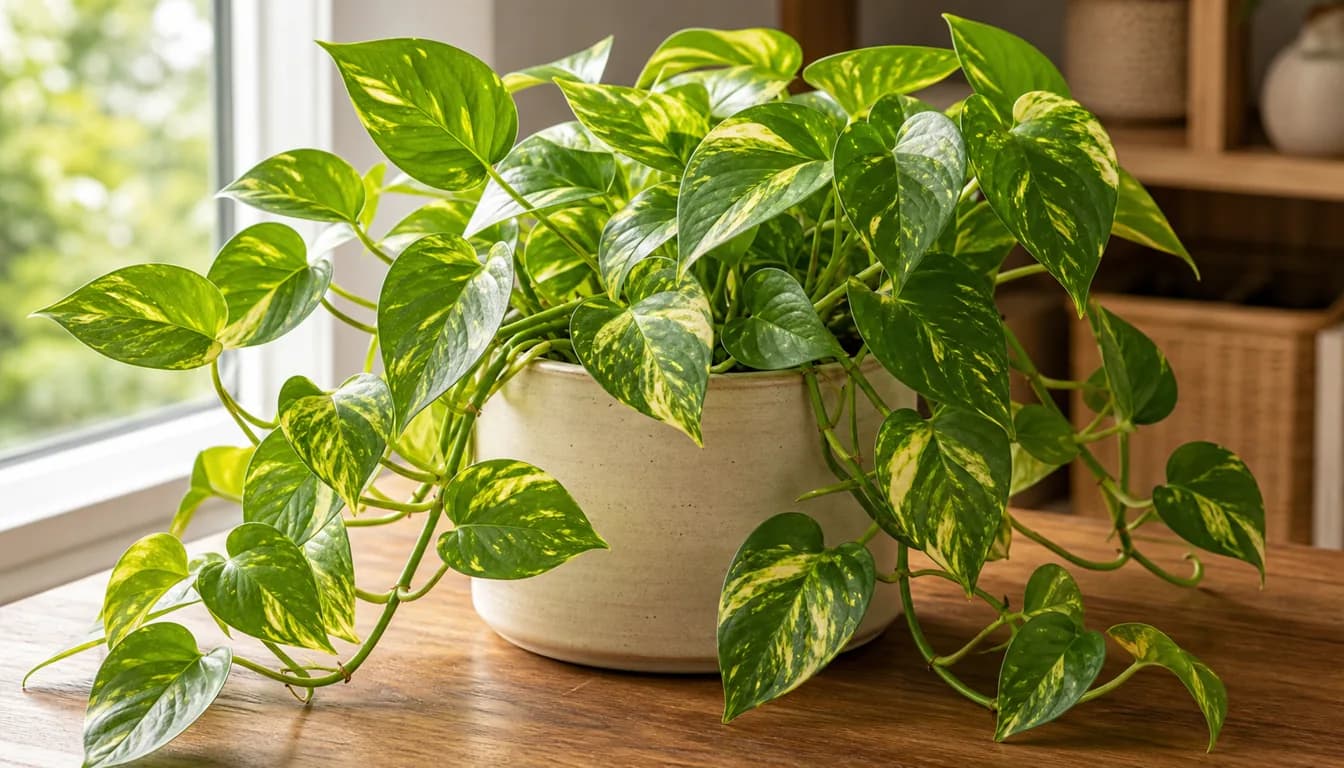
Pothos asks for almost nothing structural. It drapes off a shelf edge, a cabinet top, or a wall hook, and the vines fall wherever gravity takes them. Monstera works the other way. It needs an open floor corner, a sturdy pole to climb, and bright indirect light before it does anything impressive.
The big split leaves that sell a Monstera are earned, not handed out. Those holes and slits, called fenestration, appear only as the plant matures, gets enough light, and has support to climb. Put a young Monstera in a dim corner and you get small solid leaves and a plant that leans toward the nearest window. Anyone hoping for dramatic holes in a dark room will be disappointed.
How to Use This Guide
Match your primary use case first, then review the side-by-side specs table. The use-case cards explain where one option has a practical advantage; if your situation is different, let the specs and tradeoffs guide the choice.
Measure the exact spot you want to fill before you pick. If it is a shelf edge, a cabinet top, or a hanging hook, buy Pothos and be done. If it is an open floor corner with bright light and room for a pole, Monstera will earn it. The plant follows the space you have, not the space you wish you had.
KnowTheYard Editorial Team
Source-backed editorial note
compare_arrowsSpecific Use Cases
The following use cases focus on scenarios where the tradeoff actually matters. Each card names the stronger fit for that situation and explains the catch.
A winner only applies when that scenario matches your conditions. If neither scenario fits, check the side-by-side specs for the more relevant constraints.
Shelf edges and hanging hooks
No floor room to spareWinner: Pothos
Pothos was built for edges. Set the pot on a high shelf or a cabinet and let the vines trail down, with no floor space required. When you run out of surface, add a wall hook and hang it the way you would a spider plant. The plant asks for nothing more than a spot to spill over.
Monstera cannot do this. Its leaves grow up and out on stiff stems, so it topples off a shelf instead of trailing. Perching a mature one on a narrow ledge just leaves you with a lopsided plant reaching for balance.
An empty floor corner to fill
Bare vertical spaceWinner: Monstera
Pothos in a floor pot looks thin and lost. It has no upright structure of its own, so the corner stays mostly empty air above a small mound of vines. It reads as filler rather than a focal point.
Monstera is exactly what a bare corner is asking for. One plant in a large pot fills vertical and horizontal space at once, and a mature one can hold a corner the way a small tree does. Give it the floor and it pays you back.
Willing to run a moss pole
Staking and tyingWinner: Monstera
Pothos will climb a pole if you give it one, but the leaves stay about the same size whether it climbs or trails. You can skip the pole and lose nothing but height, which keeps setup simple.
Monstera grows bigger, more split leaves as it climbs a moss pole, because the support triggers mature growth. Skip the pole and you skip most of what makes a Monstera worth the floor space, the same lesson climbing aroids like heartleaf philodendron teach. If you will not commit to staking and tying, pick the other plant.
Your light budget for leaf splits
How bright is the spotWinner: Depends on your light
Pothos does not care much about light. It holds solid green leaves in a low-light hallway and grows a little faster in brighter spots, but the look barely changes. If your chosen corner is dim, this is the safe pick.
Monstera splits its leaves only with bright indirect light for most of the day. In a low-light room it makes small, hole-free leaves and stretches toward the window, so match Monstera's leaf needs to a bright spot near a large window or accept a plain-leaf plant that never fenestrates.
Moving and repotting reality
How often you rearrangeWinner: Pothos
Pothos is easy to relocate. Lift the pot, coil the vines, and carry it to a new shelf in one hand. Repotting is quick, and splitting it into fresh pots is simple enough to do on a whim.
A mature Monstera is heavy and awkward. Thick aerial roots grip the pole and dig into the soil, a wide pot of dense mix adds real weight, and moving day means wrestling a broad plant through doorways. Rehoming one is a genuine chore, not a quick lift.
paymentsCost & Upkeep
Long-term cost extends beyond the purchase price. Factor in ongoing inputs, replacement risk, equipment, and time so the cheaper option at checkout does not become the more expensive one to keep.
For Pothos and Monstera, the real cost difference usually shows up after purchase: water, soil, fertilizer, pruning, replacements, and how easily the plant or system recovers from mistakes.
ecoPothos
- check_circleA starter Pothos runs about $8–$20, and a plain basket or wall hook to hang it costs only a few dollars more.
- check_circleYou reuse the shelf edges and hooks you already own, so filling several spots adds almost no furniture cost.
- check_circleThe main recurring expense is swapping a stretched plastic basket every 1–2 years, which is cheap.
- cancelLong vines can look messy without occasional pruning, though the trimmings root for free in water.
- cancelIf you later want height, an optional trellis or pole adds $10–$25.
ecoMonstera
- check_circleA young Monstera costs about $25–$50, still fair for a plant that anchors a whole corner.
- cancelA large floor pot, a saucer, and a sturdy moss pole add $40–$80 to the setup before the plant settles in.
- cancelAs it matures you repot into bigger, heavier containers, and each upgrade costs more in soil and pot.
- cancelOutgrowing a small apartment can force a rehoming every 3–5 years, which means finding a new owner or a bigger room.
- check_circleOne healthy plant can hold its corner for 5–10 years, so the yearly cost of that presence stays low.
ecoResource Fit
Footprint here means two things: the physical space the plant takes and the rescue moves you make to keep it comfortable. A plant that fits its spot from the first day needs no extra hardware, no relocations, and no oversized replacement pots.
A Monstera in the wrong room turns into steady work. You restake leaning stems, rotate it toward light, and eventually shuffle it to a bigger corner or a new home, and a stressed one often shows brown leaf spots along the way. Each of those fixes adds a pole, a pot, or a car trip, and the waste stacks up faster than the plant grows.
Pothos matches edges without any of that. It reuses shelves and hooks you already own, roots its own replacements in a glass of water, and rarely outgrows the spot you gave it.
Pothos spreads downward from a shelf edge. A mature Monstera claims several feet of floor and keeps widening.
Monstera needs a moss pole and ties for full split leaves. Pothos needs nothing structural to look its best.
A Pothos pot lifts with one hand. A mature Monstera carries a heavy pot, dense mix, and pole-gripping roots.
Pothos looks the same in a dim room. Monstera makes its fenestrated leaves only in bright indirect light.
Pothos trails downward off a shelf or hook. Monstera climbs upward on stiff stems toward the light.
Pothos gives many small cuttings from its close nodes. Monstera yields fewer, larger pieces from thicker stems.
table_chartSide-by-side Specs
The rows that matter most describe how much room each plant claims and how it holds itself up. Pothos stays compact at the pot and spends its length trailing down, so its mature reach is vertical and off to one side. Monstera pushes out into the room on stiff stems and needs a pole to carry that weight, which is why its floor demand climbs as it ages.
One row drives the rest: light for full leaves. A Monstera grows its large split leaves only when it gets bright indirect light and something to climb, and both have to hold for months. Drop the light or skip the pole and you get a smaller, solid-leaved plant, while a trailing Pothos looks the same in almost any corner. Check your watering rhythm too, since Monstera's larger leaves lose water faster than Pothos vines.
Source Notes
Metrics summarize published care ranges and common cultivar behavior. Individual performance varies by cultivar selection, microclimate, and management intensity. Consult our methodology for source standards and update practices.
| Metric | Pothos | Monstera |
|---|---|---|
| straighten Mature size indoors | Vines 6–10 ft long | 3–8 ft tall and wide |
| crop_free Floor footprint | Minimal, sits on edges | Several sq ft of floor |
| account_tree Support needed (pole) | None, trails freely | Moss pole for big leaves |
| light_mode Light for full leaves | Fine in low light | Bright indirect required |
| water_drop Watering slack | Forgives missed weeks | Dislikes long dry spells |
| yard Trailing vs climbing | Trails and hangs down | Climbs upward on stems |
| fitness_center Repot effort / weight | Light, one-hand lift | Heavy, awkward to move |
| pets Pet toxicity | Mildly toxic if chewed | Mildly toxic if chewed |
| content_cut Propagation size | Many small cuttings | Few large cuttings |
| air Humidity | Average home humidity | Prefers higher humidity |
| eco Growth speed | Fast | Moderate |