
Wateringschedule11 min read
How to Water Potted Plants Without Guessing
Learn a simple, repeatable way to water potted plants based on soil and pot size, not random schedules, so you avoid root rot and constant drooping.
Most potted plants die from watering mistakes, not bugs or bad light. The good news is you can water almost any pot by watching the soil and weight instead of a calendar.
The short version: pot size, soil mix, drainage, and plant type all change your watering routine. We will use common containers like herbs, patio tomatoes, and indoor plants such as trailing pothos vines as real examples. You will finish with a clear, repeatable system instead of guessing every time you pick up the watering can.
lightbulbKnow What You Are Watering
Start with the plant, not the watering can. A thirsty peace lily behaves nothing like a jade in the same size pot.
Thin leaves like peace lily foliage lose moisture fast. Thick leaves such as snake plant leaves or ZZ stems store water and can wait longer.
Fast growers dry pots quickly too. Container tomatoes can empty a patio container in hot weather. Potted basil also uses water faster than a slow shrub.
Watering starts with plant type, growth speed, and light.
water_dropUse the Finger and Weight Test Every Time
Fixed schedules kill more pots than they save. Some dry in two days; others stay wet for a week. Use the finger test first and pot weight second. Check soil 1 to 2 inches down. If it is still cool and slightly damp, wait. If it feels dry and crumbly, water average plants like marble queen pothos. Moisture lovers can be watered when the top 0.5 inch dries. - Finger depth: 1-2 inches for most pots - Moisture lovers: water sooner - Dry lovers: wait for a deeper dry-down
Guide — See AlsoBest Time to Water Flowers for Stronger BloomsLearn exactly when to water flowers so blooms last longer, plants stay healthier, and you are not wasting water. Covers
chevron_rightpotted_plantMatch Pot Size, Material, and Drainage
Pot size and material change everything. Small pots dry fast; big tubs stay wet much longer. Terracotta wicks moisture out. Plastic and glazed ceramic hold it longer. That is helpful for peace lilies but risky for succulents. Drainage holes matter more than any pot material. Without them, even healthy roots in fiddle leaf figs or rubber plants can rot. > Standing water at the bottom is a root-rot setup, not a backup reservoir.
Email Updates
Join the KnowTheYard update list
Zone-specific advice, seasonal reminders, and new plant guides — no filler.
showerWater Deeply Until It Drains, Then Stop
Shallow sips keep roots near the surface, which makes plants dry out faster and flop in heat. Deep watering encourages roots to fill the whole pot.
For pots with drainage holes, water slowly over the soil surface until you see a steady stream coming out the bottom.
Let that extra water drain fully from the saucer within 15 minutes. This flushes out built up salts, especially if you feed with liquid fertilizer on plants like flowering peace lilies or patio potted peppers.
For large containers, it can help to water in two passes. Give a first soak so peat based mixes can rehydrate, then come back in five minutes and water again until it drains.
Do not leave pots sitting in a full saucer. Pour off any standing water after the initial drain.
That drain-and-dump step matters more than the exact amount you poured.
- fiber_manual_recordAim for runoff: water until you see drainage from the bottom
- fiber_manual_recordDrain time: empty saucers after 10-15 minutes
- fiber_manual_recordTwo pass method: short soak, pause, then final deep watering
- fiber_manual_recordNo holes pots: add water in small amounts and stop before you see pooling on top
- fiber_manual_recordSalt flush: give extra water once a month to clear fertilizer buildup
Guide — See AlsoHow to Water Succulents Without Rotting the RootsLearn how often to water succulents, what a proper soak-and-dry cycle looks like, and how light, pot type, season, and s
chevron_rightcalendar_monthAdjust Watering by Season and Location
Season and location change watering speed more than most people expect. A sunny patio pot in July dries far faster than the same pot in October. Indoor plants slow down in winter too. Low light and dry heat make people overwater peace lilies and snake plants out of habit. Use a schedule only as a check reminder. Then confirm with soil feel and pot weight. Do not water by the calendar alone.
warningSpot and Fix Overwatering and Underwatering
Overwatered and underwatered pots can both wilt, so check soil before reacting. Soft, heavy leaves and dark soil usually point to too much water. That is common on pothos vines and other foliage plants kept constantly damp. Thin, papery leaves and soil pulling from the pot edge usually mean the pot dried too far. Mushy roots on ZZ plants signal the opposite problem and need a longer dry period. A stressed monstera often recovers faster when you fix moisture and improve airflow together.
Guide — See AlsoWorst Time to Water Plants and What To Do InsteadKnow exactly when NOT to water your garden, lawn, and houseplants so you avoid disease, pests, and weak roots.
chevron_rightecoWater Needs for Different Plant Types
Not all potted plants want the same treatment from your watering can. Roots evolved for different climates, and their pots should mimic that pattern as closely as we can manage.
Succulents and thick-leaved plants store water in fleshy leaves and stems. Potted varieties like small jade trees and simple aloe clumps prefer a full dry-down between waterings instead of constant moisture.
Tropical foliage plants thrive on steady, even moisture. Think of broad-leafed options like patterned calatheas or flowering peace lilies that droop quickly when the soil goes dry but sulk in swampy pots.
Blooming outdoor annuals and many herbs sit in the middle. A pot of sunny basil or colorful petunia (if you grow flowers) wants consistent moisture without staying saturated overnight.
- fiber_manual_recordSucculents and cacti: Use a gritty mix, water thoroughly, then wait until soil is dry at least halfway down.
- fiber_manual_recordTropical foliage: Keep the top 1 inch barely moist, never fully bone dry or soupy.
- fiber_manual_recordHerbs and veggies: Aim for evenly damp soil that dries slightly on top between waterings.
- fiber_manual_recordWoody shrubs and trees in pots: Give deep, less frequent soakings so water reaches the full root ball.
For thirsty fruiting plants like container tomatoes or deck strawberries, consistent moisture is tied directly to yield and flavor. Let them dry too hard and you get blossom end rot, split fruit, and bitter flavors.
If your collection mixes plant types in one big tub, match companions with similar thirst. Pair drought-tolerant lavender with low-water sedums. Do not place that same dry mix around heavy-drinking hydrangeas. That keeps you from trying to please desert and jungle roots in the same container.
water_dropSet Up Drip, Saucers, and Self-Watering Systems
Automatic watering only helps if the setup matches the plant. Simple drip lines are reliable for peppers, cucumbers, and porch planters because they wet soil without soaking foliage. Self-watering pots suit mint or blueberry containers better than dry-soil plants. Dump saucers within 30 minutes so roots do not sit in stale water. Label timers and valves clearly if someone else may water for you. A system is only useful if you still check soil and adjust by season.
Guide — See AlsoWhat Does an Overwatered Plant Look Like (With Photos in Mind)Learn the real signs of overwatering, how they differ from underwatering, and what to check on leaves, stems, and soil b
chevron_rightlightbulbWatering Aftercare and Long-Term Habits
What you do in the minutes after watering can keep roots healthy or quietly set them up for problems. A quick check and a few habits go a long way.
Start by dumping any standing water from saucers once runoff stops. Constant puddles invite fungus gnats and root issues, especially in indoor collections of spider plants and vining philodendrons.
Glance at leaves as you put the watering can away. Dusty, sticky, or webbed foliage can mean pests like spider mites, which are easier to handle early using a focused indoor mite treatment routine.
Keep a simple watering log for your fussy plants. A notebook or phone note with dates for a touchy fiddle leaf fig or indoor rubber tree helps you see patterns before problems show.
- fiber_manual_recordLabel date: Note the last full soak on the pot tag or a piece of tape.
- fiber_manual_recordNote symptoms: Record droop, yellowing, or crispy edges when you spot them.
- fiber_manual_recordAdjust rules: Change your "water when" rule if the plant stays unhappy after two adjustments.
- fiber_manual_recordReview monthly: Skim your notes every 4 weeks and tweak schedules with the seasons.
As your collection grows, group plants by watering style. Place drought-tolerant species like tough snake plants together and thirsty foliage such as humidity-loving ferns in one cluster.
These watering groups make it easier to follow more detailed guides like houseplant-specific schedules without feeling overwhelmed. Over time, small habits like logging, grouping, and quick leaf checks turn watering from guesswork into a predictable routine.
tips_and_updates
Pro Tips
- check_circleGroup plants by thirst so you are not checking every single pot every day.
- check_circleUse a chopstick or skewer as a moisture probe in deep or crowded containers.
- check_circleMark the inside of your watering can with a line that equals one typical deep watering for your biggest pot.
- check_circleWater early in the day so leaves dry quickly and fungal issues are less likely.
- check_circleRotate hanging baskets and railing planters, since windy spots dry out faster than sheltered corners.
- check_circleSet a reminder to check, not water, so you still follow the finger test each time.
- check_circleSwitch moisture loving plants into plastic or ceramic and dry lovers into terracotta to make watering easier.
quiz
Frequently Asked Questions
How often should I water potted plants?expand_more
There is no single schedule that fits every pot. Use the finger and weight test and water when the top 1-2 inches of soil are dry for most foliage plants, or deeper for succulents and cacti.
Is it better to water potted plants in the morning or evening?expand_more
Morning is usually best. Leaves dry faster, which reduces disease risk, and plants are hydrated before the heat of the day. Indoors, time of day matters less than watering thoroughly and letting extra water drain away.
Can I use ice cubes to water potted plants?expand_more
Ice cubes give very uneven moisture and can chill roots, especially in tropical plants. It is safer to water with room-temperature water until it drains from the bottom, then empty the saucer within about 30 minutes.
Why does water run straight through my pot without soaking in?expand_more
Very dry soil can pull away from the pot wall, so water races down gaps instead of soaking the root ball. Water slowly in stages, or bottom-water the pot in a basin for 10-20 minutes so the mix can rehydrate.
Should I mist my potted plants instead of watering?expand_more
Misting does not replace proper watering. It only adds temporary surface moisture. Water the soil thoroughly for hydration, then use a humidifier or pebble tray if you need higher humidity for plants like calatheas or ferns.
menu_book
Sources & References
Related Guides
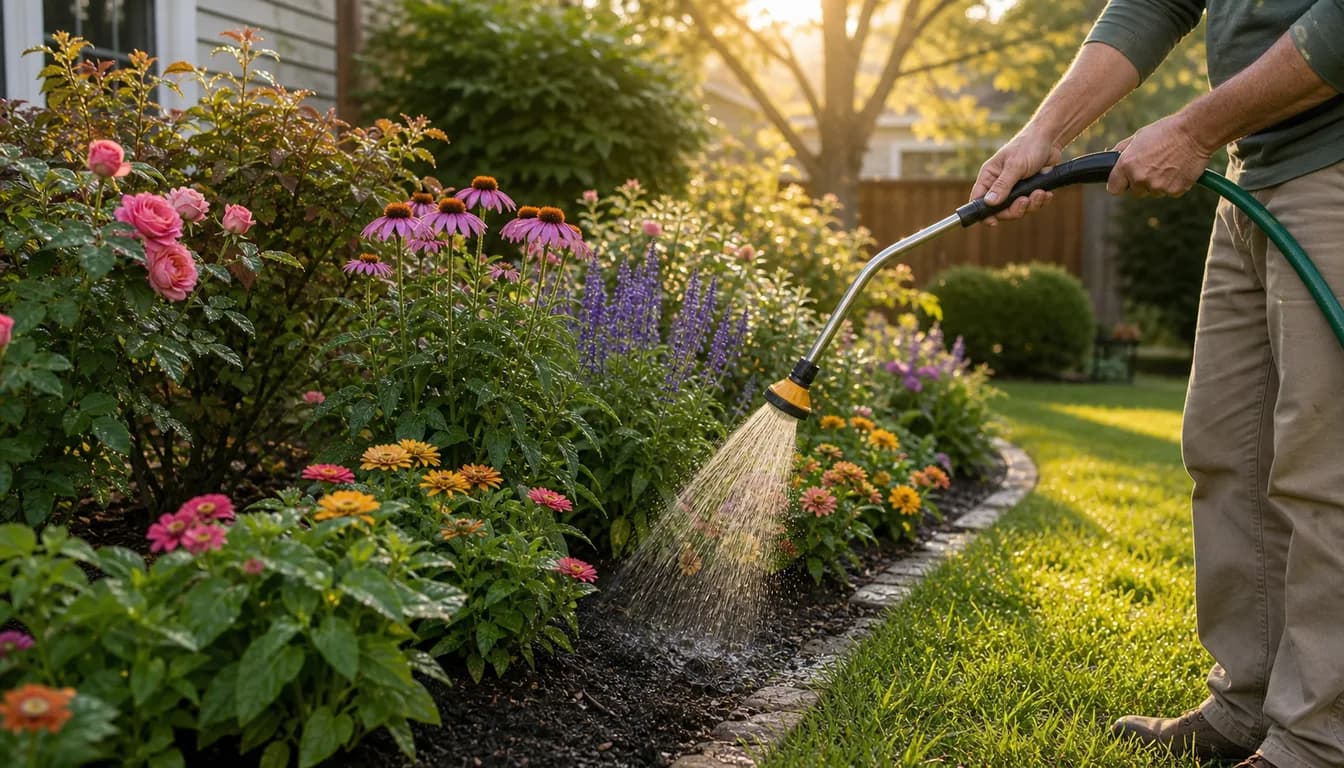
Best Time to Water Flowers for Stronger Blooms
Learn exactly when to water flowers so blooms last longer, plants stay healthier, and you are not wasting water. Covers beds, containers, and hanging baskets.
10 min read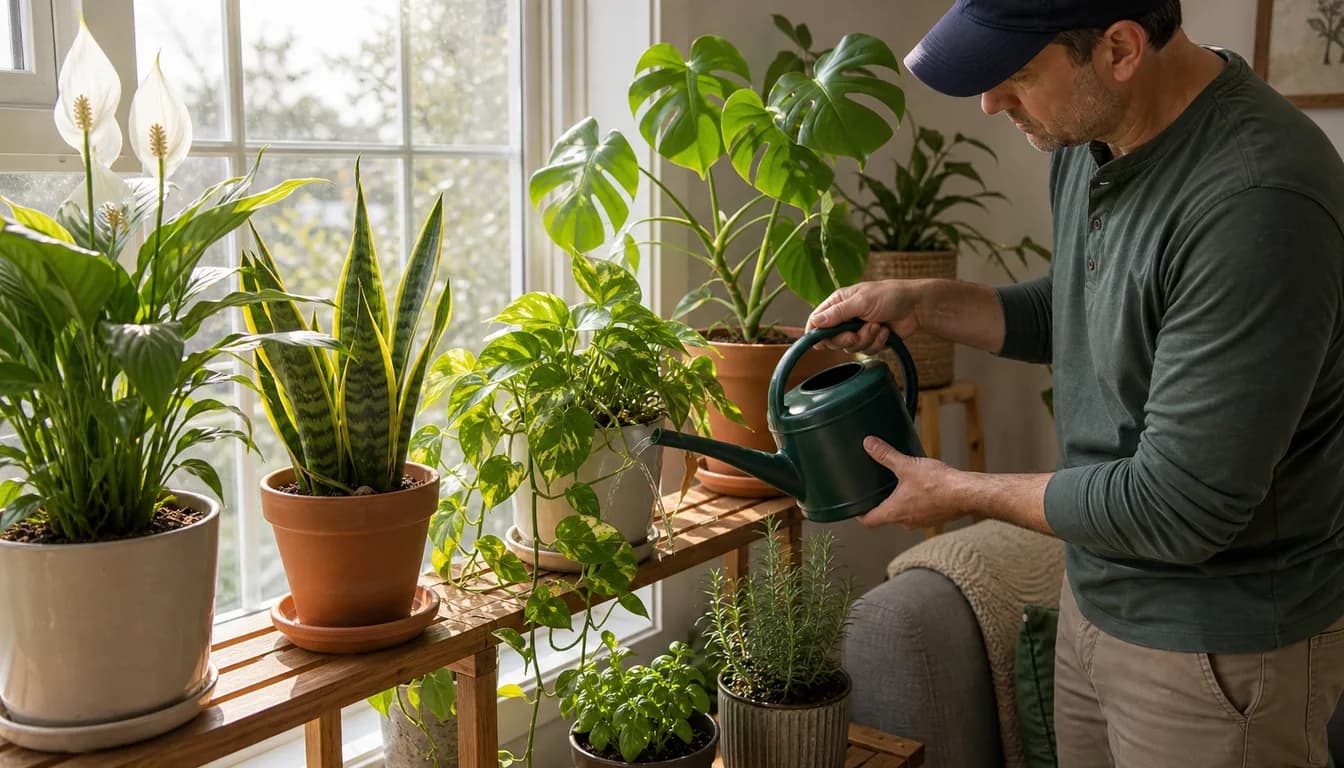
Best Time to Water Indoor Plants for Healthy Growth
Learn exactly when to water indoor plants during the day, how timing changes by season and light level, and how to avoid rot and droop without using a strict calendar schedule.
11 min read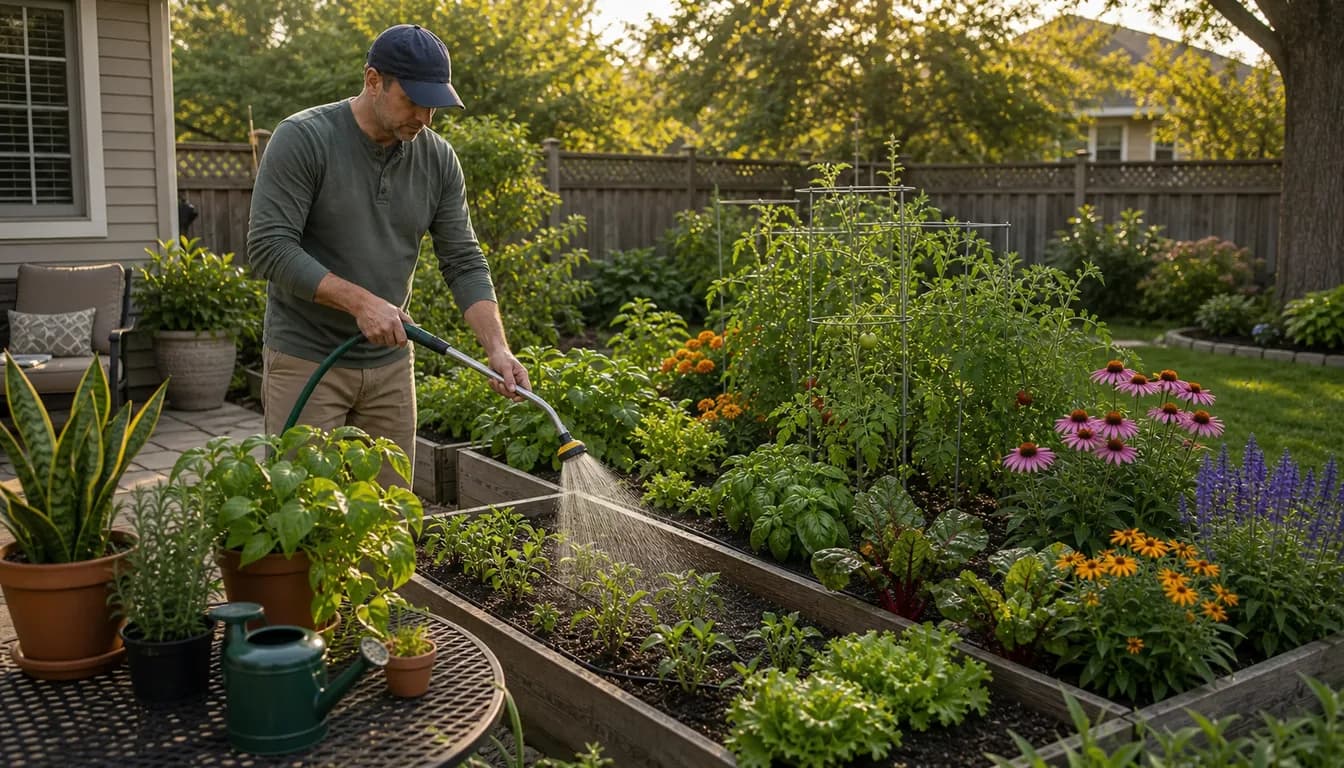
Best Time to Water Plants for Healthier Roots
Learn exactly when to water indoor and outdoor plants so roots drink deeply, leaves stay healthy, and soil stays in the ideal moisture range instead of staying soggy or bone dry.
11 min read