
Wateringschedule10 min read
Worst Time to Water Plants and What To Do Instead
Know exactly when NOT to water your garden, lawn, and houseplants so you avoid disease, pests, and weak roots.
Most watering advice tells you how often to water, not when to absolutely skip it. Bad timing does more damage than missing a day on the schedule. It invites mildew on tomato leaves, fungus gnats indoors, and weak lawn roots outside.
This guide focuses on the worst time to water plants in real backyards, from houseplants and veggies to shrubs and lawns. You will see why timing matters more than you think, how climate changes the rules, and get simple habits that fit actual busy schedules.
If you need a deeper breakdown of technique later, pair this with the deep versus frequent watering guide after you nail your timing.
water_dropWhy Timing Matters More Than The Clock
Bad timing is really about two risks: wet leaves for too long and soil that stays soggy after the sun is gone. Leaf wetness plus slow drying is what drives problems. A rose drenched at dusk faces far more disease pressure than a root-zone soak at dawn. Indoors, snake plant foliage watered heavily in a cool room can stay wet for days. When timing is questionable, slightly dry is safer than constantly damp.
scheduleLate Evening: Disease’s Favorite Watering Window
Late evening is usually the worst outdoor watering window. Leaves stay wet overnight, which gives mildew and blight exactly what they want on zucchini, roses, and tomato plants. It also encourages overwatering because runoff is hard to judge in dim light. > If foliage will stay wet for 8 hours, the timing was wrong. In very hot climates, a soil-only evening soak can help, but overhead watering after dark is still a bad default.
Guide — See AlsoBest Time to Water Indoor Plants for Healthy GrowthLearn exactly when to water indoor plants during the day, how timing changes by season and light level, and how to avoid
chevron_rightwb_sunnyMidday Heat: Why Noon Watering Falls Flat
Midday watering wastes moisture for a different reason. Heat and wind strip water from the surface before roots benefit much, so noon sprinklers on bermuda turf or cool-season fescue often underperform. The same thing happens in pots: the top looks damp while the root ball stays drier than it should. Your hydrangea shrubs and hosta clumps pay for that with faster wilt. Use midday watering only as a rescue move, not the routine.
Email Updates
Join the KnowTheYard update list
Zone-specific advice, seasonal reminders, and new plant guides — no filler.
homeBad Timing Indoors: Nights, Tiny Sips, And Cold Rooms
Indoors, the worst timing is usually late at night in a cool room. Dim corners already dry slowly, so another heavy drink can leave even sturdy plants sitting wet too long. Bright-window plants such as monstera vines and peace lilies still prefer water earlier in the day so the surface starts drying before night. Weekly just-because watering is a bigger problem than missing a day. Water by soil feel, not habit.
Guide — See AlsoHow Do I Fix an Overwatered Plant Without Losing ItLearn how to save an overwatered plant with clear, step-by-step fixes. We cover fast triage, root checks, repotting, and
chevron_rightcalendar_monthSeason By Season: Adjusting Your Watering Clock
The "worst" time to water shifts a bit with the season, even though late evening and high noon stay risky all year. Your goal is always the same, get soil moist through the root zone, then let the surface dry.
Spring often tricks us into bad timing. Cool mornings feel damp, so people wait and end up watering in windy afternoons that strip moisture from leaves on young tomato starts.
Summer punishes midday watering on lawns and beds. Deep soaks are still best in the early morning, especially for turf like bermuda in full sun that bakes quickly.
Fall is when many gardeners keep using their July schedule. Plants slow down, days shorten, and evening watering becomes more dangerous for rose foliage that already faces mildew pressure.
Winter has its own traps. On mild days, people water frozen beds or potted boxwood shrubs late in the day. That moisture can refreeze overnight and damage roots in containers.
- fiber_manual_recordSpring risk window: Windy afternoons that dry foliage but barely soak roots
- fiber_manual_recordSummer risk window: Late morning through late afternoon in full sun
- fiber_manual_recordFall risk window: Cool, damp evenings that keep leaves wet overnight
- fiber_manual_recordWinter risk window: Any time soil is frozen or about to re-freeze
Use those windows as your first filter before you decide whether a plant actually needs water.
In every season, adjust timing to match soil temperature and overnight lows, not just the forecast high.
water_dropAfter A Bad Watering: Damage Control Checklist
A single bad watering rarely kills a plant, but it can stress it enough to invite disease. What you do in the next day or two matters more than beating yourself up.
If you watered late at night, focus on airflow by morning. Gently shake rainwater off big leaves on plants like large monstera leaves and crack a window or run a small fan indoors.
Midday watering of sun lovers such as lavender clumps can leave mineral spots on foliage but usually does not burn leaves alone. The bigger issue is that roots got less water than you think, so plan a deep soak at the next cool morning.
For overwatered containers, lift the pot. If it feels like a cinder block compared to normal, tilt it slightly to let extra water drain and keep trays under pots empty for plants like peace lilies.
More plants suffer from sitting wet for days than from one dry afternoon. Your follow-up watering schedule should stretch out, not stack extra sips.
- fiber_manual_recordCheck leaves: Look under foliage for early spots or fuzzy mold after a wet night
- fiber_manual_recordTest soil: Push a finger 2 inches down; skip watering again until it dries
- fiber_manual_recordImprove airflow: Space crowded pots and thin dense stems on hosta clumps
- fiber_manual_recordAdjust next watering: Add time between waterings instead of “making up” with more
Guide — See AlsoBest Time to Water Flowers for Stronger BloomsLearn exactly when to water flowers so blooms last longer, plants stay healthier, and you are not wasting water. Covers
chevron_rightyardLawns, Beds, And Pots: Timing Mistakes By Setup
Different setups punish bad timing in different ways. Lawns shrug off one rough watering, while pots on a patio can swing from drought to root rot in a day.
Sprinklers running after dark on turf, especially cool-season grasses like tall fescue lawns, keep blades wet for 8 to 10 hours. That is prime time for fungal disease.
Drip systems on garden beds are more forgiving, but running them at midday still wastes water to evaporation. Soil near the emitters may look damp while roots of pepper plants a few inches away stay dry.
Containers suffer most from erratic timing. Tiny sips at odd hours keep the top inch wet and the bottom bone dry, which is rough on herbs like basil in pots.
If your system is on a timer, the worst mistake is "set and forget" through multiple seasons.
Match the correction to the setup, because a lawn sprinkler mistake and a patio-pot mistake do not recover the same way.
- fiber_manual_recordLawns: Avoid late-night cycles; target early morning, especially in zone 7 lawns
- fiber_manual_recordIn-ground beds: Run drip or soaker hoses long enough to soak 6 inches deep
- fiber_manual_recordRaised beds: Expect faster drying and shift watering earlier on windy days
- fiber_manual_recordContainers: Water until you see drainage, then let the top inch dry fully before repeating
homeIndoor Schedules: Matching Timing To Plant Type
Indoor plants react to timing mistakes a bit differently because the weather is controlled, but light levels, air flow, and pot size still matter.
Tropical foliage like heartleaf philodendron vines can handle an evening watering better than desert plants. Pothos trailing plants are similarly forgiving, as long as rooms are warm and bright the next morning.
Succulent types, such as snake plant clumps or zz rhizomes, resent going to bed with cold, soggy soil. Late-night waterings in a cool room are a fast track to yellowing stems and mushy roots.
Humidity lovers like calathea foliage prefer timing that lets leaves dry before dark but soil stay lightly moist. That often means morning or early afternoon sips, never daily sprinkles.
- fiber_manual_recordTropicals: Water early day so leaves dry before lights go off
- fiber_manual_recordSucculents: Choose daytime so soil warms and dries at the surface
- fiber_manual_recordFerns: Such as boston fern baskets, aim for consistent moisture without late spray-downs
- fiber_manual_recordFlowering houseplants: Plants like anthurium blooms appreciate morning water that supports all-day photosynthesis
Guide — See AlsoDrought Tolerant Plants for Low-Water YardsPractical guide to choosing and growing drought tolerant plants so you can keep color, shade, and harvests even under wa
chevron_righttips_and_updatesAdvanced Timing: Soil, Mulch, And Irrigation Tech
Once you have avoided the obvious bad windows, timing becomes about fine-tuning for your soil, mulch, and gear. Small tweaks here often save the most water.
Heavy clay soil holds moisture longer, so watering it in the evening is worse than in sandy ground. Clay beds for shrubs like shade hydrangeas should get slow, early-morning soaks that have all day to drain.
Sandy or raised beds dry quickly, so the "worst" time is any schedule that is too far apart, regardless of hour. Crops like carrot rows need frequent, morning watering while germinating, or they simply never sprout evenly.
Mulch shifts the equation. A 2 to 3 inch layer around young apple trees keeps moisture in, so you can water less often, but deep and early in the day. Thick mulch with nighttime watering almost guarantees soggy crowns on perennials.
Smart timers and moisture sensors help avoid human-error timing. The best tech feature is a simple rain or soil moisture shutoff, not a complex schedule.
- fiber_manual_recordClay soils: Water less often, strictly in the morning for deep penetration
- fiber_manual_recordSandy soils: Shorter gaps between waterings, still avoiding high sun hours
- fiber_manual_recordMulched beds: Deep but infrequent sessions, never daily dribbles
- fiber_manual_recordIrrigation tech: Pair timers with soil sensors to prevent automatic overwatering
tips_and_updates
Pro Tips
- check_circleSet a phone reminder for early morning watering on your busiest days instead of defaulting to late evenings.
- check_circleGroup containers by thirst so you can water drought lovers like potted lavender less often than moisture fans.
- check_circleUse a cheap rain gauge or tuna can to see how much your sprinklers deliver in 20 minutes.
- check_circleSwitch to drip or soaker hoses in vegetable beds to keep foliage dry during higher risk times.
- check_circleLet lawns look slightly stressed between waterings so roots of grasses like bluegrass lawns grow deeper.
- check_circleWater hanging baskets until at least 20% of the water drains out the bottom, then wait for the top inch to dry again.
- check_circleDump any water that collects in saucers under houseplants within 15–20 minutes of watering.
- check_circleMatch watering time with feeding by hitting outdoor beds shortly before you fertilize vegetable rows so nutrients move into the root zone.
quiz
Frequently Asked Questions
Is it really bad to water plants in the sun?expand_more
Direct sun does not usually burn leaves by itself. The bigger problem is that midday heat causes fast evaporation, so roots get less water than you think and you waste a lot of water for poor results.
What is the single worst time to water houseplants?expand_more
The worst time is late at night in a cool room, especially for succulents and plants in dense soil. Cold, wet roots with no airflow overnight can trigger rot much faster than letting a plant stay slightly dry until morning.
How long should soil stay wet after watering?expand_more
For most indoor plants, soil should feel evenly moist for 1 to 3 days, then start drying at the surface. Outdoors, beds can stay moist a bit longer. If soil stays soggy for a week, you are watering too often or using poor-draining soil.
Is misting at night bad for plants?expand_more
Regular misting at night keeps leaves wet just when temperatures drop and air stops moving. That encourages fungal disease on both indoor and outdoor plants. If you mist, do it early in the day so foliage can dry quickly.
What time should I set my sprinkler timer?expand_more
Set sprinklers to finish just after sunrise, usually between 4 a.m. and 8 a.m. This gives foliage time to dry, reduces evaporation loss, and takes advantage of cooler temperatures for deeper soil soaking.
menu_book
Sources & References
Related Guides
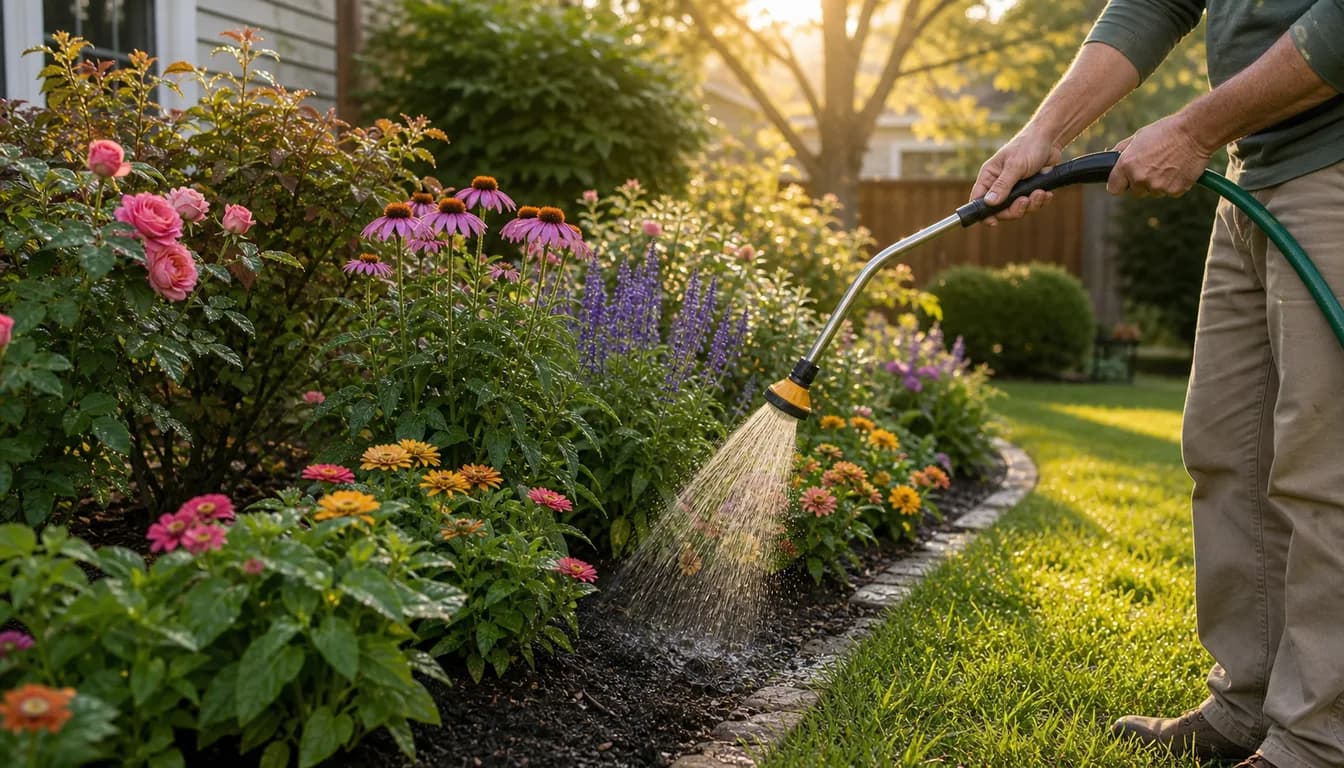
Best Time to Water Flowers for Stronger Blooms
Learn exactly when to water flowers so blooms last longer, plants stay healthier, and you are not wasting water. Covers beds, containers, and hanging baskets.
10 min read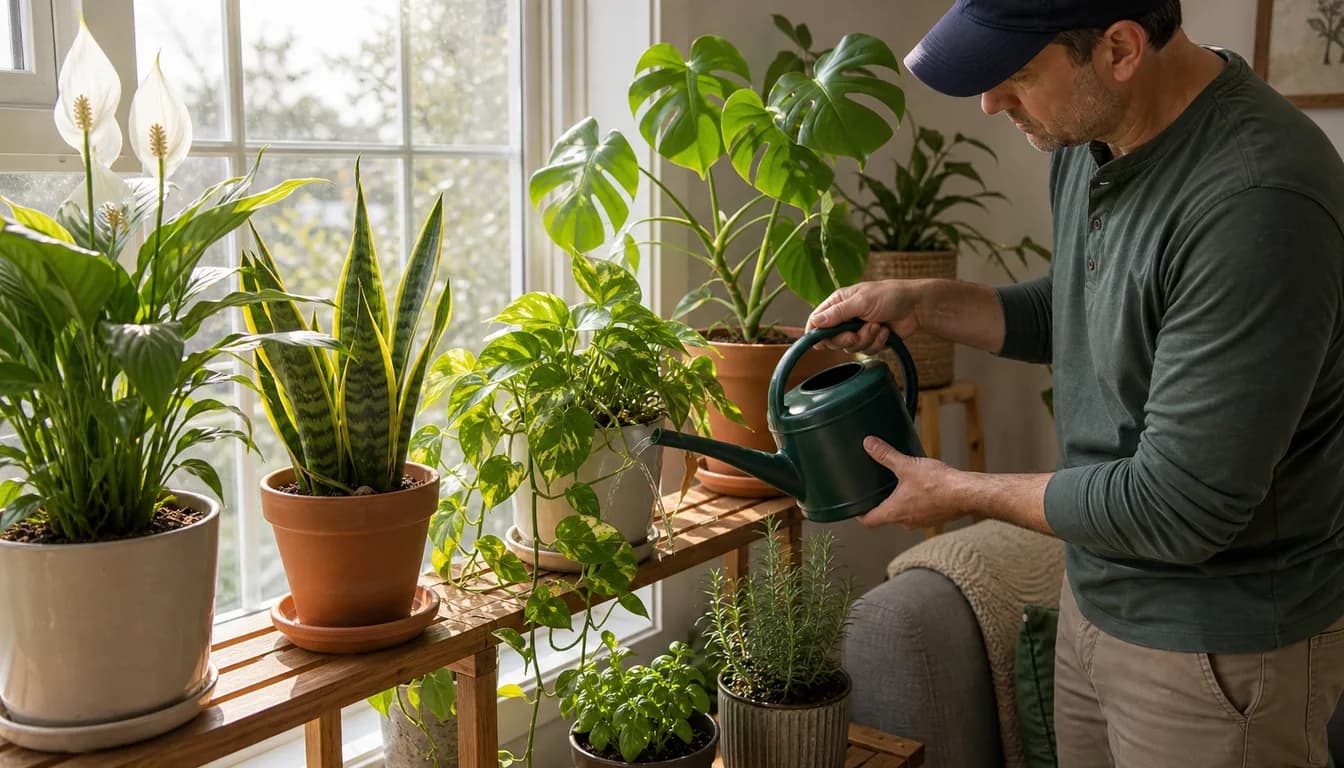
Best Time to Water Indoor Plants for Healthy Growth
Learn exactly when to water indoor plants during the day, how timing changes by season and light level, and how to avoid rot and droop without using a strict calendar schedule.
11 min read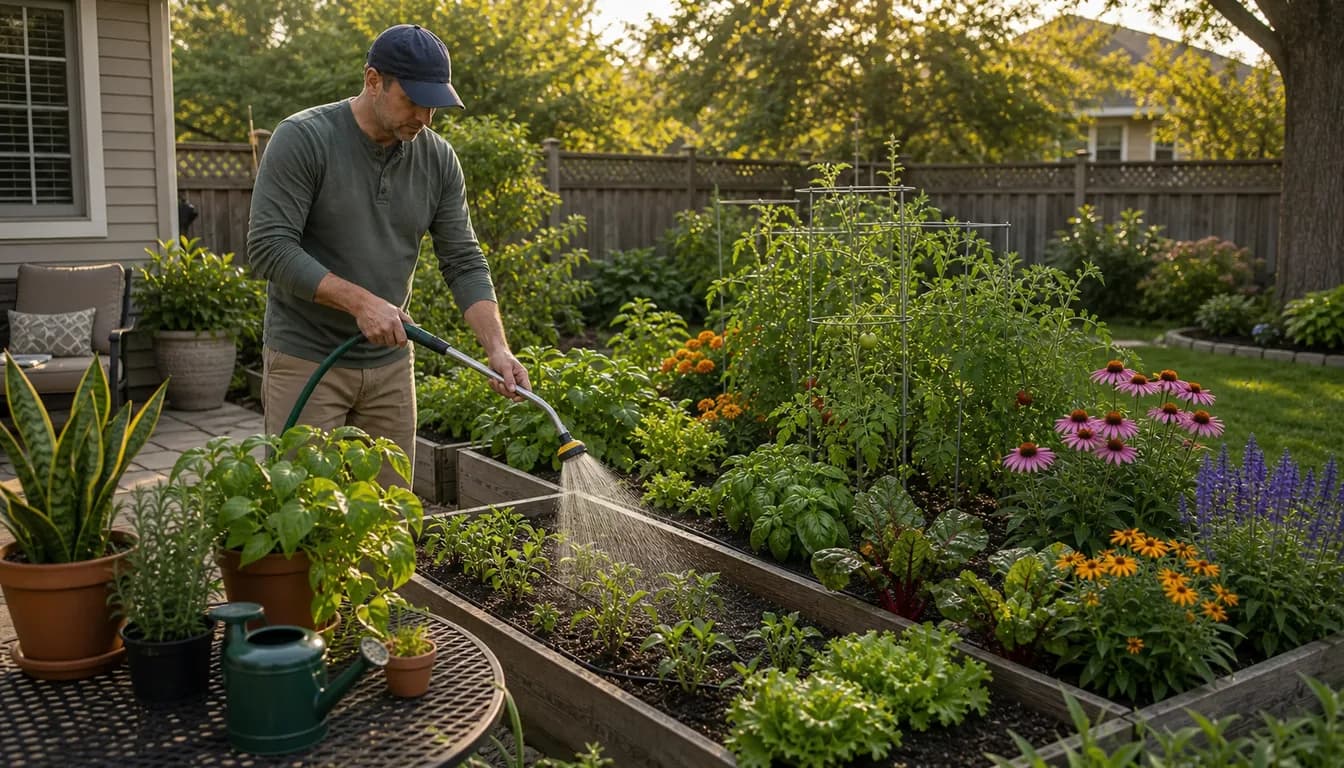
Best Time to Water Plants for Healthier Roots
Learn exactly when to water indoor and outdoor plants so roots drink deeply, leaves stay healthy, and soil stays in the ideal moisture range instead of staying soggy or bone dry.
11 min read