
Best Hardy Succulents for Rock Gardens
Choose hardy succulents for rock gardens and learn how slope, soil, crown height, watering, winter care, and spread control keep them healthy.
At a glance
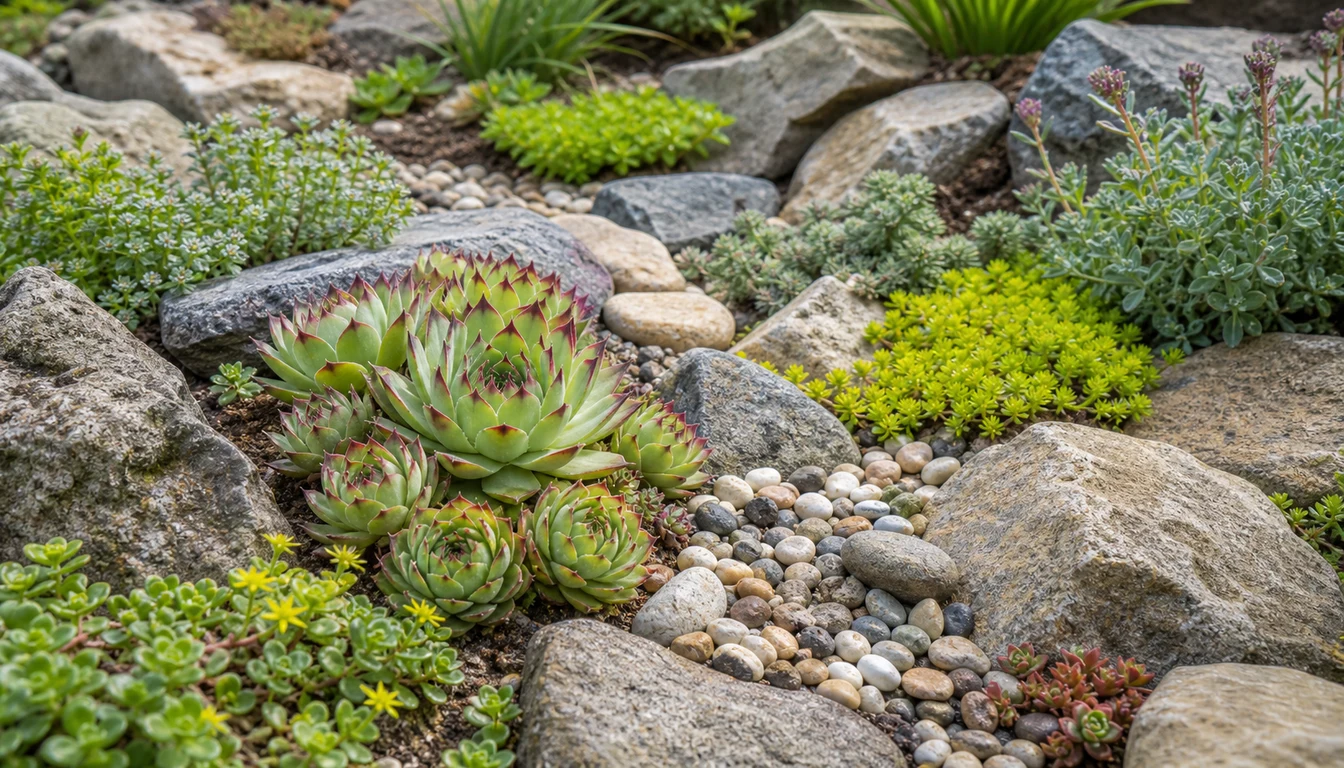
The best succulents for a permanent rock garden are hardy Sedum, Sempervivum, and climate-suitable Delosperma that can survive the site's lowest temperatures. Even a cold-hardy plant needs winter drainage, because stone placement, slope, and crown height decide whether rain and snowmelt leave the root zone.
Choose each plant by verified hardiness, mature habit, and the exact pocket it will occupy, then build the bed so water has a downhill exit.
Which Succulents Work Best in a Rock Garden?
A permanent rock garden needs plants that tolerate the local winter as well as summer drought.
Start with hardy Sedum and Sempervivum, then add companions whose mature size and moisture needs fit the same bed.
Check the hardiness label for the exact species or cultivar, not the common name alone. Compare its stated zone or minimum temperature with your local winter low, then allow for a colder exposed slope or a pocket that stays wet.
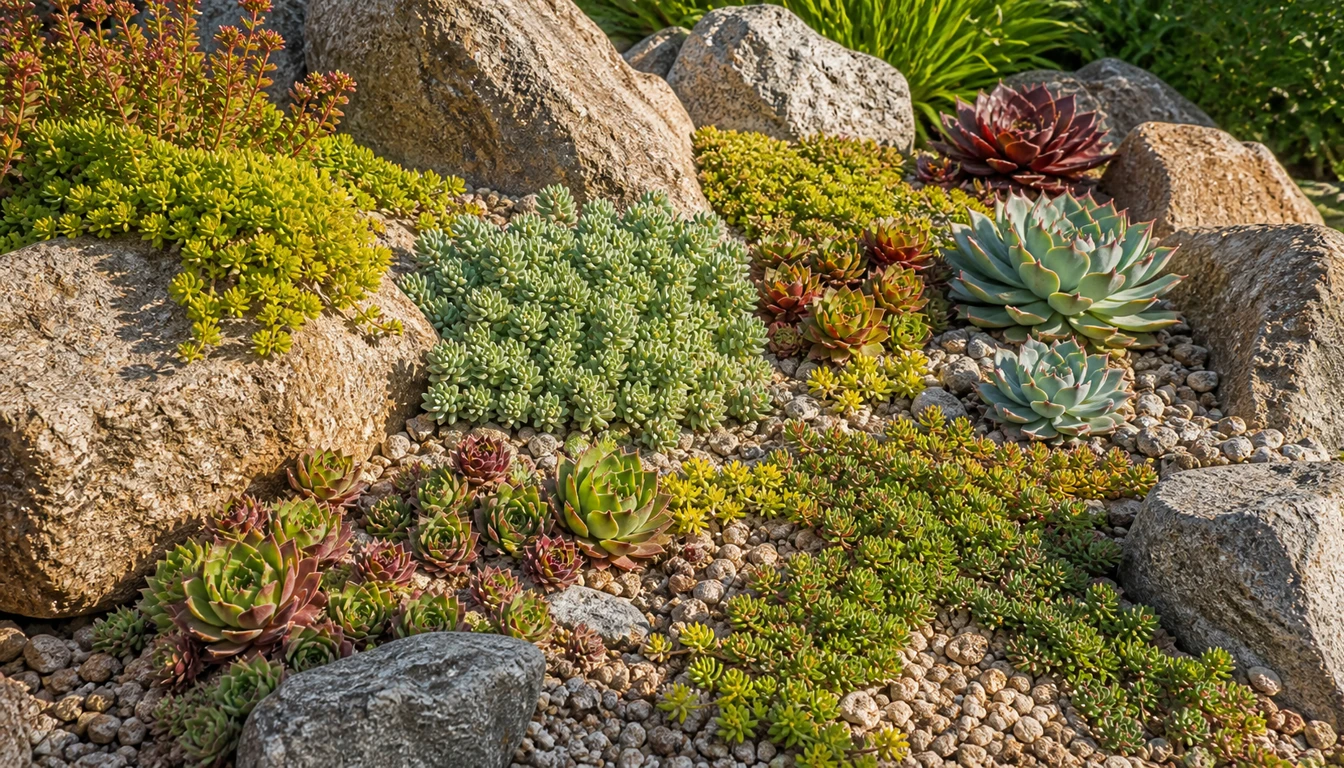
Low Sedum forms spread as mats over shallow rocky soil. Use them to soften stone edges, cover a slope, or connect isolated pockets without expecting them to tolerate heavy foot traffic.
Sempervivum makes evergreen rosettes and clusters of offsets in dry gravelly sites. Each flowering rosette eventually dies, but the surrounding offsets continue the colony.
Some Delosperma, or ice plants, form low flowering carpets in sunny, sharply drained sites.
Their cold tolerance varies, so a cultivar that succeeds in a dry western winter may fail in a milder but wetter climate.
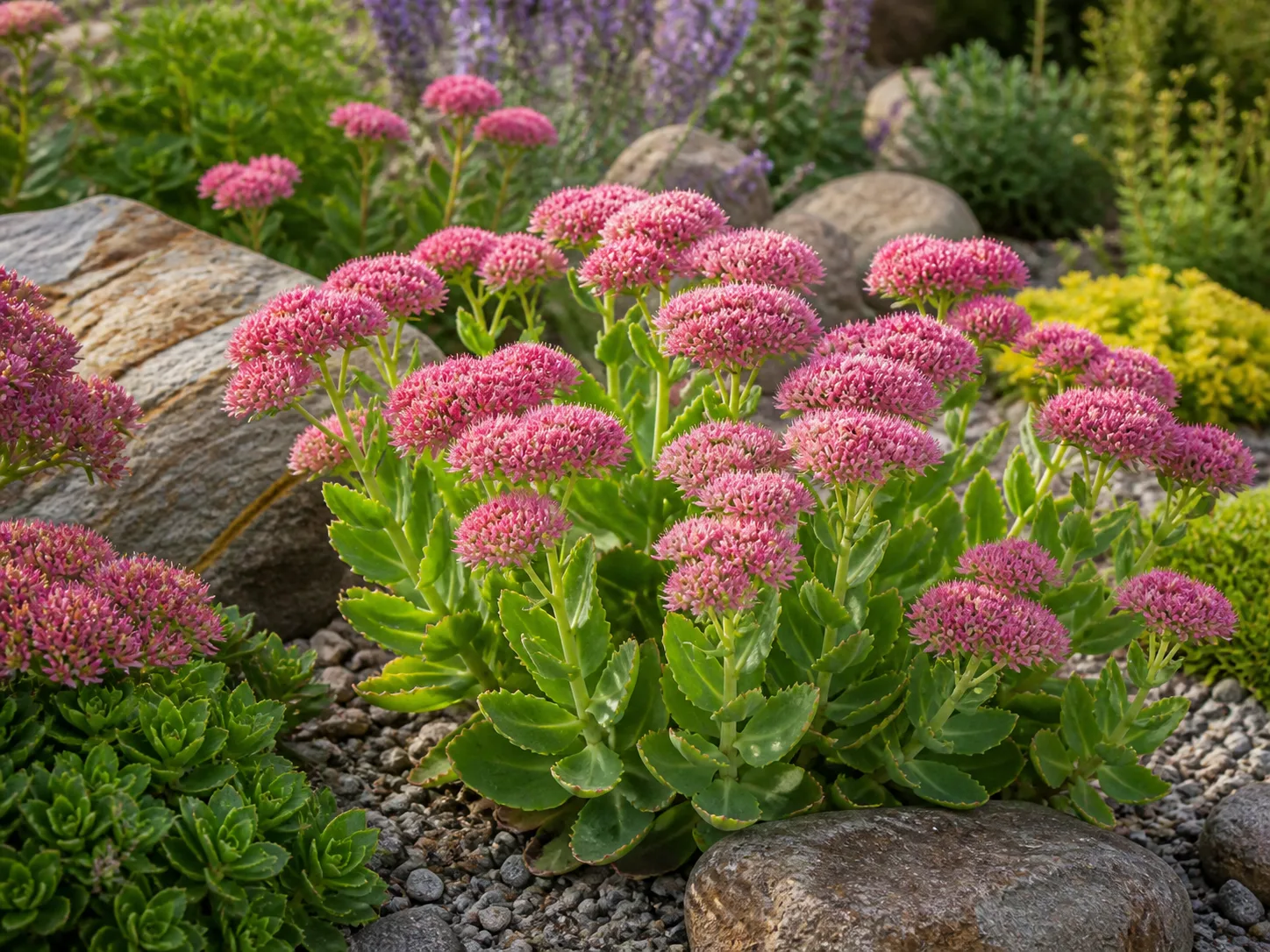
Upright stonecrops, many now classified as Hylotelephium, add late-season height and broad flower heads. They need more root room than a thin carpet and should not be hidden behind a boulder.
Tender Echeveria and many aloes can imitate the same look during summer but fail outdoors where frost or cold rain exceeds their limits. Keep them in movable containers unless the exact species is proven hardy for the site.
Creeping stonecrop
Low hardy Sedum covers shallow soil and stone edges, but fast mats need boundaries before they hide small rosettes or drainage seams.
Houseleek rosettes
Sempervivum holds a low evergreen pattern through cold weather when offsets receive sun and crowns stay clear of wet debris.
Hardy ice plant
Climate-suitable Delosperma brings bright flowers and a low carpet, but only where its verified cold tolerance and need for sharp drainage match the site.
Upright stonecrop
Hylotelephium adds late flowers and vertical structure, but its clump needs a deeper pocket and enough sun to resist flopping.
Compact dry-site companions
Low thyme and other small rock plants can extend texture where their vigor, hardiness, and moisture needs match the succulents.
Removable tender accents
Echeveria and aloe can supply summer form in pots that leave the bed before frost or prolonged cold rain.
Why Does a Succulent Rock Garden Need a Slope?
Cold-hardy succulents can survive freezing temperatures and still die in soil that remains saturated.
The bed must move rain away from roots and crowns before the plant list matters.
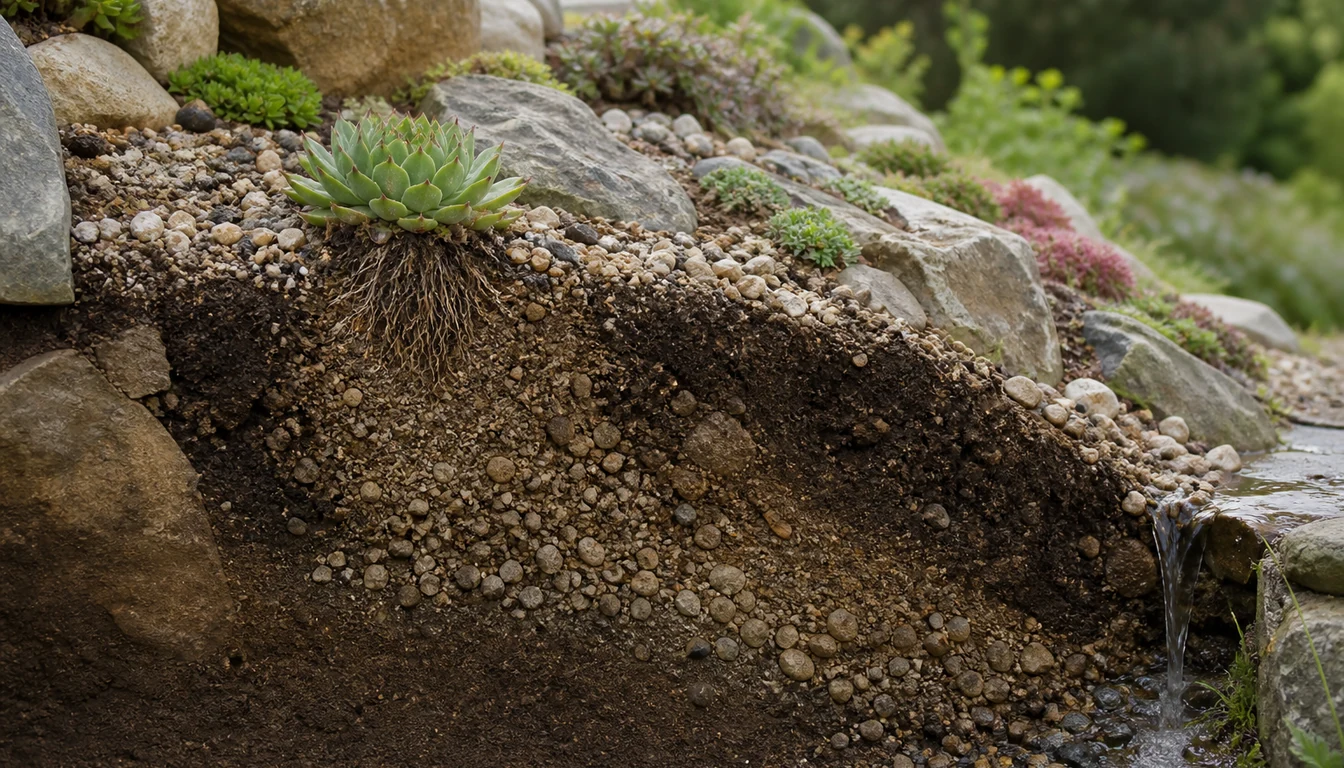
A slope, raised berm, or terraced edge gives gravity somewhere to send water. Stone can steer that flow, but decorative rock on flat compacted soil does not create drainage underneath.
Watch the site during a hard rain. Mark low basins, downspout discharge, roof drip lines, and places where water crosses a path into the bed.
Dig a test pocket after the rain has stopped. If the soil below the gravel remains slick or water stands in the hole, reshape the full root zone rather than adding a thin gritty cap.
A raised bed is often the practical choice where dense ground cannot be regraded safely. Its soil still needs an open path into or over the surrounding grade, because a framed box can also hold water.
Treat winter wet as the main design test. Cool soil loses water slowly, and a frozen surface can redirect meltwater into the lowest planting pocket.
| Site shape | Water behavior | Main risk | Useful correction |
|---|---|---|---|
| Raised shoulder | Water moves down and away | Surface can dry quickly during establishment | Target new roots when watering |
| Stone crevice | Small protected root pocket | Hidden basin behind the stone | Leave an outlet below the pocket |
| Flat compacted bed | Water has no downhill path | Saturated roots after rain | Regrade or build a raised bed |
| Bottom of a slope | Receives runoff from above | Crown and root rot | Reserve for plants that accept more moisture |
How Do You Plant Succulents Between Rocks?
Prepare a root pocket, not a rich planting hole.
The surrounding soil should drain at a similar rate so water does not collect where loose amended soil meets dense ground.
Set the roots into firm contact with the mix while keeping the crown above the finished grade. A rosette center or fleshy stem buried against wet soil is harder to inspect and quicker to damage.
Use fine gravel around the plant to reduce splash and hold small roots in place. Stop the gravel before it fills leaf joints or packs tightly against living stems.
Space plants for the mature role you chose. Leave seams beside Sedum mats and open pockets around Sempervivum so offsets have somewhere to move without swallowing slower plants.
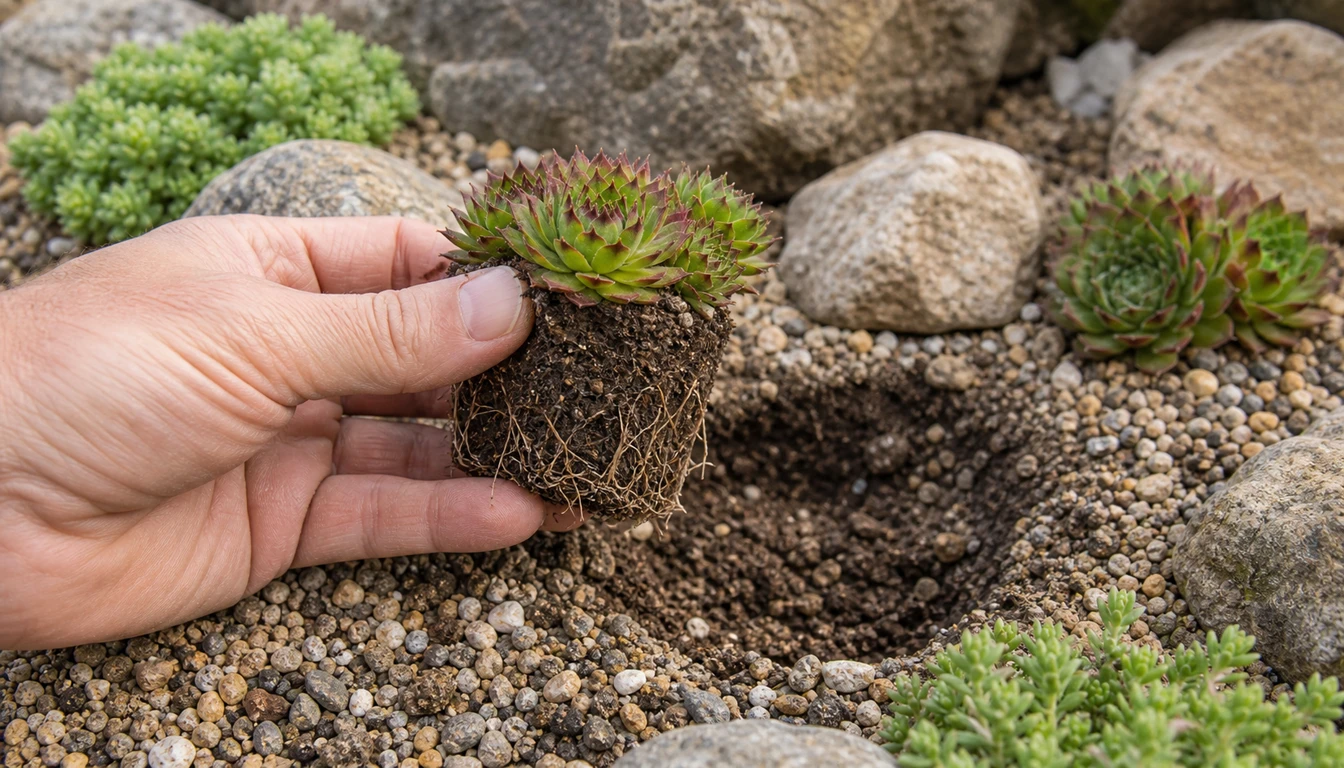
- 1. Soak the empty pocket and confirm that water leaves it.
- 2. Loosen circling roots without stripping the whole root ball.
- 3. Set the root flare or rosette base above the finished grade.
- 4. Backfill with draining soil and press it against the roots.
- 5. Add a thin mineral surface while keeping every crown clear.
- 6. Water the root pocket once and watch where the runoff travels.
Where Should Each Succulent Go Among the Rocks?
One rock garden contains several climates within a few feet.
A sun-facing ledge can become hot and dry while the east side of the same boulder stays cooler and holds moisture longer.
Put drought-tough ground-cover mats and compact rosettes on upper shoulders where water leaves quickly. Use slower or slightly less drought-tolerant companions in pockets that receive morning sun without collecting runoff.
Large west-facing stone radiates heat after direct sun. That can intensify foliage color in a suitable plant, but it can also scorch material moved directly from a shaded nursery bench.
Low pockets belong to plants that accept their longer wet period, not to the rosette you most want to display. Repeat one dependable plant across several similar pockets so the composition reads as a decision rather than a row of samples.
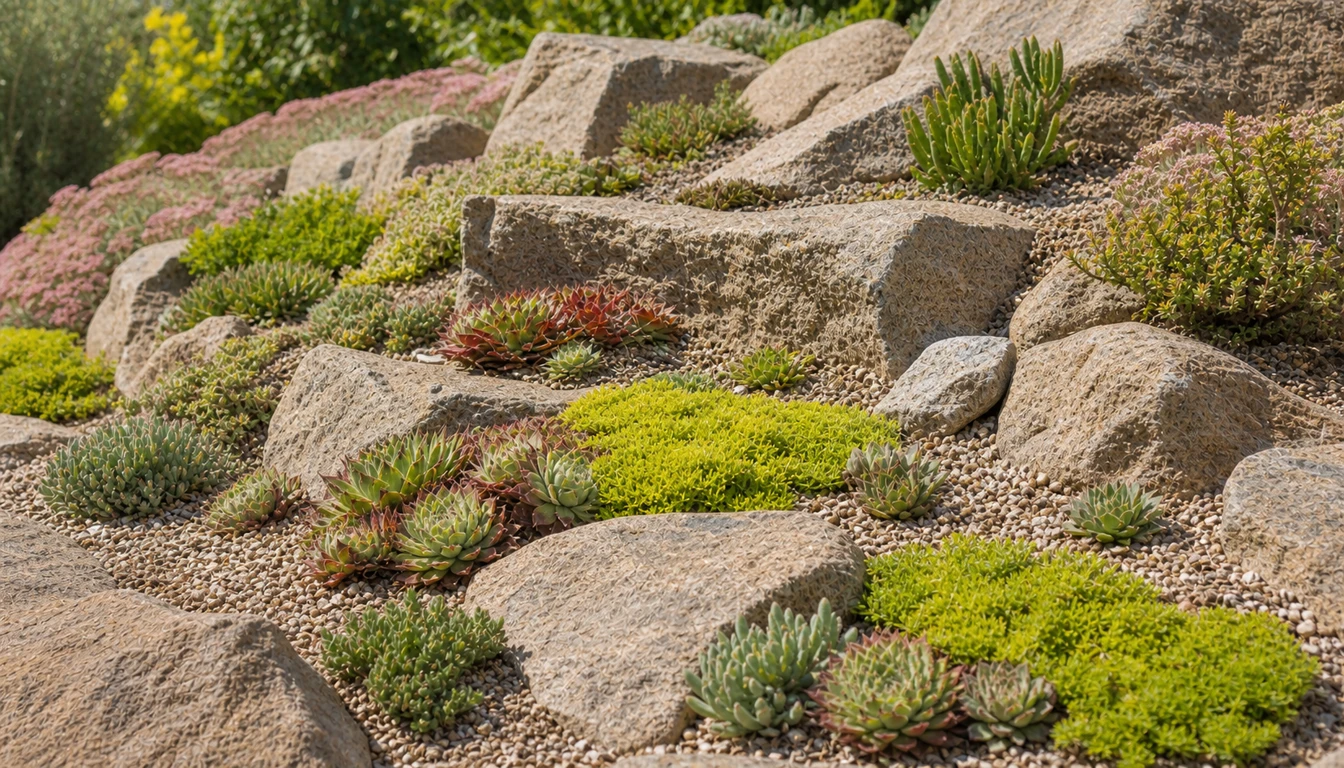
| Rock-garden pocket | Typical condition | Suitable habit | Avoid |
|---|---|---|---|
| Upper sunny shoulder | Hottest and fastest to drain | Hardy Sedum mat or compact Sempervivum | Newly rooted tender material |
| East-facing crevice | Morning sun and cooler afternoon | Small rosettes and compact companions | Plants that need all-day heat |
| West-facing rock edge | Reflected afternoon heat | Established heat-tolerant carpets | Sudden exposure of shade-grown plants |
| Runoff-adjacent hollow | Longer wet period | A non-succulent dry-border companion if drainage remains marginal | Crowns that rot when water lingers |
How Should You Water and Feed a Rock Garden?
Even drought-tolerant plants need establishment water while roots leave the nursery plug and enter the surrounding soil. Apply it to the root pocket instead of soaking the entire rock garden on a repeating calendar.
Check below the surface after watering or rain. Gravel can look dry while a hidden pocket beside a stone remains cool and damp.
Once roots have spread, use the same evidence that helps you water succulents without keeping roots wet. Check the root zone, then water only when dry soil and plant stress agree.
Firm wrinkles and stalled growth are more useful than the number of days since the last rain.
Rock-garden succulents also need little fertilizer. Excess nitrogen creates soft growth, opens compact mats, and can make upright flower stems flop.
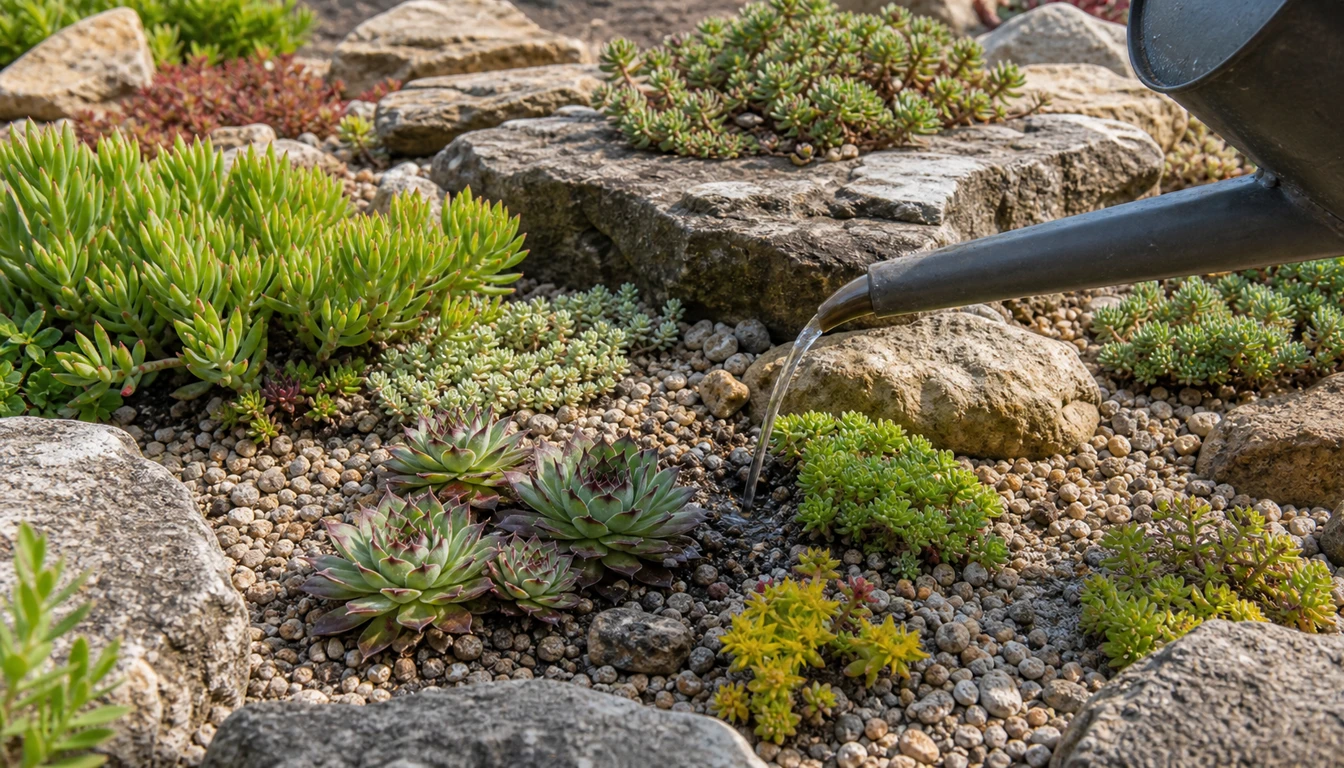
- New planting
- Keep the root pocket lightly supported while roots establish
- Established bed
- Water only when drought stress and dry soil agree
- After rain
- Check hidden pockets beside and below stones
- Fertilizer
- Use only when growth evidence or a soil test supports it
- Late season
- Avoid pushing soft growth before cold weather
What Seasonal Care Does a Rock Garden Need?
Use plant behavior and weather to decide the work.
Evergreen rosettes, creeping mats, and upright dormant stems do not need the same cleanup on the same day.
Clear dead leaves lodged in Sempervivum crowns whenever they begin to hold moisture. Do not strip healthy outer leaves merely to make every rosette look identical.
Upright stonecrop stems can remain through winter for structure and seed heads. Cut them before new shoots rise far enough to be damaged by the work.
After freeze-and-thaw cycles, press lifted shallow roots back into contact with soil and top up displaced gravel. Divide or move plants when active growth can repair the disturbance.
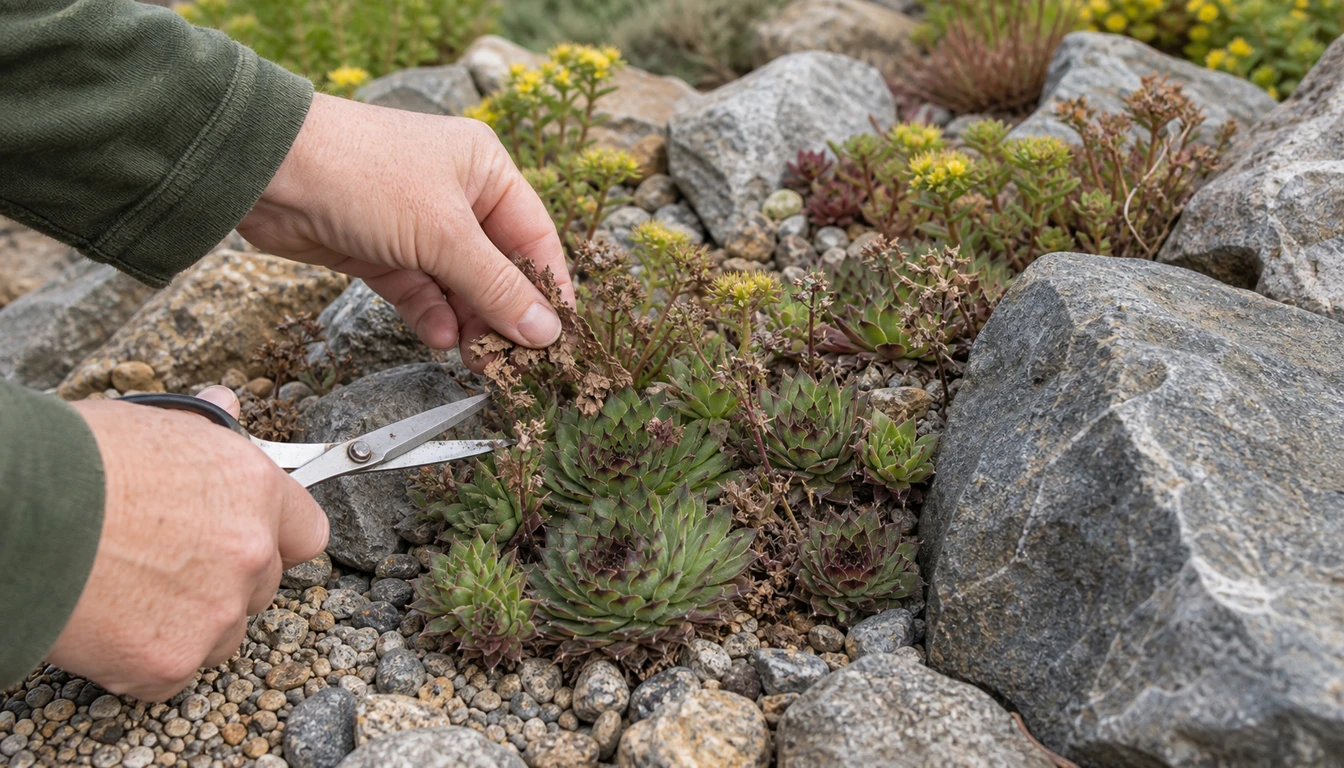
- - Clear lodged leaves without filling the crown with gravel.
- - Check that runoff channels still lead away from plants.
- - Reset frost-lifted roots into contact with soil.
- - Cut old upright stems before new shoots become tall.
- - Thin mats only where they hide stone, airflow, or slower plants.
Why Are Rock Garden Succulents Rotting or Stretching?
Begin with the damaged tissue and its exact position in the bed.
A repeated failure in one low pocket points to the pocket, while the same symptom across the slope points to weather or care affecting the whole site.
Mushy translucent crowns in wet soil indicate prolonged saturation. Remove collapsed tissue and correct the basin before you put another succulent in the same place.
Long pale growth that leans away from a rock face indicates insufficient light. Move the plant or open the shade source because less water cannot restore compact growth.
Upright stonecrop can flop when shade, rich soil, or excess fertilizer produces weak stems. A dead Sempervivum mother rosette after flowering is different because the surrounding offsets remain healthy.
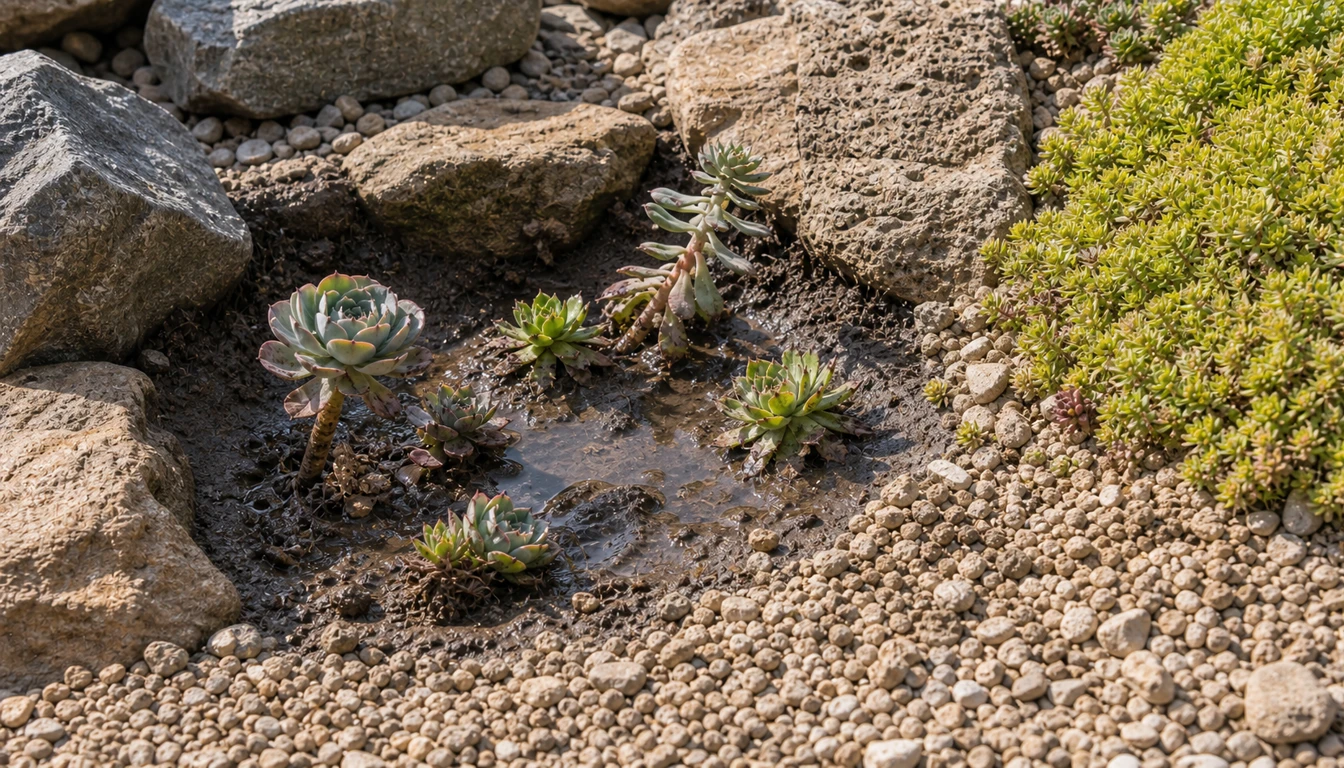
| Pattern | Likely cause | Confirm it | First action |
|---|---|---|---|
| Soft dark crown in a low pocket | Prolonged wetness | Soil remains wet below gravel | Remove rot and repair drainage |
| Pale stretched stems | Too little light | New growth leans toward open sky | Move or reduce shade |
| Upright clump opens outward | Shade or excess fertility | Stems are long and soft | Improve light and stop feeding |
| One dry rosette after bloom | Normal Sempervivum lifecycle | Healthy offsets surround it | Remove the spent mother rosette |
| Chewed low leaves | Slugs or snails | Slime or night feeding is present | Reduce hiding places and confirm the pest |
When Should You Divide or Edit the Planting?
A healthy mat can outgrow its design job without being invasive.
Edit it when it covers a path, closes a drainage seam, hides slower rosettes, or erases too much visible stone.
Lift a section from the edge instead of tearing through the middle. Keep rooted pieces for another suitable pocket and discard damaged or weak material.
Sempervivum offsets can be detached and reset where the parent colony has become dense. Leave enough open ground for the remaining rosettes to expand without touching every neighbor.
Renovation should restore airflow, water movement, and a readable pattern. It should not reduce the bed to bare gravel or force every plant back to nursery size.
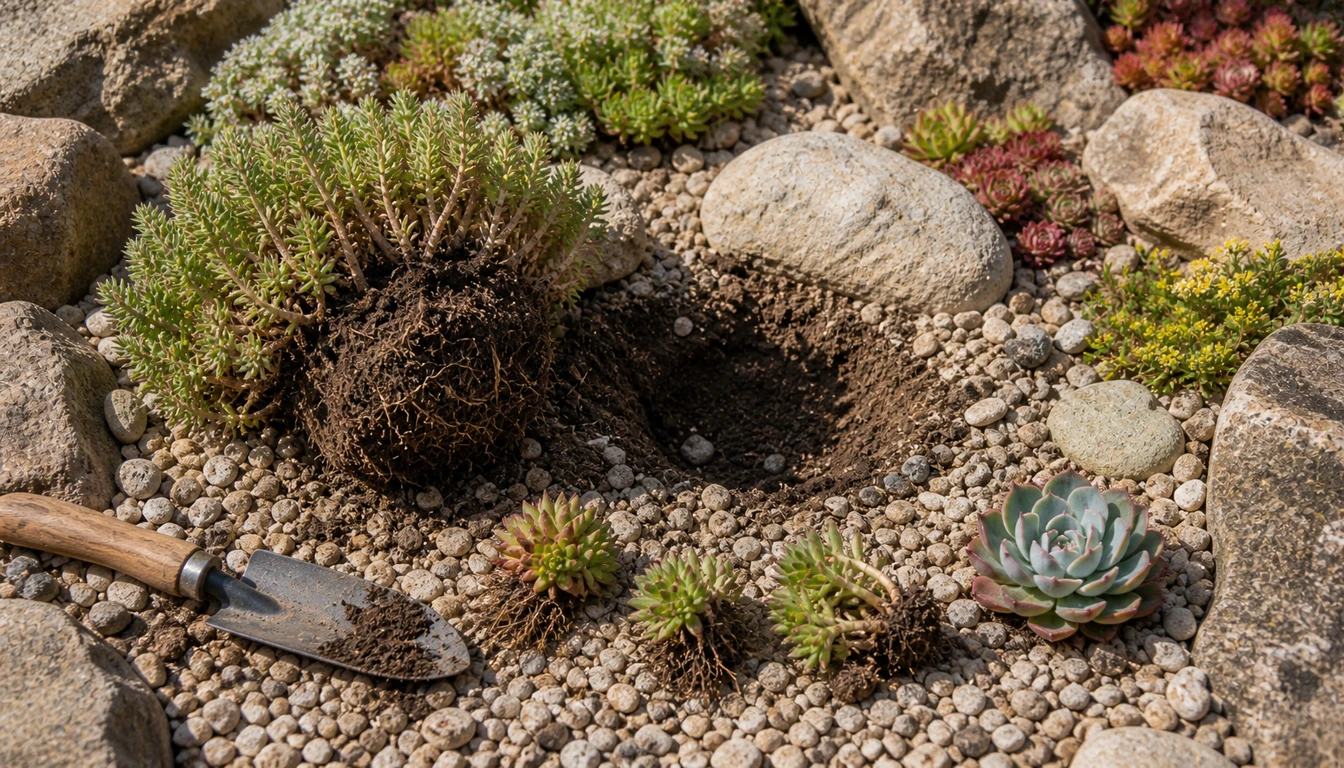
- 1. Mark the plants and stone lines that should remain.
- 2. Trace the edge of the mat or offset colony that crossed its role.
- 3. Lift rooted pieces with as little crown damage as possible.
- 4. Reopen drainage seams and clear buried debris.
- 5. Replant only healthy divisions in pockets that match their habit.
- 6. Watch the edited area through one wet period before adding more.
Quick Tips
- Confirm the exact plant's hardiness before it stays outdoors.
- Shape an outlet for water before setting the first crown.
- Keep rosette centers and fleshy stems above the finished grade.
- Use upper shoulders, crevices, and runoff pockets as different sites.
- Water new root pockets instead of irrigating the whole bed by calendar.
- Edit mats when they hide stone, airflow, or slower plants.
Recommended Plants
1 succulents worth considering.
Frequently Asked Questions
Which succulents are hardy enough for a rock garden?
Hardy Sedum and Sempervivum provide the most reliable starting groups, although hardiness still varies by species and cultivar. Upright Hylotelephium can add border height where the root pocket is deeper.
Do rocks improve drainage around succulents?
Rocks can guide runoff and protect raised pockets, but they do not correct compacted soil below them. The bed needs a real downhill outlet or a raised root zone.
How deep should a succulent sit between rocks?
Roots should contact the prepared soil while the crown stays above finished grade. Gravel can steady the plant, but it should not fill the rosette or press against a fleshy stem.
How often should you water a succulent rock garden?
Water new root pockets while plants establish, then respond to dry soil and visible drought stress. A draining established bed should not receive automatic whole-bed irrigation.
Why did a hardy succulent rot over winter?
Cold hardiness does not prevent damage from saturated soil. Check whether rain, snowmelt, or compacted subsoil held water around that exact crown.