
How to Water Succulents Without Keeping the Roots Wet
For established drought-tolerant succulents such as jade and echeveria, check that the root zone has dried before watering thoroughly and letting excess water drain away. Do not water again just because a week has passed.
Identify the plant before applying that routine. Forest cacti, newly rooting cuttings, and succulents with a distinct dry rest need different handling.
A wrinkled plant in wet mix needs inspection, not an automatic extra drink.
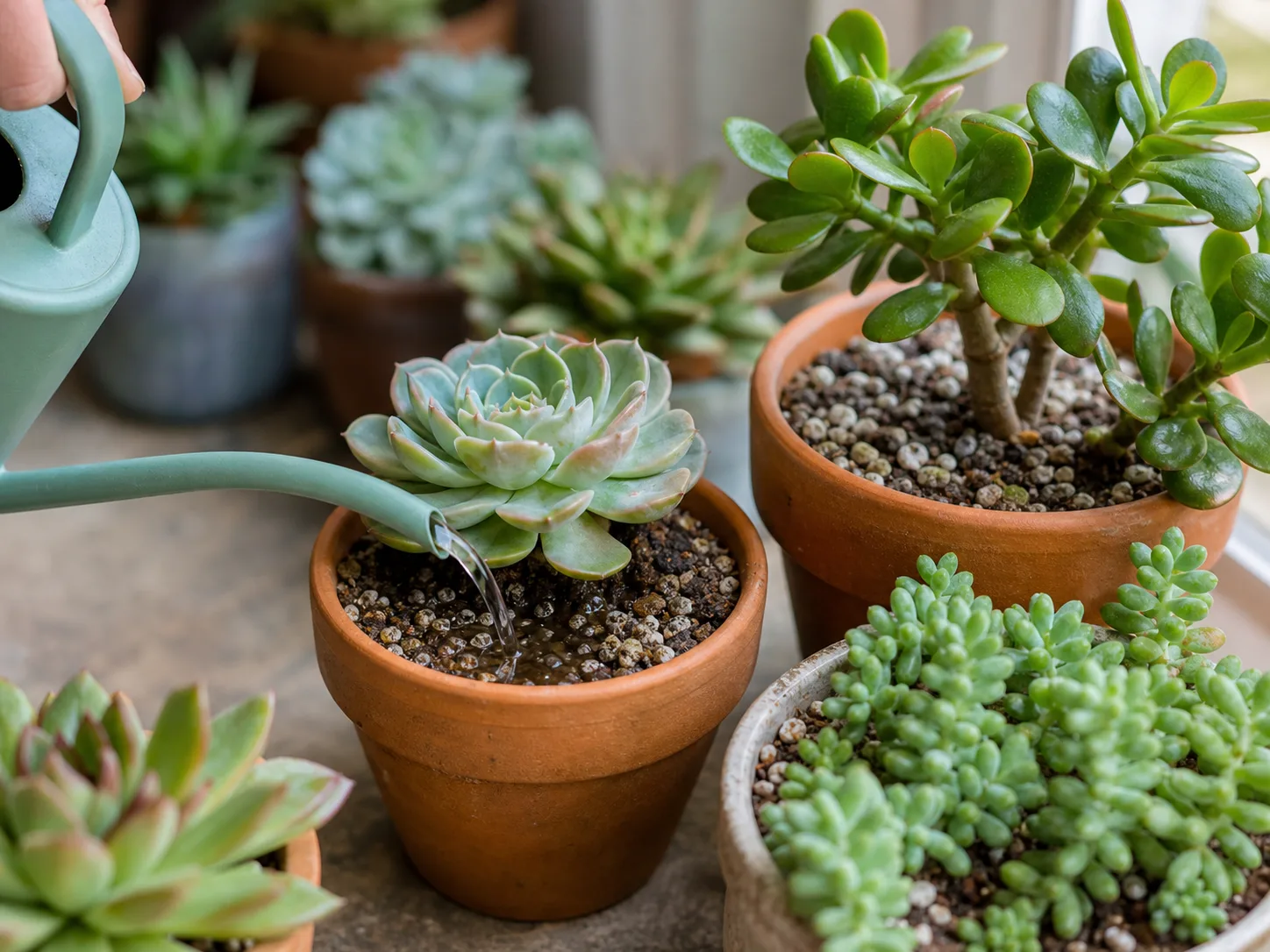
At a glance
What does overwatering actually do?
Succulents store water in fleshy leaves, stems, or roots, which helps them survive dry periods. That reserve does not make them immune to drought, and it does not mean they all come from the same habitat.
A desert cactus and a forest-growing Christmas cactus should not share an identical watering rule.
For many commonly grown dry-climate succulents, the main danger is a root zone that remains excessively wet. Roots need oxygen, and waterlogged mix limits the air available around them.
Damaged roots can then struggle to supply water to the leaves, so a plant may shrivel even while its pot is damp.
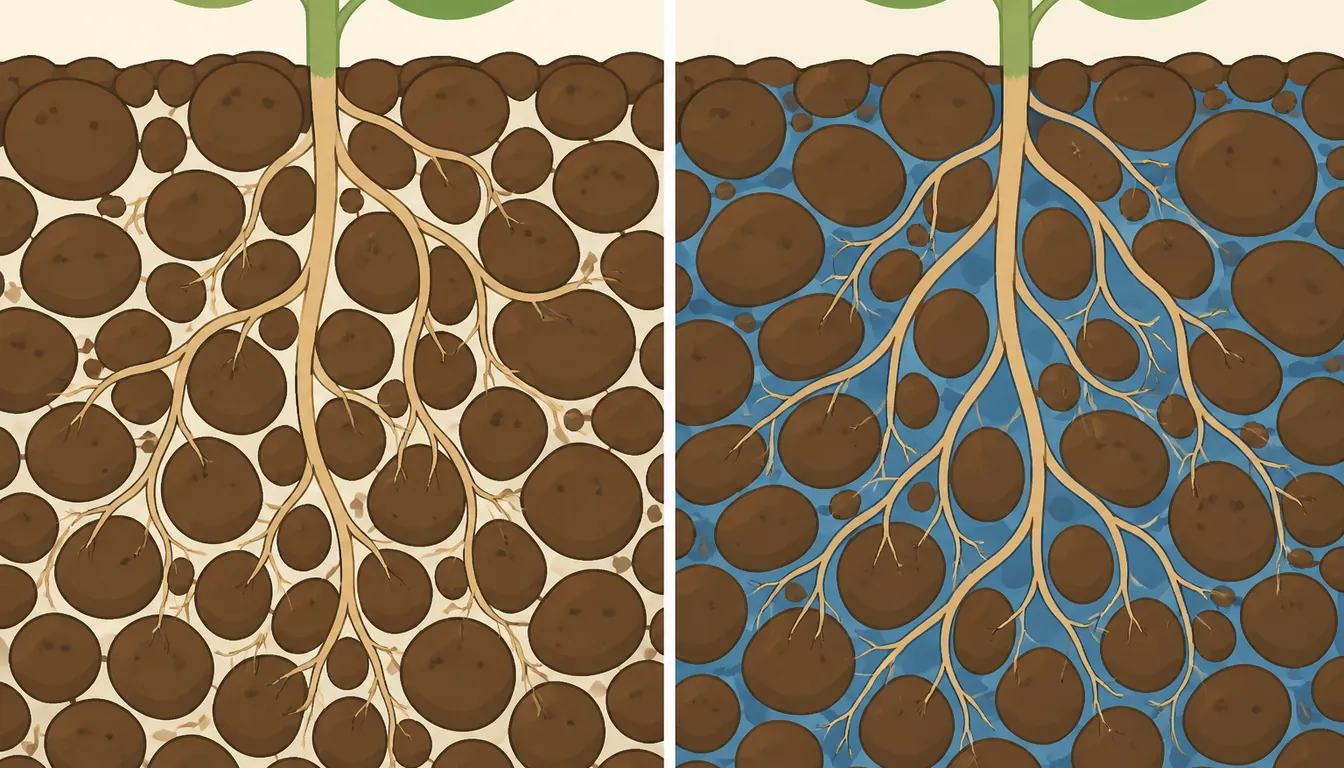
Both the amount applied and the conditions afterward matter.
Watering a draining pot thoroughly is different from leaving the same pot standing in runoff. Repeated small top-ups can also fail by keeping part of the mix damp without wetting the whole root ball.
Judge whether water reaches the roots and whether the container can drain, rather than assuming that either a splash or a soak is always safe.
Brief saturation while water moves through a suitable mix is not proof of root disease. Persistent wetness, declining growth, and soft or decaying tissue deserve investigation.
There is no universal number of wet hours after which every succulent begins to rot.
How do you know it is time to water?
Check below the dry surface.
A thin crust or a layer of decorative gravel can hide damp mix around the roots. For an established jade or echeveria in a suitable container, let the root zone dry between thorough waterings.
Do not extend the dry period indefinitely just to prove the plant is drought tolerant.
Learn the pot's weight after watering and draining, then compare it as the mix dries. The lighter weight reflects water loss, but it takes practice to interpret.
A heavy ceramic container can make a small moisture change difficult to feel, so combine the lift test with a check of the mix.
A wooden skewer or chopstick can help reach deeper material.
Insert it gently where it can pass without forcing through roots. Darkened, damp wood or moist particles indicate water is still present.
A clean skewer alone does not prove complete dryness, particularly in a coarse mix that does not cling to it. Check more than one accessible spot when the result seems inconsistent with the pot's weight.
- Check the plantConfirm that it is an established succulent that benefits from drying between waterings, rather than a cutting or a species in a special growth stage.
- Check the root zoneFeel below the surface where accessible, lift the pot, and use a skewer if deeper moisture is uncertain.
- Decide whether to waterIf the mix is still damp, wait. If it is dry and the plant's seasonal needs permit watering, wet the root ball and drain it.
- Check again as conditions changeUse reminders to inspect. Record what you found, not just the date you poured water.
A drying-time note helps you plan your next inspection, but it is not a permanent watering interval. New growth, a move to another window, repotting, indoor heating, and a change in weather can all alter water use.
Recheck the actual pot rather than watering automatically on the day written on its label.
How much water should you give the pot?
For a healthy, established dry-climate succulent that is ready for water, apply enough to moisten the root ball evenly.
Pour onto the mix, working around the plant instead of directing the stream into the center of a tight rosette. Let excess water escape through the drainage holes, then discard runoff.
A fixed number of tablespoons cannot account for different root balls and containers.
Use a sink or another place where the pot can drain.
Keep the foliage and container supported while moving it, especially if the plant is spiny or top-heavy. Avoid leaving water pooled between rosette leaves in a poorly ventilated room.
Misting the foliage is not a substitute for watering the roots.
A decorative outer pot needs a separate check. Lift the nursery pot out to water, allow it to drain, and empty the cover before replacing it.
The presence of drainage holes in the inner pot does not help if those holes sit in a reservoir of collected water.
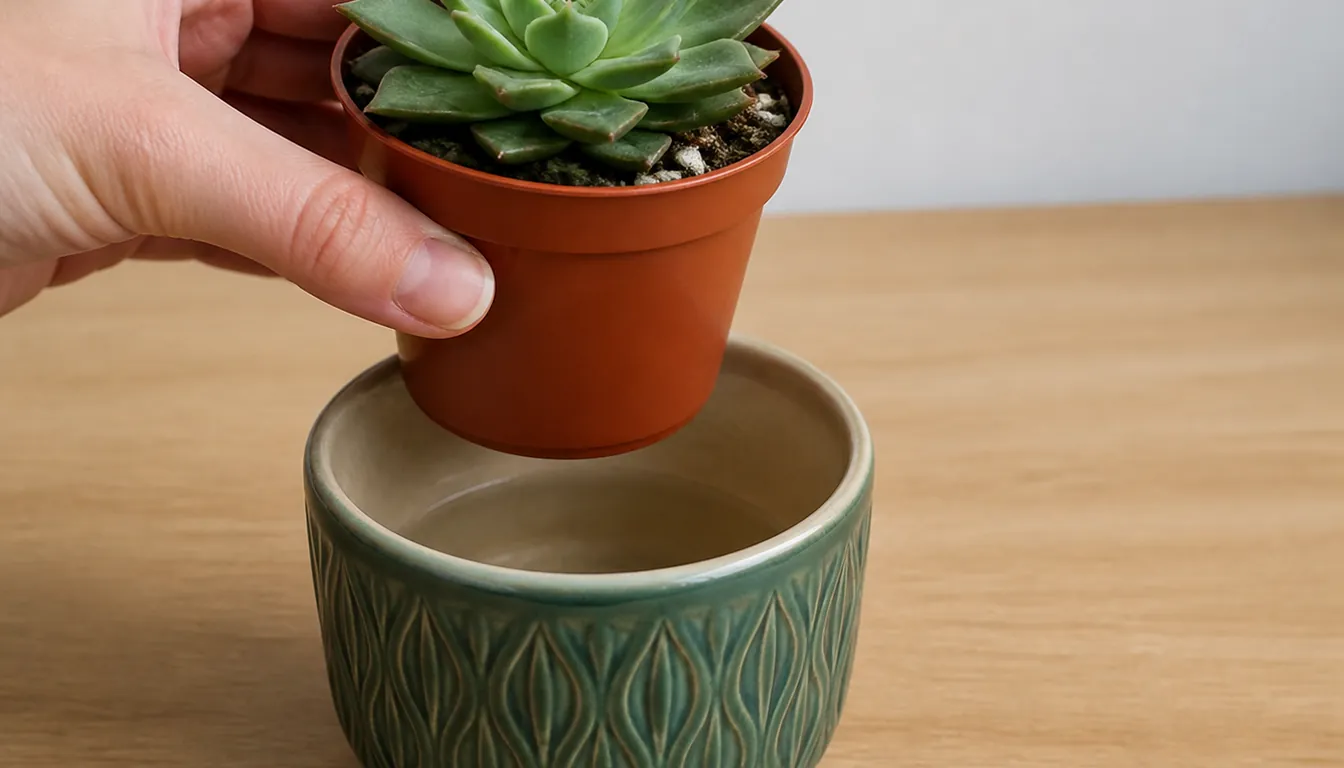
Very dry, shrunken mix may resist rewetting.
Apply water slowly in stages so it has time to soak in. Controlled bottom watering is another option for an intact, draining pot.
Stand its lower portion in water and monitor uptake, then remove it once the root zone has moistened and let it drain fully. Do not leave it soaking indefinitely or insist that a coarse surface dressing must look wet before removing it.
Bottom watering changes the direction water enters, not the plant's need for air afterward. Use it to rewet a dry pot when appropriate, not to treat a plant whose roots are already wet or decaying.
Which pot and mix make watering easier?
A container with drainage holes gives excess water a way out and makes watering easier to assess. If you want a decorative container without holes, use it as a cover for a separate draining pot.
Do not rely on gravel at the bottom to turn a sealed container into a well-drained one.
Choose the pot for the size of the root system.
A small plant placed in a much larger pot can leave a large volume of unused mix wet. Conversely, a badly crowded plant in broken-down mix may become difficult to water evenly.
Inspect the roots and material before assuming that changing the watering frequency is the only solution.
Unglazed terracotta loses moisture through its walls, while plastic and glazed containers do not lose water in the same way. All can work with suitable drainage and a suitable mix.
Material alone does not establish the interval, because plant size, light, airflow, and temperature also contribute.
| What you find | Why it matters | Useful adjustment |
|---|---|---|
| Dense mix staying wet around a small root ball | Water and air are poorly balanced for many dry-climate succulents | Use a suitable free-draining succulent mix and correctly sized pot |
| Water running around a dry central plug | Runoff may bypass the roots | Rewet carefully and assess whether the old mix needs replacing |
| Very coarse mix drying faster than you can manage | Roots may receive too little sustained moisture | Choose a blend with appropriate water retention for the plant and room |
| Water in the saucer or cover pot | Roots can remain in contact with runoff | Empty it after watering |
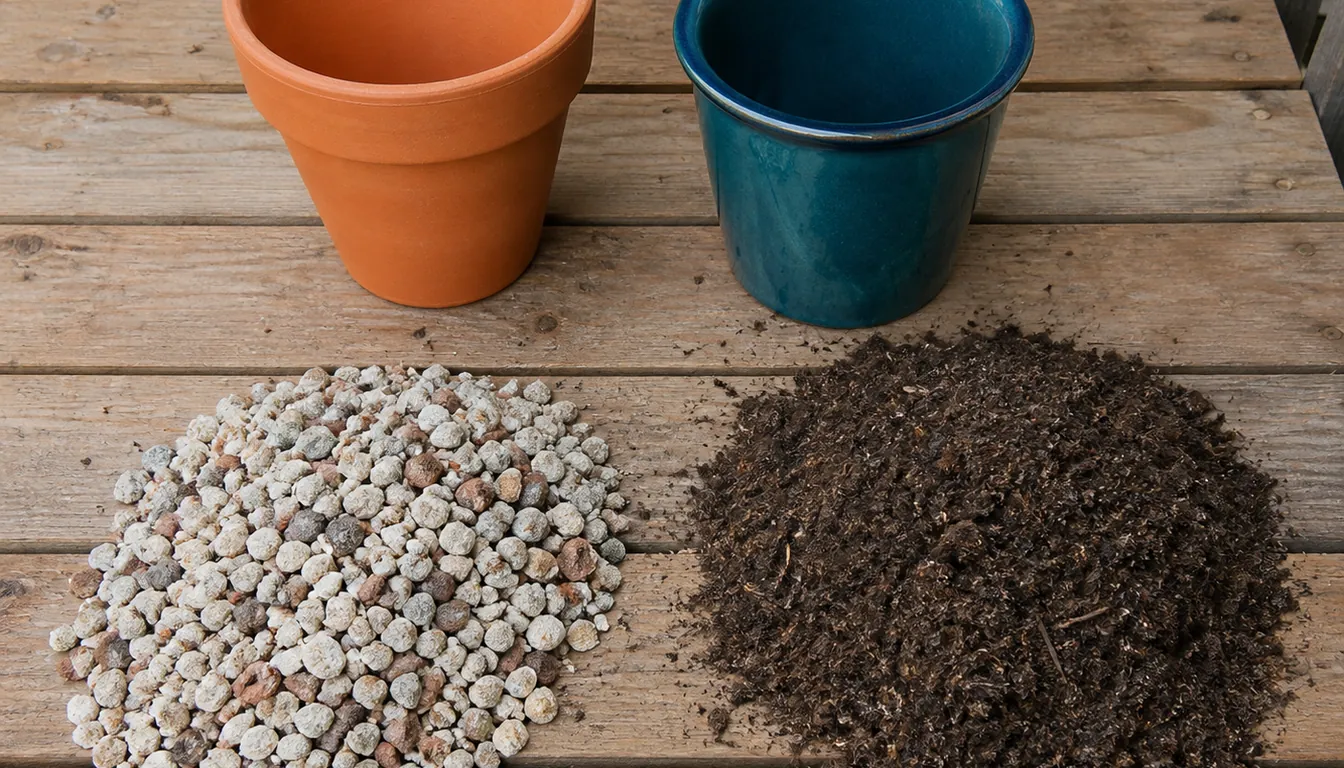
A commercial cactus and succulent mix is a useful starting point for many dry-climate species. Coarse mineral ingredients such as perlite or pumice help create an open structure, while an organic component retains some water.
Not every product performs alike, and the words peat-based or gritty alone cannot tell you how the finished blend behaves.
Look at the whole root zone after repotting. A compact nursery plug inside a coarse new mix can hold moisture differently from the material around it.
Keep checking both rather than assuming that fresh grit has corrected every drainage problem.
What if the leaves are wrinkled, yellow, or soft?
Treat leaf appearance as a clue, not a complete diagnosis. Excessively wet roots and severe drought can both cause yellowing, shriveling, and leaf loss.
Some waterlogged succulents develop translucent, mushy leaves, but neither a leaf's color nor which leaf fell first can settle the cause by itself.
Inspect the mix, drainage, stem base, and recent conditions together.
A dry, light pot supports a thirst diagnosis. Persistent moisture with collapsing roots or a soft, darkened base is more concerning for root or crown damage.
Healthy root color varies, so texture and the overall condition matter more than a simple white-versus-brown rule.
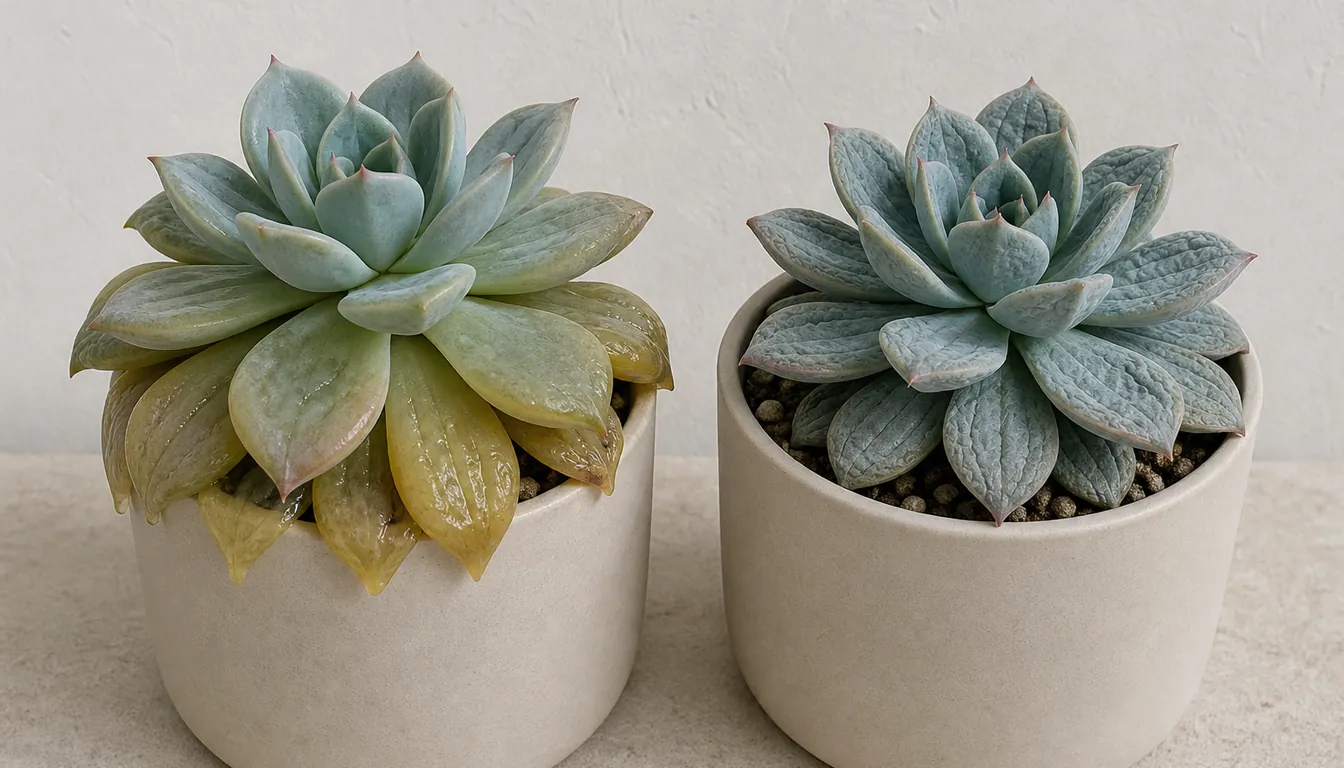
| Findings together | Sensible next step | Limit of the clue |
|---|---|---|
| Dry root ball with shriveled leaves | Rehydrate an established plant whose growth stage permits watering, then drain | A badly dried root system may not recover quickly |
| Damp mix with yellowing or mushy leaves | Stop adding water, empty runoff, and investigate drainage and roots | Leaf symptoms alone do not identify a pathogen |
| Soft, collapsing roots or a decaying stem base | Separate the plant and assess what healthy tissue remains | Drying the pot cannot restore dead tissue |
| A few papery lower leaves with healthy new growth | Monitor and remove fully dead leaves when loose | Normal leaf aging does not require an extra watering |
| Damage after sudden strong sun or cold exposure | Correct that exposure and inspect the roots before changing watering | Scorched or chilled tissue will not be repaired by a soak |
After watering a dry plant, allow time to assess its response. Do not keep adding water while waiting for old damaged leaves to look new.
Severe drought can kill roots, so a plant that stays weak despite a properly moistened mix needs further inspection rather than another automatic drink.
If roots or the base are decaying, assess the extent of damage.
Some plants with limited root loss can recover after the cause is corrected. A badly rotted specimen may need to be discarded or restarted from healthy tissue.
A soft patch at the stem base is serious, but it does not prove that every root has already died.
For salvage, use the propagation method appropriate to the identified species.
A clean stem section or offset may be usable when the remaining plant is failing. Let fresh cuts dry as that species requires and avoid burying decaying tissue in new mix.
Not every succulent can regrow from a single leaf, and an unrooted cutting should not receive the same routine as an established pot.
How do species and seasons change the routine?
Growth and growing conditions matter more than the month on a calendar.
Many dry-climate succulents use less water in a cool, dim winter position than during active growth. A plant under effective grow lights in a warm room may behave differently.
Check whether its mix is drying and whether the plant is actively growing before carrying over a summer routine.
Do not assign every succulent to a single winter-dormant group.
Nor is a light monthly watering safe for every resting plant. Some need a distinctly dry period, while others still require moisture.
These examples show why identification comes before a watering schedule.
| Plant or situation | What changes | Watering implication |
|---|---|---|
| Many desert cacti given a cool winter rest | Growth and water use decline | Species guidance may call for minimal water or a dry rest |
| Aeonium in very hot summer conditions | Some plants become semi-dormant | Avoid repeated soaking to force growth; follow the plant's summer-rest needs |
| Lithops replacing its old leaf pair | The new leaves use reserves from the old pair | Keep dry during this stage and wait until the old leaves have shriveled before resuming the appropriate routine |
| Christmas cactus and other forest cacti | Their habitat and flowering cycle differ from desert cacti | Use their own moisture and seasonal care instructions rather than prolonged desert-style drying |
| Succulent seedlings or fresh cuttings | Roots and reserves are not those of a mature plant | Follow establishment guidance, not the adult plant's full wet-dry cycle |
Aeonium behavior illustrates the importance of local conditions.
Hot summers can reduce growth, while milder weather may allow a different pattern. A species description is more useful than a universal instruction to water more in summer.
The same caution applies to Lithops, whose leaf-replacement cycle needs attention even when other plants on the shelf are ready for water.
Outdoors, count rainfall as water.
A pot left in repeated rain can stay wet without anyone using a watering can. Shelter a sensitive container when needed, and keep drainage outlets open.
When moving a plant outside, acclimate it to brighter exposure gradually so sun damage is not mistaken for thirst.
Succulents established in suitable ground have a different rooting volume and exposure from small indoor pots. Newly planted specimens still need establishment care, while mature drought-tolerant plantings may need little supplemental irrigation.
Judge the species, soil, recent rain, and local climate rather than transferring an indoor pot interval to the garden.
Should new pots and cuttings be watered the same way?
A newly purchased plant needs a moisture check before its first watering at home. The nursery may have watered it recently, and a decorative gravel layer can hide the original mix.
Remove packaging that traps runoff, identify the plant, and inspect the pot instead of watering simply to welcome it.
Repotting can mean very different things.
Moving an intact, dry root ball into a slightly larger container is not the same as trimming diseased roots or taking a fresh cutting. Fresh wounds on many fleshy succulents need time to dry before they are exposed to sustained moisture.
Follow the relevant species and propagation instructions rather than using one waiting period after every repot.
An unrooted cutting has limited ability to take up water.
Many succulent stem and leaf cuttings are allowed to callus and then rooted with modest moisture in a suitable medium. They should not sit in a saturated adult-sized pot, but neither should every young propagule be left dry for months.
Seedlings can need more consistent moisture than established plants.
For a mixed arrangement, group plants only when their light, moisture, and seasonal needs are compatible. A Lithops beside a more regularly watered succulent creates a conflict that a shared reminder cannot solve.
Separate nursery pots inside a larger display can let you inspect and water each plant independently, provided collected runoff is removed.
Use reminders as inspection appointments. A helpful note says what was dry, what was watered, and what was left alone.
Recheck after a move or seasonal change, and give anyone caring for the plants the same decision process rather than a fixed dose for every pot.
Frequently Asked Questions
How often should I water an indoor succulent?
Check the identified plant and its root zone. Many established dry-climate succulents benefit from drying between thorough waterings, but the interval changes with the pot, mix, light, temperature, and growth stage.
Use a reminder to inspect rather than to water automatically.
Should I spray succulent leaves instead of watering the soil?
No.
Misting does not reliably moisten the root ball.
For a plant that is ready for water, apply it to the mix and let excess drain.
Use different guidance for seedlings or propagation setups that need controlled surface moisture.
Can I keep succulents in pots without drainage holes?
A separate draining nursery pot inside a decorative cover is easier to manage.
Lift it out to water, let it drain, and empty the cover.
A gravel layer inside a sealed pot does not provide an outlet for excess water.
Can an overwatered succulent recover?
Sometimes, depending on the amount of healthy root and stem tissue left.
Correct the source of persistent wetness and inspect any soft or decaying tissue.
Severe rot may require discarding the plant or propagating a healthy portion using a method suitable for that species.
Sources & References
- Cacti and succulents - University of Minnesota Extension
- Low-maintenance succulents - University of Illinois Extension
- How to grow houseplant cacti and succulents - Royal Horticultural Society
- Common Problems and Issues of Succulents - Iowa State University Extension and Outreach
- Living Stones, Lithops - University of Wisconsin Horticulture
- Aeonium trial results - Royal Horticultural Society
- Succulents - UC Master Gardener Program of Sonoma County
- Winter Indoor Plant Problems - University of Maryland Extension
Related Guides
A Drought Tolerant Plant Is Not Drought Tolerant Yet
Colorado State puts it in one sentence. Drought tolerant plants are not drought tolerant until…
11 min read
An Overwatered Tree Hides It for a Year, Then Thins
A tree gives you almost no warning. Colorado State says the symptoms of root problems may appear…
12 min read
Best Time to Water Flowers for Stronger Blooms
Watering flowers at the wrong time does more damage than skipping a day.
10 min read
Best Time to Water Indoor Plants: Morning or Evening?
Morning is the better default for watering indoor plants.
6 min read
Best Time to Water Plants for Healthier Roots
Watering at the wrong time wastes water and stresses plants, even if you are generous with the…
11 min read
Deep Watering vs Frequent Watering: What Roots Need
Deep watering usually serves established lawns, vegetables, trees, and shrubs better than repeated…
17 min read