
How to Grow Hoya Carnosa and Encourage Repeat Flowers
Hoya carnosa Apocynaceae
Hoya carnosa grows as a climbing or trailing vine with waxy leaves and repeat flower clusters. Bright filtered light, an airy root zone, and retained flower stalks support growth; wrinkled leaves still need a moisture check before more water.
Care snapshot
Know which hoya you are growing
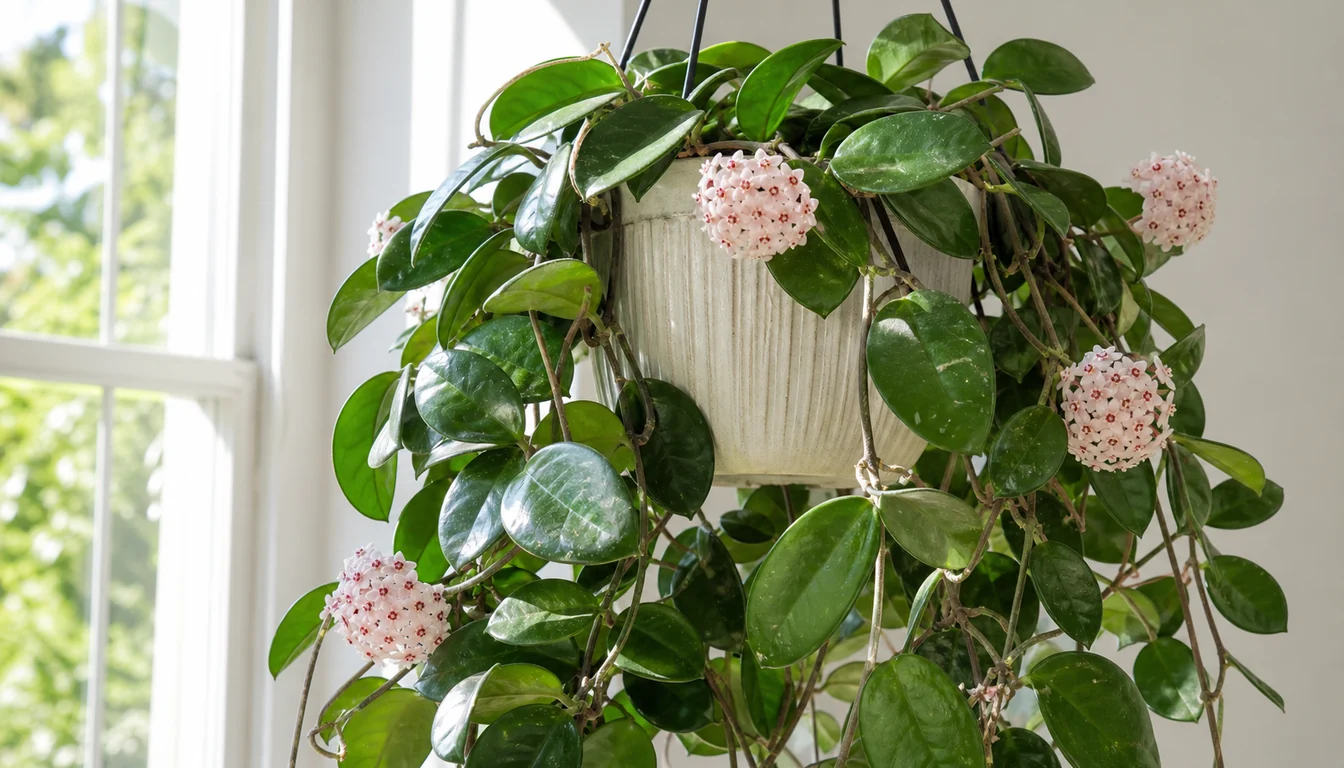
Hoya carnosa, also called wax plant, has paired fleshy leaves and clusters of pale, star-shaped flowers. It belongs to the dogbane family, Apocynaceae. It is a climbing epiphyte, a plant that can grow on another plant for support. In a container, that makes a loose root environment more useful than a large volume of dense soil. This care advice covers carnosa and its cultivars, rather than assuming every species sold as a hoya needs identical treatment.
An established green carnosa can grow vigorously, while the curled-leaf cultivar Compacta grows more slowly. A young cutting also needs time to establish roots before sustained vine growth. A pause in growth is not enough to identify a nutrient shortage. Light, temperature, and potting-mix condition give the feeding decision context.
- Green-leaved carnosa
- A straightforward choice if you want the classic waxy vine and can provide a bright position.
- Variegated forms
- Cream, white, or pink areas change the appearance. Buy a named plant if the exact cultivar matters, and protect pale foliage from scorching exposure.
- Compacta, or rope hoya
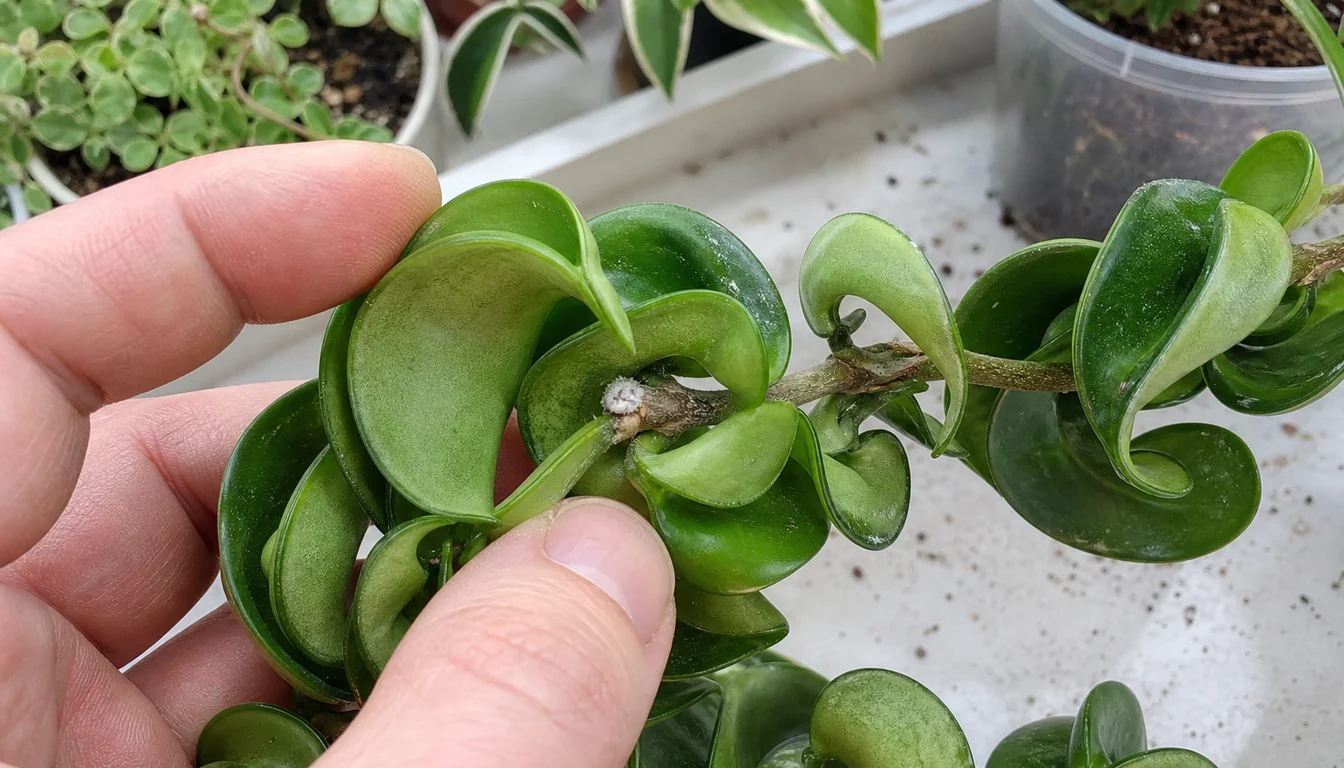
- Tightly curled leaves create a distinctive trailing plant. Inspect inside the folds when buying it and during pest checks.
Firm leaves, sound stem bases, and clean leaf joints are useful buying observations. A leafless runner alone is not a defect because carnosa can extend a searching stem before leaves develop. Softness or collapse at the stem base needs closer inspection even when the tip still looks green.
Put the leaves where the light reaches them
Bright filtered daylight supports growth and flowering. An east-facing window can provide gentler morning exposure, while strong south or west sun may need a sheer curtain. Nearby trees, buildings, screens, and overhangs can change the light reaching the foliage, so direction alone does not settle the position.
A basket hung high above a window can leave much of its growth in shade. Hanging height determines whether the leaves receive daylight, and a trellis can keep vines from disappearing behind furniture. A plant without developing buds can be turned as needed for more even exposure.
Thin, stretched growth and poor flowering can indicate insufficient light. A long, firm runner by itself does not prove that diagnosis. At the other extreme, bleached or scorched areas on exposed leaves are a reason to reduce harsh sun. Increase exposure gradually when moving a plant from a dim shop or room rather than placing it directly against hot glass.
A grow light can make a suitable shelf usable when daylight is inadequate. Follow the fixture guidance for distance and coverage and illuminate the leaves, not just the soil. An interior corner without useful daylight or supplemental light is a poor place to expect hoya flowers.
Use the pot to judge watering and root health
Water thoroughly, then allow meaningful drying before the next watering. Feel the mix below the surface and lift the container to learn how its weight changes. A dry crust over a heavy, damp root ball is not a reason to add more water. Let the mix become substantially drier without leaving the entire root ball desiccated for a prolonged period.
There is no reliable weekly schedule for every hoya. A small pot in warm, bright conditions can need attention sooner than the same plant in winter. Check it regularly and water when the root zone needs it. Do not wait for deeply wrinkled leaves as your routine signal, because the plant may already be stressed by then.
At watering time, wet the root ball evenly until excess water leaves the drainage holes. Empty the saucer or lift the nursery pot out of its decorative cover to drain. A cover pot can hide standing water even when the surface looks dry, so check the bottom before returning the plant to its place.
- Wrinkled leaves and a very dry, light pot
- Water thoroughly and watch for improved firmness. If water runs around a shrunken root ball, make sure the mix actually becomes moist.
- Wrinkled or yellowing leaves with persistently wet mix
- Do not add another drink. Check for trapped water and inspect the roots if decline continues.
- Blackening stems or soft, decaying roots
- Inspect the extent of decay and correct drainage. A firm-looking upper stem does not prove that propagation material is disease-free. Severe or spreading decline may require discarding the plant or help from local extension.
- A crowded pot that dries unusually fast
- Inspect the root ball and mix. Repotting may be appropriate once roots have filled the container.
Use a mix that holds some moisture while draining freely. Potting mix, orchid bark, and coarse perlite are useful ingredients, but the result matters more than a rigid recipe. Dense, collapsed material that remains saturated needs replacement. A coarse blend that dries faster than you can manage needs more moisture retention, not a permanently full saucer.
A hoya can remain in its pot for several years. Repot when roots have outgrown it or the mix has deteriorated, preferably during renewed spring growth and away from active buds or flowers. Choose a container only slightly wider than the root ball, with drainage holes. A much larger pot leaves extra wet mix around a relatively small root system. Being somewhat pot-bound is tolerated, but severe crowding is not a treatment for poor flowering.
Match warmth, humidity, and feeding to growth
Iowa State gives 65–80°F as a useful indoor growing range for hoyas. Temperature guidance differs with species and growing context, so a minimum survival value is not a target for active growth. Keep it away from cold window contact, drafty doors, and direct heater airflow. For summer outdoors, use a sheltered, partially shaded position and acclimate it gradually.
For a summer move, returning the plant indoors before nights fall below 55°F follows Iowa’s conservative genus guidance. NC State describes 50°F for carnosa, but waiting for that lower value is unnecessary when a warmer indoor position is available. Neither temperature is a guarantee against injury in an exposed pot.
Average household humidity is often workable for carnosa. Iowa State describes 40–60% as a useful range, while NC State and RHS emphasize higher humidity during growth. The response of the plant and the actual room conditions matter more than chasing a percentage without checking the root zone.
If the room is very dry, a humidifier can help, but keep air moving around the foliage and avoid keeping leaves continually wet. Increasing humidity does not repair waterlogged roots. Check the pot first when a plant wilts, even if the room also feels dry.
Feed lightly during active spring and summer growth with a fertilizer labeled for houseplants, using its directions for dilution and frequency. Account for fertilizer already included in a fresh potting mix. More food is not the first response to a vine that has stopped growing in a cold or dim position.
Reduce watering frequency as light and growth decline in winter, while continuing to check the root zone. Pause feeding on a resting plant and resume when growth restarts. If salts collect on the mix or pot, review your dosing and occasionally flush a freely draining pot with plain water. Do not leave the drained solution sitting beneath the roots.
Preserve the flower stalk and troubleshoot missing blooms
The short stalk that held a cluster of flowers is a peduncle, often called a bloom spur. It remains after the individual flowers fall and can bear later clusters. Leave that stalk attached. If you are unsure whether a small old growth is a flower stalk, leave it until you can identify it rather than trimming everything that looks bare.
A useful way to recognize a peduncle is to follow an open flower cluster back to the vine while the plant is blooming. Remember that attachment point after the flowers drop. It is different from a long runner that continues extending and making leaves. Do not cut off the whole flower stalk as routine deadheading.
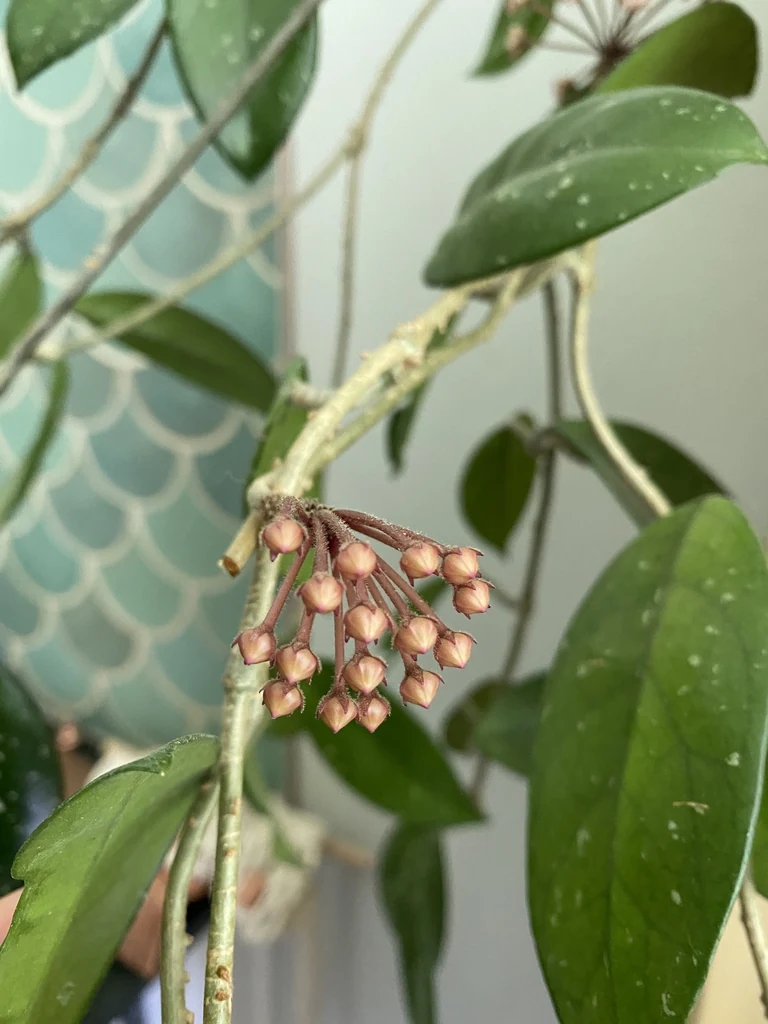
If the plant has never flowered, review its light and age first. Young plants commonly need several years before their first display. If a mature plant previously bloomed, ask what changed, including a darker location, major pruning, a much larger pot, or root decline. Correct the specific problem rather than trying heavy fertilizer or deliberate drought to force buds.
Once buds appear, keep care steady. A sudden change in light, temperature, or watering can cause them to drop. Continue checking moisture, because both excessive drying and excessive wetness can spoil a developing display. Move the plant if its current position is damaging it, but avoid unnecessary relocations during bud development.
Train flexible vines around a hoop or trellis with loose ties, leaving space for growth. Light pruning can contain an oversized plant or remove damaged stems. Check for peduncles before each cut and retain useful flowering growth. A support makes inspection easier, but a well-lit hanging plant can flower too.
Start a new vine with a stem cutting
Take a healthy stem cutting with a node, the point where leaves join the stem. A leaf without an attached stem node can root without ever producing a new vine. For a usable cutting, choose a healthy non-flowering portion rather than sacrificing a peduncle or cutting from a soft, failing stem base.
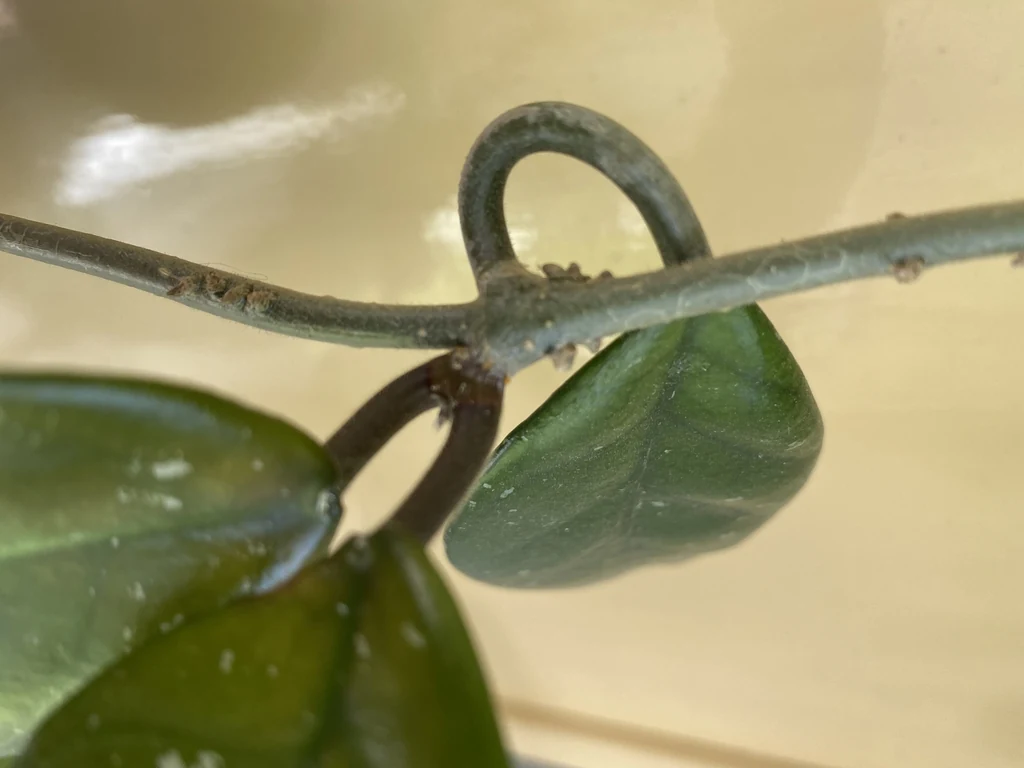
- Use clean, sharp tools to cut a stem section containing leaf nodes. Keep track of which end was nearest the roots, and remove the lower leaves so that a node can sit in the rooting medium.
- Place the lower node in water or a moist, airy propagation mix. Keep the remaining leaves above the water or mix. A small container makes the moisture level easier to manage.
- Keep the cutting warm in bright filtered light. Maintain moisture while roots form. If using a loose transparent cover to reduce drying, keep it out of direct sun and allow air exchange.
- For water rooting, refresh the water regularly and keep developing roots submerged. Transfer the cutting to a small draining pot after several roots have formed, handling them gently instead of waiting for a tangled mass to fill the glass.
- After potting, keep the mix lightly moist while the cutting settles, then gradually use the wet-dry routine for an established hoya. Check new growth and root establishment before feeding.
Rooting usually takes weeks, and cooler or poorly lit conditions slow it down. Resist pulling a cutting out repeatedly to see whether it has rooted. If the submerged stem becomes soft or dark and decays, remove the failed material rather than waiting for it to recover. New cuttings are best taken from healthy stock. If decay keeps spreading, apparent firmness above the damage does not establish that the remaining stem is free of disease.
Keep trailing stems and pruning sap out of reach
NC State lists Hoya carnosa as non-toxic to dogs, cats, and horses. ASPCA’s wax-plant entry names the curled-leaf form, Hoya carnosa 'Krinkle Kurl', and lists dogs and cats. Those scopes do not establish the safety of every species sold as a hoya. Non-toxic still does not mean edible, so discourage chewing and keep loose cuttings away from pets.
Wear gloves when pruning and wash off milky sap, which can irritate skin. Keep it away from eyes and mouths. A non-toxic animal listing does not cancel contact precautions for people handling cut stems.
Place the plant on a stable support or hanger where children and pets cannot pull down the vines, while keeping the foliage in useful light. A high but dark shelf solves access at the expense of growth. Allow room to reach the pot for watering and to examine the leaf joints. A long vine tangled behind other plants can hide both trapped water and pests.
If flowers drip nectar, protect the surface below and clean the residue without removing the living flower stalk. Flowers can be strongly fragrant, especially in the evening, so consider that when choosing a bedroom position.
Sources & References
- Hoya carnosa - NC State Extension Gardener Plant Toolbox
- All About Hoyas - Iowa State University Extension and Outreach
- How to grow hoya - Royal Horticultural Society
- Hoya carnosa - Plants of the World Online, Royal Botanic Gardens, Kew
- Wax Plant - ASPCA plant toxicity database
- Hoya — UF/IFAS Gardening Solutions
- Diagnose Indoor Plant Problems — University of Maryland Extension
- Insects on Indoor Plants — University of Minnesota Extension
Related Plants
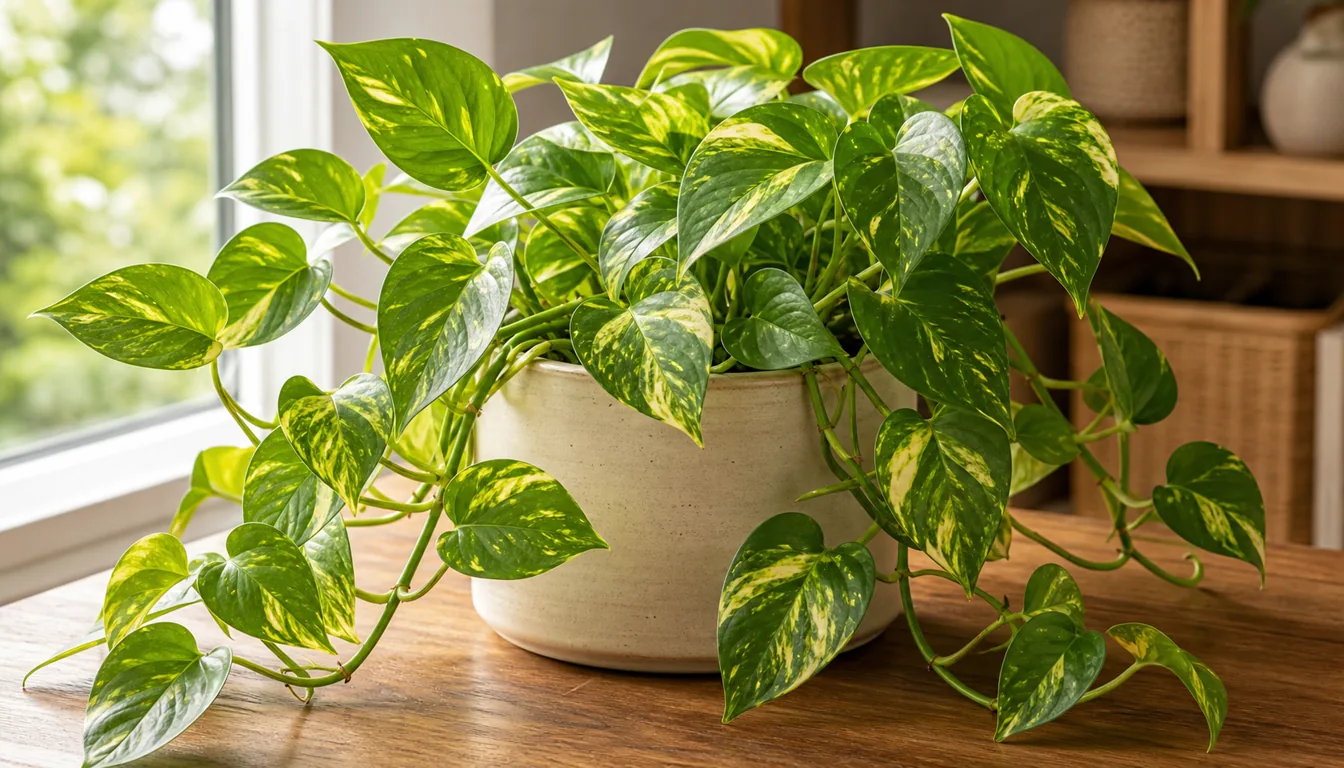
Golden Pothos
A familiar leafy vine for trailing baskets and indoor supports.
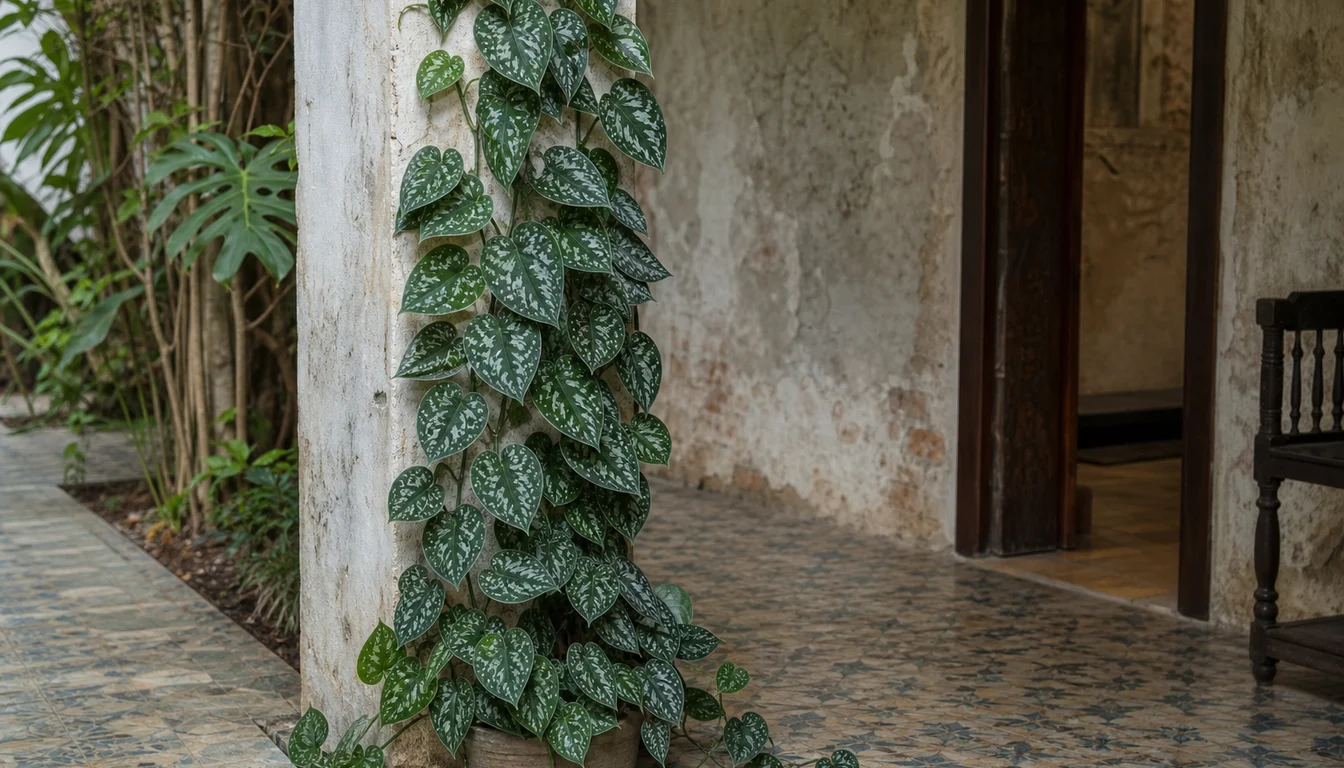
Satin Pothos
A trailing plant grown for silver-patterned foliage rather than hoya-like flower clusters.
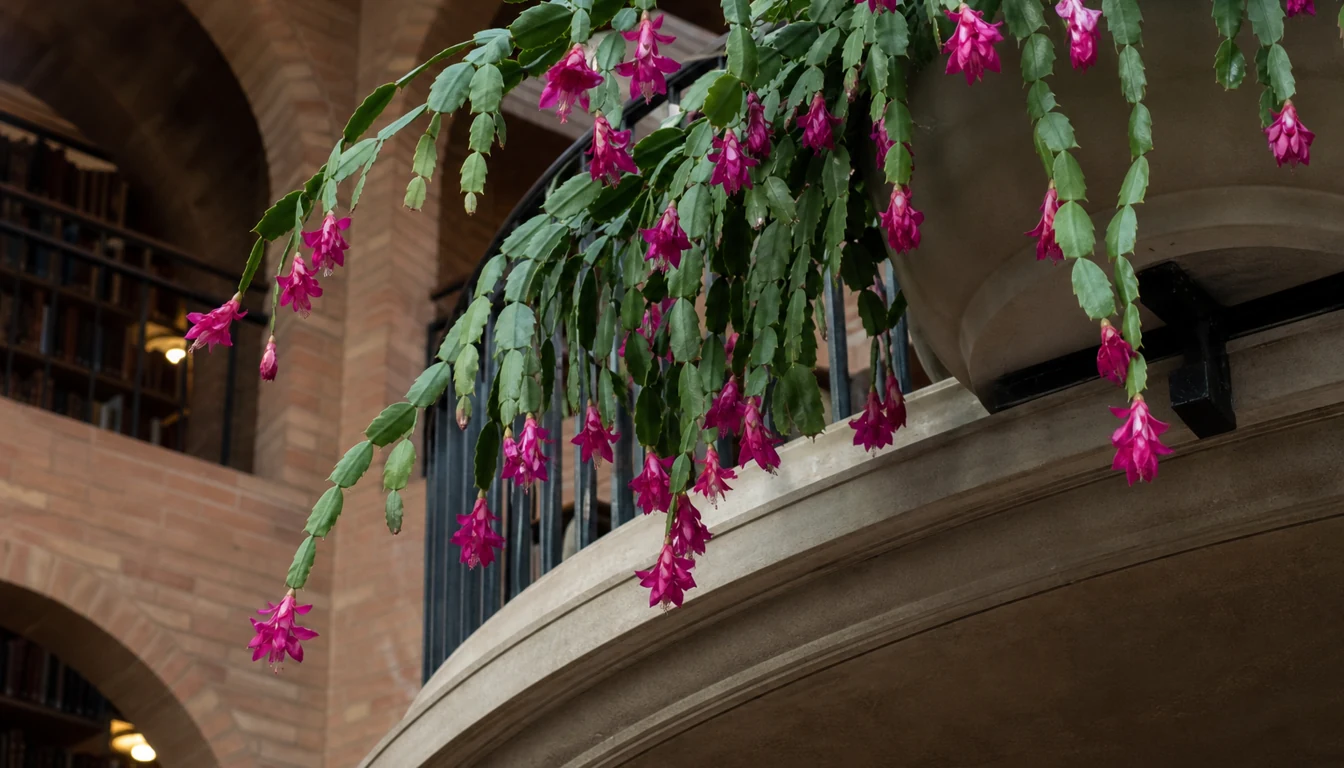
Christmas Cactus
An epiphytic indoor bloomer with flattened stems and different seasonal flowering cues.
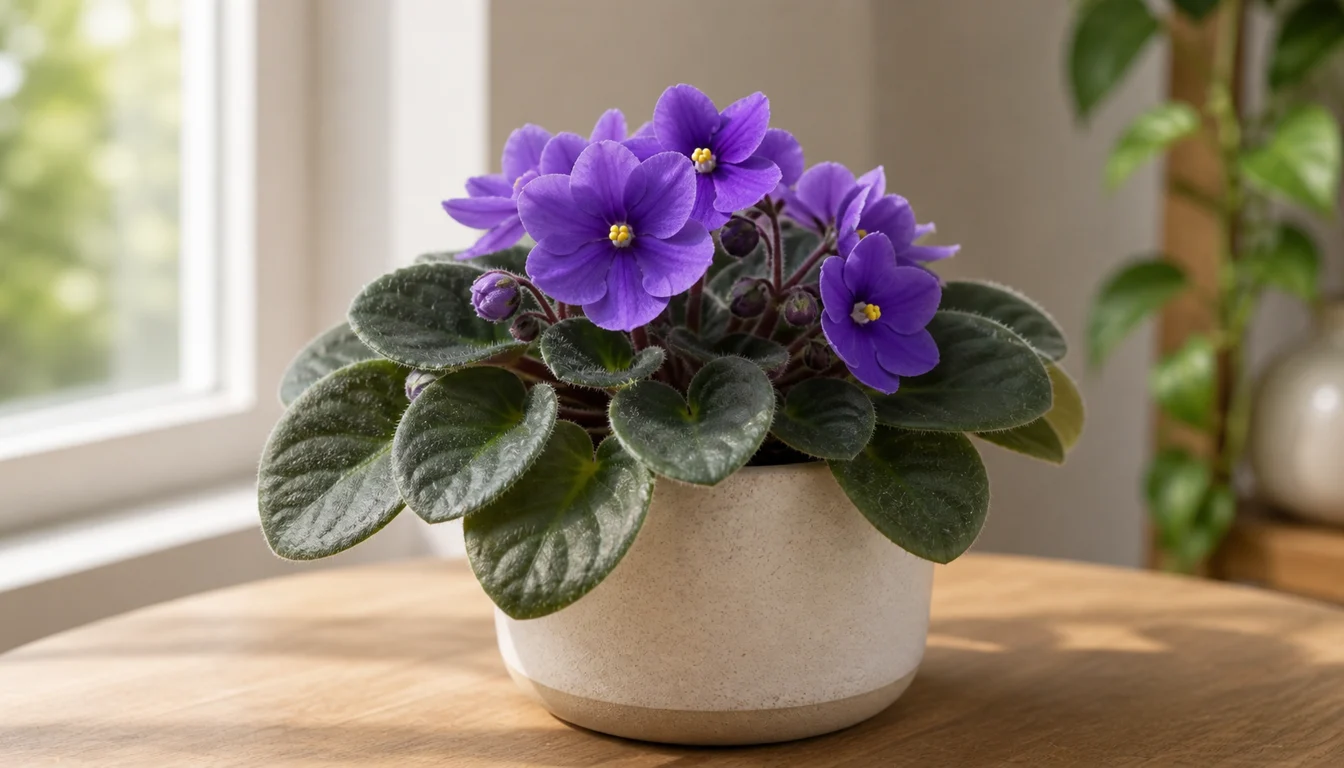
African Violet
African Violet is a windowsill bloomer that rewards steady, small-pot care.
Air Plant
Air plants are living sculptures that thrive without soil, anchoring to driftwood, rocks, or shells while drawing…
Alocasia
Alocasias include compact, textured houseplants and large elephant ears that need substantial floor space.