Raised Bed vs In-Ground Bed
Choose a raised bed when clean imported soil, drainage control, a defined edge, or a reachable working height solves a real site problem. Choose an in-ground bed when the native soil is safe and workable and you want more growing area with fewer built parts.
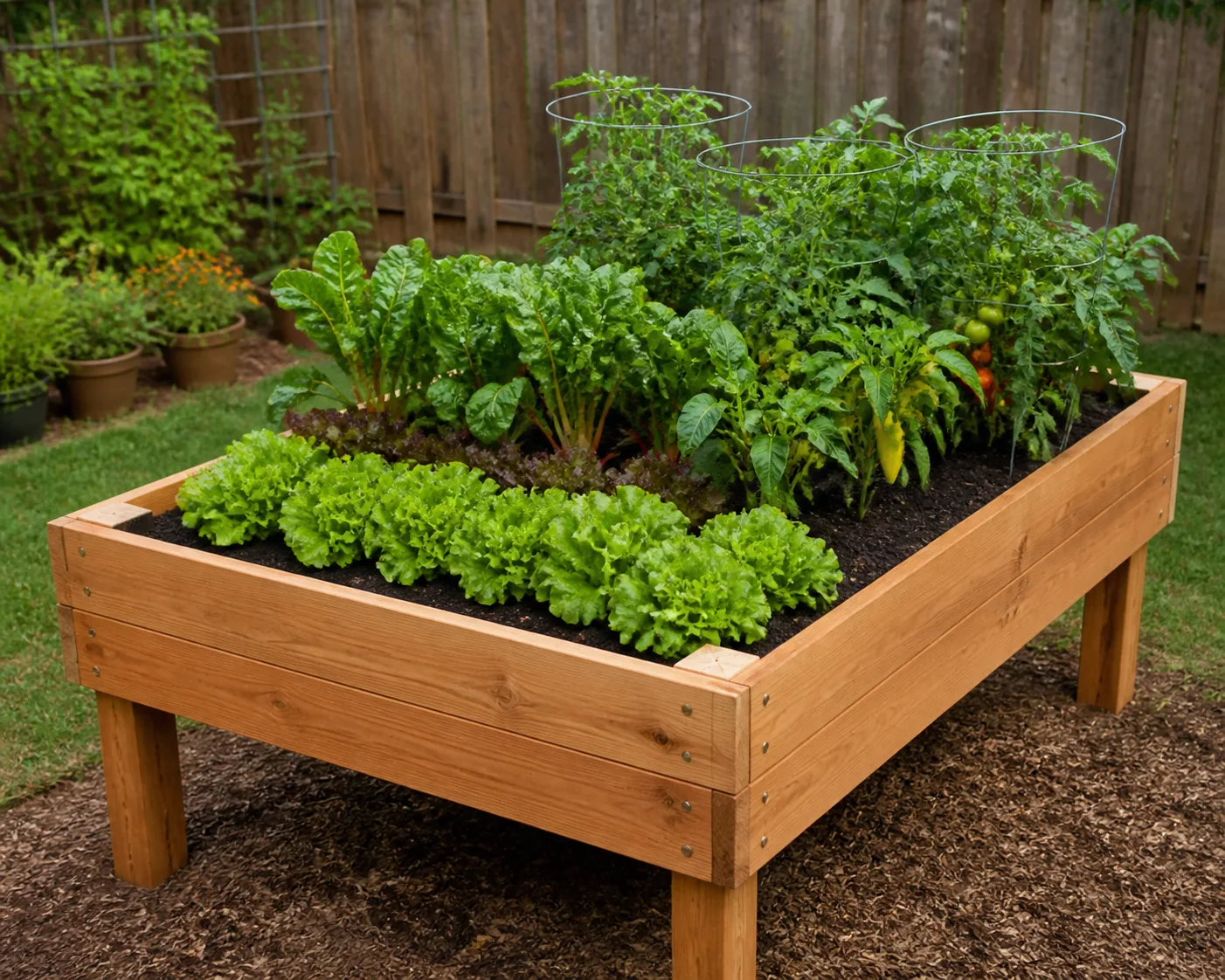
Raised Bed
Framed, mounded, or elevated growing bed
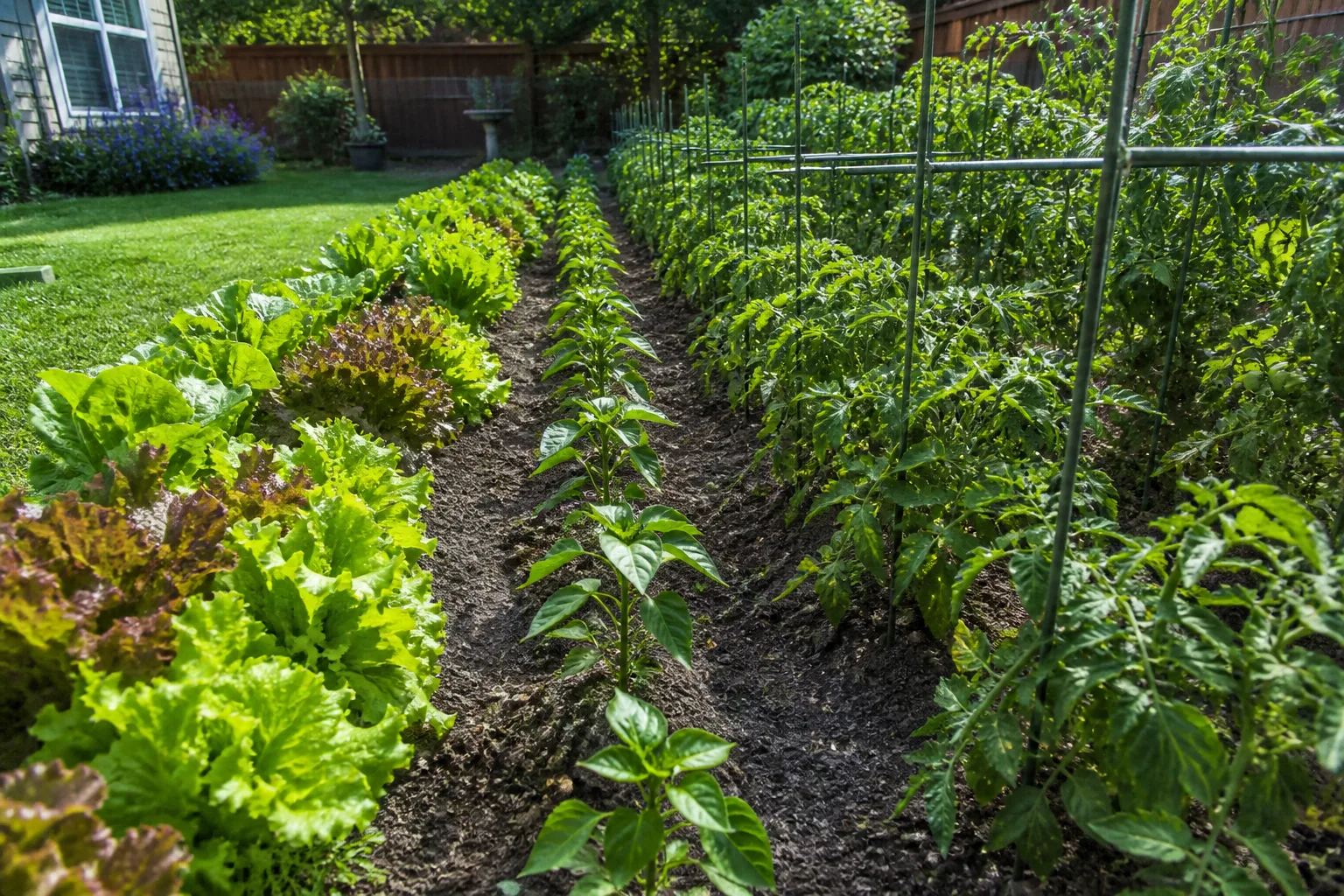
In-Ground Bed
Permanent growing area at soil grade
Raised beds and in-ground beds can grow the same vegetables well. Yield comes from light, root volume, soil, water, fertility, spacing, and care rather than from the presence of a frame.
A raised bed buys control over the upper root zone and can bring plants closer to the gardener. An in-ground bed keeps roots connected to a larger soil reservoir and avoids the material, fill, and repair work of a tall structure.
Make the choice from site constraints. Test questionable soil, observe drainage and sun, measure your reach and paths, and calculate the fill volume before buying boards or soil.
Specifications
Compare how each system delivers water, cost, and upkeep.
| Feature | Raised Bed | In-Ground Bed |
|---|---|---|
| Growing zone | Above grade, often open to soil below | Within the existing soil profile |
| Best reason to choose | Control, access, or separation | Scale and usable native soil |
| Initial materials | Fill plus optional frame | Soil improvement and paths |
| Root connection | Deep with an open bottom | Continuous by default |
| Water behavior | Often drains and dries faster | Follows native soil and grade |
| Temperature | Changes faster | Changes more gradually |
| Working height | Can be customized | At ground level |
| Maintenance | Refill settling and repair structure | Maintain soil, edges, and paths |
| Easy expansion | Add another defined unit | Extend permanent beds |
A raised bed does not have to be a box. Oregon State and the University of Minnesota both describe unframed soil mounds as raised beds, which can provide some drainage and traffic-control benefits without walls.
An in-ground garden does not have to be tilled every year. Permanent beds at grade can use mulch, compost, dripline, and no-dig practices while preserving the larger native-soil connection.
Best Use Cases
Choose by the site and the workload you can sustain.
Confirmed soil contamination
Separate crops from unsafe soil
Clean tested fill and a suitable barrier can reduce contact with contaminated ground.
Food crops should not go directly into unsafe soil without site-specific risk guidance.
Large plot with workable soil
Use the existing root zone
Frames and imported mix add little value when the site already drains and grows crops well.
Permanent ground-level beds can cover more area with paths, compost, mulch, and irrigation.
Limited bending or wheelchair access
Design from the user's reach
Correct height, width, knee space, edge shape, and path surface can reduce strain.
Ground-level beds can work with adaptive tools, but they do not bring the crop into reach.
Hot, dry, windy garden
Protect stored soil moisture
Elevated soil and exposed sides commonly dry faster and require closer irrigation checks.
The connected soil profile usually stores more water, though sandy ground can still dry quickly.
What counts as a raised or in-ground bed?
A raised bed has a growing surface above the surrounding path. It may be a low soil mound, a framed box open to the ground, or an elevated table with a contained bottom.
Those forms behave differently. A six-inch mound remains connected to native soil, while a waist-high table bed acts more like a large container with finite soil and faster drying.
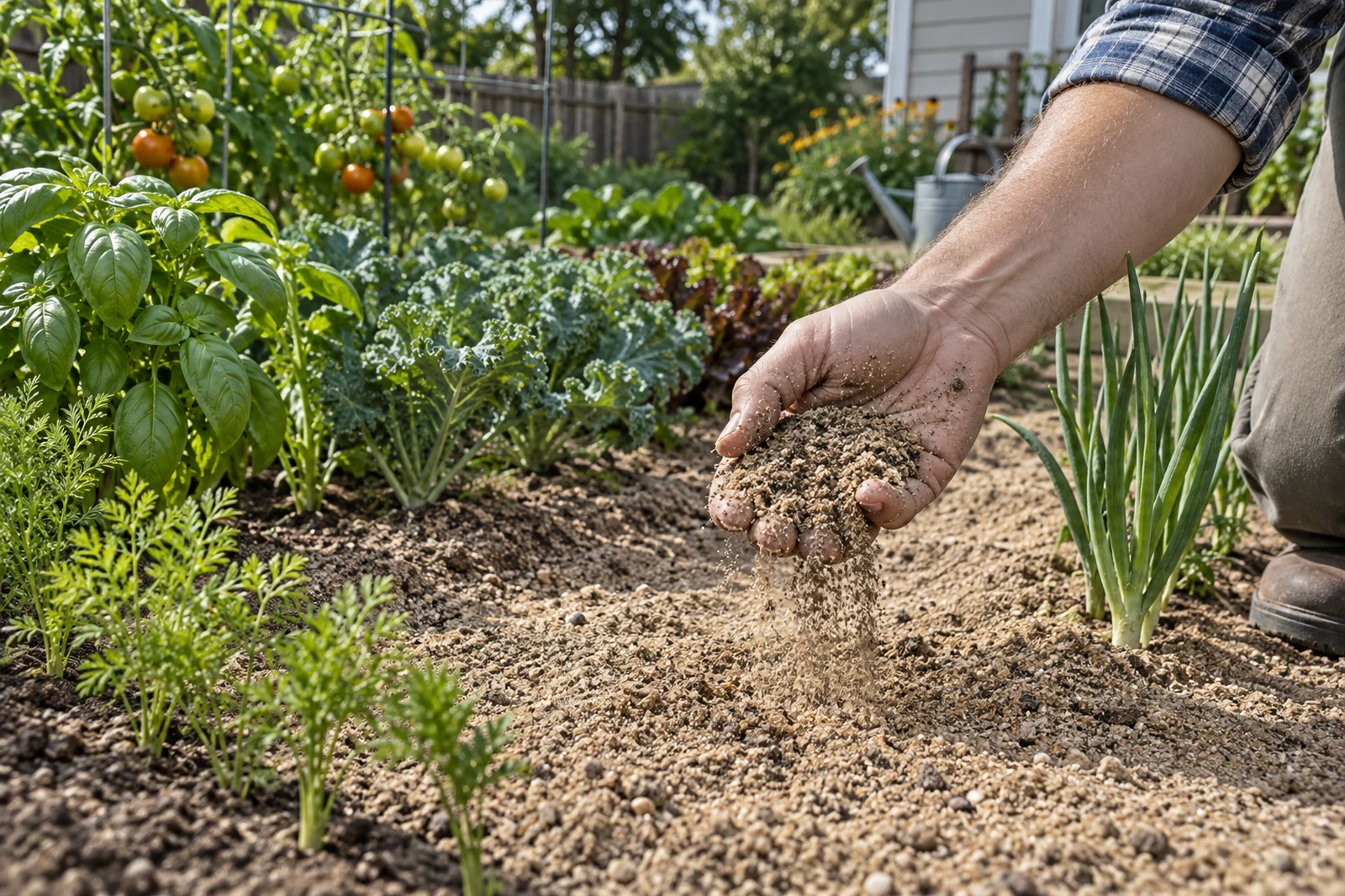
An in-ground bed is a defined planting area at or near grade. It can be a traditional row garden, a broad permanent bed, or a no-dig bed that receives surface compost without annual tillage.
The frame itself does not create fertile soil or good drainage. A raised box filled with poor material, placed in shade, or sealed over an outlet can perform worse than a well-managed bed at grade.
What should you check before choosing a bed type?
Start with the place where the garden must work. A frame cannot supply sunlight, move a flood-prone yard uphill, or make an unsafe soil history disappear.
Complete this site check before drawing beds.
- Track direct sun during the growing season and note shade from buildings or mature trees.
- Confirm a practical water source and the route for hose or irrigation lines.
- Observe where water stands after rain and where runoff enters or leaves the site.
- Dig test holes to inspect topsoil depth, compaction, rubble, roots, and drainage.
- Submit representative soil for fertility and pH testing.
- Request contaminant testing when the site history, peeling paint, traffic, fill, or prior industry creates a reason for concern.
- Locate utilities before deep digging, stakes, or earthwork.
- Measure gates, slopes, path turns, wheelbarrow clearance, and the gardener's comfortable reach.
Choose a raised bed when its design directly fixes one of those findings. Clean fill can separate crops from contaminated soil, extra height can improve access, and a mound can lift roots above a seasonally wet surface.
Choose in ground when testing shows safe workable soil and the site already drains adequately. Improving that soil may take labor, but a frame and imported mix would otherwise duplicate resources already present.
Plan the overall vegetable garden site before choosing bed dimensions. Crop rotation, compost storage, paths, sun, fencing, and water need space outside the planting surface.
How do soil depth and the bed bottom affect roots?
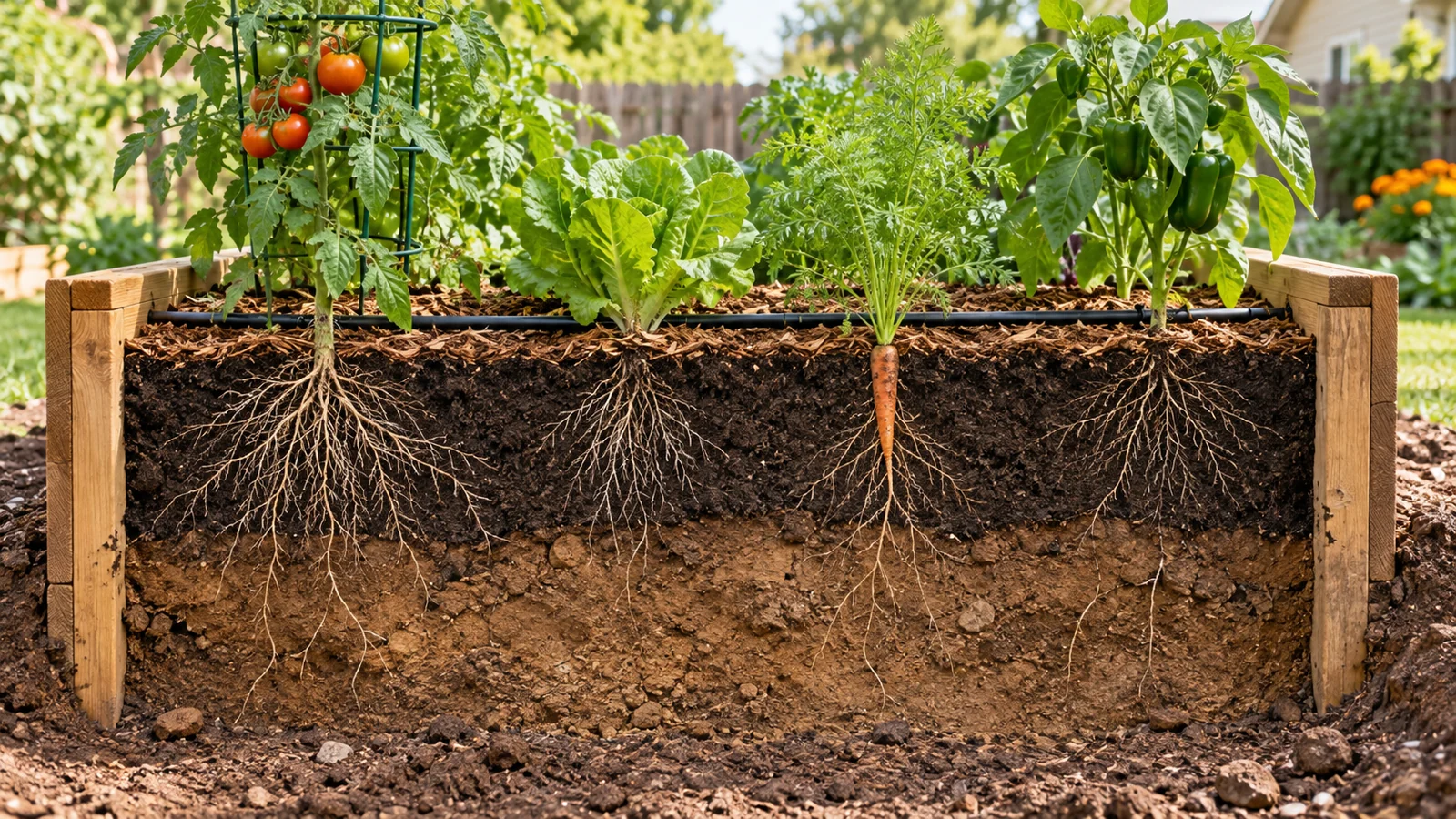
Most framed beds placed on safe soil should remain open at the bottom. University of Minnesota Extension warns that an unnecessary barrier can stunt roots, while Oregon State recommends loosening the ground below to improve deeper rooting.
Remove turf and perennial roots, loosen compacted surface soil, and blend the transition instead of leaving fine imported mix over a dense glazed base.
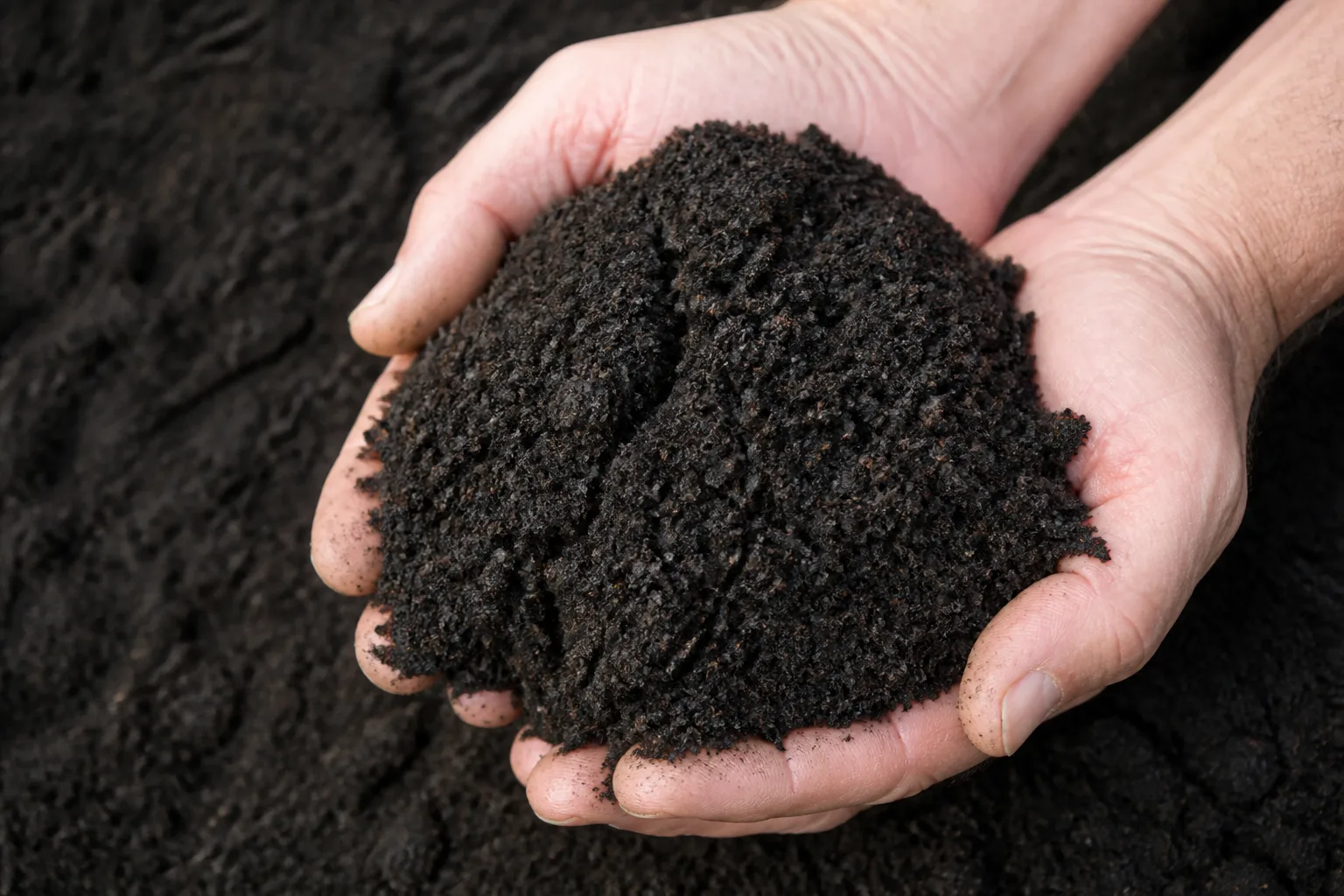
Use a soil-rich fill instead of pure compost or lightweight potting mix. Minnesota recommends roughly one-half to two-thirds topsoil with one-third to one-half plant-based compost as a starting blend, while the actual mix should reflect local materials, drainage, test results, and crops.
Compost alone settles as it decomposes, can resist water when very dry, and may build phosphorus or soluble salts when overused.
Choose the bottom treatment for the specific site condition.
| Site condition | Bottom treatment | Why |
|---|---|---|
| Safe native soil | Open over loosened ground | Roots can continue downward |
| Confirmed contamination | Planned barrier and clean tested fill | Reduces contact and soil splash |
| Burrowing animals | Hardware cloth | Deters animals while passing water and roots |
| Elevated container | Solid base with drainage outlets | Supports contained soil without trapping water |
The cutaway shows a normal open-bottom bed on safe ground, with roots continuing from the upper mix into loosened native soil.
Which bed handles water and temperature better?
Raised mixes often accept water readily and drain sooner than dense clay, but that does not mean they always need less irrigation. Exposed sides, loose fill, added height, sun, and wind can make a raised bed dry faster than the surrounding ground.
In-ground beds reflect the native soil. Clay may accept water slowly and remain wet, while sand may drain so quickly that an in-ground bed dries faster than a moisture-retentive raised mix.
Check moisture where roots are active instead of watering by bed type. Push a finger, trowel, or probe below the surface, note how deeply one irrigation wets, and adjust emitter spacing and runtime from what the soil actually does.
Use seasonal vegetable watering guidance rather than a daily raised-bed rule. Mulch, crop canopy, rooting depth, rain, temperature, and the water-holding capacity of the mix can all change frequency.
Raised soil also warms and cools faster. Earlier spring warming can help cool-season sowing, while rapid cooling and exposed sides can increase winter stress for perennial plants.
Good drainage cannot repair a bad outlet. A bed set in a low basin, on sealed pavement, or over saturated clay still needs a path for excess water to leave without eroding soil or flooding neighboring property.
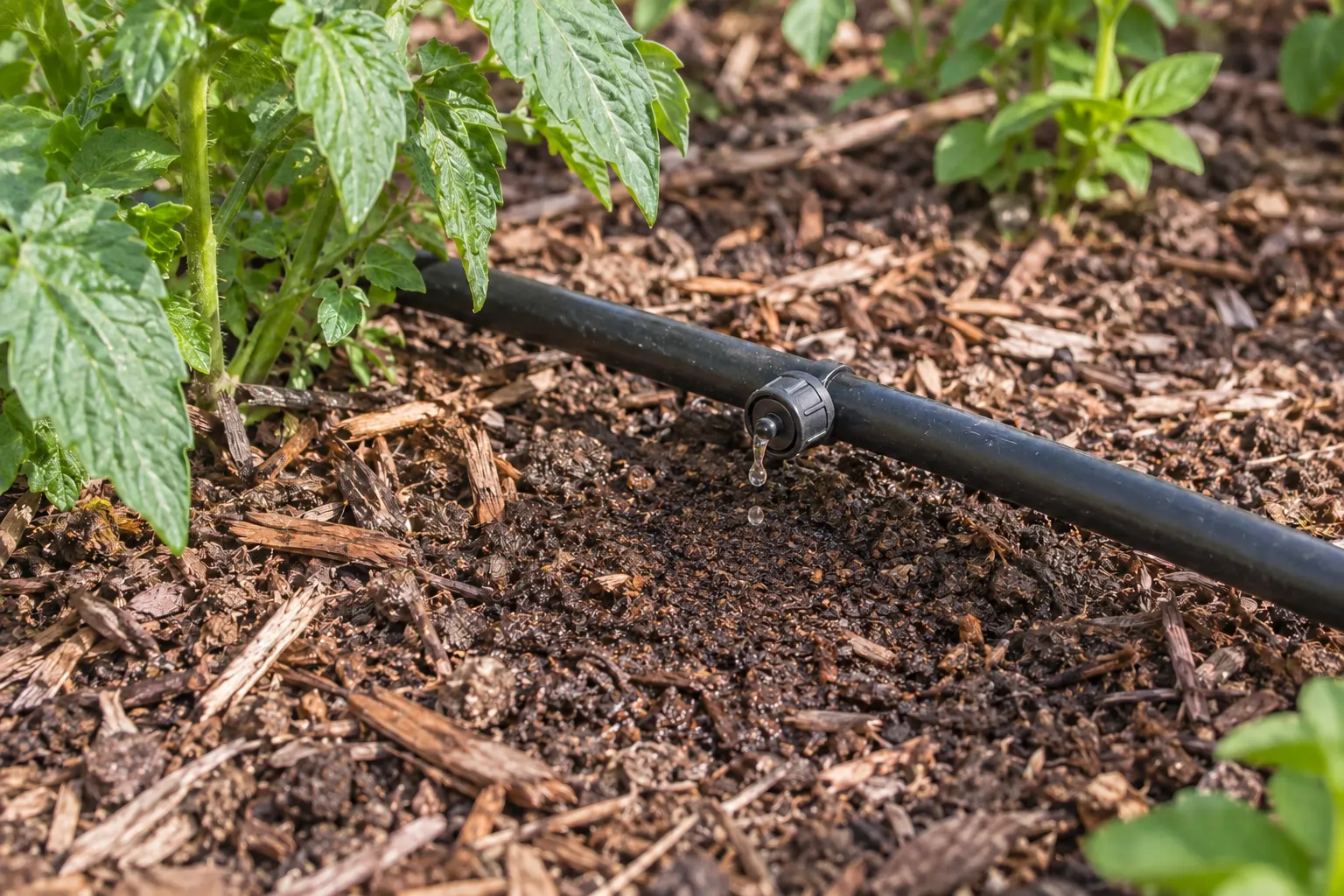
For a new raised bed, install dripline or another low-level system before the crop fills the space. Keep emitters on the soil surface or beneath mulch where they can be inspected rather than burying leaks inside the fill.
When does a raised bed improve accessibility?
Height helps only when width, approach, edge shape, and paths fit the person using the garden. A tall bed that forces a long reach can move strain from the back to the shoulders.
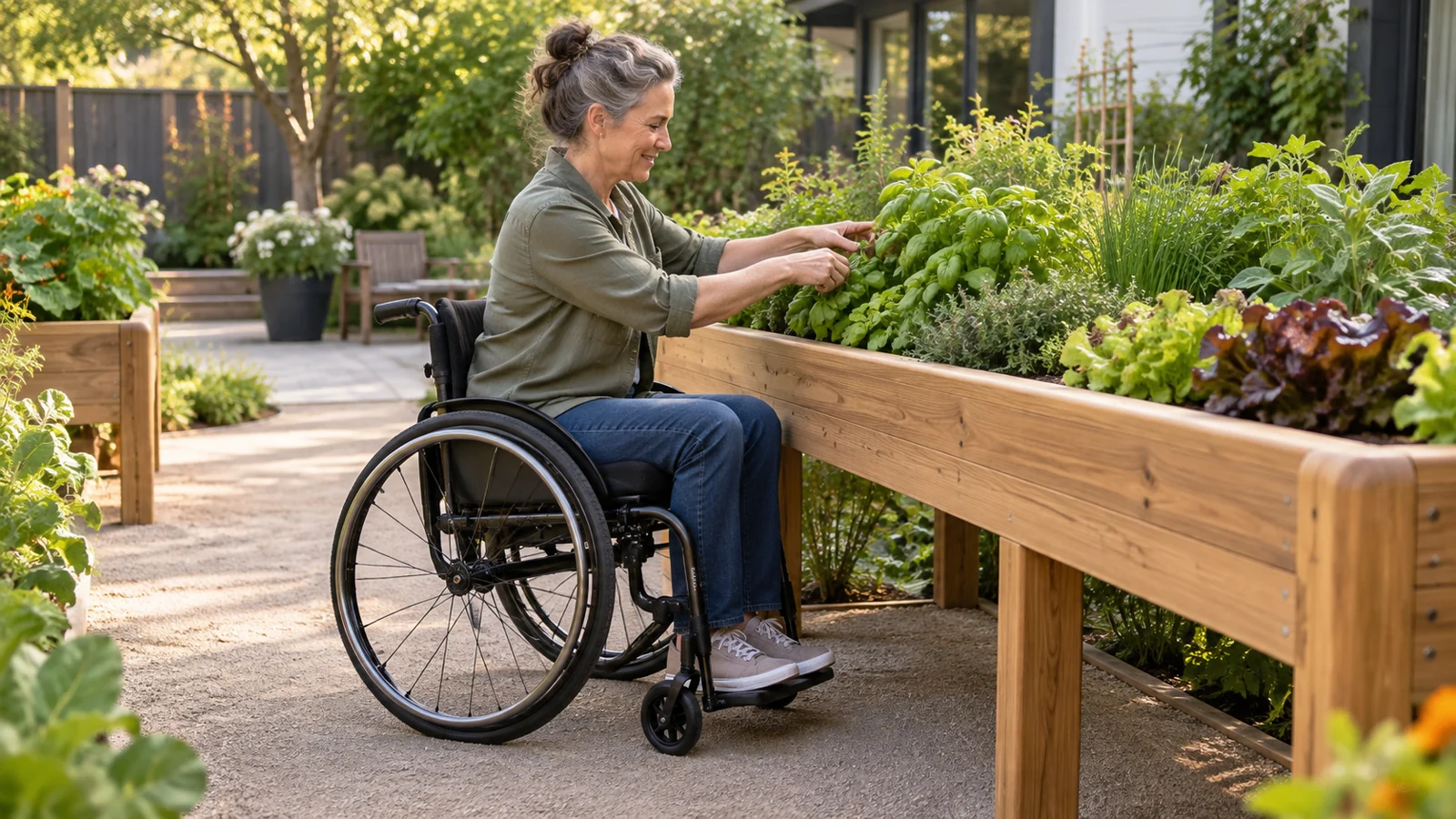
The University of Minnesota identifies 27 inches as a generally comfortable starting height for many wheelchair users, but chair dimensions, arm reach, posture, and crop height vary. Build a mock edge with boxes or a table and test it from the actual chair before construction.
Use these design checks.
- The user can reach the center without leaning on plants or soil.
- Knee and toe clearance lets the chair approach the planting edge.
- The path is firm, level, nonslip, and wide enough for turns.
- Edges are smooth and do not catch sleeves, hoses, or hands.
- Water controls, tools, and harvest containers are within reach.
- Tall crops and trellises do not block access to shorter plants.
- Drainage leaves the path usable after irrigation and rain.
For beds approached from two sides, four feet is a common adult maximum, but reach is the real limit. A bed worked from one side needs to be narrower.
Ground-level beds can still reduce strain through short rows, permanent paths, lightweight tools, kneeling seats, and crop placement. They remain a poor substitute when the gardener cannot safely bend or transfer to the ground.
The accessible bed in the image combines working height with knee space and a firm turning surface. All three details are part of the system.
How much material does a raised bed require?
The hidden cost of a raised bed is often fill rather than the frame. Calculate volume before choosing height because doubling the soil depth doubles the amount to buy, move, and support.
Use the inside dimensions of the bed.
- Convert length, width, and fill depth to feet.
- Multiply the three dimensions to get cubic feet.
- Divide cubic feet by 27 when a supplier sells by the cubic yard.
- Subtract space occupied by safe native soil already mounded into the bed.
- Confirm whether the supplier measures loose or compacted volume and allow for reasonable settling.
A bed with inside dimensions of 4 feet by 8 feet and a 1-foot fill depth holds 32 cubic feet, or about 1.19 cubic yards, before settling. That is a volume example rather than a recommended bed size.
Choose material after estimating soil volume. Bulk screened topsoil and tested compost may suit a large project, while bagged mix may be practical for one small bed but creates more packaging and handling.
Framed beds also carry the wet weight of soil and irrigation water. Oregon State advises reinforcing beds longer than 6 feet or taller than about 18 inches because long walls can bow outward.
Use framing rated and suitable for the intended site. Avoid railroad ties and unknown salvaged lumber around food crops, inspect metal products and coatings, and check current Extension guidance for treated wood rather than assuming every old or new treatment is identical.
In-ground beds avoid most frame and fill costs, yet they may need compost, drainage work, edging, or path material. Compare the exact site work on both plans instead of pricing boards against untouched ground.
Can you combine raised and in-ground methods?
Yes. A low unframed mound over loosened native soil provides a raised planting surface without a permanent box, while permanent in-ground beds and paths prevent compaction without changing grade much.
A framed open-bottom raised bed is another hybrid. It creates defined edges and a chosen upper mix while keeping roots connected to safe ground beneath it.
Use a contained elevated bed only when the bottom must be separate from the site or when working height is the main goal. Treat it more like a large container because root volume, drainage outlets, winter exposure, and irrigation all depend on the structure.
The final decision can be short.
- Build raised when tested contamination, severe surface compaction, wet ground, limited topsoil, a patio location, or access needs justify imported soil and structure.
- Stay in ground when safe workable soil, a large area, deeper moisture storage, or low construction input matters most.
- Use a low mound when you need modest elevation and permanent paths without buying a frame.
- Use both across the yard when different gardeners, crops, or site zones have different needs.
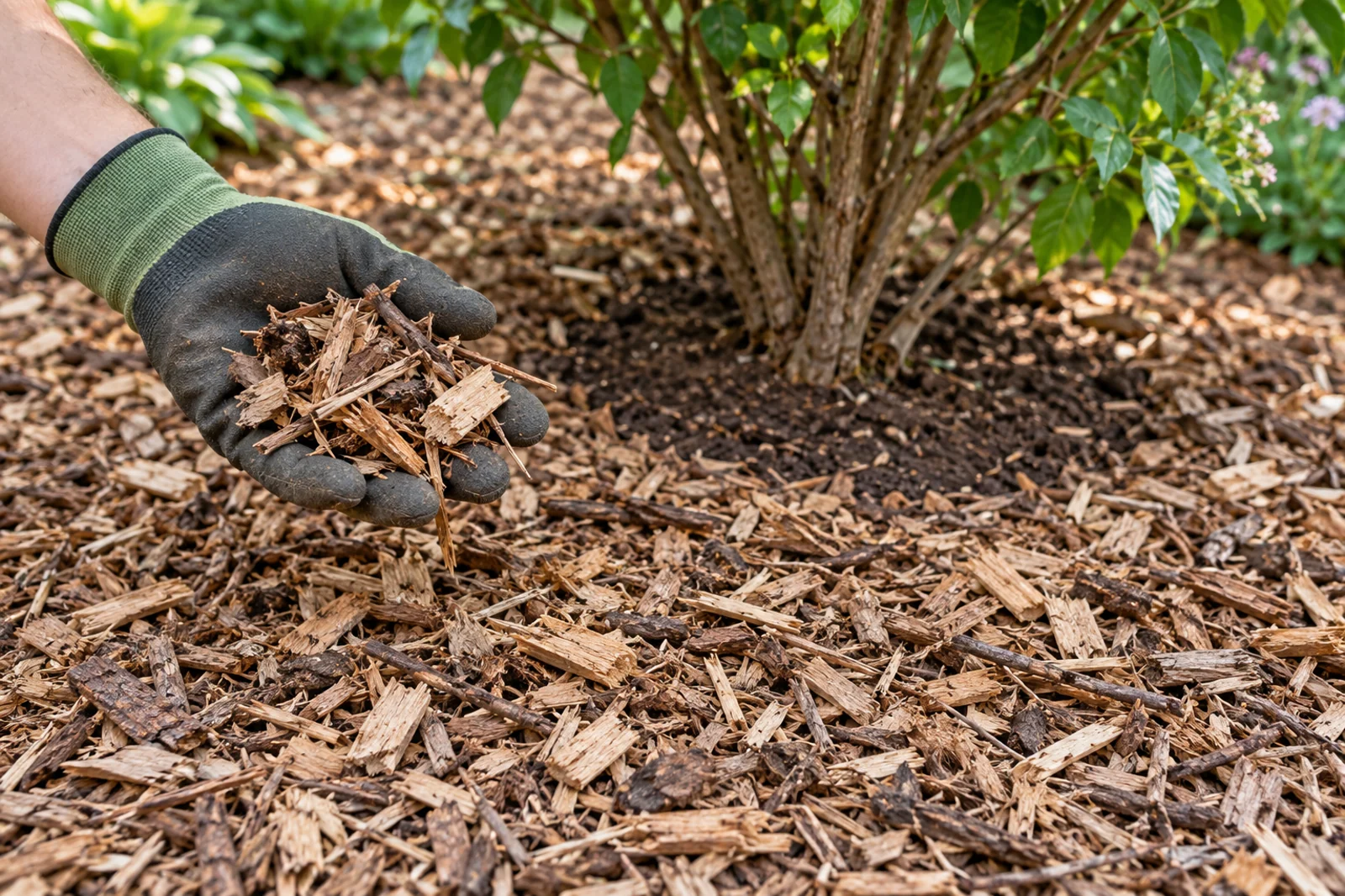
Finish either system with soil testing, suitable compost rates, mulch, irrigation access, and traffic kept out of the growing surface. The mulch and compost decision helps assign those two materials to the right job.
Reassess after one season before expanding. Watering labor, path access, crop health, settlement, and actual harvest space provide better evidence than the first-year appearance of a newly built box.
Sources & References
- Raised Bed Gardens — University of Minnesota Extension
- Raised Bed Gardening — Oregon State University Extension
- Lead in Soil — US Environmental Protection Agency
- Reusing Potentially Contaminated Landscapes — US Environmental Protection Agency
- How to Use Compost in Gardens and Landscapes — Oregon State University Extension
- Watering Basics — Oregon State University Extension
- Healthy Tips to Garden with Fewer Aches and Pains — Penn State Extension