
What's Thyme? How to Keep It From Turning Woody and Bare
Thymus vulgaris Lamiaceae
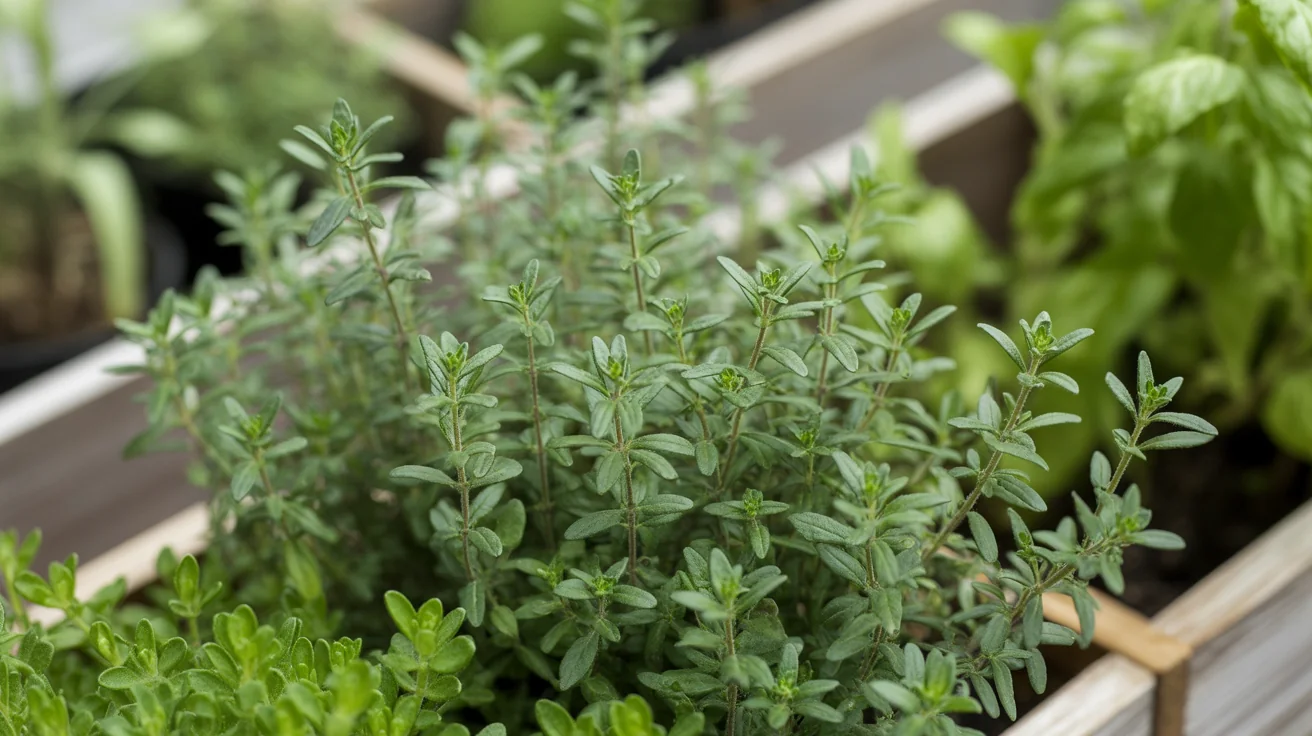
Thyme is sold beside the soft herbs but it is a small evergreen shrub, and it lives or dies on drainage rather than on watering. It wants full sun and lean, gritty ground, it is hardy in Zones 5 to 9 depending on the type, and by its third year the base turns to bare wood that needs a specific cut with a specific limit.
Care snapshot
How Big Does Thyme Get, and How Long Does It Last?
Thyme is Thymus vulgaris, a member of the mint family, and it is a broadleaf evergreen rather than a soft annual herb. It holds its small gray-green leaves through the year across most of its range.
That puts it in the same group as rosemary and lavender, shrubs that happen to be sold in the herb aisle.
The three sources put a mature plant within an inch or two of each other.
NC State gives 6 to 12 inches tall and 6 to 16 inches across, Penn State gives 12 inches by 10 to 12, and Maryland gives 6 to 10 inches.
One plant fills roughly a square foot of bed.
Two or three give more thyme than most kitchens get through in a year, which is worth knowing before a row of them goes in beside sage and the rest of the essential kitchen herbs.
Maryland describes the stems as stiff and woody, and that is the detail the size figures leave out. This is a shrub in miniature rather than a herb, and it ages like one.
The surprise arrives around year three. Each season the lower stems harden and drop their leaves, until the base of the plant is bare brown wood carrying a fringe of green on top.
Nothing has gone wrong, because that is what a small shrub does as it ages. Knowing it is coming matters, since the cut that fixes it has a limit a soft herb would never need.
Should You Buy Upright or Creeping Thyme?
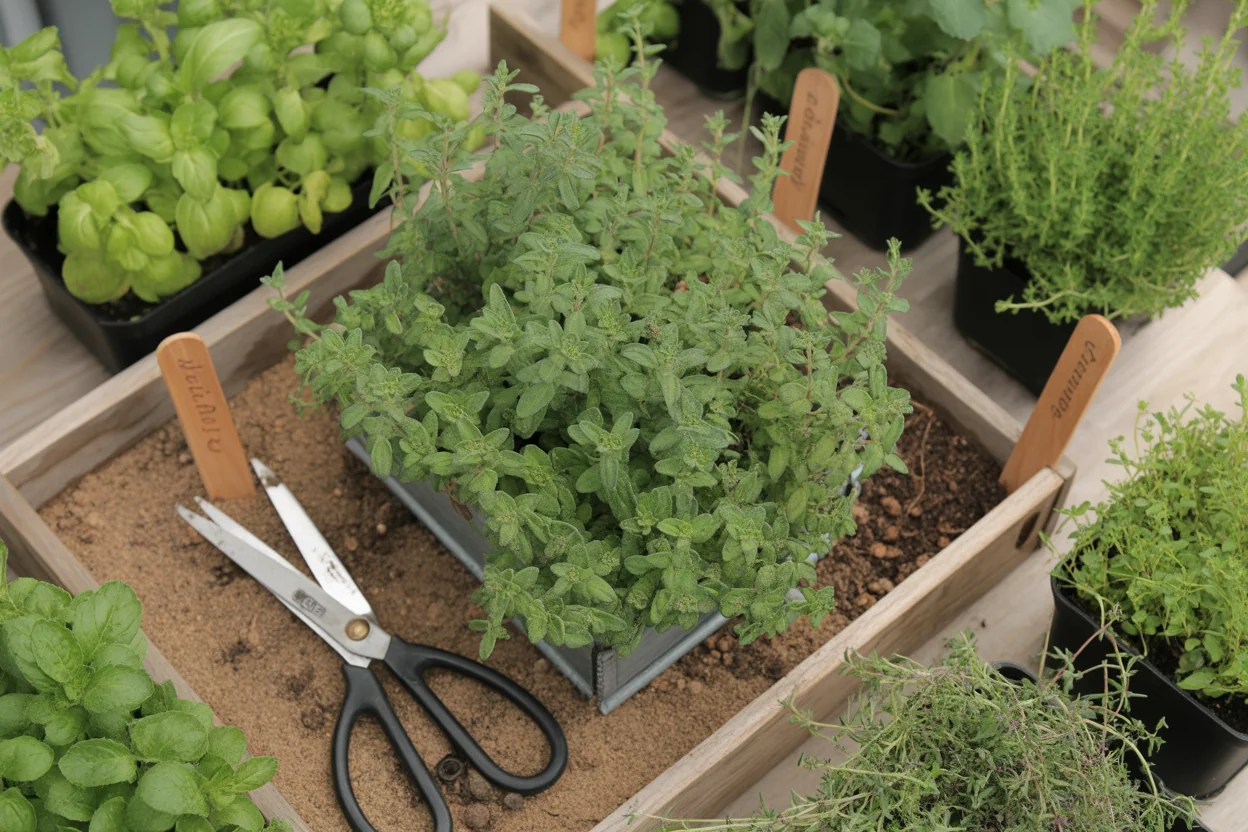
One word on a plant label covers plants that behave differently in a garden. Upright culinary thyme is Thymus vulgaris, stocked as common thyme, English thyme or German thyme, and it grows as a small bushy shrub.
Creeping thyme is the other habit entirely. It spreads flat across the ground and is grown as ground cover rather than for the kitchen.
- Common thyme (Thymus vulgaris)
- Upright shrub 6 to 12 inches tall and 6 to 16 inches wide, hardy in Zones 5a to 9b, the culinary default, and listed by NC State as resistant to foot traffic
- Lemon thyme (Thymus x citriodorus)
- Upright, 6 to 12 inches tall and about as wide, hardy in Zones 5a to 8b, with leaves and flowers that are both edible
- Creeping thyme (Thymus serpyllum or T. praecox)
- Flat mat 2 to 3 inches tall and 3 to 12 inches wide, hardy in Zones 4a to 9b, grown as ground cover and rarely used in cooking
- Woolly thyme (Thymus pseudolanuginosus)
- A flat gray felted mat grown for the texture rather than the flavor
- Elfin thyme (Thymus serpyllum 'Elfin')
- The smallest of them at 1 to 2 inches tall, for gaps between pavers
Height is the difference a buyer notices in the shop, and cold hardiness is the one that decides whether the plant is still there in April. Creeping thyme is the hardiest of them, which is the opposite of what its size suggests.
Within culinary thyme there is a second layer of names. Penn State lists Narrow Leaf French, Broadleaf English, German Winter, Silver Queen and Provencial, which are cultivars of the one species rather than different plants.
Those names matter less than they look. All five take the same soil, the same sun and the same cut, and the choice between them comes down to leaf size and whether you want the variegation Silver Queen carries.
Pick by the job the plant has to do. An edge that gets trodden on suits common thyme, which NC State rates as resistant to foot traffic, and Maryland points at the same use, calling thyme an attractive edging plant that can be planted between pavers or spread among and over rocks.
For the kitchen, common thyme is the default, and rosemary is worth weighing against it before either gets bed space.
Where Does Thyme Actually Want to Live?
Thyme needs full sun, which NC State defines as six or more hours of direct sunlight a day. Below that the stems stretch, the leaves thin out and the flavor goes with them.
Penn State is a shade more generous and allows full sun to partial shade. Between the two the safe reading is that partial shade keeps a plant alive and full sun is what makes it worth cooking with.
The soil question is where most thyme is lost. It grows best on dry, sandy or rocky ground with good drainage, and Penn State describes the same thing as light, dry, well-drained soil.
That is close to the opposite of the rich, moisture-holding bed a vegetable garden aims for.
The one figure the sources part company on is pH.
NC State puts thyme at neutral to alkaline and Penn State names 6.3, which is slightly acid.
Since that gap sits inside the range most garden soils already fall in, drainage is the number worth acting on and pH is not.
Iowa State is blunt about the consequence of getting drainage wrong and says wet or poorly drained locations should be avoided, because thyme is susceptible to root diseases in saturated soils. Anything done to a bed to make it hold more moisture therefore works against the plant.
- Skip the low corner where water stands after rain, since saturated ground is where root disease starts.
- Raise the planting area with gritty soil if the whole bed drains slowly.
- A slope, a wall top or a gravel path edge sheds water without any help.
- Mix coarse sand or grit into the planting hole rather than compost, which holds the water thyme does not want.
- Thin or space plants 8 to 12 inches apart, which is Maryland's figure, or about 12 inches by Penn State's.
Sun and drainage are settled on planting day.
A plant in the wrong spot cannot be rescued by watering it differently, because the water that kills it arrives as rain, and moving it in early spring is the only real fix.
Thyme is one of the drought-tolerant plants that earns a hot, poor, sunny strip most things refuse.
How Little Water Does Thyme Need?
Most thyme that dies in a pot dies from kindness.
NC State rates it drought tolerant and suited to occasionally dry conditions, which is a lower bar than the leafy herbs sold beside it.
Watering thyme on the schedule basil needs will drown it inside a season.
Penn State goes further than tolerance and describes the requirement itself. Once established, thyme does not require much watering or any fertilizer, which puts it in a very short group of garden plants that are finished asking for anything.
The check replaces the schedule because the right interval changes with the weather, and a plant in the ground behaves differently from one in a pot. Once its roots are established, thyme in a well-drained bed needs little water beyond what the sky provides.
A pot dries faster and does need attention in heat. That is also the case where the no fertilizer rule bends, since potting mix runs out of what little the plant does use, and it is why thyme reads as easy outdoors and fussy on an indoor sill.
How Much Cold Will Thyme Take?
Iowa State reports that most thyme species are hardy in USDA Zones 5 to 9, and Penn State gives the same range. NC State puts common thyme at 5a to 9b and lemon thyme at 5a to 8b, while creeping thyme runs from 4a to 9b.
Survival varies among species and cultivars, so the zone printed on a label is a starting point rather than a promise.
At the cold edge of that range the plant may simply not come back. Iowa State notes that in colder areas thyme may be grown as an annual, though in most areas it survives the winter in most years.
Habit changes the odds, because prostrate forms often overwinter better than upright types. A gardener in Zone 4 who wants thyme every year is better served by a creeping type and a plan to replace the culinary one.
- Choose a prostrate or creeping form where winters run cold, since those overwinter better than upright types.
- Plant on a slope or a raised bed so meltwater drains away from the crown instead of sitting on it.
- Save the cutting back for early spring rather than autumn, which is the timing NC State gives.
- Keep heavy, moisture-holding mulch off the crown, since saturated conditions are what the roots cannot tolerate.
None of that helps a plant sitting in wet ground through February. Cold alone is survivable at the right zone, and cold plus saturated soil is not.
Why Does Thyme Turn Woody, and What Fixes It?
Look at an established thyme plant from the side rather than from above.
The top is a dome of green, and underneath it the stems are bare, brown and stiff for the lower few inches. That bare zone grows every year while the green fringe on top gets thinner.
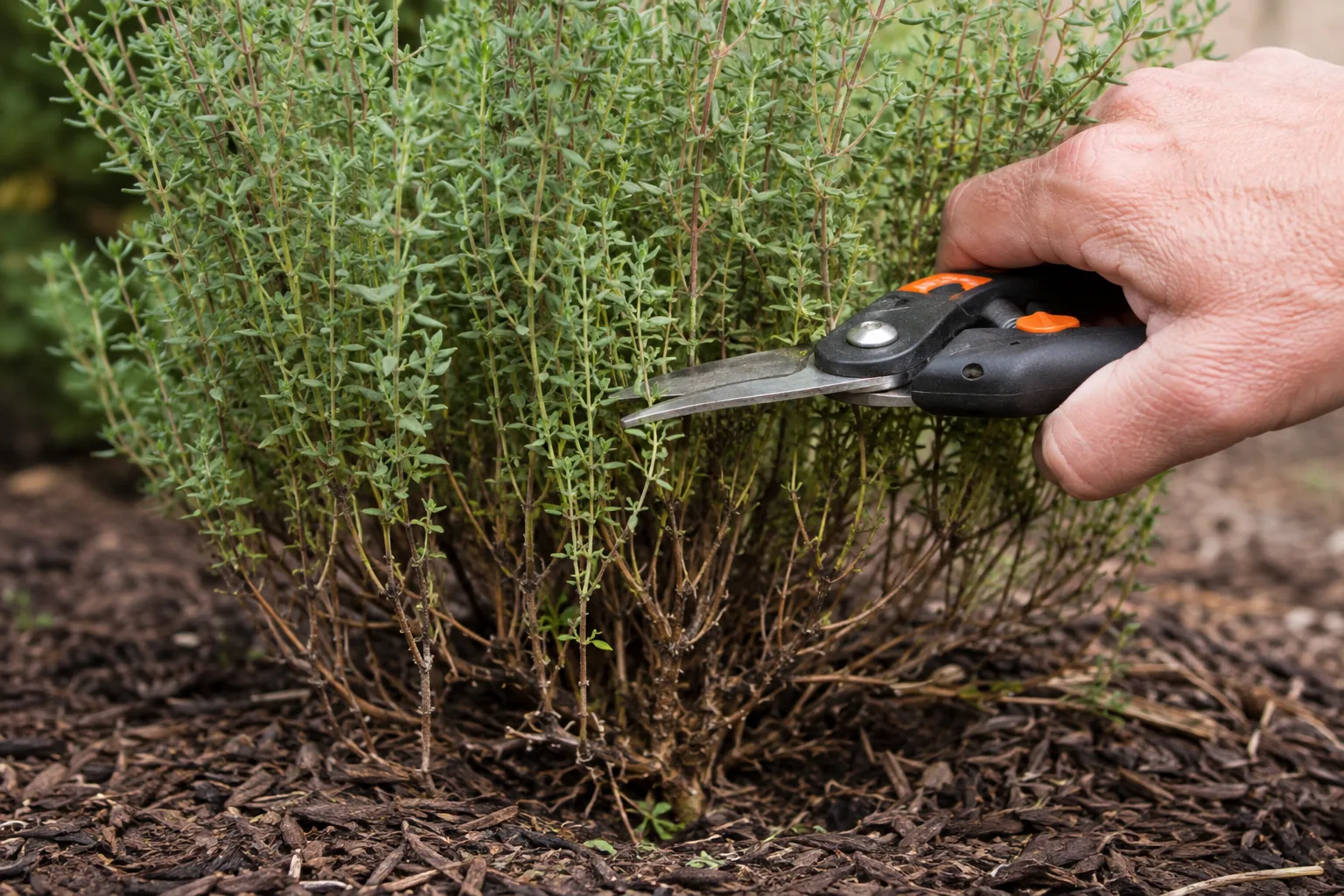
The limit on any cut follows from that shape.
NC State is specific and says always leave at least five inches of growth, which keeps the blades in the leafy part and out of the bare wood.
Thyme cut back into that bare zone often fails to regrow from it.
Trim whenever the plant gets leggy, and cut back in early spring and summer to reduce woody growth. Illinois Extension goes further and recommends renewing an older plant every few years by cutting it back severely in spring, and Maryland agrees that it is best to renew the plants every few years.
Even for that harder cut, the five-inch floor is the safer reading, because the regrowth comes from leafy stems rather than from bare wood.
- Early spring, before new growth runs, cut back to clear the woody growth built up last year.
- Midsummer, after the first flowering, cut again to keep the plant compact.
- Any time it looks leggy, trim the stretched stems back into leafy growth.
- Every few years in spring, take the renewal cut Illinois and Maryland both describe, staying above the bare wood.
A plant that is mostly wood is past renewing, and starting a replacement is quicker than nursing it. Illinois Extension notes thyme is much easier to grow from divisions or cuttings than from seed, and NC State adds that seed germination is uneven.
Penn State gives both methods their figures.
Cuttings are 4-inch shoot tips taken in late spring and rooted in a sand medium, kept well watered.
Division is a spring job on a well-established plant, lifting the whole root ball and splitting it so that every piece keeps rootlets.
Layering is the least work of the three, because a low stem pegged down onto the soil roots where it touches and can be cut free later. Oregano is the other kitchen herb that hardens at the base, and the herb pruning guide sets out how the woody ones differ from the soft.
When Should You Cut Thyme for the Best Flavor?
Stems can be cut through the whole season, and a few sprigs taken for dinner do the plant no harm. The peak of flavor is somewhere more specific than that.
Three sources put it within days of each other, on either side of the same event. Illinois Extension and Penn State both cut just before the plant flowers, Iowa State allows shortly before flowering or when the first blossoms begin to open, and Maryland takes the leafy tops and flower clusters when first blossoms open.
That spread is small enough to act on. Watch the plant from the point buds show color, and take the year's bulk cut in the few days around the first open flowers.
Penn State adds the part of the timing nobody thinks about, which is the hour. Cut on a dry day, after the dew has dried and before midday, because a stem cut wet goes into the bundle wet and takes the mold with it.
The drying method is a specification rather than a suggestion. Strip the bottom 2 inches of leaves, bundle the stems with a rubber band, and hang them upside down in a shady, dry, airy place.
Two details in that are doing real work. The stripped 2 inches is what the band grips, so no leaves are crushed inside it, and the band tightens as the stems shrink instead of letting the bundle drop.
- Cut on a dry day, after the dew has gone and before midday.
- Strip the bottom 2 inches of each stem and band the bundle there.
- Hang upside down somewhere shady, dry and airy.
- Wait for crisp, then strip the leaves off and seal them in an airtight container.
The test for done is the same one every drying guide gives and worth repeating because people stop early. The leaves are ready when they are crisp to the touch, and anything that still bends holds enough moisture to spoil a jar.
What Goes Wrong with Thyme?
A thyme plant that is dull, thinning and slowly giving up is usually telling you about its roots.
Iowa State names the cause directly and says thyme is susceptible to root diseases in saturated soils.
Before changing anything else, find out whether the spot holds water after rain.
Penn State reaches the same short list independently, naming root rot, fungal diseases and spider mites as what goes wrong. Two of the three are conditions rather than organisms, which is the useful thing about that list.
Dry air produces a plant that looks similar from a distance and needs the opposite response. Spider mites leave fine webbing between the shoots and a pale stippling across the leaf surface, both easy to miss until you look closely.
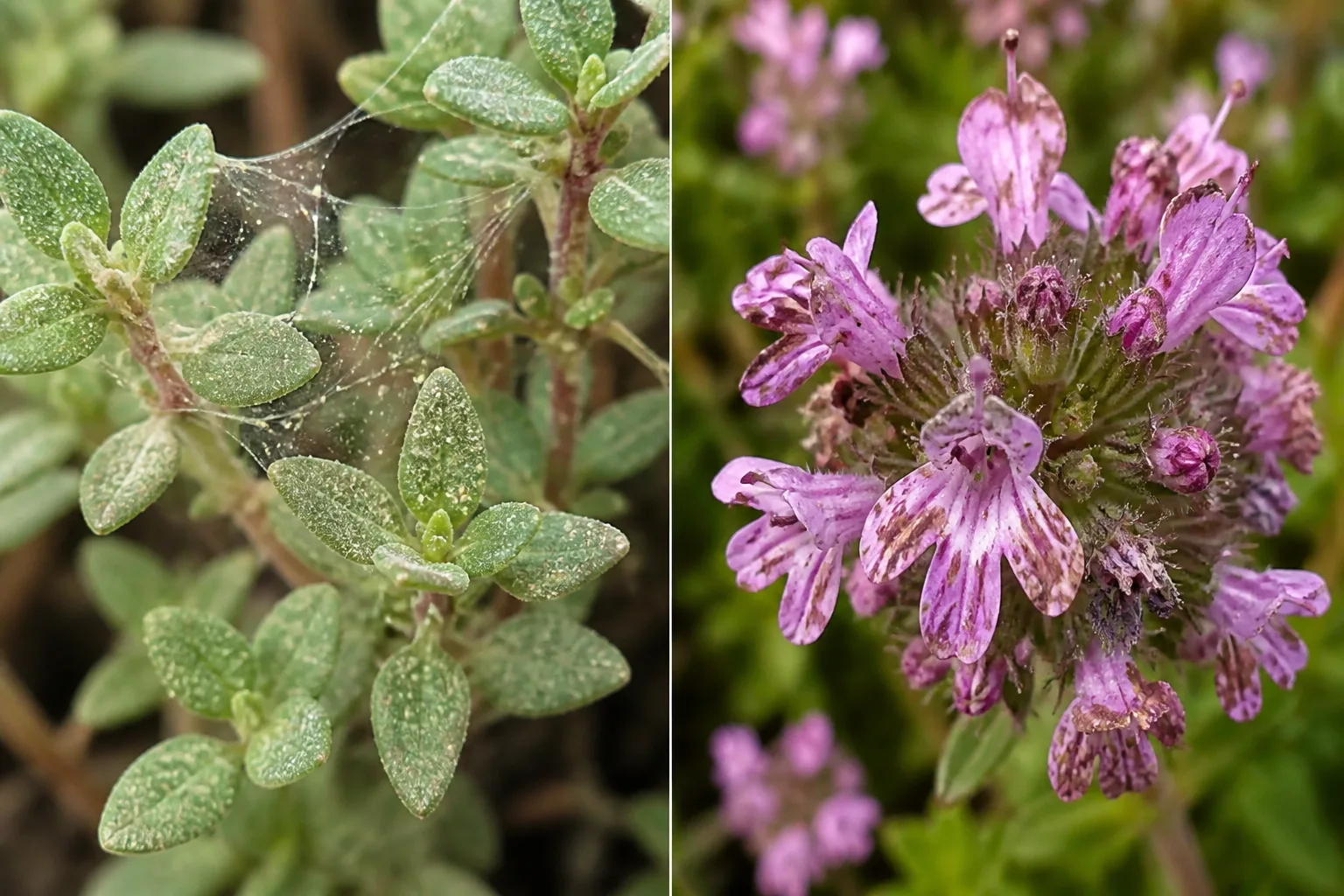
- Fine webbing and pale stippling means spider mites, which build up in hot, dry, still air.
- A dull, soft plant in ground that stays wet after rain points at root disease, where the fix is drainage rather than treatment.
- A bare woody base under a thin green top is age rather than illness, and it calls for a renewal cut or a replacement raised from cuttings.
Two of those three are settled by where the plant lives. Root disease follows standing water and mites build up where the air does not move, so a sunny, open, well-drained spot removes most of the risk before it starts.
The third is simply what an old thyme plant does, and no choice of site prevents it.
Getting the cause right is the whole job here. A spray aimed at a plant with root trouble changes nothing, and better drainage does nothing about mites.
Frequently Asked Questions
Is thyme a perennial or an annual?
Thyme is a perennial and a broadleaf evergreen, hardy in USDA Zones 5 to 9 for most species. In colder gardens it may be grown as an annual, though Iowa State notes that in most areas it survives the winter in most years.
Why is my thyme bare and woody at the bottom?
That is normal aging rather than a disease.
The lower stems harden and lose their leaves each year, so an older plant carries a thin green top over bare wood.
Cutting back in early spring and summer slows it down, and Illinois Extension recommends a severe renewal cut in spring every few years.
How hard can you cut thyme back?
NC State says always leave at least five inches of growth. Cutting below that puts the blades into the bare woody stems, and thyme often does not regrow from bare wood.
Can you eat creeping thyme?
NC State describes creeping thyme as primarily ornamental and rarely used in cooking. For the kitchen, common thyme or lemon thyme are the ones to grow, and lemon thyme has edible flowers as well as leaves.
How do you make more thyme plants?
Take divisions or stem cuttings, or peg a low stem down to layer it. Illinois Extension says thyme is much easier to grow this way than from seed, and NC State notes that seed germination is uneven.
Is thyme safe for cats and dogs?
NC State lists thyme as non-toxic to cats, dogs and horses. The flowers do attract bees, so it is worth waiting for them to move on before cutting a plant in full bloom.
Sources & References
- NC State Extension Gardener Plant Toolbox: Thymus vulgaris
- NC State Extension Gardener Plant Toolbox: Thymus serpyllum
- NC State Extension Gardener Plant Toolbox: Thymus x citriodorus
- Iowa State University Extension: All About Thyme
- Illinois Extension: Thyme
- Penn State Extension: Herb Garden Plants, Thyme
- University of Maryland Extension: Thyme
- Toxic and Non-toxic Plants: Thyme | ASPCA
Related Plants
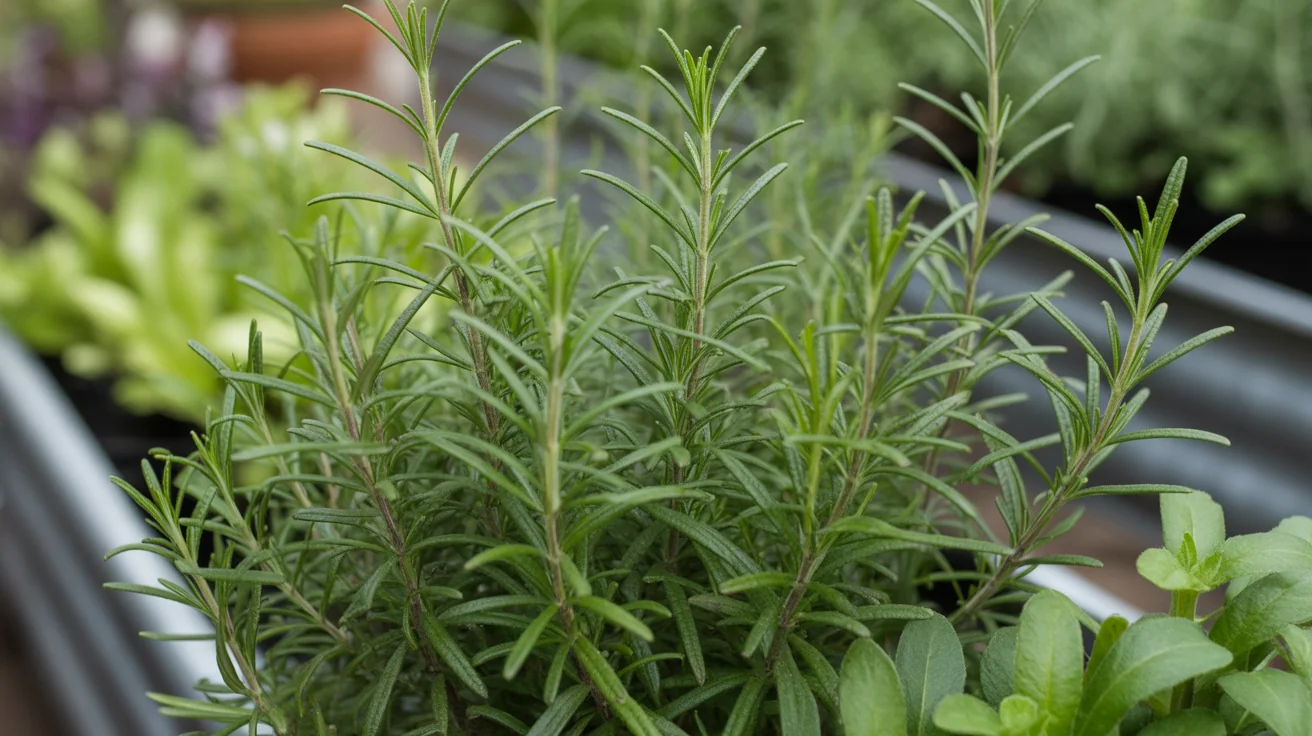
Rosemary
Woody Mediterranean herb with similar light and soil needs, but taller and shrubbier than thyme.
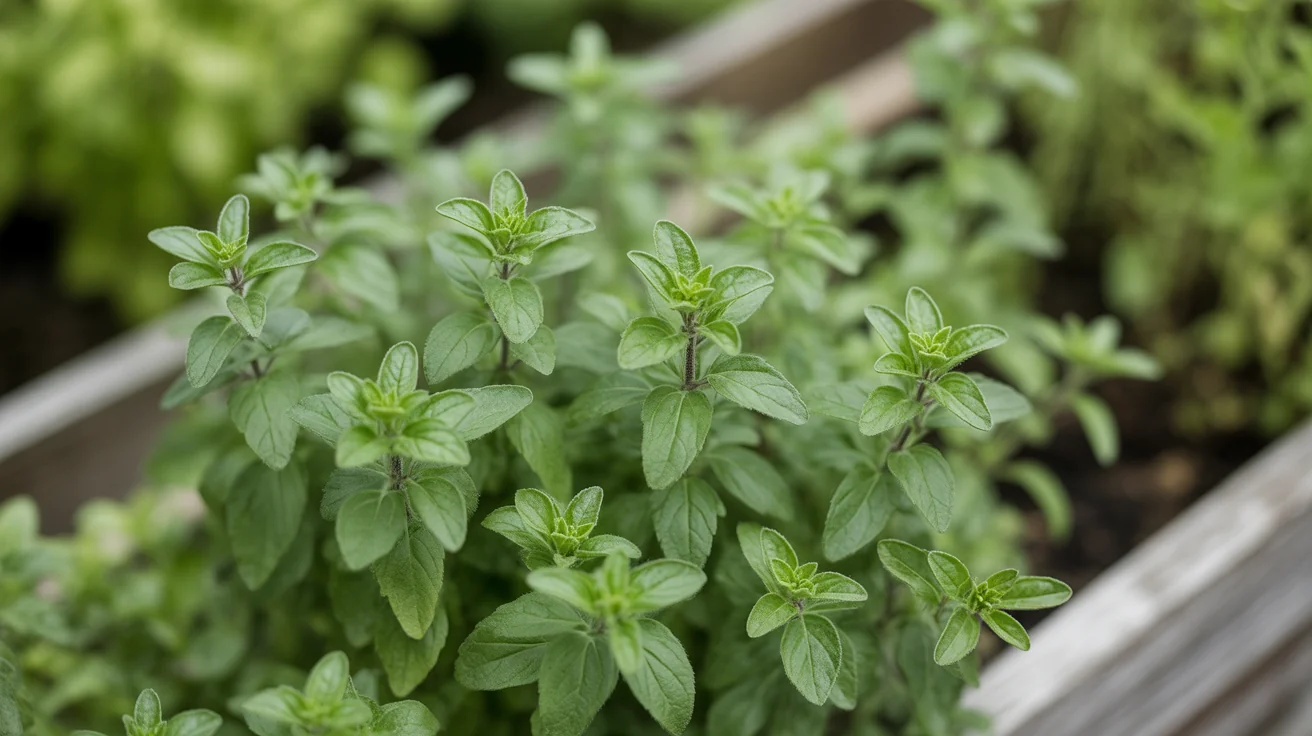
Oregano
Low, spreading herb that likes the same dry, sunny conditions and pairs well in the kitchen.
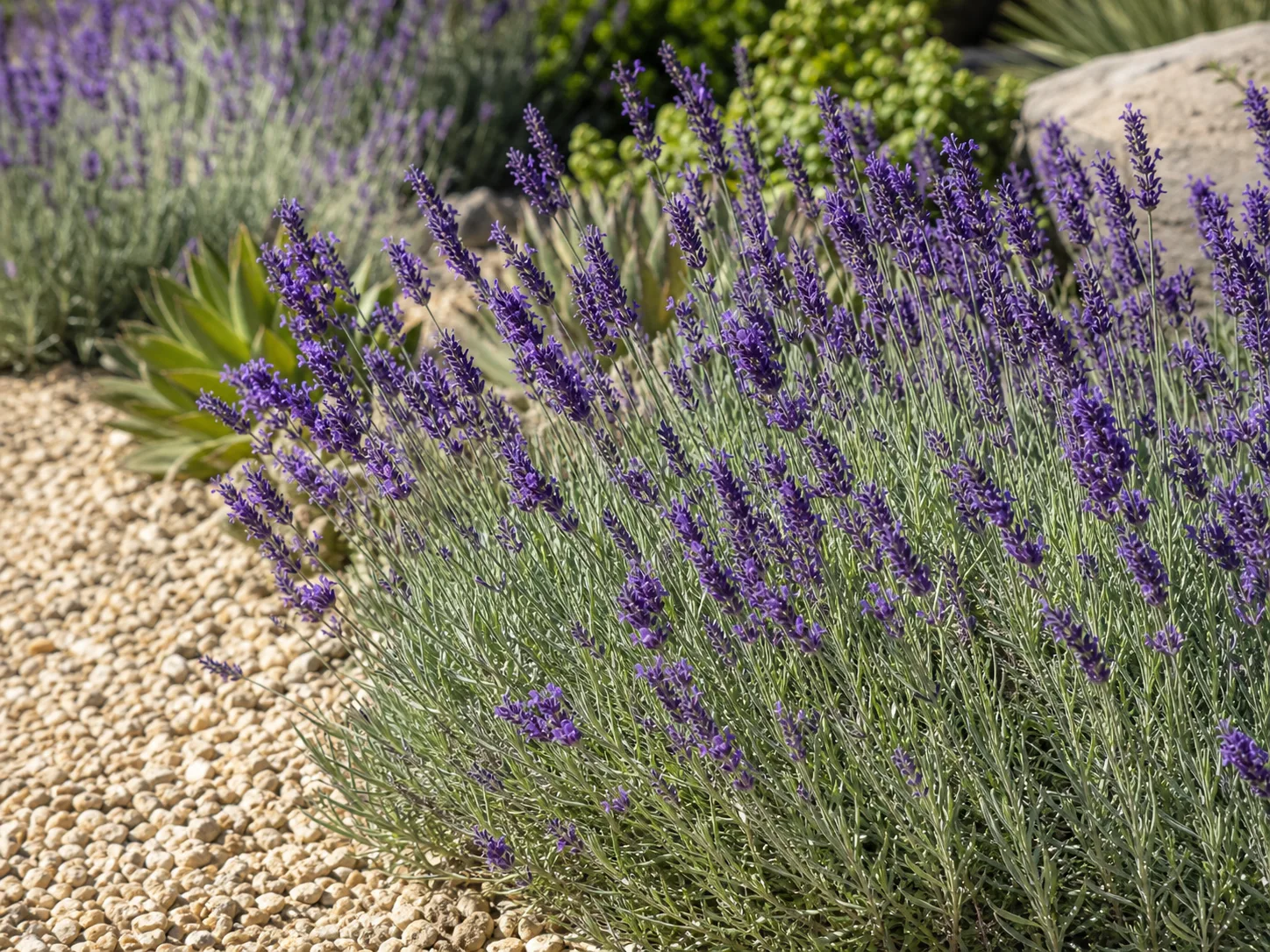
English Lavender
Fragrant flowering herb that thrives in similar lean, well-drained soil, but grows taller.
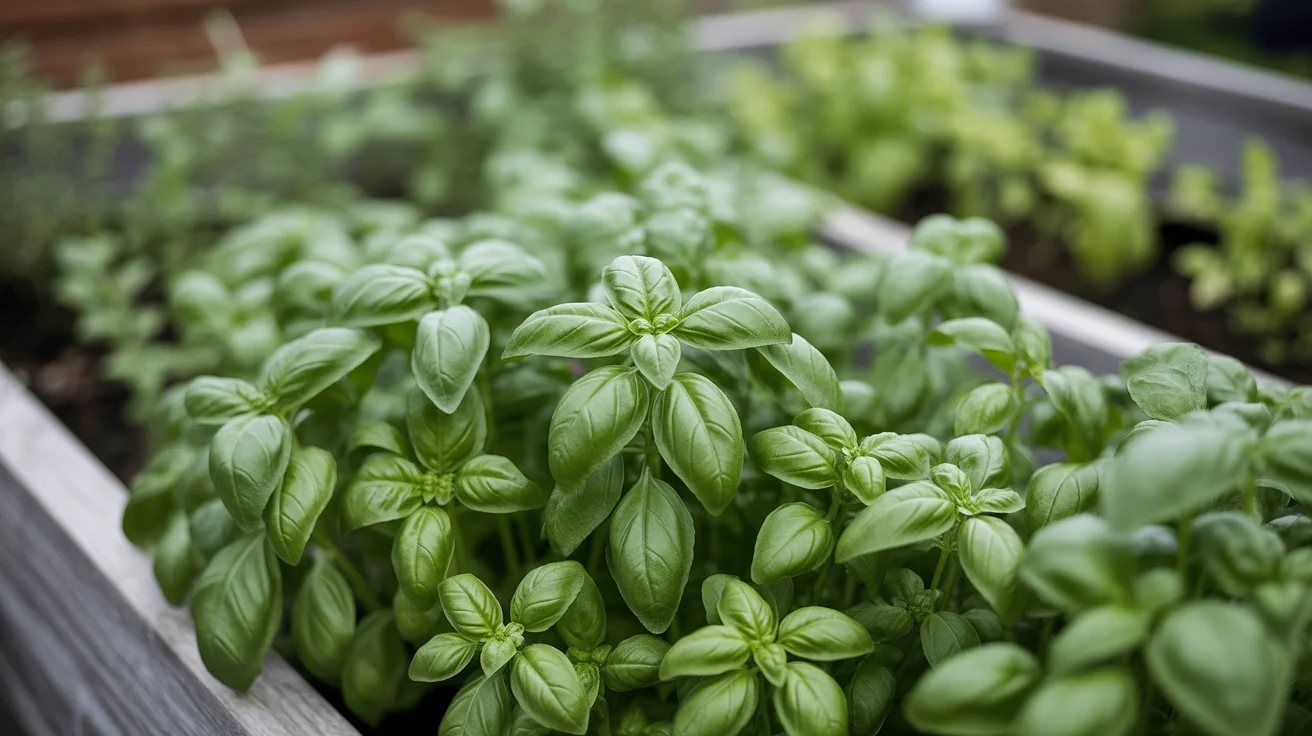
Basil
Basil is a tender annual that turns a warm season into armfuls of soft leaves, as long as it goes out into warm soil…
Bay Laurel
Bay laurel is a tree grown as a container plant, which is why every decision about it looks the way it does.
Chives
Chives are an Allium, in the same genus as onion and garlic, and that explains the flavor, the clump of small bulbs…