
How to Grow String of Pearls Without Keeping Its Roots Wet
Curio rowleyanus Asteraceae
String of Pearls keeps water in its round leaves, but its small root system still needs a mix that wets evenly and drains well. Bright indirect light, room for the trails and a watering decision based on the pot help it stay full without keeping the roots constantly wet.
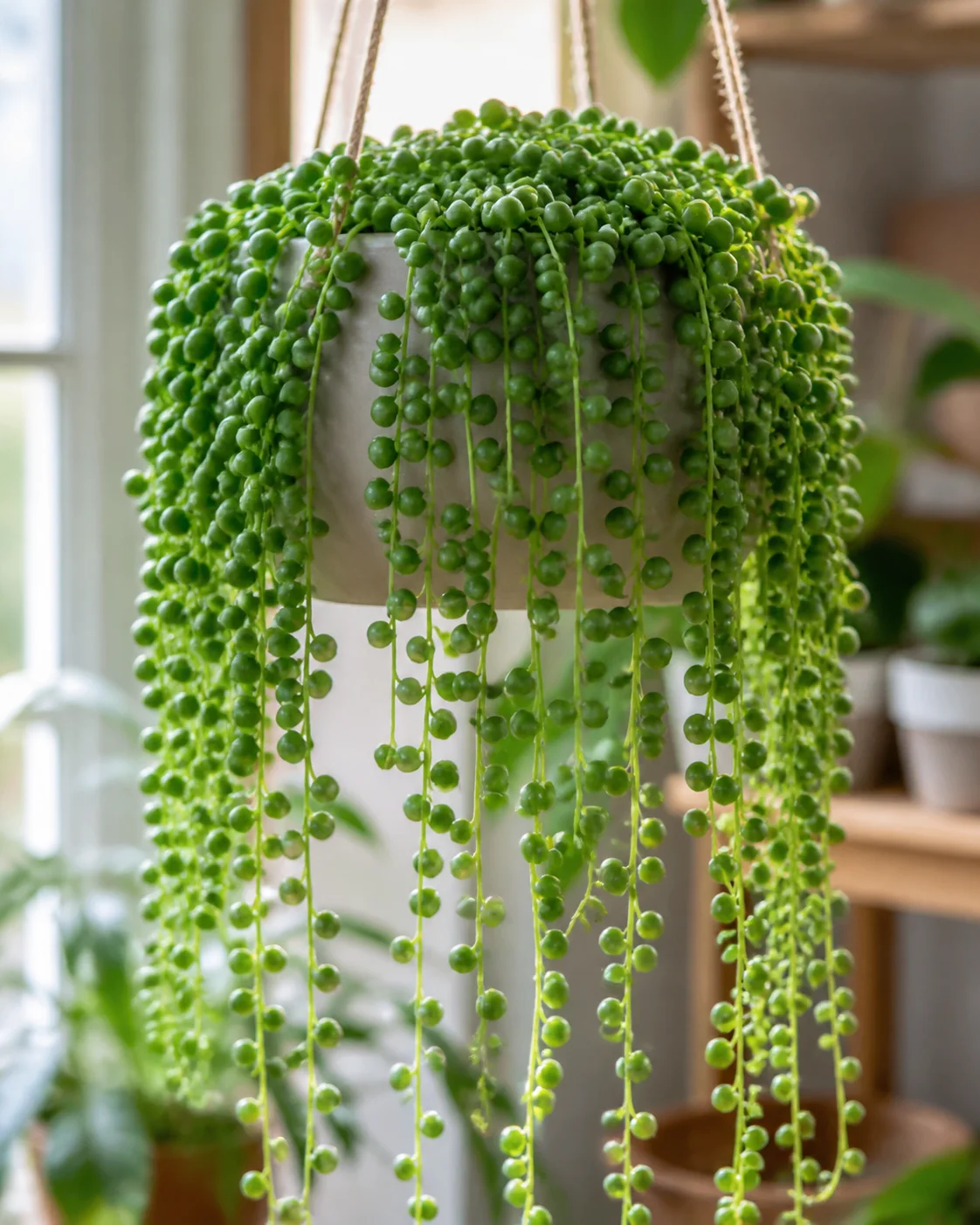
Care snapshot
Round Leaves, Small Roots and Long Trails
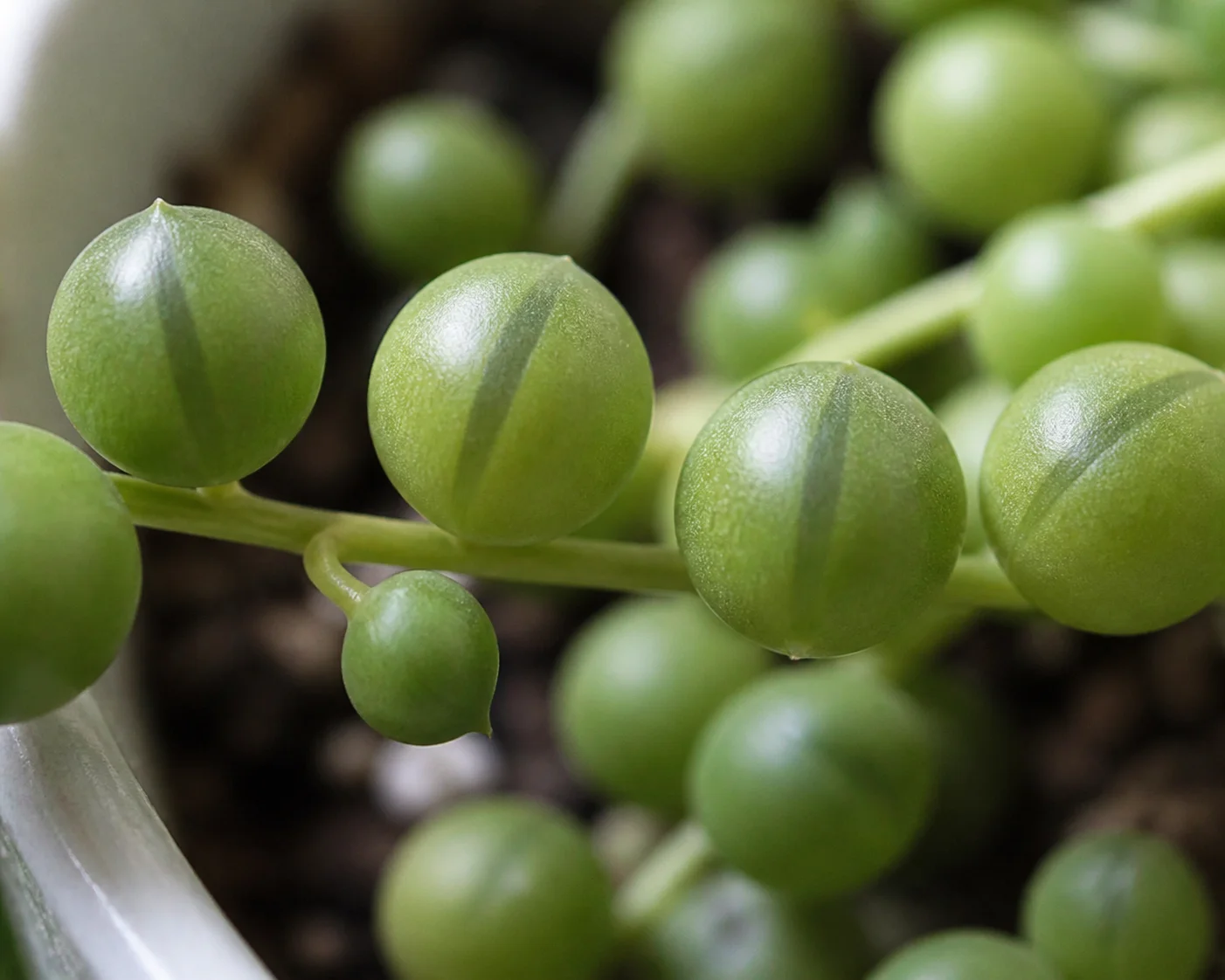
Each pearl is a fleshy leaf attached to a slender stem. Its rounded shape exposes less surface to dry air than a broad flat leaf, helping conserve the water stored inside. A narrow translucent band, the epidermal window, lets light reach inner leaf tissue.
The stripe belongs to normal anatomy, while a whole leaf becoming glassy or collapsing is a different observation. The close view below shows the window and the leaf’s attachment to its stem.
NC State lists the accepted name as Curio rowleyanus, with Senecio rowleyanus as an older synonym. The plant belongs to the daisy family, Asteraceae. It comes from dry parts of South Africa, where trailing stems spread across the ground and root where they contact soil, often with shelter from shrubs or rocks.
In a hanging pot, stems can trail about 3 feet, although the display depends on growth and pruning. A low dish allows the same creeping habit to spread across its surface. The pot needs room for the roots it actually contains, rather than a deep container chosen to match the length of the vines.
A full nursery basket may contain several rooted pieces. Long trails alone are therefore a poor buying test. The top of the basket, the condition of stem attachments and the moisture below the surface matter as much as the view from the side.
Light Reaching Both the Basket and Its Trails
Bright indirect light suits an indoor String of Pearls. Its sheltered natural habitat helps explain why a plant from a dry region can still scorch in strong sun. A bright position does not have to expose the basket to hot midday rays.
A high shelf can leave the top of the pot in shade while the lower strands hang in front of a window. Positioning the basket where light reaches the upper growth supports the display as a whole. A wall, blind, overhang or nearby tree can change that exposure even beside a window.
Gentle direct sun may be workable after gradual adjustment. A plant brought from a dim nursery or moved outdoors needs time to adapt, and a hot window is a poor place to test its limits. Bleached or crisp patches after a sudden exposure change warrant shade and inspection, not extra fertilizer.
Small leaves and thin, extended growth can accompany inadequate light, but root stress and feeding problems also affect growth. The useful comparison is how new growth develops after the actual setting improves. Leaf spacing does not supply a universal light-meter reading.
A basket that can be lowered for watering and inspection is easier to manage than one whose crown and drainage can never be seen. The light needs to reach the plant’s actual position, including the top of its pot.
Pearls, Variegated Forms and Similar Trailing Plants
The familiar green form has nearly spherical leaves with small pointed tips. RHS also lists Curio rowleyanus ‘Variegatus’, whose foliage combines green and cream. Variegation changes the appearance of the basket, and the pale areas are especially vulnerable to scorch in harsh sun.
- String of Pearls
- Round bead-like leaves with a narrow window and a small tip.
- String of Bananas
- Curved, elongated leaves on Curio radicans, rather than the rounded beads of C. rowleyanus.
- String of Tears and String of Watermelons
- RHS distinguishes Curio citriformis and Curio herreianus from the round-leaved species. Nursery common names can overlap.
- String of Hearts
- Heart-shaped leaves on an unrelated Ceropegia. A similar display is not proof of identical care or safety.
A label that says only “string of beads” can cover more than one plant. Leaf shape and the botanical label together are more useful than a promise of a rare form. A newly pale, damaged leaf is not enough to identify a variegated cultivar.
For a full display immediately, the distribution of living stems across the pot matters more than one exceptionally long vine. A sparsely filled basket can be renewed through stem propagation as the new pieces establish.
Watering Without Keeping the Roots Wet
Water storage gives the leaves a reserve; it does not make the roots unnecessary. A pot can stay wet below a dry-looking surface, while an extremely dry root ball can resist rewetting. Both situations can leave a plant looking thirsty.
Published advice differs in wording. Wisconsin recommends letting the potting medium dry completely between waterings, while NC State cautions against complete drying; RHS calls for drying between waterings without allowing the leaves to shrivel. None of these descriptions establishes a fixed interval for every mix and room.
For an established basket, the practical aim is a clear drying interval without prolonged severe dehydration. Pot weight and moisture within the root zone are more useful than waiting for every pearl to wrinkle. A pot that remains damp and heavy does not need another drink because its upper leaves look smaller.
- Lift the pot and compare its weight with how it felt after the last watering and drainage.
- Feel the mix below the surface where accessible, taking account of the depth of this particular pot.
- When the root zone has dried, apply water across the surface and allow it to leave through the drainage holes.
- Empty the saucer or outer pot. If water ran around a gap while the center stayed dry, rewet the mix evenly before calling the watering complete.
A shriveled String of Pearls needs a moisture and root-history check. Dry mix supports rewetting, but shriveling over damp mix can reflect damaged roots that cannot take up water. Mushy stems need separate attention because collapsed tissue will not become sound simply by changing the next watering date.
A Small Root System in a Draining Pot
A cactus or succulent potting mix provides a useful starting point. The mixture needs to accept water and leave air around the roots after drainage. Perlite or pumice can improve a mix that retains too much water, but a single ingredient ratio cannot account for every commercial product and pot.
Wisconsin favors a shallow container because this species develops a limited root system. The important match is between root volume and the surrounding mix. An oversized shallow bowl can still contain more wet material than a small plant can use.
Drainage holes provide an exit, but the exit only works when the pot can drain freely. Water retained in a decorative cover pot can keep the base wet. A gravel topping cannot correct that problem, and a dry layer at the surface does not establish that deeper mix has dried.
Unglazed clay allows moisture to leave through the sides, so it can help a slowly drying setup. It also dries faster than plastic under the same conditions. For a small basket in warm, moving air, that difference can increase the need to inspect moisture.
Repotting makes sense when roots crowd the available space, the mix has deteriorated or wetting and drainage have become unreliable. Support the trailing stems while moving the root ball. Keeping sound roots intact matters more than stripping away every old particle to achieve a neat appearance.
Rooting Stems and Filling a Sparse Basket
String of Pearls can root at stem nodes, the points where leaves attach. A bare length of stem is useful only if it contains those growing points. Stem cuttings are the more dependable method described by NC State; the same source recognizes leaf propagation as slower and less reliable, rather than impossible.
A detached cutting starts a separate plant. With layering, a stem stays attached to the parent while a section rests on moist mix and forms roots. Looping an attached stem back across the basket can therefore fill an open area without immediately severing its existing supply.
- Select a stem without soft, collapsing or discolored areas. Wear gloves because the sap can irritate skin.
- For a cutting, use clean scissors to take a manageable section containing several nodes. Remove leaves only where needed to place those nodes against the mix.
- Lay the stem on a draining propagation mix or insert its lower bare nodes shallowly. Keep the remaining pearls above the mix.
- Maintain gentle moisture around the rooting nodes in bright indirect light. Avoid leaving the pot saturated.
- Leave developing roots undisturbed. With an attached layer, detach it only after roots have formed.
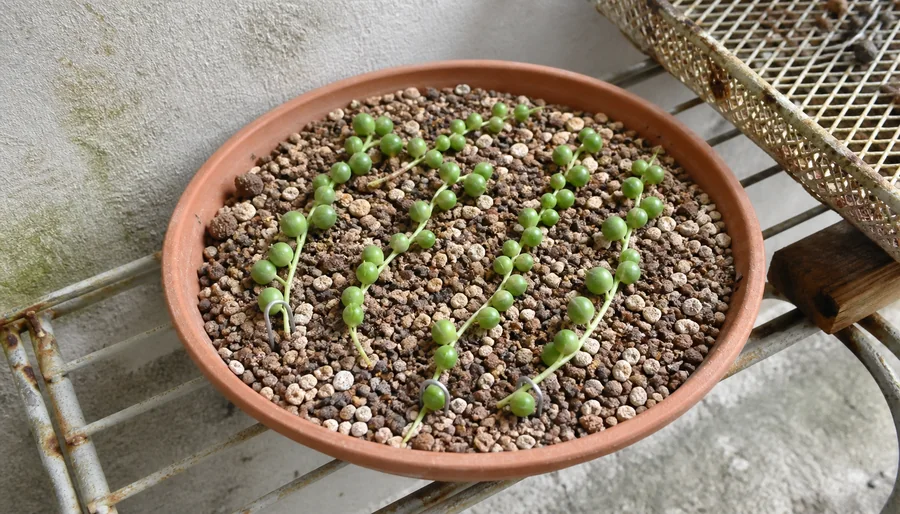
Wisconsin describes short stem-tip cuttings placed in or on moist mix. Its suggestion to moisten the soil surface during rooting addresses roots that are still developing. Applying the mature plant’s full dry interval to a small unrooted cutting can leave it without enough moisture to establish.
New growth and anchoring are useful progress signs. Repeatedly lifting a strand to inspect roots can damage the attachment being formed. A cutting that develops spreading softness needs reassessment rather than continued watering.
Growth, Flowers and Outdoor Weather
New vines use water and nutrients as they grow, so the same pot may dry faster in a brighter, warmer period. Growth can slow when indoor light falls. A change in the calendar alone does not tell you whether a heated room, grow light or outdoor basket has changed conditions.
Light feeding during active growth can support a plant whose mix no longer supplies enough nutrients. A fertilizer labeled for indoor succulents gives application directions for that product. Extra feed cannot restore rotten roots, replace light or guarantee a chosen length of vine each year.
Small white flower heads can have a cinnamon-like scent, but NC State notes that flowering indoors is uncommon. Wisconsin describes a cool, drier winter rest around 55–60°F as a possible aid to summer bloom. That is a flowering treatment, not a requirement to chill or severely dehydrate every houseplant.
This species is frost tender. Outdoor growing depends on actual local temperatures, exposure and drainage; a USDA zone is not an indoor temperature setting or a forecast for the next cold night. A summer basket needs gradual light adjustment, protection from excess rain and a move indoors before frost.
Pruning can shorten strands that reach the floor or become awkward to handle. Sound tips can supply replacement plants as an older basket thins. Renewal is useful, but new cuttings will also struggle if the original light or drainage problem remains.
Pests and Damage Worth Inspecting
Mealybugs and aphids are among the pests listed for String of Pearls by extension sources. Cottony material at a joint deserves a closer look for insects, while clusters of small soft-bodied insects on growth may be aphids. Loose fibers or dust alone are not an identification.
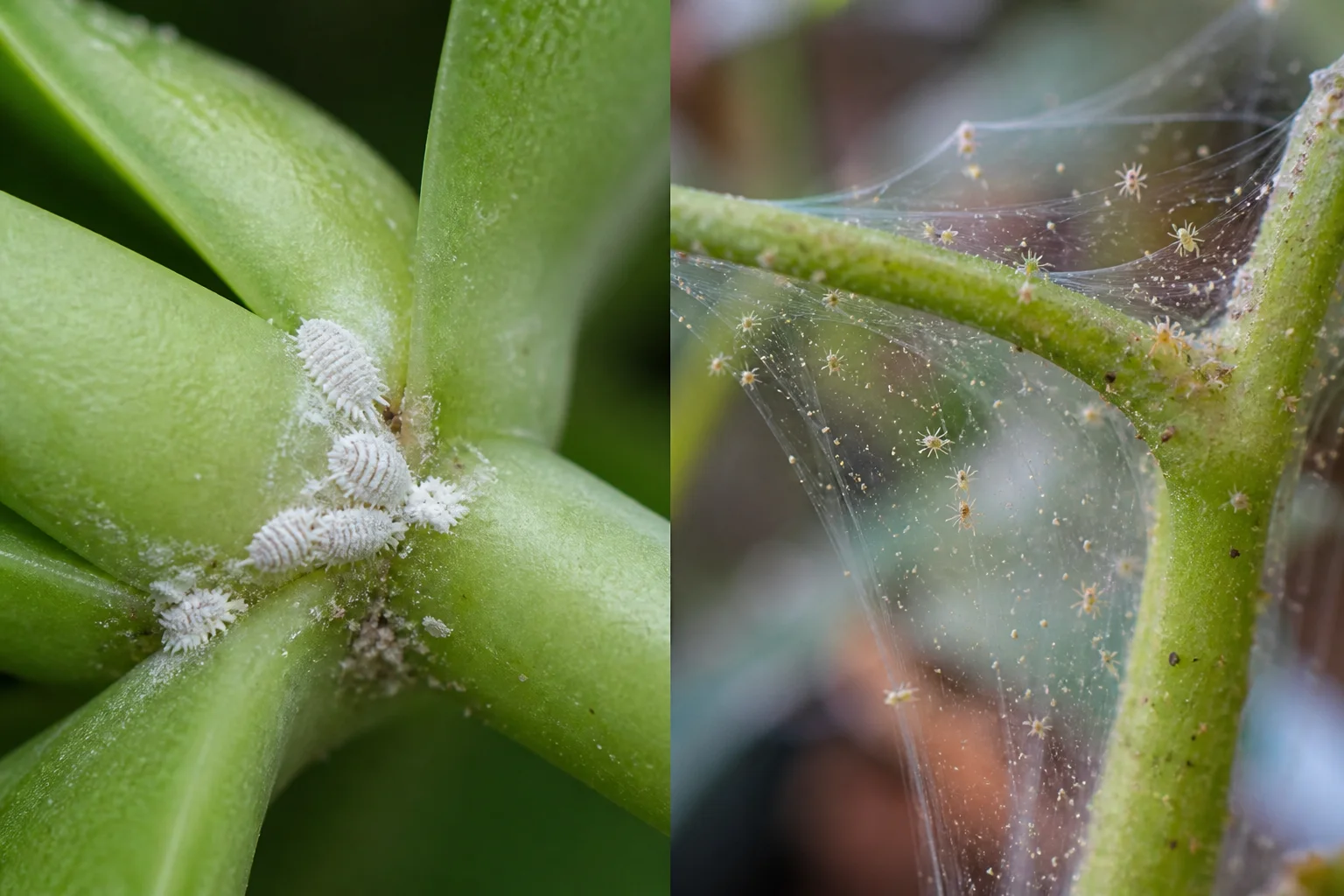
Spider mites can leave fine webbing and stippled feeding damage on houseplants. Magnification helps separate a moving pest from a particle. The general comparison above shows why cottony insects and a web-covered stem require different inspection rather than one spray for every white mark.
A plant with suspected pests is best kept apart from other plants while the organism is identified. Removing individual visible insects can reduce a small infestation; any treatment needs to be suitable for the plant and pest on its label. Delicate or already damaged foliage can be injured by sprays, so a whole-basket alcohol or detergent treatment is not a neutral first step.
Moisture, light injury and cold can also damage pearls. The pattern of affected leaves and recent exposure help direct inspection, but a clean-looking upper strand does not rule out root trouble. Persistent decline or repeated collapse after a care correction warrants extension or plant-clinic advice.
Toxic Leaves, Sap and Trailing Access
NC State identifies Curio rowleyanus as toxic to people and flags dogs, cats and horses. Its leaves and sap are the listed poisonous parts, and sap can irritate skin. The older name Senecio rowleyanus also appears in ASPCA’s succulent guidance.
A hanging pot still leaves strands, fallen pearls and cuttings within reach. Placement needs to account for what an animal or child can actually touch, including access from furniture. A chosen shelf height does not guarantee separation.
Gloves and collecting cut pieces make pruning easier to manage without sap on skin or leaves on the floor. Wash exposed skin after contact. A description of low poison severity is not a safe dose, and this ornamental is not a food plant.
Sources & References
- Curio rowleyanus - NC State Extension Plant Toolbox
- String of Pearls, Senecio rowleyanus - Wisconsin Horticulture
- How to grow string of beads - RHS Growing Guide
- Diagnose Indoor Plant Problems - University of Maryland Extension
- Watering Indoor Plants - University of Maryland Extension
- Are Succulents Safe to Have Around Pets? - ASPCA
Related Plants
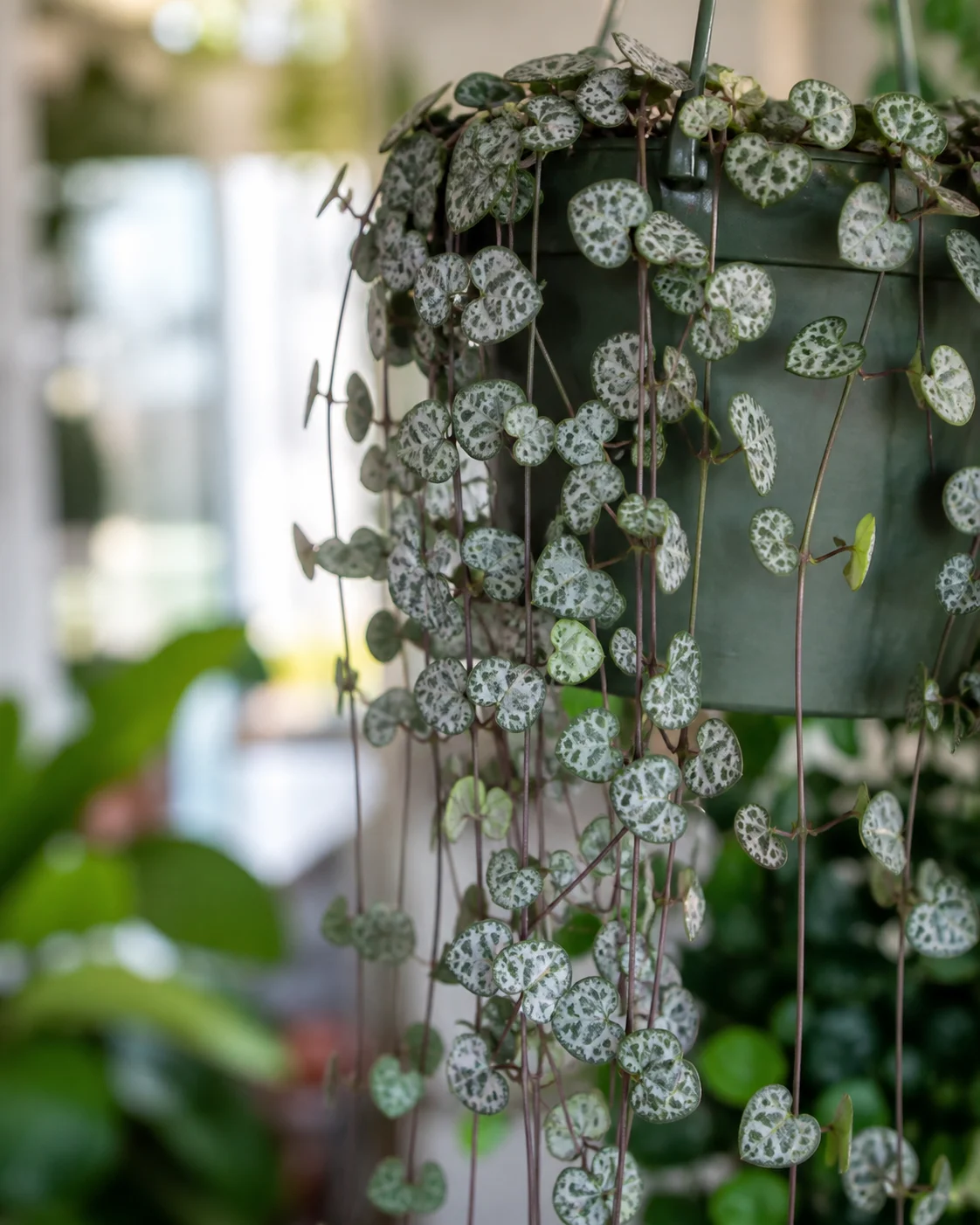
String of Hearts
A fine-textured trailing houseplant with heart-shaped leaves that prefers similar bright light and careful watering.
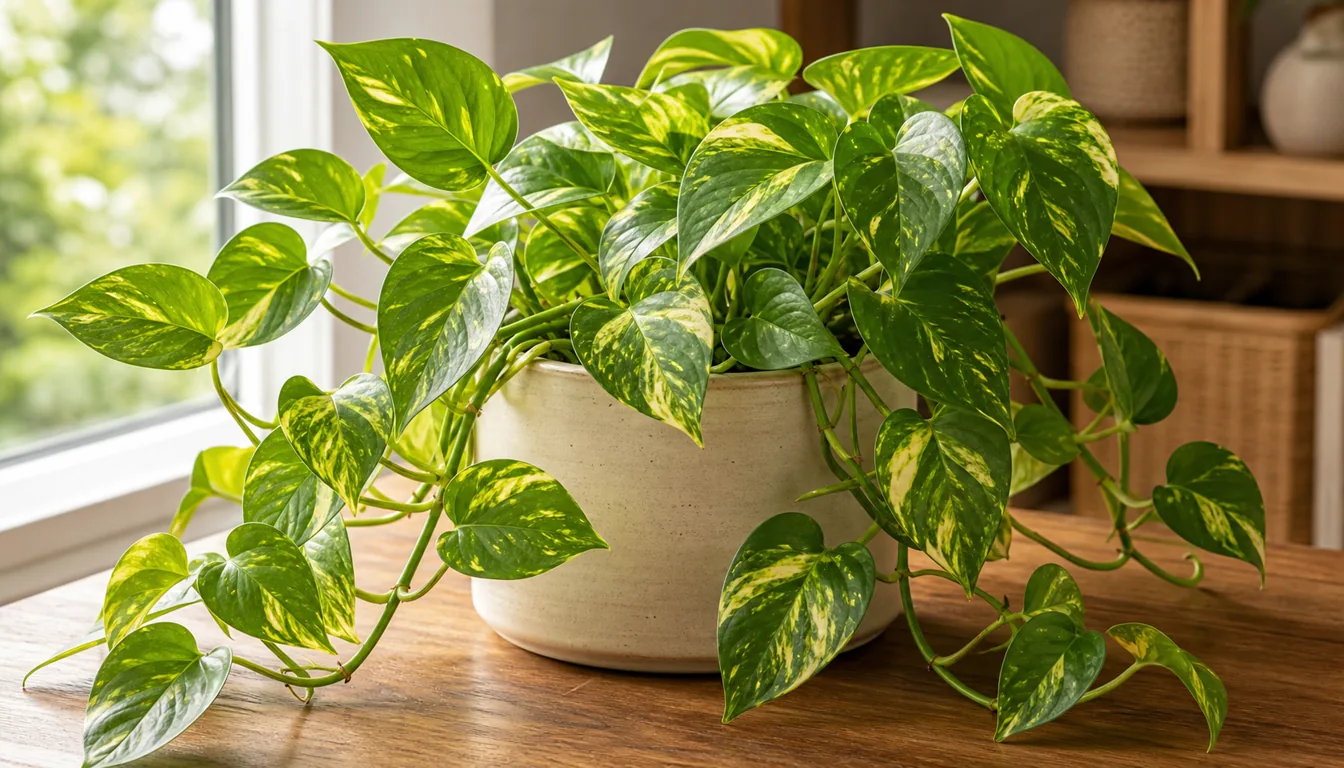
Golden Pothos
A broad-leaved trailing houseplant with a different water balance and light tolerance.
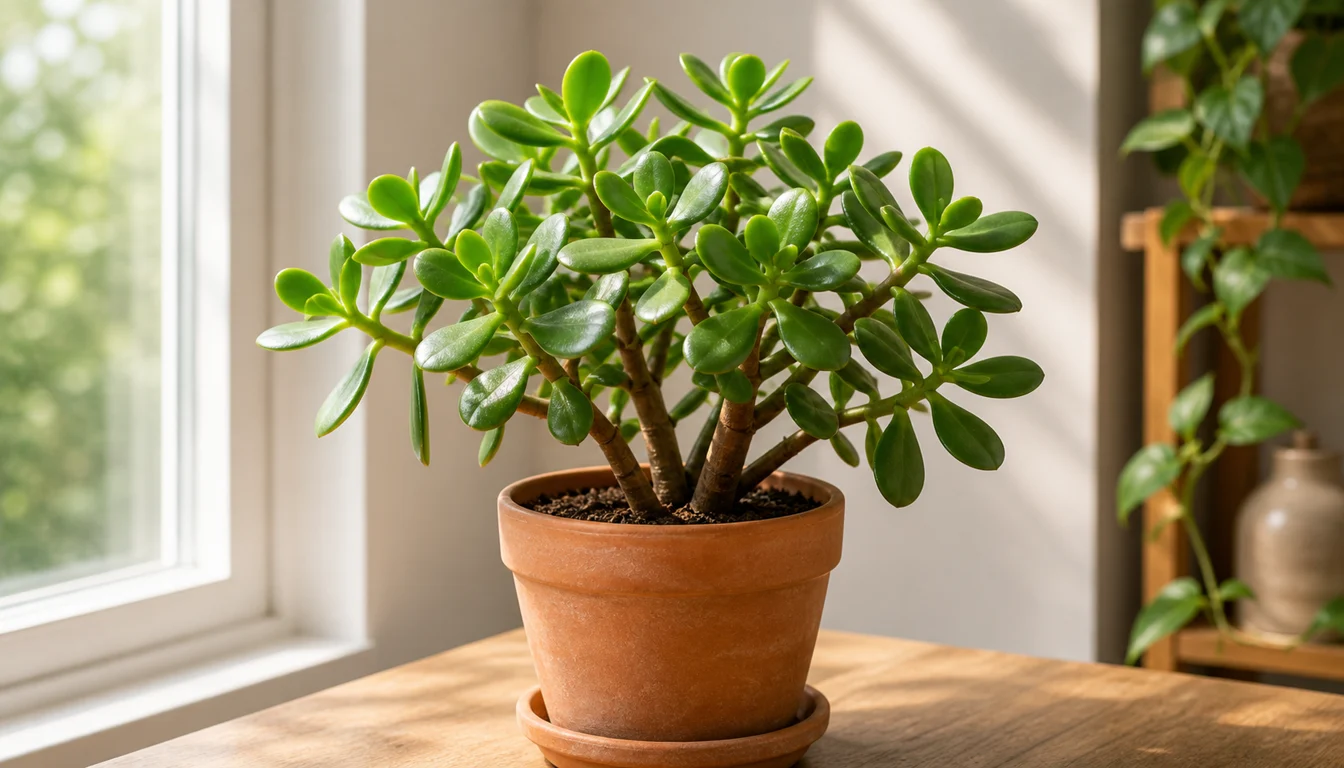
Jade Plant
An upright, woody succulent rather than a trailing member of the daisy family.
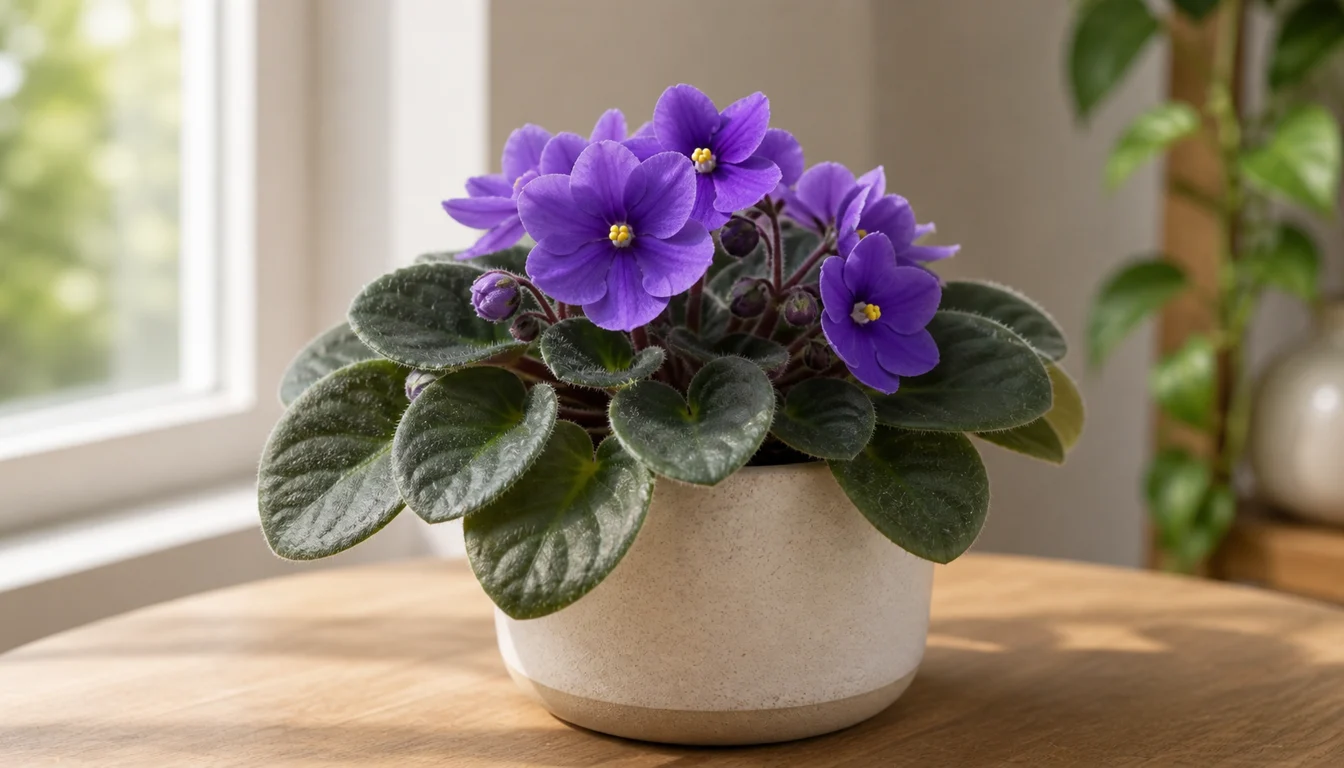
African Violet
African Violet is a windowsill bloomer that rewards steady, small-pot care.
Air Plant
Air plants are living sculptures that thrive without soil, anchoring to driftwood, rocks, or shells while drawing…
Alocasia
Alocasias include compact, textured houseplants and large elephant ears that need substantial floor space.