What's Sedum? How to Grow It Without Rot or Flopping
Sedum spp. Crassulaceae
Sedum is a diverse group of creeping and upright stonecrops. Choose the right habit, give it sun and drainage, and manage water, renewal, pests, and seasonal change.
Care snapshot
What Is Sedum and How Can You Identify It?
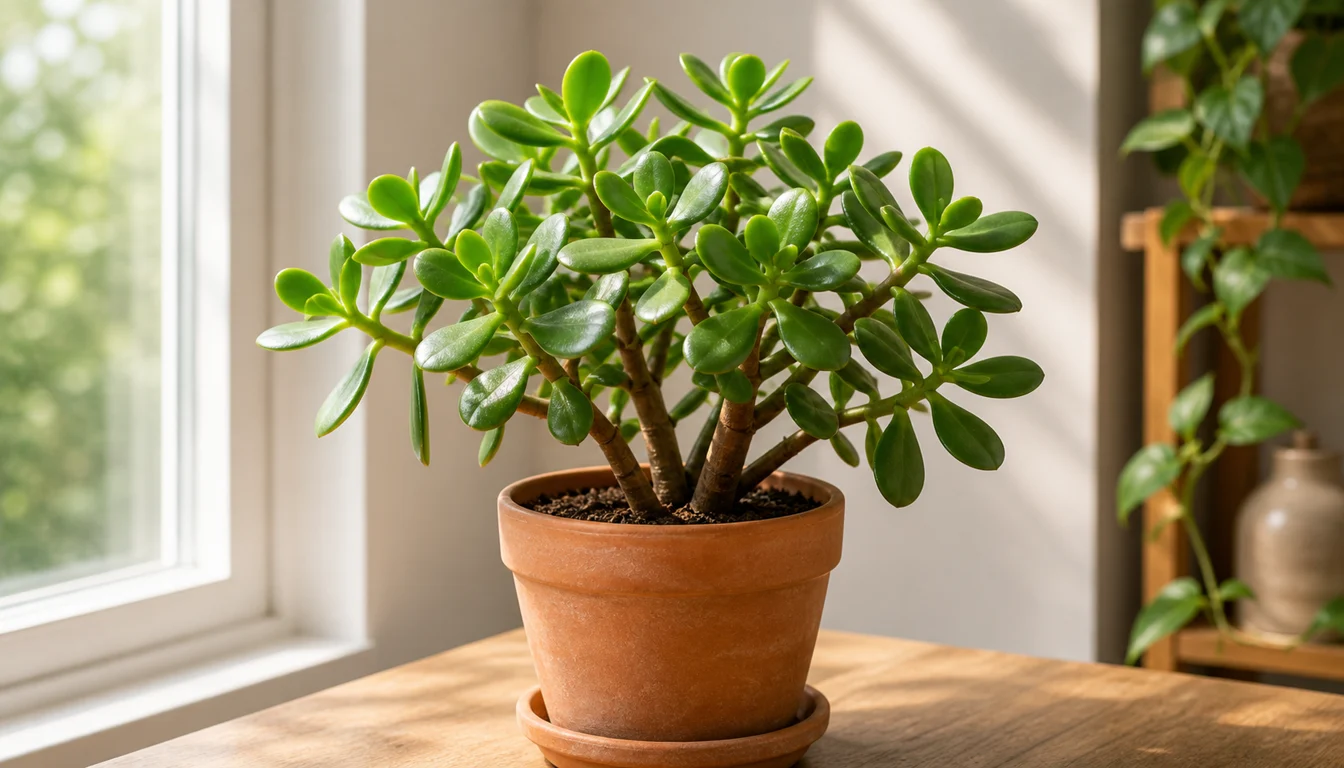
Sedum is a diverse genus of succulent herbaceous perennials in the stonecrop family, Crassulaceae. Garden plants sold under the name range from tiny spreading mats to upright clumps around two feet tall.
Their different habits lead to different placement and care decisions.
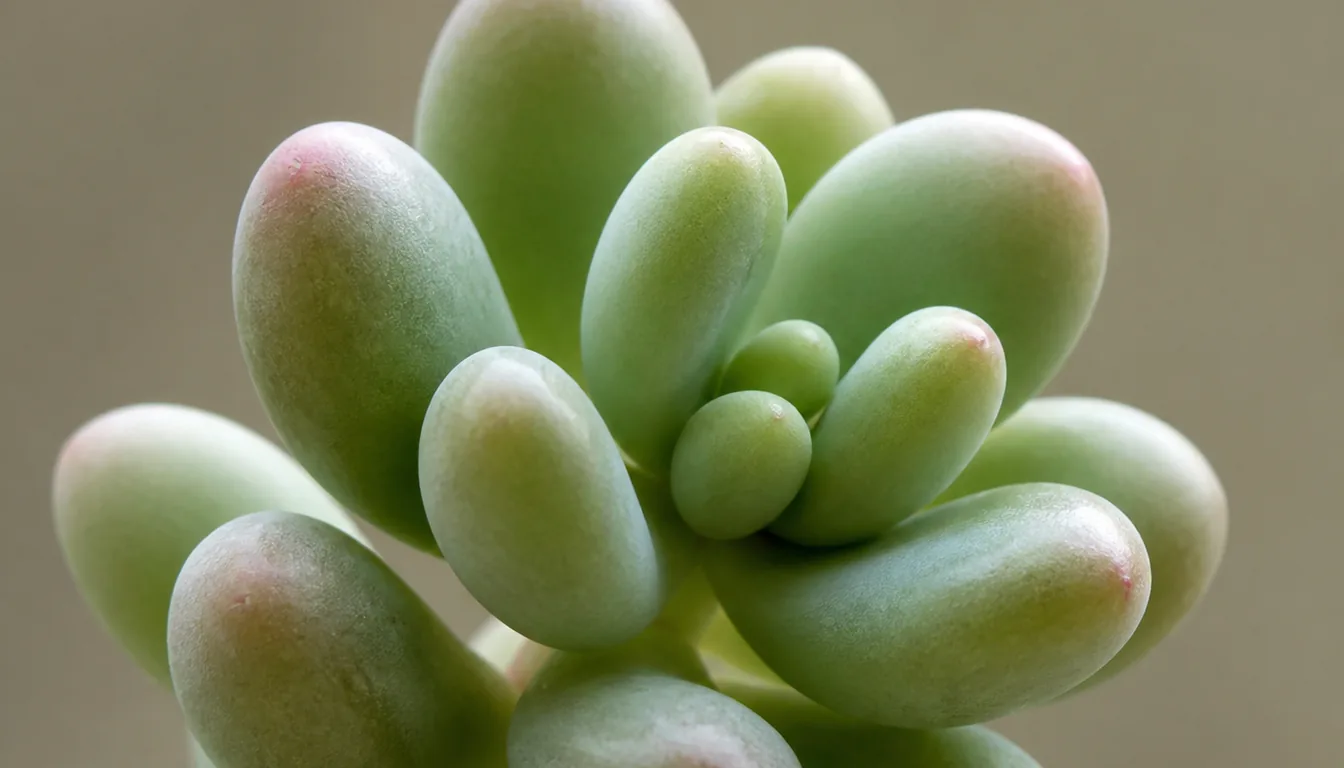
The leaves are fleshy because they store water. Depending on the species, they can be flat or nearly cylindrical and appear in alternate, opposite, or whorled arrangements.
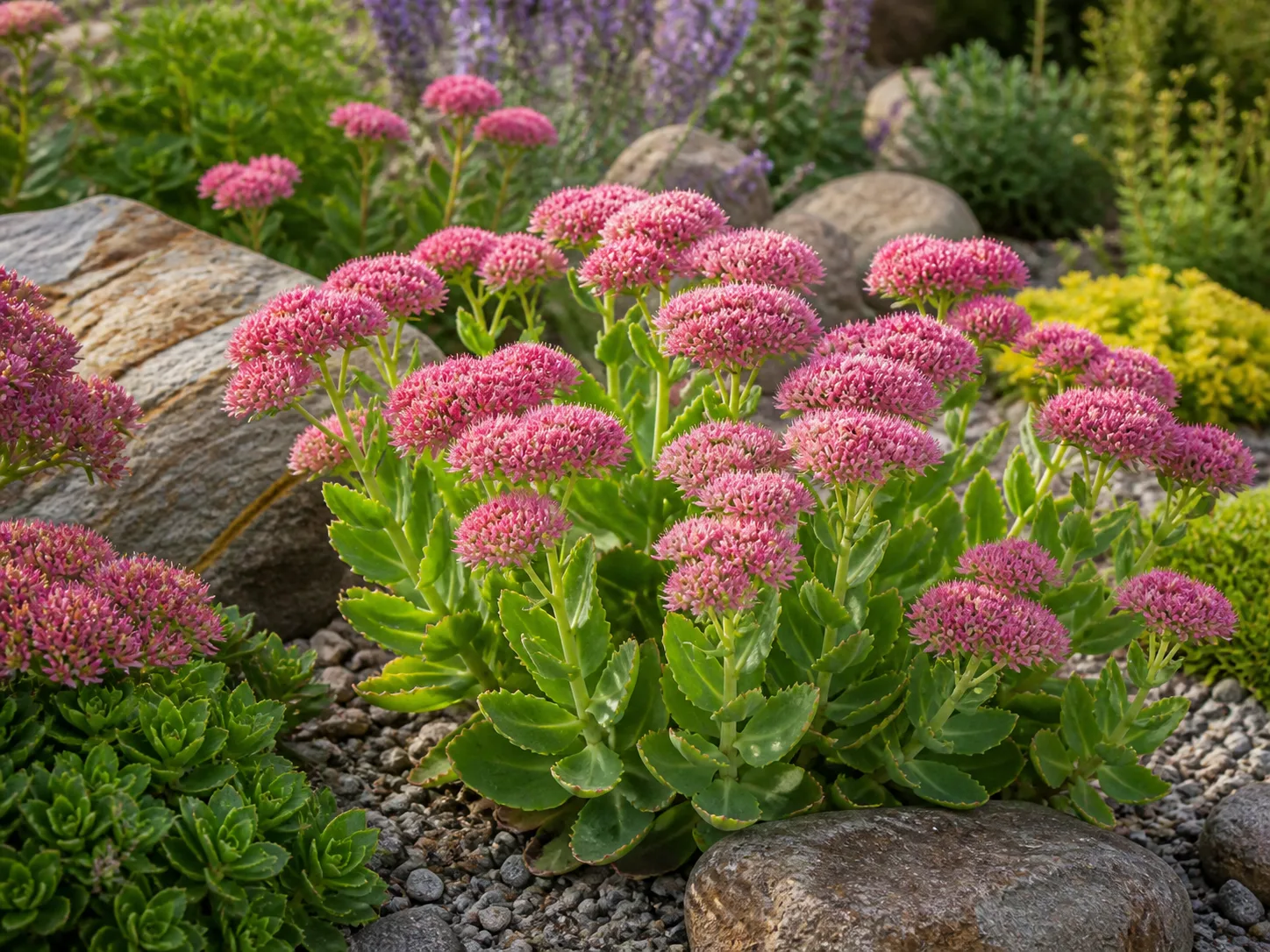
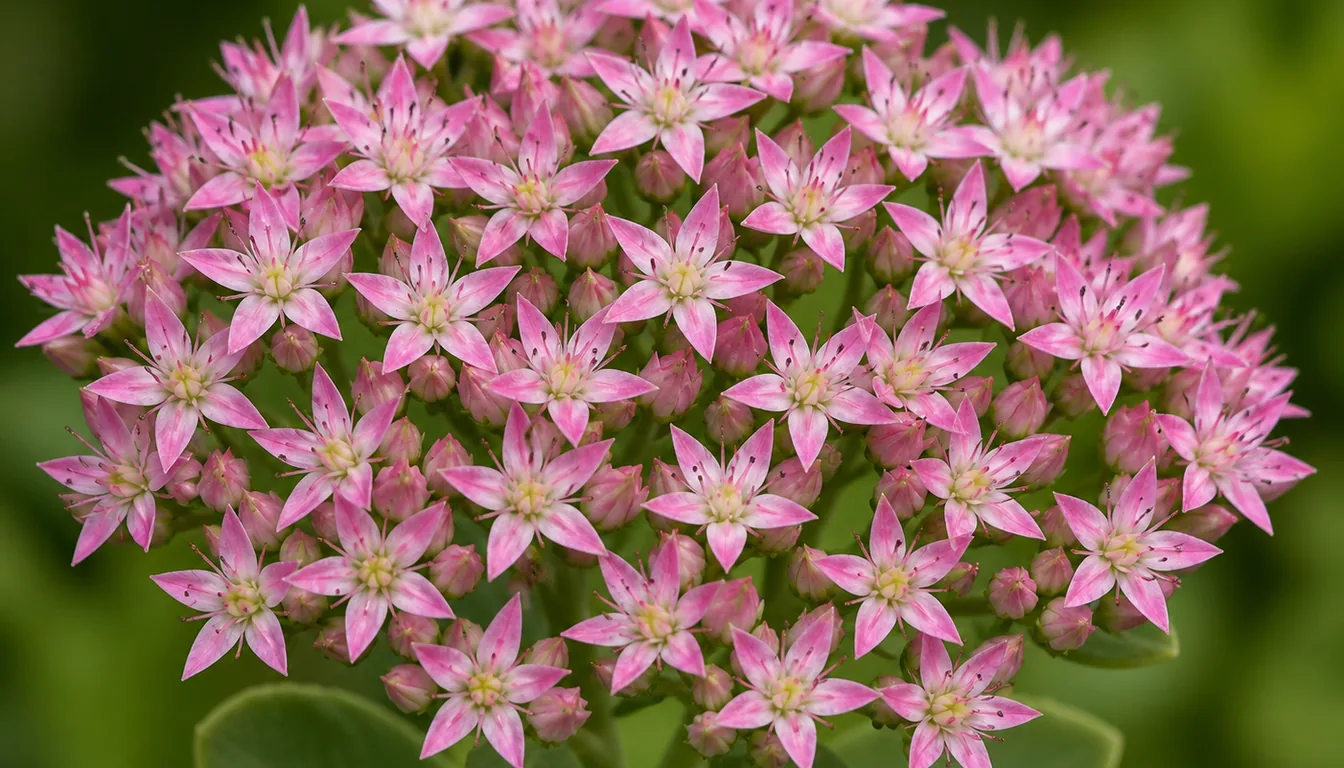
Sedum flowers are usually small and star-shaped, with several flowers held together in clusters. Bloom color and timing vary, so foliage and habit are more dependable identity clues outside the flowering period.
Many familiar upright stonecrops have been moved botanically from Sedum to Hylotelephium. Nurseries and gardeners still use older Sedum names, which is why the label alone does not tell you whether a plant will creep or stand upright.
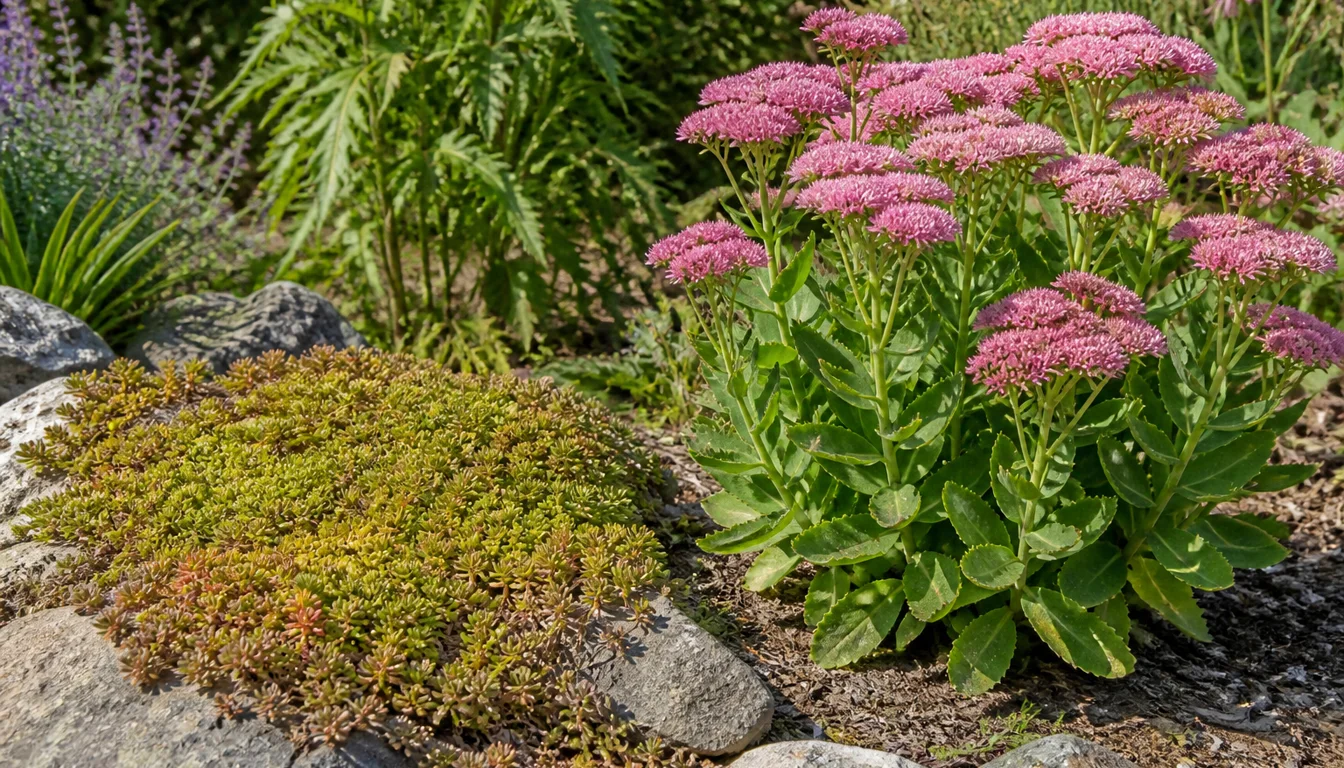
Low forms often root where stems touch soil and can knit around rocks or cover a dry slope. Upright forms rise from a clump and carry broad flower heads that remain visible late in the season.
- Plant family
- Crassulaceae, the stonecrop family
- Leaf clues
- Fleshy simple leaves that may be flat, rounded, or cylindrical
- Flower clues
- Small star-shaped flowers held in clusters
- Creeping habit
- Low stems that spread and may root at nodes
- Upright habit
- Clumping stems with broad late-season flower heads
- Name to watch
- Many upright forms now appear as Hylotelephium
Which Sedum Growth Habit Fits Your Garden?
Choose Sedum by growth habit before flower color. The plant's height, spread, and seasonal structure determine whether it belongs in a crevice, a container edge, a groundcover patch, or a perennial border.
Creeping stonecrops can cover shallow rocky soil and soften hard edges. They tolerate only light foot traffic, so keep the main walking line on stone rather than across living stems.
Compact mounding forms fit troughs and small pockets where an aggressive carpet would hide neighboring plants. Check the mature width because a nursery tag can understate how quickly a rooted mat expands.
Upright Hylotelephium makes a border-scale clump with late flower heads. It needs more soil volume than a thin carpet and enough sun to keep stems firm.
Tender trailing species such as Sedum morganianum belong in hanging containers where their long, leaf-covered stems can clear the rim. They need a frost-free plan and should not be treated as substitutes for hardy outdoor groundcovers.
Named cultivars differ in height, foliage color, and spread. Read the complete cultivar label instead of assuming that every plant marketed as stonecrop will behave like the one already in your garden.
Creeping carpet
- Best for slopes, rock edges, and broad dry gaps
- Spreads through stems and rooted nodes
- Needs boundaries away from regular foot traffic
Compact mound
- Fits troughs, pots, and small rock pockets
- Keeps a more contained outline
- Still needs mature-width spacing
Upright clump
- Adds late flowers and vertical structure
- Often sold under Sedum or Hylotelephium
- Can flop in shade or rich soil
Tender trailing
- Fits frost-free hanging pots and elevated container edges
- Long stems and loose leaves need handling room
- Cannot replace a cold-hardy outdoor groundcover
Where Does Sedum Grow Best?
Most outdoor Sedum grows best in full sun to part sun with soil that drains reliably. Strong light keeps creeping growth dense, helps foliage color develop, and supports upright flower stems.
A hot shallow pocket can suit a creeping stonecrop when roots can enter the surrounding soil.
A richer perennial border can support an upright form, but excess compost and shade can produce long weak stems.
Use new growth as the light report.
Compact leaves and firm stems show that the exposure works, while pale gaps and leaning growth point to insufficient light.
Cold hardiness varies by species and cultivar. A plant can tolerate the winter temperature and still fail when rain or melting snow remains around the crown.
Containers need the same light test plus protection appropriate to the exact plant. A pot also exposes roots to faster temperature change than the ground.
- Sunny rock edge
- Creeping or compact Sedum with a reliable drainage path
- Dry slope
- Rooting mats that can cover soil without receiving regular foot traffic
- Perennial border
- Upright Hylotelephium with room for its mature clump
- Bright container
- Compact or trailing forms in coarse mix with an open drainage hole
- Deep shade or wet hollow
- Poor Sedum site because growth stretches and roots stay wet
How Should You Water Sedum Without Causing Rot?
Newly planted Sedum needs moisture while roots enter the surrounding soil.
Once established, its fleshy leaves buffer dry periods better than its roots tolerate prolonged saturation.
Water the full root zone and let excess water move away. A shallow sip can dampen the crown while leaving lower roots dry, which creates two problems instead of one.
Check below the surface before watering again. Pot weight works well in containers, while a finger or narrow trowel can test the root pocket in a bed.
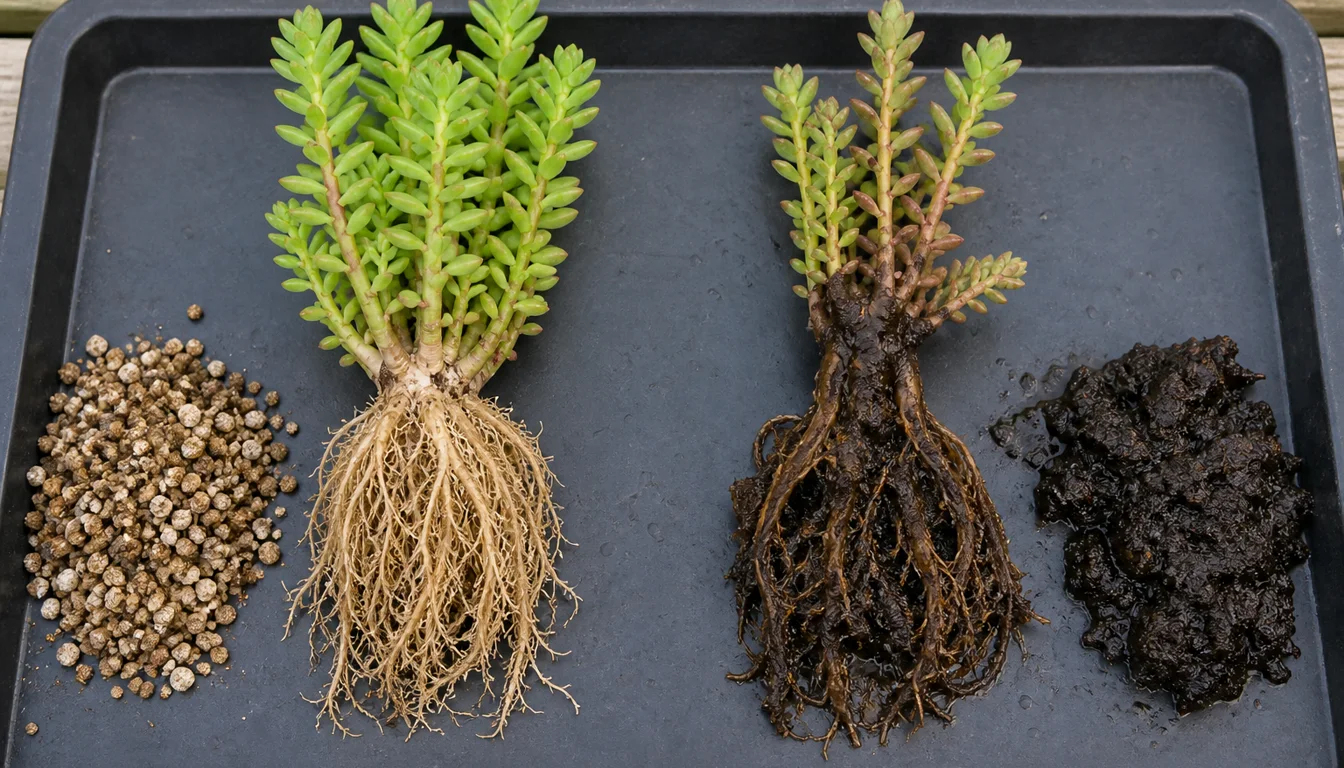
Firm wrinkles with dry soil suggest a depleted water reserve. Translucent leaves, a dark soft crown, or brown roots in damp soil point toward excess moisture and tissue damage.
Healthy roots remain firm and hold together. Rotten roots turn brown, soften, and pull apart easily, so damaged material must be removed before a clean division or cutting is replanted.
- Check moisture at root depth rather than reading the surface alone.
- Soak the root zone completely and confirm that water can leave.
- Wait for dry-down before the next soak.
- Reduce watering when cool weather or weak light slows plant use.
- Inspect roots and crowns before watering a soft plant.
What Soil and Fertilizer Does Sedum Need?
Sedum needs an airy root zone more than rich soil. Sandy, shallow, rocky, or loose loam can work when rain and irrigation leave rather than forming a wet basin.
Improve a heavy site through elevation, grading, or a broader drainage correction. A small pocket of loose mix inside compacted clay can collect water like a bowl.
Containers need a coarse succulent mix and an open drainage hole. Match pot depth to the root mass so a small plant is not surrounded by a large volume of slow-drying soil.
Feed only when weak growth has a supported nutrient cause. Excess nitrogen can open creeping mats and make upright stems soft enough to fall outward.
- Rock garden
- Lean mineral soil with an outlet below every planting pocket
- Groundcover slope
- Loose soil that roots can enter without holding runoff
- Perennial border
- Well-drained loam without heavy routine feeding
- Container
- Coarse mix, suitable pot depth, and an open drainage hole
- Fertilizer boundary
- Use lightly during active growth only when the plant shows a real need
How Do You Propagate and Renew Sedum?
Choose the propagation method by the material you have.
Creeping mats divide easily, firm stems make quick cuttings, and leaves from some species can produce new plants.
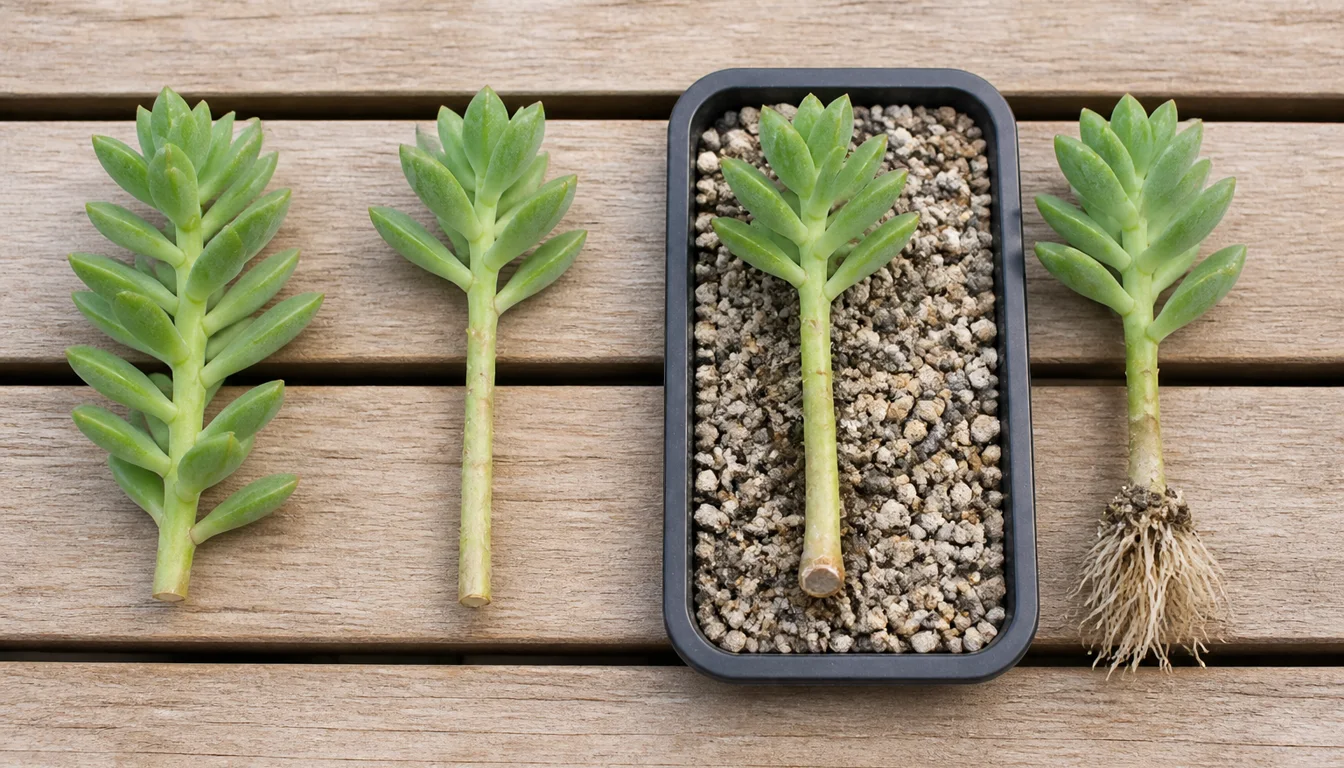
For a stem cutting, remove the lower leaves so one or two clean nodes can meet the mix.
Let a juicy cut surface dry briefly before placing it shallowly in coarse material.
Keep the cutting in bright filtered light while roots form. Continuous wetness can rot an unrooted node before it can take up water.
Divide an upright clump when the center opens or when healthy outer shoots can be separated with roots attached. Replant divisions at their previous depth so the crown remains exposed.
Lift sections from the edge of a spreading mat when it hides stone or crowds a slower plant. Reset only firm rooted pieces and leave open seams for future growth.
- Take a firm non-flowering stem with several healthy nodes.
- Remove the lowest leaves without crushing the stem.
- Let the cut surface seal briefly when it is wet and fleshy.
- Set the prepared nodes into shallow gritty mix.
- Keep the mix barely supported rather than continuously wet.
- Move the rooted cutting into stronger light gradually.
- Division
- Best for crowded mats and established upright clumps
- Stem cutting
- Best for a quick copy of healthy named plants
- Leaf propagation
- Possible for some species but slower and easier to rot
Why Is Your Sedum Flopping, Rotting, or Losing Color?
Diagnose the pattern before choosing a treatment.
Sedum reacts differently to shade, rich soil, wet roots, chewing pests, and sap-feeding insects.
Long pale gaps and leaning stems show that the plant is reaching for light. Upright clumps can also open outward when rich soil or excess fertilizer produces soft growth.
Dark soft tissue at the soil line points toward crown or root rot. Check moisture and root firmness before assuming that wrinkled or weak foliage needs more water.
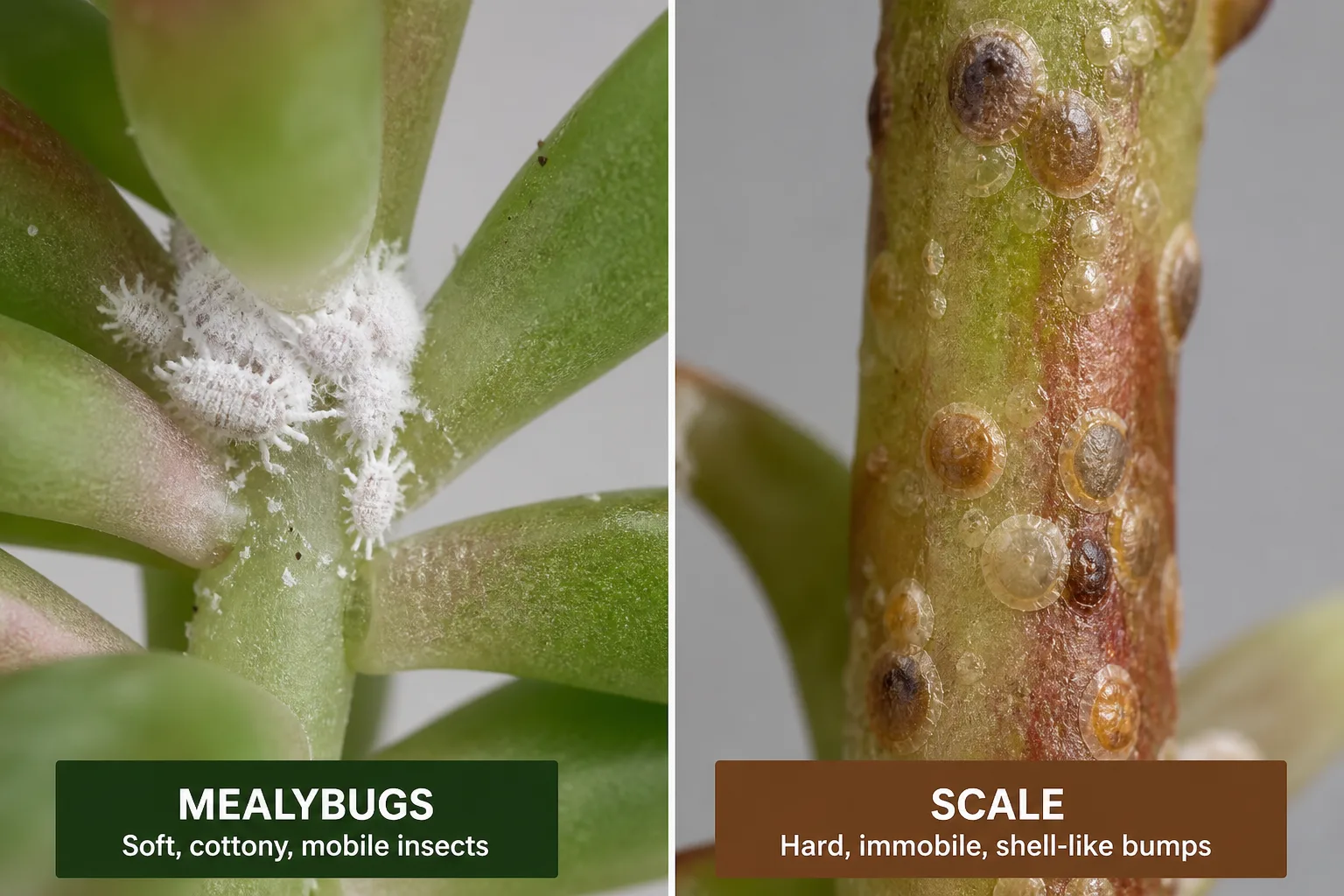
Mealybugs form soft cottony clusters in leaf joints, while scale insects sit as hard shell-like bumps on stems. Slugs and snails leave irregular chewing on low foliage and are often easier to confirm after dark.
A flowering Sempervivum rosette that dies is not a Sedum disease, but the two plants often share rock gardens. The surrounding offsets remain alive because the lifecycle belongs to that individual rosette.
- Long pale growth
- Check light and move the plant before adding fertilizer
- Upright stems flop
- Check shade, rich soil, and excess nitrogen
- Soft dark crown
- Inspect wet roots and remove rotten tissue
- Cottony leaf joints
- Confirm mealybugs and isolate affected container plants
- Hard attached bumps
- Confirm scale before choosing a control
- Irregular holes
- Look for slugs or snails and their hiding places
- Compare damaged and healthy tissue on the same plant.
- Check light direction and internode spacing.
- Feel the crown and inspect roots when soil remains damp.
- Inspect leaf joints and stem surfaces closely.
- Confirm the pest before applying a treatment.
What Happens to Sedum Through the Seasons?
Seasonal behavior depends on the Sedum habit and climate.
Some low mats remain visible through winter, while upright Hylotelephium dies back to the crown and returns from new shoots.
Flower timing varies by species, with many upright forms blooming from late summer into fall.
Their clusters attract bees, butterflies, and other beneficial insects in sunny dry borders.
Leave sound upright seed heads when they still add winter structure, then cut the old stems before new shoots rise far enough to be damaged. Clear wet leaf litter from low crowns whenever it blocks airflow.
Freeze and thaw can lift shallow rooted mats away from soil contact. Press them back into place when conditions allow instead of covering the crown with more mulch.
Safety information varies across species and sources, so do not generalize one edible or toxic claim to the whole genus.
Keep unidentified ornamental material away from pets and children who chew plants.
- Spring
- Reset lifted roots, divide healthy growth, and clear old stems
- Summer
- Watch drought evidence without keeping crowns wet
- Late season
- Use upright flowers and seed heads for pollinators and structure
- Winter
- Protect drainage and check the exact cultivar's hardiness
Frequently Asked Questions
Is sedum a good groundcover for full sun?
Yes, creeping Sedum is best in full sun or very bright light with sharp drainage. It forms low mats in dry, rocky, or gravelly spots where many leafy groundcovers struggle.
Why is my sedum turning mushy?
Mushy Sedum usually means wet soil around the crown, especially after overwatering, heavy rain, thick mulch, or soil that drains poorly. Let the soil dry and remove soft stems back to firm tissue.
Can sedum grow indoors?
Some Sedum can grow indoors on a very bright sill or under a grow light, but most typical rooms are too dim. Outdoor containers, sunny balconies, and bright porches usually work better.
How fast does sedum spread?
Many creeping Sedum types spread several inches in a growing season once rooted. Spacing small divisions 6-8 inches apart gives quicker coverage than waiting for one plant to cover a wide area.
Should sedum be fertilized?
Usually no, since Sedum performs best in lean soil. Heavy fertilizer often makes stems soft, tall, and floppy instead of compact.
Is sedum safe for pets?
Sedum safety depends on the species. ASPCA lists burro's tail (Sedum morganianum) as non-toxic to dogs, cats, and horses and Sedum album as non-toxic to dogs and cats, but no record covers every sedum. Call a veterinarian if a pet eats a large amount or shows symptoms.
Sources & References
- Clemson Cooperative Extension: Groundcovers - Sedum
- North Carolina State Extension: Sedum, Stonecrop
- NC State Extension Plant Toolbox: Sedum morganianum (Burro's Tail)
- Missouri Botanical Garden: Sedum (Stonecrop) Plant Finder
- How to grow hylotelephium, formerly sedum, Royal Horticultural Society
- Toxic and Non-toxic Plants: Burro's Tail | ASPCA
- Toxic and Non-toxic Plants: Hardy Baby Tears | ASPCA