
Treat Yucca Cane Like a Sun Plant, Not a Soft Palm
Yucca elephantipes Asparagaceae
Yucca Cane is a dry-room indoor tree with thick canes, sword-like leaves, and a strong need for bright light. Good care means treating it like a sun-loving cane plant with a heavy pot, not like a soft tropical palm.
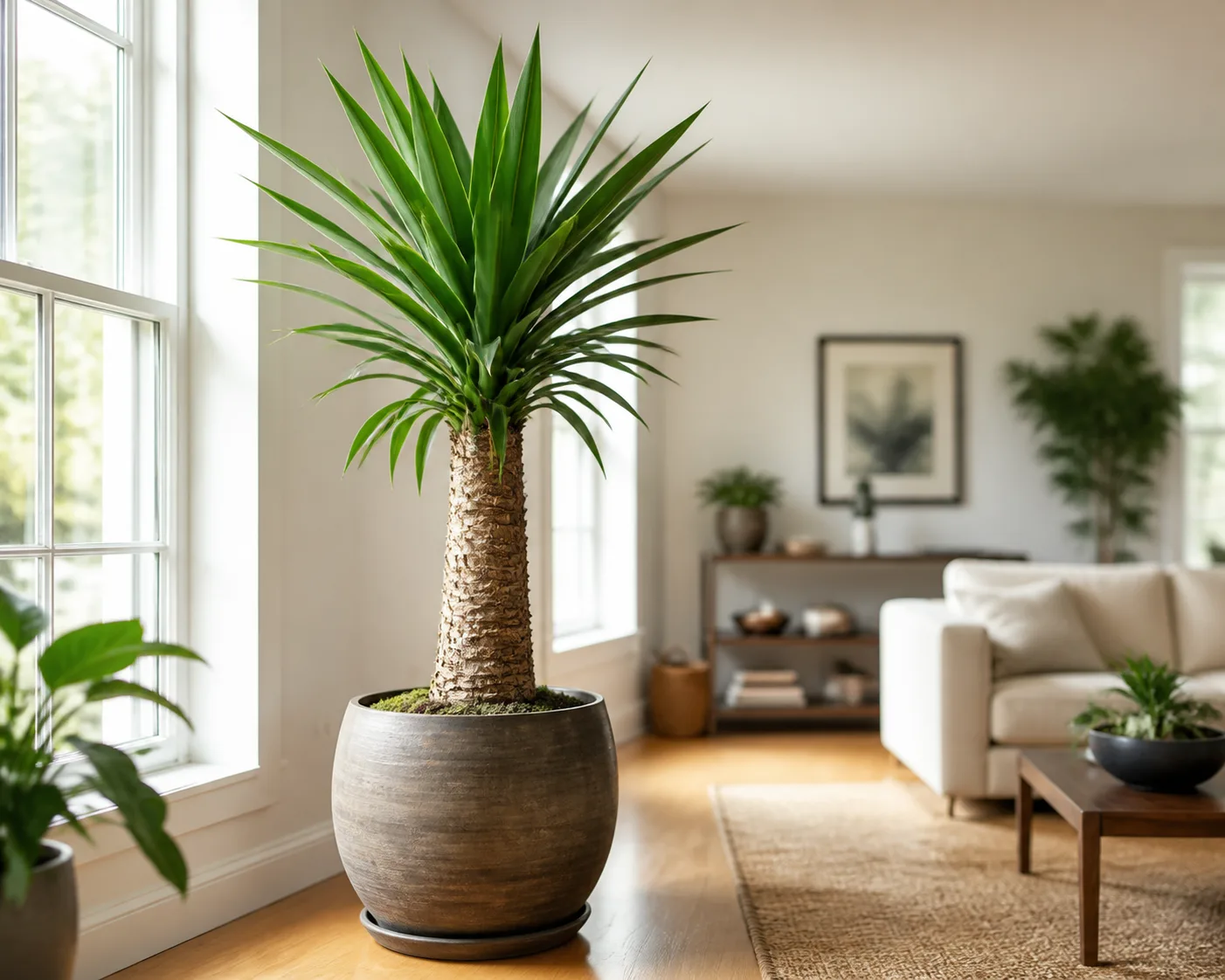
Care snapshot
The Cane Stores Strength, Not Unlimited Water
The thick cane makes Yucca look indestructible, but the roots still rot if the pot stays wet. The plant survives dry rooms because it is built for light and restraint.
A good indoor plant has firm canes, upright leaf heads, and a pot heavy enough to hold the shape. A soft cane is a bigger warning than a few brown leaf tips.
Lower leaves will age out over time, and that is normal for a cane plant. The warning sign is not one old lower leaf browning, but a soft cane, a loose head, or new leaves that emerge pale and weak.
The cane also gives you less room for correction than a vine. If the head stretches in weak light, you cannot simply wind it back into shape.
If you want a plant with a similar dry-room mindset but a swollen base, Ponytail Palm is the closer comparison than a true palm.
Yucca elephantipes is sometimes sold under the synonym Yucca gigantea, and both names refer to the same spineless, soft-tipped species commonly grown indoors.
A cane's girth roughly tracks its age, since a thick trunk took years to build the reserves that let it shrug off a missed watering or two.
Choose Cane Height by the Room
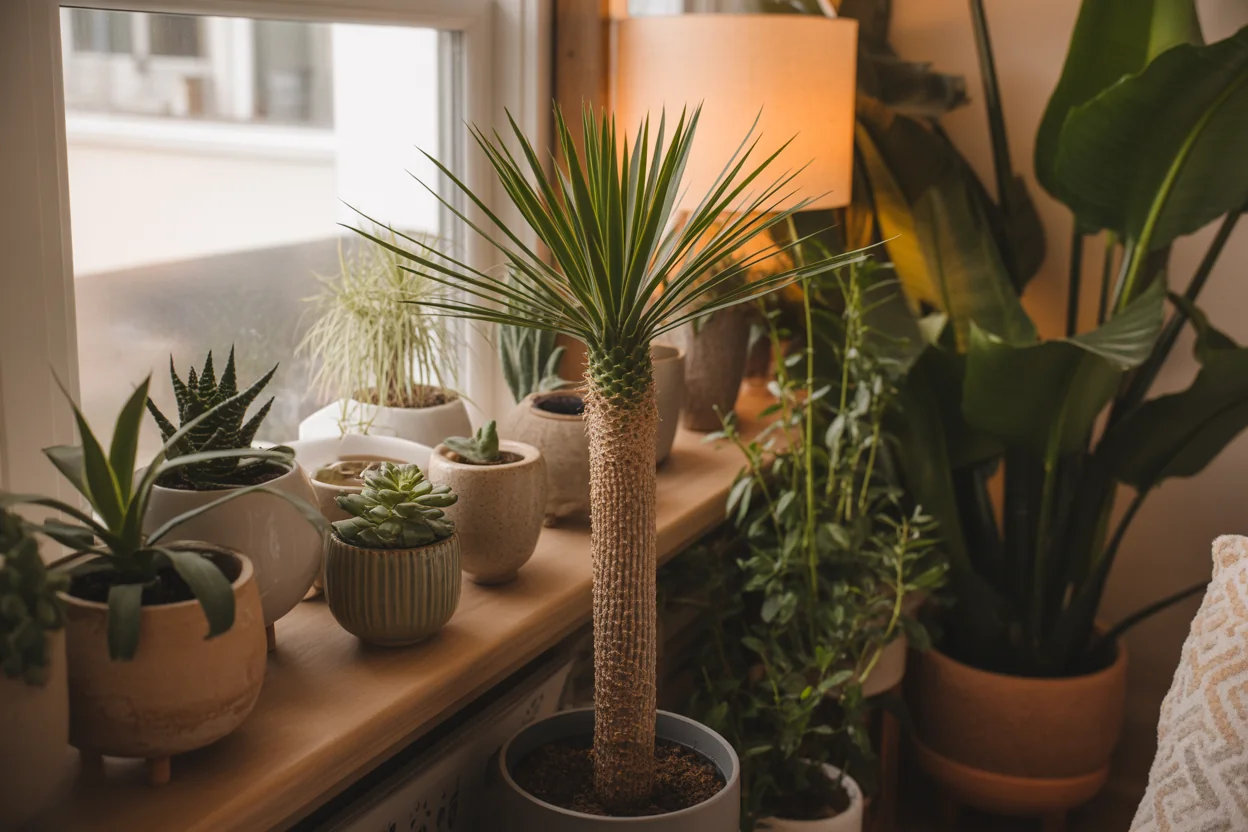
The cane height you buy sets the room scale from day one. Indoor Yucca Cane plants grow slowly upward, so do not expect a tabletop plant to become a floor specimen fast.
- Single cane
- Clean architectural look, easier to place
- Multi-cane pot
- Fuller look, heavier pot, more leaf heads to balance
- Risky buy
- Soft cane, loose crown, wet soil, or leaves collapsing from the center
A multi-cane pot looks fuller, but each cane may have a different strength. Check every cane for firmness instead of assuming the whole pot is healthy because one head looks good.
For apartments, a lower multi-cane plant often works better than one tall cane. It gives the architectural look without putting stiff leaves at face height.
Choose a plant with enough clearance around the leaves. The tips are stiff, and a narrow hallway turns the plant into a daily annoyance.
Braided or twisted multi-cane specimens are grown by nurseries training several young canes together while still flexible, a look that can't be recreated later on a mature plant.
Variegated Yucca elephantipes cultivars with cream leaf margins exist but grow slower and need brighter light to hold their pattern than plain green forms.
Nurseries commonly sell Yucca Cane as staggered-height multi-cane pots, with each cane cut to a different level on purpose, so the leaf heads fill in at varied depths instead of one flat row.
Give It More Sun Than Most Houseplants
Strong light is the difference between a sturdy cane plant and a weak indoor prop. Aim for bright light with several hours of direct sun when possible.
A bright south or west window can work if heat does not scorch leaves. A dim north room usually makes the heads loosen and the soil stay wet too long.
If you are choosing between tough upright plants, ZZ Plant handles less light, but Yucca Cane gives a sharper tree shape in sun.
Acclimate to direct sun over one to two weeks if the plant came from a dim store. Existing leaves can scorch even though the species wants strong light.
If only one side gets sun, rotate slowly. A sudden 180-degree turn can expose shaded leaves to full sun before they are ready.
- Upright firm leaves: light is likely enough.
- Leaning heads: rotate and move brighter.
- Pale floppy new leaves: light is too weak.
This is where Yucca Cane beats many indoor trees. Fiddle Leaf Fig may sulk after moves, while Yucca Cane simply wants stronger sun.
A sheer curtain between the plant and a hot afternoon window can soften intense light just enough to prevent scorch while still delivering strong brightness.
Leaves that developed indoors carry less protective cuticle than field-grown leaves, which is exactly why a sudden move outdoors into full sun burns them first.
A spot just inside a large west-facing patio door often gives enough direct afternoon sun to keep canes stocky without the leaf-scorch risk of glass pressed right against a hot south window.
Dry Most of the Pot Before Watering
Let the top half of the pot dry before watering. In a large container, that often means waiting much longer than you would for leafy tropical plants.
That dry wait is why a moisture meter can mislead if it only checks the top inch. The lower half of a large pot controls the risk.
A large pot can be dry at the top and wet around the lower roots. Use a wooden skewer, moisture probe pushed deeper, or pot weight to avoid watering on surface feel alone.
If water runs straight down the side and out, the root ball may be shrunken dry. Soak slowly in rounds until the center rewets, then let it drain completely.
When it is time, water thoroughly and drain the saucer. Deep watering is fine, but staying wet is the problem.
For a broader dry-room comparison, Snake Plant is even more tolerant of low water, but Yucca needs stronger light.
Elevating the nursery pot slightly on pot feet inside a decorative outer container keeps drained water from pooling silently against the bottom of the root ball.
Watering with room-temperature water rather than straight from a cold tap avoids the brief shock a large root ball can feel from a sudden temperature swing.
Pair Fast Drainage With Real Weight
A light nursery pot can tip once the cane leans toward the window. Use a heavy container with a drainage hole, not a sealed decorative sleeve.
Mix indoor potting soil with perlite, pumice, or coarse bark. The roots need drainage more than richness.
A layer of rocks at the bottom does not fix a pot with no drainage. It only creates a hidden wet zone below the roots.
- Best indoor mix
- Potting soil cut with perlite, pumice, or coarse bark
- Best container
- Heavy pot with a drainage hole and a broad base
- Best top dressing
- Light mineral layer kept away from the cane base
Use the first table for the heavy-pot decision, then use the next one to check whether the mix and top dressing are helping the cane stay dry.
- Pot priority
- Heavy, stable, drainage hole, room for cane weight
- Mix priority
- Fast drainage and air after watering
- Repot trigger
- Plant tipping, roots crowded, or soil staying wet too long
Terracotta pots wick moisture out through their walls faster than glazed ceramic or plastic, a real advantage for a plant that punishes overwatering more than underwatering.
Working a handful of coarse grit into the bottom third of the pot, not just the top layer, helps the whole root zone drain rather than only the surface.
A soil test is rarely useful for this plant, since the drainage and pot weight decisions matter far more to long-term health than fine-tuning nutrient levels.
Pruning Changes the Tree Shape Slowly
Cutting a cane is a shape decision, not quick grooming. New shoots can form below the cut, but the plant takes time to look balanced again.
Tip cuttings and cane sections can root in warm bright conditions, yet large indoor canes are not ideal beginner propagation material.
Mark the top end of any cane section before you set it aside. A reversed cane cutting may fail because the growth direction is wrong.
Let large cuts dry briefly before potting, then keep the mix barely moist. A wet cane section rots before dormant buds have time to wake.
A cane cutting also needs clean tools and patience. It may sit for weeks before the first new shoot proves the cut worked.
If you want easy cuttings, Wandering Jew is a much better practice plant.
A rooting cane section still counts as a cutting even after the parent cane above it has been repotted separately, since each piece develops its own root system independently.
Labeling which end faced up with a strip of tape at the moment of cutting removes any guesswork weeks later when the orientation is no longer obvious.
Cuttings taken from the upper, more actively growing portion of a cane tend to root a little faster than sections taken from older, harder wood lower down.
Brown Tips Are Not Always Thirst
Dry brown tips can come from age, low humidity, mineral buildup, or physical brushing. They do not automatically mean the plant needs more water.
Scale and mealybugs can hide where leaves meet the cane. Check the crown before the sticky residue spreads to nearby surfaces.
Physical damage is common because the leaves are stiff. A brushed tip can brown later and look like a watering issue even though the root system is fine.
Scale sits close to the cane and leaf bases. A quick wipe across the leaf blade will not catch it, so inspect the tight joints where leaves emerge.
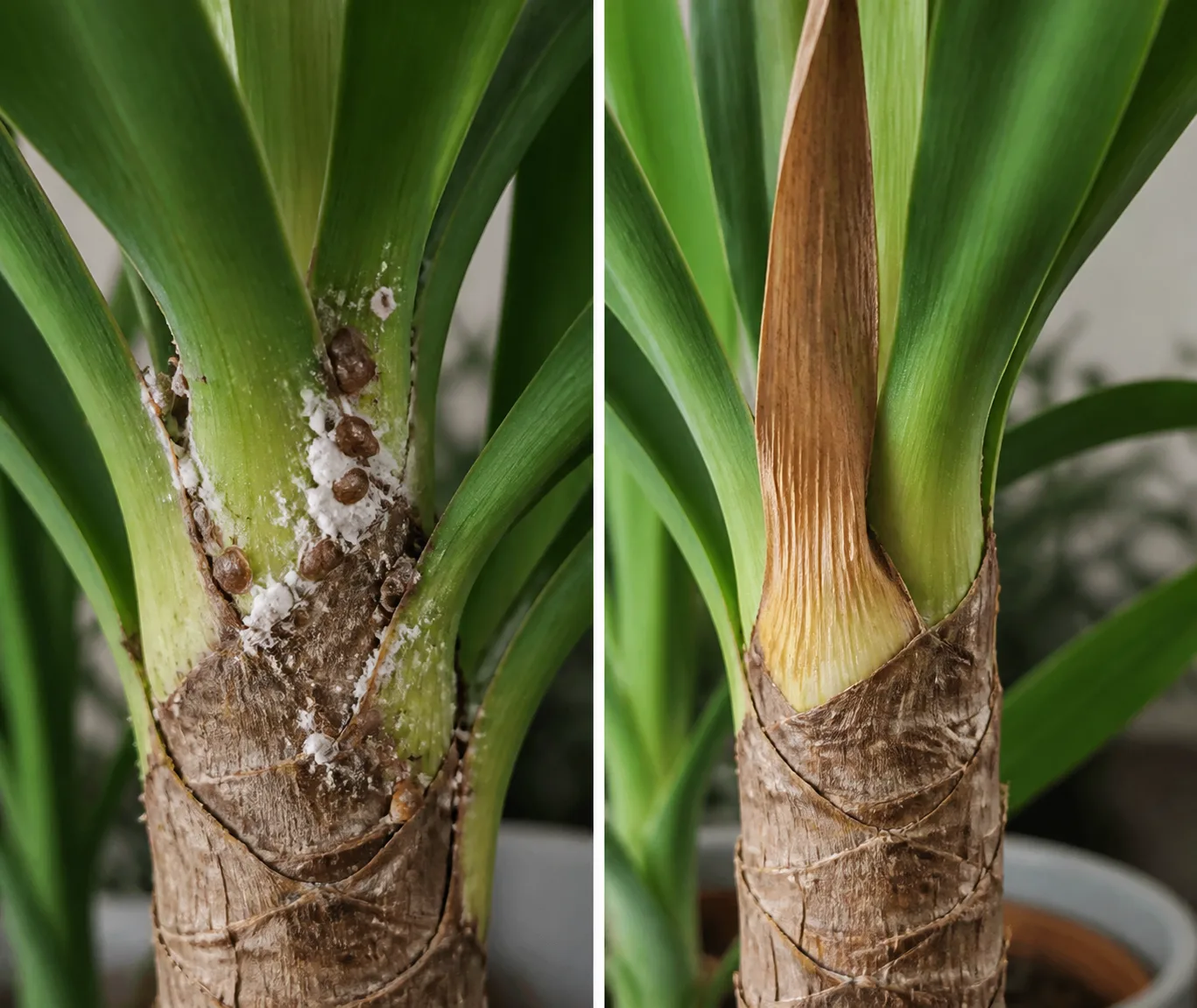
- Brown tips with firm cane: trim and review water quality.
- Yellow leaves with wet soil: check roots.
- Sticky crown: inspect for scale or mealybugs.
If yellowing spreads after wet soil, Dracaena yellow leaves is a useful cane-plant comparison.
A cotton swab dipped in rubbing alcohol lifts individual scale insects off the cane fast during a small outbreak, before a broader spray treatment becomes necessary.
A magnifying loupe held right against a leaf joint reveals a scale insect's waxy shell far more clearly than the naked eye, which matters since early-stage scale barely raises a bump.
Ants trailing up and down the cane are a strong hint that scale or mealybugs are already established, since ants actively farm the honeydew those pests excrete.
Winter Is Dry and Bright, Not Wet and Warm
Winter care should get drier, not cozier. Short days slow the plant, even in a heated room.
Keep it in the brightest window, away from cold drafts, and stretch the time between waterings. Dust leaves so the limited light reaches the surface.
If you move it outside for summer, start in bright shade and increase sun slowly. Wind can also shred older indoor-grown leaves, so protect the plant the first week.
Bring it back in before cold nights. Cold plus wet soil is harder on Yucca Cane than dry indoor air.
For a larger seasonal rhythm, indoor plant care calendar helps, but this plant's pot weight is still the better watering signal.
Spring and summer are better for repotting, pruning, or moving outdoors into shade before stronger sun.
A sudden temperature swing near a drafty winter window can stress a Yucca Cane even though the plant tolerates cooler nights better than most tropical houseplants.
Rotating the pot a quarter turn every few weeks during the growing season keeps the head developing evenly instead of leaning hard toward one window.
Flushing the pot with plain water every couple of months during the growing season helps clear mineral salts that regular feeding leaves behind in the mix.
Sharp Leaves and Pet Risk Decide Placement
The leaves are stiff and pointed, so placement matters even before toxicity. Keep Yucca Cane out of tight walkways and eye-level traffic.
Yucca Cane is also not a chew-safe plant for pets. Put it where animals cannot bite the leaves or knock the heavy pot over.
Place the pot where leaf tips do not meet faces, arms, or doorways. A plant can be healthy and still be wrong for a narrow path.
If children or pets run near the plant, choose a lower-traffic corner and a heavy pot. The safety issue is both chewing and impact.
For a softer pet-safe floor plant, Parlor Palm is easier to place, though it asks for a different light and water routine.
Vets treating a yucca-related pet incident usually see vomiting and drooling well before anything more serious, and most cases resolve with monitoring rather than emergency intervention.
Even a plant with no history of pet interest deserves a stable, tucked-away spot, since curiosity often shows up only after a bored afternoon or a new litter of kittens arrives.
A well-secured heavy pot also protects small children from a genuinely serious tip-over risk, not just a scrape from a stiff leaf tip, since a mature multi-cane specimen can weigh considerably more than it looks.
Frequently Asked Questions
How much light does Yucca Cane need indoors?
Give the brightest spot you have, including several hours of direct sun if the plant adapts without scorch.
How often should I water Yucca Cane?
Wait until much of the pot dries, then water deeply and drain well. Large pots may go a long time between waterings.
Why is my yucca cane soft?
A soft cane usually means rot from wet soil or cold stress. Stop watering and inspect the base and roots.
Can I cut back a tall Yucca Cane?
Yes, but cut only with a clear shape goal. New shoots can form below the cut, but recovery is slow.
Is Yucca Cane pet safe?
No. Keep it away from chewing pets, and place the stiff leaves away from traffic.
Sources & References
- Clemson Cooperative Extension: Yucca
- Royal Horticultural Society: Growing Yucca as a Houseplant
- ASPCA: Yucca Toxicity to Dogs and Cats
- Missouri Botanical Garden: Yucca gigantea (syn. elephantipes)
- Royal Horticultural Society: Yucca gigantea Profile
- Missouri Botanical Garden Plant Finder: Yucca elephantipes
- University of Florida IFAS Extension: Yuccas for Florida
- North Carolina Extension Gardener Plant Toolbox - Yucca gigantea
Related Plants
Snake Plant
Another tough structural houseplant that tolerates dry soil and bright light.
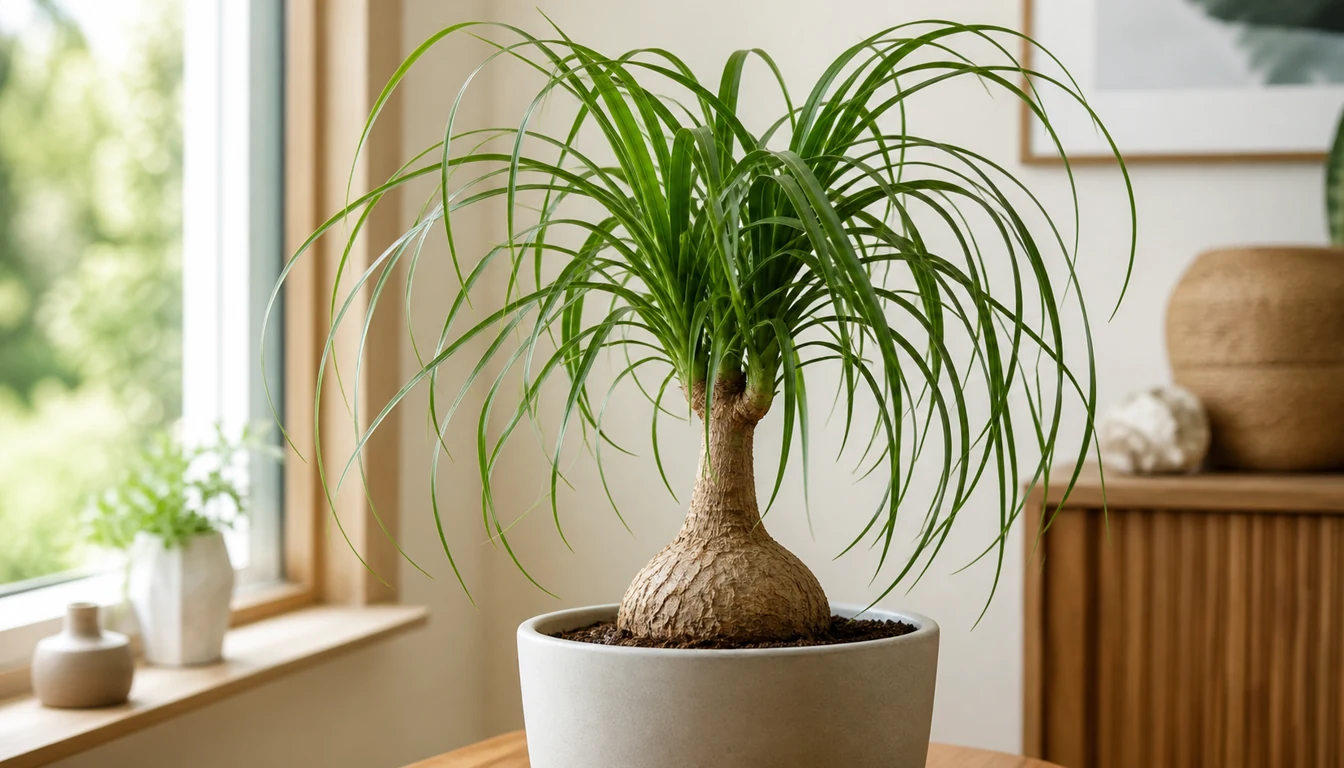
Ponytail Palm
Bulbous base and fountain of leaves. Similar feel but slower growth indoors.
Monstera
Leafy alternative if you like tall plants but want broader, tropical foliage.
African Violet
African Violet is a windowsill bloomer that rewards steady, small-pot care.
Air Plant
Air plants are living sculptures that thrive without soil, anchoring to driftwood, rocks, or shells while drawing…
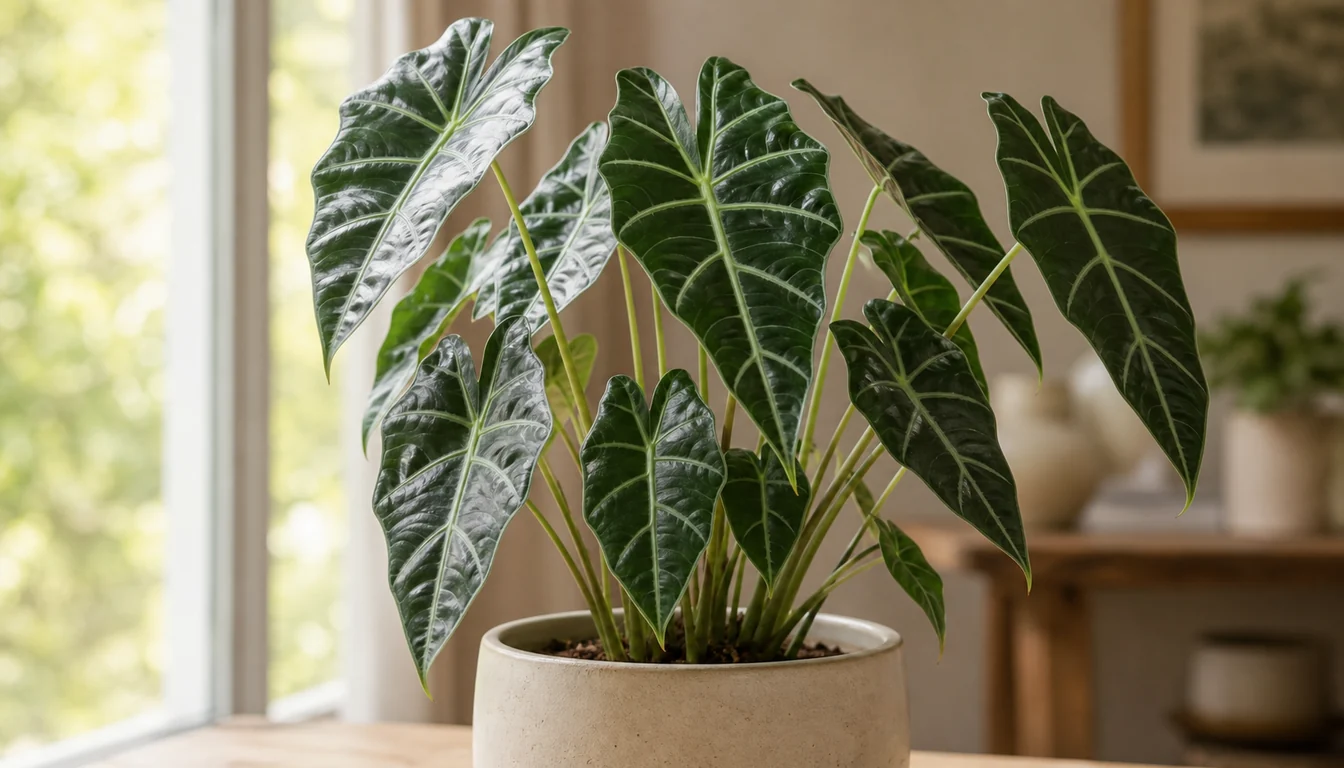
Alocasia
Alocasias include compact, textured houseplants and large elephant ears that need substantial floor space.