
How to Grow Tank Bromeliads and Care for Their Cups and Pups
Bromeliaceae spp. Bromeliaceae
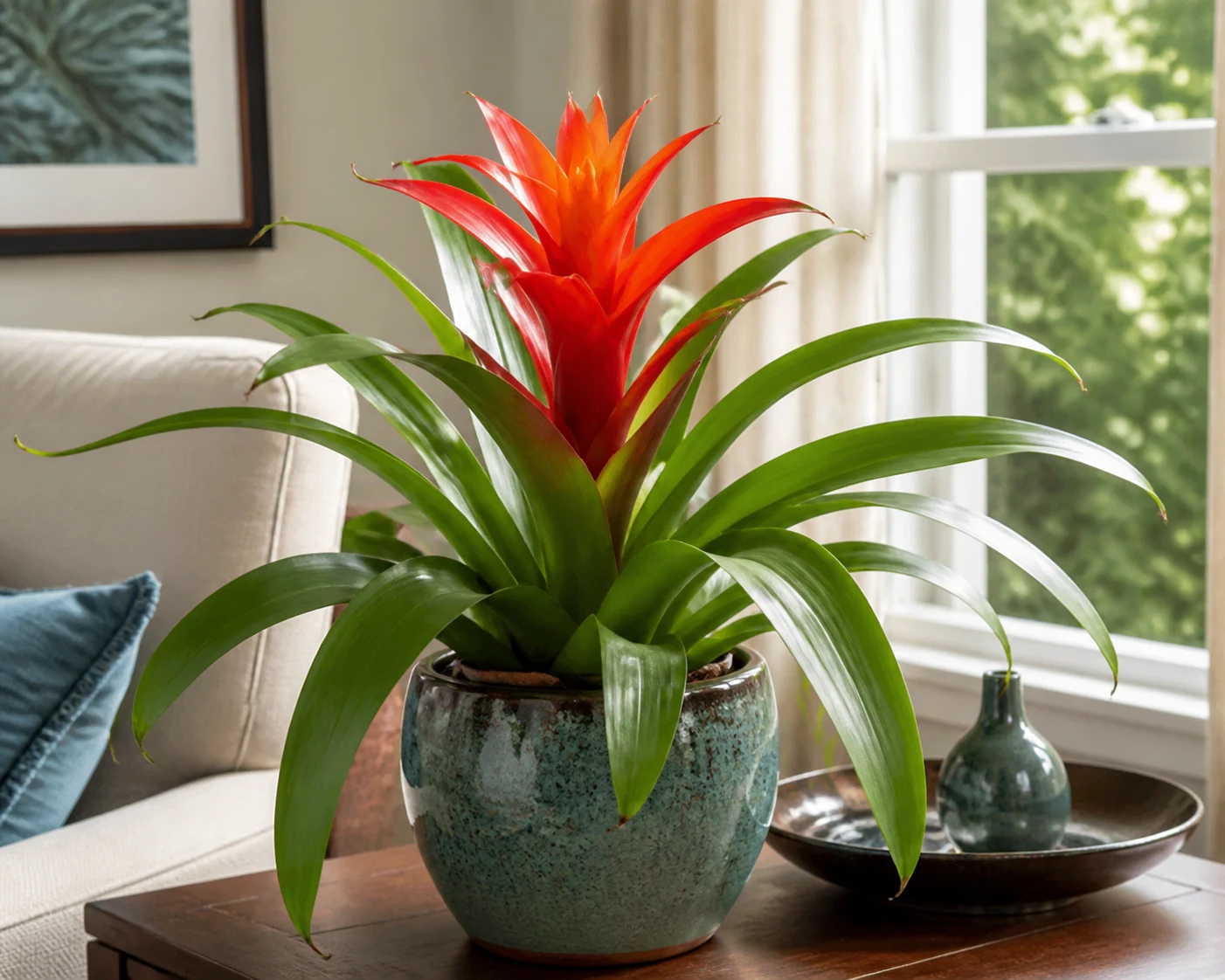
Bromeliads are colorful rosette-forming houseplants that hold water in a central cup instead of relying on constantly wet soil. They thrive in bright, filtered light, moderate indoor humidity, and tight pots, making them ideal for small, warm homes and offices in Zones 10-12 or as indoor-only plants elsewhere.
Care snapshot
Botanical Profile: Tank-Style Foliage
Winter heating season is when Bromeliads prove how different they are from most houseplants.
The rosette of leaves forms a tank that holds water, so dry indoor air bothers them far less than thin-leaved tropicals like Calathea.
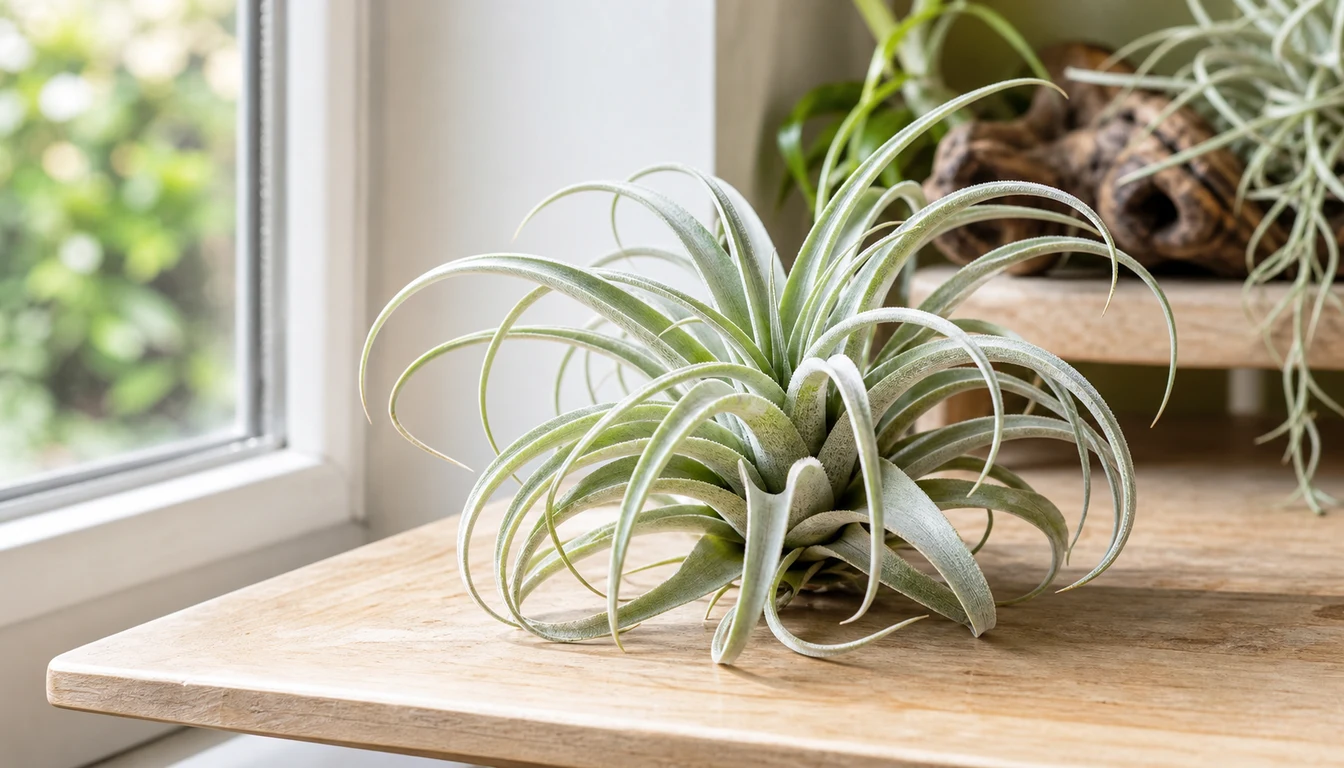
Spring and summer growth in Zone 10-12 lines up with their tropical roots in Central and South America. Many Bromeliads are epiphytes, meaning they grow on trees instead of in deep soil, similar to an Air Plant.
Warm months also highlight their slow but steady growth habit. Most potted Bromeliads stay 8-24 inches tall and 6-20 inches wide, so they fit on side tables where larger plants like Monstera would overwhelm the space.
All year long, the plant you see is technically the parent that will bloom once, then shift energy into offsets called pups. If you have handled Snake Plant clumps, the idea will feel familiar.
Spider Plant babies follow a similar replacement rhythm, just without the tank-like rosette.
- Botanical family
- Bromeliaceae
- Common indoor size
- 8-18 in tall, 6-16 in wide
- Native habitat
- Tropical forests and arid regions of the Americas
- Growth rate
- Slow, similar to a small peace lily
- Hardiness outdoors
- Zone 10-12, frost-free only
Light Needs Through the Seasons
Winter light is the toughest test for Bromeliads. Short days and low sun angles mean they need the brightest spot you have, similar to where you would park a Fiddle Leaf Fig but without direct midday rays.
Spring and fall are the sweet spots. Aim for 4-6 hours of bright, indirect light each day, like a sheer-curtained east or bright north window.
This matches what many easy indoor plants prefer.
Summer sun through glass can scorch the leaves. Outdoors in Zone 10-12, they handle dappled shade under trees, similar to where you might plant hosta in cooler zones, never in open afternoon sun.
Year-round, weak light gives stretched, dull plants with floppy rosettes. Too much direct sun gives pale patches or crispy banding, a sign to move them deeper into the room like you would with a stressed peace lily.
- Place within 3-5 feet of a bright window, filtered by sheer curtains.
- Use a grow light in dark winters, set for 10-12 hours per day.
- Rotate the pot monthly so the rosette stays centered and even.
- Avoid south windows without sheer curtains, which cause leaf scorch.
Cultivars: Guzmania, Neoregelia, and More
Summer displays at garden centers show how wide Bromeliad colors run. You will see glossy, solid green rosettes, banded foliage, and compact plants with bright red centers that rival Anthurium for drama.
Spring shipments usually lean on Guzmania hybrids with tall, flame-shaped bracts. These do well in bright rooms similar to where you would keep a Marble Queen Pothos, but they stay upright instead of trailing.
Year-round you will find Neoregelia types, which color up more in stronger light. Their leaves often blush pink or red in the center, making them good companions for darker foliage like ZZ Plant or Chinese evergreen varieties.
Cooler months are when Aechmea types, such as Aechmea fasciata, shine. Their thicker, banded leaves tolerate slightly cooler rooms, similar to a Rubber Plant, as long as they stay above 60°F.
- Guzmania: upright, glossy green leaves with bright orange, red, or yellow bracts.
- Neoregelia: flatter rosettes with colorful centers, best color in strong filtered light.
- Aechmea: thicker, often silver-banded foliage with striking long-lasting flower spikes.
- Vriesea: sword-shaped inflorescences and softer leaves that like consistent warmth.
After scanning the types, match the rosette to your room, since Bromeliad color depends on light as much as the name on the tag.
Soil and Potting Mix for Epiphytes
Spring repotting is rare with Bromeliads, and that surprises people used to fast growers like Spider Plant. Many Bromeliads sit in the same small pot for years, as long as the mix drains fast and stays airy.
Summer is a good time to refresh tired mix without jumping to a bigger pot. A blend that works well is 50% regular potting soil, 25% orchid bark, and 25% perlite, giving them the chunky texture epiphytes like air plants on branches are used to.
Year-round, the pot should be only 1-2 inches wider than the root ball. Oversized pots trap moisture, the same reason we do not plant ZZ plant in huge containers when we first bring it home.
For outdoor containers in Zone 10-12, use the same airy mix but add a little extra bark for faster drainage during summer storms. Heavy garden soil belongs in beds for shrubs like Azalea, not in indoor Bromeliad pots.
- Ideal mix
- 50% potting mix, 25% orchid bark, 25% perlite
- pH range
- Slightly acidic to neutral (5.5-7.0)
- Repot frequency
- Every 2-3 years or when pups crowd the pot
- Preferred pot type
- Plastic or glazed clay to keep moisture even
After choosing the mix, keep the pot snug, since Bromeliads use airy roots for anchoring more than heavy feeding.
Watering the Cup, Not Just the Soil
Winter is when most Bromeliads rot, and the mistake usually starts at the sink. Cold, standing water in a chilly room can sit in the central cup and damage the crown faster than overwatering does for Pothos or Philodendron.
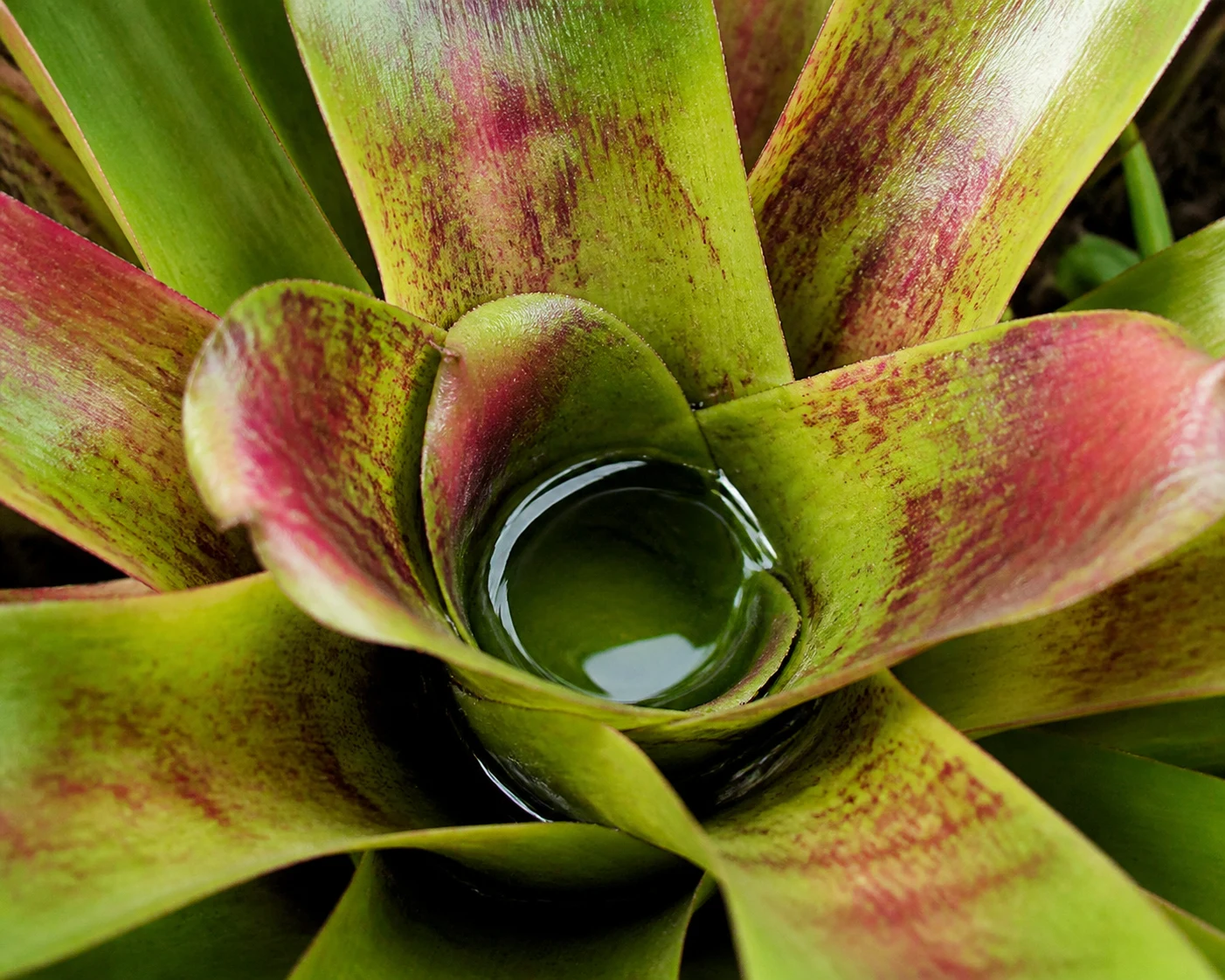
Spring and summer care focuses on keeping the tank filled but fresh. Use room-temperature, low-mineral water and flush the central cup every 1-2 weeks so algae and salts do not build up, similar to rinsing media for fungus gnat control.
In warm months, keep the cup one-half to three-quarters full and the soil just barely moist. Their roots act more like anchors than thirsty straws, so you should never see soggy, heavy potting mix like you might maintain for a peace lily.
During cooler seasons, let any water in the cup evaporate before refilling, and water the soil sparingly.
- Check the cup weekly; top up with room-temperature filtered or rainwater.
- Empty and refill the cup every 1-2 weeks to prevent stagnation.
- Water soil lightly when the top 1 inch feels dry to the touch.
- Reduce cup water in cool rooms, focusing on light misting instead.
Use the cup routine before adding more soil water, since Bromeliads rot fastest when both the tank and the pot stay cold and stale.
Propagating from Pups and Offsets
Late spring is the safest time to separate pups, when growth is steady and the mother plant has recovered from blooming. Cooler months slow root growth, so offsets just sit and sulk instead of settling into fresh mix.
Most bromeliads give you pups at the base once the main rosette is done flowering. That original plant will not bloom again, so pups are how you keep the show going year after year.
For indoor growers who already repot other houseplants, the same tools work here. A clean knife and a sturdy nursery pot are enough, and you can borrow tips from repotting indoor containers if you are new to handling root balls.
- Wait until pups are at least one-third to one-half the size of the mother rosette.
- Water the pot lightly the day before so roots are flexible but the mix is not soggy.
- Slide the plant from its pot and gently tease away mix to expose the pup attachment point.
- Use a clean, sharp knife or pruners to cut each pup away, keeping some roots attached.
- Dust cut surfaces with dry cinnamon if you are worried about rot in humid rooms.
Summer warmth in Zone 10-11 lets you root pups faster on a bright porch or shaded patio. In cooler homes, a heat mat under the pot at 70-75°F helps new roots form without overwatering.
- Set pups into a fast-draining mix, such as 60% orchid bark, 20% perlite, 20% peat or coco.
- Firm mix around the base so the rosette does not wobble when you nudge it.
- Water the soil lightly, then fill the central cup halfway and dump it after 24 hours.
- Keep light bright but indirect until you see new leaves emerging from the center.
- Expect 6-18 months before a pup is large enough to flower, depending on variety.
After potting the pup, support matters more than extra water, since Bromeliad offsets need a firm base while new roots grab the mix.
Seasonal Care Indoors and Out
Spring light changes faster than you think, and that is when many Bromeliads scorch. A plant that was content in a south window in February can start to bleach by April if you do not scoot it back a few feet.
In warm Zone 10-12, some gardeners summer Bromeliads outdoors in bright shade, much like they do with Peace Lilies or other tropical foliage. Indoors, we are mainly tracking shifts in light and heating so leaves stay colored without burning or drying.
Increase light gradually, rotate plants every 2 weeks, and resume light feeding with a diluted, balanced fertilizer once a month.
Shade from direct midday sun, check cups weekly for algae or mosquitoes, and top off water more often in hot rooms.
Move plants away from cold panes, trim spent flower bracts, and watch for pups forming at the base.
Cut back on fertilizer, keep cups filled but change water more often, and protect from furnace blasts or drafty doors.
Year-round indoor growers can treat Bromeliads much like Snake Plant or other tough foliage, just with a twist. Roots like similar snug pots and bright light, but the leaf cup always needs a bit of clean water on board.
- Aim for room temperatures between 65-80°F most of the year for steady growth.
- Avoid placing plants within 3 feet of heater vents or AC units that blow directly on the leaves.
- Use a small tray of pebbles and water to bump humidity if leaf tips brown during winter heating season.
- Trim only truly dead leaves; pups depend on the mother rosette for support while they bulk up.
- If blooms fade in winter, do your shaping cuts just before spring light returns, not in the darkest months.
After the seasonal checks, plan outdoor moves separately, since Bromeliads need bright shade before they can handle open-air summer light.
Pests: Scale, Mealybugs, and Gnats
Winter heating season is when pest problems usually show up, because dry air and warm rooms speed up insect life cycles. A Bromeliad that looked fine in October can be dotted with scale by January.
Soft leaves and the permanent water cup make Bromeliads a target for scale, mealybugs, and fungus gnats. The good news is that shallow root systems mean you can treat and inspect the whole plant in a few minutes.
If you have fought mites on other houseplants, you already know the drill. Many of the same tactics from treating indoor pests apply here, you just need to avoid filling the cup with oily sprays.
Scale insects and mealybugs get confused at a glance, since both are sap-sucking pests that leave sticky honeydew. Scale shows up as hard, flat tan or brown bumps stuck to leaves and stalks, while mealybugs form soft, cottony white clumps tucked into leaf bases and around pups.
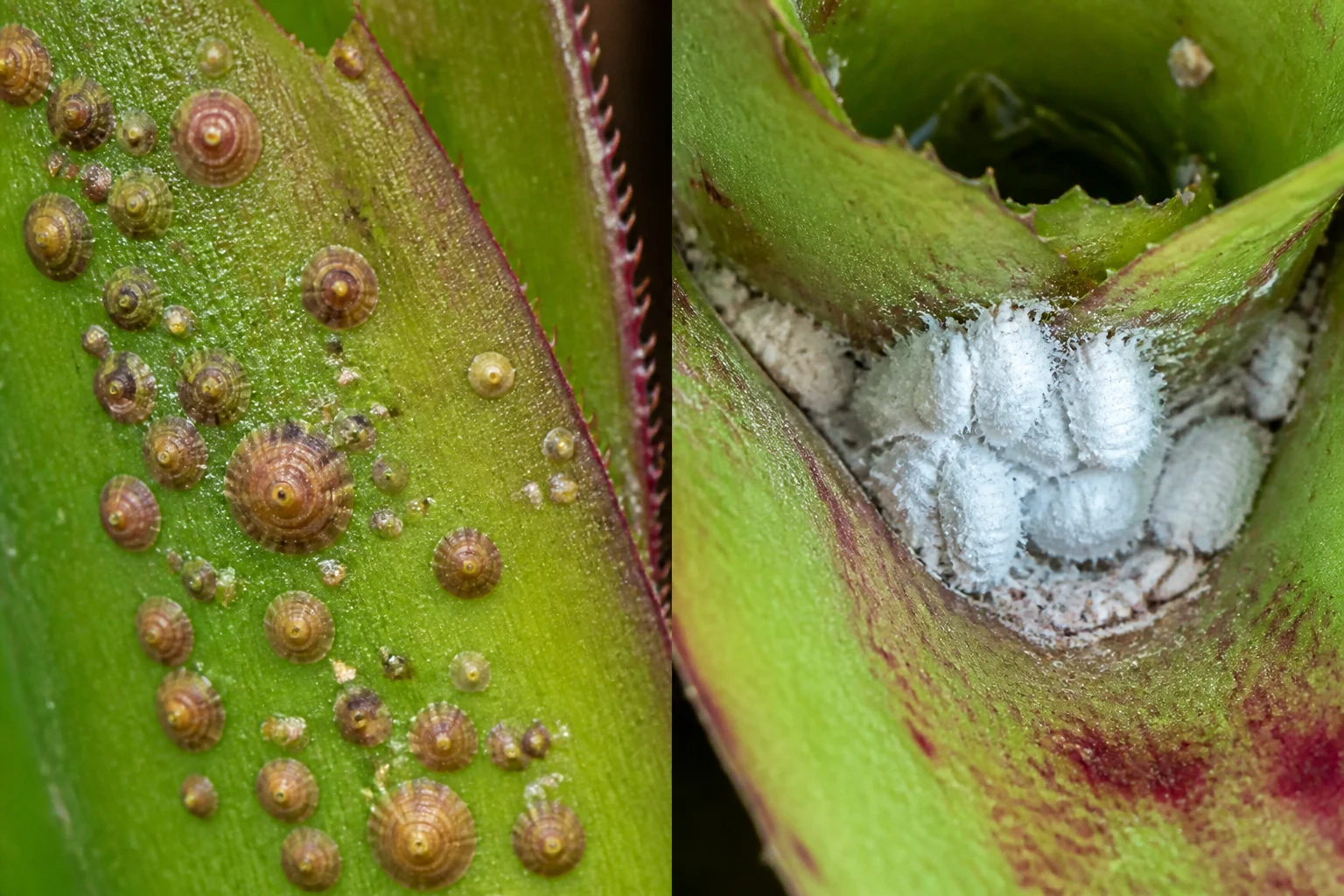
Look like tan or brown bumps on leaves and flower stalks. They suck sap and leave sticky honeydew that can grow sooty mold.
Hide in leaf bases and around pups as cottony white clumps. Leaves may yellow or twist near infestations.
Tiny black flies hovering over the pot, often a sign you are keeping the potting mix wetter than Bromeliad roots prefer.
Once you identify the pest, switch from scouting to treatment, since Bromeliad cups and leaf bases hide insects better than flat-leaved plants do.
- Flush the central cup with fresh water weekly, then turn the plant to drain, to discourage mosquito and gnat larvae.
- Wipe leaves with a cloth dipped in 1:10 dish soap and water to remove light scale and mealybugs.
- Spot treat stubborn insects with cotton swabs dipped in isopropyl alcohol, avoiding large amounts in the leaf cup.
- Let the top 1-2 inches of mix dry before watering again to make life harder for fungus gnat larvae.
- Use sticky traps and, if needed, tactics from controlling gnats in potting soil for heavier gnat issues.
After treatment, refresh the cup water separately, since Bromeliads should not hold oily spray residue where new leaves emerge.
Safety, Pets, and Indoor Ecology
Indoor winter months are when pets get bored and start chewing leaves, so safety questions matter more than admit. Bromeliads generally rank as low-to-moderate concern compared with many other popular houseplants.
The ASPCA lists the blushing bromeliad (Neoregelia) as non-toxic to cats and dogs, unlike dumbcane relatives or peace lily, but it gives no rating for the whole Bromeliaceae family, so check the exact plant name. Still, fibrous leaves can cause mild stomach upset if a pet chews big pieces.
From an ecology angle, indoor Bromeliads are not invasive in cooler regions, since they cannot survive frost. In true Zone 10-12 yards, epiphytic types mounted on trees behave more like ornamental accents than aggressive spreaders.
- Place pots out of reach of notorious chewers, especially kittens and young dogs that sample every leaf.
- Discard old cup water in the sink, not outside, if you use any fertilizer or insecticidal soap in it.
- Rinse the cup and leaves after using any systemic or contact pesticide on nearby houseplants.
- Avoid letting cup water sit stagnant for more than 7 days to limit mosquito breeding indoors.
If you prefer to skip any risk at all, pair Bromeliads with known pet-safe choices like curly spider plants on higher shelves. That way the showy rosettes are still visible, just not in pouncing range.
Frequently Asked Questions
How long do bromeliad flowers last indoors?
Most Bromeliad flower bracts last 2-6 months indoors if they receive bright, indirect light and stable temperatures. The individual tiny flowers fade sooner, but the colorful bract remains attractive for weeks or months before gradually dulling.
Will my bromeliad die after it blooms?
The main rosette slowly declines after blooming, but it does not crash overnight, producing pups at the base over 6-18 months. You can pot up those pups and keep the "family" going while the original plant fades naturally.
Can bromeliads grow outside in my area?
Bromeliads are reliably hardy outdoors only in Zone 10-12 with frost-free winters. In cooler regions, treat them as indoor plants or move pots outside just for warm months, similar to how many people summer their Peace Lilies or Rubber Plants.
Why did my bromeliad die after flowering?
Most Bromeliad rosettes are monocarpic, which means the mother plant dies after blooming, and this is normal. Keep caring for the pot and focus on the pups that form at the base, since they will grow into the next flowering generation.
How often should I change the water in a bromeliad’s cup?
Swap the water in the central cup every 5-7 days, rinsing it out completely and refilling about halfway. In warm rooms or if you use fertilizer in the cup, change it a bit more often to prevent algae, mosquitoes, and sour smells.
Can I grow bromeliads under grow lights only?
Yes, Bromeliads adapt well to bright LED grow lights. Aim for roughly 10-12 hours of light daily, keep fixtures about 12-18 inches above the leaves, and watch foliage color, since washed-out leaves usually mean light is too strong or too close.
Sources & References
- Bromeliads at a Glance (ENH1071/EP337), University of Florida IFAS Extension
- Royal Horticultural Society – Bromeliads Growing Guide
- Clemson Cooperative Extension – Bromeliads
- ASPCA – Toxic and Non-Toxic Plants List
- Missouri Botanical Garden – Aechmea fasciata Plant Finder
- Missouri Botanical Garden – Bromeliad Family Overview (Bromeliaceae)
- Toxic and Non-toxic Plants: Blushing Bromeliad | ASPCA
Related Plants
Air Plant
Another bromeliad relative that grows without soil and thrives in bright, humid rooms.
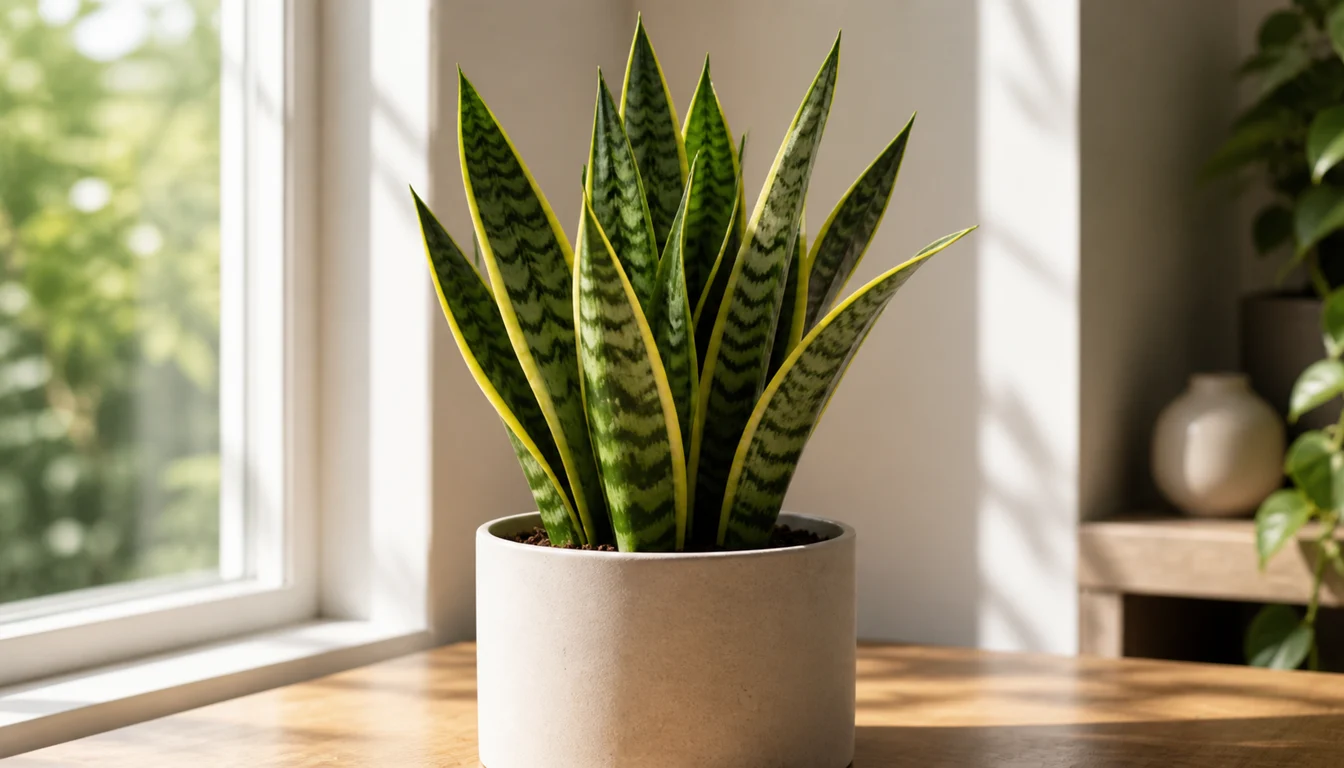
Snake Plant
Tough, architectural foliage plant that pairs well with bromeliads in modern rooms.
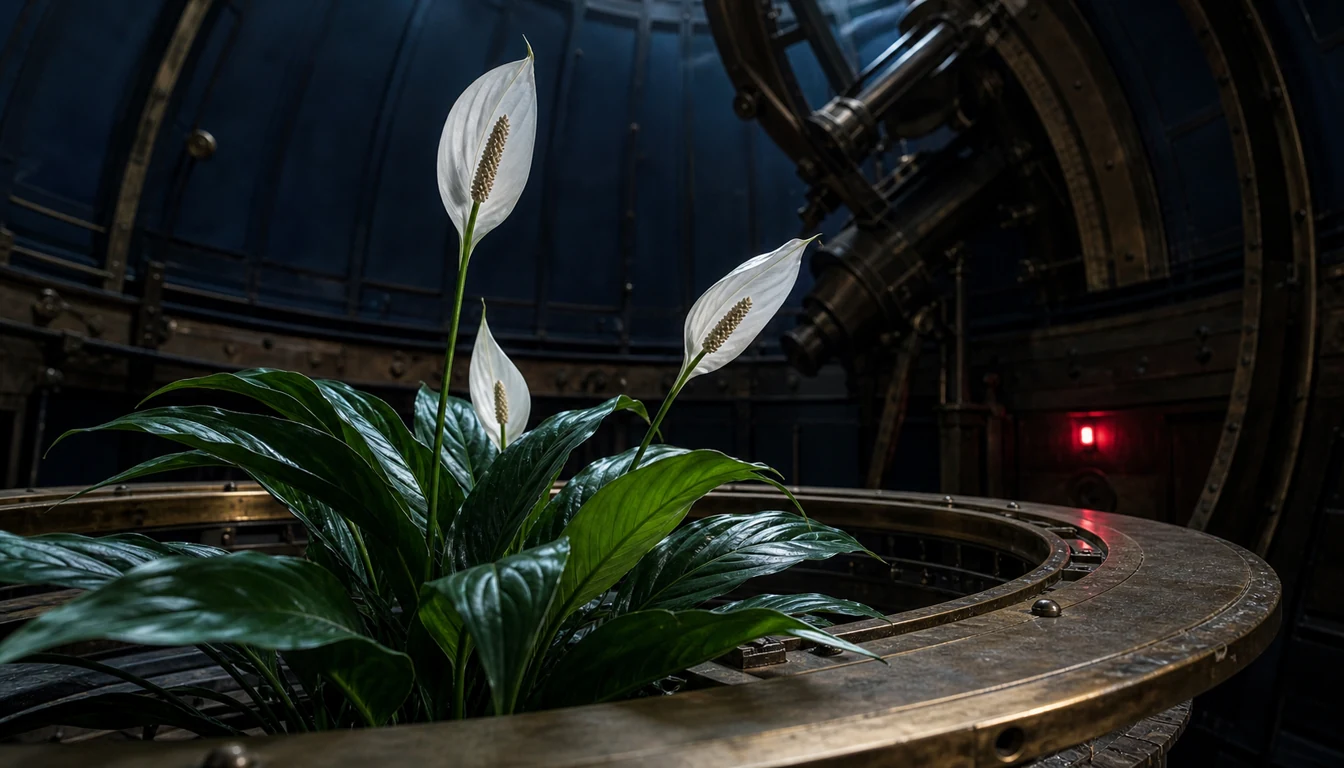
Peace Lily
Flowering houseplant that enjoys similar warm, evenly moist conditions.
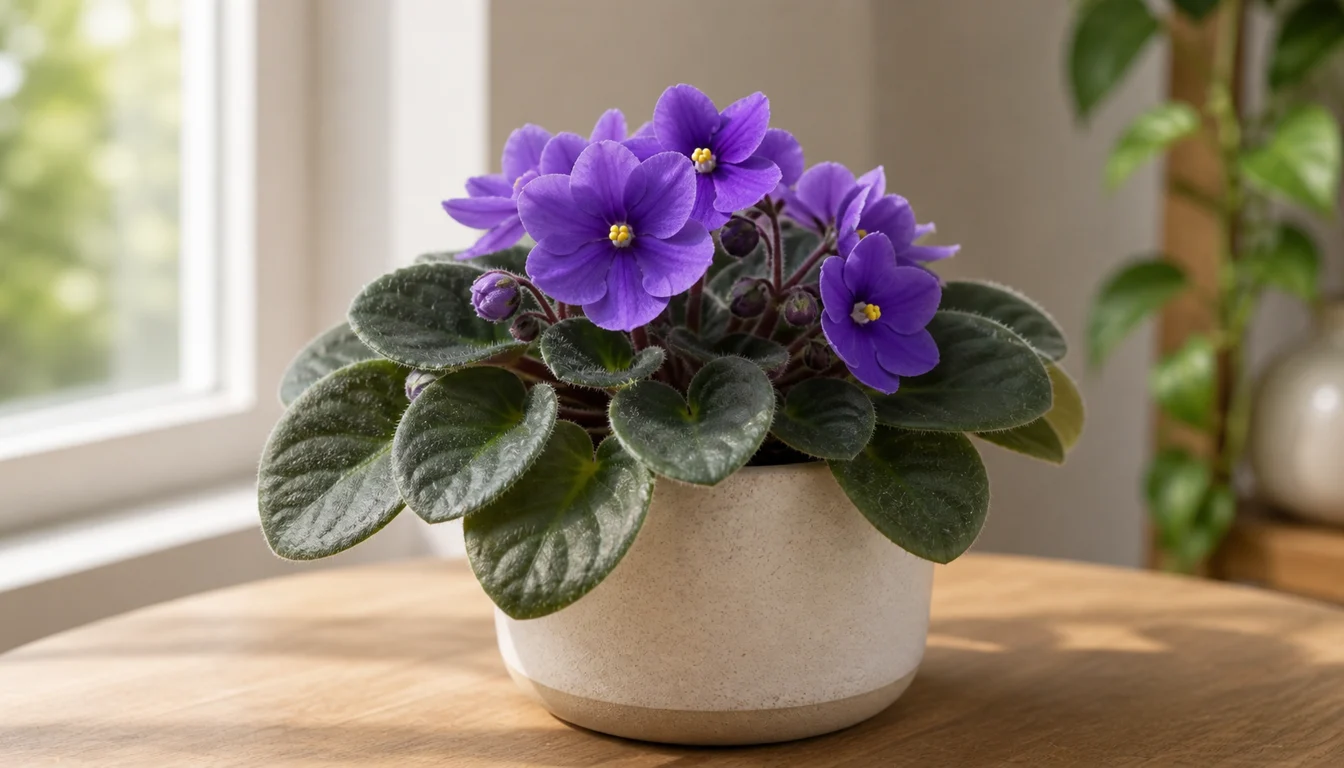
African Violet
African Violet is a windowsill bloomer that rewards steady, small-pot care.
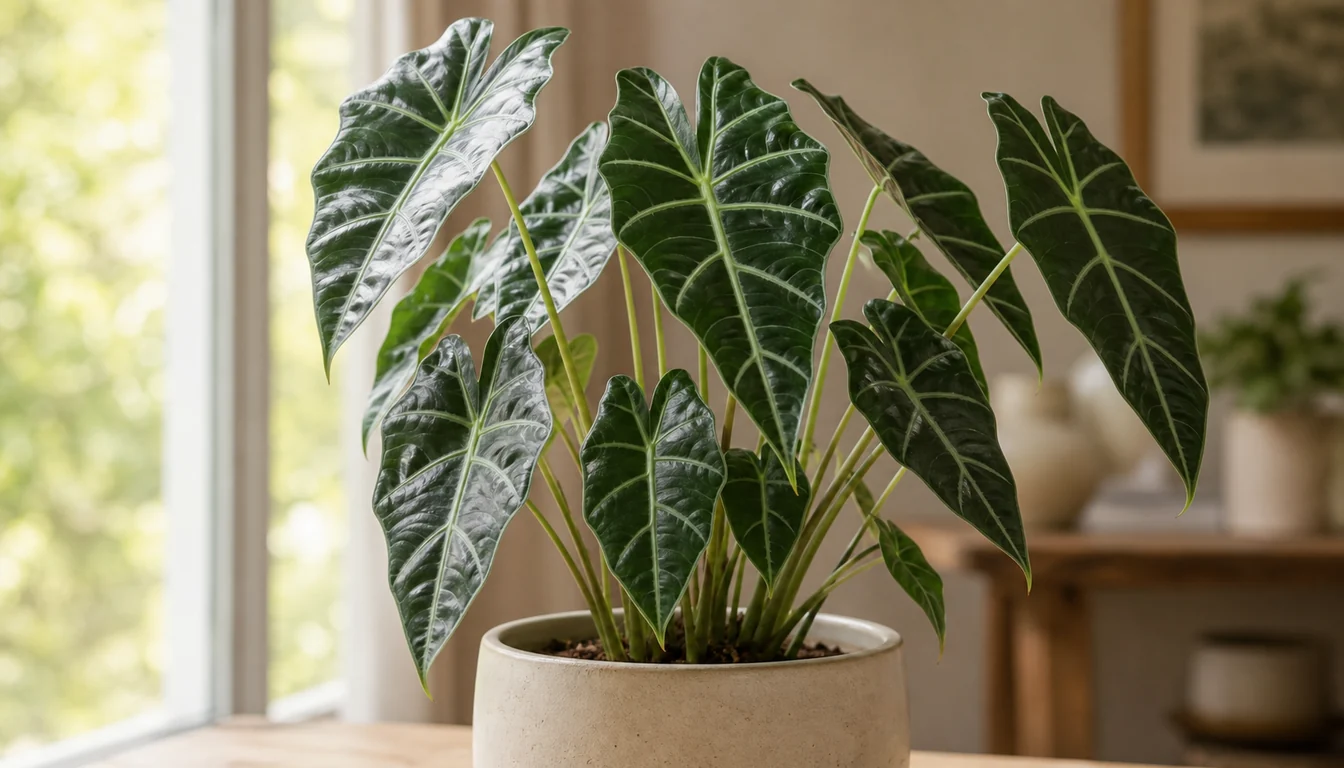
Alocasia
Alocasias include compact, textured houseplants and large elephant ears that need substantial floor space.
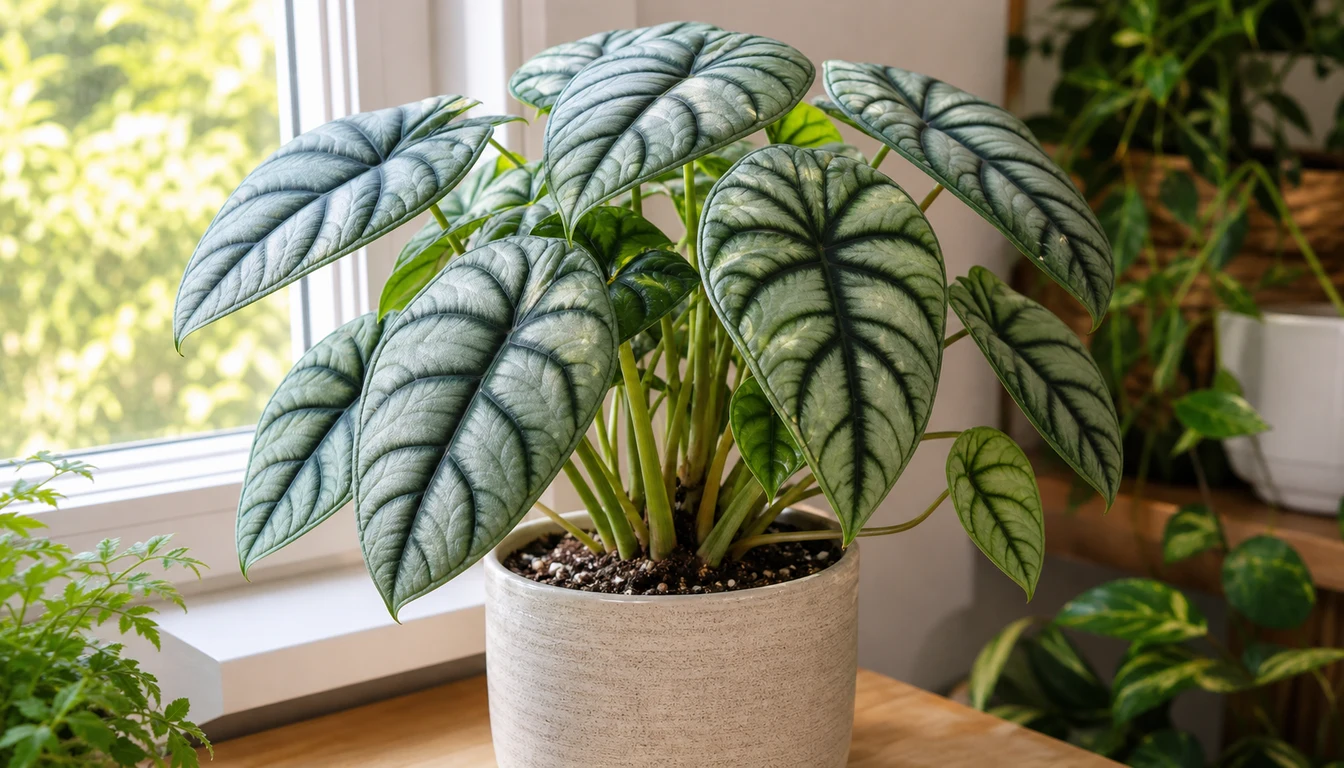
Alocasia Dragon Scale
Alocasia Dragon Scale has thick, quilted-looking leaves with dark veins.