
Which Succulents Work Best Together in a Container Garden?
Succulents that share a pot need the same light, cold tolerance, and growing season. Use a pot with a drainage hole and 1 part organic to 2 parts mineral mix.
At a glance
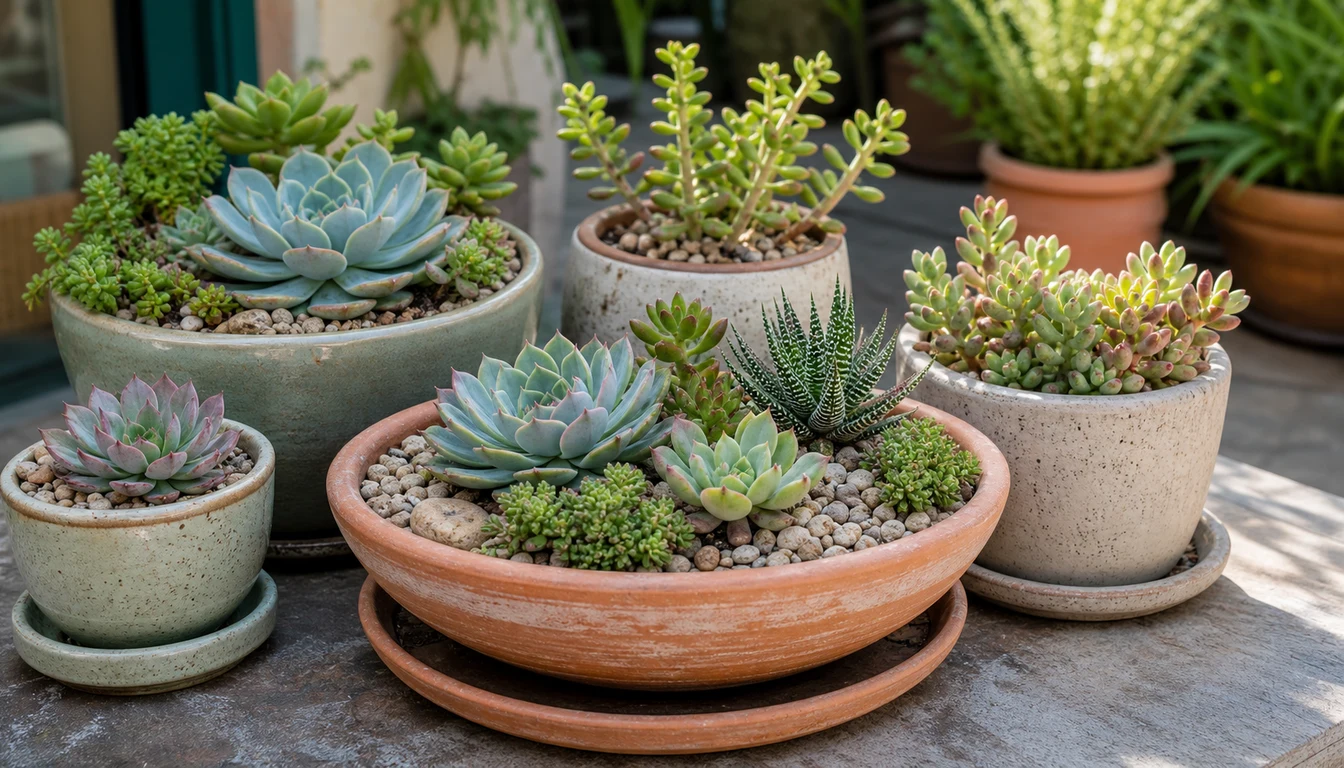
Succulents can share a container when they need the same light, the same winter, and the same growing season. Everything in the pot gets one watering, so a plant that wants water while its neighbor is resting will rot or shrivel first.
Two pairings cover most mixed pots. Hardy Sempervivum and low Sedum can live together outdoors through frost, and University of Florida IFAS describes Sempervivum as exceptionally cold hardy. Tender Echeveria, jade plant, and aloe share a frost-free pot that comes indoors for winter.
The container does the rest. Iowa State Extension requires a drainage hole in every succulent pot, mixes 1 part organic material with 2 parts mineral material, and gives indoor succulents 10 or more hours of bright, indirect light.
Which Container Works Best for a Mixed Succulent Planting?
A drainage hole comes first. Iowa State Extension calls drainage holes non-negotiable for succulents and warns that a layer of coarse gravel at the bottom of a pot is not a replacement for one. Excess water needs a way out through the open drainage hole, or the lowest roots sit in it.
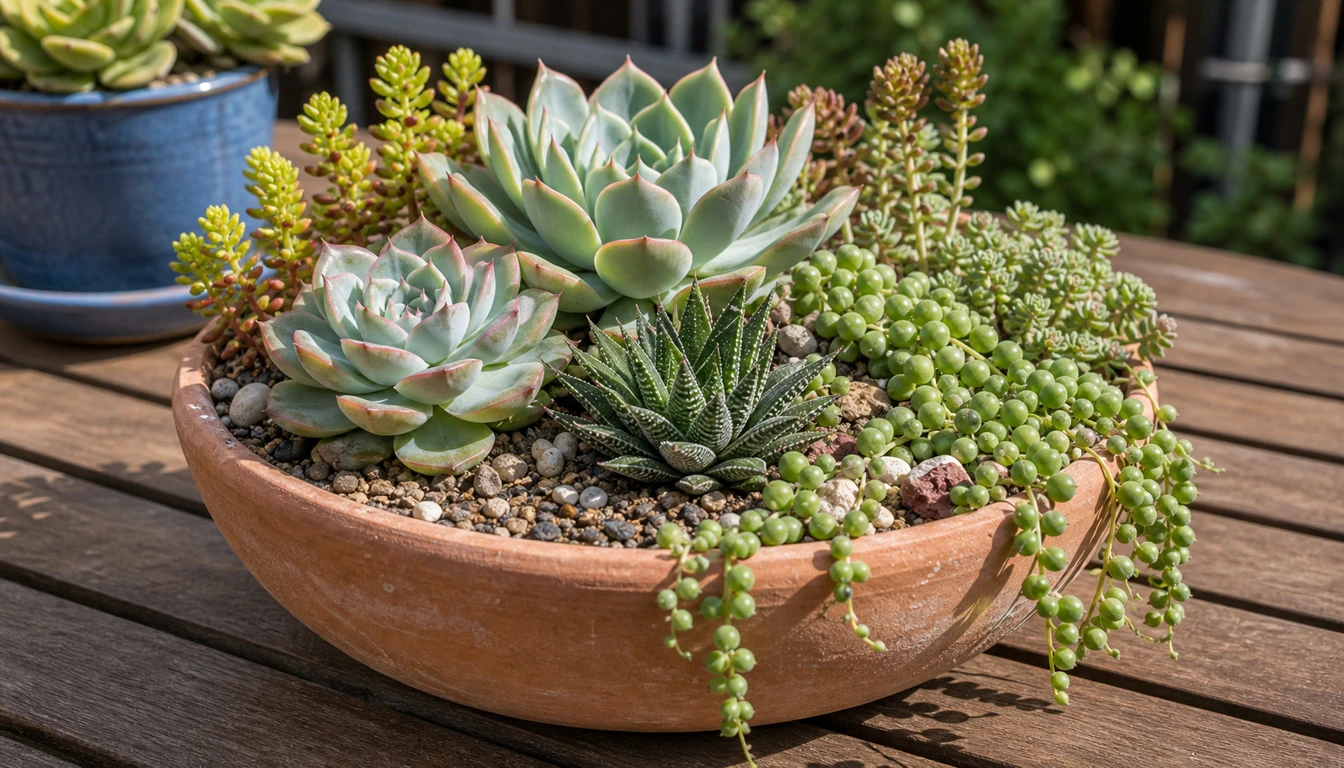
Shallow clay suits most mixed plantings. University of Florida IFAS recommends a shallow clay or terra cotta container with drainage holes, and Iowa State notes that porous clay pots let the mix dry faster. UC Master Gardeners make the same point from the other side, that glazed pots hold moisture longer than terra cotta.
Depth follows the largest root ball. Low rosettes and mats fill a shallow bowl, while a jade plant or a larger aloe needs a deeper pot that matches its roots rather than a wide bowl of unused wet mix.
| Container | Useful trait | Main risk | Best fit |
|---|---|---|---|
| Shallow terra cotta bowl | Porous wall, mix dries quickly | Can dry very fast outdoors in summer | Mixed rosettes, sedums, and Sempervivum |
| Glazed ceramic pot | Holds moisture longer | Mix stays wet longer in low light | Bright sites, or growers who water sparingly |
| Deep pot | Room for a larger root ball | Extra wet mix under small plants | One jade, aloe, or other upright succulent |
| Decorative pot without a hole | None as a planting pot | Water collects at the bottom | Only as a sleeve around a pot that drains, emptied after watering |
What Potting Mix Should a Succulent Container Use?
Succulent mix has to drain fast and hold little water. Illinois Extension recommends a sandy mix for that reason, and University of Florida IFAS recommends a coarse, well-drained sand mix.
Iowa State Extension mixes its own from 1 part organic material, such as potting soil, pine bark, compost, or coir, with 2 parts mineral material, such as perlite, coarse sand, pumice, or fine gravel. Bagged cactus and succulent mixes are a suitable alternative.
UC Master Gardeners take the simpler route of mixing perlite into a commercial potting soil, or using a specialty cactus, succulent, or palm mix, and add coarse sand or pumice when more drainage is needed.
- DIY ratio
- 1 part organic to 2 parts mineral
- Organic part
- Potting soil, pine bark, compost, or coir
- Mineral part
- Perlite, coarse sand, pumice, or fine gravel
- Shortcut
- Bagged cactus and succulent mix, or potting soil with added perlite
Fill the pot to within a few inches of the rim before planting, as Illinois does, then add mix around the root balls until they are covered, leaving about 1 inch below the rim so water does not run straight off the top.
Which Succulents Can Share the Same Pot?
Plants in one container share one root zone, so they cannot be watered separately. Matching them by light, cold tolerance, and growing season before color keeps one plant from setting the watering for the others.
Growing season is the match most people miss. UC Master Gardeners, writing for California gardens, divide succulents into summer growers, such as Sempervivum, Echeveria, and Agave, and winter growers, such as Aeonium and Kalanchoe. Summer growers want water every week or two in summer, while dormant plants get only a light spritz about once a month. A pot that mixes the two groups puts one of them in wet mix during its rest.
Cold tolerance sets the second limit. University of Florida IFAS describes Sempervivum as exceptionally cold hardy, and hardy Sedum can share an outdoor pot with it where both cultivars suit the local winter. Echeveria, Kalanchoe, jade, aloe, and string of pearls need a frost-free winter.
Hardy outdoor pot
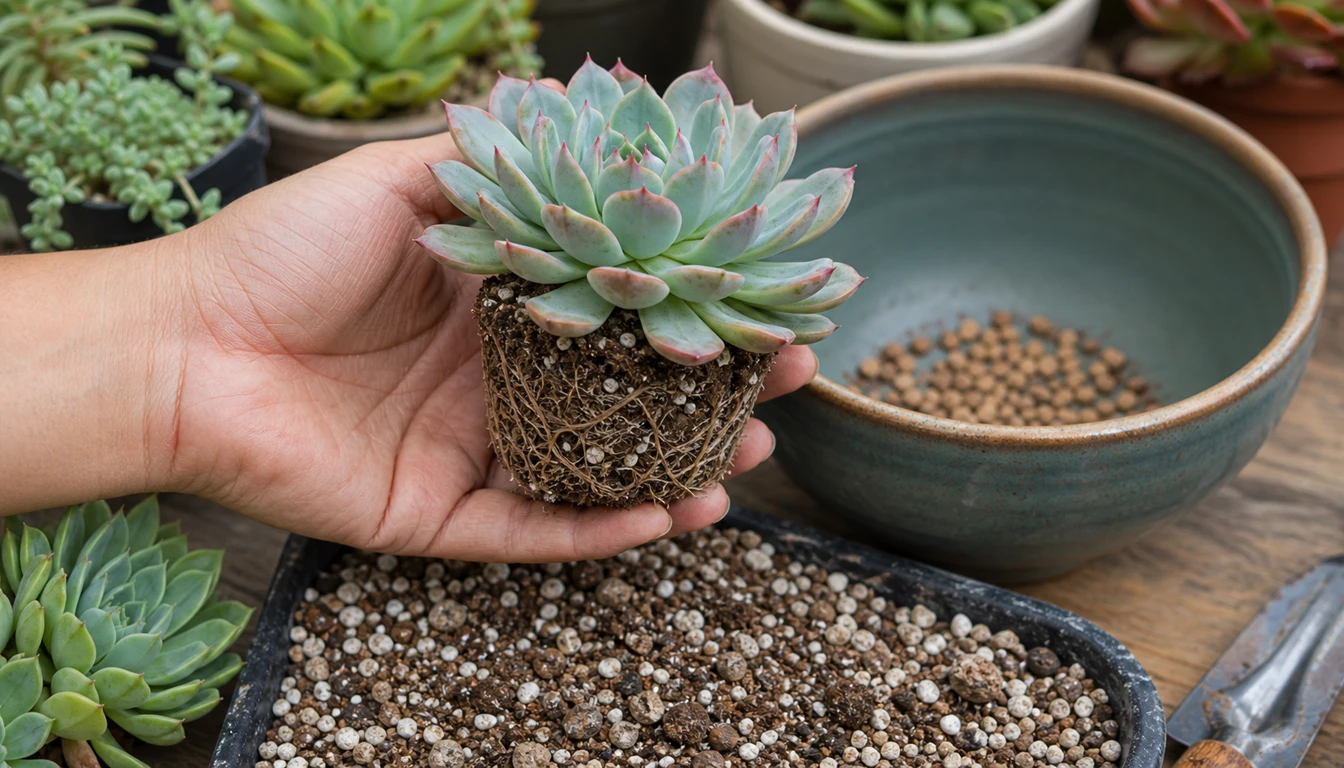
Sempervivum such as 'Royal Ruby' or the cobweb houseleek, with low sedums such as 'Angelina' or 'Dragon's Blood', in full sun with fast winter drainage.
Frost-free rosette bowl
Echeveria such as 'Black Prince' or 'Topsy Turvy' with similar small rosettes, in bright light, moved indoors before frost.
Kalanchoe and Aeonium pot
Winter growers such as panda plant, Kalanchoe tomentosa, kept together so their watering follows the same calendar.
Anchor and trailer
One jade or compact aloe for height, with string of pearls or donkey tail spilling over the rim, all kept frost-free.
Sedum
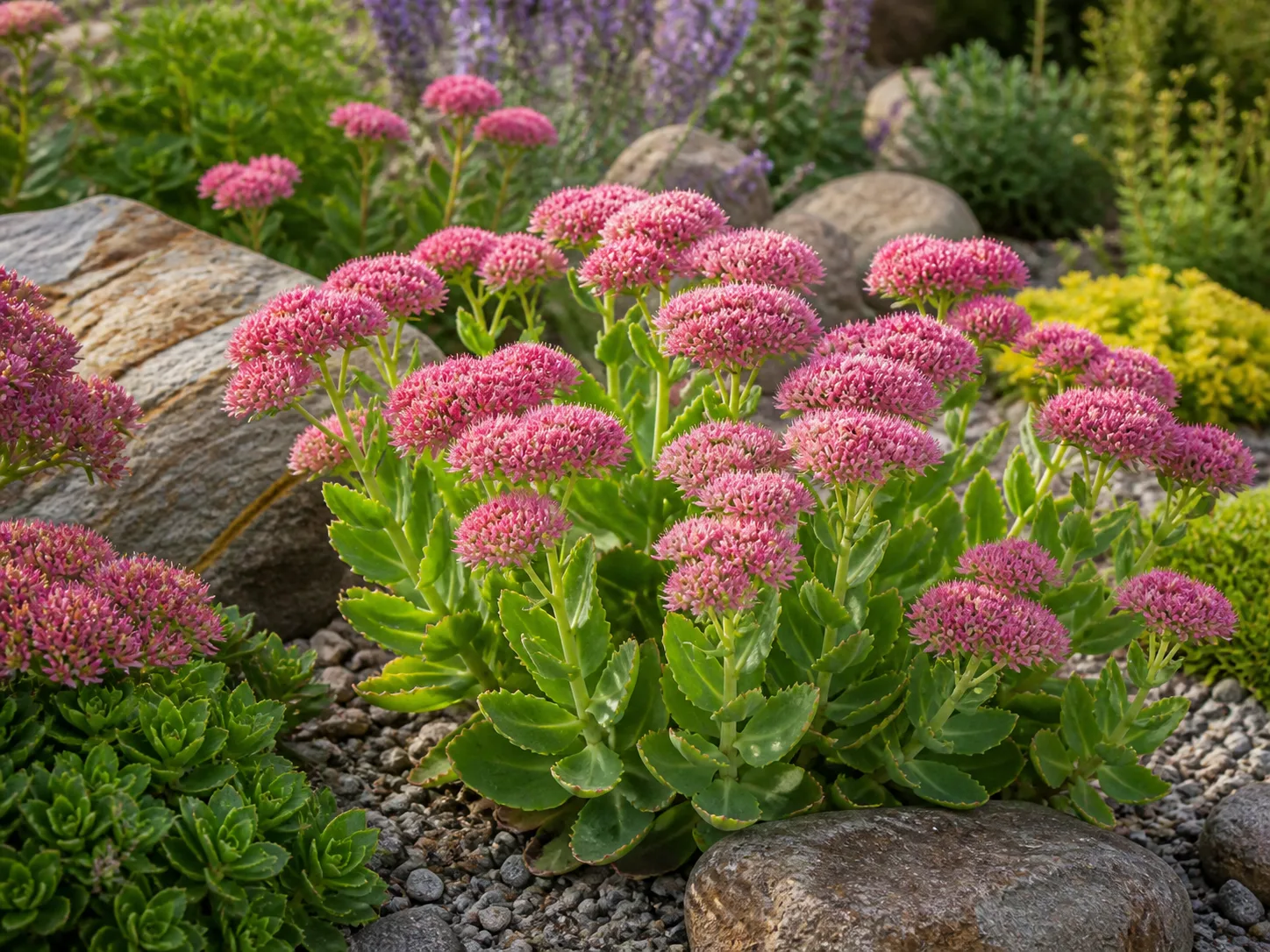
Sedum spp.
Low mats and trailing stems that edge an outdoor succulent pot
- Mature fit
- Hardy types such as 'Angelina' and 'Dragon's Blood' suit pots that stay outside through frost
- Main tradeoff
- Fast mats can cover slower rosettes and need trimming back from their crowns
How Do You Keep Rosette Centers From Rotting?
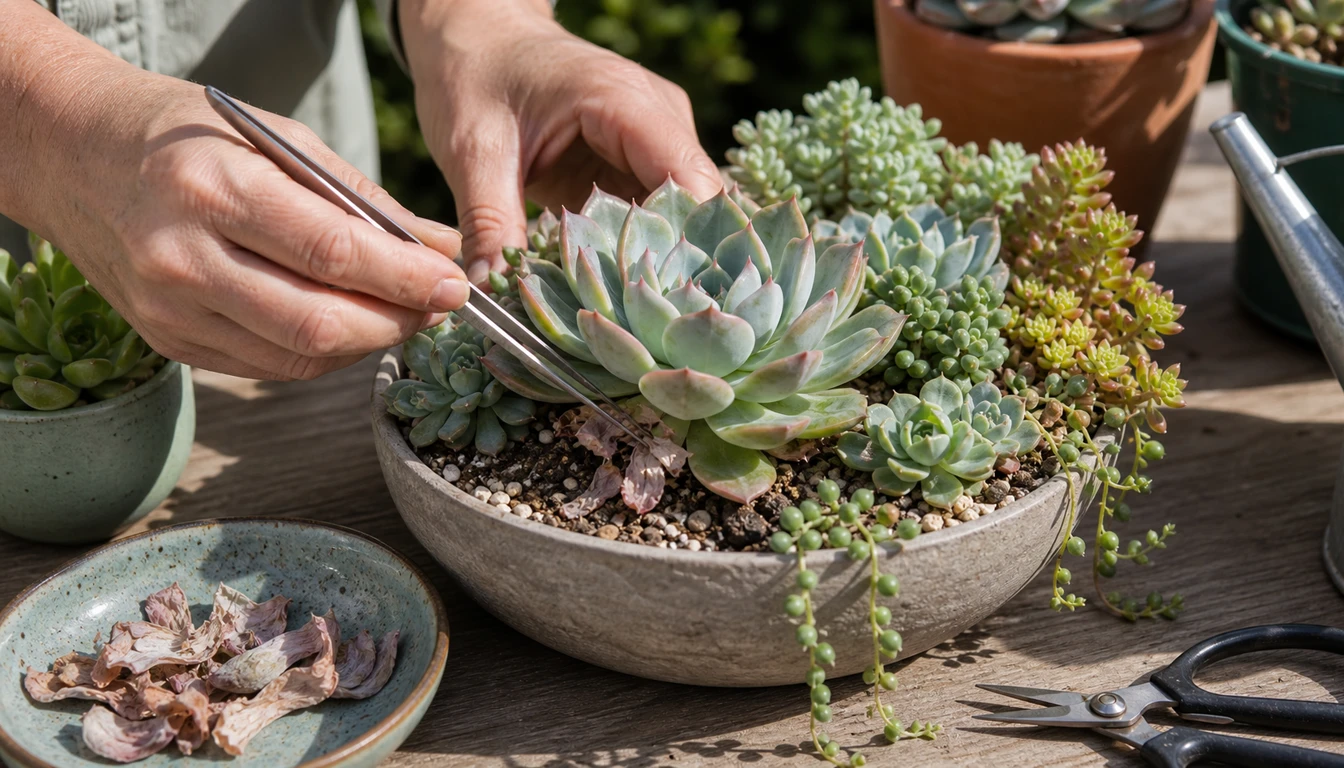
Water that sits in the center of a rosette is the usual start of rot. University of Florida IFAS warns against letting water accumulate in rosette centers, so each crown is set at or just above the finished soil line, where it can dry.
A top dressing of small stones or pebbles holds the mix in place and gives a finished look, as UC Master Gardeners and Illinois Extension both describe. It works when it stays around the plants and off the leaves, because stone packed into the base of a rosette keeps that tissue damp.
Dead lower leaves cause the same problem from below. Lifting them out with tweezers keeps the base dry and also exposes mealybugs, which Iowa State lists among the pests of indoor succulents, especially where air circulation is poor.
How Should You Plant and Arrange a Mixed Succulent Container?
Illinois Extension's container method is short, and the order matters because it keeps every crown above the soil.
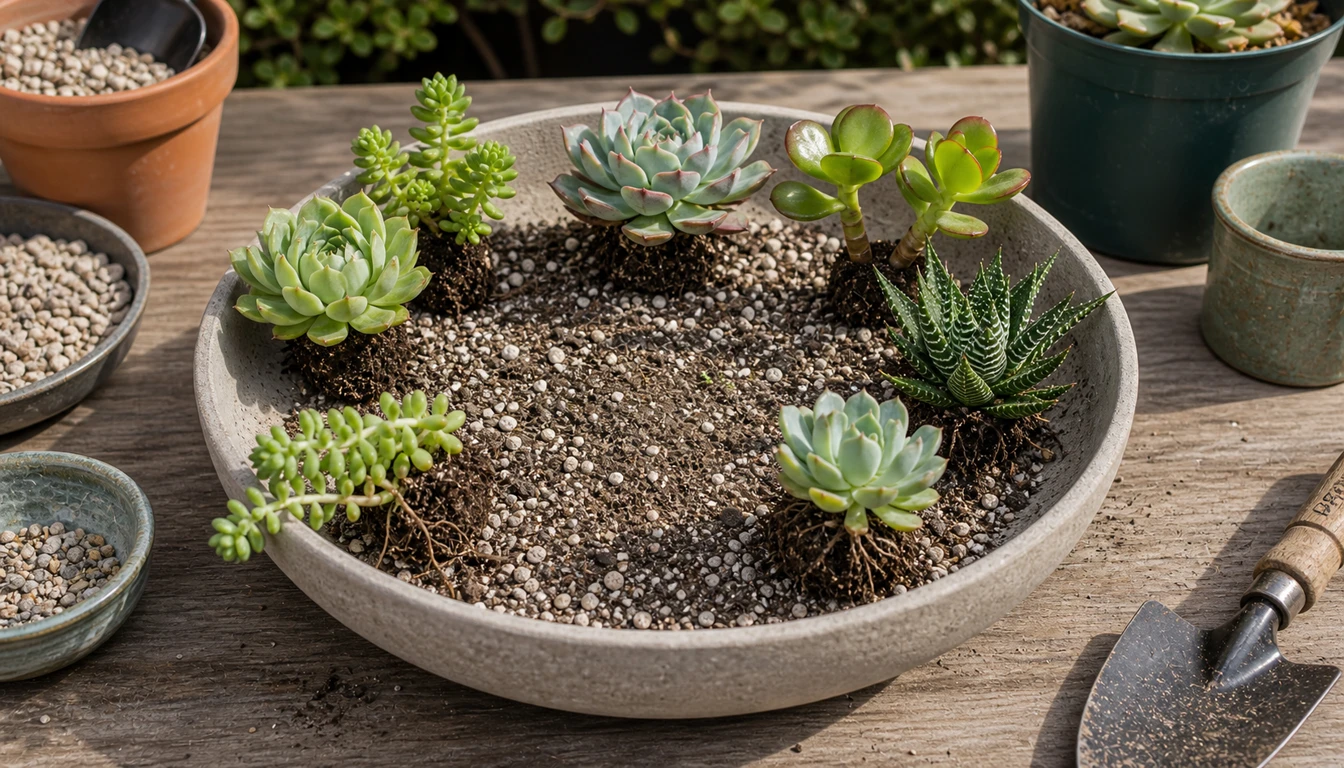
- Prepare the mixUse a bagged succulent mix, or potting mix with perlite or coarse sand.
- Fill the potAdd mix to within a few inches of the rim of a container with drainage holes.
- Arrange the plantsTake the plants out of their nursery pots and set them in place, mixing shapes, colors, and heights.
- BackfillAdd mix until the root balls are covered, leaving about 1 inch below the rim for watering.
- FinishAdd rocks, moss, or other top dressing around the plants, not over the crowns.
One taller plant, such as a jade or a compact aloe, gives the arrangement its height. Low rosettes fill the middle, and a trailing plant uses one section of the rim. Leaving room between them matters more than filling every gap on day one, because offsets and spreading sedums close the space within a season.
How Should You Water a Succulent Container?
Iowa State Extension uses a wet-dry cycle. It waters thoroughly, wetting the whole root ball until water drains, then lets the mix dry completely before watering again. Indoors that often works out to every 2 to 3 weeks, adjusted to the conditions.
No fixed schedule fits every pot. Illinois Extension lists the time of year, the size of the plants, the type of mix, and the size of the pot as the factors that change how often a container needs water, and checks the soil with a finger first. If the mix still feels moist, it waits.
Season changes the answer most. UC Master Gardeners water summer growers every week or two during summer and give dormant plants only a light spritz about once a month. That is why a pot of plants that share a growing season is easier to water than a mixed one. The same soak-and-dry rhythm applies to watering single succulents in their own pots.
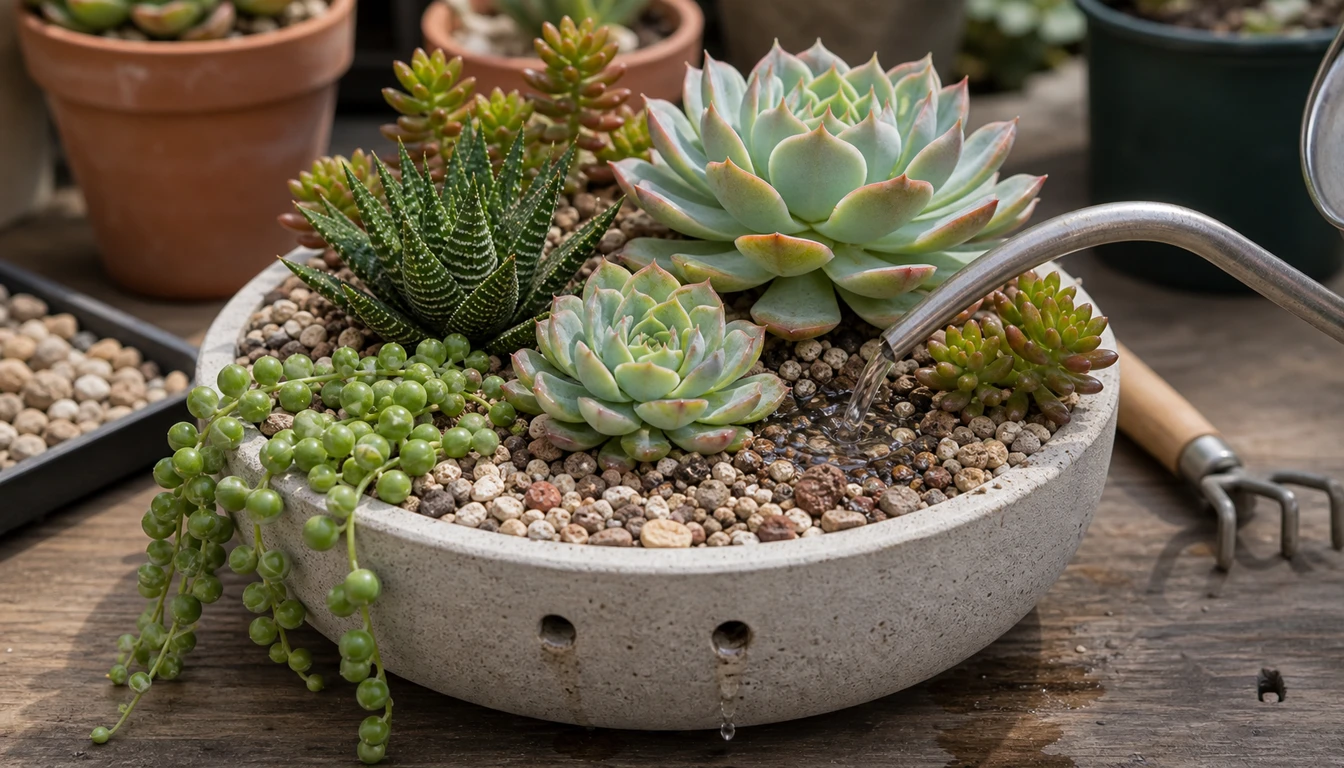
- CheckFeel the mix with a finger. Wait if it is still moist.
- SoakWater the mix, not the rosettes, until water runs from the drainage hole.
- DrainLet all the water run out, and empty any saucer or outer pot.
- WaitLet the mix dry completely before the next watering.
Can a Succulent Container Move Indoors for Winter?
A container moves as one unit, so its least hardy plant sets the date. UC Master Gardeners keep succulents outside below 40 F only when they sit close to the house or against a sunny wall, and otherwise cover them with breathable fabric or bring them indoors when a hard frost or freeze is forecast. Illinois Extension moves succulent containers outdoors into full sun once temperatures stay above freezing.
Indoor light is the bigger change. Iowa State Extension gives indoor succulents 10 or more hours of bright, indirect light, and notes that in too little light they grow lanky and pale. Illinois points to a south or west window as the brightest spot, and Iowa State recommends high-output fluorescent or LED fixtures when a window falls short.
Indoor temperatures are rarely the problem. Iowa State gives a preferred range of 55 to 75 F, with some succulents tolerating 45 to 85 F.
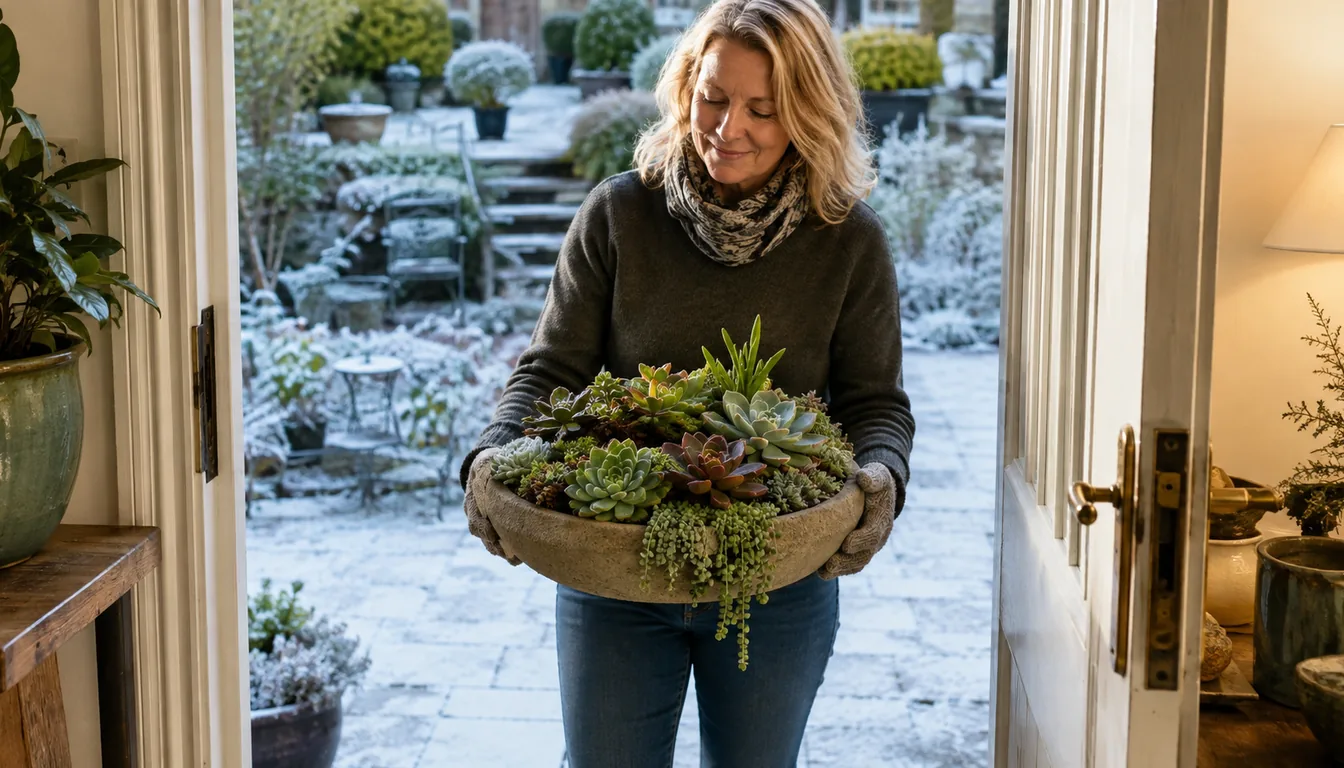
- Bring in
- Before a hard frost, or below 40 F unless sheltered against the house
- Indoor light
- 10 or more hours of bright, indirect light, or grow lights
- Indoor temperature
- 55 to 75 F preferred
- Low-light sign
- Lanky, pale, stretched growth
When Should You Feed, Repot, or Rebuild the Container?
Succulents need little fertilizer. Iowa State Extension feeds at half to a quarter of the label rate every 3 to 4 waterings during spring and summer, and none in winter. Illinois feeds monthly with a standard houseplant fertilizer from March to October, and UC Master Gardeners skip feeding while plants are dormant.
A planting needs rebuilding when it stops sharing one watering well. Water pooling in one part of the bowl while another dries, plants stretching toward light, or one fast grower covering its neighbors are the usual signs.
Rebuilding uses the same steps as planting. Lift the plants, discard soft or rotted tissue, replace collapsed mix with fresh succulent mix, and replant only the plants that still share light, winter, and growing season.
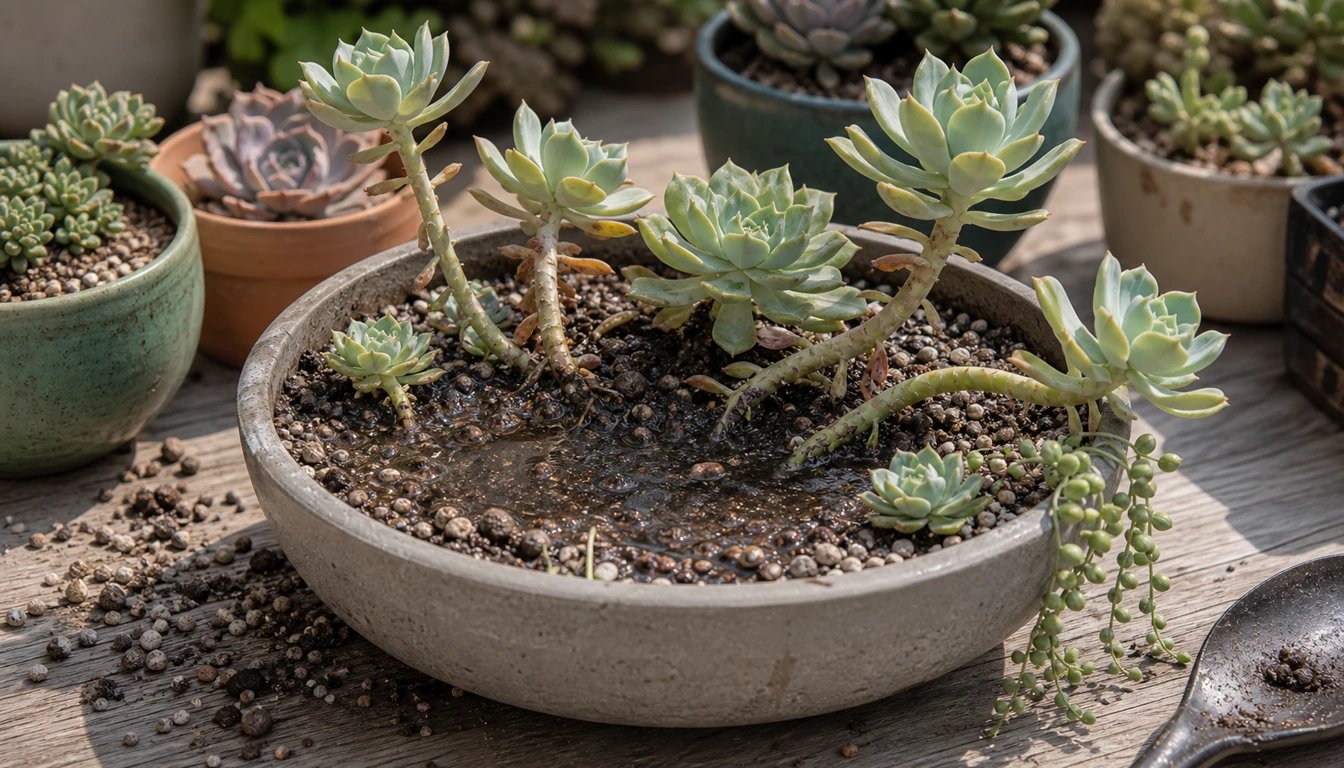
- - Water pools in one area while the rest of the pot dries.
- - Plants have stretched or leaned toward the light.
- - One plant has spread over the crowns of others.
- - Roots circle the pot or lift plants above the soil.
Quick Tips
- Pair succulents that survive the same winter and grow in the same season, such as Sempervivum with hardy sedum outdoors, or Aeonium with Kalanchoe in a frost-free pot.
- Mix 1 part potting soil, bark, compost, or coir with 2 parts perlite, coarse sand, pumice, or fine gravel.
- Leave about 1 inch between the soil surface and the rim so water has room to soak in.
- Feed at a half to a quarter of the label rate during spring and summer only.
Recommended Plants
1 succulents worth considering.
Frequently Asked Questions
What soil should I use for a succulent container?
Iowa State Extension mixes 1 part organic material, such as potting soil or bark, with 2 parts mineral material, such as perlite, coarse sand, or pumice. A bagged cactus and succulent mix also works.
Can different succulents share one pot?
Yes, when they share light, cold tolerance, and growing season. UC Master Gardeners separate summer growers such as Echeveria and Sempervivum from winter growers such as Aeonium and Kalanchoe, and the two groups want water at different times.
Do I need a drainage hole if I put gravel in the bottom?
Yes. Iowa State Extension states that a layer of coarse gravel at the bottom of a container is not a suitable replacement for a drainage hole.
How often should I water a succulent container?
Water thoroughly until it drains, then wait until the mix is completely dry. Iowa State notes that indoors this is often every 2 to 3 weeks, but season, pot size, and light change it.
How much light do succulents need indoors?
Iowa State Extension gives 10 or more hours of bright, indirect light. Plants in too little light grow lanky and pale, and grow lights can make up the difference.