
Best Ornamental Shrubs for Borders and Foundation Beds
A window sill is 30 to 36 inches high. Set shrubs back by half their mature width, compare mature sizes, and learn when each one is pruned.
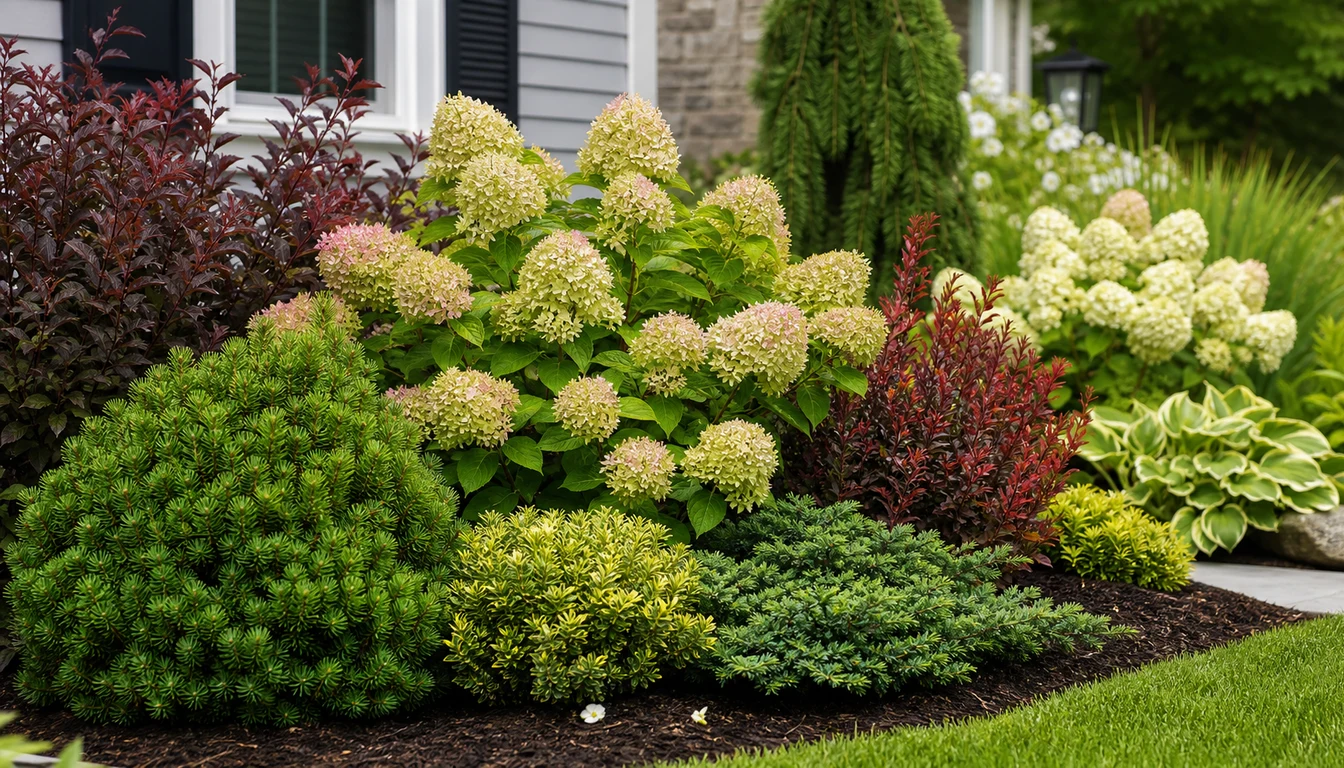
At a glance
An ornamental shrub is judged on the fifty weeks it is not flowering.
That is why a tape measure beats a plant list as the place to start. The window sill, the wall and the path edge each set a hard limit on mature size, and almost every unhappy foundation planting is a good shrub put somewhere it was always going to outgrow.
How Much Space Does an Ornamental Shrub Need?
Three measurements decide nearly everything, and all of them are taken before you look at a single plant. The height of the window sill, the distance from the wall to the front of the bed, and the clear width of the path beside it.
A first-floor sill usually sits 30 to 36 inches above grade, which means a shrub planted under it has to mature below that height on its own rather than be cut down to it every spring.
Set a shrub back at least half its mature width from the wall, so a plant that will reach 6 feet across goes 3 feet out from the siding. Keep that same mature width 18 to 24 inches clear of a path edge, because a walk that loses a foot on each side stops being a walk.
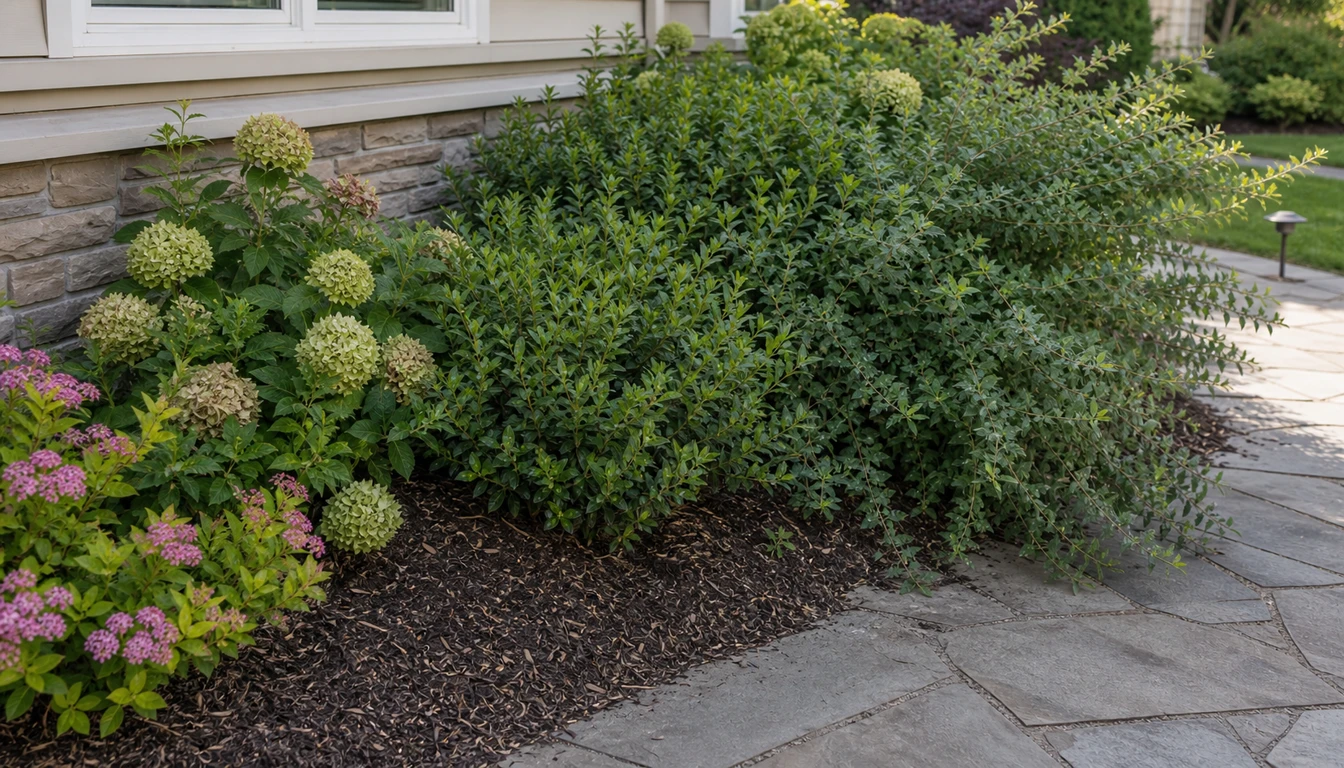
| Position | Measure this | Mature size limit |
|---|---|---|
| Under a window | Sill height above grade, usually 30-36 in | Height under about 30 in |
| Against a wall | Wall to front of bed | Width no more than twice that distance |
| Beside a path | Clear walk width | Width that leaves 18-24 in spare |
| Entry corner | Door swing and sight line | Evergreen, and narrow enough not to crowd |
| Open border | Bed depth front to back | Anything that fits the tier it sits in |
Which Mature Shrub Size Fits Each Bed Position?
The size on a nursery label is a range and not a number, which is why the species name alone tells you almost nothing. Boxwood runs anywhere from 2 to 15 feet and spirea from 2 to 8, so two plants with the same label can be a footstool or a hedge.
The cultivar fixes the size, and the honest way to plan is against the top of the range rather than the middle.
A border then sorts into tiers. Low plants hold the front edge, mid-height ones do the structural work, and anything over about 8 feet belongs at the back or well away from a wall where it will not be fighting the house.
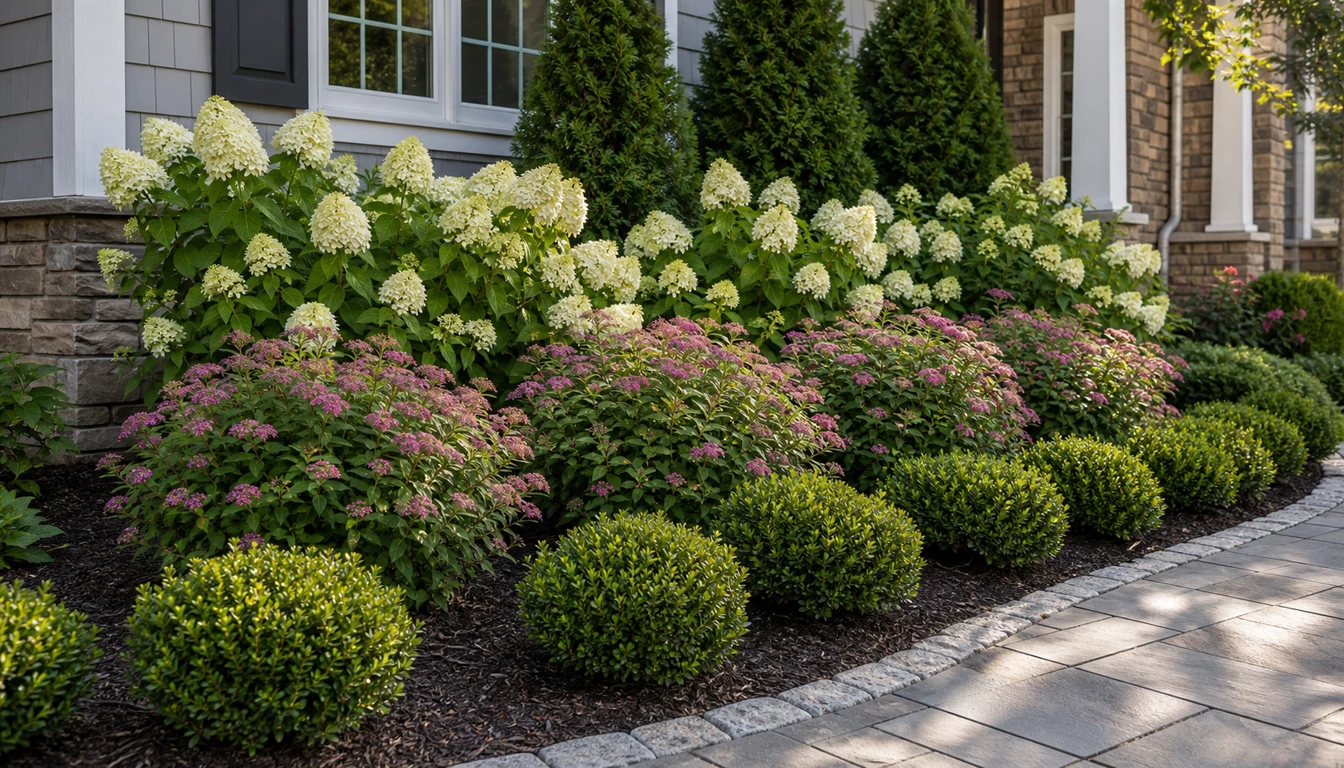
| Shrub | Mature height | Mature width | Where it fits |
|---|---|---|---|
| Nandina | 2-8 ft | 2-4 ft | Narrow beds, tight corners |
| Gardenia | 3-6 ft, dwarfs 2-3 | 3-5 ft | Front tier, near a door for scent |
| Beautyberry | 3-6 ft | 3-6 ft | Mid tier, where berries are seen close |
| Spirea | 2-8 ft | 2-10 ft | Front or mid, check the cultivar |
| Boxwood | 2-15 ft | 2-8 ft | Any tier, entirely cultivar dependent |
| Ninebark | 5-10 ft | 4-8 ft | Back tier, arching habit needs room |
| Viburnum | 4-12 ft | 4-12 ft | Back tier, away from walls |
| Lilac | 8-15 ft | 6-12 ft | Back tier or free-standing |
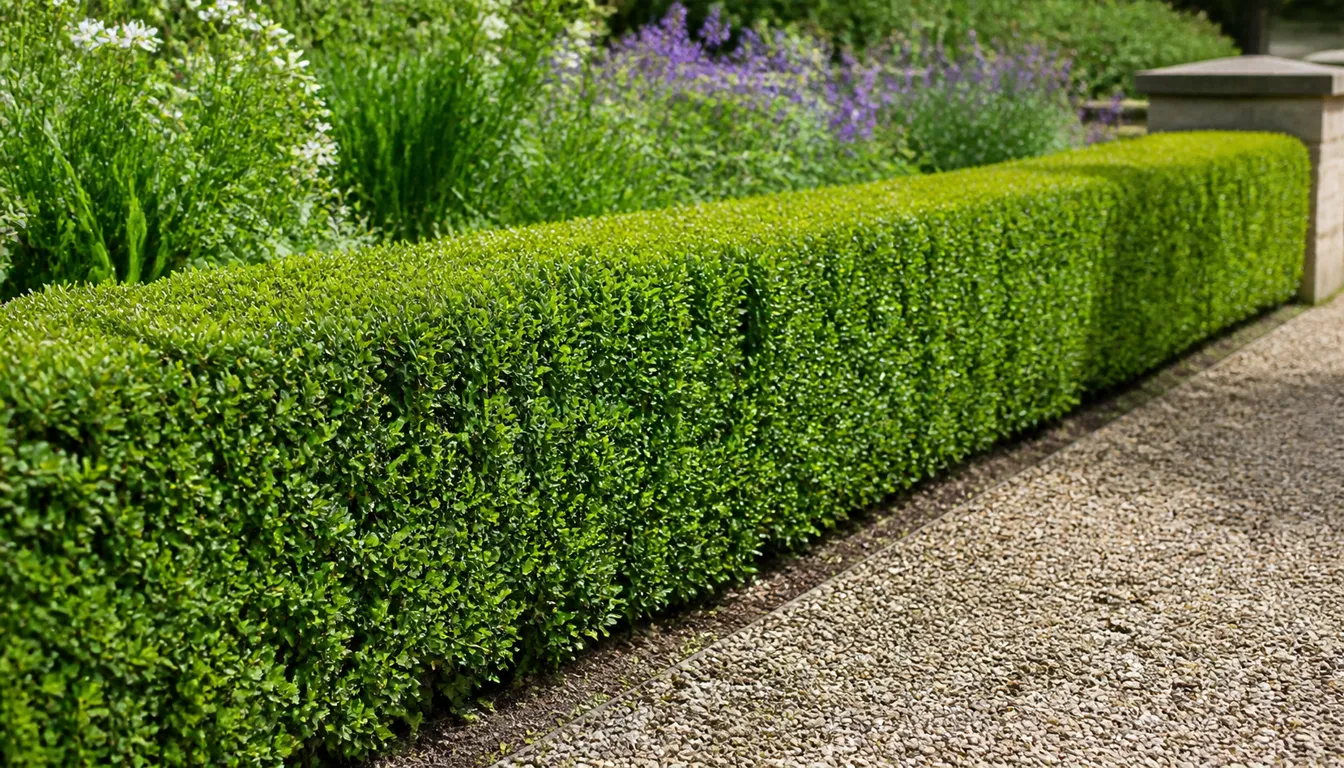
Boxwood
Buxus sempervirens
Low evergreen structure, clipped edging, and formal repetition
- Mature fit
- Choose the named cultivar by final height and width instead of relying on shearing
- Main tradeoff
- Dense wet foliage and poorly drained roots raise blight and root-rot pressure
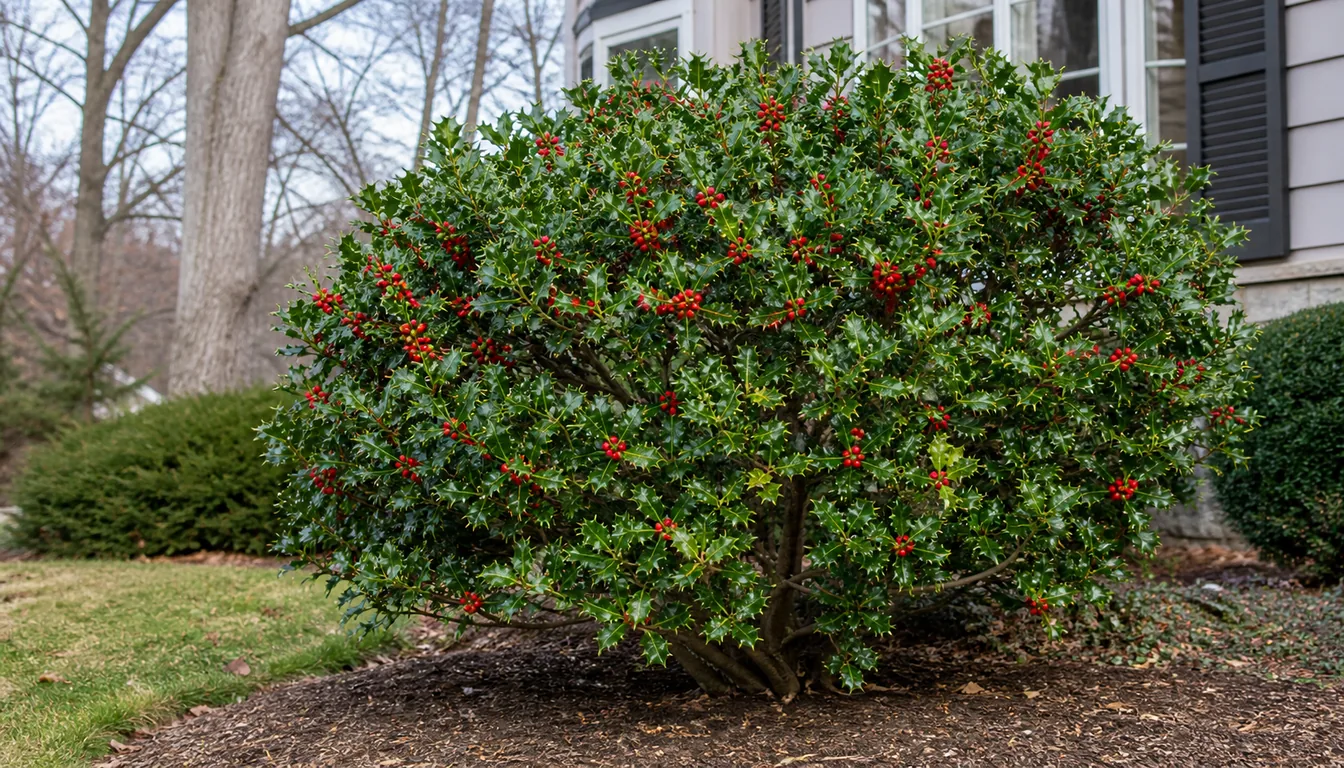
Holly
Ilex spp.
Evergreen mass, prickly boundaries, and winter berries where pollination is planned
- Mature fit
- Match the holly species and cultivar to the bed because mature sizes range from compact to tree-like
- Main tradeoff
- Berry display may require compatible male and female plants, and prickly foliage limits access
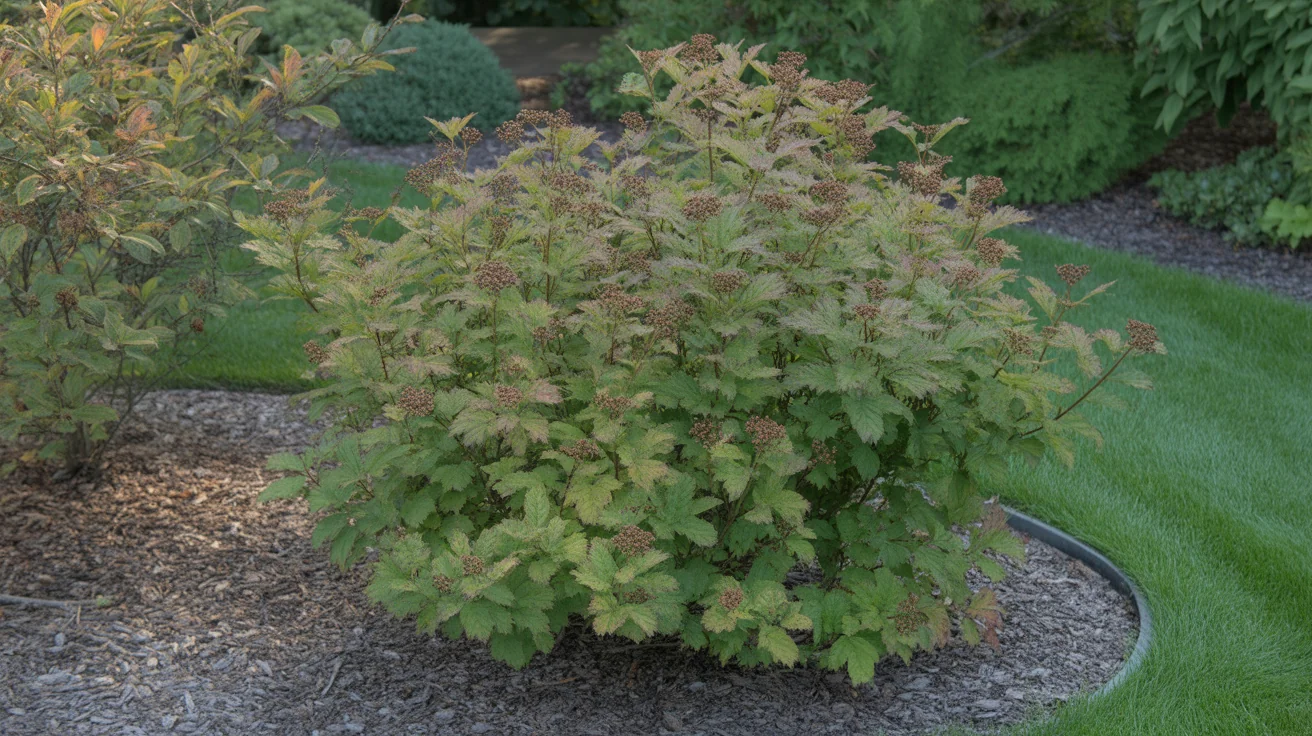
Viburnum
Viburnum spp.
Broad seasonal structure with flowers, fruit, fall color, or fragrance depending on species
- Mature fit
- Reserve enough width for the selected viburnum rather than treating the genus as one size
- Main tradeoff
- Some fruiting selections need a compatible second plant, and several forms outgrow foundation beds
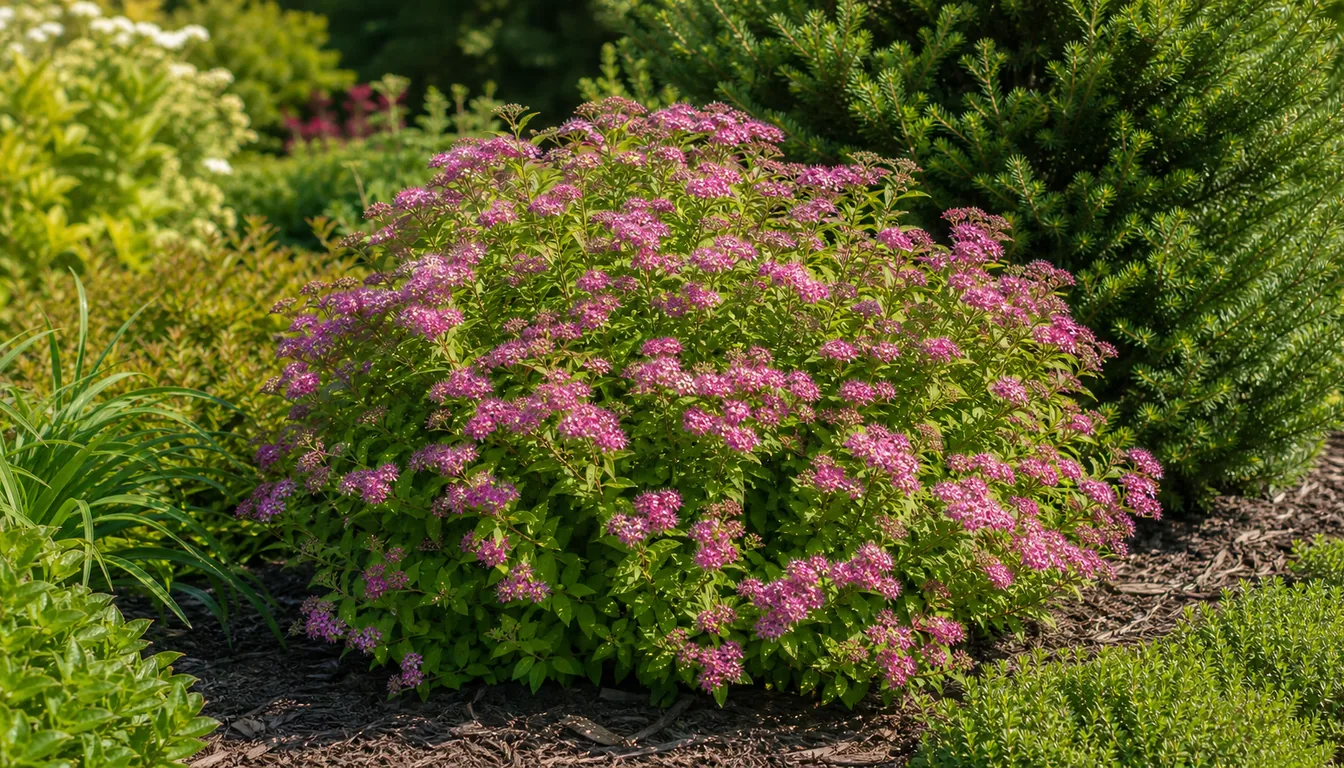
Spirea
Spiraea spp.
Repeated low or mid-height flowering mass along a sunny border
- Mature fit
- Use compact cultivars at the front and larger arching forms where canes can spread
- Main tradeoff
- Old stems need renewal, and an unpruned plant can look twiggy outside bloom season
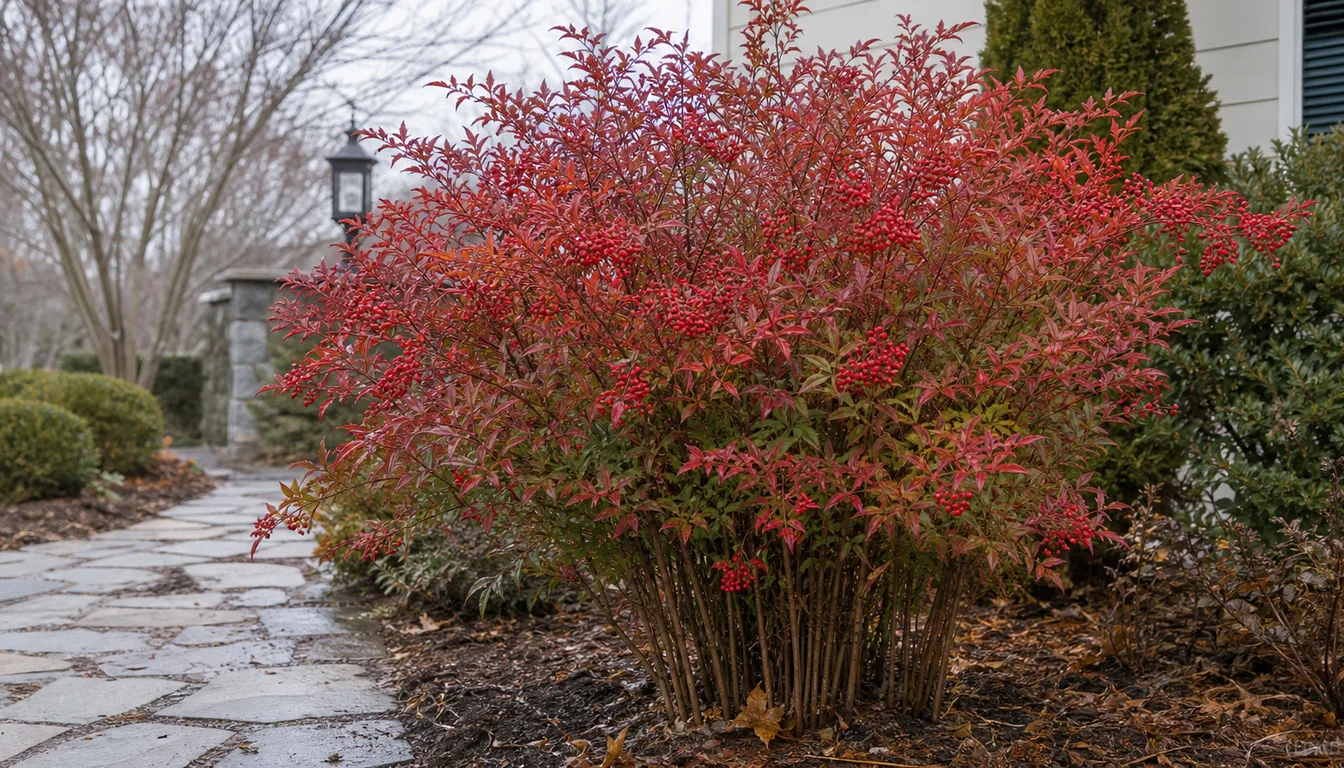
Nandina
Nandina domestica
Fine evergreen texture and red seasonal color in a narrow planting space
- Mature fit
- Prefer a compact sterile selection whose height fits without shearing
- Main tradeoff
- Seed-producing forms can spread, and berries create wildlife and toxicity concerns
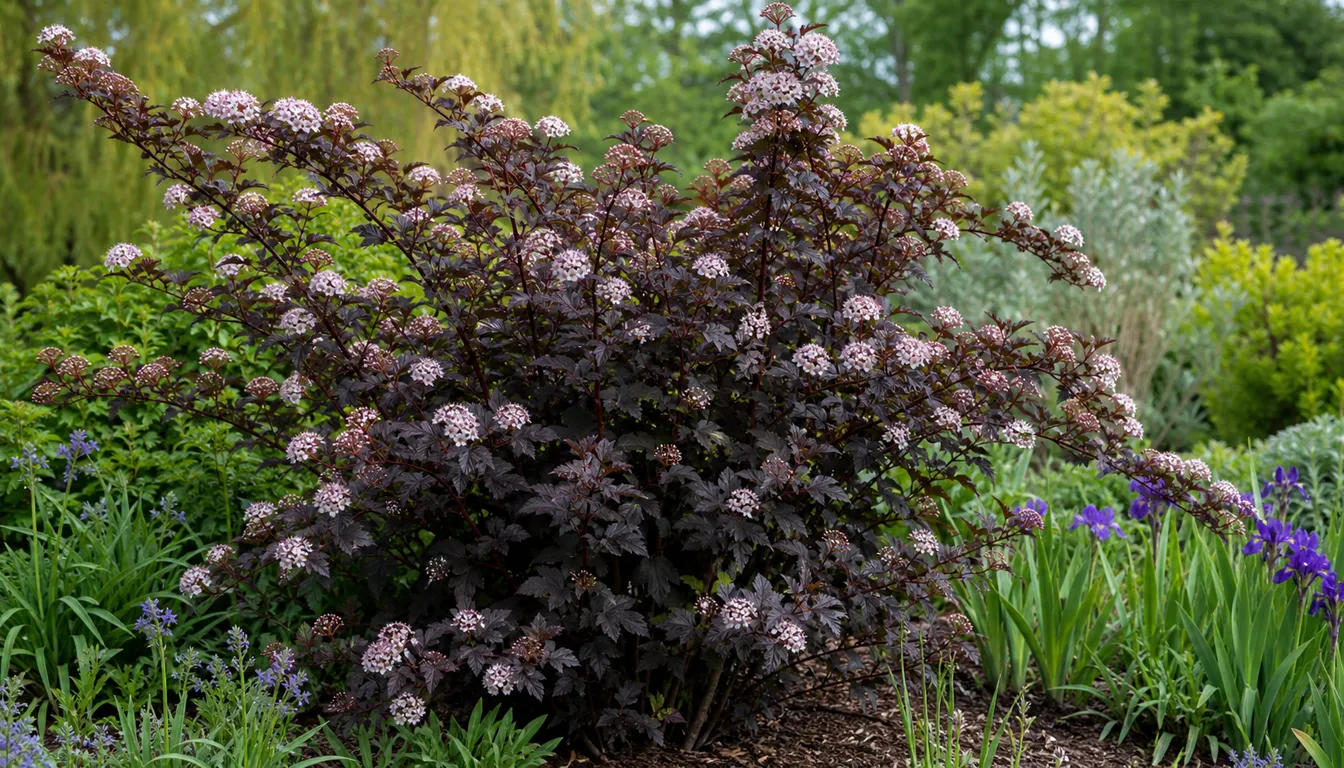
Ninebark
Physocarpus opulifolius
Native cane structure, peeling bark, and dark or gold foliage in a broad sunny bed
- Mature fit
- Allow the cultivar's full cane spread or choose a genuinely compact selection
- Main tradeoff
- Crowded shade weakens leaf color and airflow, while old canes eventually need renewal
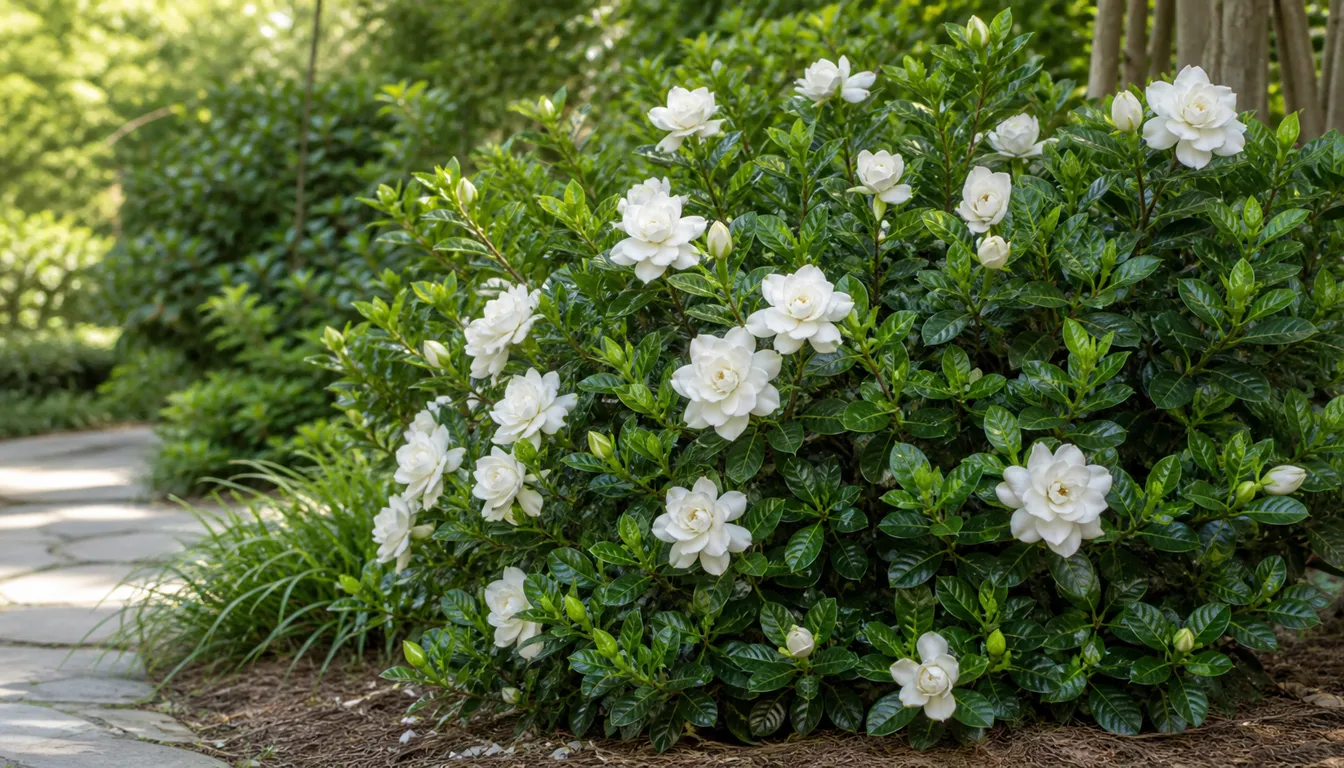
Gardenia
Gardenia jasminoides
Fragrance beside a warm sheltered entry, gate, patio, or frequently used path
- Mature fit
- Choose cold tolerance and final size for the exact climate and planting position
- Main tradeoff
- Bud drop and yellow leaves follow quickly when temperature, acidity, roots, or moisture drift
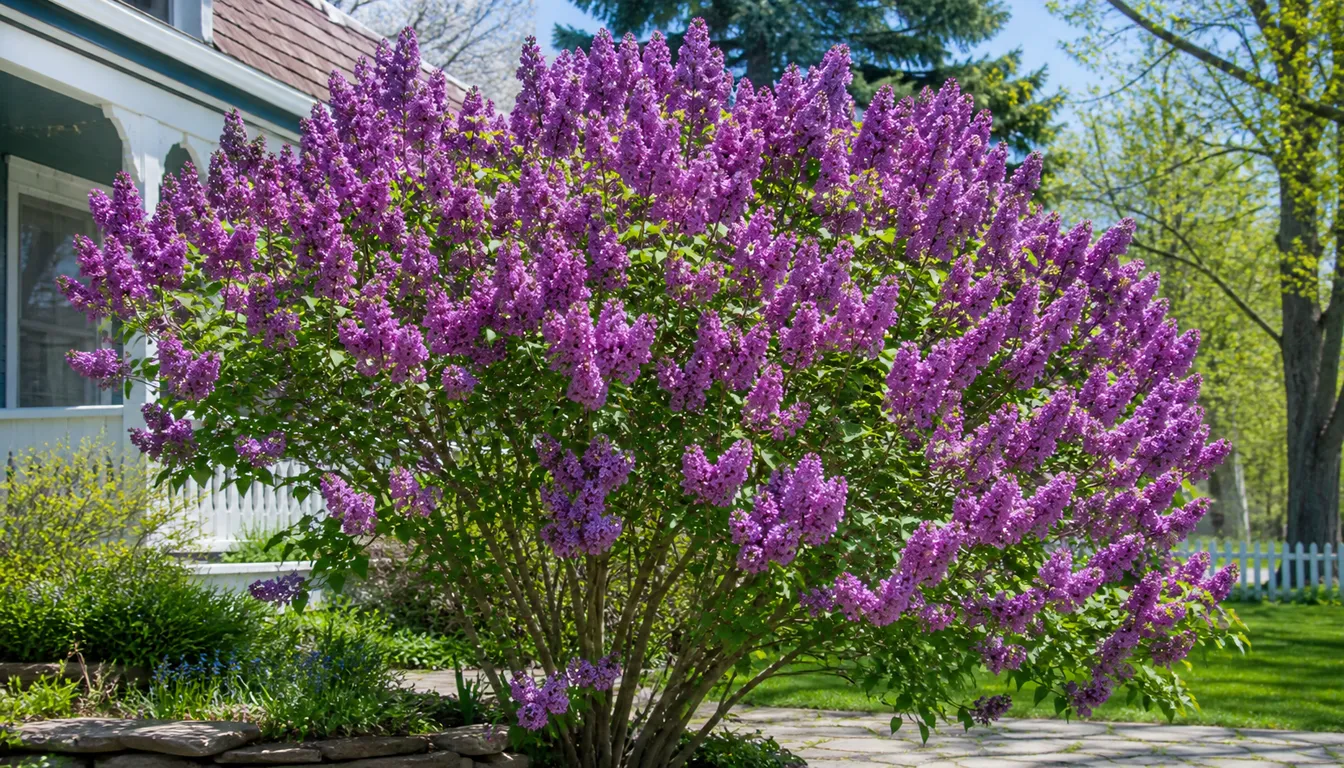
Lilac
Syringa vulgaris
Cold-climate spring fragrance in an open sunny position with room for renewing canes
- Mature fit
- Keep its mature width away from windows and paths unless the cultivar is truly compact
- Main tradeoff
- The flower season is brief, and poor airflow or badly timed pruning can erase the display
How Do You Use One Seasonal Accent Without Making the Bed Busy?
A border goes noisy when every shrub is competing to be the event.
Repetition is what makes a single accent read as deliberate rather than accidental, so a quiet frame of one or two repeated shrubs will do more for the bed than another new variety. The accent also has to sit where people actually get close enough to notice it.
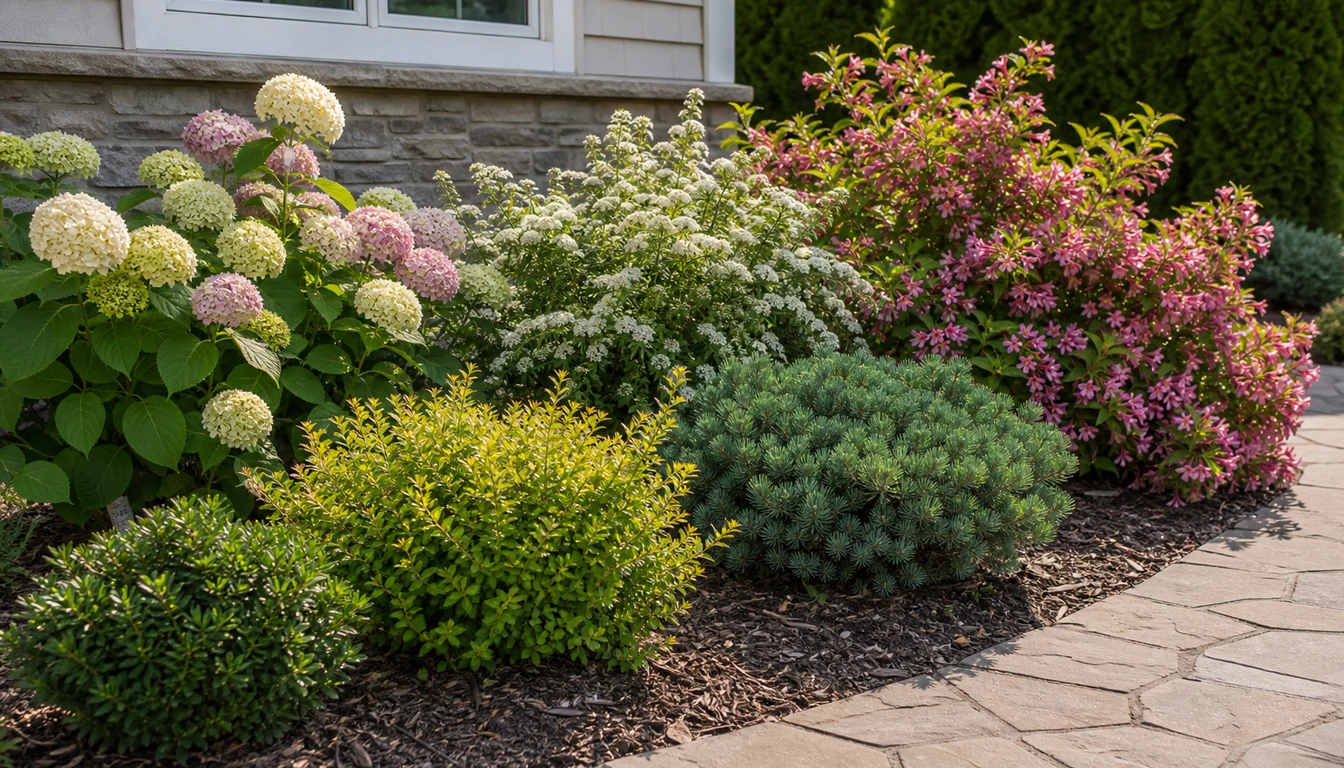
- Scent: within a few feet of a door, a gate or a seat, or nobody meets it
- Berries: beside a path or under a window, not behind a foundation planting
- Fine foliage detail: front tier only, since it disappears at more than a few paces
- Flower mass: the one detail that still reads from the street, so it can go further back
What Keeps an Ornamental Shrub Bed Working in Winter?
A flowering shrub is in bloom for two to four weeks and standing in that bed for the other fifty. Beside a front door or a kitchen window, that is the most-looked-at planting you own, and it spends most of the year showing you whatever it has when nothing is flowering.
Four things carry it through those months, and they are worth choosing before anything that blooms.
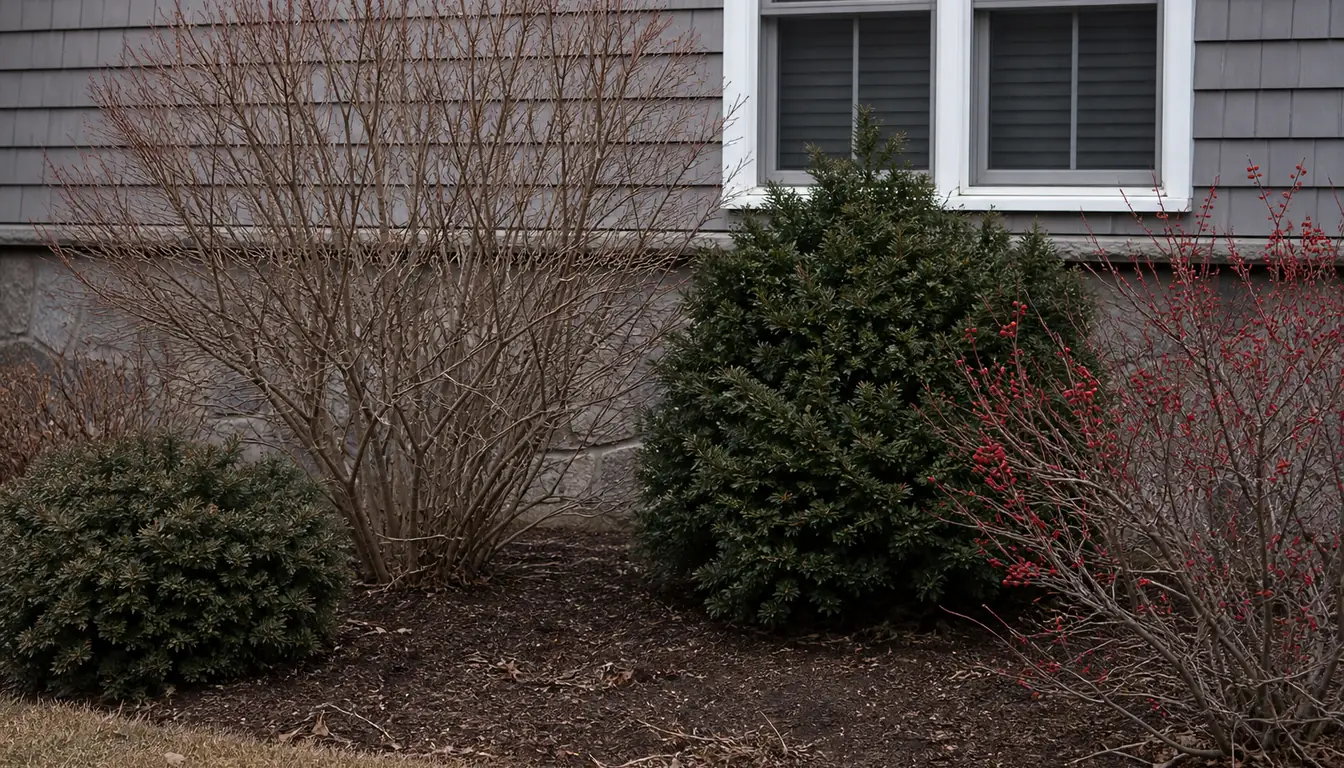
- Evergreen mass: holly or yew, the anchor the bed reads from in February
- Branch structure: the bare outline of a deciduous shrub, which is why habit matters more than flower color
- Bark and stem color: ninebark and dogwood stems, which only show once leaves drop
- Berries on bare wood: the one bright thing in a winter bed, and the reason to place it where it is seen
When Should You Prune Flowering Shrubs?
One distinction decides every pruning date, and it is not the calendar. Shrubs that flower on old wood set next year's buds shortly after this year's flowers finish, so cutting them in late winter removes the display before it opens.
Shrubs that flower on new wood do the opposite and can be cut hard while dormant. Getting this backwards is the most common reason a healthy shrub stops flowering.
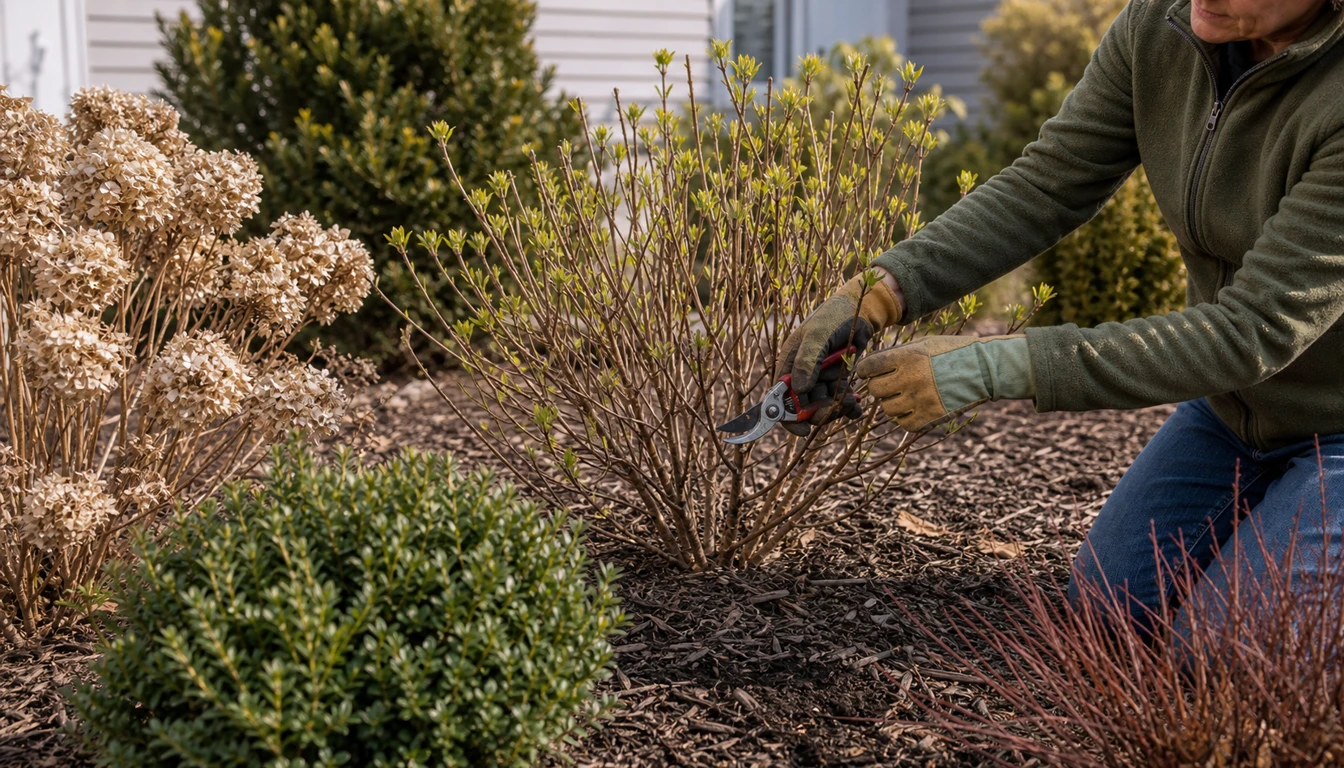
- Old wood, prune just after bloom: lilac, forsythia, azalea and most viburnum
- New wood, prune in late winter: spirea, butterfly bush and panicle hydrangea
- Never shear everything round: it hides dead interiors and removes the habit you paid for
- Correcting yearly means wrong size: the fix is the plant or the place, not more pruning
How Should You Water a Newly Planted Shrub?
Deep watering means soaking the root zone and then leaving it alone until the top 2 inches of soil are dry, which in most soils is several days rather than the next morning. Daily light watering keeps the roots in the top inch, and the top inch is the first thing to dry out in the heat that will test them.
Feeding a new shrub works directly against the reason you chose it, since heavy nitrogen produces bigger, softer and faster growth where you wanted a compact outline.
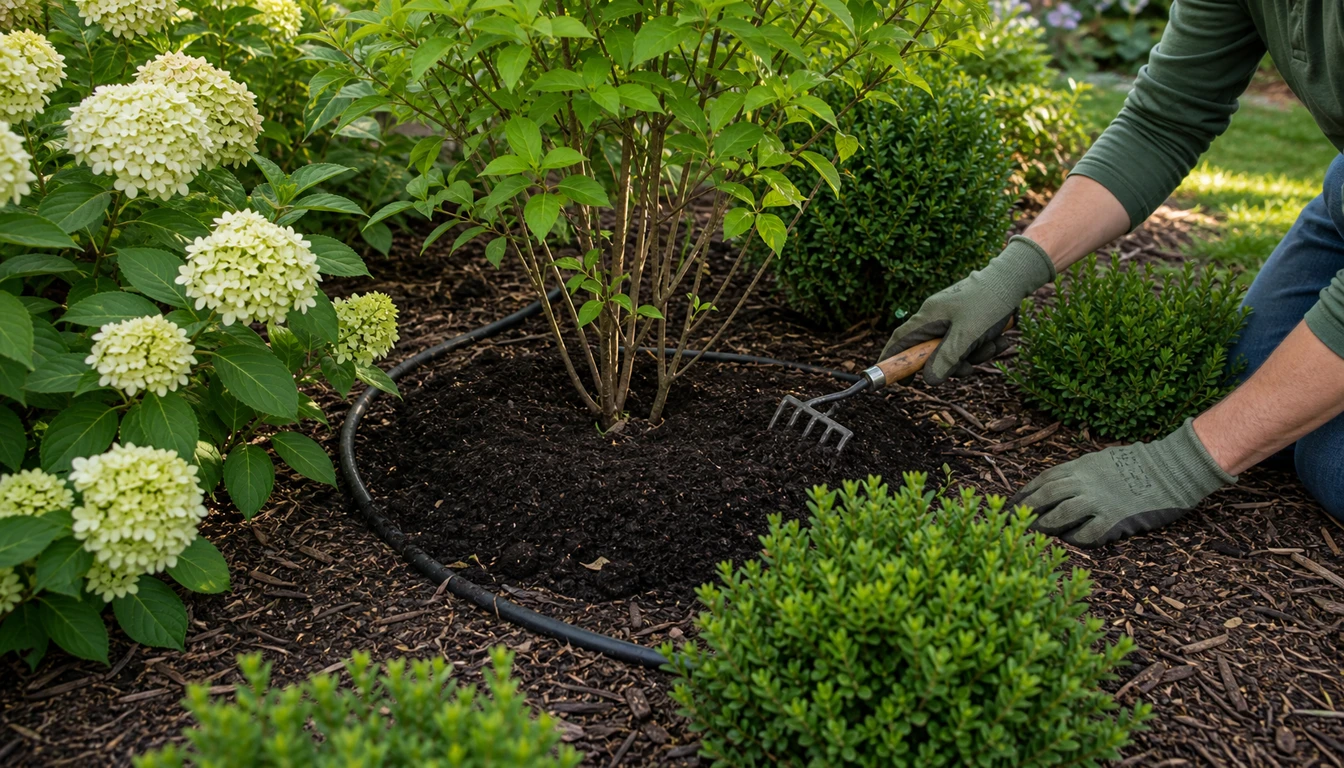
- Soak, then wait: water again when the top 2 inches are dry, not on a schedule
- Expect a full season: most shrubs are still establishing through their first summer
- Skip the fertilizer: feed only if growth is weak and the site is otherwise right
- Mulch the bed, not the stems: watering timing matters more than mulch depth
Should You Repeat, Move, or Replace a Shrub?
At the end of the season, judge each shrub on whether it kept the window clear and still looked deliberate the week after bloom. That question sorts a border faster than any list of favorites.
Then expand what passed rather than adding a new type, because a calm border almost always comes from repetition and almost never from variety.
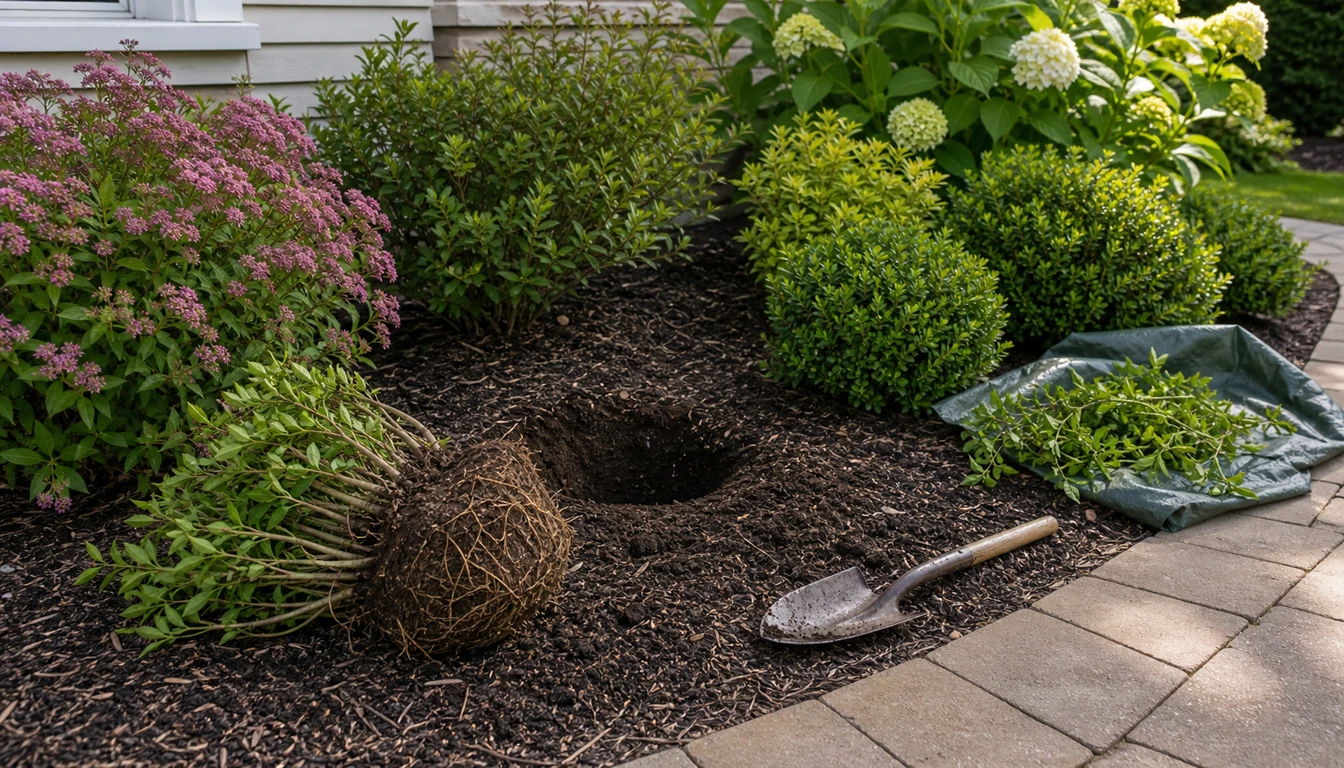
- Kept the view clear: buy another and repeat it down the bed
- Needed correcting twice: it is the wrong size for the spot, so move it now
- Looked bare after bloom: it belongs somewhere less visible than a doorway
- Still young: move it this season, since an established shrub will not go willingly
Quick Tips
- Measure the sill, the wall setback and the path before looking at any plant.
- A first-floor sill is usually 30 to 36 inches up, so a shrub under it must mature below that.
- Set a shrub back half its mature width from the wall, minimum.
- Plan against the top of the label's size range, never the middle.
- Prune lilac and forsythia just after bloom, spirea in late winter.
- Put scent and berries within a few feet of a door or path or nobody meets them.
- Water deeply, then wait until the top 2 inches are dry.
Recommended Plants
8 shrubs worth considering.
Frequently Asked Questions
How far from the house should I plant a shrub?
At least half its mature width, so a shrub reaching 6 feet across goes 3 feet out from the siding. Planting closer means the shrub grows into the wall, loses air movement on that side, and has to be cut back every year to keep access.
What shrubs stay low enough for under a window?
Anything whose mature height stays under about 30 inches, since a first-floor sill usually sits 30 to 36 inches above grade. Dwarf gardenia at 2 to 3 feet and compact nandina cultivars work, while the full-size forms of the same plants do not.
When should I prune flowering shrubs?
It depends entirely on whether they bloom on old or new wood. Lilac, forsythia, azalea and most viburnum set next year's buds soon after flowering, so prune them within a few weeks of bloom, while spirea, butterfly bush and panicle hydrangea are cut in late winter.
Why does my foundation planting look dull most of the year?
Because it was chosen on flowers, which last two to four weeks out of fifty-two. Evergreen mass, branch structure, bark color and berries on bare wood are what carry a bed the rest of the time, and they need choosing before anything that blooms.
How much should I water a newly planted shrub?
Soak the root zone deeply, then wait until the top 2 inches of soil are dry before watering again, which is usually several days rather than daily. Most shrubs are still establishing through their whole first growing season.