At a glance
- Best Outdoor Time
- Early morning
- Vegetable Beds
- 4 to 6 a.m. (UF/IFAS)
- Lawns
- 5:00 to 9:00 a.m. (Iowa State)
- Water When
- The top half-inch to inch of soil begins to dry (vegetables)
- Houseplants
- Test the soil with a finger 2 inches deep (Illinois Extension)
Colorado State's lawn advice opens the window as early as 9 p.m., and pots, hanging baskets and houseplants follow rules of their own, which come after the outdoor decision.
What Time of Day Should You Water Outdoors?
Early morning gives the soil and leaves time to dry, and several sources add that little water is lost to evaporation or wind then. Each row below was written for its own setting, which is vegetables in Florida, lawns in Iowa, Virginia, North Dakota and Colorado, or landscapes in South Carolina.
| Source | Window | Reason given |
|---|---|---|
| UF/IFAS (vegetable garden) | Early in the morning, preferably 4 to 6 a.m. | Soil and foliage need time to dry |
| Iowa State Extension (lawn) | Early morning, 5:00 to 9:00 a.m. | Water soaks in deeply with little lost to evaporation, and the grass dries quickly. Watering in late afternoon or evening may increase disease problems |
| Virginia Tech (lawn) | Early morning, a few hours before or just after sunrise | Evaporation loss and the impact of wind are lowest. Afternoon watering is acceptable, though wind may affect uniformity and evaporation loss is greater. Night watering is to be avoided unless it is the only time possible |
| NDSU Extension (lawn) | Early morning | The grass is active and absorbs what it needs, and any extra water evaporates, keeping the blades dry. Midday loses water to evaporation, and evening leaves the lawn wet all night |
| Clemson (South Carolina landscapes) | Finish all zones before 5:00 a.m. | Most South Carolina landscapes show no increase in disease with early morning irrigation. Evening irrigation adds moisture to dew already on the leaves |
| Colorado State Extension (lawn) | Between 9:00 p.m. and 9:00 a.m. | Reduces water loss from evaporation, and in many areas wind drift is less in the early morning hours |
Every row includes the early morning hours. Colorado's 9 p.m. start is aimed at evaporation loss, while Virginia Tech and NDSU warn that night or evening watering keeps the lawn wet for hours. If after dark is the only time you can water, the night watering guide covers what to do.
Is Midday Watering Harmful, and How Do Soil and Mulch Change the Answer?
Midday watering wastes some of the water. Evapotranspiration is greatest from 10:00 a.m. to 4:00 p.m., and Clemson estimates that 20% to 30% of the water from daytime irrigation is lost, depending on humidity, wind speed and temperature. At 30%, an inch applied gives the plants about 0.7 inch. The estimate for nighttime is approximately 15%.
Water drops on leaves are a separate worry, and the answer depends on the leaf. In a Hungarian-German study reported by the European Commission's CORDIS service, water drops on smooth, hairless leaves were unlikely to damage the leaf tissue in sunshine, while drops held up by plant hairs could cause sunburn.
How much water does the soil need?
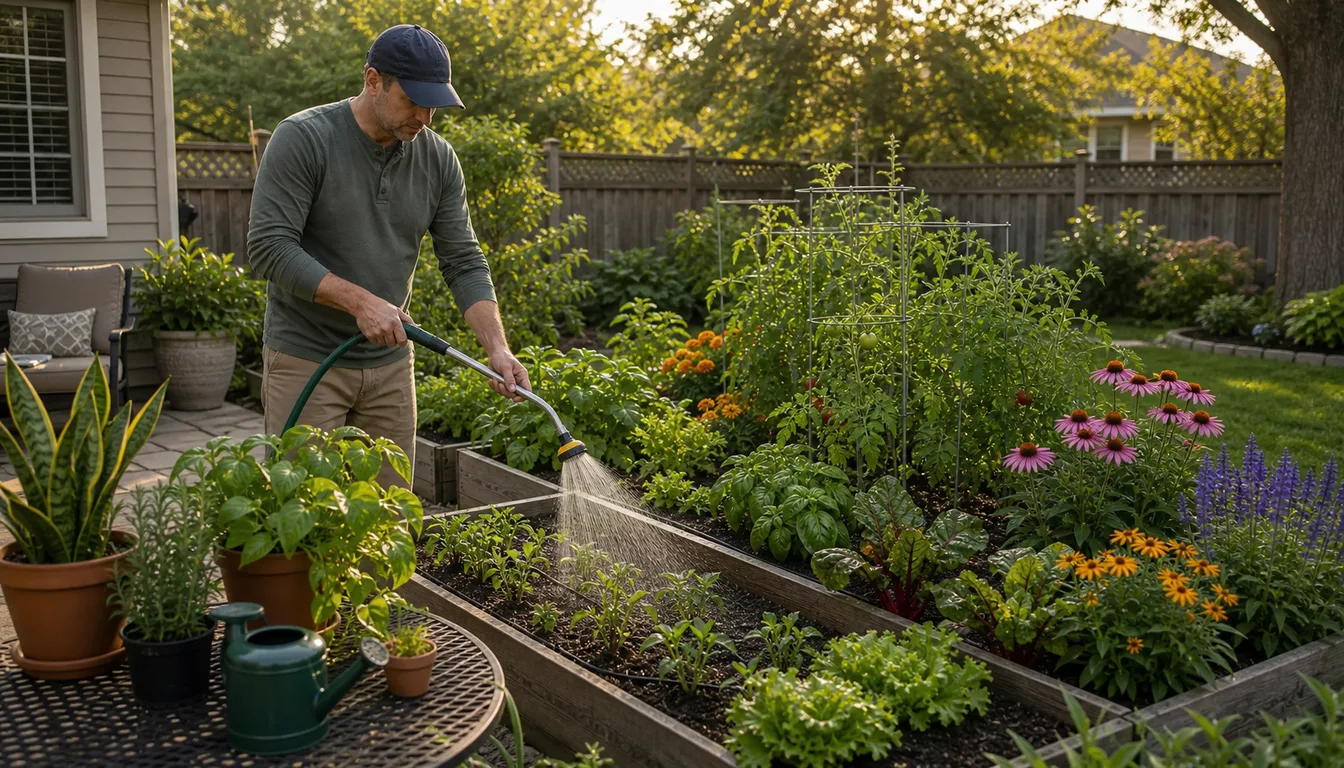
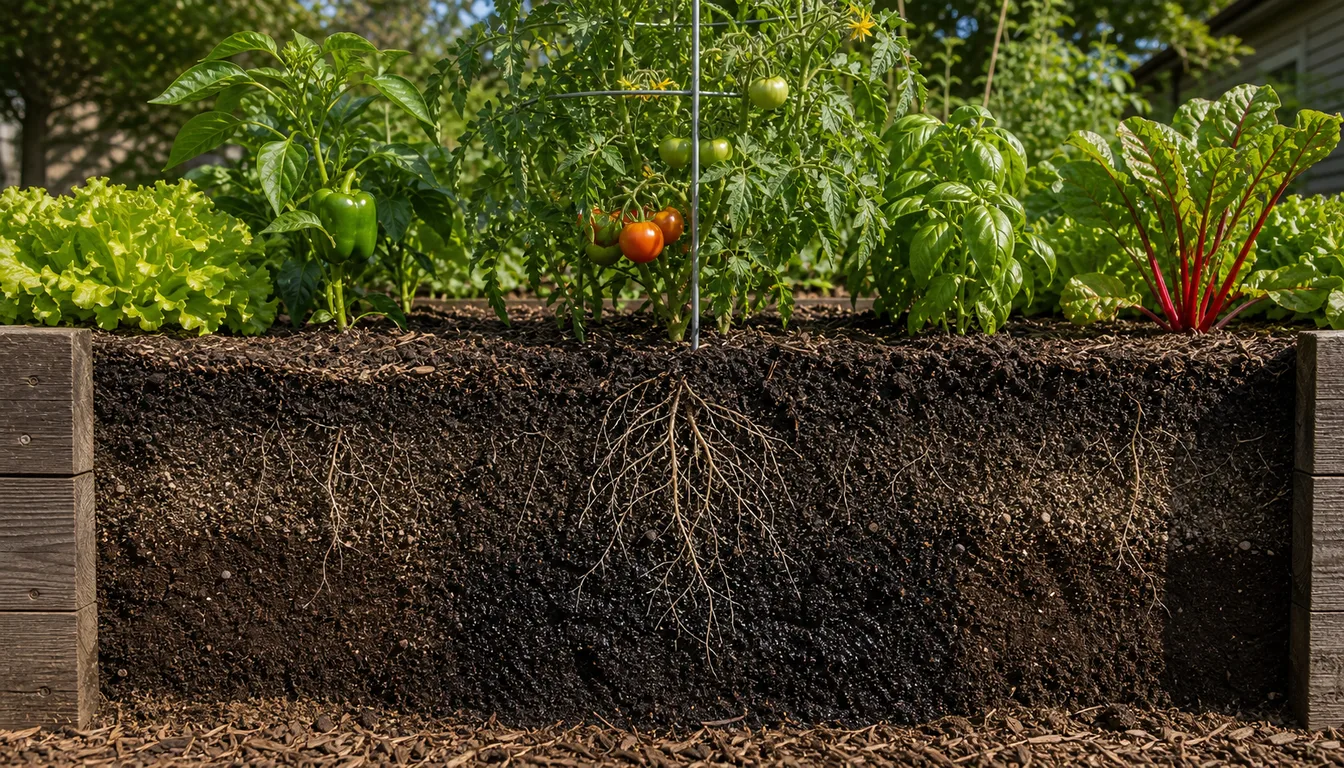
In general, water vegetables when the top half-inch to inch of soil begins to dry, and apply enough to wet the soil and root zone thoroughly. An irrigation system left to run indefinitely wastes water and can encourage disease.
In sandy soil, a half-inch of water moistens the soil to about 6 inches deep. In soils with more organic or clay content, and in gardens with a thick layer of mulch, up to an inch may be needed to wet the same depth. Those soils also hold moisture longer than sandy soil, so you can water less often, and mulch decreases water evaporation from the soil. The how much water plants need guide covers amounts by plant type.
How Should You Set a Timer, Sprinkler or Drip Line?
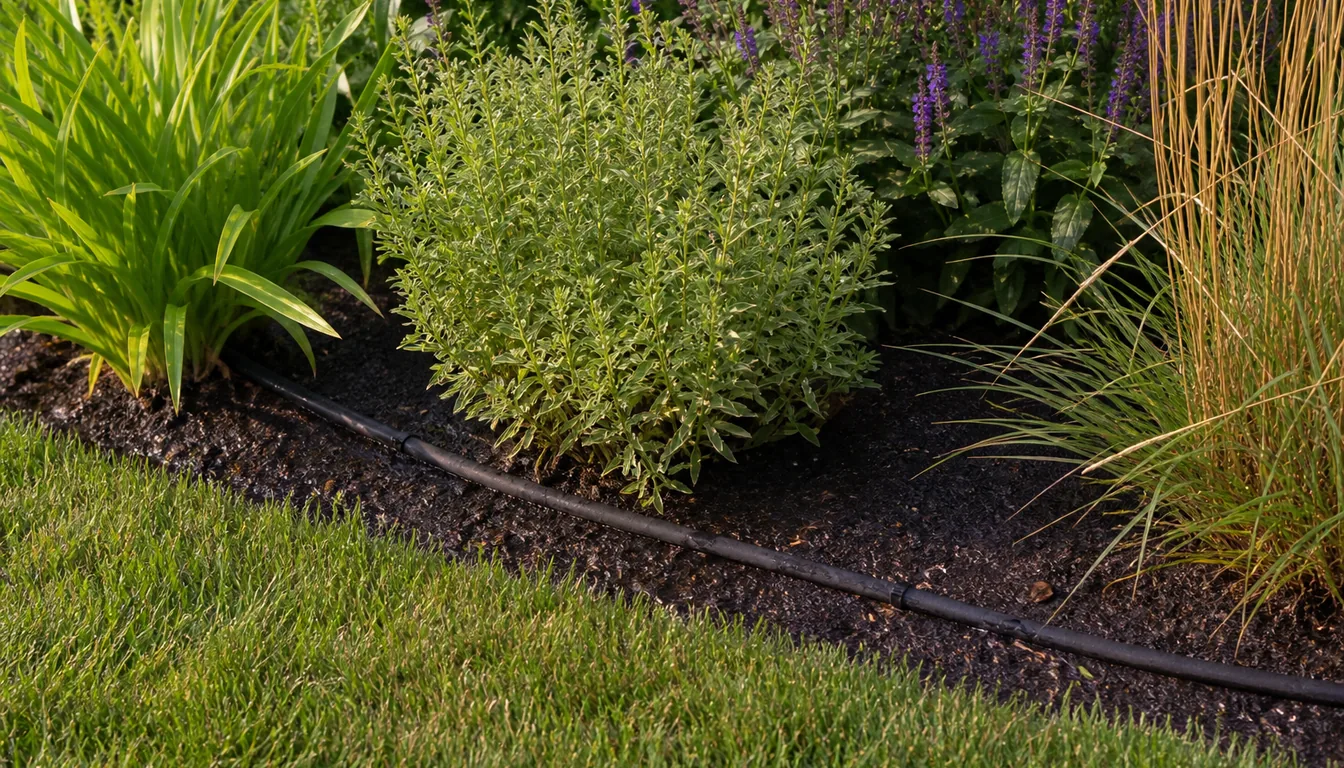
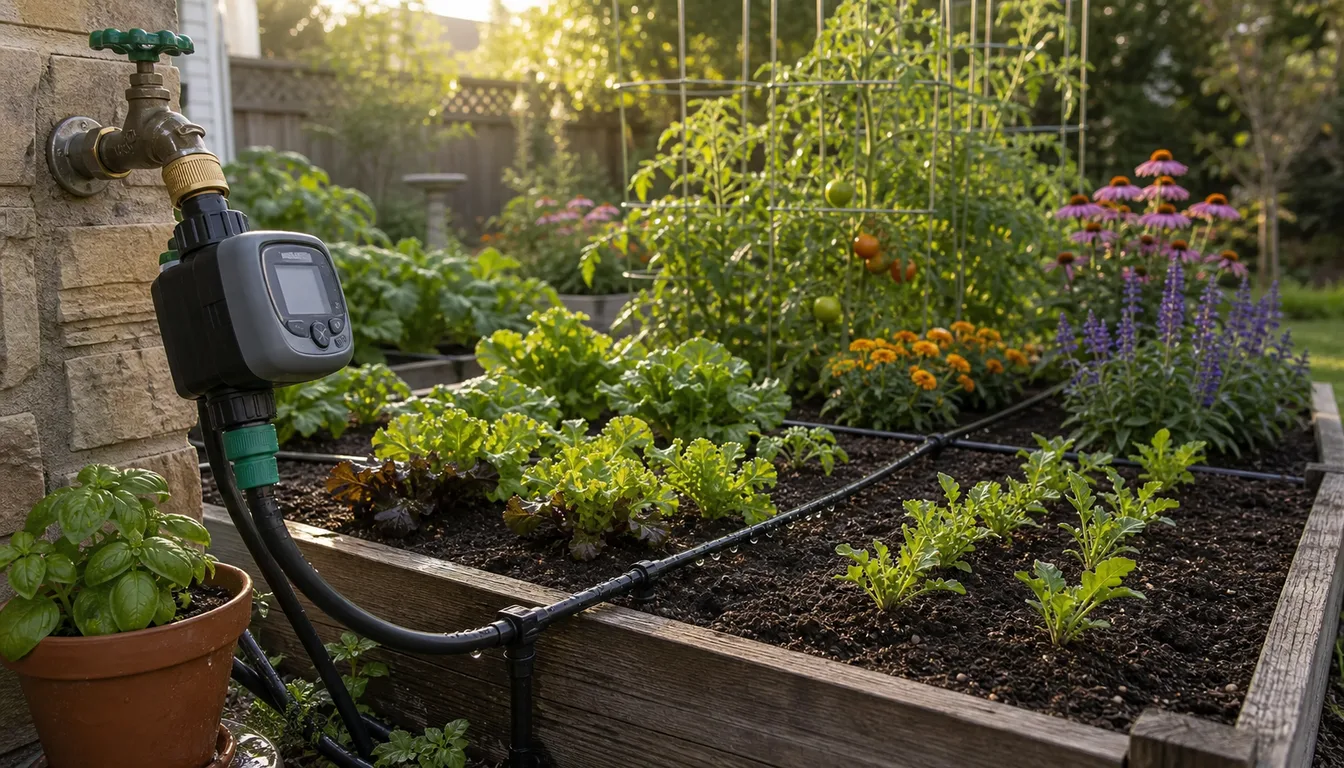
Overhead sprinklers are the least efficient way to water a garden, because much of the water evaporates before plants use it, and overhead irrigation can also encourage disease. Drip and micro-spray lines put the water on the soil around the roots and lose minimal water to evaporation and wind drift.
Clemson advises programming every zone to finish before 5:00 a.m. in South Carolina. On city water there is a second reason, since local water systems try to keep reservoirs filled for the morning rush of showers and baths, and when many households running sprinklers then deplete them quickly and leave the community's water pressure much lower than normal.
With buried drip lines, the choice between night and early morning is optional, because the water goes straight to the root zone and none sits on plant tissue above the ground.
How Should Pots and Hanging Baskets Be Watered?
Potting mix is light and well-drained, and a hanging basket often holds several closely spaced plants with fast-growing roots, so a basket dries out quickly. In general, water it when the soil surface is dry to the touch. On hot, sunny days that can mean once a day, and it may be necessary more than once a day.
Water until it runs out the bottom of the container, so the whole soil ball is wet. If the mix becomes extremely dry, it pulls away from the sides of the container, and water poured from above then runs out the drainage holes while most of the mix stays dry. A basket that dry needs to be soaked from below.
- Take the basket downMove it to a spot where you can set it in a tub.
- Set it in the waterLeave it in a tub of water for 1 or 2 hours, so the mix absorbs water slowly from the bottom.
- Lift it out in timeDo not leave it in the tub for more than 2 hours, because that may cause root rot.
Does Time of Day Matter for Houseplants?
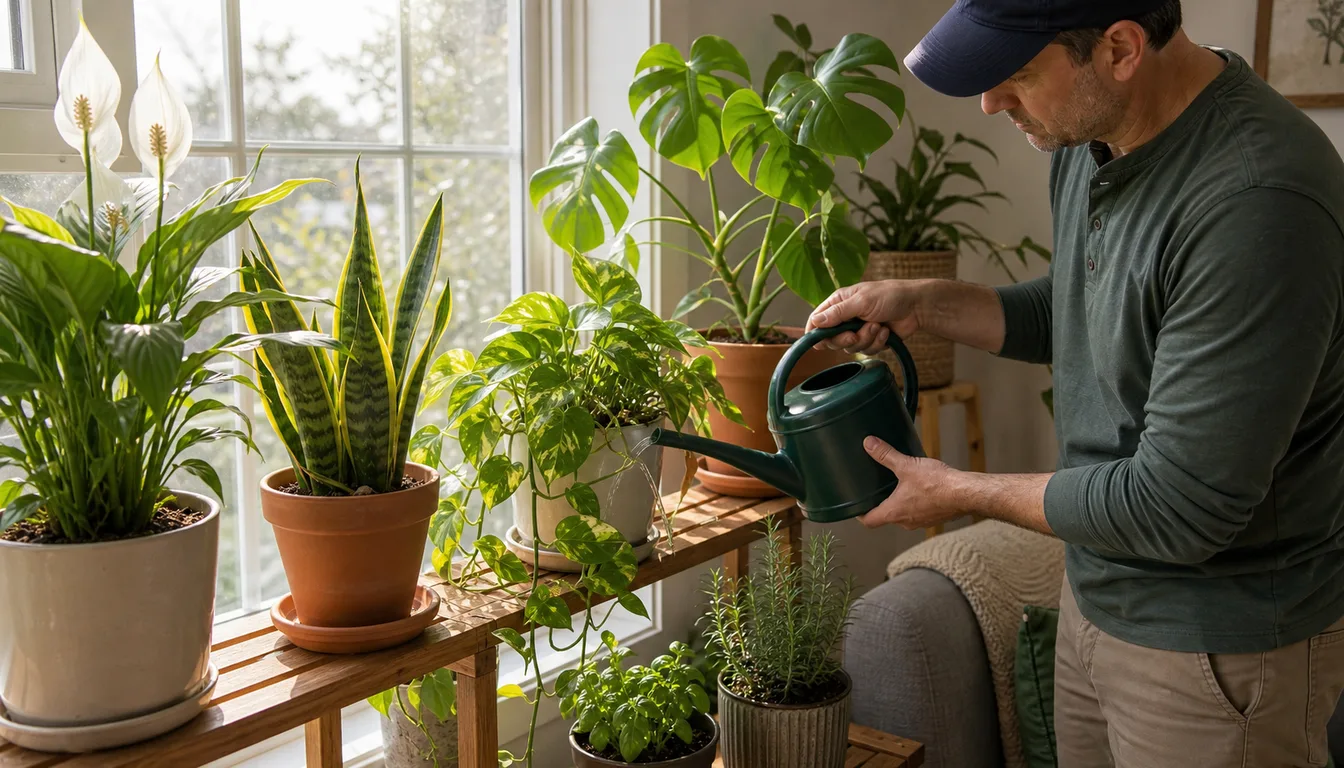
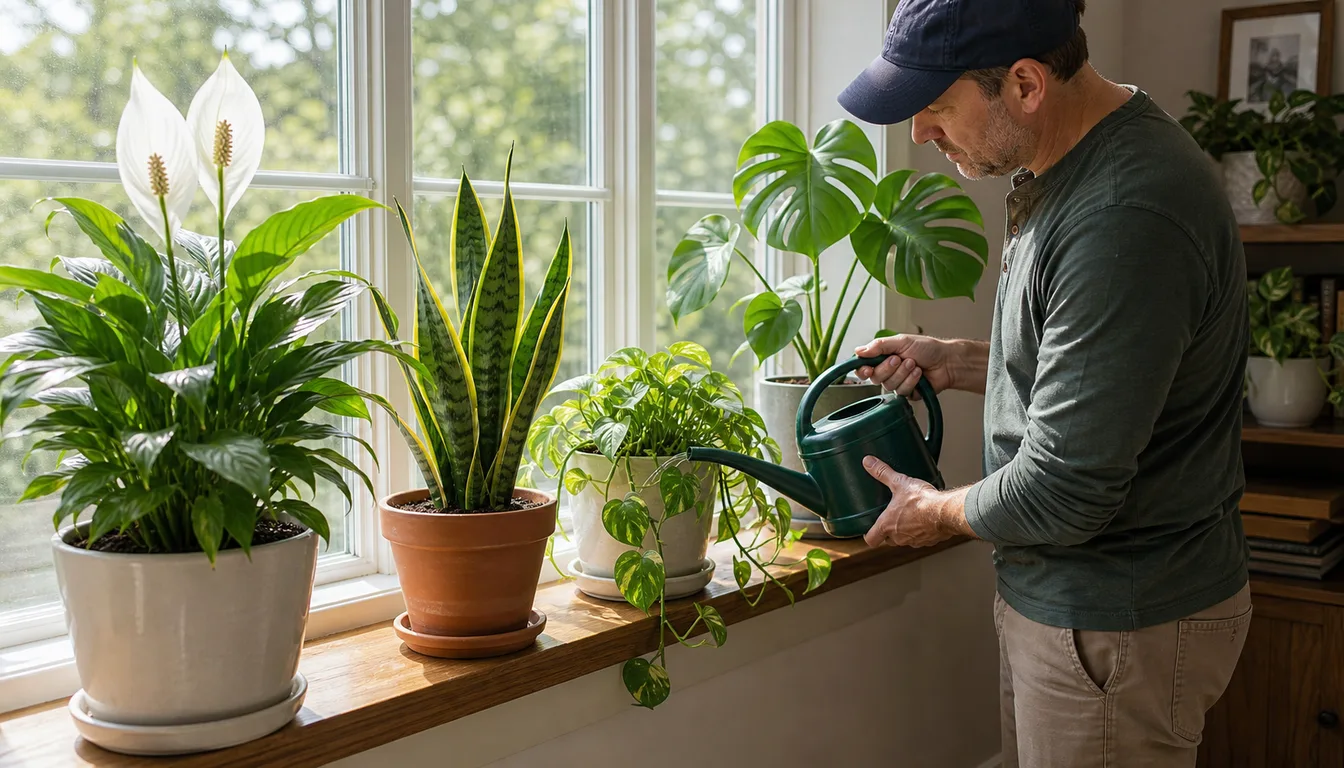
For houseplants, Virginia Cooperative Extension calls the morning best, so the soil has time to drain and the plant can take up water through the day. The other houseplant sources give a soil check instead of an hour, and Illinois Extension adds that a schedule usually does not work. Plant size and species, light, temperature, humidity, pot type and size, and soil all change how often a plant needs water.
| Source | How to check | How to water |
|---|---|---|
| Illinois Extension | Push a finger into the soil to a depth of 2 inches. If the soil is dry, the plant probably needs water | Soak the soil thoroughly, let the excess drain through to the saucer, then empty the saucer |
| Purdue Extension | Check daily. The soil is dry 1/4 inch down and a tapped pot sounds hollow | Add water until moisture drips out of the drainage hole, wait a few minutes and water again until it drips, and discard the drainage water |
How dry the soil should get depends on the plant. Care notes range from constantly moist but not soggy, to allowed to dry moderately between waterings, to very slightly moist at all times, so look up which of those your plant needs.
Plants in unglazed clay pots tend to need water more often than plants in plastic pots, because clay is porous.
How Do You Know the Timing Is Working?
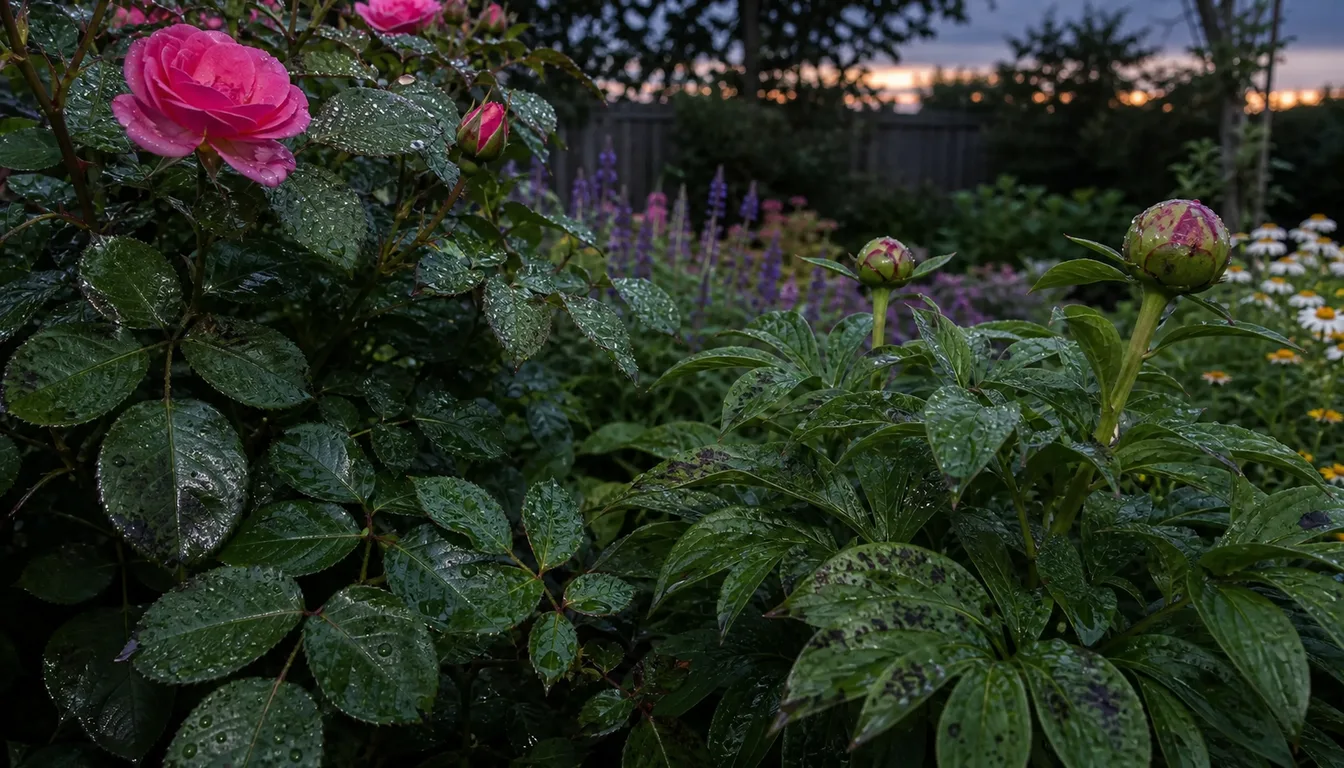
Fungal disease is what to watch for, since Virginia Tech says night watering greatly increases its chances by keeping the leaf blades wet for hours. Clemson suggests trying a new hour for several weeks while you monitor the plants.
If disease pressure increases, its South Carolina advice is to begin irrigation in the morning after the dew has dried, probably around 10:00 a.m. or slightly later. It also advises reducing irrigation frequency, because disease pressure is increased more by routine irrigations that apply more water than is required.
Pro Tips
- Water in the early morning, 4 to 6 a.m. for vegetables in UF/IFAS advice and 5 to 9 a.m. for lawns in Iowa State's, so soil and leaves have time to dry.
- If you water on city supply, set the sprinkler timer to finish before 5:00 a.m., as Clemson advises.
- Water vegetables when the top half-inch to inch of soil begins to dry.
- Water a hanging basket when the soil surface is dry to the touch. On hot, sunny days that may mean once a day or more.
- Test houseplant soil with a finger to a depth of 2 inches before you water.
- On a lawn on slopes or clay soil, use several short runs with time to soak in between.
Frequently Asked Questions
Is it really bad to water plants at night?
Virginia Tech says to avoid night watering of lawns unless it is the only time possible, because it greatly increases the chances of fungal diseases by keeping the leaf blades wet for hours. Clemson says that in practice disease increases only when lawns are routinely over-irrigated, and Colorado State lists 9:00 p.m. to 9:00 a.m. as a window that reduces evaporation loss. The night watering guide goes through the choice.
How often should I water hanging baskets in summer?
Iowa State says to water a hanging basket when the soil surface becomes dry to the touch. On hot, sunny days that may be once a day, and sometimes more than once.
Can I water my lawn during the day?
Virginia Tech says afternoon watering is acceptable, but wind may affect uniformity and evaporation loss is greater. NDSU does not recommend midday watering, since much of the water evaporates before the plants absorb it.
Can water droplets burn leaves in the sun?
A Hungarian-German study reported by CORDIS found that drops on smooth, hairless leaves are unlikely to damage the leaf tissue in sunshine. Drops held up by plant hairs can cause sunburn.
Should I water less often after mulching?
Mulch decreases water evaporation from the soil, so check the soil under it before you water. UF/IFAS says to water vegetables when the top half-inch to inch of soil begins to dry, and that a garden with a thick layer of mulch may need up to an inch of water to wet the soil as deep as a half-inch does in sandy soil.
Sources & References
- University of Minnesota Extension, Watering Newly Planted Trees and Shrubs
- Clemson Cooperative Extension, Landscape Irrigation Management Part 5: Irrigation Time of Day
- Colorado State University Extension, Watering Efficiently
- UF/IFAS Gardening Solutions, Watering the Vegetable Garden
- Iowa State University Extension, When is the best time to water a lawn?
- Virginia Tech Cooperative Extension, Summer Lawn Management: Watering the Lawn
- NDSU Extension, The Right Way to Water Your Lawn
- Iowa State University Extension, How often should I water plants in hanging baskets?
- Iowa State University Extension, Creating and Growing Hanging Baskets
- Illinois Extension, Houseplants: Watering
- Purdue Extension, HO-39 Indoor Plant Care
- CORDIS (European Commission), Watering plants midday triggers sunburn, research shows
- Virginia Cooperative Extension, Properly Watering Container Houseplants (SPES-804)