
What's Nandina? How to Get the Color Without the Seed Risk
Nandina domestica Berberidaceae
Nandina is a tough color shrub, but it is not a harmless bamboo substitute. Choose it only after you decide whether berries, bird safety, local invasive risk, and pet access fit your yard.
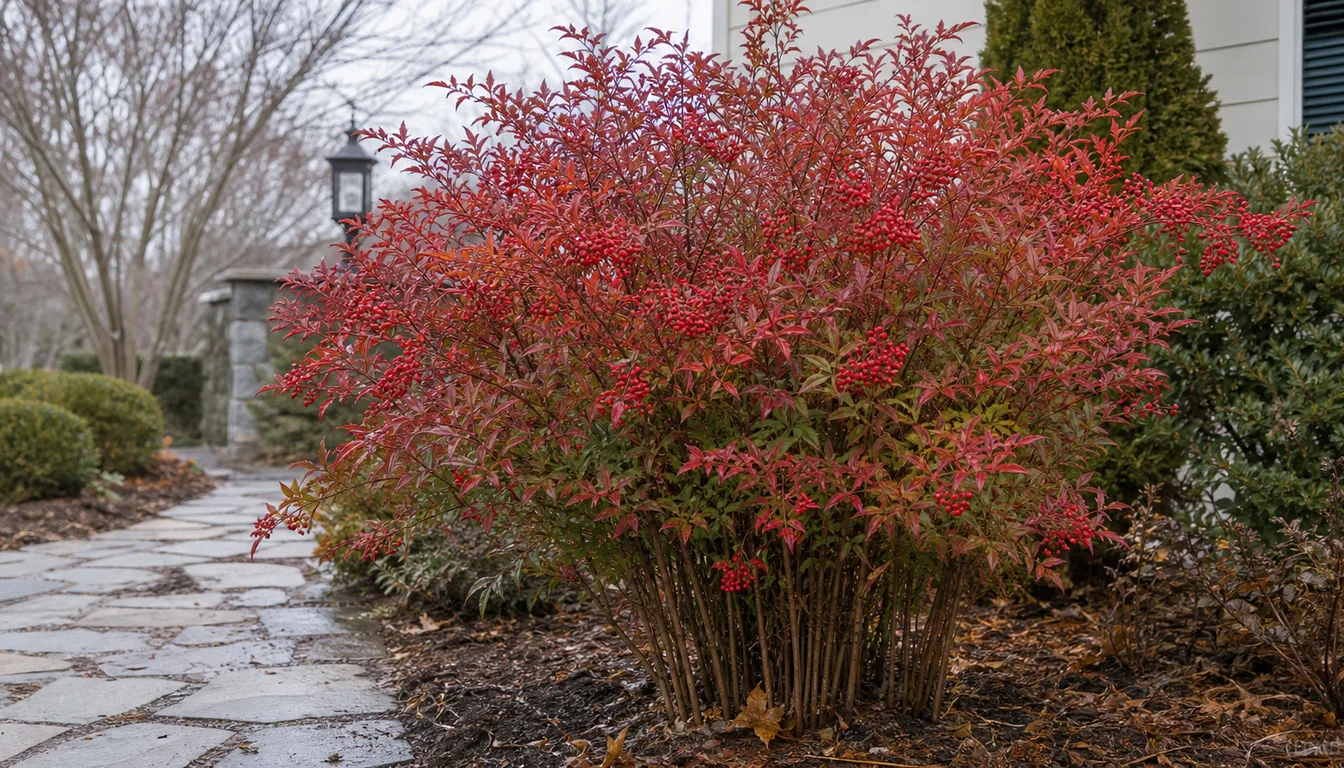
Care snapshot
Decide on Berries Before You Plant
The first real decision about Nandina is not light or water, it is whether the plant belongs in this yard at all.
Older, heavy-fruiting seedling forms can escape a planting bed because birds eat the berries and carry seed into nearby wild areas. That spread risk, not the plant's easy care, is what should decide the purchase.
The bamboo nickname is where most of the confusion starts.
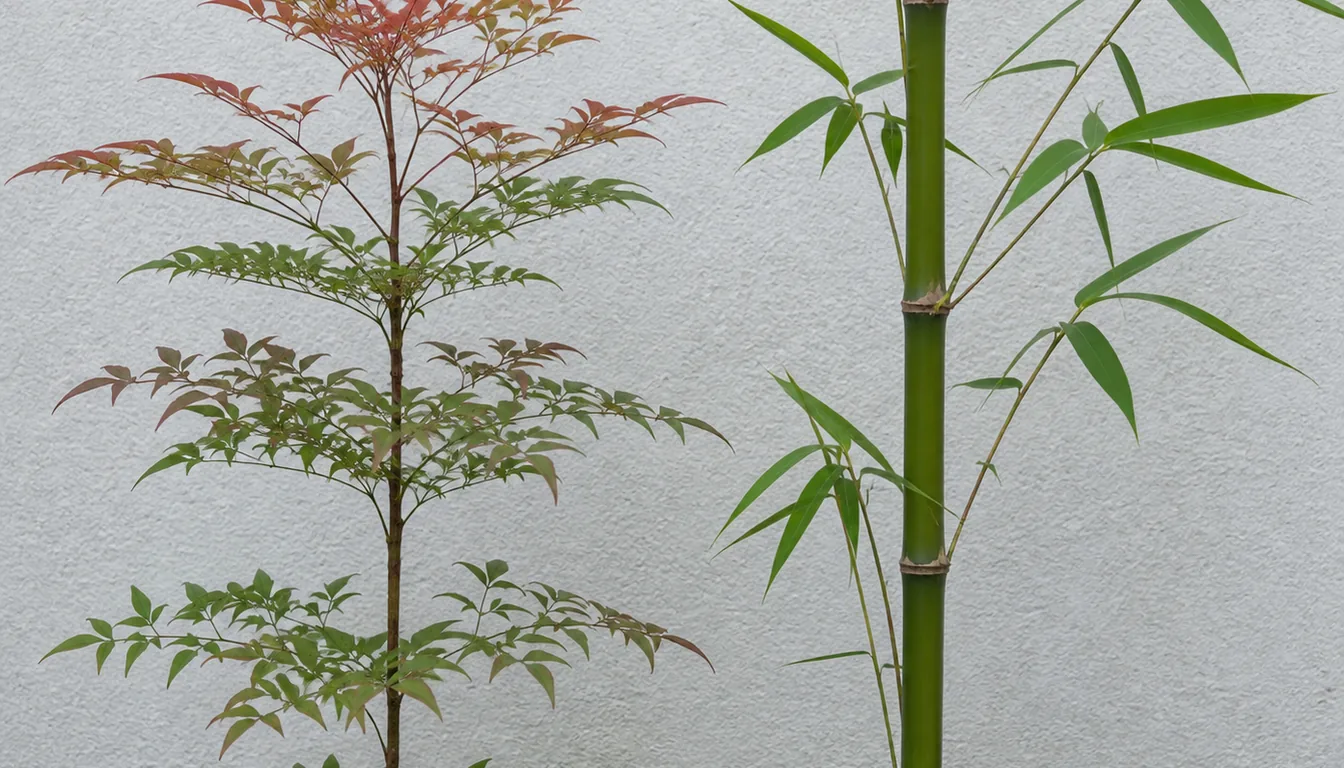
Nandina domestica sits in the barberry family, Berberidaceae, not the grass family that true bamboo belongs to. Its compound, finely divided leaflets simply echo bamboo foliage at a glance, and the plant forms upright woody canes from a clump rather than spreading rhizomes underground.
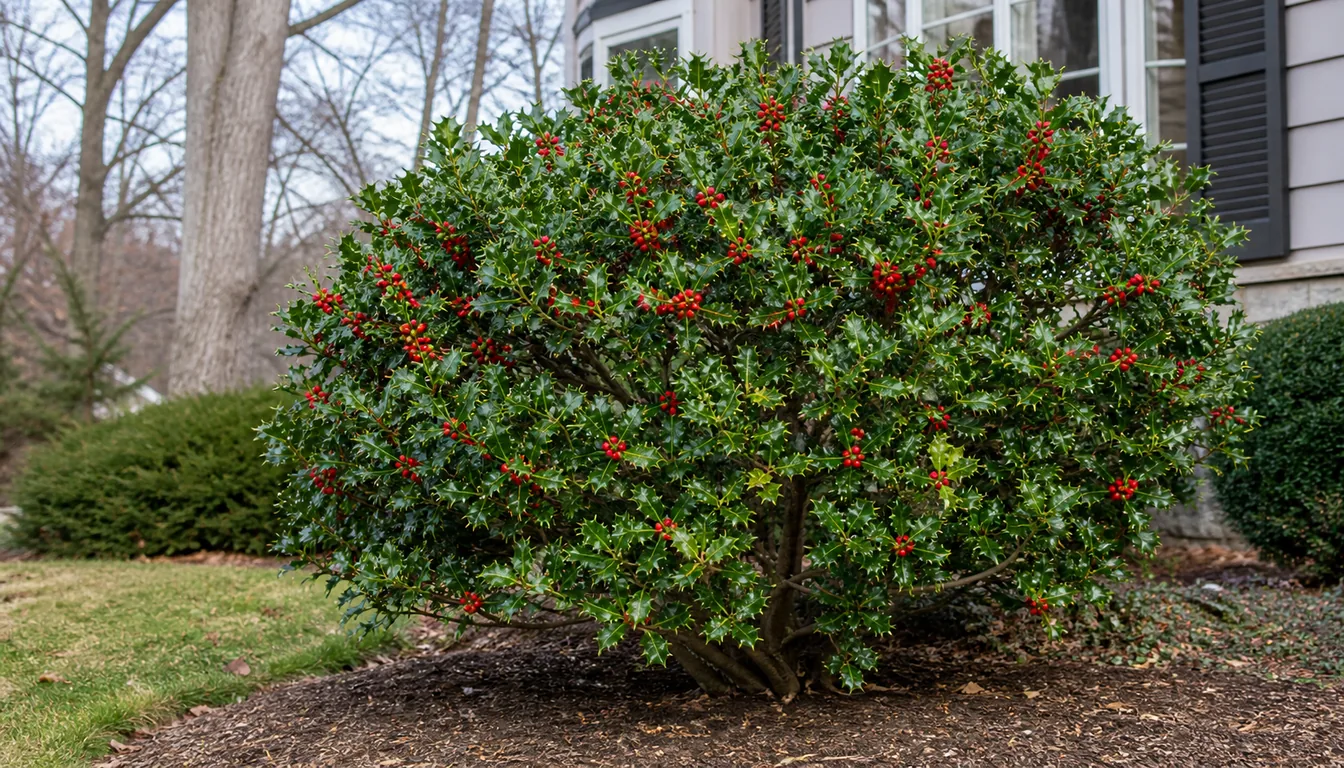
Several southeastern states and invasive plant councils now restrict or discourage the commercial sale of fruiting Nandina because of how easily birds move its seed. Holly raises a pollination question at planting time, while Nandina raises a wildlife and escape question that lasts as long as the shrub does.
Proximity is the practical test.
If the yard sits near woods, a stream, conservation land, or a region where Nandina domestica is listed as invasive, choose a sterile or low-berry cultivar or skip the plant entirely. That boundary matters more than anything in the care sections below.
Getting this decision right up front saves a removal job later. A sterile cultivar planted correctly gives the same red winter color and structure without the years of seedling cleanup that a heavy-fruiting form eventually demands.
None of this means the plant is a bad choice everywhere.
In a fenced suburban yard far from any natural area, a labeled low-fruit cultivar behaves like an ordinary well-mannered color shrub. The risk profile changes with the site, not with the plant's reputation alone.
Pick a Cultivar by Seed Risk and Height
Let fruiting risk decide the cultivar before height or color does.
Dwarf, low-fruit selections such as Firepower, Gulf Stream, and Obsession stay compact and set few or no berries, which makes them the safest fit for most home beds. They give the red winter color people want without the seedling cleanup that heavier forms create.
Spreading dwarf types like Harbor Dwarf and groundcover forms like Flirt trade height for width, so check their fruiting habit separately before assuming a low form is automatically low-risk. A cultivar tag that only advertises size is not the same as one that confirms fruiting.
Unlabeled or straight-species seedling stock is the plant to watch for.
That older type can reach 6 to 8 feet and carries the heaviest berry load of any form sold, which is exactly the combination that creates spread risk near wild areas. Buying by cultivar name, not by a nursery photo of red leaves, is the only reliable way to know what a specific plant will do.
- Lowest seed risk
- Firepower, Gulf Stream, or Obsession for compact, low-berry color
- Spreading groundcover
- Harbor Dwarf or Flirt, checked for fruiting habit first
- Highest spread risk
- Unlabeled seedling stock reaching 6-8 ft with heavy berry clusters
- Avoid near
- Wood edges, streams, preserves, and bird-focused gardens
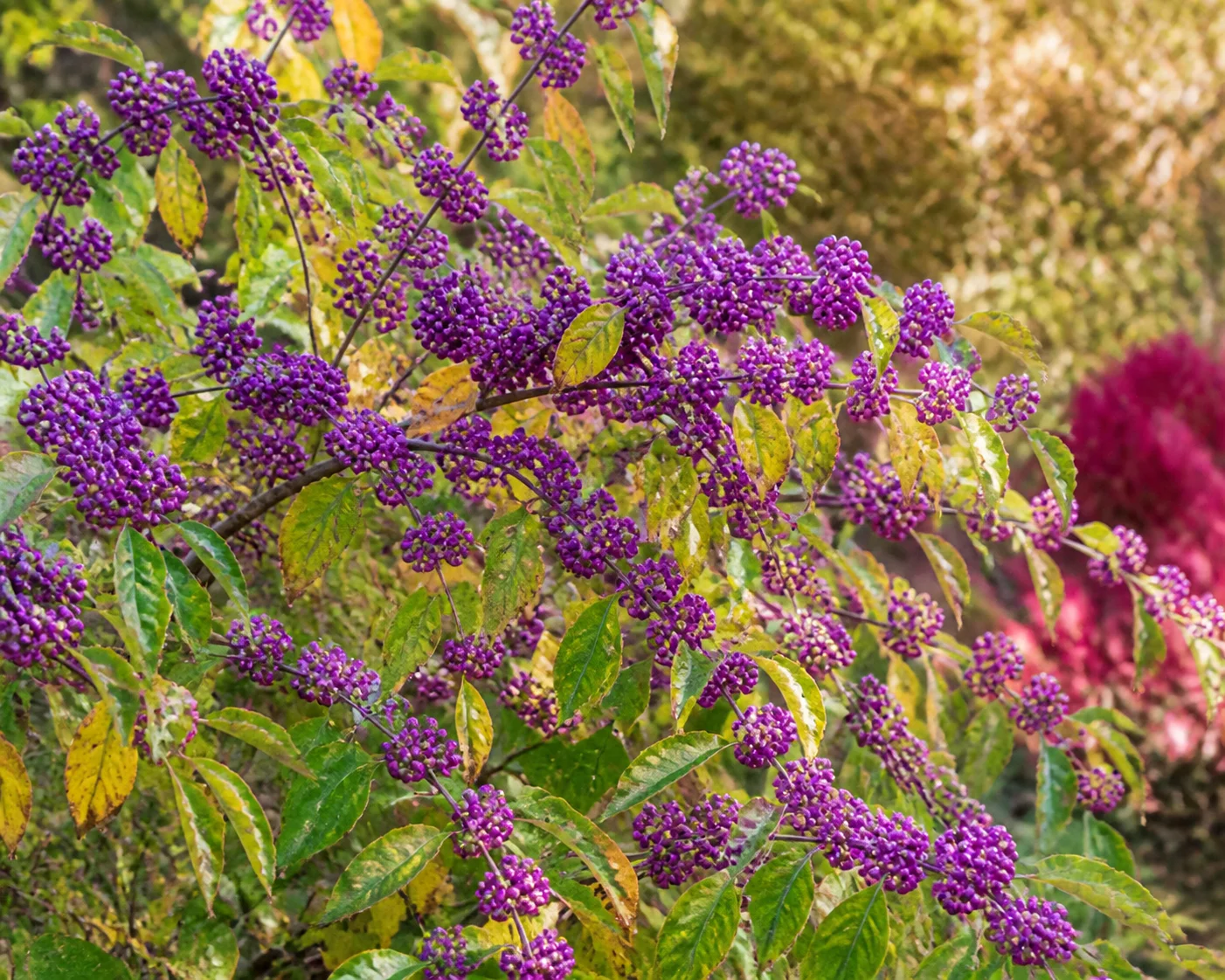
If the seed issue rules out Nandina for a particular site, beautyberry and native viburnums give comparable fall and winter berry color without the same escape concern. Color-focused compact reds and pinks are worth comparing against those alternatives before committing to a fruiting form.
Mature height and fruiting habit should outweigh the reddest photo on the nursery bench.
A reputable local nursery can usually confirm a plant's cultivar and fruiting habit on request. Big-box stores selling unlabeled stock by color alone are the more likely source of a surprise seedling type.
Use Sun for Red Color, Shade for Softer Growth
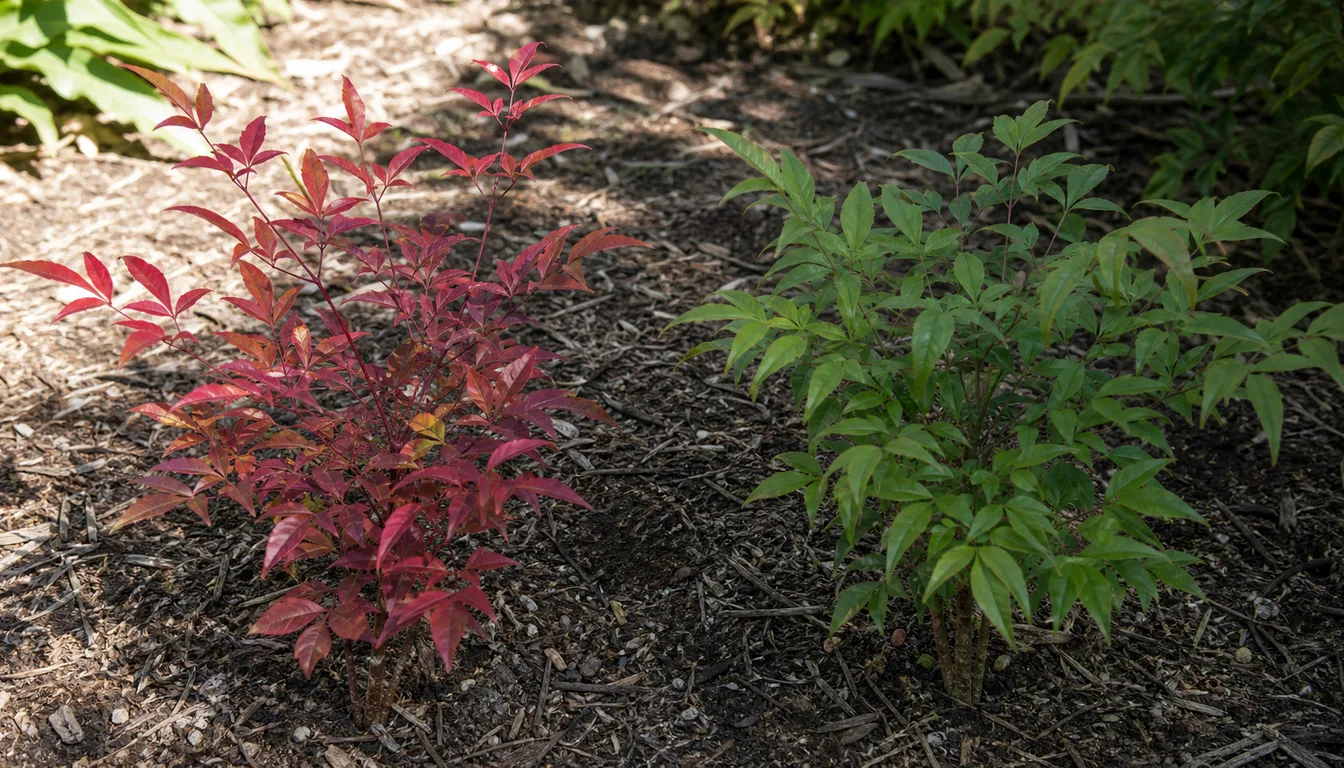
Red winter color in Nandina comes from anthocyanin pigments that build up as temperatures drop and light increases through fall. More sun means more pigment and a deeper red.
Foliage runs greener through the active summer growing season.
As nights cool in fall, the same leaves shift from green toward red, orange, or purple depending on the cultivar and how much direct sun the plant gets. A plant in heavy shade may barely change color at all.
Hot climates complicate the simple bright-light rule.
Intense afternoon sun in a hot region can bleach or crisp the leaves instead of coloring them well, so morning sun with light afternoon shade often gives the cleanest result. Reflected heat from pavement or a south-facing wall makes this worse, not better.
The practical target is four to six hours of direct or bright sun for compact, colorful growth.
More shade is an acceptable tradeoff when the goal is a soft evergreen filler rather than intense winter red. Expect thinner canes and fewer berries as shade increases, which is a fair trade for some sites.
Reddest color and heaviest shade cannot both happen in the same spot, so pick the priority first.
- Use brighter sites for red winter foliage.
- Use afternoon shade where pavement or walls reflect heat.
- Move leggy plants before blaming fertilizer.
- Expect fewer berries in deeper shade.
Let It Toughen Up After Establishment
A newly planted Nandina is not drought-proof yet. Water it like any young shrub through its first growing season before expecting the dry-spell tolerance it is known for later.
That establishment window is where most watering mistakes happen.
Once established, it handles ordinary dry gaps better than thirsty shrubs such as hydrangea. Chronic wet clay does more lasting damage than an occasional missed watering ever will.
Plant slightly high in heavy soil and mulch the root zone so water does not pool against the crown. In sandy soil, work in compost so moisture does not vanish before young roots can reach it, following the same root-zone logic as deep watering practices.
The plant tolerates a range of soil pH and texture, but good drainage matters more than any single soil type.
Fertilizer should stay light for the same reason pruning stays selective. Too much nitrogen pushes soft, fast cane growth that undercuts the compact look dwarf forms are chosen for.
Container-grown plants need a well-draining mix and some winter root protection, since pot roots lack the insulation that ground soil provides. Move containers against a wall or into a garage during hard freezes in marginal zones.
A 2-inch mulch layer over the root zone does double duty in this plant's favor.
It buffers soil temperature swings during establishment and slows the moisture loss that stresses a young shrub the most. Keep the mulch pulled back a few inches from the base of the canes so it does not trap moisture against the crown.
Renew Canes Instead of Shearing
Shearing is the single most common mistake made with Nandina.
Cutting the top into a formal shape leaves the lower canes permanently bare, because this plant does not rebranch low the way a hedge shrub does. The result is a chopped top over a see-through bottom that never fills back in.
Cane renewal avoids that problem. Each late winter, before the spring growth flush, remove a few of the oldest, thickest canes at ground level with bypass loppers if the clump looks crowded.
That approach is closer to how ninebark gets renewal pruning than to formal hedge clipping.
Removing whole canes at the base keeps new growth coming from the ground instead of forcing it from stubs partway up a cut stem. Never cut every cane to the same height at once, since that recreates the sheared look from a different angle.
To reduce berries, clip flower or fruit clusters before they ripen rather than waiting until they are already spreadable. That timing matters most in regions where seedling escape is a real concern.
- Crowded clump
- Remove oldest, thickest canes at the base in late winter
- Too tall
- Cut selected tall canes low, not every stem halfway
- Berry control
- Clip clusters before they ripen
- Dwarf forms
- Prune lightly; size control comes from cultivar choice
Dwarf forms need very little pruning at all, since their size control should come from cultivar choice, not from regular cutting.
Wear gloves for this job.
Older canes near the base can be surprisingly tough and fibrous, and a dull pruner will crush rather than cut cleanly through them. A clean cut heals faster and looks better through the following season than a crushed one.
Skip Propagation Where Spread Is the Problem
The easiest way to make more Nandina is division or a rooted side shoot, but easy propagation is not automatically a good goal here. In a region where local guidance wants the plant contained, multiplying it works against that goal.
Where it is not a spread concern, divide in early spring by lifting a rooted outer cane with its own root piece attached. Replant at the same depth and water until new growth confirms the division has settled in.
Hardwood cuttings taken in late winter are a slower alternative to division.
Seed propagation does not belong in a home landscape workflow at all.
It adds variability and spread risk without giving the reader a better plant than a named cultivar already would.
Most Problems Start With Crowding or Wet Soil
Healthy Nandina is usually low-spray.
When it looks bad, check crowding, wet roots, and shade before reaching for any pest product. Most trouble traces back to a site condition, not an insect.
Leaf spot increases where canes are packed tight and where sprinklers wet the foliage late in the day. Thinning the clump and watering earlier solves more of this than a fungicide does.
Scale hides on older stems inside dense, unthinned clumps.
It shows up as small raised bumps that barely move, usually worst on stems that never get light or airflow. Cutting out the most infested old stems removes most of the problem at once.
Brown leaf tips can come from drought, reflected heat, fertilizer salt buildup, or container stress rather than a pathogen. The pattern across the plant tells more than the leaf color alone.
Yellowing between the veins on otherwise healthy-looking leaves is a different signal. It usually means iron chlorosis from high soil pH, which reads differently from the plant's normal seasonal reddening and will not fix itself by waiting for winter.
Aphids and whitefly occasionally cluster on tender new spring growth.
Thin crowded canes and stop wetting leaves late in the day.
Cut out heavily infested old stems, then treat remaining stems if needed.
Check soil pH. Treat as iron chlorosis, not seasonal color.
Remove them young and reduce berry set.
Use the same slow diagnosis you would use for euonymus scale checks, inspecting the stems, checking soil moisture, then correcting the site condition that keeps inviting the damage back.
Deer mostly leave this plant alone.
That makes crowding and moisture the two conditions actually worth checking on a struggling plant, well ahead of browsing damage on most home properties.
Handle Berries as a Wildlife Issue
The berries are why Nandina needs a stronger safety section than most easy shrubs.
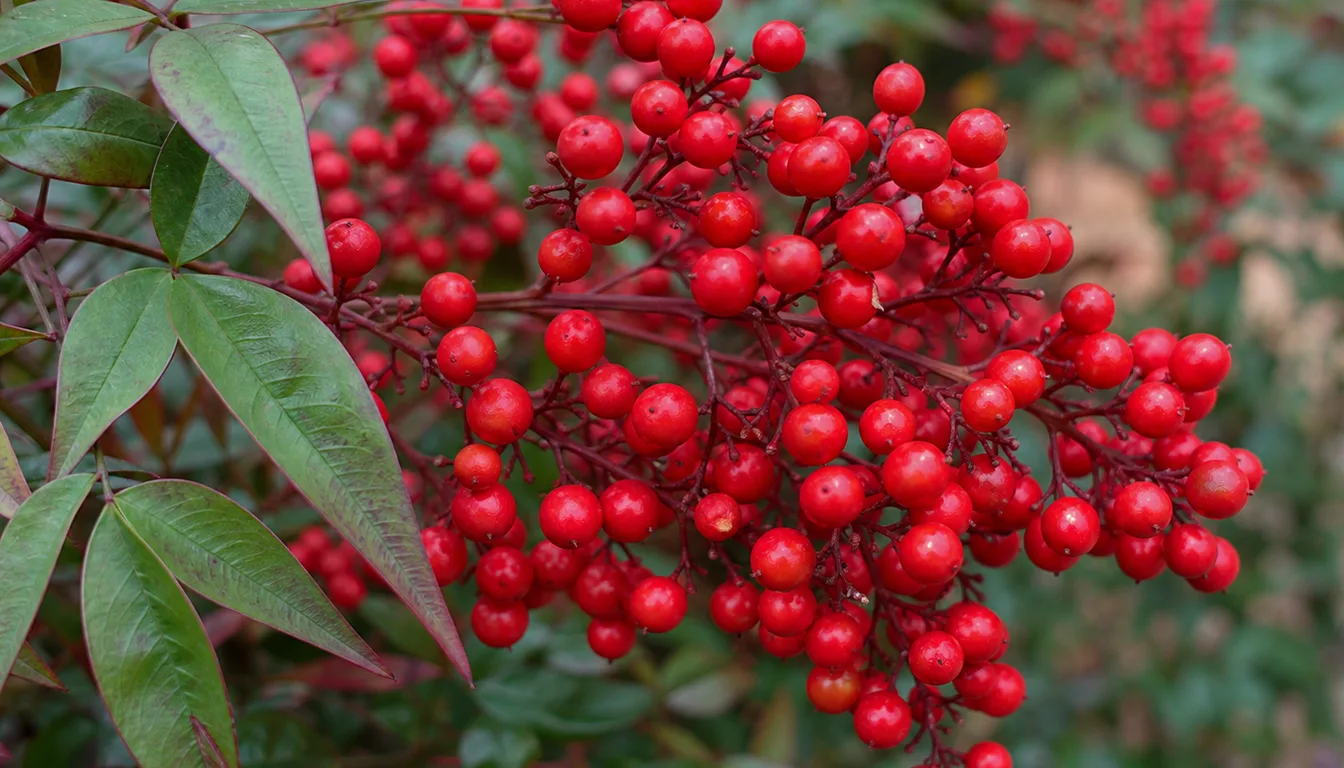
They contain cyanogenic compounds that release cyanide when metabolized in enough quantity. That risk is real for wildlife that eats the fruit in bulk, not just a label warning.
In 2009, a mass die-off of cedar waxwings in Georgia was linked to the birds gorging on Nandina berries during a late-winter stretch when little other food was available. That documented case is why bird-focused gardens treat this plant differently from an ordinary berry shrub.
Children and pets should not eat the berries either.
Site fruiting forms away from play areas, dog runs, and patios where fallen berries collect underfoot. A plant that is fine to walk past is not automatically fine for a toddler or a grazing dog to reach.
For a bird garden specifically, the safer move is a native berry shrub or a genuinely low-fruit cultivar instead of a heavy-fruiting straight species. A wildlife planting should not create the exact food risk it was meant to solve.
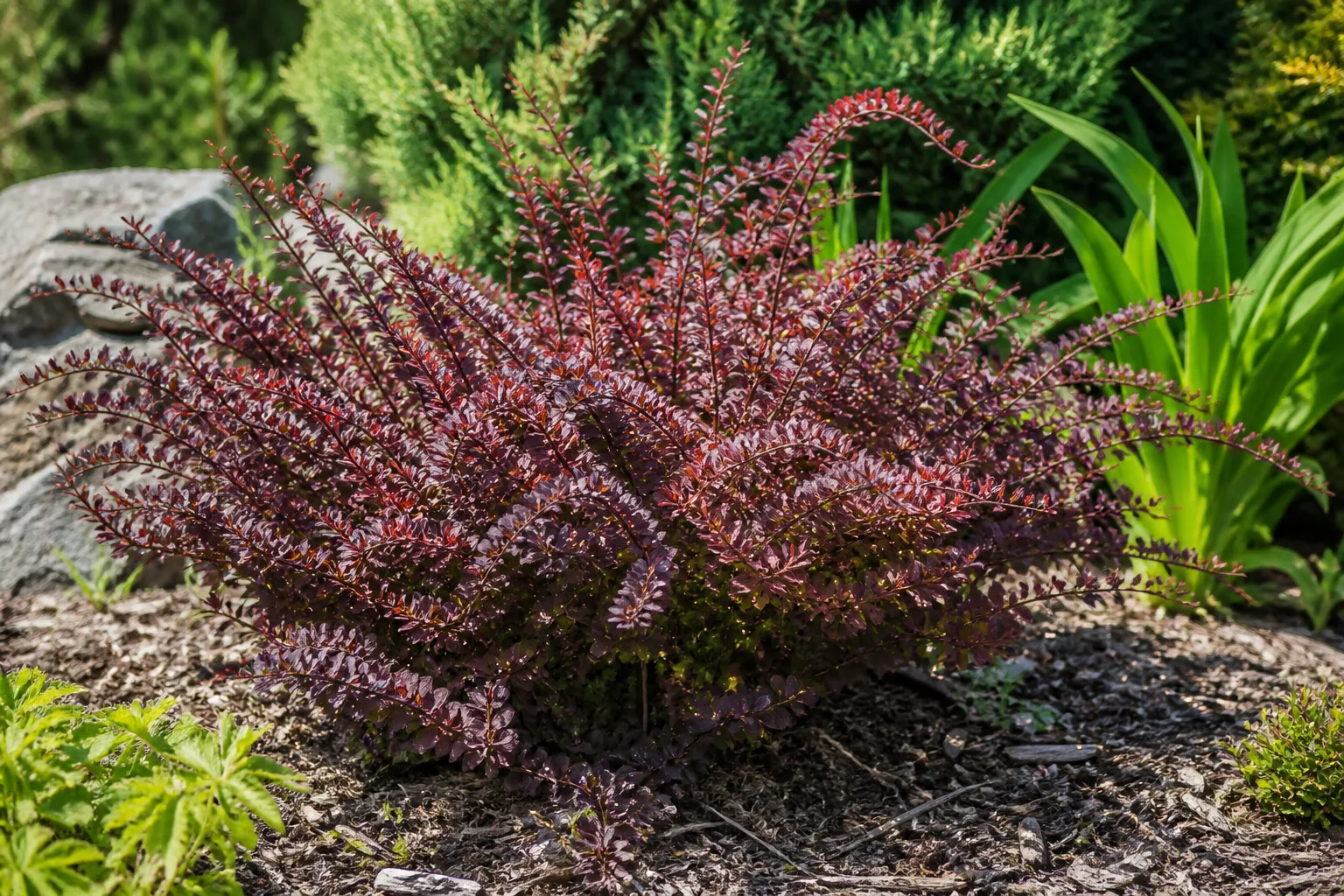
If red winter structure is the actual goal, barberry where it is not itself restricted, or a native holly, gives similar color and form without the same wildlife stakes.
Compare local options before copying a generic deer-resistant plant list that was not written with bird safety in mind.
Ask a local extension office or native plant society for a same-season alternative if the invasive listing rules this plant out.
Mammals mostly leave the berries alone.
The documented poisoning cases center on birds that strip a cane clean during a food shortage, not on casual browsing, which is part of why the risk gets underestimated until a bad winter concentrates it.
Frequently Asked Questions
Is Nandina invasive?
Nandina can be invasive or discouraged in some regions, especially where berrying forms escape into natural areas. Check local guidance before planting and choose fruitless or low-berry cultivars when allowed.
Are Nandina berries poisonous to birds?
They can be risky when birds eat large amounts. A documented 2009 die-off of cedar waxwings in Georgia was linked to heavy Nandina berry feeding, which is why bird-focused gardens avoid heavy-fruiting forms.
Should I shear Nandina?
No, remove old canes at ground level instead. Shearing cuts the natural cane shape and leaves the plant looking chopped with a bare bottom.
Does Nandina need full sun?
It grows in sun or part shade, but sun is what drives the red winter color. More sun means stronger red, while deeper shade gives greener, looser growth with fewer berries.
Which Nandina cultivar has the least berries?
Firepower, Gulf Stream, and Obsession are widely sold dwarf selections bred for compact color with little to no fruiting, which makes them the safer pick near wild areas.
Sources & References
- Nandina domestica, Cooperative Extension Service, University of Georgia
- Nandina domestica Profile, North Carolina State Extension
- Nandina domestica, Missouri Botanical Garden Plant Finder
- Heavenly Bamboo, University of Florida IFAS Extension
- Nandina domestica, Invasive Species Council of California
- Toxic and Non-toxic Plants: Nandina | ASPCA
Related Plants
Holly
Beautyberry
Barberry
Arborvitae
Arborvitae can form a dense living screen where its mature width, exposure, and water needs fit the site.
Aucuba
Aucuba is the shrub for bright shade with dry root competition. It keeps evergreen structure near north walls, porches…
Azalea
Azaleas bring spring flowers, and some cultivars bloom again later in the year.