
When Should You Prune Flowering Shrubs for More Blooms?
A shrub loaded with flowers one year and bare the next was almost always cut in the wrong month.
The fix is not a better tool or a neater cut. It is knowing whether the plant makes its flower buds on last year's wood or on this year's, because that single fact sets the window for everything else.
This page sorts the shrubs on this site into the two groups, gives the window for each, and handles the two genera where the common name settles nothing.
Then it covers the two cuts that go wrong most often, the staged renewal of an overgrown plant and the position of a single cut on a stem.
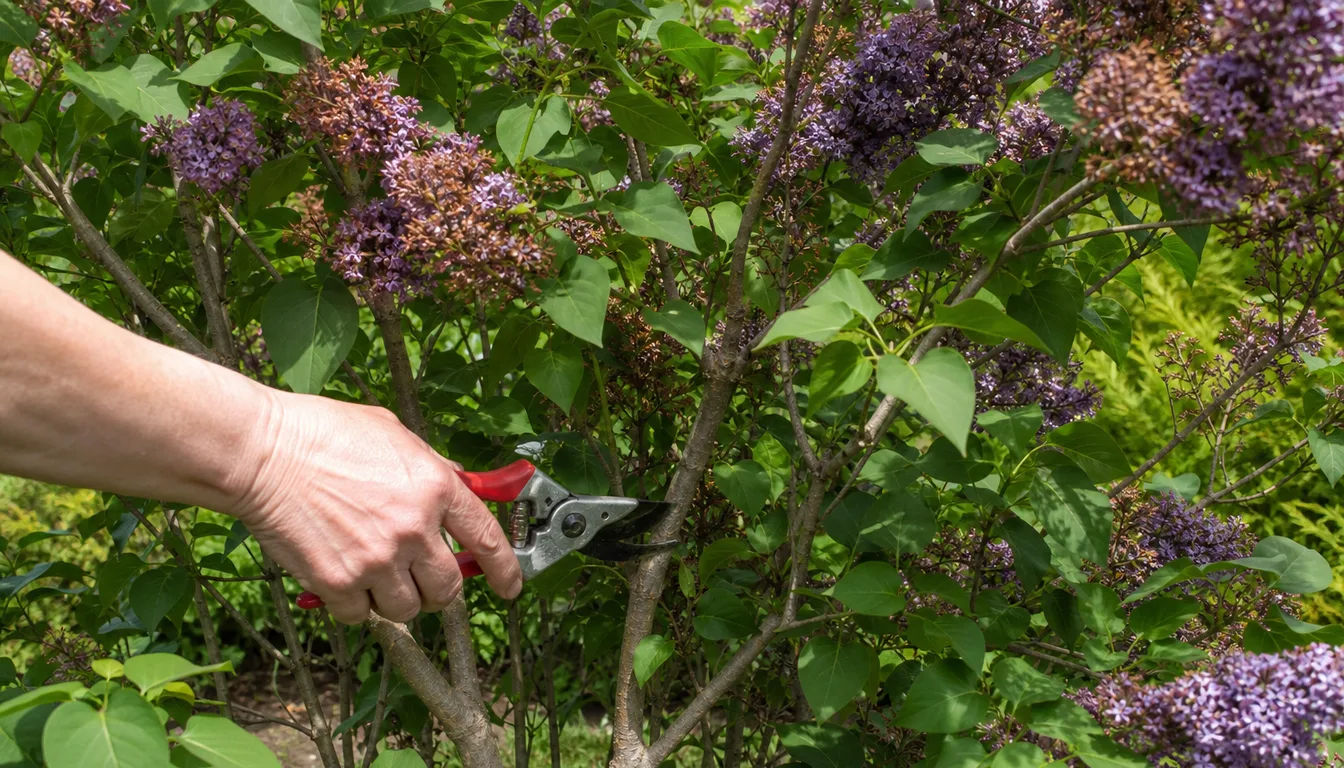
At a glance
Does Your Shrub Bloom on Old Wood or New Wood?
Everything follows from when the shrub made its flower buds.
A shrub that flowers in spring formed those buds on last season's growth, the old wood, so a winter tidy throws next spring away before it opens. A shrub that flowers in summer or autumn builds its buds on shoots grown the same year, so a hard dormant cut makes it flower harder.
The bloom month sorts almost everything. Anything flowering before roughly mid-June is working from old wood, and anything after it is not.
| Shrub | Flowers on | When to cut |
|---|---|---|
| Forsythia | Old wood | Straight after flowering |
| Lilac | Old wood | Straight after flowering |
| Azalea and rhododendron | Old wood | Straight after flowering |
| Viburnum, most species | Old wood | Straight after flowering |
| Butterfly bush | New wood | Late winter |
| Crepe myrtle | New wood | Late winter |
| Knock Out rose | New wood | Late winter |
| Hydrangea | Depends on type | See below |
| Spirea | Depends on type | See below |
A shrub that has never flowered gives you no month to read. Leave it uncut for a full season and watch, because a year of waiting costs less than a cut that removes the first display before it arrives.
When Do You Prune a Spring Bloomer?
The window opens as the flowers fade and closes over late summer as the plant starts building next year's buds.
It is short, and it is the only safe one. A cut in autumn or winter on this group is a decision to skip a season.
Work on structure inside that window rather than on outline. Take whole old stems out at the base instead of shortening every tip, which is what keeps a plant open and flowering rather than dense and green.
Shearing is the failure here. A forsythia clipped into a shape loses a little more of next spring every year, because the wood carrying the flowers is exactly the wood the shears take off.
When Do You Prune a Summer or Fall Bloomer?
Late winter, just before the buds swell.
Nothing is lost by cutting hard at that point, because the shoots that will carry the flowers have not been made yet, and the cut is what tells the plant to make strong ones.
Cut last season's growth back to a low sturdy framework. The plant answers with vigorous new canes and those canes carry the display, which is why a nervous trim gives a worse result here than a decisive cut.
Left alone, this group declines slowly. A butterfly bush that is never cut flowers on progressively thinner wood and the heads shrink year on year.
Crepe myrtle is in this group and is the one most often damaged, not by cutting but by cutting to the same stubs every winter until the trunk carries knuckles instead of branches. Cut back to a framework, and move the framework outward as the plant matures.
Which Shrubs Sit in Both Groups?
Two genera make the common name useless.
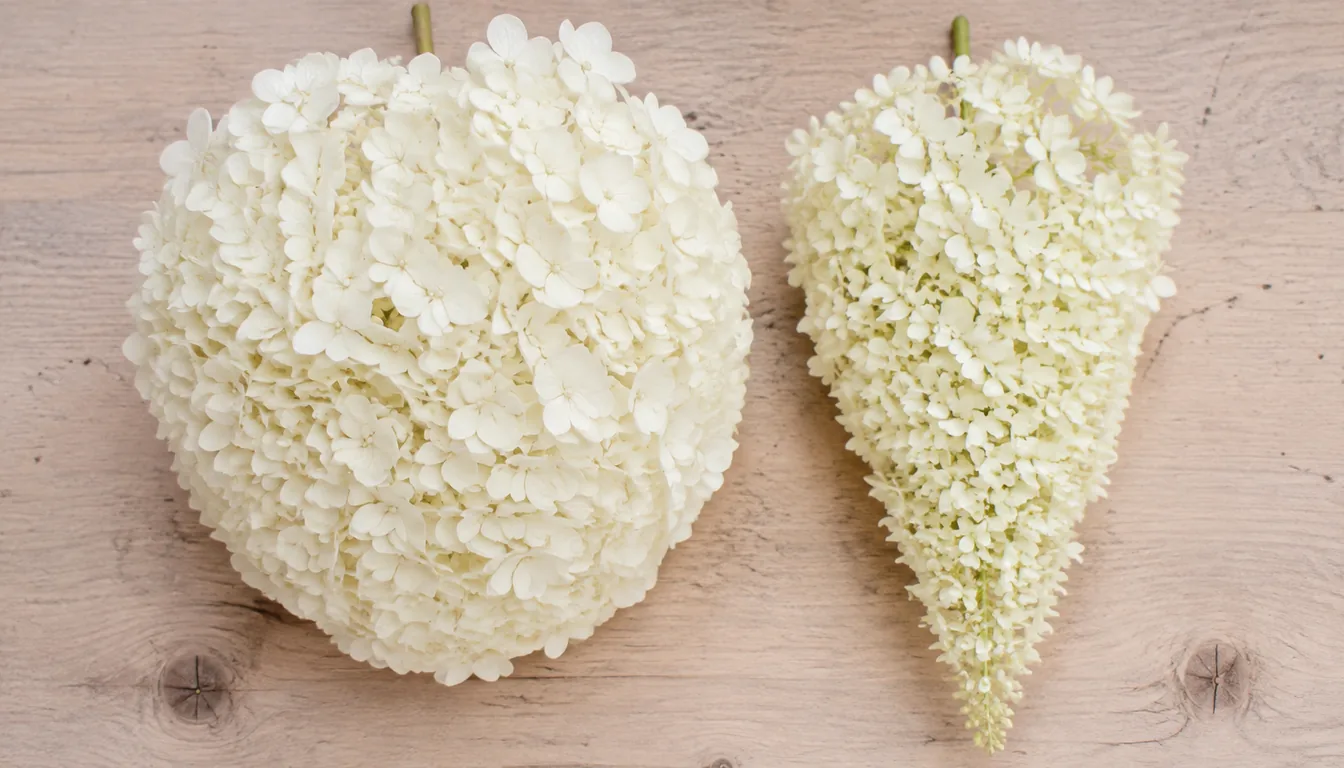
Hydrangea is the one that costs the most flowers, because the label says hydrangea and the plant could be from either camp. The flower head settles it where the name cannot.
Bigleaf and mophead types carry round dense heads and flower on old wood, so they get a light cut straight after flowering. Panicle and smooth types carry tapering cones and flower on new wood, so they take the late-winter cut.
Reblooming series flower on both old and current-season growth, which is what makes them forgiving in zones where a late freeze kills the old-wood buds outright.
Spirea splits the same way and gets discussed far less. The arching spring types carry a display worth protecting and are cut after flowering, while the tight mounded summer types tolerate a late-winter reset.
How Do You Renew an Overgrown Shrub Without Losing a Year?
A leggy woody shrub does not need one brutal chop.
Cutting the whole plant to the ground costs a full season of bloom and can kill a slow grower outright, and it is not necessary, because the same result arrives over three years while the shrub keeps flowering.
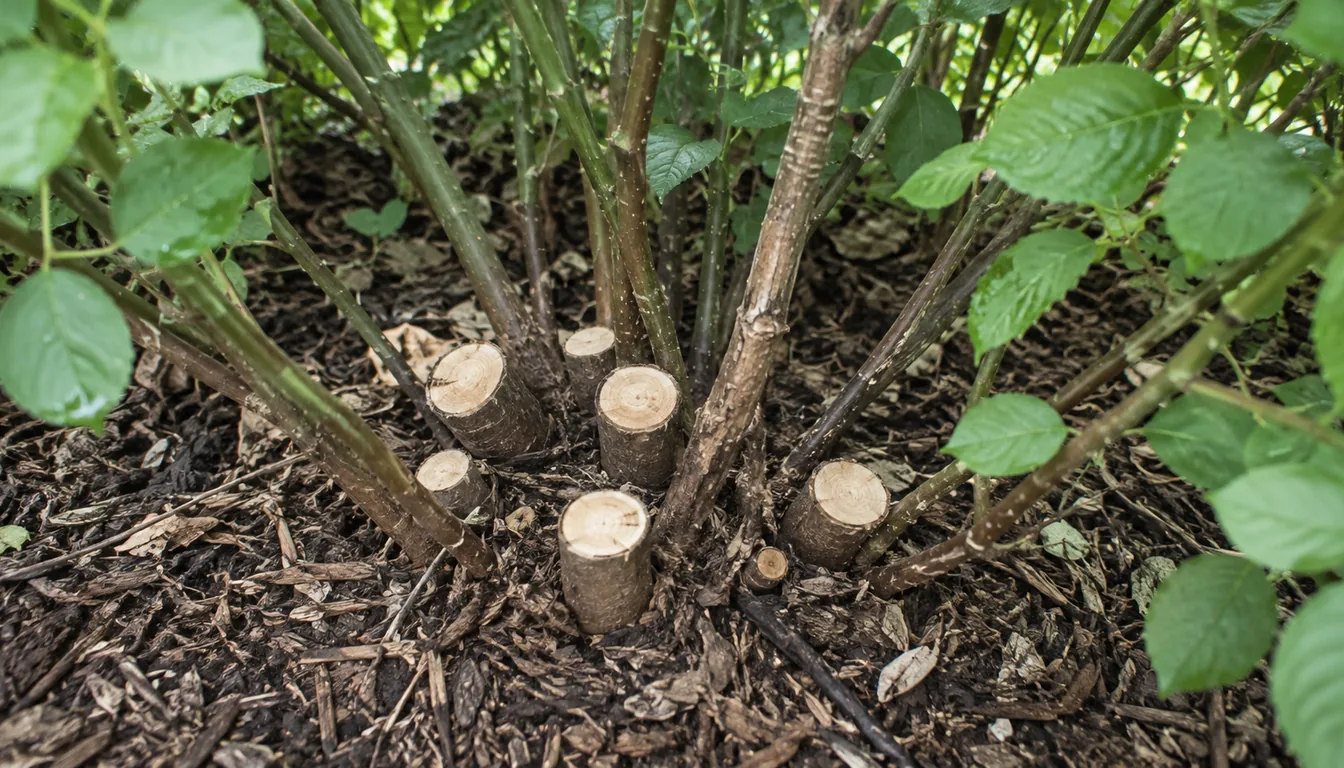
- Year oneRemove about a third of the oldest thickest stems, cutting each one right at the base rather than partway up.
- Year twoTake another third of the remaining old stems, and leave the new growth that has come from the crown alone.
- Year threeRemove the last of the old wood, by which point the plant is carrying mostly young stems.
- ThenTake one or two old stems a year to hold it there rather than letting it thicken up again.
The method is identical for both groups and only the month changes. After flowering for the old-wood shrubs, late winter for the new-wood ones.
Cut right at the base. A stem shortened partway leaves a stub that dies back, where a stem taken at the crown pushes its replacement from there.
One shrub is not a candidate. A plant growing from a single trunk rather than several stems at ground level has nothing to renew from, and cutting into it is removal rather than renewal.
Where Exactly Does the Cut Go?
Just above an outward-facing bud.
That bud becomes the new shoot, so choosing one pointing away from the center sends the growth outward and keeps the middle of the shrub open to light, which is where the flowers form.
On a thick branch the rule changes. Cut just outside the swollen collar where the branch meets the trunk, because the collar is the tissue that seals the wound and cutting it off leaves a hole that does not close.
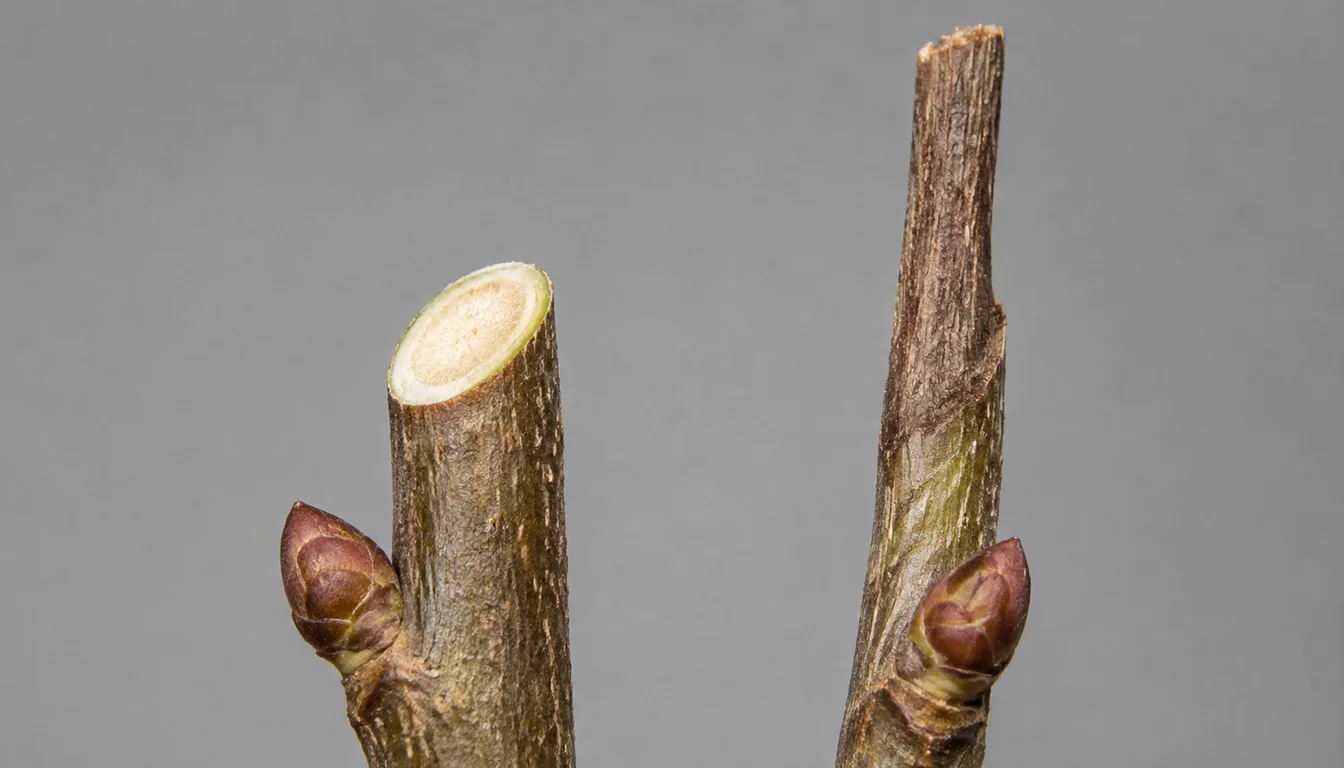
- Close above the bud: A long stub dies back and carries rot down into live wood.
- Slightly angled: Enough that water runs off the cut face rather than sitting on it.
- Outward-facing bud: Inward shoots cross, rub, and shade the center.
- Outside the collar: On any branch thick enough to need two hands.
Bare legs come from the opposite habit. Cutting only the tips year after year thickens the top, shades everything beneath it, and the lower growth gives up, which is the shape most people are trying to fix by the time they read a page like this.
Pro Tips
- Photograph each shrub in flower with the month in the filename. One season of that answers the old wood question for every plant in the garden permanently.
- Prune the spring group the same week you deadhead it, because you are already at the plant and the window is open exactly then.
- Keep the nursery label. On hydrangea and spirea it carries the cultivar, which is the only thing that settles the group before the plant flowers for you.
Frequently Asked Questions
What happens if I already pruned at the wrong time?
You lose that season's flowers on an old-wood shrub and nothing else. The plant is not damaged, it rebuilds buds through the summer, and the following year is normal provided you leave it alone until after it flowers.
Can I prune a flowering shrub in autumn to tidy the garden?
Not on the old-wood group, because the buds are already formed and sitting on the wood you would be cutting. Autumn also pushes soft growth on some shrubs that then takes frost damage.
How much can I safely take off in one year?
About a third of the oldest stems on a multi-stemmed shrub, which is the basis of staged renewal. Beyond that the plant spends the following season replacing what it lost rather than flowering.
Does deadheading count as pruning?
It removes spent flowers rather than wood, so it does not affect next year's buds on either group. On an old-wood shrub it is worth doing in the same session as the structural cut.
Why does my shrub grow well and never flower?
Wrong pruning month is the most common cause, and too much shade or too much nitrogen are the next two. Rule out timing first, since it is the only one you can test by simply not cutting for a season.
Sources & References
Related Guides
Cutting Back a Leggy Houseplant Does Not Fix It
Most people cut a houseplant back because it has gone long and bare.
11 min read
Deadheading Daffodils Matters Less Than the Six Weeks After
Almost every page about spent daffodils tells you to remove the seed pod so the bulb is not…
11 min read
French Lavender Pruning Depends on the Plant and Season
French lavender needs light trimming within its leafy growth, rather than a hard cut into bare…
6 min read
Fruit Tree Pruning Starts With Where the Crop Forms
A fruit tree that gives small, crowded, scabby fruit is usually not underfed.
11 min read
How Deep Can You Cut a Spent Lavender Spike?
Deadheading lavender is the lightest cut you will ever make on the plant, and the one place people…
7 min read
How Do You Prune Spanish Lavender for a Second Flush?
Spanish lavender is the one that flowers first and the one that keeps going.
7 min read