
What's a Ninebark? How to Renew Canes and Keep Leaf Color
Physocarpus opulifolius Rosaceae
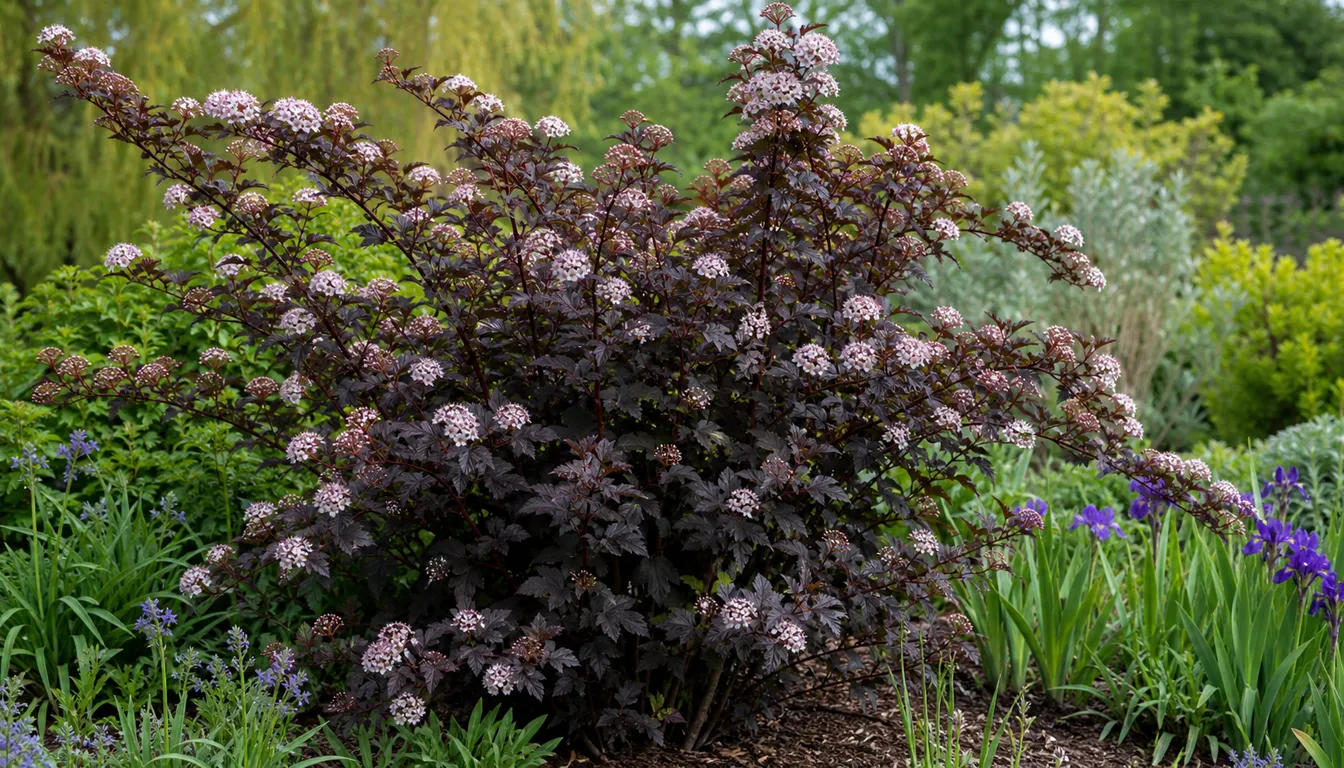
Ninebark is a tough native shrub for gardeners who want color without acid-soil fuss. Its care revolves around sun for leaf color, room for arching canes, and renewal pruning that keeps young stems coming.
Care snapshot
What Makes Ninebark a Cane-Forming Native Shrub?
Ninebark suits informal structure far better than clipped hedging.
It grows as arching canes with peeling bark, spring flower clusters, and colorful leaves that earn their space in rougher beds.
Unlike acid-loving shrubs, Ninebark does not need a special pH project.
NC State Extension describes it as tough and adaptable, tolerating a wide range of soils along with heat, drought, and compacted ground. That makes it a good fit for ordinary garden soil where fussier shrubs struggle.
Its closest comparison in habit and everyday landscape role is spirea.
Ninebark is larger, woodier, and more useful for loose screening, while spirea stays lower, denser, and better suited to a tidy foundation planting. The scale of the job the bed needs decides between them more than flower color does.
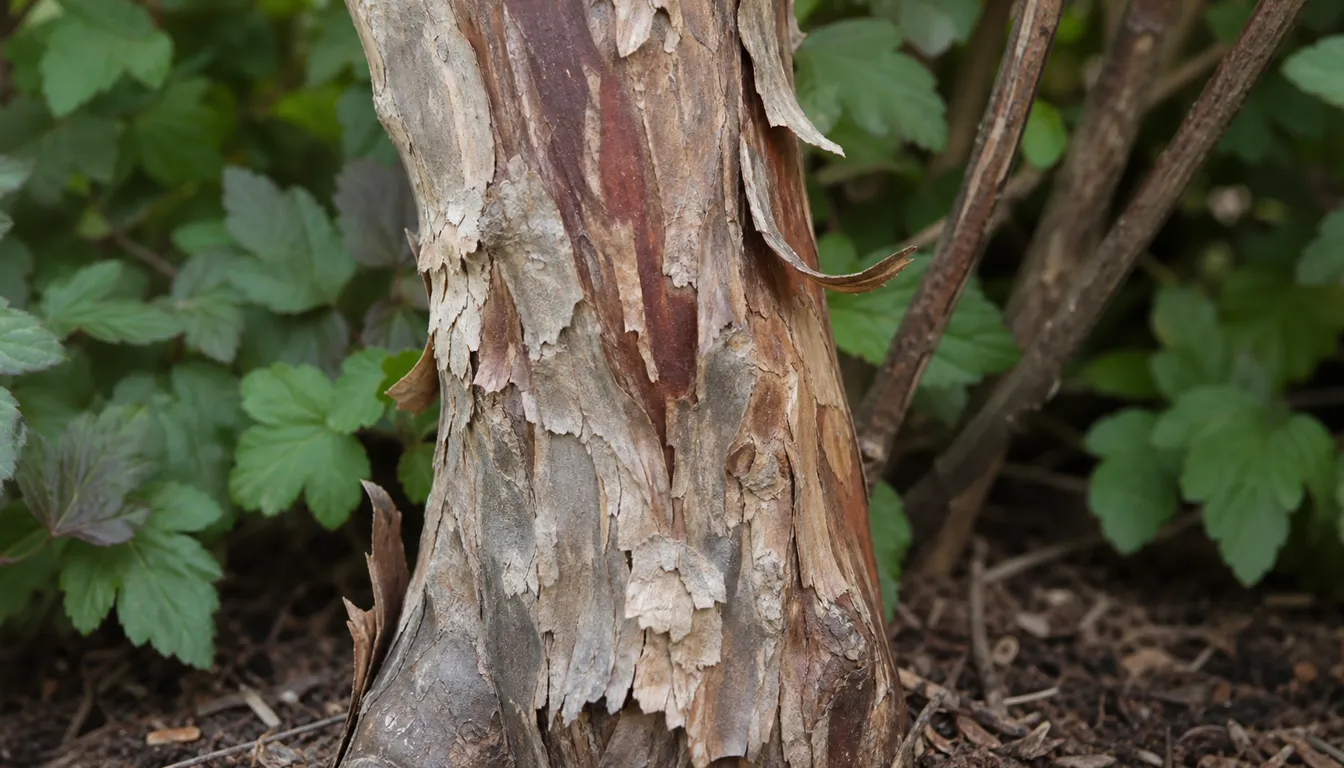
The common name comes directly from the bark itself.
Mature stems peel in strips to reveal several layers of reddish to light brown inner bark, said to number nine. That texture becomes the plant's main feature once the leaves drop for winter.
A ninebark planted where its winter silhouette is visible from a window earns its space twice, once for summer color and once for the bark left standing after frost.
The plant's genus name reflects the same inflated, papery quality that shows up throughout the shrub.
Physocarpus translates roughly to bladder fruit, referring to the inflated seed capsules that follow the spring flowers. Those capsules add a second, less obvious season of interest once the petals drop.
Pick by Leaf Color and Final Width
A dark, 8-foot selection functions as a screen, while a compact gold type functions as a border accent instead, so the cultivar sets the job the shrub does.
Diablo, also sold as Diabolo, is the classic dark-leaf choice, a tall purple selection with pink-tinged white flowers.
Gold and amber forms such as Amber Jubilee and Dart's Gold brighten a bed, and in hot southern gardens they benefit from some afternoon shade, since NC State notes the species appreciates shade in the southern part of its range.
Dwarf types solve the biggest complaint about this plant.
Old, full-size Ninebark can become too wide and woody for a narrow foundation strip. Compact selections such as Tiny Wine or Little Devil start at the right size instead of planning to fight the plant later.
- Dark screen
- Diabolo or similar burgundy cultivars with 6-10 ft potential
- Small bed
- Tiny Wine, Little Devil, or other dwarf forms bred for small spaces
- Bright accent
- Amber Jubilee or Dart's Gold with some heat protection
- Wildlife edge
- Straight species or larger forms with room to arch
If you are choosing between Ninebark and lilac fragrance, decide whether the bed needs scent or foliage texture.
Ninebark wins when color and toughness matter more than perfume, since it tolerates dry, compacted, and poor soils that would hold a lilac back.
Give Enough Sun for the Color You Bought
A burgundy Ninebark in shade often turns dull green-brown, then gets blamed on the nursery tag.
Leaf color depends on light. NC State grows the species in full sun to part shade, and purple-leaf cultivars are planted in sun for their color, although NC State also notes that the purple can lose some intensity under long hours of strong sun.
Aim for six or more hours of direct sun when leaf color is the main reason you bought the plant.
Four hours can still grow a healthy shrub, but the color usually softens compared with a plant in fuller sun, and flowering thins as well.
Hot climates may need a compromise for gold-leaf types specifically.
Morning sun with light afternoon shade can keep bright foliage from scorching while still giving enough energy for bloom. Too much shade undoes the color, so the goal in hot regions is relief from the harshest afternoon hours only.
This is the opposite of the woodland logic used for mountain laurel shade.
Ninebark tolerates some shade, but it does not show off there, so a gardener used to acid-loving woodland shrubs has to give this one a much sunnier spot.
Reflected heat from pavement or a south-facing wall can push a hot site past what even a sun-loving cultivar wants.
In that setting, watch for crisp, papery leaf edges rather than the clean color shift a normal sunny spot produces. That distinction separates a plant that is thriving in strong light from one that is actually stressed by it.
Do Not Overbuild the Soil
Average soil is enough for Ninebark if drainage is reasonable.
NC State Extension lists it for slightly acidic, dry to medium, well-drained soil, and rich, constantly wet ground creates more problems than it solves.
Water new shrubs through the first season so roots move into native soil.
After that, established plants usually need help only in long dry spells or reflected-heat sites, unlike hydrangea in the same dry border.
Use compost lightly to improve structure, not to create a soft pocket inside clay.
Keep the crown at grade or slightly high so water does not sit against the base.
- Avoid low spots where water stands after rain.
- Mulch wide but keep mulch off the stems.
- Space large cultivars for mature width, not nursery size.
Container plants follow a slightly different rule than in-ground shrubs.
A well-draining mix and a pot with real drainage holes matter more in a container than the exact soil recipe does, since excess water has nowhere to disperse the way it would in open ground. Check the pot's weight rather than a fixed schedule to judge when it needs water again.
Renew Old Canes After Bloom
How Ninebark is pruned decides whether it keeps its arching shape.
Shearing turns arching canes into a stiff blob and hides the peeling bark that makes this plant worth growing. A sheared ninebark loses the exact traits that set it apart from a generic hedge shrub.
The better method is cane renewal.
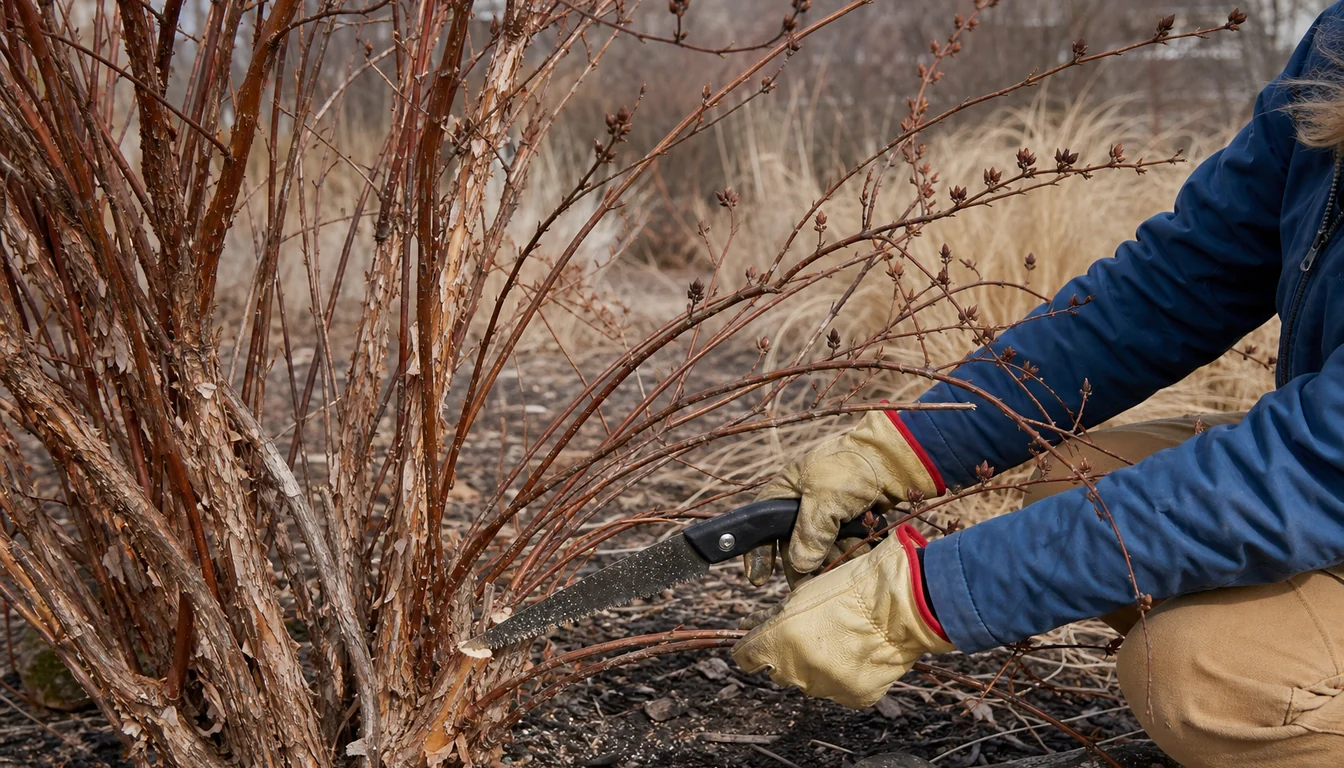
Right after bloom, cut a few of the oldest, thickest stems to the base so young colored shoots replace them. NC State advises pruning just after flowering and no later than mid-August, because next year's flowers appear on old growth.
Waiting until winter is fine for removing broken stems.
Heavy winter pruning sacrifices some bloom, though, since next year's flower buds are already set on existing wood by that point. Save the heavier renewal cuts for right after flowering instead.
- Best pruning time
- Right after spring flowering, no later than mid-August
- Best cut
- Oldest canes removed at ground level
- Avoid
- Flat shearing across the outer surface
- Goal
- Young colored stems plus visible winter bark
If a mature plant has swallowed the path, remove up to one-third of old stems in a year, then repeat the next year.
A full reset is also possible. NC State notes that ninebark can be cut to the ground in winter to rejuvenate it, which costs the next spring's flowers. A staged renewal over two seasons keeps some bloom and structure the whole time.
Clean, sharp tools matter more here than on most shrubs, since old canes can be surprisingly thick and fibrous at the base.
A dull blade crushes rather than cuts cleanly through a mature stem, leaving a ragged wound. Bypass loppers or a pruning saw handle most renewal cuts better than hand pruners on canes this size.
Cuttings Keep the Cultivar Color
If you want the same dark or gold foliage as the parent plant, use cuttings, not seed.
Seedlings can vary in color, and they may not keep the exact cultivar trait you chose the parent plant for in the first place.
Take softwood cuttings after new growth firms but before the stems turn fully woody.
Keep the cuttings in bright shade with even moisture and air movement around the leaves.
Layering is slower but simple on the plant's naturally arching stems.
Pin a low branch to the ground, cover a node with soil, and separate it once roots have formed. That method needs almost no special equipment, just patience through a growing season.
Spring through early summer is the best window for starting either method.
The plant is putting energy into new growth during that stretch, which gives a fresh cutting or a pinned layer good odds of rooting before the season slows down.
Powdery Mildew Is Usually a Site Signal
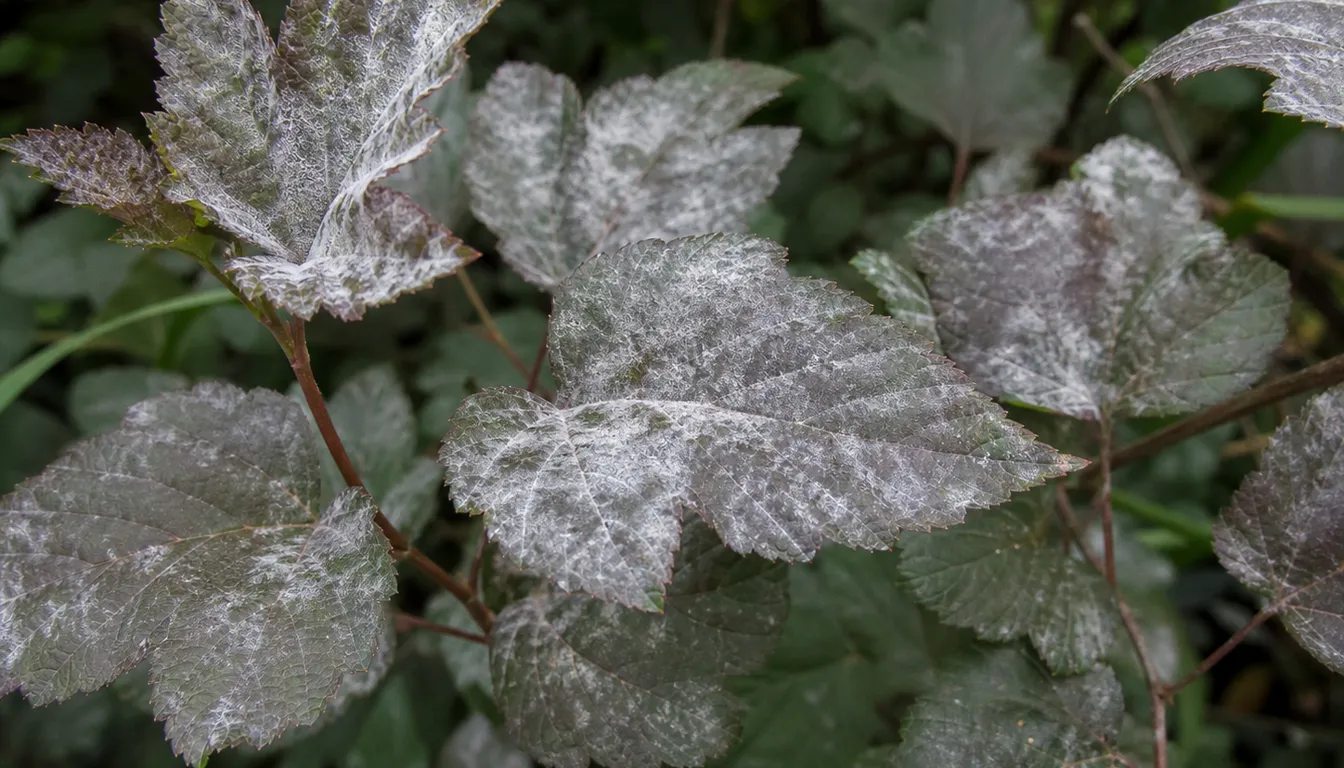
NC State Extension calls Ninebark relatively trouble free, with powdery mildew and fireblight as the problems it can be susceptible to. Mildew shows up when shade, still air, and dense old stems stack together.
Treating mildew starts with light and pruning, since opening the shrub up removes the damp, still air the fungus needs.
Aphids occasionally cluster on tender new growth and usually do very little lasting damage overall.
A water spray or natural predators often handle a light aphid presence on their own.
Leaf spots and mildew are more common where shrubs are crowded against fences or other shrubs.
Space and renewal pruning matter because young, open canes dry faster than a dense, shaded interior.
Increase sun and remove old crowded canes.
Check for aphids, then rinse before using stronger products.
Check light level before feeding.
Start a two-year renewal plan.
If you garden for low-spray borders, Ninebark pairs well with natural pest habits.
It rarely needs intensive treatment once the site is right, which is part of why it holds up so well in mixed native plantings.
Is Ninebark Good for Wildlife, and Is It Safe Around Pets?
Native value is part of Ninebark care because the plant fits mixed, living borders better than tight decorative islands.
Flowers bring bees, and the branching gives cover in the same kind of layered edge where serviceberry works well. NC State lists the shrub as attracting birds and bees.
The main design concern is giving the arching canes enough room so paths and driveways stay clear, especially if thorny shrubs such as barberry already make the edge hard to work.
In a layered bed, use Ninebark behind shorter perennials such as coneflower and in front of taller small trees. That placement lets the bark, leaves, and flowers each do a real job instead of competing for the same visual space.
The fruit adds a second season.
Drooping clusters of reddish seed capsules follow the flowers and hang from July into September, which keeps the shrub interesting after bloom.
No toxicity record covers ninebark. Physocarpus does not appear on the ASPCA's dog, cat, or horse lists, and NC State's profile gives it no poison rating, so its effect on a pet that chews the canes or seed capsules is unknown.
Frequently Asked Questions
Why is my Ninebark losing its dark color?
Ninebark often loses strong burgundy color in too much shade. Move future plantings into more sun, or accept a greener look if the site gets only a few hours of light.
When should I prune Ninebark?
Prune right after spring bloom if you want flowers and good shape. Remove a few old canes at ground level instead of shearing the outside.
Does Ninebark need acidic soil?
No, Ninebark handles ordinary garden soil better than acid-loving shrubs. Good drainage and enough sun matter more than lowering pH.
Is Ninebark good for wildlife?
Yes. Ninebark is native to central and eastern North America, and NC State lists it as attracting birds and bees, with spring flowers and seed capsules that hang into late summer.
Why is Ninebark called ninebark?
The name comes from its bark, which peels in strips to reveal several layers of reddish to light brown inner bark, said to be nine layers.
Sources & References
- Ninebark, University of Minnesota Extension
- Missouri Botanical Garden Plant Finder: Physocarpus opulifolius
- USDA NRCS Plant Guide: Physocarpus opulifolius
- Physocarpus opulifolius, Missouri Botanical Garden Plant Finder
- Physocarpus opulifolius, North Carolina State Extension Gardener Plant Toolbox
- Toxic and Non-Toxic Plant List: Dogs, ASPCA Animal Poison Control
Related Plants
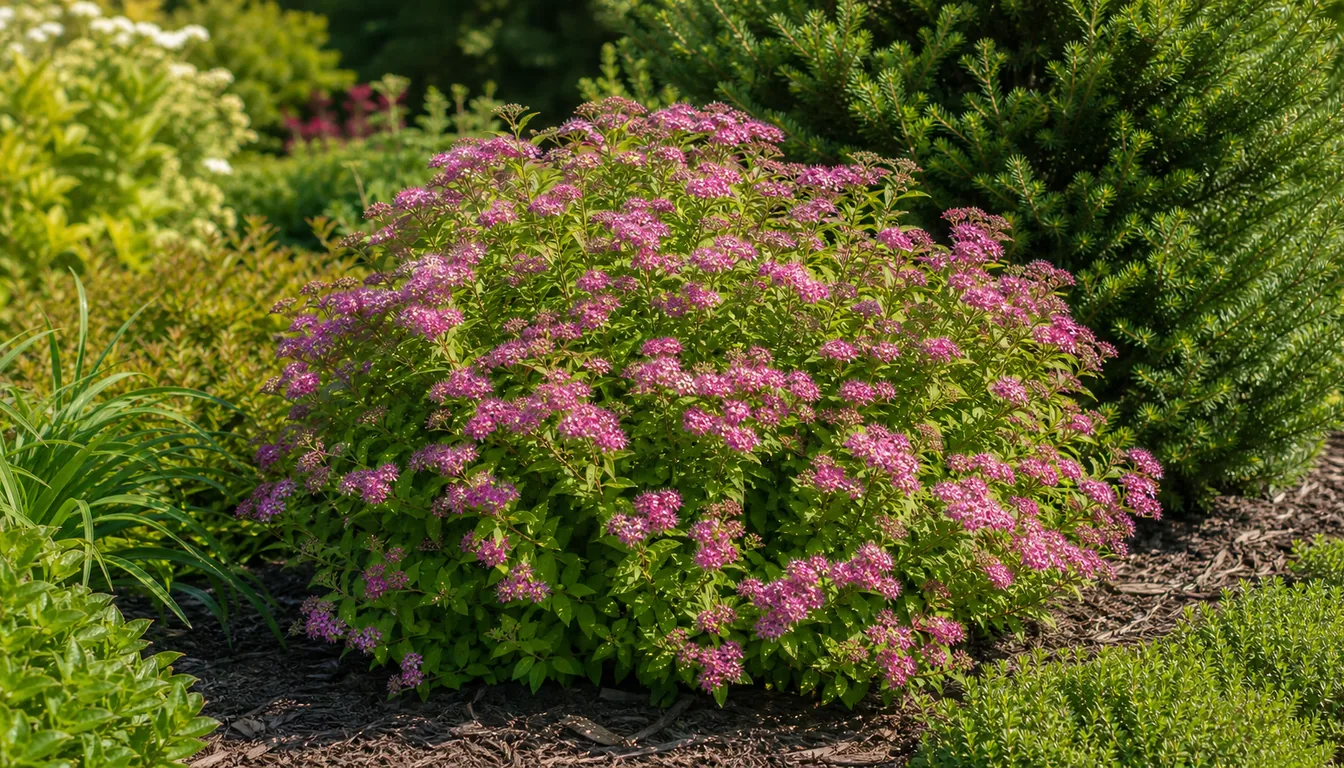
Spirea
Compact flowering shrub with similar carefree habit and spring bloom.
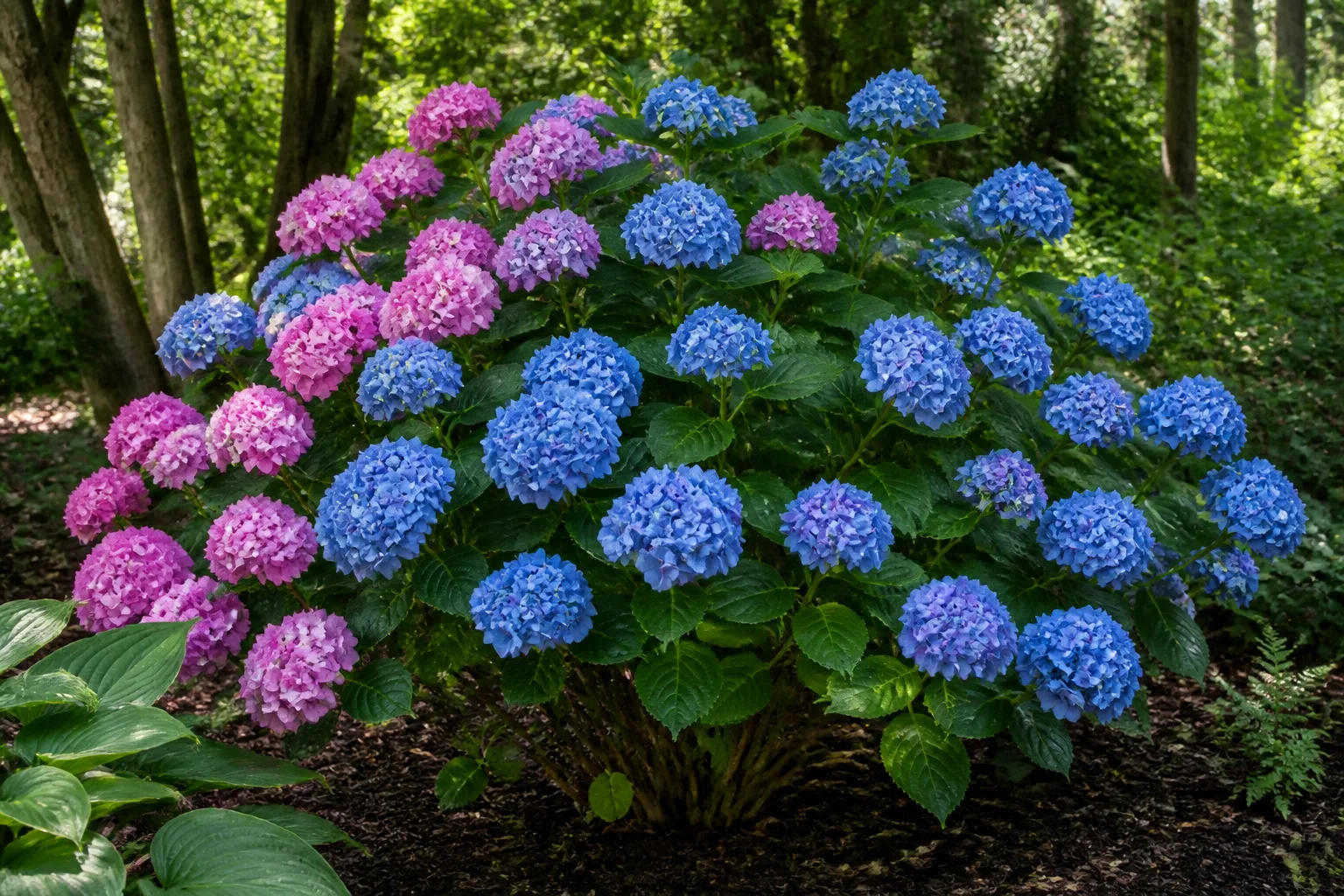
Bigleaf Hydrangea
Showier flowers but higher water needs, often paired with ninebark in mixed borders.
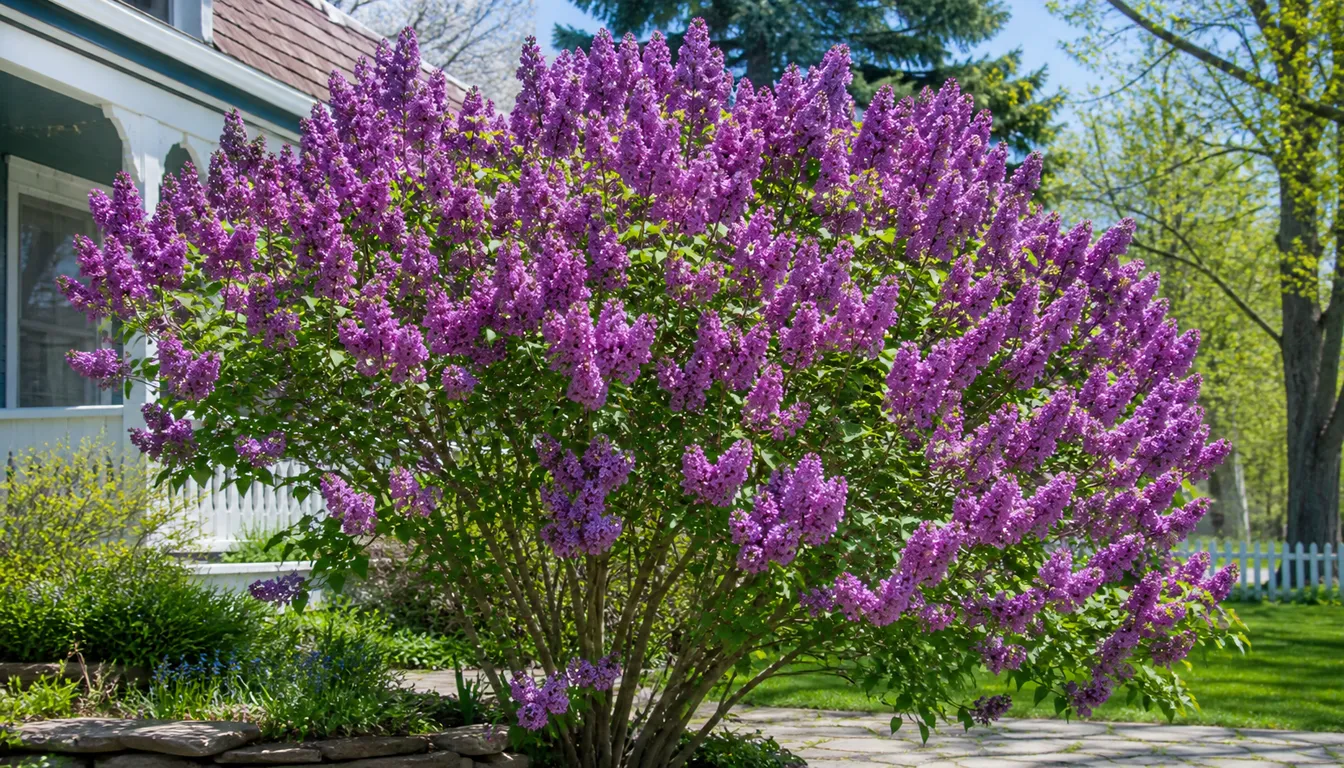
Lilac
Classic Zone 5 flowering shrub, grows at a similar rate but prefers richer soil.
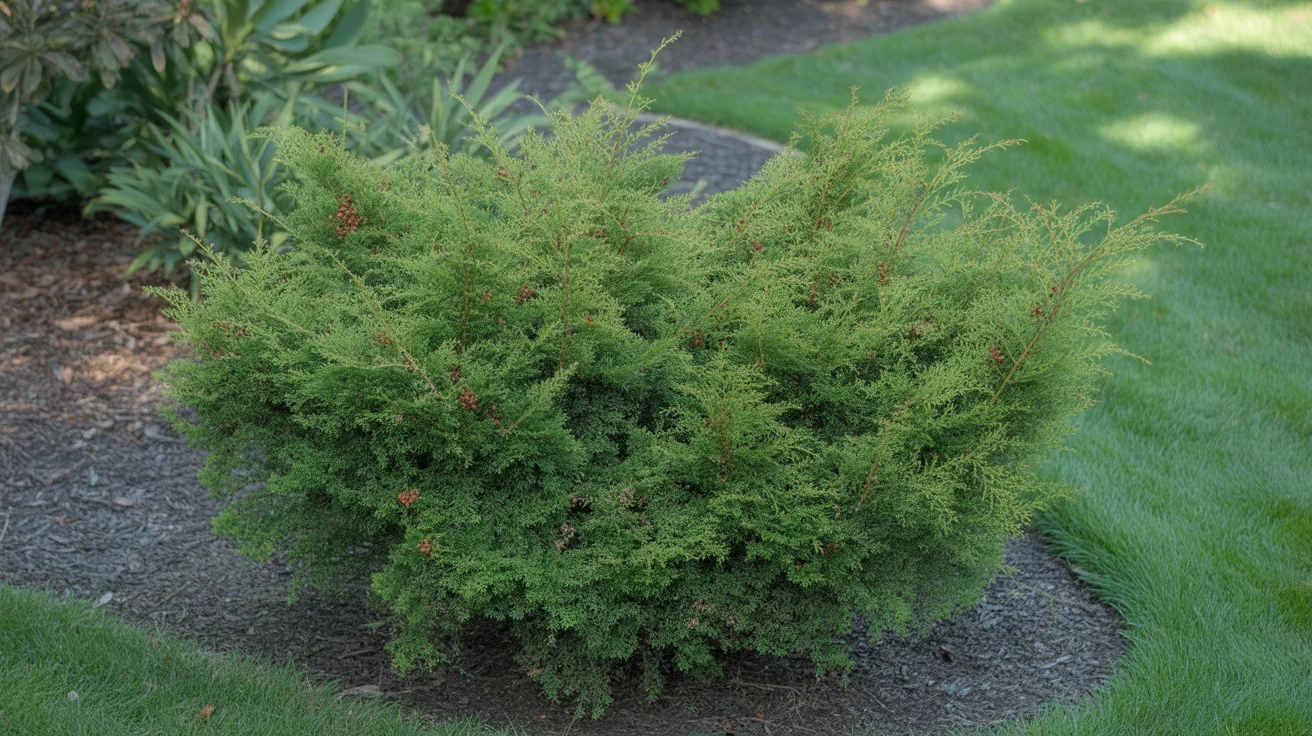
Arborvitae
Arborvitae can form a dense living screen where its mature width, exposure, and water needs fit the site.
Aucuba
Aucuba is the shrub for bright shade with dry root competition. It keeps evergreen structure near north walls, porches…
Azalea
Azaleas bring spring flowers, and some cultivars bloom again later in the year.