
Which Shade Grass Suits a Patch That Keeps Thinning?
Choose shade-tolerant lawn grass by climate, cultivar, light, and traffic; distinguish a repairable patch from a site better suited to a bed or path.
At a glance
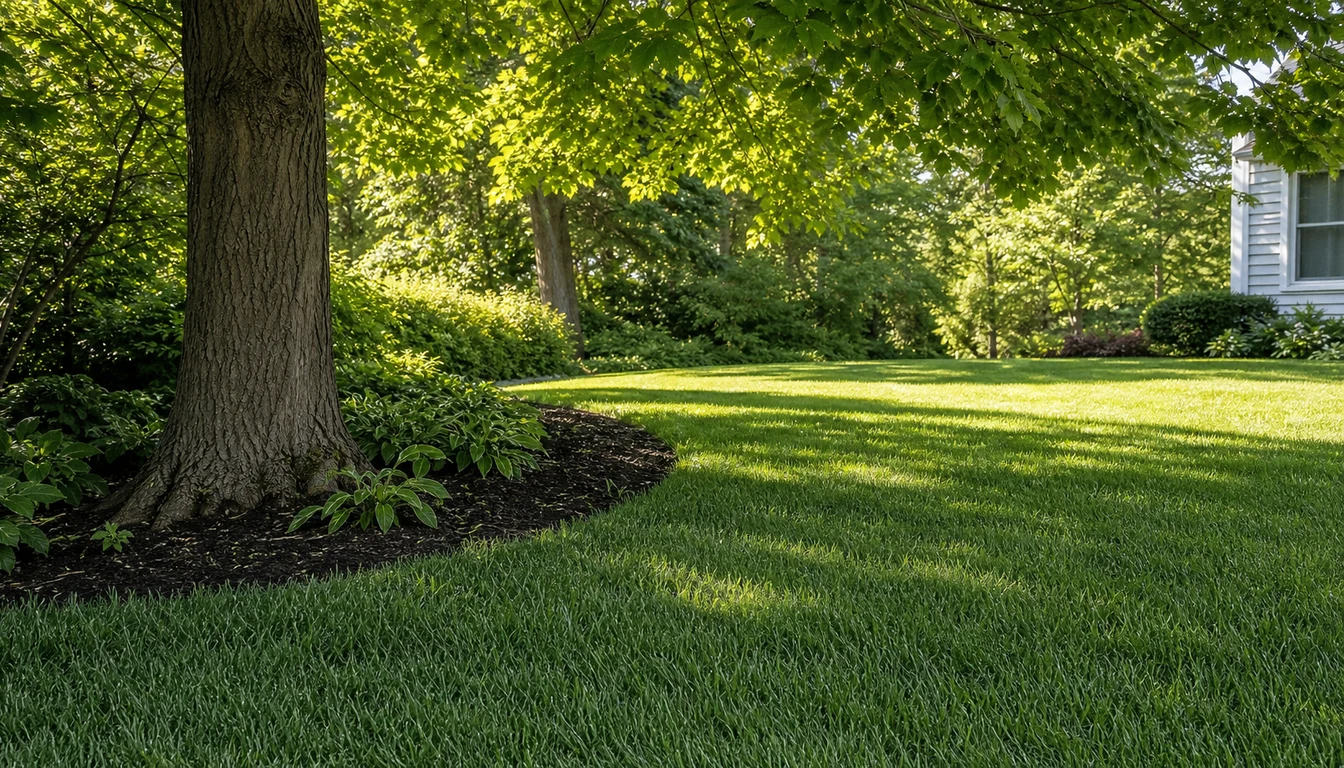
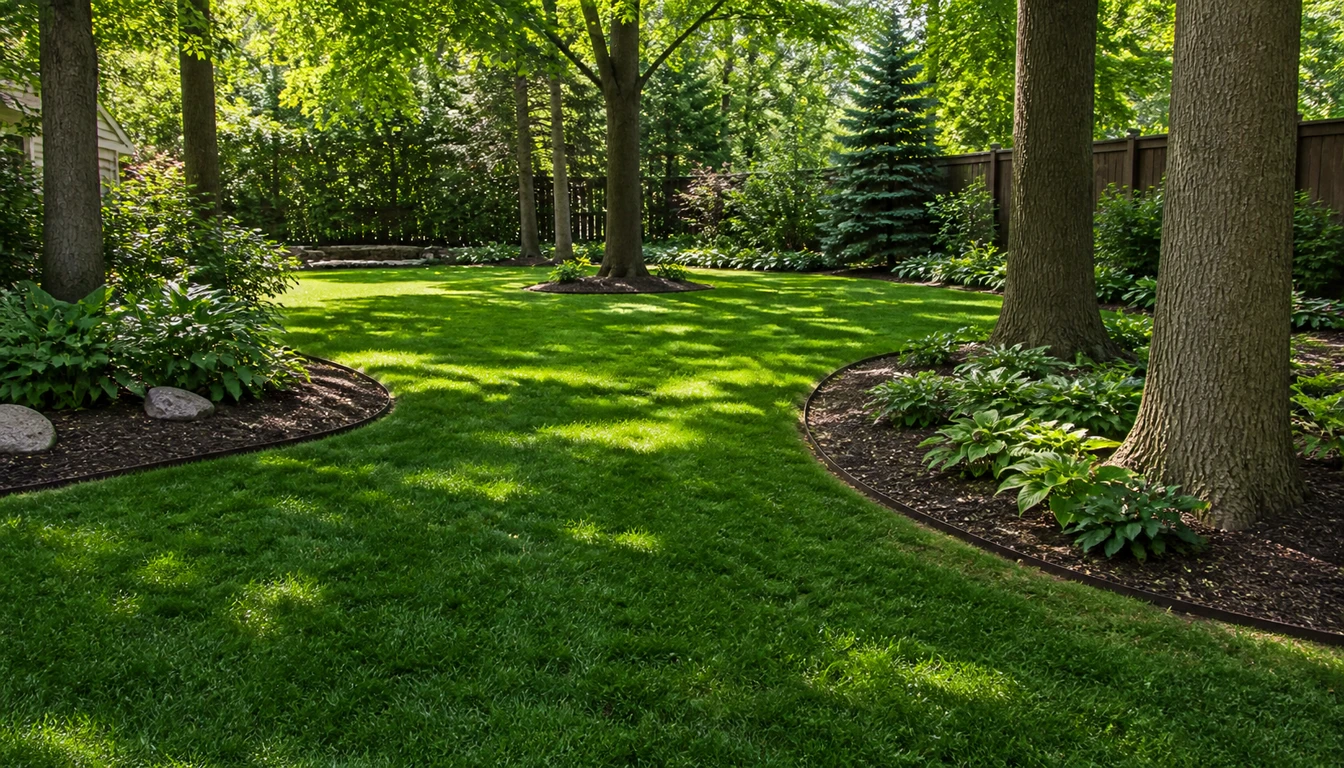
A thinning shaded lawn needs a diagnosis of the site before a new seed choice. Light, moisture, tree roots, traffic, and establishment problems can overlap, so one photograph or a count of sun hours cannot settle the cause.
A suitable grass can help where conditions support turf. Where they do not, a bed or path can solve the recurring bare-patch problem without another cycle of seeding.
What Can Change in This Patch?
The first distinction is between a limitation you can change and one the lawn must live with. A path may be easier to move than the shade of a building; a drainage problem needs different treatment from a seed choice.
| Observation | What to investigate | Decision it informs |
|---|---|---|
| Thin grass with useful light | Establishment, species, moisture, and traffic | Whether a targeted lawn repair is reasonable |
| Failure beside roots or a worn path | Competition, compaction, and repeated use | Whether access or the bed edge needs changing |
| Persistent deep shade | Seasonal light and feasible pruning | Whether turf remains a suitable surface |
The lawn grass library helps compare species after the site’s limits are clearer.
Find Out What Is Stealing the Light
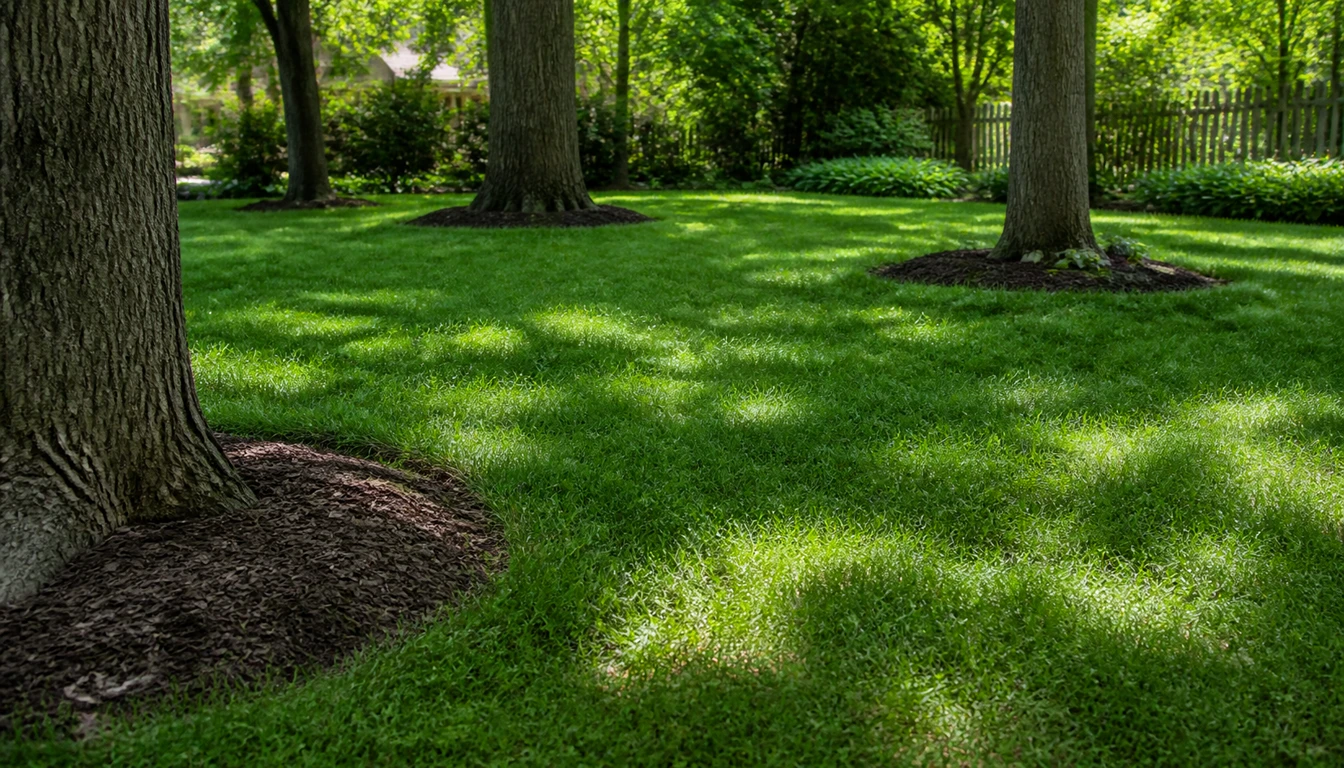
Tree shade may combine reduced light with root competition. Building or fence shade does not add roots by itself, but nearby plants, drainage, and foot traffic can still affect the same strip.
NC State’s four-hour or half-open-sunlight warning is a useful regional screening guide. It is not a universal pass/fail test for every cultivar and garden; strong filtered light and changing seasonal shade deserve attention too.
Selective pruning can sometimes improve light and air movement, but severe pruning can damage the tree or remove a screen’s purpose. Where the shade comes from a privacy hedge, the lawn-edge planning guide explains that tradeoff.
Choose Seed Only for the Surviving Zone
A shade-tolerant species still needs enough light to grow and recover. Climate and cultivar narrow the choice before a general ranking becomes useful.
| Grass | Where it may fit | Important limitation |
|---|---|---|
| Fine fescue | Cool-season, lightly used shaded areas | Heavy traffic and summer stress can limit persistence |
| Tall fescue | Moderate shade in suitable cool-season or transition climates | Establishment and drainage still matter |
| Kentucky bluegrass | Suitable cultivars in mixtures and lighter shade | Spreading recovery does not make deep shade suitable |
| Perennial ryegrass | Quick establishment in an appropriate mixture | Quick germination does not prove long-term shade performance |
| St. Augustine grass | Suitable warm-climate shaded lawns | Cultivar and cold exposure matter |
| Zoysia | Some warm-climate sites with moderate shade | Cultivar differences are important |
| Bermuda grass | Sunny warm-season lawns | Poor choice for a persistently shaded patch |
Repair a Test Square Before the Whole Area
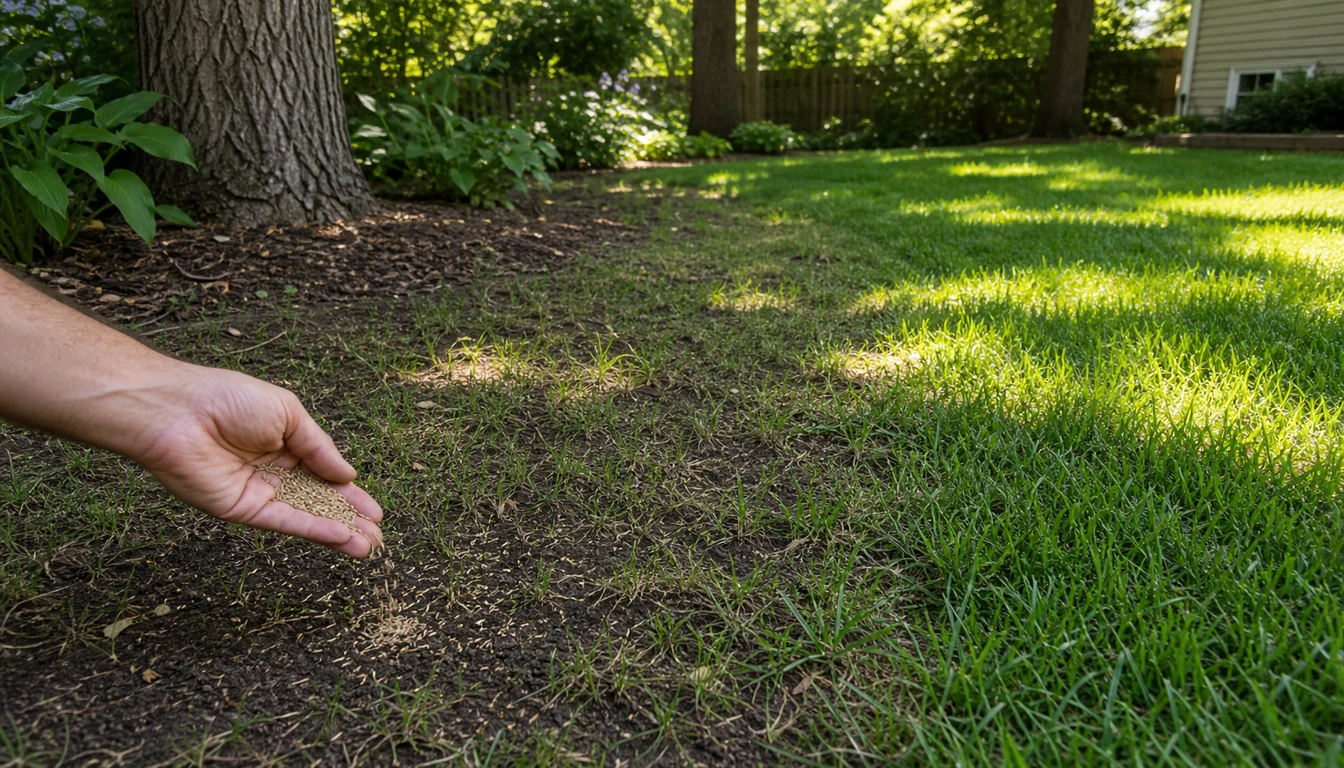
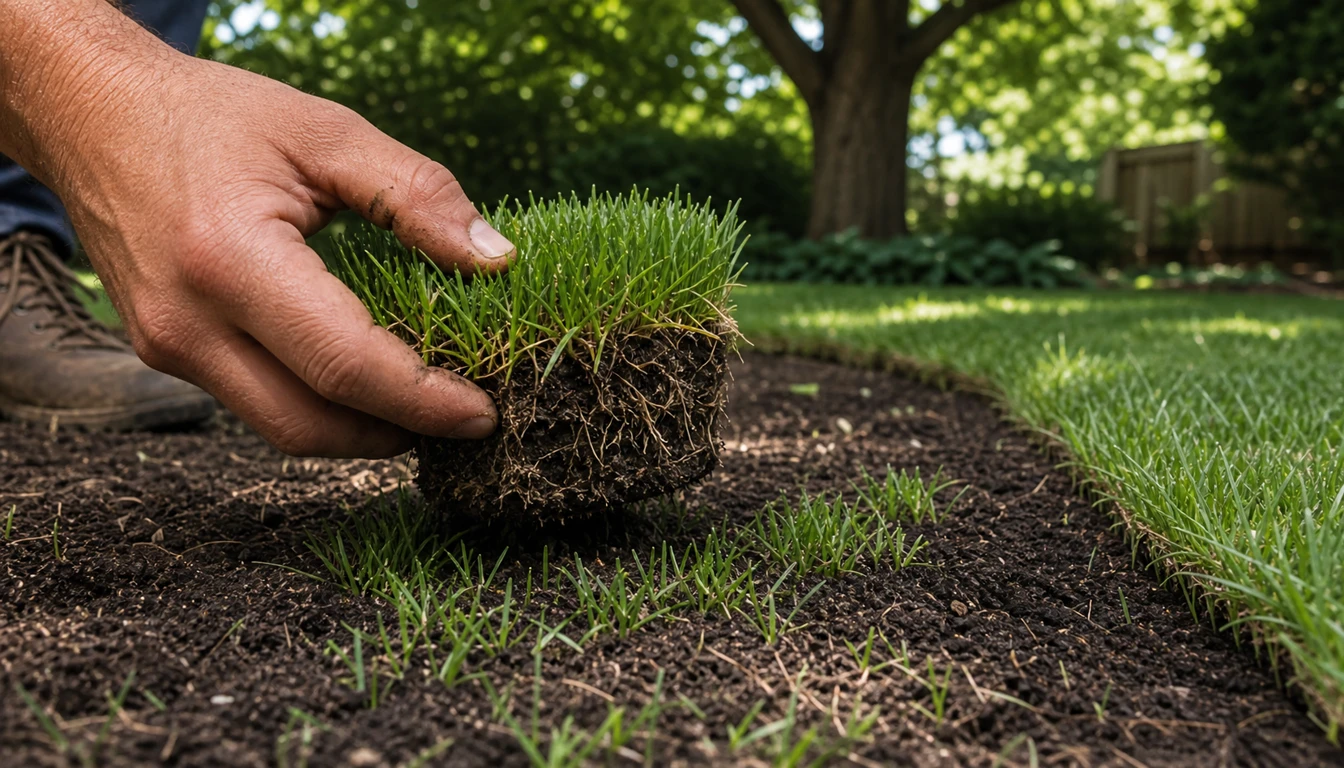
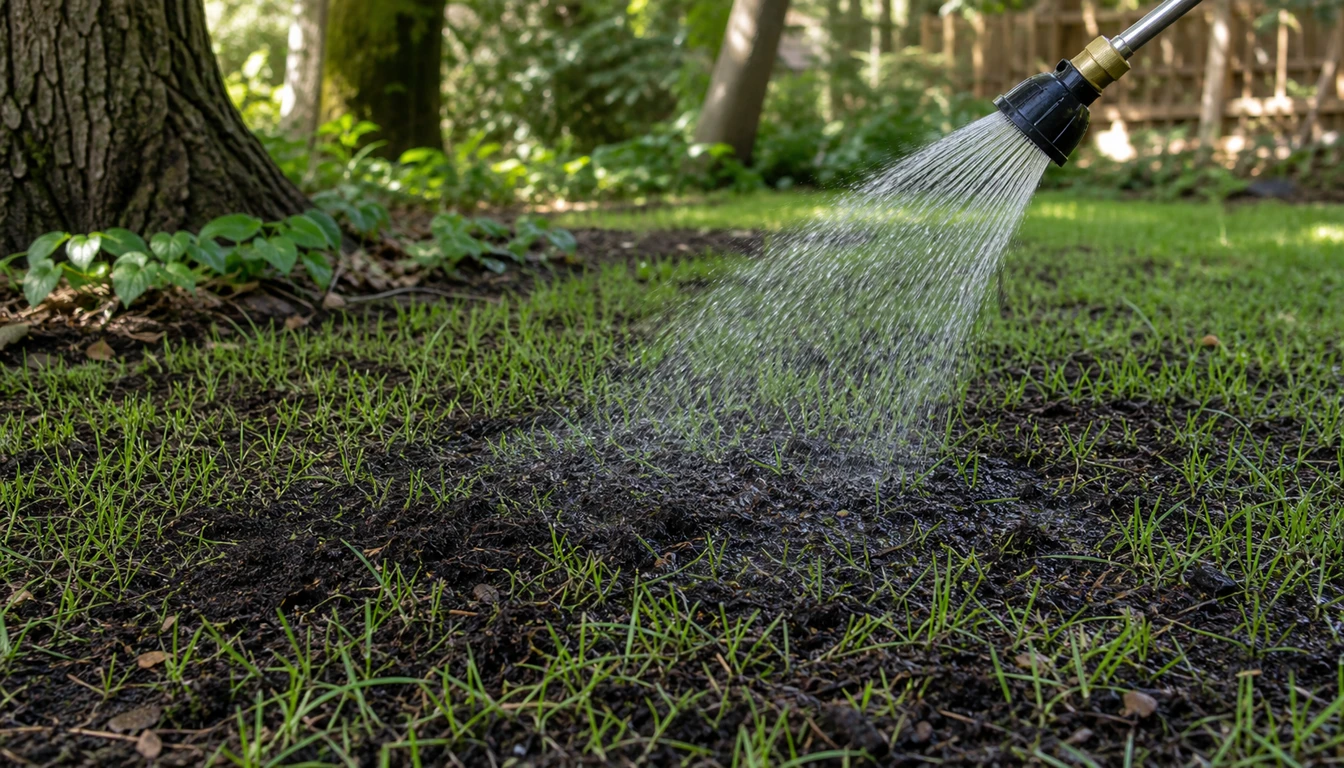
A small trial can reduce the cost of a broad repair, but it cannot prove long-term success after one mowing or one rain. A representative part of the failing area is more informative than choosing only the easiest corner.
- Note the suspected limitation and the change being tested.
- Prepare and seed at the appropriate time for the grass, using overseeding guidance.
- Protect establishment from traffic and monitor soil moisture.
- Observe whether cover persists through the conditions that previously caused failure.
Where compaction is involved, aeration timing matters. A failed trial calls for reassessment, not an automatic conclusion that every grass is unsuitable.
Care for Shade Turf Like a Low-Energy Plant
Shaded turf generally benefits from mowing toward the upper end of its species’ recommended range. Adding the same number of mower settings to every grass can exceed that range.
Moisture needs checking below the surface. Root competition may dry a shaded site, while slow drying and poor drainage can leave another one wet.
Fertilizer cannot replace light, but shade does not prove that nutrients are adequate. Local species guidance and soil testing help avoid both excessive nitrogen and an unsupported “never feed” rule.
Overwatering signs and thatch versus compaction help separate problems that need different responses.
Stop Reseeding at the Dead Line
Repeated failure is useful evidence, but the number of attempts does not diagnose the cause. When light, access, or roots make turf impractical, the replacement surface can follow the actual use of the space.
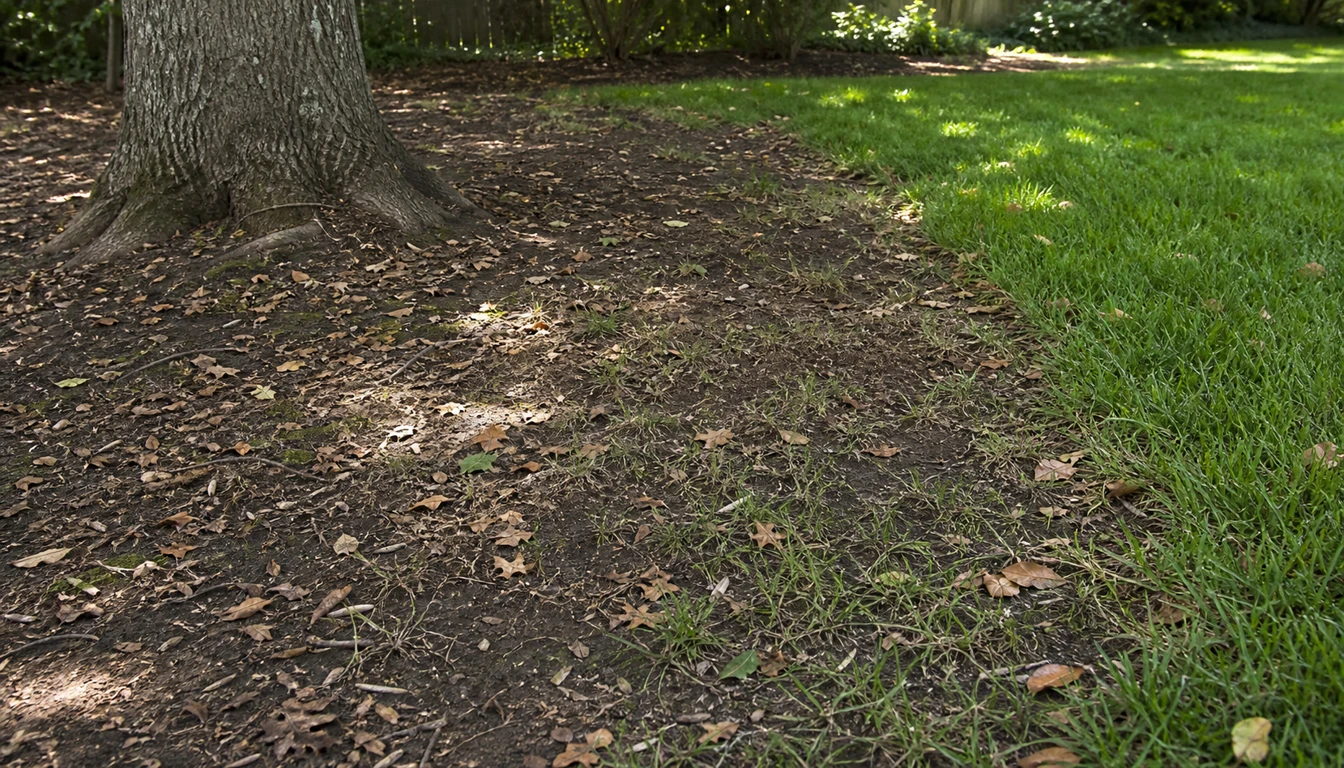
- Mulch removes the need to establish grass, while the tree roots and drainage conditions remain.
- A path accommodates regular foot traffic.
- A shade planting needs species suited to the moisture and root competition as well as light.
A clean boundary can make a smaller lawn easier to maintain without treating every bare patch as a reason to remove a tree.
Quick Tips
- Identify the limiting conditions before choosing seed.
- Use species and cultivar guidance suited to the local climate.
- Judge a trial through the conditions that caused the original failure.
- Match mowing height to the grass, not a fixed increase in mower settings.
Recommended Plants
8 lawn grasses worth considering.
Fine Fescue
Fine fescue is not one grass. Five species and subspecies share the name and the very fine, needle-like leaf, and they…
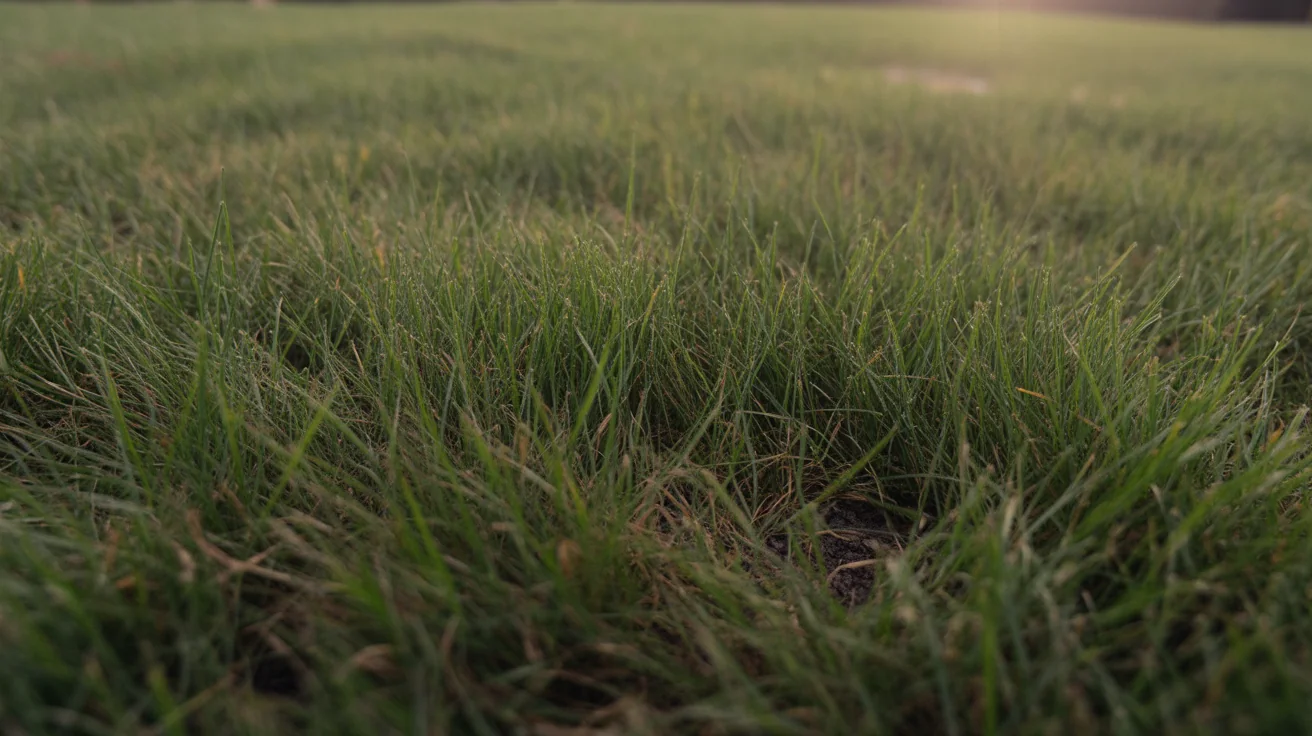
Tall Fescue
Homeowners across Zone 3-10 lean on Tall Fescue for a cool-season lawn that stays green without babying it every…
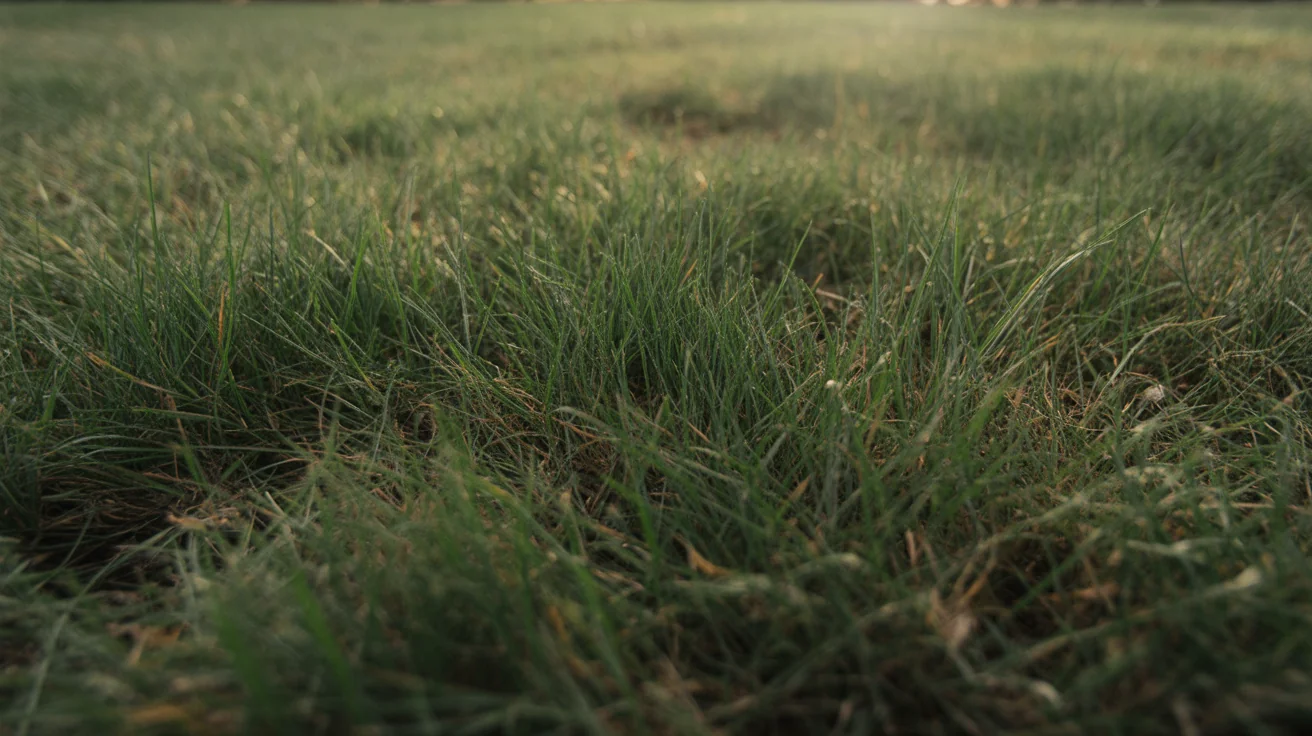
Fescue
Fescue is not a grass, it is a genus. More than 450 species carry the name and about ten make turf, split into a coarse…
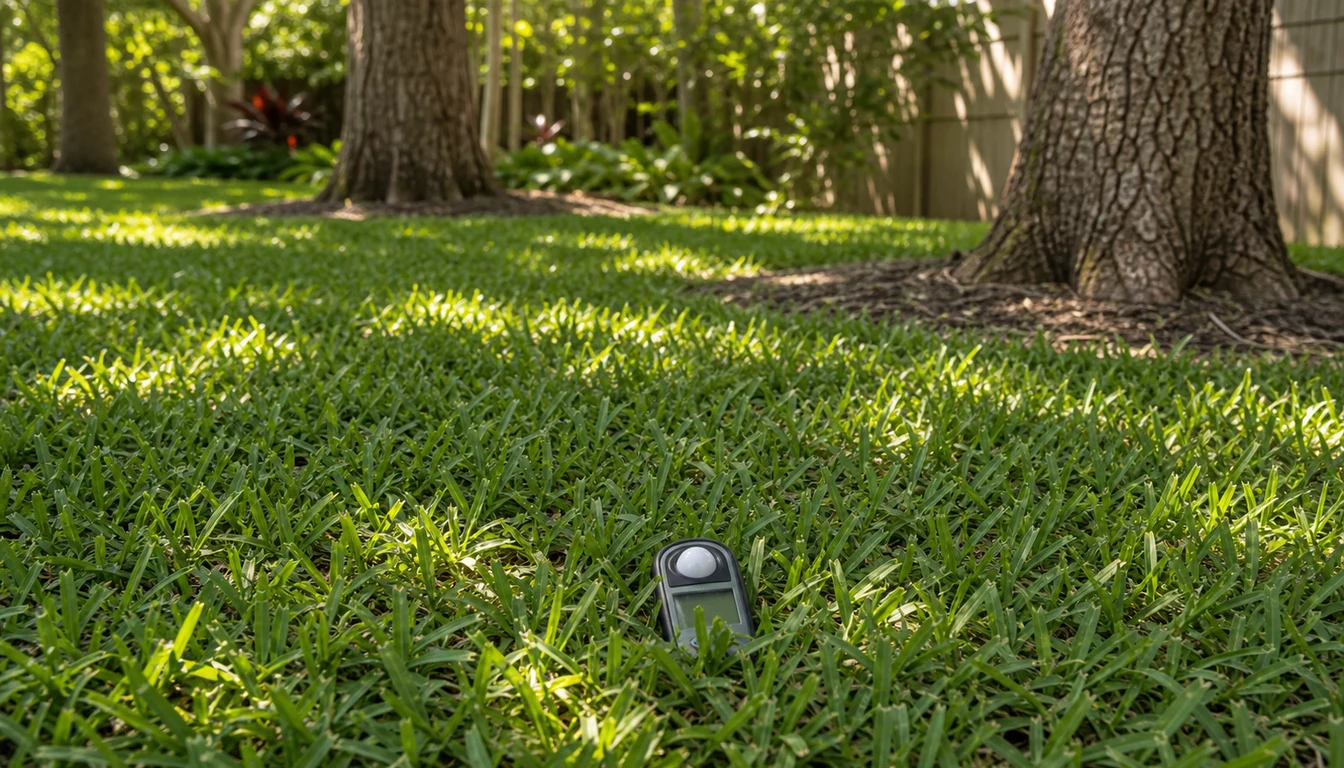
St. Augustine
St. Augustinegrass forms a broad-bladed warm-season lawn from sod, plugs or sprigs.
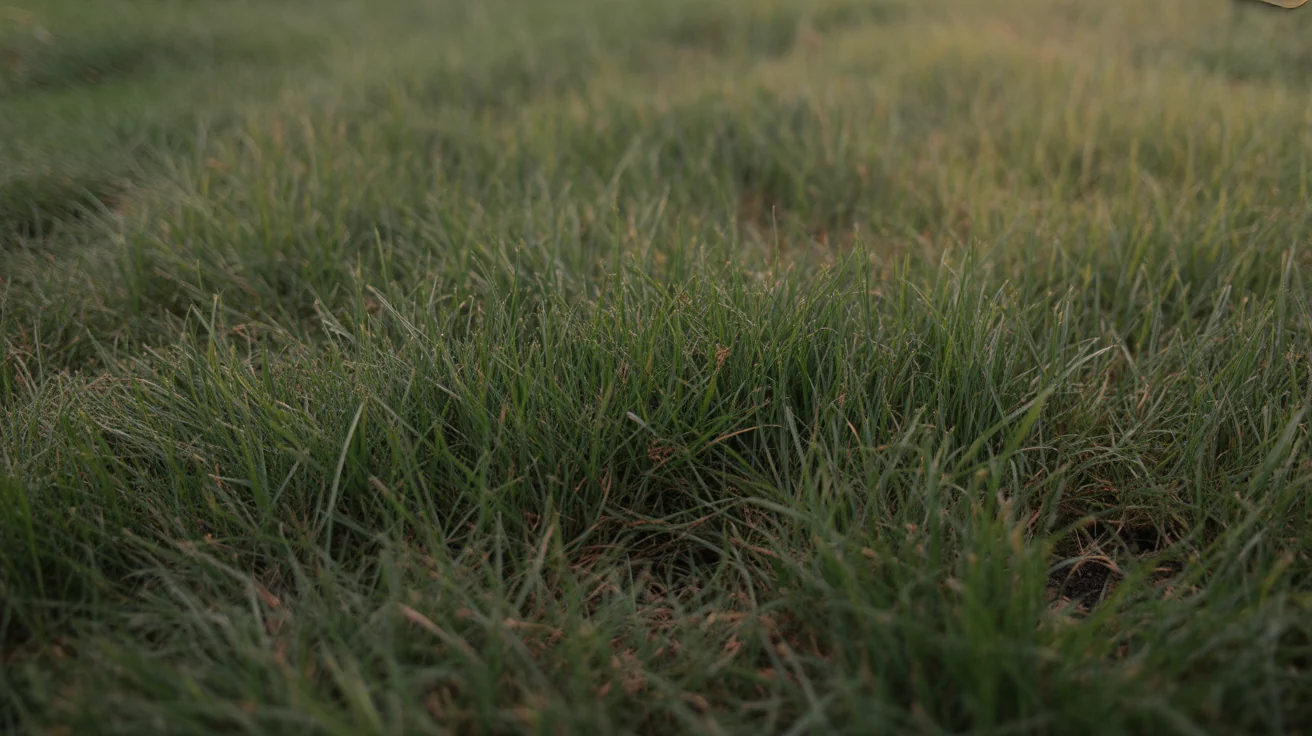
Kentucky Bluegrass
Kentucky bluegrass forms a dense lawn and repairs small worn areas through underground rhizomes.
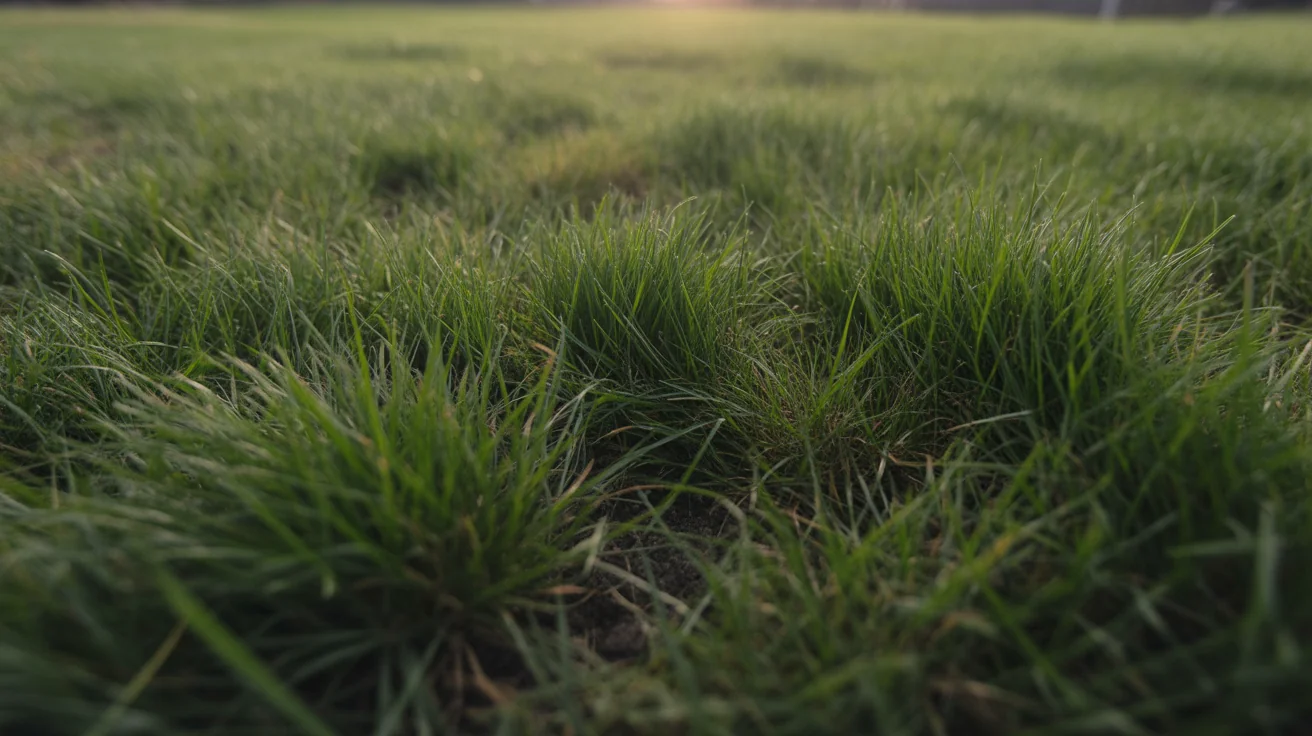
Perennial Ryegrass
Perennial ryegrass comes up in 5 to 10 days, which is why it is in almost every cool-season seed bag.
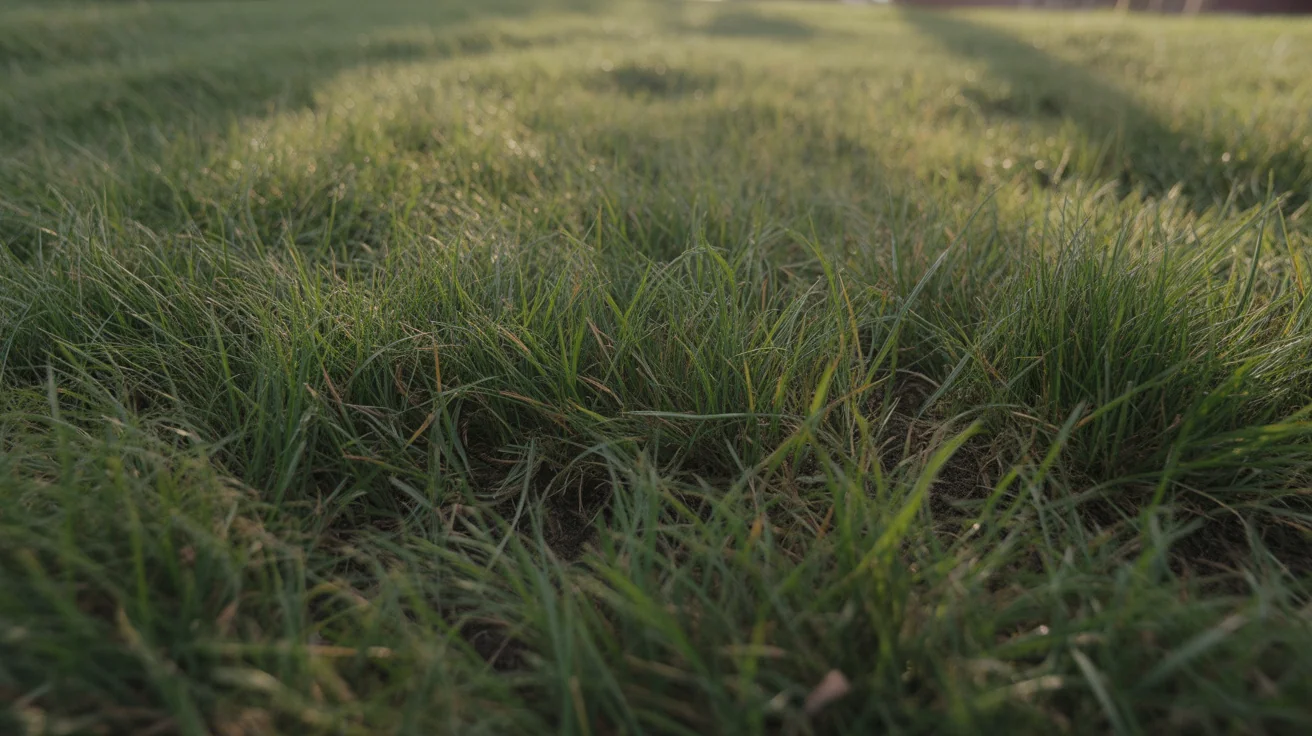
Zoysia Grass
Zoysiagrass forms dense warm-season turf that tolerates wear once established, but fills gaps and recovers from injury…
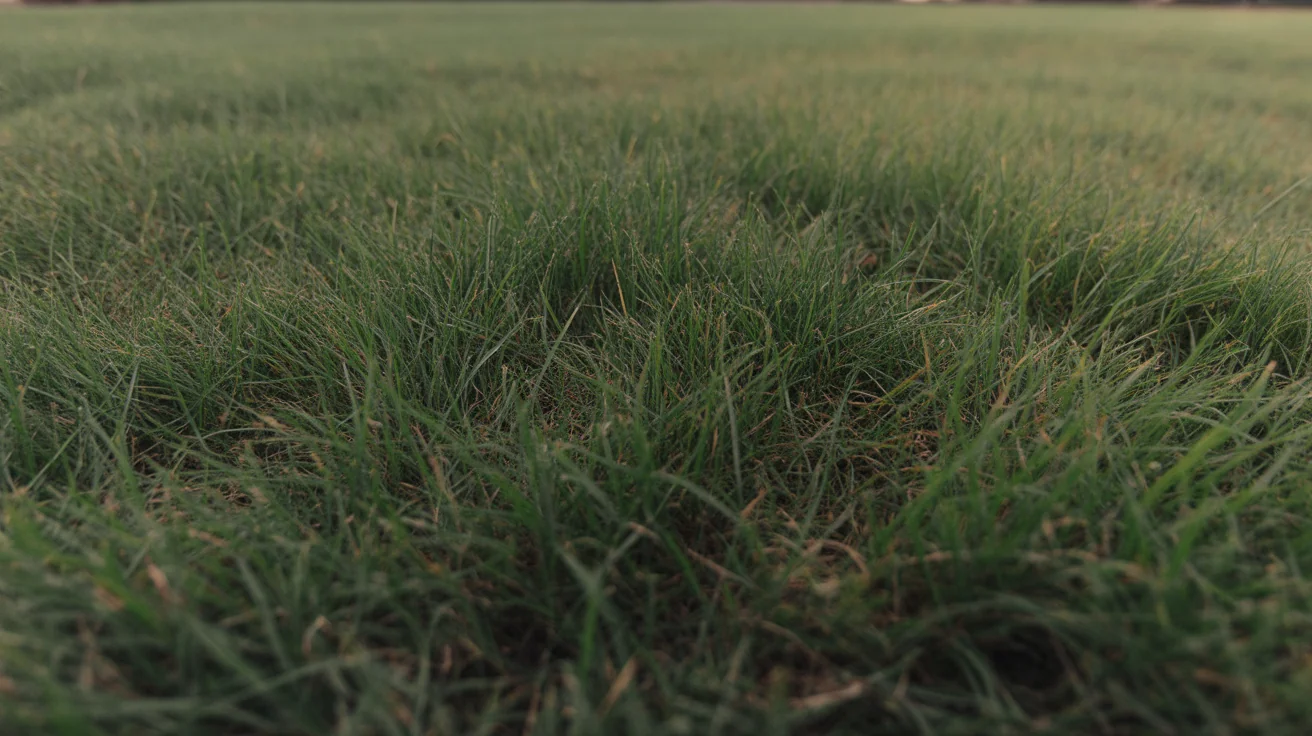
Bermuda Grass
Grow Bermuda grass if you want a dense, sun-loving lawn that shrugs off heat, foot traffic, and summer drought.
Frequently Asked Questions
Does a shade-tolerant seed label guarantee grass beneath a tree?
No. It describes relative tolerance, while light, roots, moisture, traffic, and establishment still affect the result. A locally recommended cultivar or mixture gives more useful information than the label alone.
Does thin shaded grass always need more fertilizer?
No. Light may be limiting, but nutrient status cannot be diagnosed from shade alone. Species guidance and a soil test help determine whether feeding is needed.