
Is Zoysia Grass Right for Your Yard? Growth and Care Tradeoffs
Zoysia japonica Poaceae
Zoysiagrass forms dense warm-season turf that tolerates wear once established, but fills gaps and recovers from injury slowly. Its winter color, establishment time and mowing needs matter as much as the finished lawn’s density.
Zoysia japonica, finer-leaved species and their hybrids do not all perform alike. A cultivar suited to the local climate and available mowing equipment is a better starting point than a universal zone, water or fertilizer recipe.
Care snapshot
Dense Turf Still Has Maintenance Tradeoffs
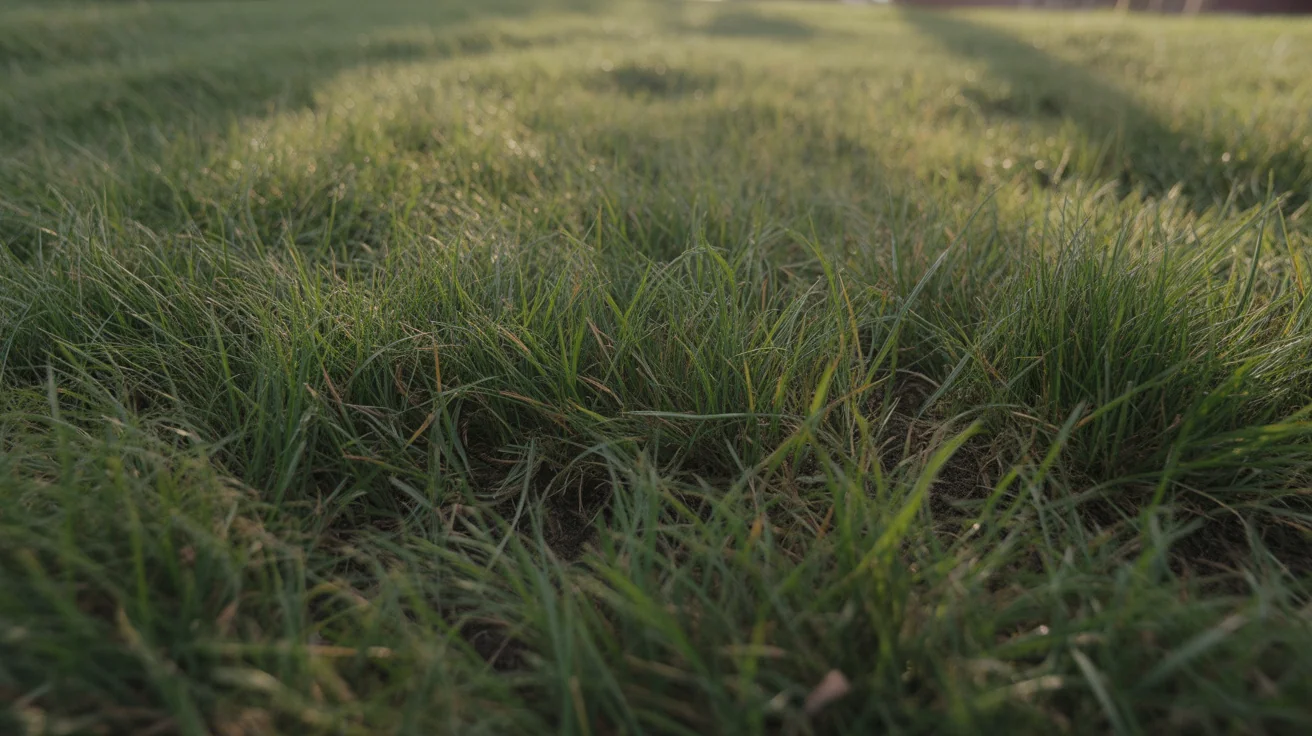
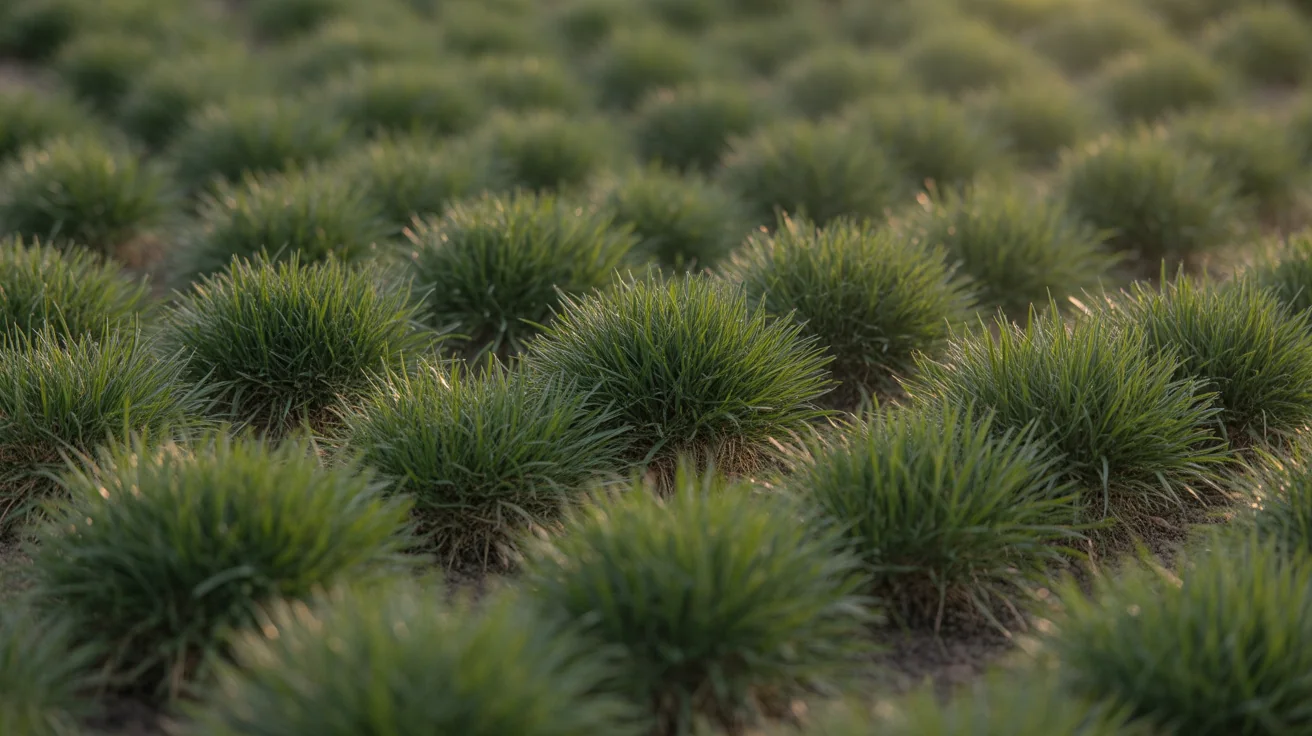
Zoysiagrass spreads through stolons above ground and rhizomes below it. These stems help form a dense surface when the site and maintenance suit the grass. Density can suppress many weeds, but gaps during establishment or after injury still provide places for weeds to grow.
NC State describes established zoysia as wear-resistant and slow to recover from damage. Those are separate properties. A lawn can tolerate some use yet struggle to replace turf worn away along a repeated path, especially when it is dormant or growing slowly.
Full sun generally favors a dense lawn, while partial-shade performance varies by species, cultivar and use. Texas A&M notes greater shade tolerance among many Z. matrella varieties than Z. japonica varieties. That relative difference is not a fixed number of hours that guarantees turf beneath every tree.
The site decision includes drainage, root competition, traffic and equipment as well as light. Persistently wet low ground or concentrated foot traffic can remain unsuitable even after a different cultivar is installed.
A soil test helps establish nutrient and lime needs before planting. Watching runoff and persistent wet areas can reveal drainage problems, but a single timed puddle test cannot certify the whole lawn’s soil structure.
Wear Resistance Does Not Mean Fast Repair
Plugs need to spread across the open soil between them. NC State reports that establishment from plugs can take roughly two to four years in its context. Closer spacing, growing conditions and cultivar change the pace, so a universal weekly growth rate would be misleading.
Sod provides immediate surface coverage, but still needs roots to grow into the prepared soil. A lawn looking green on installation day does not establish that it can tolerate normal traffic. Root attachment, moisture and growth should guide the return to use with the installer’s local directions.
Open spaces among plugs need attention to weeds and moisture while they close. A herbicide that is suitable for established turf may interfere with rooting or seedling growth. Its label must permit the grass and establishment method involved.
Bermuda grass commonly offers faster recovery in a suitable sunny warm-season site. The recovery difference in Bermuda Grass vs Zoysia can matter more than leaf texture where wear is frequent. Both choices still need site preparation and a suitable growing-season window.
Species, Cultivar and Climate Belong Together
Texas A&M describes Z. japonica varieties as generally coarser and more cold tolerant than Z. matrella varieties. Finer types can offer different shade performance and mowing options, but may need different equipment and care. Hybrid cultivars add further variation.
- Zoysia japonica types
- Often coarser leaves and greater cold tolerance relative to matrella; some cultivars are available as seed
- Zoysia matrella types
- Often finer leaves and comparatively better shade tolerance; low mowing may call for a reel mower
- Named hybrids
- Traits and management differ, so confirm the actual cultivar and local performance
- Colder or transition-zone site
- Consider winter survival, the length of dormant color and local trial results together
A USDA zone cannot tell you how long the lawn will stay green, how quickly it will recover or which cultivar will survive a particular winter. NC State emphasizes regional adaptation and cold-tolerant selections rather than treating every zoysia as interchangeable.
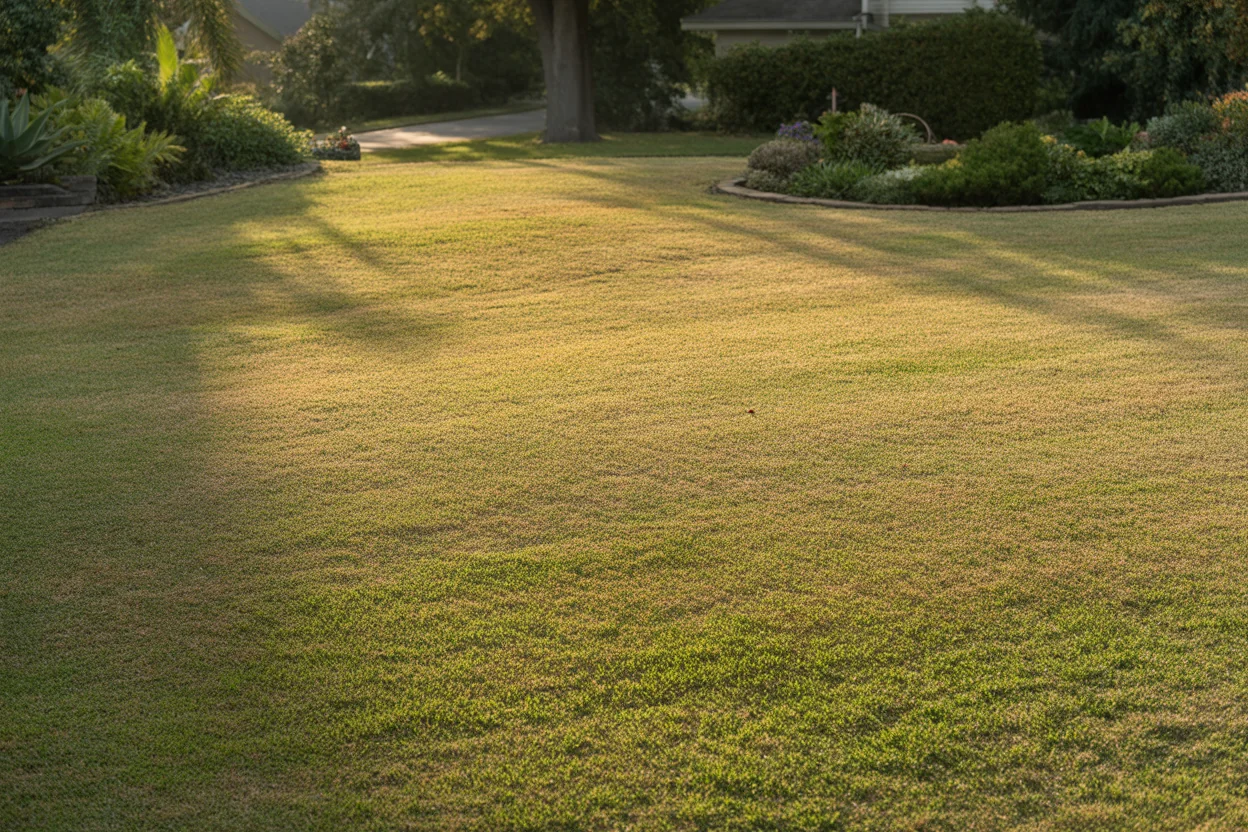
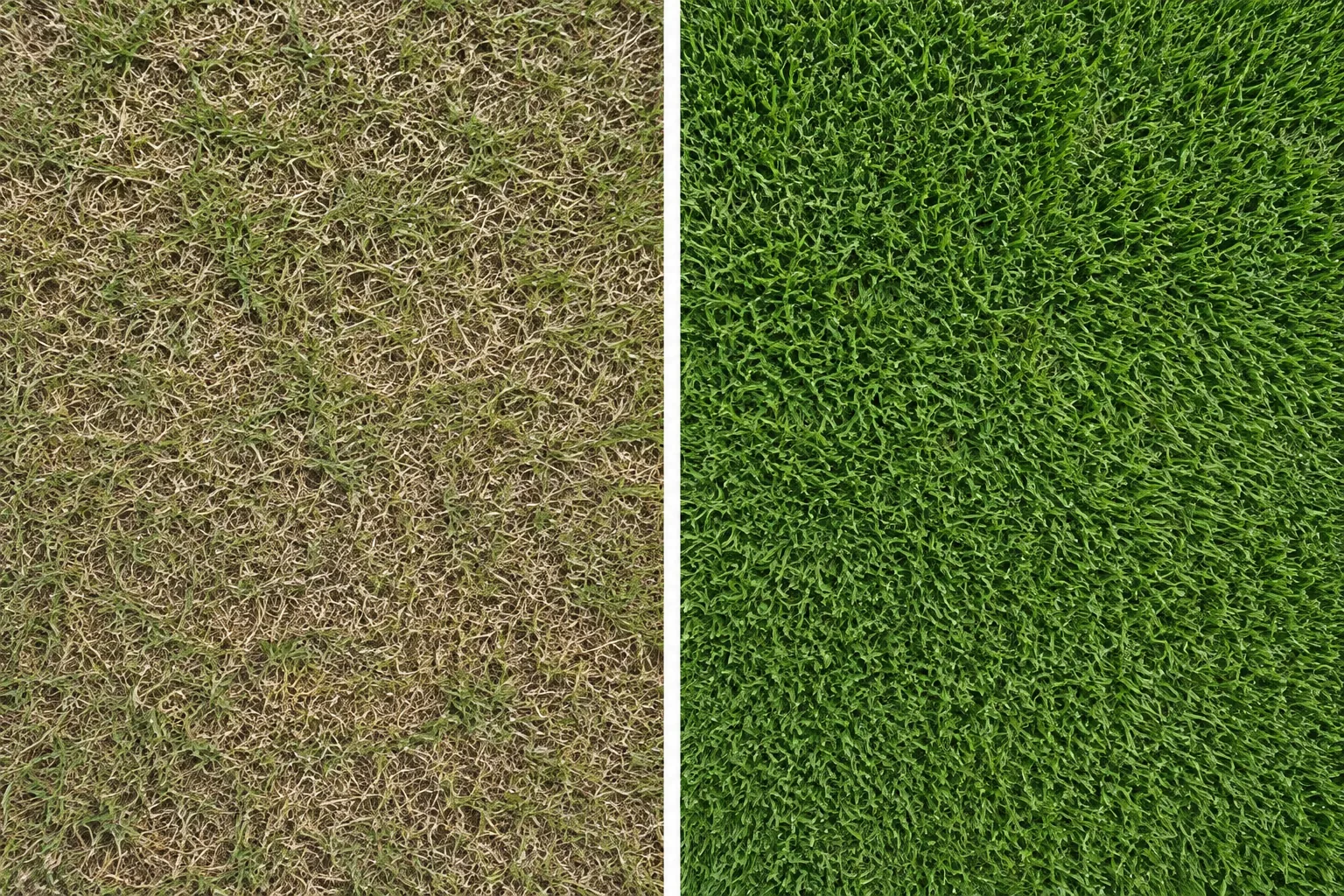
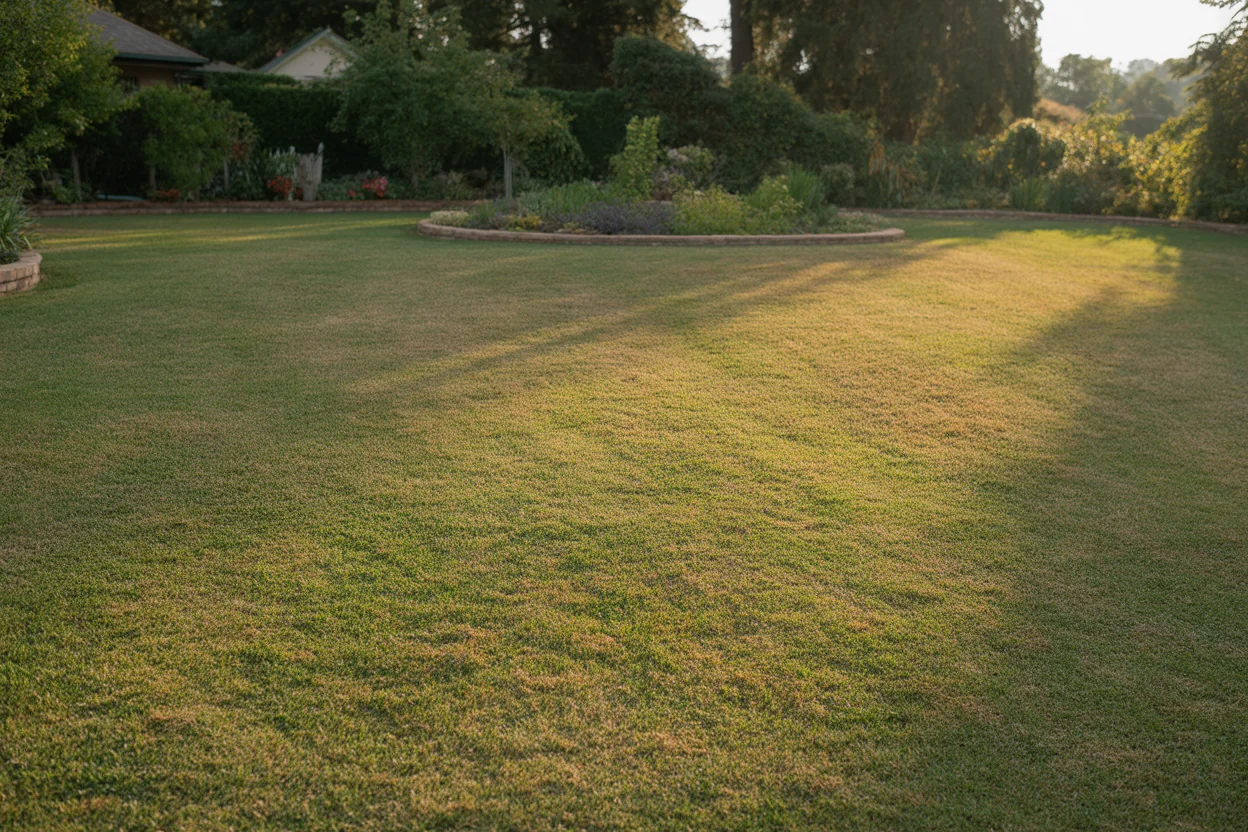
Warm-season turf commonly turns tan during winter dormancy and greens up as suitable growing conditions return. The lawn image shows color variation, but cannot establish whether a particular patch is dormant, drought-stressed or diseased.
A local sod supplier can identify available cultivars, while regional extension recommendations and trials help assess whether they fit the site. Stocking a cultivar is not, on its own, proof of winter survival or disease resistance.
Where a long dormant season is unacceptable, a suitable cool-season lawn such as Kentucky Bluegrass may be worth comparing. The climate and site still govern whether that alternative works.
Seed, Plugs and Sod Need Different Establishment Care
Zoysia can be established from seed, plugs or sod, but seed is available for only some cultivars. NC State identifies Zenith and Compadre among seeded choices. A bag labeled zoysia does not reproduce every named sod cultivar.
- Seed
- Requires a prepared seedbed and moisture at seed depth; follow the selected cultivar’s rate and establishment directions
- Plugs
- Leave open ground that must fill through spreading growth; closer spacing generally shortens the wait
- Sod
- Provides immediate cover but still needs close soil contact, water and root establishment
The planting window needs enough warm growing weather for establishment. NC State’s Carolina Lawns guidance places warm-season establishment in its spring-to-summer window, with dates varying by region. A fixed month or soil-temperature reading cannot cover every climate and method.
Site preparation includes removing competing vegetation, correcting grade and drainage problems, and creating a suitable soil surface. Sod laid over uneven ground can bridge hollows, leaving poor root contact. Plugs set too high or in depressions face different moisture problems.
New seed needs its seed zone kept moist while germinating. Sod and plugs need moisture where their roots meet the underlying soil. As roots develop, irrigation shifts toward wetting a deeper root zone rather than maintaining only a damp surface.
Initial mowing depends on growth, root attachment and the cultivar’s intended height. A universal wait of two or three weeks or a universal three-inch first cut can be wrong for a finer type. Traffic and mowing should not pull loose turf from the soil.
Mowing Height Must Fit the Cultivar and Mower
Texas A&M gives 1–2 inches as a common home-lawn range with a rotary mower, while finer turf managed lower may require a reel mower. That equipment difference belongs in the selection decision, not as a surprise after the lawn is installed.
The one-third rule helps avoid removing too much leaf at a time. Mowing frequency therefore follows actual growth and the chosen height. Slow lateral spread does not mean the lawn can always wait a month between cuts.
NC State advises starting spring mowing when the lawn turns green, low enough to remove excess dormant material without scalping. That differs from waiting for every zoysia lawn to reach three inches. A mower cutting into uneven ground can scalp a patch even when its nominal setting seems suitable.
Sharp blades matter because zoysia leaves can be stiff and difficult to cut cleanly. Small dispersed clippings can remain on the lawn. They are not the same as the slowly decomposing stem and root layer that forms thatch.
After scalping, recovery depends on remaining live tissue and growing conditions. A particular month-to-month recovery deadline cannot be predicted from a weekly growth figure. Repeated low cuts or extra fertilizer can add stress rather than restore missing leaves.
Water From Soil Conditions and Lawn Use
NC State uses about 0.5–1 inch of water per week as a regional care reference, including rain. Sandy soil may require smaller applications more often than heavier soil. The useful principle is to replenish the root zone without applying water that simply runs off or leaves it saturated.
Dark bluish-gray color, folded leaves or persistent footprints can indicate water stress. They prompt a moisture check and an assessment of recent weather rather than proving drought is the only problem. Root damage and other stresses can produce overlapping surface symptoms.
For established turf, the NC guidance aims to wet roughly 4–6 inches of soil. A soil probe or screwdriver can help assess penetration, while catch containers show how much irrigation was applied and whether coverage is uneven. Neither measurement alone establishes that the plant needed that amount.
The watering interval changes with weather, soil and rooting. New installations are an important exception because their roots cannot yet use the same soil volume. A fixed five-to-seven-day interval can be inappropriate for both young turf and some established sandy sites.
Zoysia can enter drought dormancy, but tan color does not guarantee that every plant remains alive or will recover after rain. Prolonged stress and traffic can cause lasting injury. Even winter-dormant turf may need occasional water during a dry spell when the soil becomes very dry.
Feed Active Growth and Measure Thatch
Fertilizer rates depend on regional guidance, cultivar, soil test and the desired lawn performance. Texas A&M gives roughly 1–3 pounds of actual nitrogen per 1,000 square feet per year for its zoysia context. That is nutrient mass, not the weight of a bag of fertilizer and not a requirement to apply the upper amount.
Late-season nitrogen can increase large-patch risk. NC State advises avoiding nitrogen within about six weeks before dormancy and during the first three weeks after spring green-up in its large-patch guidance. A thin lawn is not a general exception permitting a late-fall feeding.
Soil testing informs phosphorus, potassium and lime decisions. The nitrogen number on a fertilizer label represents a percentage by weight, so translating a local nutrient recommendation into product requires that percentage and the lawn area. A pale patch alone is insufficient evidence for feeding.
Thatch is a layer of slowly decomposing stems, roots and other material near the soil surface. Excessive fertilization, overwatering and infrequent mowing can contribute. Short clippings left after regular mowing are a different material and usually decompose readily.
NC State uses more than about half an inch of thatch as a reason to consider removal after green-up. A sample from the lawn reveals the layer better than a photograph of brown surface tissue. Aggressive removal can injure slow-recovering zoysia, so several smaller interventions may be needed.
Dethatching removes accumulated material, while core aeration addresses soil compaction and air/water movement. The right choice depends on which condition exists. Timing during active growth allows recovery, unlike assuming every cool-season spring or fall lawn task transfers to zoysia.
Brown Patches Need a Diagnosis Before Treatment
Billbugs, white grubs, large patch disease, mowing injury and moisture stress can all contribute to damaged turf. The season, distribution and evidence below the leaf canopy matter. A response to watering does not rule out root feeding or disease.
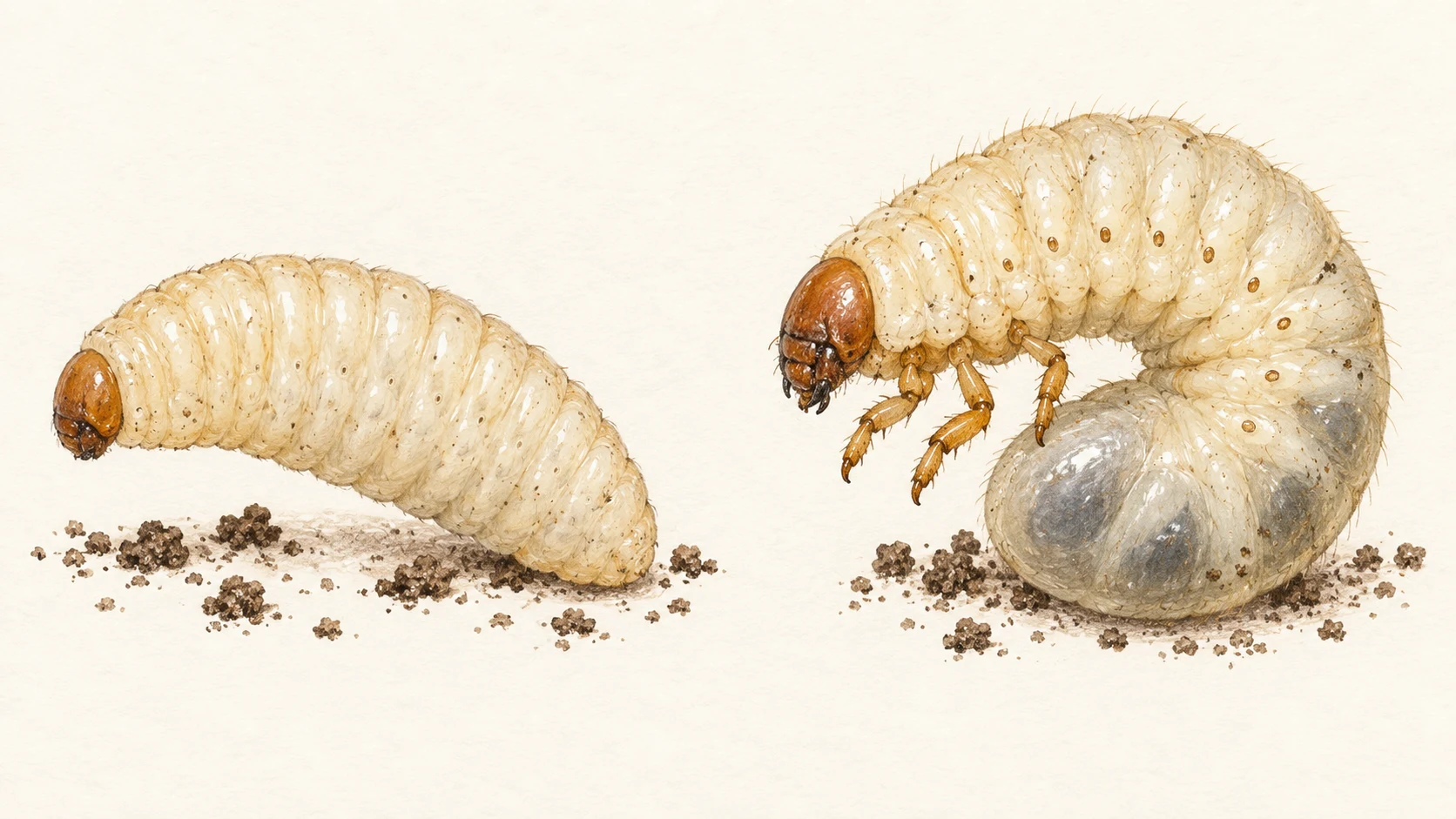
NC State describes young hunting billbug larvae feeding in stems, then in crowns, roots and stolons as they develop. White grubs are scarab beetle larvae, usually curled and bearing six legs. Finding larvae in soil rather than inside a stem does not exclude billbugs.
Sampling affected and less-affected areas helps connect insect presence with injury. The insect, its life stage, the sample area and local action guidance all affect interpretation. A universal count per small square of turf cannot decide treatment, and finding a few larvae does not explain every brown patch.
Large patch is favored by cool, wet conditions, poor drainage, excessive thatch and poorly timed nitrogen. Symptoms may become obvious during spring green-up even though disease activity began earlier. Watering or feeding every brown patch can aggravate those conditions.
Preventive and curative insect treatments target different stages. NC State limits preventive grub or billbug treatment to sites with a relevant infestation history, and emphasizes species, timing and label directions. A generic late-summer application is not a complete control plan.
Persistent or spreading damage deserves identification through local extension or a turf diagnostic service. A treatment label must permit the turf and residential use involved. It also governs watering-in and when people or animals may return.
The cited turf sources do not establish a species-specific animal toxicity classification for Zoysia japonica. That remains unknown rather than an assurance of no toxicity concern. Independently, fertilizer, pesticide and other products can change access and exposure conditions on a lawn.
Sources & References
Related Plants
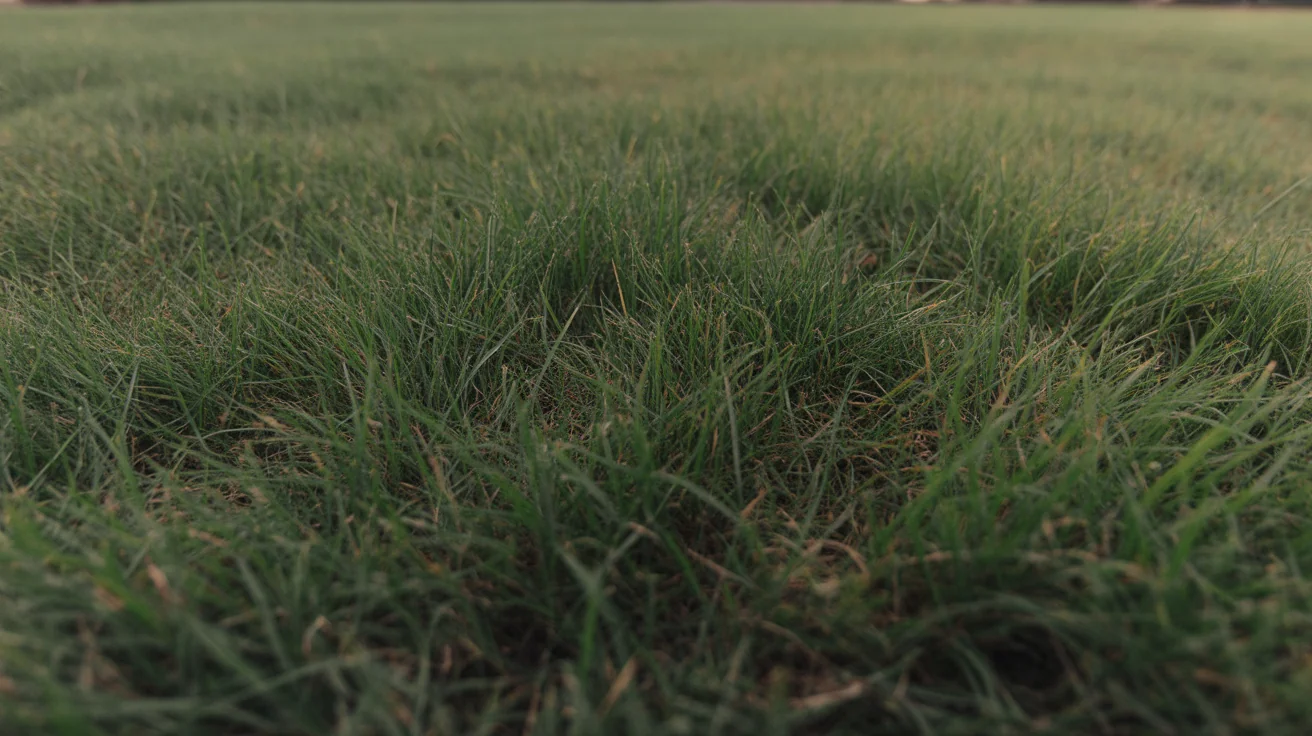
Bermuda Grass
A warm-season alternative whose faster recovery can matter on sunny sites with repeated wear.
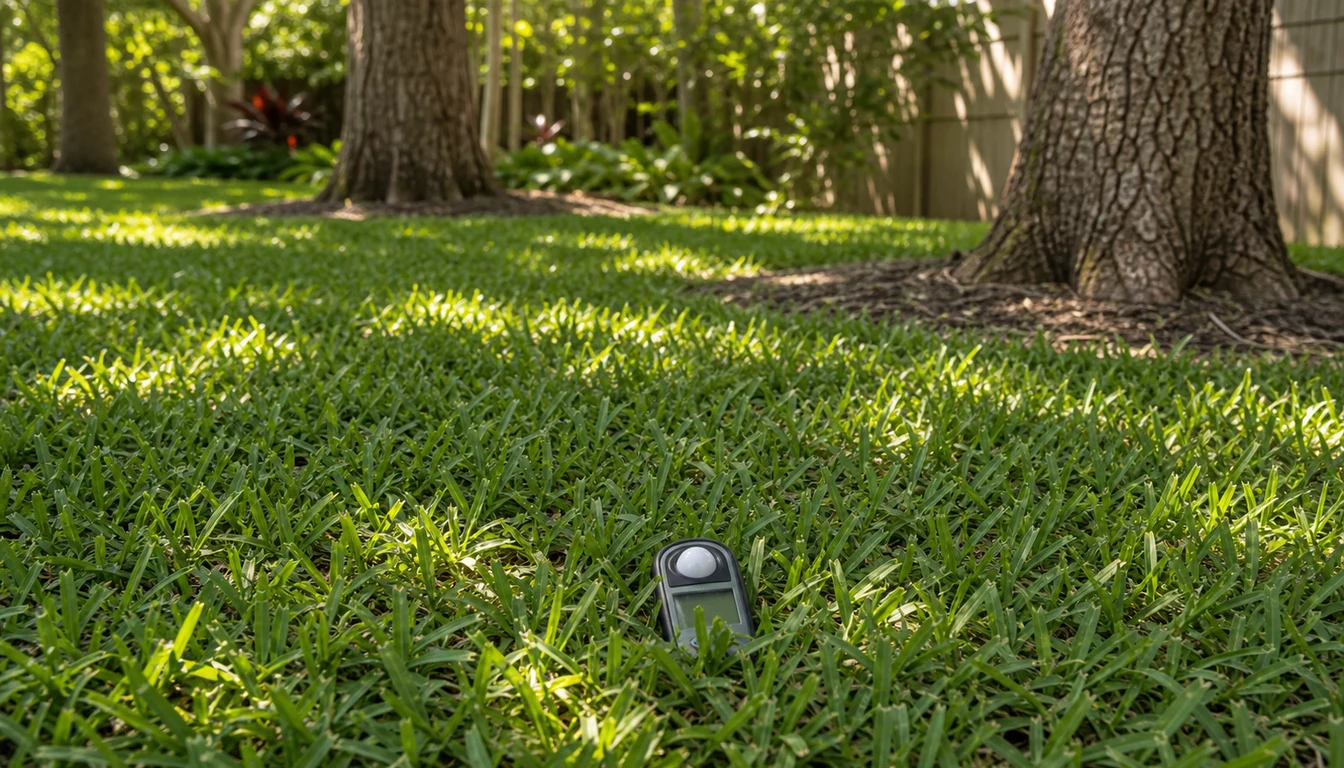
St. Augustine
A broader-bladed warm-season option with its own climate, shade and mowing requirements.
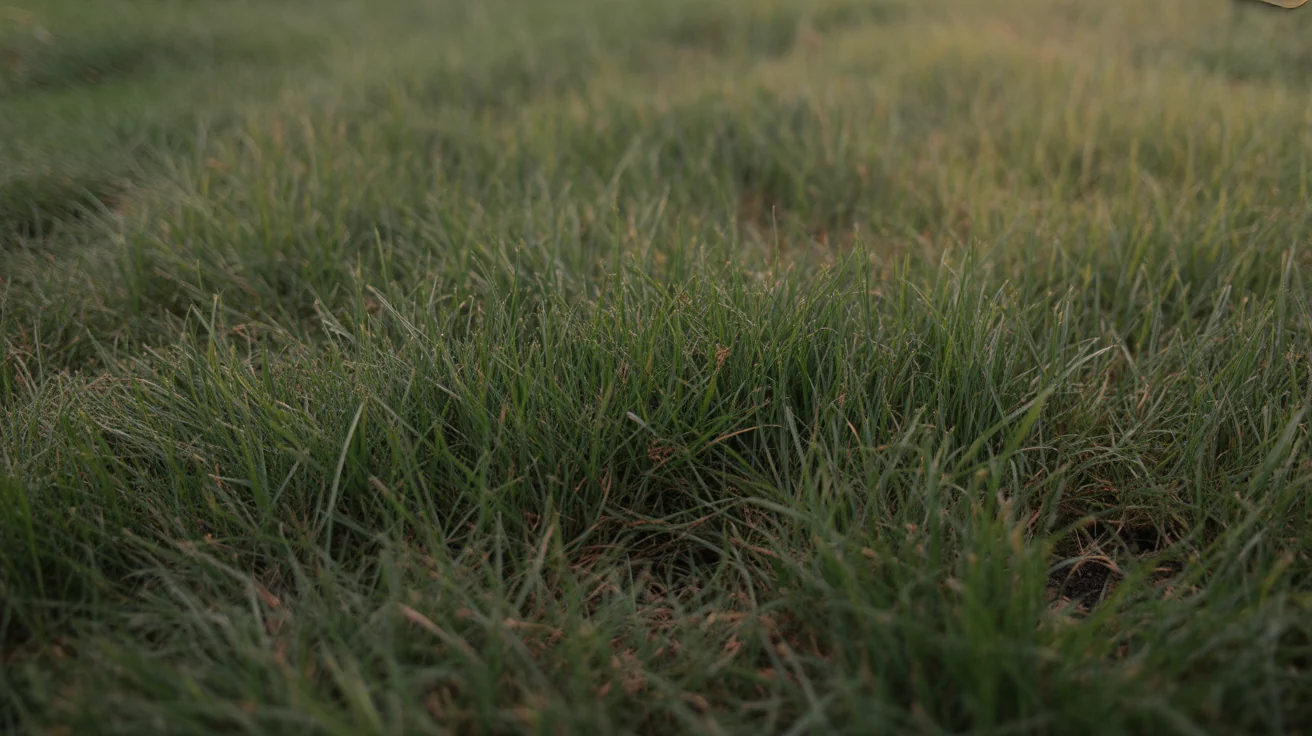
Kentucky Bluegrass
A cool-season option where the climate and maintenance suit it, with different seasonal growth.
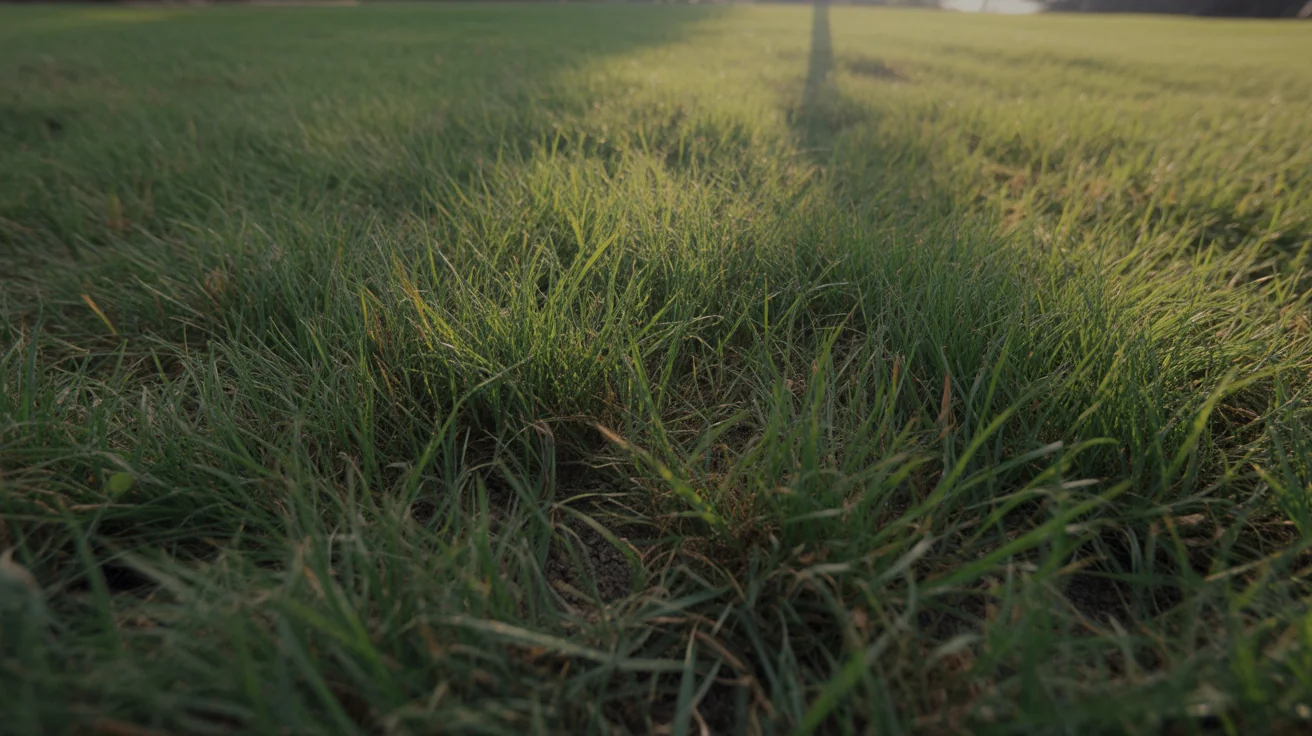
Bahia Grass
Bahia grass is a warm-season utility lawn built for sandy, hungry ground where fussier grasses give up.
Buffalo Grass
Many people treat buffalo grass like a regular high-input lawn, then wonder why it looks thin and weedy.
Centipede Grass
Centipedegrass is a slow-growing, light-green lawn grass for suitable warm-climate sites.