
What's Perennial Ryegrass? How to Use It in a Mix
Lolium perenne Poaceae
Perennial ryegrass comes up in 5 to 10 days, which is why it is in almost every cool-season seed bag. It is also a bunch grass that never closes its own bare spots, and Colorado State ranks it last of twelve turfgrasses for surviving low maintenance.
Use it for speed and wear, and let something else carry the long term.
Care snapshot
What Is Perennial Ryegrass, and Why Is It in Every Seed Bag?
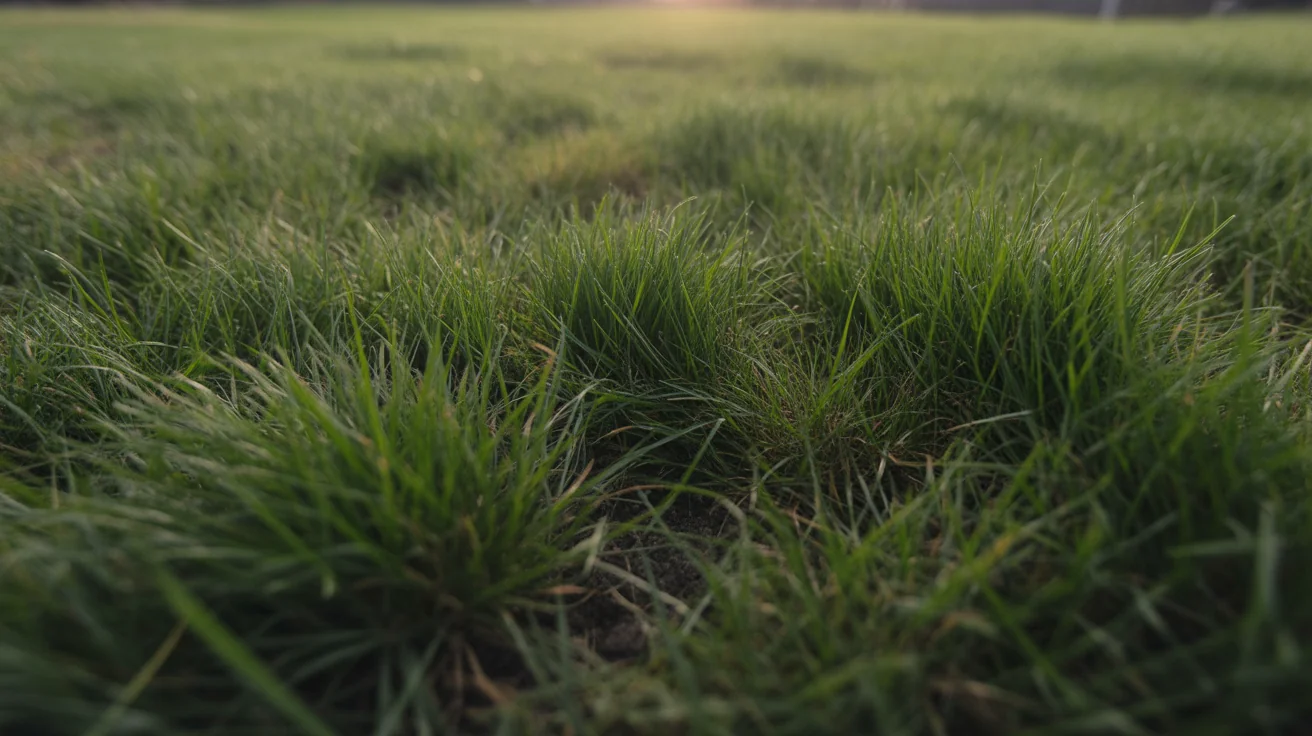
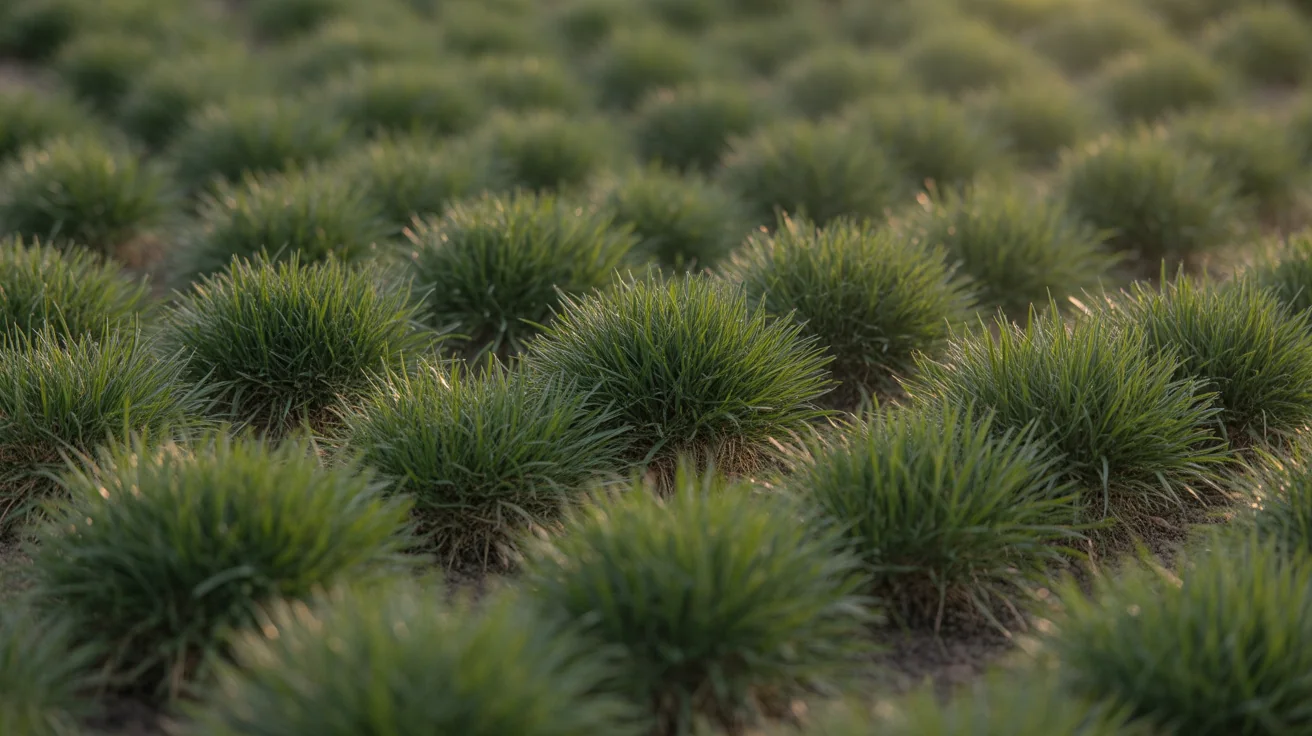
Perennial ryegrass is Lolium perenne, a cool-season perennial in the family Poaceae. It is a bunch grass with no stolons and no rhizomes, so it thickens by producing new shoots from its own crown rather than by traveling sideways.
Identifying it takes one gesture. Turn a blade over and the glossy underside is almost reflective, with a pale midrib running down the center, while the upper surface is dull and finely ridged.
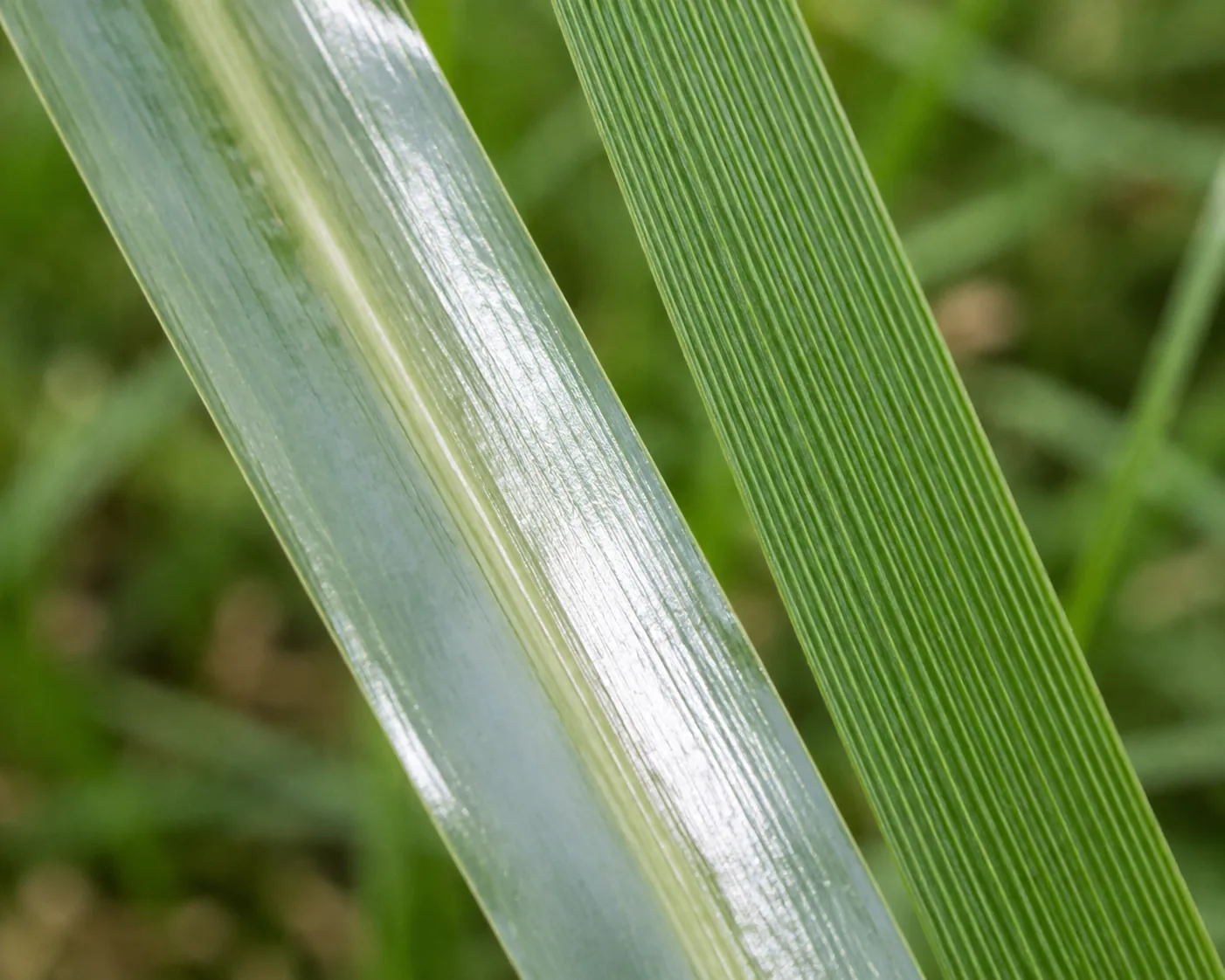
What puts it in the bag is speed. It comes up in 5 to 10 days, roughly three times faster than the kentucky bluegrass it is usually sold beside.
- Perennial ryegrass
- 5 to 10 days to germinate
- Tall fescue
- 7 to 12 days
- Red fescue
- 7 to 14 days
- Kentucky bluegrass
- 14 to 30 days
- Bermudagrass, seeded
- 10 to 30 days
It is also vigorous in the seedling stage, which is a genuine advantage on bare soil because it closes the window weeds would otherwise use. It matches bluegrass closely enough in color and texture that a mixed lawn reads as one lawn, and it does best around 60 to 75°F.
Where Does Perennial Ryegrass Belong, and Where Does It Fail?
This is a cool-season grass, and the 60 to 75 degree figure above is the whole of its comfort. It grows hard in spring and fall, coasts through summer where summers are mild, and struggles where they are not.
Shade is the question the two extension programs answer differently.
Colorado State lists poor shade tolerance among this species' disadvantages, while UC IPM calls it well adapted to sunny or partially shady conditions.
A page that quietly picks one is hiding the disagreement, so treat a shaded lawn as the case to test on a small area rather than the case to seed wholesale.
Where the two programs do not disagree is cold plus water.
Colorado State pairs them in one line, listing poor freezing tolerance where a site is flooded or exposed to wind.
Neither condition is about winter temperature on its own.
A low corner that holds meltwater and an open edge with nothing between it and the wind are the two places a stand comes out of winter thinner than it went in.
That rules out more sites than the germination figure suggests. For a shaded yard the fine fescues carry very good shade tolerance on the same Colorado State list, and for an exposed one they are rated very cold tolerant as well.
Why Does Ryegrass Take Over a Bluegrass Mix?
The percentage on the bag is measuring weight, and weight is not what germinates.
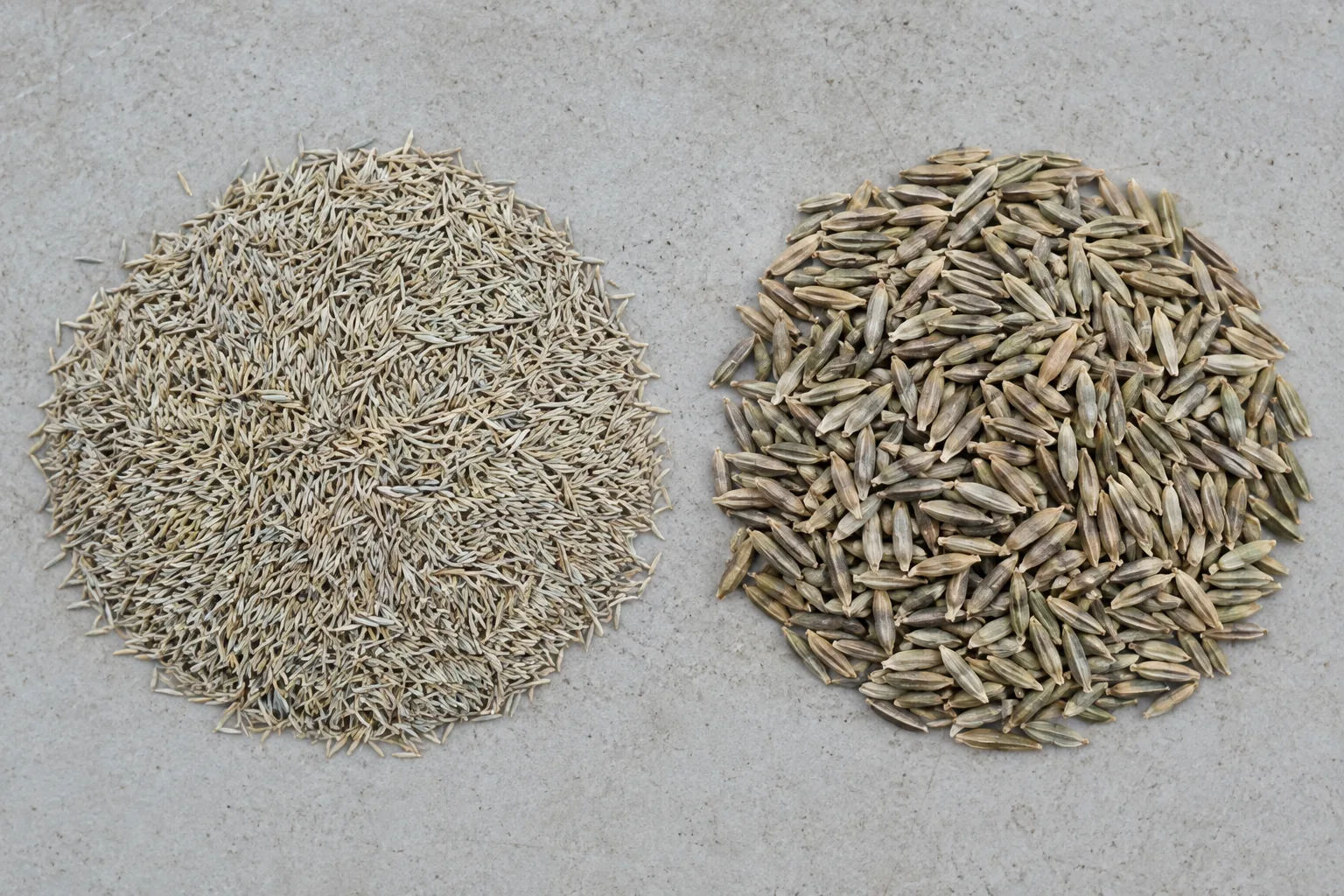
Seed size differs enormously between the two species. Kentucky bluegrass carries about 1.4 million seeds per pound, and perennial ryegrass about 240,000, so ryegrass seed is nearly six times heavier one seed at a time.
Do the arithmetic the label does not. A bag sold as 80 percent bluegrass and 20 percent ryegrass by weight contains about 1,120,000 bluegrass seeds and about 48,000 ryegrass seeds, so the ryegrass is only about 4 percent of the seeds going down.
- Kentucky bluegrass
- About 1.4 million seeds per pound
- Perennial ryegrass
- About 240,000 seeds per pound
- An 80:20 bag by weight
- Roughly 96% bluegrass seeds, 4% ryegrass
- That lawn after one year
- Only 51% bluegrass in a Wisconsin trial
Read the last two rows together, because that is the finding.
Four percent of the seeds became roughly half the lawn.
A Wisconsin study found that an eighty-twenty mix held only 51 percent Kentucky bluegrass by the following August, which came to 64 percent of what the pure bluegrass plots held.
The mechanism is the germination table from the previous section.
Ryegrass is up and photosynthesizing in a week, occupying space and light, while bluegrass is still underground with two or three weeks to go.
By the time the bluegrass emerges, the room has been taken.
It matters beyond bookkeeping. Too much ryegrass in a stand brings long-term dollar spot, brown patch and red thread problems, and it trades away the disease, drought and wear tolerance that the bluegrass was in the bag to provide.
How Much Ryegrass Should Be in the Bag?
Two university extension programs give different answers, and a page that quietly picks one is hiding something from you.
Purdue recommends including less than 10 percent perennial ryegrass by weight, with research validating a limit of 5 or maybe 10.
UC IPM recommends at least 15 percent, arguing the mixture is more disease resistant with better color and year-round growth.
The Wisconsin trial sits behind the lower number, which is why it carries more weight in a cool-season yard where you want the bluegrass to be the lawn in five years. Where quick cover and year-round color matter more than long-term composition, the higher figure is defensible on its own terms.
The practical move is to treat any printed percentage as a floor rather than a ceiling. Whatever share of the bag the ryegrass has by weight, expect it to hold a larger share of the finished lawn, and buy accordingly.
Why Does Perennial Ryegrass Rank Last for Persistence?
Colorado State ranks twelve turfgrasses for persistence under low maintenance, from 1 for the best down to 10 for the worst. Perennial ryegrass ranks 9 to 10, dead last, below improved Kentucky bluegrass at 8 and a long way below buffalograss at 1.
That is a genuinely surprising place for a grass with a reputation for toughness, and the reason is that persistence and wear tolerance are different properties. This grass takes foot traffic well.
It does not take being ignored.
Wear is survived rather than repaired, so damage accumulates instead of closing.
Rust and leaf spot are named for this species, and dense stands add three more.
Colorado State's assessment, though UC IPM rates it adapted to sunny or partially shady sites.
Specifically if flooded or exposed to wind, which describes a lot of open winter lawns.
The credit side of the ledger is real too.
Quick establishment, wear tolerance, good color and density, no thatch, compatibility with bluegrass, possible endophytes, good heat tolerance, and moderate to good salt tolerance for a walk or drive edge. It can even manage good drought resistance where it has rooted deeply into well-prepared soil.
The honest reading is that this is an excellent grass with a short memory. It gives you a lawn quickly and holds up to being walked on, and it asks for that lawn to keep being tended.
Left to itself for a season it thins, and unlike a spreading grass it has no way to come back on its own.
Will a Ryegrass Lawn Close Its Own Bare Spots?
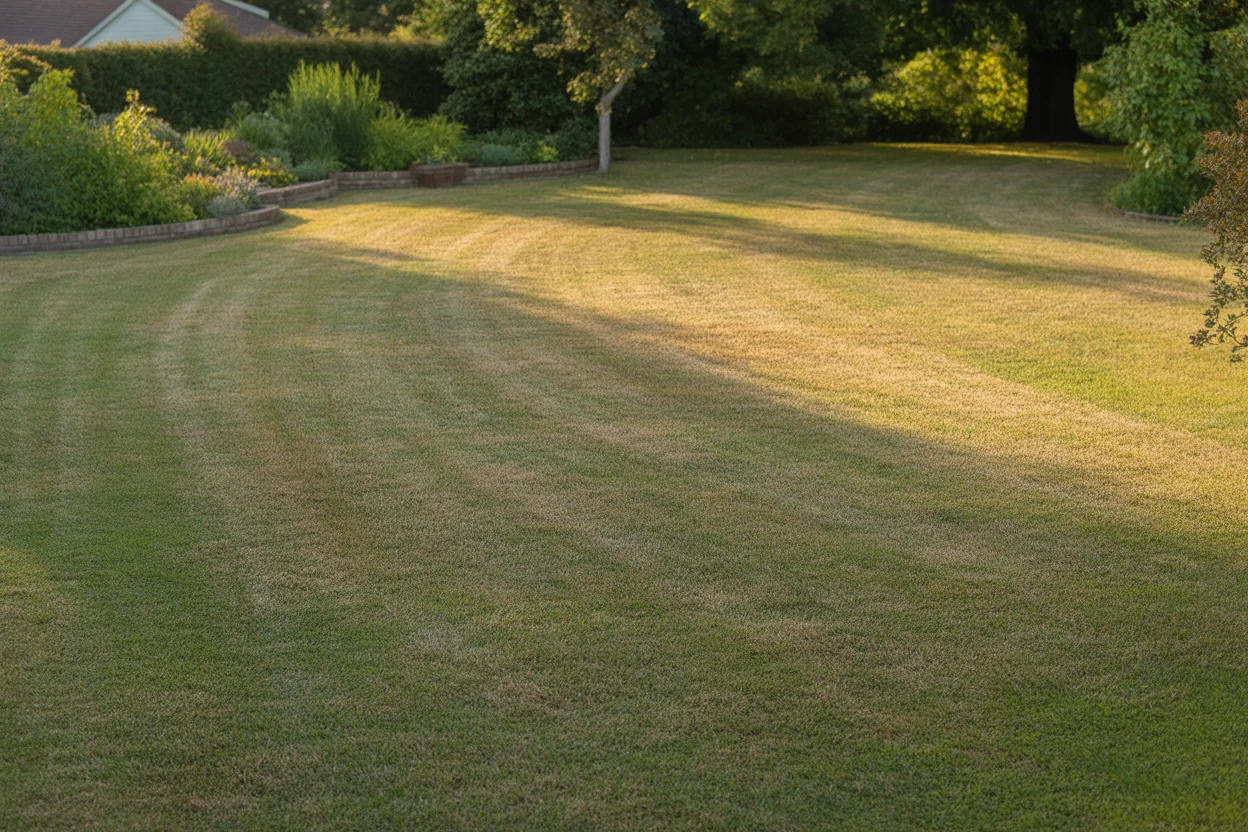
No. It is a bunch grass with poor recuperative potential, so a worn path or a pet spot stays exactly as bare as the day it appeared until somebody puts seed on it.
There is no second route either.
Unlike bluegrass, perennial ryegrass is unavailable as pure sod, so you cannot cut a patch in from a roll.
Seed is the only repair tool this grass has, which is a different situation from a rhizome grass that quietly fixes small damage on its own.
How Do You Mow and Water a Ryegrass Lawn?
Mow at 2.5 to 3 inches, raising to 3 to 3.5 through summer, and expect to cut every 5 to 7 days during the spring flush. Never take more than a third of the blade at once.
One warning is specific to this grass. Leaf shredding is common when the mower blade is dull, because ryegrass leaves tear rather than cut cleanly, and a lawn that looks gray-tipped and frayed the day after mowing is telling you to sharpen rather than to fertilize.
Water at about 1 to 1.5 inches a week in active growth, and aim to wet the soil 4 to 6 inches down rather than keeping the surface damp. That is the deep and infrequent approach, and it matters more here than on most lawns.
New seed is the exception, and watering new grass seed runs on the opposite rule until the seedlings are up.
- Spring. Mow every 5 to 7 days at 2.5 to 3 inches, feed lightly once growth starts.
- Summer. Raise to 3 to 3.5 inches, water 1 to 1.5 inches a week, hold off on nitrogen.
- Fall. The repair window. Overseed, fix traffic damage, and feed while nights are cool.
The reason the watering method matters is the canopy.
An overseeded ryegrass stand is dense, and a dense canopy that stays wet is what rust, dollar spot and brown patch want.
Let the surface dry between soakings.
Clippings can stay where they fall, since this grass does not form thatch.
What Rate Does Ryegrass Need, Seeding or Overseeding?
6 to 8 pounds per 1,000 square feet for a new stand. For overseeding an existing lawn, rates generally run 5 to 10 pounds per 1,000 square feet, toward the lower end when you are thickening rather than rebuilding.
The window in a cool-season lawn is mid-August to late September.
Soil is still warm, air is cooling, and the summer annual weeds that would race a spring seeding are done for the year.
Overseeding covers the ground preparation in more detail.
- Rake or dethatch lightly so seed reaches soil, since seed left on thatch dries out and feeds birds rather than growing.
- Spread in two passes at right angles, which evens out the coverage a single pass misses.
- Bury it shallow, a quarter inch is plenty. Ryegrass seed is large enough to see and place, so it needs contact rather than covering, and burying it deeper just delays the one thing this grass is good at.
- Hold off on herbicides. A ryegrass seedling is up in a week, long before the label assumes new grass exists, and its speed buys no chemical tolerance. Wait for several mowings first.
Overseeding a dormant warm-season lawn for winter color is a different calculation, and UC IPM notes that annual ryegrass is the species used principally for that job. Where you use the perennial, take the lowest rate that gives the look you want, because heavy ryegrass lingers into spring and slows the green-up of the bermuda grass underneath it.
Grubs or Brown Patch?
Rust and leaf spot are the two Colorado State names for this species, and a dense overseeded stand adds dollar spot, brown patch and red thread to the list.
What they have in common is a cause.
Disease pressure rises when mowing, nitrogen and watering leave the stand soft and the canopy wet, so straw-colored spots in late spring deserve a diagnosis before they get fertilizer.
More nitrogen deepens the problem when the real issue is humidity and leaf wetness.
Insects and fungus separate with one test.
Take hold of the damaged turf and pull.
Grub damage lifts loose like carpet, with larvae visible in the root zone.
Brown patch stays rooted, and often shows a darker smoke ring around the edge of the affected area.
Turf lifts loose. Check the top 2 inches of soil under a peeled flap before treating.
Turf stays rooted. Fix watering timing and nitrogen before reaching for a fungicide.
Scalped irregular areas. They feed at night, so use a soap flush over one square foot to bring them up.
Order matters more than product choice here. Fix moisture, then thatch, then confirmed pests, and a ryegrass lawn recovers faster than most because it grows back quickly once the cause is gone.
What Do Endophytes in Ryegrass Seed Do?
An endophyte is a fungus living inside the plant's own tissue rather than on it, and in perennial ryegrass it is a feature rather than a disease. Colorado State lists it among this grass's advantages, because endophyte-enhanced cultivars deter some surface-feeding insects without anything being sprayed.
That is a real reduction in pest treatment for a lawn that would otherwise attract sod webworms and chinch bugs, and it is worth looking for the word on the bag.
Is Ryegrass a Lawn or a Component?
Usually a component. Perennial ryegrass earns its place as part of a mix or as temporary cover far more often than it earns a yard on its own, and the persistence ranking is why.
Three jobs suit it.
Quick cover on bare soil, where the seedling vigor shuts weeds out.
Winter color overseeded into a dormant warm-season lawn, though annual ryegrass is the cheaper standard there.
And a minority partner in a cool-season mix, giving the slow grasses cover while they establish.
The job it does badly is being the backbone of a low-maintenance lawn. Where you want turf that persists on reduced water, feeding and attention, tall fescue and the fine fescues rank far higher on the same scale, and ryegrass against bluegrass puts the cool-season choice side by side.
Frequently Asked Questions
Is perennial ryegrass good as a primary lawn on its own?
Perennial ryegrass can be used alone in cooler climates, but it performs best in a mix with Kentucky bluegrass or fescue. Blends improve heat tolerance, disease resistance, and long-term recovery, especially in Zones 6–8.
How often should I overseed a perennial ryegrass lawn?
Most ryegrass lawns benefit from overseeding every 1–2 years. In high-traffic yards or hot-summer regions, annual overseeding in early fall keeps the turf thick and helps fill in spots that thinned over summer.
Can I overseed ryegrass into a warm-season lawn for winter color?
Yes, many homeowners overseed warm-season lawns like Bermuda with perennial ryegrass in fall. The ryegrass greens up through winter while the warm-season grass is dormant, then fades back when heat returns in late spring.
Can perennial ryegrass handle full sun in hot climates?
In Zone 8-10 heat, perennial ryegrass will often thin or go semi-dormant in full sun. It does best with some afternoon shade or when used as a cool-season overseed on warm-season turf rather than as the only grass in very hot areas.
Is perennial ryegrass good for pets and high traffic areas?
This grass handles foot traffic better than many cool-season options, but heavy dog paths can still wear spots bare. Keep it mowed at 3 inches, water deeply, overseed worn paths yearly, and mix in tougher tall fescue for constant rough play.
Sources & References
- CMG GardenNotes #561: Turfgrass Species Selection Guidelines, Colorado State University Extension
- How much perennial ryegrass / Kentucky bluegrass in a mix?, Purdue University Turfgrass Science
- Healthy Lawns, Grass development: Seed germination rates, UC IPM
- Turfgrass Species, UC IPM Pest Management Guidelines
- North Carolina Extension Gardener Plant Toolbox - Lolium perenne
Related Plants
Kentucky Bluegrass
Cool-season partner grass that spreads by rhizomes and pairs well with perennial ryegrass.
Tall Fescue
Deep-rooted cool-season grass that handles heat better but germinates slower.
Bermuda Grass
Warm-season option often overseeded with ryegrass for winter color in warm climates.
Bahia Grass
Bahia grass is a warm-season utility lawn built for sandy, hungry ground where fussier grasses give up.
Buffalo Grass
Many people treat buffalo grass like a regular high-input lawn, then wonder why it looks thin and weedy.
Centipede Grass
Centipedegrass is a slow-growing, light-green lawn grass for suitable warm-climate sites.