
Is Centipede Grass Right for Your Yard? Growing a Southern Lawn
Eremochloa ophiuroides Poaceae
Centipedegrass is a slow-growing, light-green lawn grass for suitable warm-climate sites. It needs relatively little fertilizer, but shade, traffic, alkaline soil and excessive feeding can make it a poor fit.
Care snapshot
Where centipedegrass fits
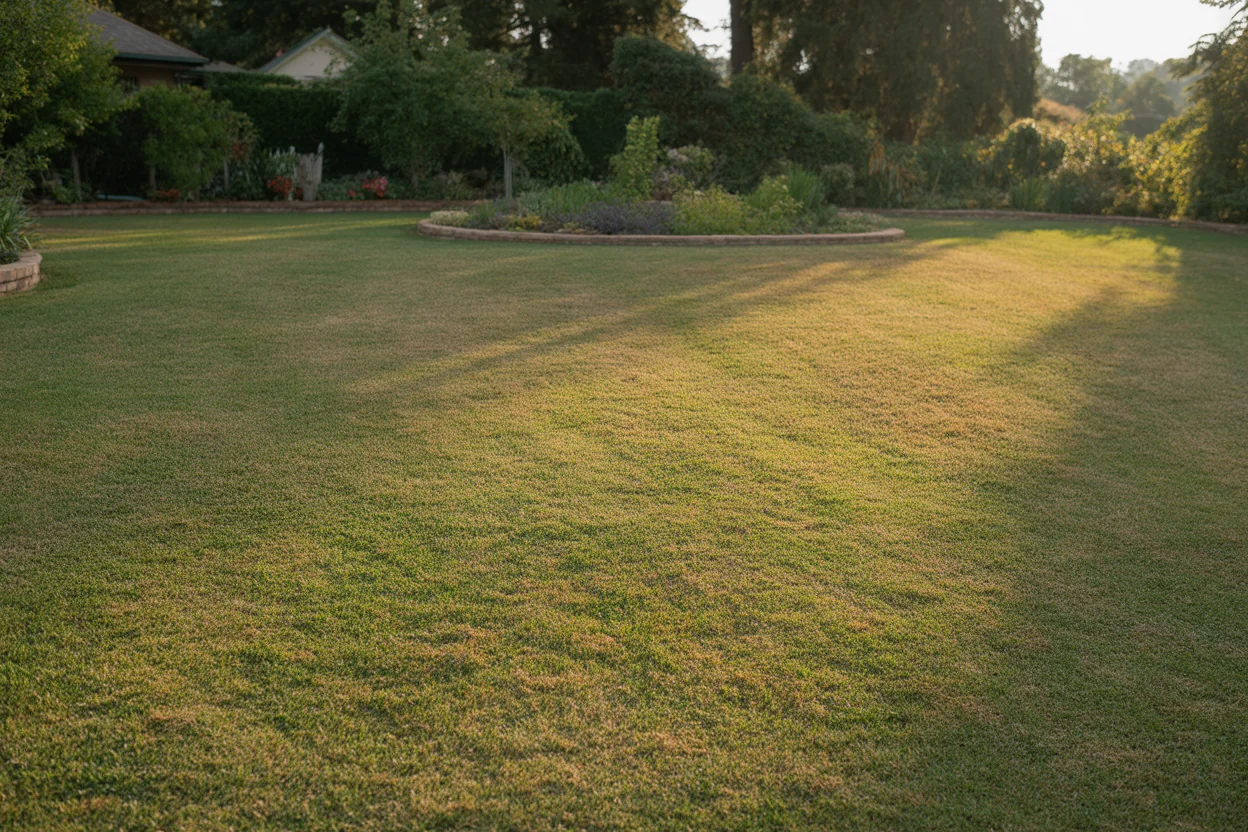
Centipedegrass, Eremochloa ophiuroides, forms turf through aboveground stems called stolons. The stems root at their nodes and gradually extend the lawn. Its naturally light-green color and slow growth distinguish its care from a lawn managed for rapid growth and dark color.
The best fit is a lightly used lawn with suitable acidic soil and enough light. NC State describes it as a low-maintenance grass, but also identifies traffic, compaction, drought, high pH and heavy shade as limitations. Low maintenance describes the input level on a suitable site, not a promise that the grass survives any site with little attention.
Centipede and St. Augustine can look similar from a distance. NC State describes alternating leaves at centipede nodes versus opposite leaves at St. Augustine nodes, with centipede having narrower, more pointed blades. Color alone is a weaker identification clue.
Cold adaptation varies with cultivar and location. UF/IFAS identifies improved cold tolerance in TifBlair, while still describing centipedegrass overall as vulnerable to freezing. A local cultivar recommendation is more useful than treating a broad zone range as a survival guarantee.
Pale leaves, soil pH and iron availability
Centipede does well in acidic soil. UF/IFAS describes a suitable range of pH 4.5–6.5 and warns that higher pH can cause severe iron chlorosis. A soil test helps distinguish an unsuitable root environment from a need for fertilizer.
At high pH, iron may be present in the soil but less available to the grass. Adding nitrogen to make the lawn greener does not solve that problem. Lime raises pH, so adding it automatically to a centipede lawn can move the soil in the wrong direction.
Yellow tissue between greener veins is a useful observation, but a photograph cannot establish a nutrient diagnosis. The plant’s normal light-green color, recent fertilizer applications, soil conditions and the location of affected patches all change the interpretation.
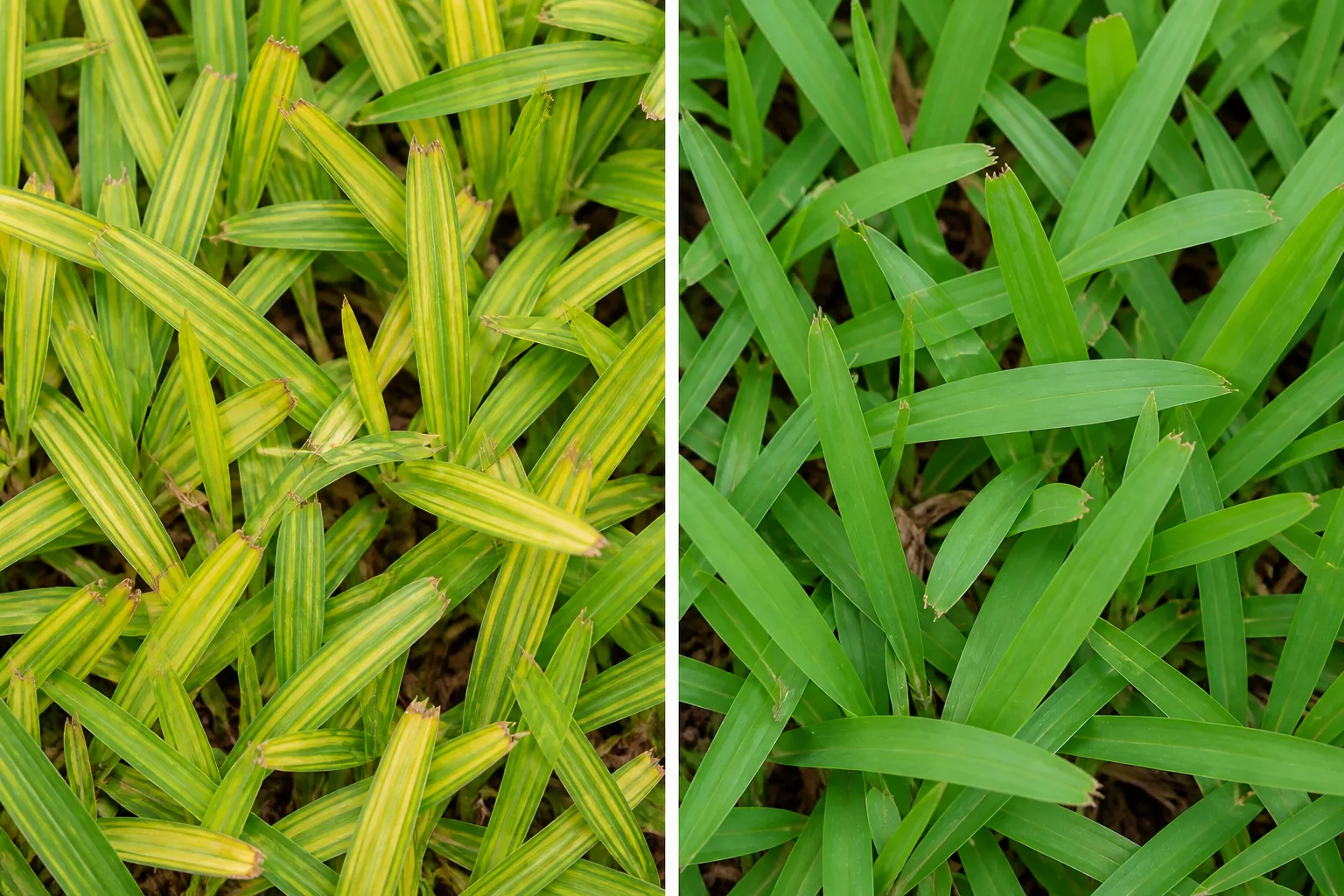
UF/IFAS also describes temporary spring yellowing when leaf growth accelerates before roots can supply enough nutrients in cool soil. That gives another reason to avoid treating every pale lawn with the same product.
Iron and nitrogen have different jobs. Iron does not replace the nitrogen needed for growth, while more nitrogen cannot correct every iron-availability problem. Lime, sulfur and nutrient applications belong to a soil-informed recommendation, not a color-based guess.
Low fertilizer demand needs a regional plan
Centipede needs less nitrogen than many other lawn grasses. Repeated feeding to force dark green growth can encourage thatch, reduce cold tolerance and contribute to decline. The desired result is healthy growth in its natural color.
There is no universal annual cap of one pound of nitrogen. NC State’s calendar describes a basic application of one pound per 1,000 square feet in mid-May and a possible additional application later in summer when needed. UF/IFAS gives ranges that differ across Florida and with site conditions.
Those figures are regional guidance, not a schedule to combine. They illustrate why a fixed annual amount, a fixed feeding count or a warning that any larger amount kills the grass can mislead. Soil conditions, growth and the local maintenance recommendation determine the program.
Fertilizer weight is also different from nitrogen weight. A bag’s first analysis number is the percentage of nitrogen by weight. A nutrient rate therefore cannot be applied as the same weight of every fertilizer product.
Timing matters because fertilizer changes growth. Local guidance waits for active growth rather than feeding a still-dormant lawn, and late-season timing depends on climate. Product directions and current local restrictions remain part of the application decision.
How much shade can the lawn tolerate?
Centipede can tolerate some shade, but heavy shade is a poor fit. A sunny front lawn and a narrow strip beneath mature trees may behave differently even though they contain the same grass.
A thin patch beside a fence does not prove that low light is the only cause. Repeated traffic, compacted soil and root competition may occur in the same place. More fertilizer cannot replace light, but recognizing shade does not remove the need to examine those other conditions.
Where the site remains too shaded or heavily used, changing that portion of the landscape may be more durable than repeated reseeding. A path can carry regular footsteps, while a locally appropriate shade planting can occupy ground where turf does not persist.
Mowing without scalping slow-growing turf
NC State’s maintenance calendar uses 1–2 inches for centipedegrass. UF/IFAS discusses a somewhat higher range in its advice on encouraging roots and reducing decline stress. Regional recommendations differ, so a hardiness-zone number should not be used to invent a mowing-height change.
A low cut that scalps uneven ground can damage the lawn faster than slow-growing stolons replace it. UF/IFAS recommends removing no more than a third of the leaf height at a mowing. That links mowing frequency to actual growth instead of a fixed weekly appointment.
Thatch is a layer of slow-decomposing material near the soil surface. When new stolons grow on that layer instead of rooting well into soil, the lawn becomes more vulnerable to drying and cold. Extra nitrogen can worsen the accumulation.
Clippings are not the same as thatch. UF/IFAS explains that returned clippings decompose and recycle nutrients, so routinely removing them is not the default solution to a spongy lawn.
Watering established turf and new planting differently
An established lawn has roots beyond the immediate soil surface. Newly seeded, plugged or sodded grass does not have that same access to moisture, so one watering schedule cannot serve both stages.
For mature turf, rainfall, soil and visible stress help determine when irrigation is needed. Folded blades, a blue-gray cast and lingering footprints can accompany moisture stress, but they are observations to assess with soil moisture rather than proof of one cause.
NC State describes about an inch per week for actively growing grass in its regional calendar. UF/IFAS instead emphasizes watering established turf when needed, with a measured amount per application. A weekly total and an amount per irrigation are different instructions, and neither tells how many minutes a particular sprinkler needs.
Straight-sided containers placed around the irrigation area reveal the depth and unevenness of water applied. If one part stays dry while another puddles, running the same cycle longer can make the wet area worse. Sprinkler output and soil intake both affect the useful duration.
Winter dormancy does not mean the plant no longer needs moisture. NC State advises enough water to prevent severe drying during prolonged dry periods. Turning irrigation off without considering the soil can be as misleading as maintaining a summer schedule through winter.
Seed, plugs or sod for a new lawn
Centipede can be established from seed, sod, plugs or sprigs. Sod gives immediate cover, while seed and spaced planting material leave exposed soil during establishment. None arrives with an established root system in the ground below.
Warm growing conditions and time before cold weather support establishment. UF/IFAS favors spring-to-summer seeding in its Florida guidance and warns against young seedlings entering winter too soon. Calendar dates from another region cannot substitute for local conditions.
- Seed
- Lower initial material cost, with slow germination and a period of careful moisture and weed management.
- Plugs or sprigs
- Living pieces spread into gaps; exposed ground needs attention while stolons grow.
- Sod
- Immediate cover at a higher initial cost, but rooting and establishment watering are still required.
UF/IFAS reports that germination can take several weeks. Full coverage takes longer and varies with planting material, conditions and care, so a promise of a finished lawn in one season is unreliable. Plug spacing alone cannot guarantee the date it will be ready for use.
New planting needs moisture near its developing roots without saturated soil. As roots establish, watering frequency can decrease while each watering reaches a larger root zone. Rooted plugs or sod resist a gentle tug, which is more informative than counting days alone.
A small seeded repair creates a particular problem inside an established lawn. Frequent irrigation for the seed may overwater surrounding mature grass. UF/IFAS notes that targeted hand watering can help manage the patch separately while it establishes.
Why a thinning lawn needs more than a color diagnosis
Centipede decline can involve several interacting stresses. UF/IFAS describes high pH, excess nitrogen, thatch, root stress, nematodes and disease organisms among the contributors. There is no dependable rule that pests always arrive only after a feeding mistake.
An uneven surface can leave stolons elevated on thatch, with poor contact between new roots and soil. Such growth is easier to dry out or injure in cold weather. That explains why a lawn can look acceptable for a time and then develop dead patches as spring growth resumes.
- A patch that follows a shaded or heavily used route raises site and wear questions.
- Yellowing after a feeding deserves a review of the product, rate and application pattern, not an automatic second treatment.
- Wilting despite moist soil can reflect root problems; more water is not a diagnosis.
- Recurring decline in the same place may indicate that the site remains unsuitable even after replacement.
Ground pearls, grubs, mole crickets and other pests can damage centipedegrass. A brown patch or turf that lifts easily does not identify which one is present. UF/IFAS notes that nematode diagnosis can require a properly collected sample and laboratory examination.
Visible insects, roots, thatch, moisture patterns and the lawn’s treatment history give an extension adviser more useful evidence than color alone. A confirmed problem supports a targeted response. It does not justify applying an insecticide or fungicide to every thinning lawn.
Animal-ingestion safety has not been verified for this profile. Lawn-care products have separate exposure precautions, so an unverified grass label cannot establish that treated turf is suitable for pets. Product-specific restrictions still apply.
Frequently Asked Questions
Does centipedegrass need to be dark green to be healthy?
No. Its natural color is relatively light green. New yellowing, weak growth or dead patches deserve assessment, but adding nitrogen simply to imitate a darker lawn can create problems.
Can centipedegrass be grown from seed?
Yes. Seed is a viable option, but germination and coverage are slow. The site needs suitable warmth, moisture and weed management while the new lawn develops.
Is a brown centipede lawn always dead?
No. Dormancy can change its color, but brown areas may also reflect injury or decline. Season, soil moisture, roots and the pattern of affected growth help determine what is happening.
Sources & References
Related Plants
Bermuda Grass
Aggressive, drought-tough warm-season lawn for full sun and heavy use.
Zoysia Grass
Dense, slow-growing warm-season turf with good wear tolerance.
Tall Fescue
Cool-season clumping grass that stays green longer into fall.
Bahia Grass
Bahia grass is a warm-season utility lawn built for sandy, hungry ground where fussier grasses give up.
Buffalo Grass
Many people treat buffalo grass like a regular high-input lawn, then wonder why it looks thin and weedy.
Fescue
Fescue is not a grass, it is a genus. More than 450 species carry the name and about ten make turf, split into a coarse…