
Dethatching vs Aerating: Which Does Your Lawn Need?
Choose dethatching when a measured layer of thatch has become excessive.
Choose core aeration when compacted soil limits air, water movement, or root growth.
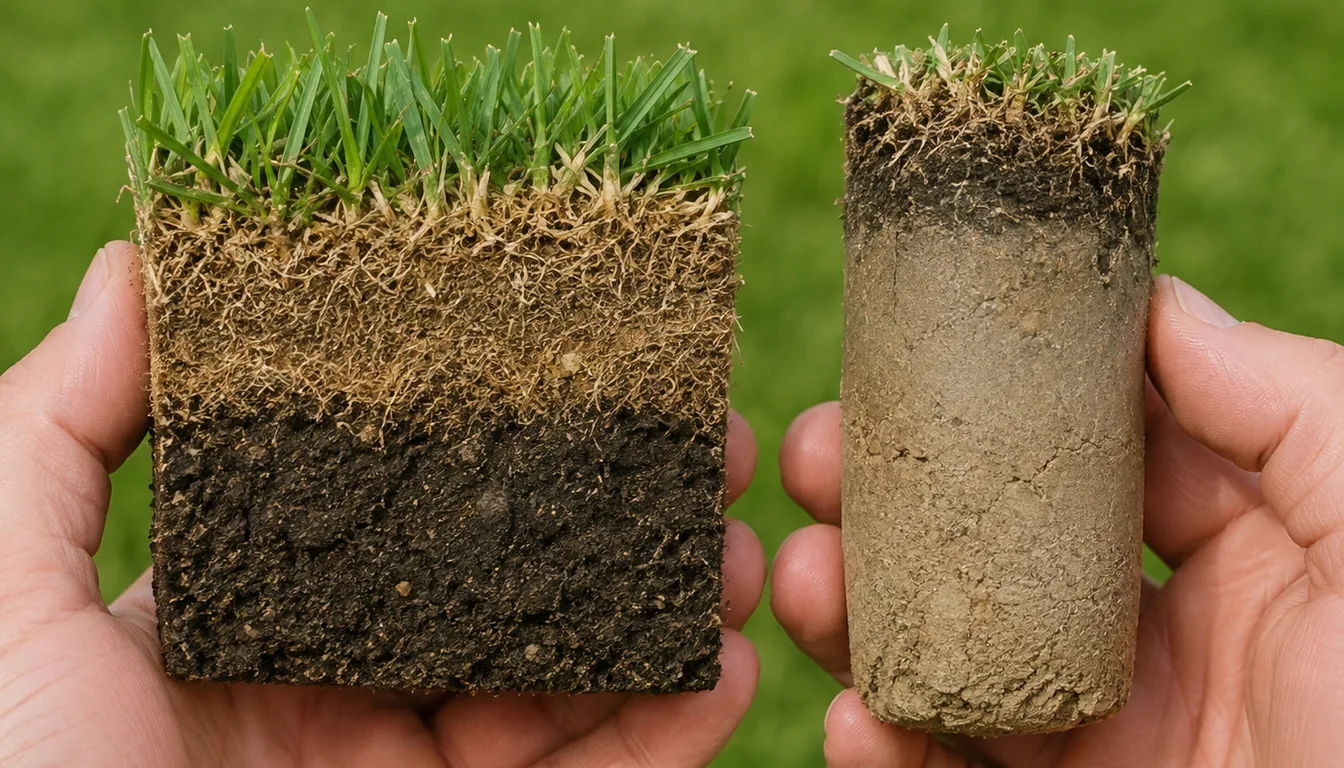
One machine removes interwoven stems and roots above the soil. The other removes plugs from the soil itself.
A spongy feel or a hard surface can point you in the right direction, but neither proves the diagnosis. Cut and measure several turf wedges for thatch, then test moist soil in traffic zones and compare it with a less-used part of the lawn.
Some lawns have both problems. In that case, work only while the grass is actively growing and able to recover, use the least aggressive treatment that resolves the measured problem, and avoid stacking renovation work onto heat-, drought-, disease-, or herbicide-stressed turf.
[ky_keyfacts] Dethatching addresses | Excess organic layer between green leaves and mineral soil Core aeration addresses | Compacted soil below the turf surface Useful thin thatch | About one-half inch or less can cushion and insulate turf Decision evidence | Turf wedges, moist-soil penetration, traffic pattern, and infiltration Timing | Active growth with enough favorable weather for recovery [/ky_keyfacts]
At a glance
What Is the Difference Between Dethatching and Aerating?
Thatch is a loose, interwoven layer of living and dead stems, roots, and crowns between the green canopy and soil.
Grass clippings usually decompose too quickly to be the main cause.
Compaction occurs when soil particles are pressed together and large pore spaces shrink. Repeated traffic, construction, mowing on wet soil, and fine-textured soil can reduce water infiltration and oxygen around roots.
| Question | Dethatching | Core aeration |
|---|---|---|
| Primary target | Excess thatch above the soil | Compacted soil and restricted pore space |
| What the machine does | Vertical blades or tines lift and cut organic material | Hollow tines remove plugs of turf and soil |
| Best evidence | Measured turf wedge with excessive thatch | Hard moist soil, traffic pattern, shallow rooting, and poor infiltration |
| Main injury risk | Torn crowns, stolons, and roots; severe thinning | Surface disruption, weed opportunity, and poor cores in soil that is too wet or dry |
| Typical recovery | More visible thinning and cleanup | Plugs dry and break down on the surface |
| Secondary benefit | Opens the surface for renovation | Can reduce compaction and help prevent or reduce some thatch |
A power rake sold as a dethatcher is not an aerator, and a spike shoe is not equivalent to a hollow-tine core aerator. Solid spikes can displace soil sideways without removing a core, which may provide little relief in a compacted root zone.
A thin thatch layer is useful.
Penn State describes about one-half inch or less as insulation against temperature and moisture swings, while serious problems become more likely as the layer grows much thicker. Local Extension thresholds differ with grass, site, and renovation goals, so measured depth.
How Do You Test for Thatch and Compaction?
Test several locations because a lawn can be compacted beside a gate and normal near a low-traffic bed. Include a healthy reference area, the suspected problem, and any zone with different soil or irrigation.
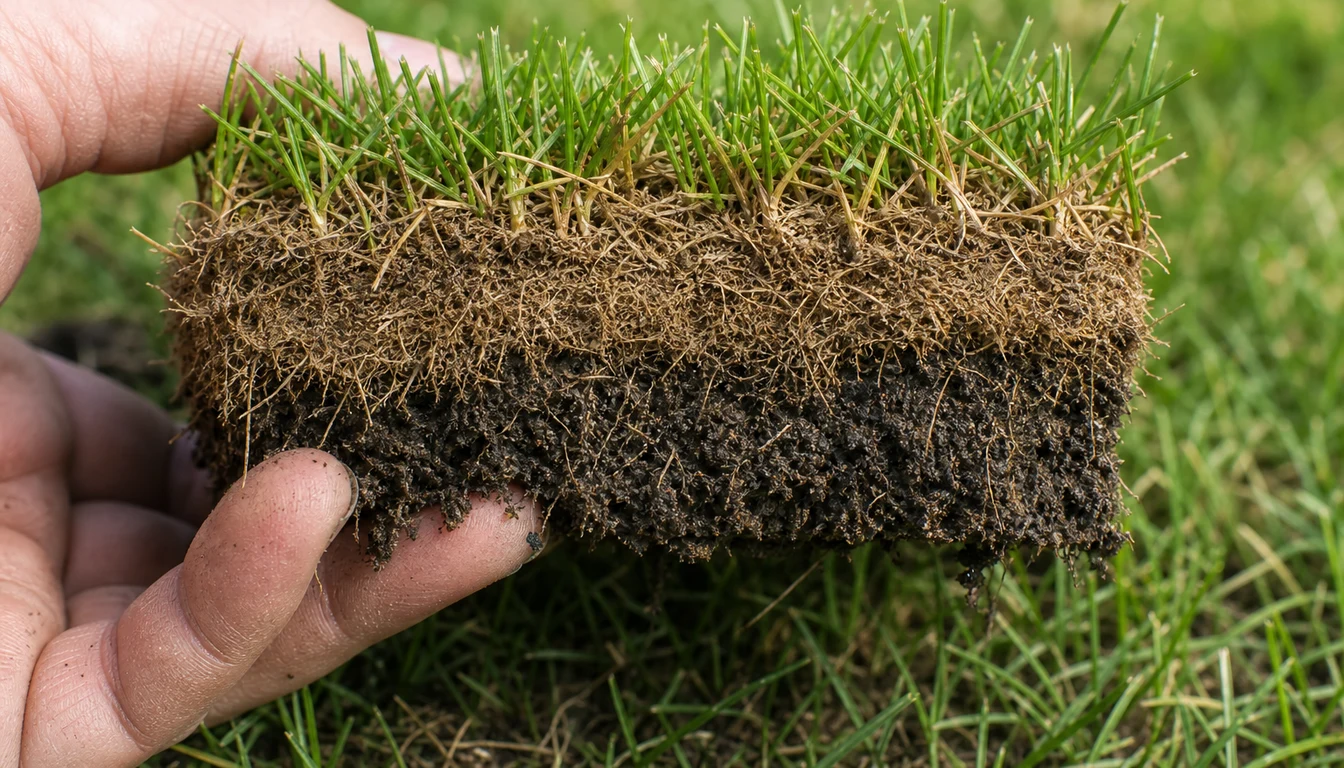
- Cut turf wedgesRemove a narrow wedge deep enough to show green shoots, the brown interwoven layer, roots, and mineral soil.
- Measure actual thatchIgnore loose clippings on top and measure the distinct layer between green vegetation and soil.
- Test moist soilAfter normal rain or irrigation, push a screwdriver or soil probe into suspected traffic areas and a healthier comparison area.
- Inspect roots and soilNote rooting depth, abrupt hard layers, standing water, dry hydrophobic thatch, and whether water reaches the mineral soil.
- Map the patternMark gates, play routes, mower turns, parked vehicles, construction fill, slopes, and shaded wet ground.
- Rule out other causesCheck irrigation coverage, disease, insects, shade, mowing height, pet injury, and nutrient problems before blaming every thin patch on compaction.
The screwdriver test is a useful screen, not a laboratory measurement.
Dry clay can resist a tool without chronic compaction, while very wet soil can accept it even though traffic has damaged structure.
Standing water also has more than one cause. A low grade, buried debris, hydrophobic dry soil, a broken irrigation head, or an impermeable layer can require drainage or grading work that aeration alone will not solve.
Measured thick thatch, soil accepts the probe
Dethatching or vertical mowing may be appropriate.
Thin thatch, moist soil resists the probe
Core aeration is the better mechanical treatment.
Thick thatch and compacted soil
Both may help, but only if turf condition and timing support the combined stress.
Thin thatch and normal soil
Diagnose irrigation, light, pests, disease, mowing, or species fit before renting either machine.
Deep construction compaction or chronic standing water
Seek soil, grading, or drainage advice because repeated shallow aeration may not reach the restrictive soil layer.
Why Does Thatch Build Up?
Thatch accumulates when resistant stems, crowns, roots, and stolons are produced faster than soil organisms break them down. Bagging or leaving ordinary clippings is rarely the decisive cause because leaf tissue usually decomposes readily.
Spreading grasses that produce many rhizomes or stolons can form thatch more readily than bunch-type grasses. Kentucky bluegrass, creeping red fescue, bermudagrass, zoysiagrass, and other dense spreading turf may need closer observation, while tall fescue and perennial ryegrass generally produce less.
Management can accelerate buildup.
Excess nitrogen pushes stem and root production, very acidic soil can limit decomposer activity, and chronic compaction reduces the air and biological activity involved in breakdown.
Irrigation that keeps the surface continually wet can support shallow roots in the thatch, while repeated shallow watering leaves those roots vulnerable when the layer dries. Some pesticide programs can also affect soil organisms or turf growth, so products should be used for identified needs rather than as a routine.
Core aeration is part of thatch prevention because removed soil cores mix mineral soil and microorganisms into the surface as they break down. It is not a fast substitute for physical removal when a severe layer has already lifted most roots above the soil.
When Should You Dethatch or Core Aerate?
Schedule either operation when the grass is growing strongly and several weeks of favorable weather remain. The machine wounds turf, so active roots and shoots need time to close openings and rebuild density.
| Lawn type | Better general window | Important limit |
|---|---|---|
| Cool-season turf | Late summer to early fall; spring only where local guidance and conditions support recovery | Heat, drought, and spring annual weeds can make a late or aggressive job costly |
| Bermudagrass and zoysiagrass | Late spring into early summer after full green-up | Do not work dormant turf or wait so late that recovery runs into fall dormancy |
| St. Augustinegrass and centipedegrass | Active warm-season growth, with species-specific equipment guidance | Aggressive vertical blades can injure stolons, and local recommendations should control depth |
| Mixed or unidentified lawn | Identify dominant grass and growth cycle first | A schedule safe for fescue can be wrong for dormant warm-season grass |
| New sod or young seedling turf | Wait until roots and plants are established enough for the chosen operation | Equipment can lift poorly rooted sod and destroy seedlings |
Soil for core aeration should be moderately moist. Tines need enough moisture to penetrate and pull intact plugs, but saturated soil can smear hole walls and equipment can rut the surface.
Delay the job during heat, drought, active disease, widespread wilt, or severe insect damage. Also review herbicide labels before combining aeration, dethatching, and overseeding because preemergent barriers and seeding restrictions can conflict with renovation.
For cool-season lawns, fall is often best because cooler air and warm soil support recovery with less spring weed pressure.
Warm-season turf needs its own active-growth window rather than the same fall calendar.
Allow at least the recovery period recommended by your state Extension service for the grass and operation. active growth stage, while calendar months are only local shorthand.
How Do You Dethatch Without Stripping the Lawn?
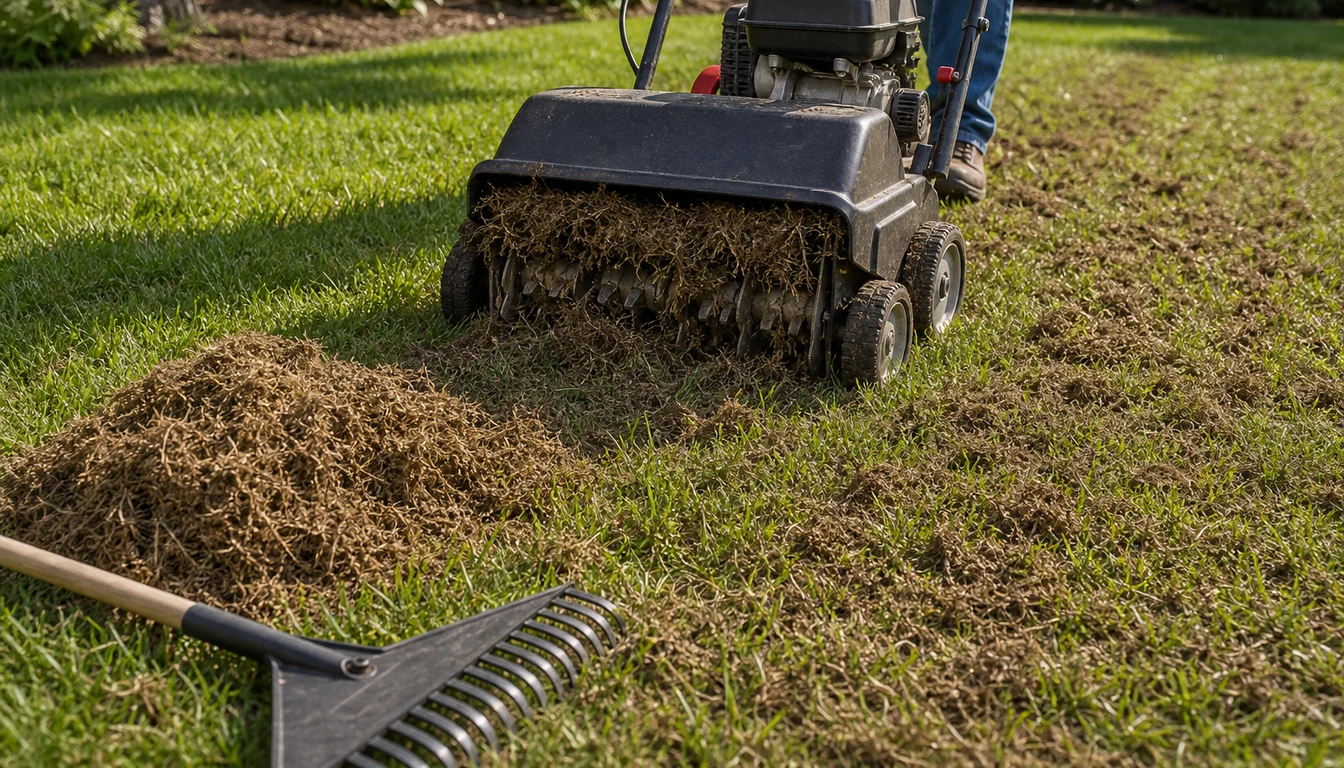
A thatch rake can handle a small area, while a vertical mower or power rake covers a larger lawn. Machine type, blade spacing, and depth change how much living turf is removed with the debris.
Flag sprinkler heads, shallow lighting wire, invisible-fence wire, irrigation valves, and exposed roots before starting. Mow only as low as the grass and equipment guidance safely allow, and remove loose surface debris.
- Choose a hidden test stripUse a representative area away from the front walk and set the machine conservatively.
- Make one controlled passLet blades enter the thatch without tilling deeply into mineral soil or tearing out extensive live crowns.
- Inspect immediatelyStop and compare remaining thatch, exposed soil, and live-plant loss before changing depth.
- Add a second direction only if justifiedSevere buildup may need another pass, but more disturbance is not automatically better.
- Collect lifted materialRake or bag heavy debris so it does not smother recovering leaves.
- Reassess the standDecide whether bare areas need seed, plugs, sod, or a less intensive recovery plan.
Do not spread questionable thatch as mulch around valuable beds. Material can contain weed seed, disease, pesticide residues, or persistent turf pieces, and composting suitability depends on what the lawn received.
The lawn may look thinner after a necessary operation, but widespread torn crowns and bare soil mean the setting or number of passes was too aggressive. Stop rather than trying to make every visible brown fiber disappear.
Dethatching is not annual housekeeping.
Repeat only when new measurements show that the layer has again reached the locally important threshold.
How Do You Core Aerate Compacted Soil?
Use a hollow-tine machine that removes real plugs. Equipment with solid spikes makes holes but does not remove the same volume of compacted soil.
Water dry soil in advance only enough to make it moderately moist, then allow a saturated lawn to drain before equipment enters. Test the first cores for useful depth and integrity rather than trusting that the machine is working because it leaves visible marks.
High-traffic or severely compacted areas may need passes in more than one direction. Low-traffic healthy areas do not need the same intensity simply because the machine is already rented.
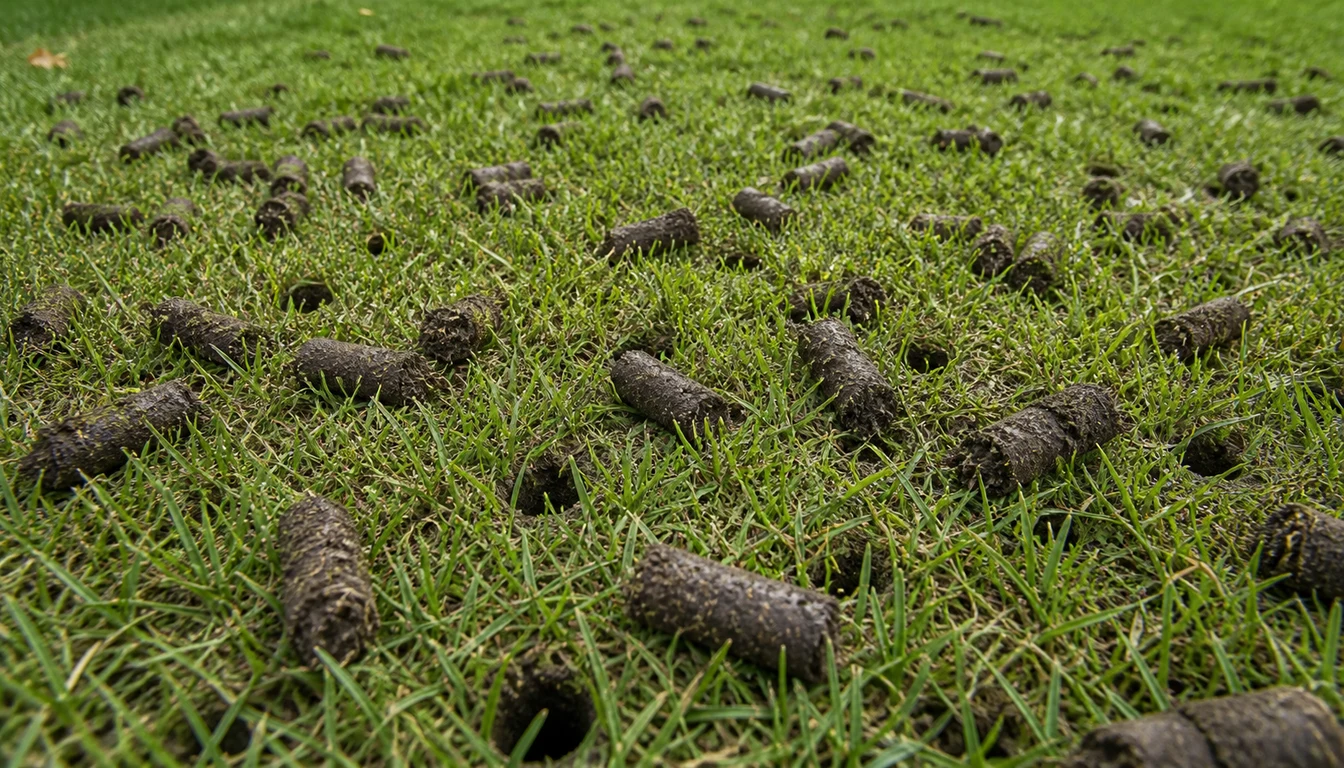
Leave soil cores on the lawn. Once they dry, mowing and weather break them apart, returning soil to the surface and helping thatch decomposition.
- Grass is actively growing and not heat-, drought-, disease-, or insect-stressed
- Soil is moist enough to pull cores but firm enough to avoid ruts and smearing
- Sprinklers, wires, shallow utilities, tree roots, and steep slopes are marked
- The machine uses hollow tines and produces real soil plugs
- Traffic zones receive the passes they need without overworking healthy areas
- Cores remain on the surface to dry and break down
- Overseeding and herbicide plans have been checked against product labels
Aeration creates temporary openings, not a permanent cure for traffic. Reroute repeated foot or vehicle pressure, avoid mowing saturated soil, and correct construction or drainage problems when those forces would immediately compress the lawn again.
Liquid products marketed as “aeration” do not remove soil cores.
Evaluate their labeled purpose and independent evidence separately rather than treating them as equivalent to mechanical core aeration.
Can You Dethatch, Aerate, and Overseed Together?
Combine operations only when each one has its own diagnosis. Dethatching a lawn with thin thatch adds injury without solving compaction, while aerating a loose sandy lawn may add little to a thatch-removal project.
If both are justified, dethatch first so the aerator can reach the soil and the surface debris can be collected. Core aerate next, then seed or topdress if the season, grass type, and renovation plan support those steps.
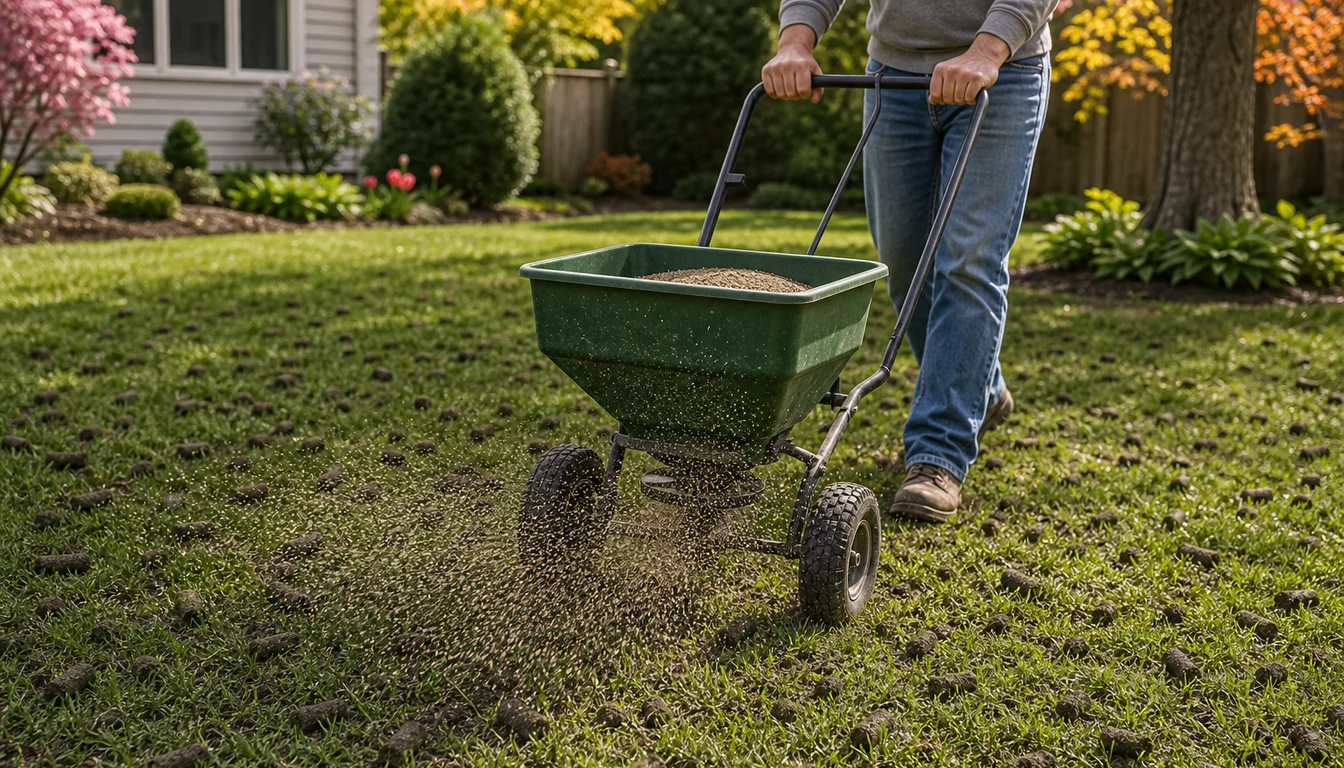
- Confirm both problemsRecord thatch measurements and compaction evidence rather than relying on appearance alone.
- Choose a recovery windowIdentify grass type and leave enough active growth after the work.
- Dethatch conservativelyRemove the excessive layer without trying to expose bare mineral soil everywhere.
- Core aerate traffic zonesPull real plugs and vary the number of passes according to compaction.
- Seed only where appropriateMatch species to the existing lawn, available light, climate, and remaining establishment time.
- Apply nutrients by evidenceFollow soil-test and product-label directions instead of adding fertilizer because the soil is open.
- Protect recoveryManage moisture for the existing turf and any seed, and limit traffic until the surface firms and new plants are established.
Aeration improves soil contact opportunities but does not guarantee germination.
Seed needs a compatible species, correct rate, suitable temperature, consistent surface moisture, and protection from herbicide conflicts.
Aggressive dethatching plus multiple aerator passes can be too much for a thin or weak stand. Stage the work across appropriate seasons or renovate the failed area when preserving sparse turf creates more labor than establishing a suitable lawn.
What Should You Do After the Work?
After dethatching, remove heavy piles of debris and inspect whether crowns remain rooted. After aeration, leave the plugs and avoid turning a cosmetic cleanup into another soil-disturbing pass.
Water according to current soil moisture, weather, and whether seed was added.
Existing turf may need a thorough irrigation when the root zone is dry, while a newly seeded surface needs lighter, more frequent moisture until germination and then a gradual transition toward deeper intervals.
Keep people, pets, and equipment off soft or newly seeded areas. Traffic can close fresh aeration holes, rut wet soil, and dislodge seedlings.
Resume mowing when existing grass is upright and firm enough to cut cleanly. For new seedlings, wait until the species reaches its recommended first-mow height and the soil can support the mower without tearing plants.
Do not fertilize automatically. A soil test, species program, seeding product, and nutrient restrictions in your jurisdiction decide whether a starter or maintenance application belongs in the project.
| What you see after treatment | Normal response | Action that needs review |
|---|---|---|
| Loose brown debris after dethatching | Removed thatch ready for collection | Leaving thick windrows that smother turf |
| Soil plugs after aeration | Cores drying before they break apart | Raking them away solely for appearance |
| Temporary open surface | Expected disturbance with intact plants | Extensive torn crowns, deep gouges, or equipment ruts |
| Short-term wilt in dry weather | Possible need for a root-zone moisture check | Repeated shallow watering without checking soil |
| New weeds weeks later | Openings and season can favor germination | Applying an incompatible herbicide over new seed |
Photograph and measure the same test sites later in the growing season. Improved infiltration, firmer footing, deeper roots, and denser compatible turf are more useful evidence than how dramatic the machine looked on treatment day.
When Will Neither Machine Fix the Lawn?
Dethatching and aeration correct specific physical conditions. They do not cure every brown, thin, wet, or shaded lawn.
Deep shade
Choose a shade-tolerant grass where climate permits, reduce competition appropriately, or replace turf with another surface. Mechanical work cannot create light.
Chronic low spot
Correct grade, drainage, or irrigation before repeated aeration. Holes do not provide an outlet for standing water.
Construction rubble or severe subsoil compaction
Obtain a soil profile and renovation advice because shallow cores may not reach the restrictive layer.
Wrong grass for the climate
Replace or transition to a compatible species rather than repeatedly repairing seasonal failure.
Active disease or insects
Identify and manage the organism. Thinning the canopy may worsen stress when the diagnosis is wrong.
Poor irrigation coverage
Repair distribution and scheduling before using machines to compensate for dry arcs or saturated overlaps.
Mostly undesirable grass or weeds
Compare renovation or replacement with preserving a stand that has little useful turf left.
Call a qualified turf or Extension professional when you cannot identify the grass, when roots stop at an abrupt soil layer, or when water remains after grading and irrigation checks. A small soil pit often reveals more than another rental.
The best choice can be no machine this season.
Correct mowing, irrigation, traffic, drainage, or species fit first, then retest thatch and compaction when the lawn is healthy enough for a meaningful result.
Pro Tips
- Measure several turf wedges because thatch depth can change across one lawn.
- Compare a traffic zone with a healthy low-traffic area when testing moist soil.
- Use a hidden test strip before changing a dethatcher's depth or making a second pass.
- Leave aeration cores on the surface to dry and break apart.
- Flag irrigation hardware, wires, roots, and shallow obstacles before using either machine.
- Review herbicide labels before combining mechanical work with overseeding.
Frequently Asked Questions
Should I dethatch or aerate first if my lawn needs both?
Dethatch first so excess surface material can be removed, then core aerate the exposed turf and soil. Combine them only during an active-growth window when the lawn is healthy enough to recover.
Is one-half inch of thatch always a reason to dethatch?
No. A thin layer around one-half inch or less can cushion and insulate turf, and Extension thresholds vary with grass and renovation goals.
Measure several wedges and follow local recommendations before removing it.
Is core aeration better than spike aeration?
Core aeration removes plugs and creates pore space. Solid spikes only displace soil and are not equivalent when the job is relieving meaningful compaction.
Can I aerate a wet lawn?
Wait until saturated soil drains and becomes moderately moist. Waterlogged soil can rut under equipment and smear hole walls, while very dry soil may produce shallow or incomplete cores.
How often should a lawn be dethatched or aerated?
Retest the conditions rather than following an automatic annual schedule. High-traffic compacted soil may need more frequent aeration, while dethatching belongs only when measured buildup becomes excessive.
Sources & References
Related Guides
Best Time to Aerate and Overseed for a Thicker Lawn
Most lawns never reach their potential because aeration and overseeding happen at the wrong time.
11 min read
Best Time to Overseed a Northeast Lawn for Thick Turf
Overseeding in the Northeast is all about catching that short window when soil is warm, air is…
11 min read
Can You Overseed a Lawn Without Aerating It First?
Thin turf and bare patches do not always mean you need to rent an aerator.
11 min read
How Long After Planting Grass Seed Can You Walk On It Safely
Most new lawns fail not from bad seed, but from feet, paws, and mower wheels showing up too soon…
11 min read
How to Fertilize a Lawn Without Burning It
Those yellow stripes and crispy patches after fertilizing are almost always user error, not bad…
14 min read
How to Find Frost Dates by ZIP Code and Use Them Safely
A ZIP-code frost date is a planning estimate from a nearby weather station, not a forecast for your…
15 min read