
How to Tell If Your Lawn Is Overwatered—and Fix It
Grass is probably overwatered when the root zone stays wet between irrigation days and the lawn also shows soft yellowing, shallow roots, persistent footprints, or decline concentrated in sprinkler overlap and low spots. One symptom alone is not enough, because drought, compaction, disease, shade, and poor sprinkler coverage can produce similar color changes.
Start with the soil, not the controller.
If several inches of the root zone are still wet before the next scheduled cycle, do not add more water until you know why it is lingering.
Most lawns recover after the source is corrected and air returns to the soil. Severe root loss or prolonged hot-weather flooding may leave dead turf that needs reseeding or sod, but drying and diagnosis come before repair.
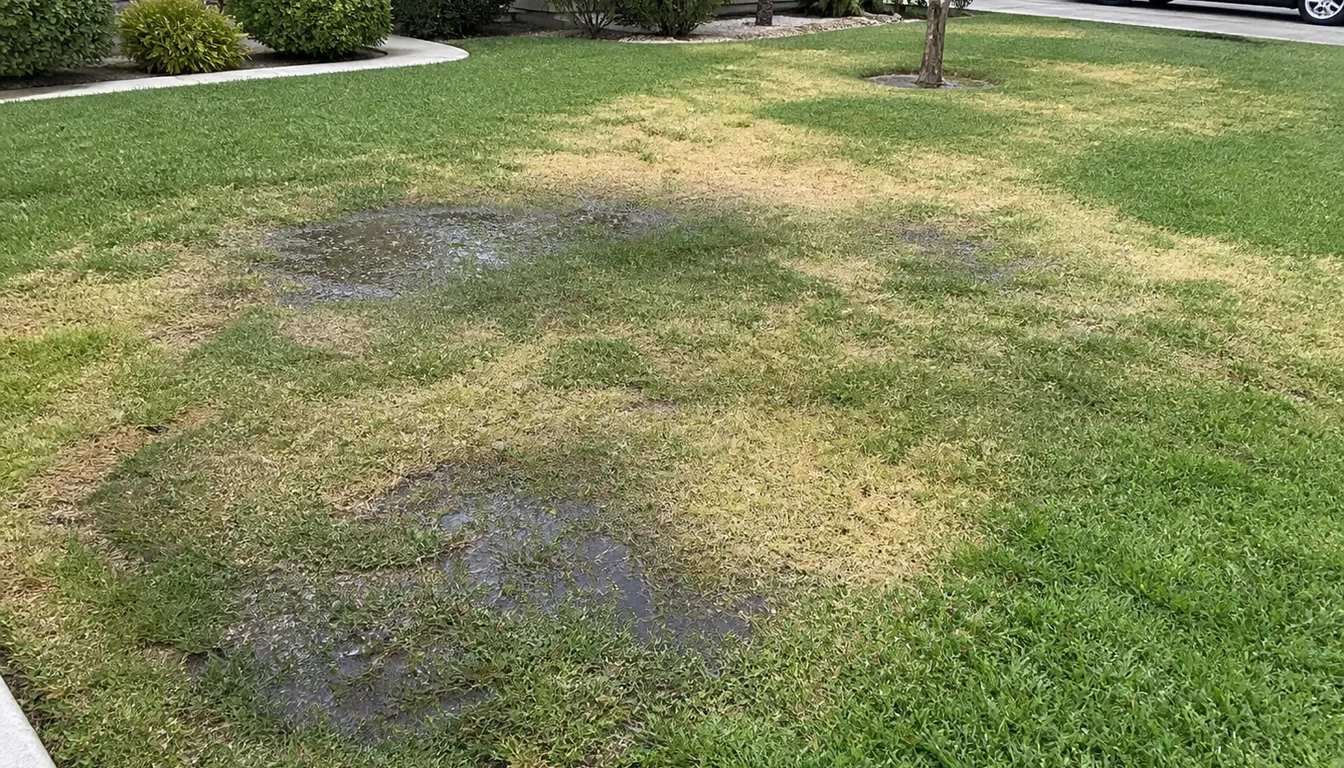
At a glance
What Are the Most Reliable Signs of Overwatering Grass?
The strongest diagnosis combines a turf symptom with wet soil and a matching water pattern. Look first in low areas, shaded edges, sprinkler overlaps, and places below a downspout or slope.
Press a narrow trowel or soil probe into the active root zone before the next irrigation.
The surface can look dry while finer soil below remains slick, cool, and saturated.
A wet lawn may feel soft underfoot and retain footprints long after you pass. In advanced cases, a lifted plug has sparse tan or dark roots, soft basal tissue, or a sour odor from oxygen-poor soil.
Color varies with species, temperature, and the length of saturation. Turf may turn pale green or yellow, thin gradually, or become brown to black and mushy after hot standing water.
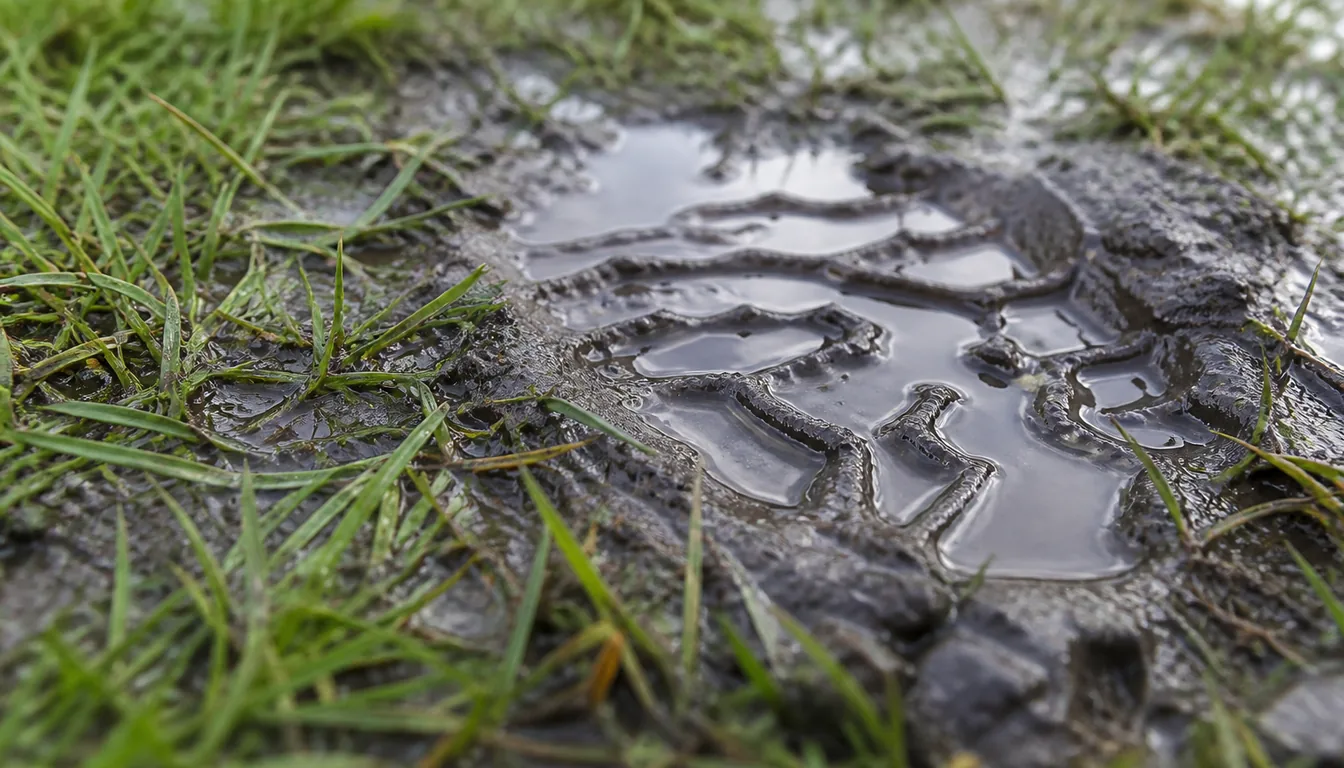
- Soil evidence
- Root-zone soil is still wet before the next planned irrigation
- Surface evidence
- Footprints persist, low spots stay muddy, or water stands after the system stops
- Plant evidence
- Turf loses density, yellows while wet, or pulls up with weak roots
- Pattern evidence
- Damage follows overlaps, shade, depressions, leaks, or runoff paths
- Odor evidence
- Sour or rotten smell suggests prolonged oxygen loss and decaying tissue
Overwatering is a water-balance problem, not a color diagnosis. Confirm where water enters, where it accumulates, and whether the soil has had time to drain before fertilizing the lawn or applying a fungicide.
How Do Overwatering Symptoms Appear Across a Lawn?
Walk the whole irrigation zone before focusing on individual blades. A broad pale strip beside two overlapping sprinkler heads tells a different story from one small circle, a line along a driveway, or uniform decline across the property.
Water accumulates where application exceeds infiltration. That may be the center of an overlap, the downhill edge of a slope, a compacted path, or a depression that receives runoff from surrounding turf.
Constant surface moisture can support algae, moss, and repeated mushroom flushes.
These are clues about the site, but mushrooms after rain do not prove that grass roots are waterlogged.
Soft, greasy thatch and a stale odor deserve a closer root-zone check. So does turf that tears loose easily because few healthy roots still bind the soil.
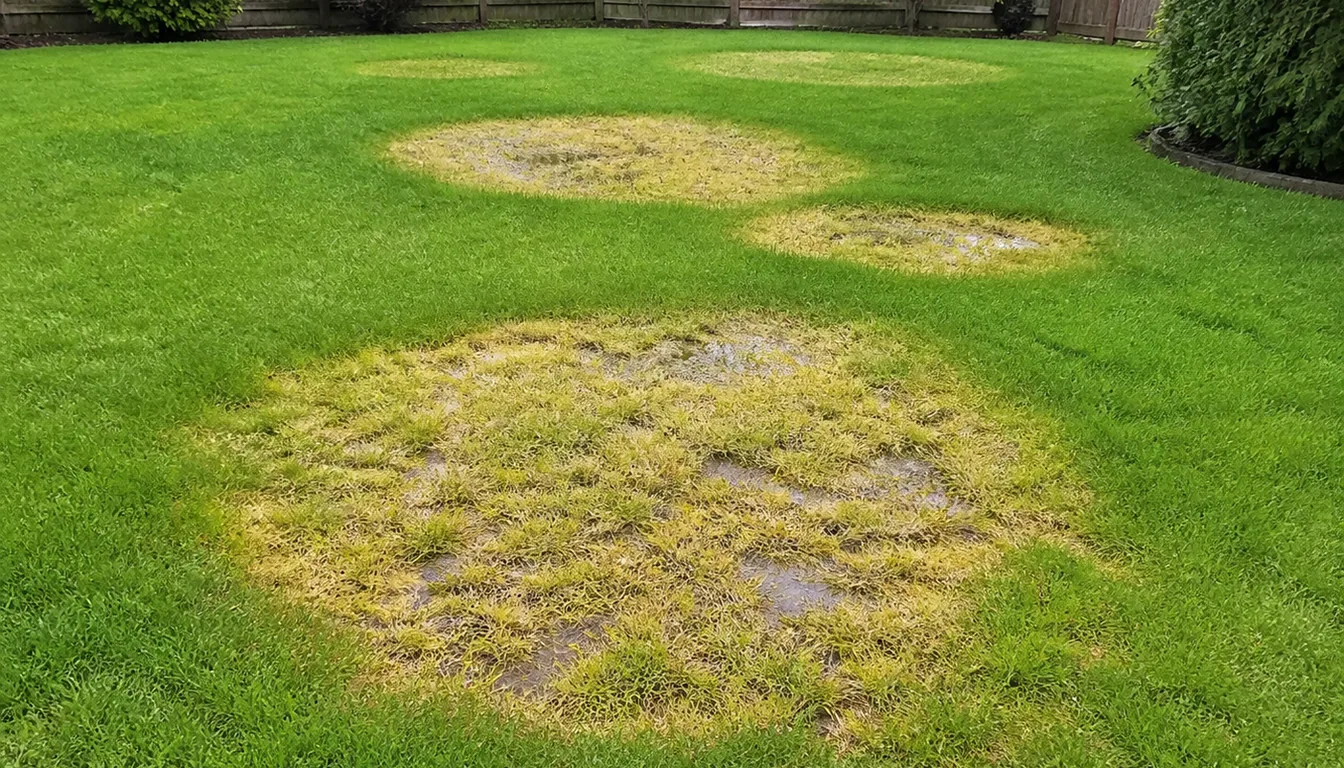
| Pattern | What to check | Possible water source | What the pattern does not prove |
|---|---|---|---|
| Damage centered on sprinkler overlap | Catch-can depth and wet soil below | Excess application in the overlap | That the whole zone needs less water |
| Wet downhill band | Runoff during each cycle | Application faster than infiltration | That the slope itself has poor subsurface drainage |
| Yellow shaded edge | Moisture, light, and air movement | Same runtime as a sunnier zone | That water is the only stress |
| Muddy isolated spot | Valve leak, broken head, grading, buried obstruction | Continuous leak or collected runoff | That scheduled irrigation is solely responsible |
| Thin lawn with moss | Drainage, shade, soil acidity, and compaction | Persistent surface moisture | That moss caused the turf decline |
A pattern that stays wet after surrounding turf firms up is the place to investigate first. Mark it before the next cycle so you can watch how water arrives instead of guessing from the damage afterward.
Is the Lawn Overwatered, Drought-Stressed, or Diseased?
Drought and excess water can both make grass wilt, discolor, and stop growing.
The difference is below the leaves.
Drought-stressed blades often fold or roll and may show footprints because they lack turgor, while the soil in the root zone is dry. Overwatered turf may also hold a footprint, but the ground beneath it remains wet, soft, or muddy.
Disease can complicate either condition. Leaf spots, colored fungal growth, sharply defined patches, or expanding rings call for closer identification, yet wet foliage and saturated roots still need correction even when a pathogen is present.
Compaction creates another misleading combination. Water can puddle on a hard surface while soil below the compacted layer remains relatively dry, so the lawn experiences runoff rather than a fully saturated root zone.
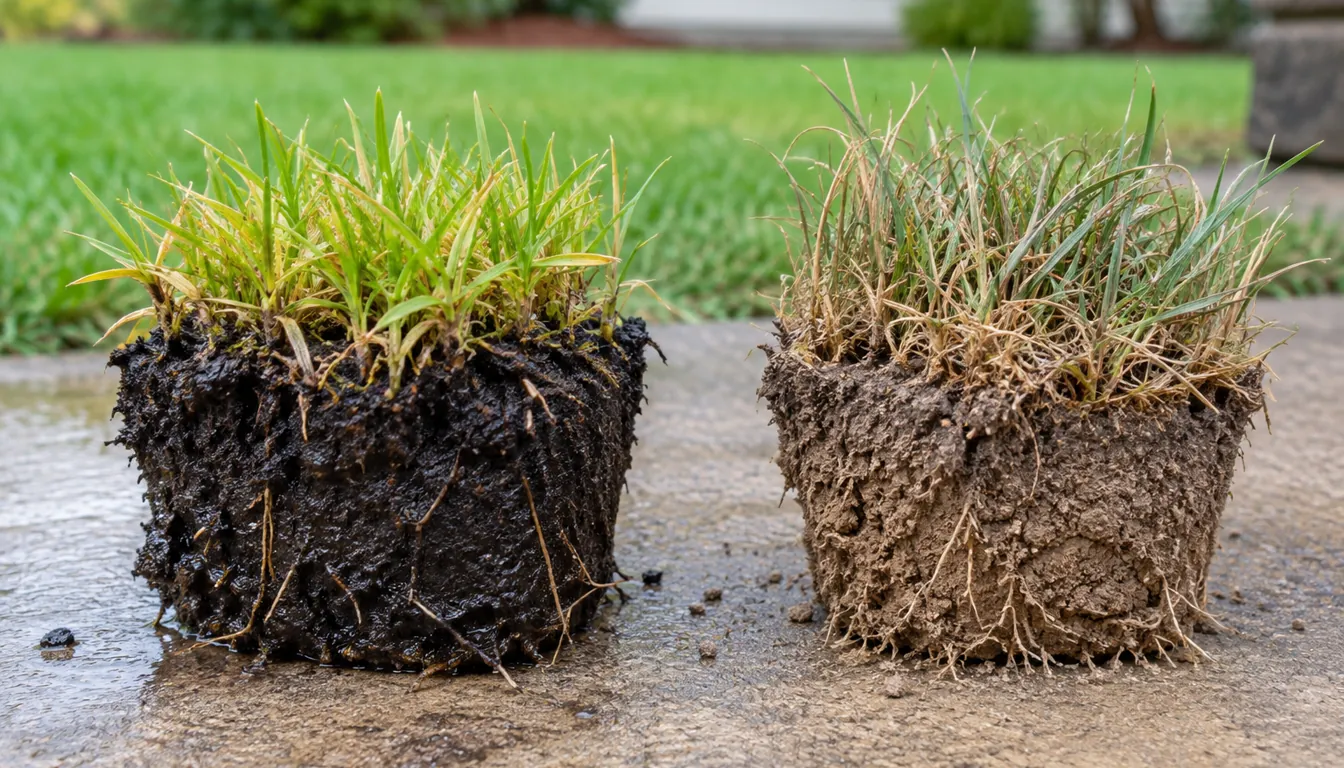
| Observation | Drought more likely | Excess water more likely | Another issue to check |
|---|---|---|---|
| Root-zone feel | Dry, hard, or loose for its texture | Slick, cool, soft, or saturated | A compacted layer blocking infiltration |
| Blades | Folded, dull, slow to rebound | Soft yellowing or decline while soil is wet | Leaf spots, lesions, insect feeding |
| Roots | Dry soil around otherwise firm roots | Sparse tan, dark, or soft roots | Grubs, root disease, construction damage |
| Pattern | Hot edges, missed arcs, exposed high spots | Low spots, overlaps, shade, leaks | Chemical spill, pet urine, mower injury |
| Response to irrigation | Recovers after adequate root-zone wetting | Stays weak or worsens when more water is added | Damaged roots unable to take up water |
Wet soil changes the decision. Do not respond to wilt with another automatic cycle until a trowel check shows that the root zone can use it.
What Should You Do First When Grass Is Overwatered?
Turn off the affected irrigation zone and stop traffic on soil that deforms underfoot. Mowing, aerating, or dethatching saturated ground can shear roots and compress the very pores that need to reopen.
Then identify whether water is still entering the area.
Close a leaking valve, repair a broken head, redirect roof discharge, and pause any upstream zone that sends runoff downhill.
Do not choose a universal number of dry days. The difference between sandy soil and clay means one site may firm quickly while another stays unsafe to work much longer.
- Stop the sourceSuspend the affected zone and account for recent rain or runoff from nearby areas.
- Protect the soilKeep people, pets, mowers, and heavy equipment off any ground that squishes or takes deep prints.
- Check more than the surfaceOpen a narrow hole in the affected and healthy turf to compare moisture, odor, and roots.
- Map the causeWatch heads, valves, slopes, downspouts, and low spots during a short controlled test only if the site can accept it.
- Wait for workable moistureResume physical repair when plugs hold together without smearing and the surface supports foot traffic.
- Choose the correctionFix scheduling, distribution, infiltration, or drainage according to the cause you confirmed.
Fertilizer is not first aid for suffocated roots. Delay feeding until the soil drains and the lawn produces healthy new growth, then base any application on the grass species, season, and a soil test or local guidance.
How Do You Find Out How Much Water the Sprinklers Apply?
Controller minutes do not tell you how much water reached the lawn. Nozzle type, pressure, wind, spacing, blocked spray, and overlapping arcs can make one part of a zone receive several times more than another.
Use several identical, straight-sided catch cups across the full pattern.
Include the wet patch, an average area, the far edge, and any overlap between heads.
Run a short timed test, measure every cup, and compare the depths. A large spread means distribution needs repair before you calculate a longer or shorter runtime.
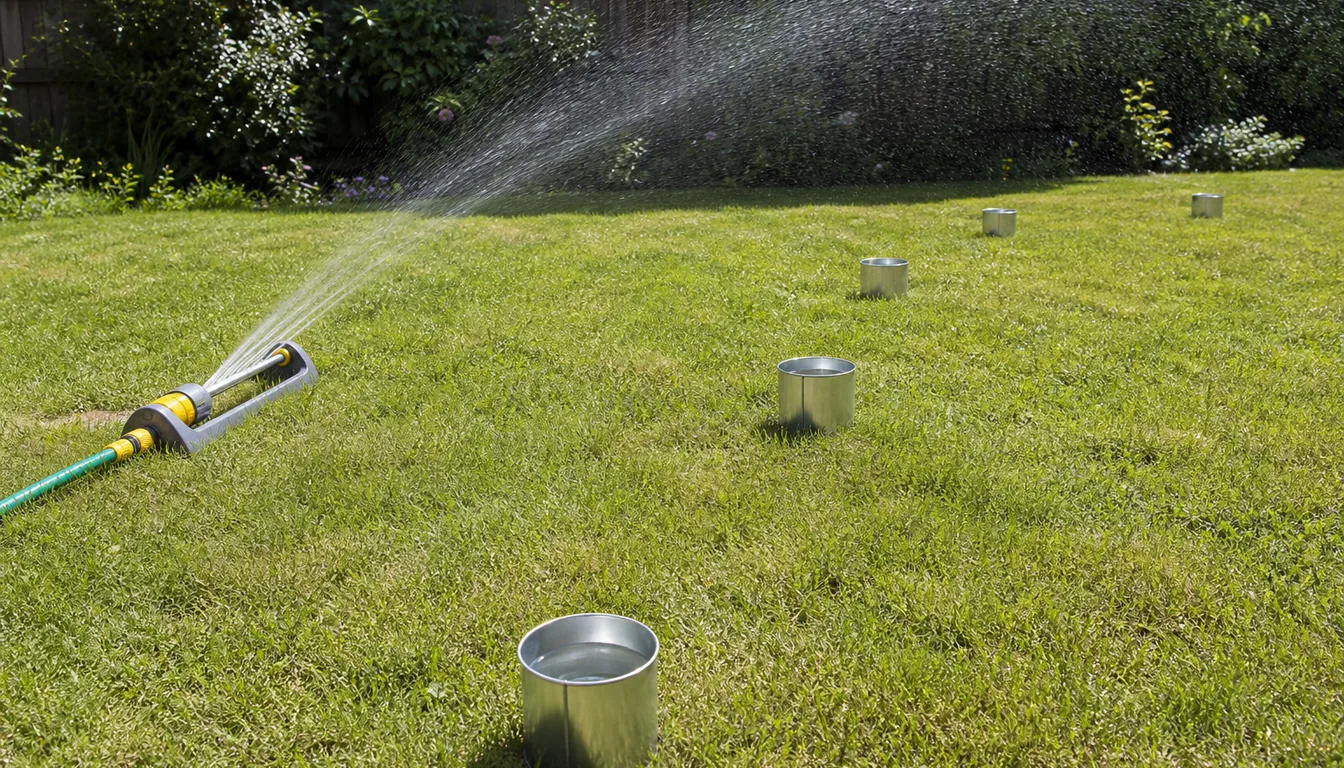
- Place the cupsSpread them between heads and include visibly wet and dry areas.
- Run one timed testChoose calm conditions and record the exact minutes.
- Measure every depthCalculate the average, but keep the individual values so overlaps and missed arcs remain visible.
- Inspect the hardwareCorrect tilted, sunken, blocked, leaking, or mismatched heads and keep spray off pavement.
- Retest the corrected zoneConfirm that distribution improved before changing the controller schedule.
- Check the root zoneAfter water redistributes, open the soil and see how far the measured application traveled.
The right total changes with turf species, root depth, soil, season, wind, temperature, shade, and useful rainfall. A measured root zone is more reliable than a fixed weekly number copied from another climate.
Water again only when the grass and soil indicate a need. Newly seeded areas and new sod are exceptions because their usable root zone is shallow during establishment.
Why Does Water Run Off Before the Lawn Is Wet Deeply?
Runoff is an application-rate failure.
It can happen on clay, compacted soil, slopes, hydrophobic dry turf, or any zone where a sprinkler delivers water faster than the surface can absorb it.
The lawn may be muddy at the edge while deeper soil remains dry. Increasing the total minutes without changing delivery sends more water to the gutter and makes the wet margin worse.
Use cycle-and-soak when the hardware is working but infiltration is slow. Run the zone only until water begins to pool or move, pause long enough for it to enter, then repeat if the root-zone check shows more moisture is needed.
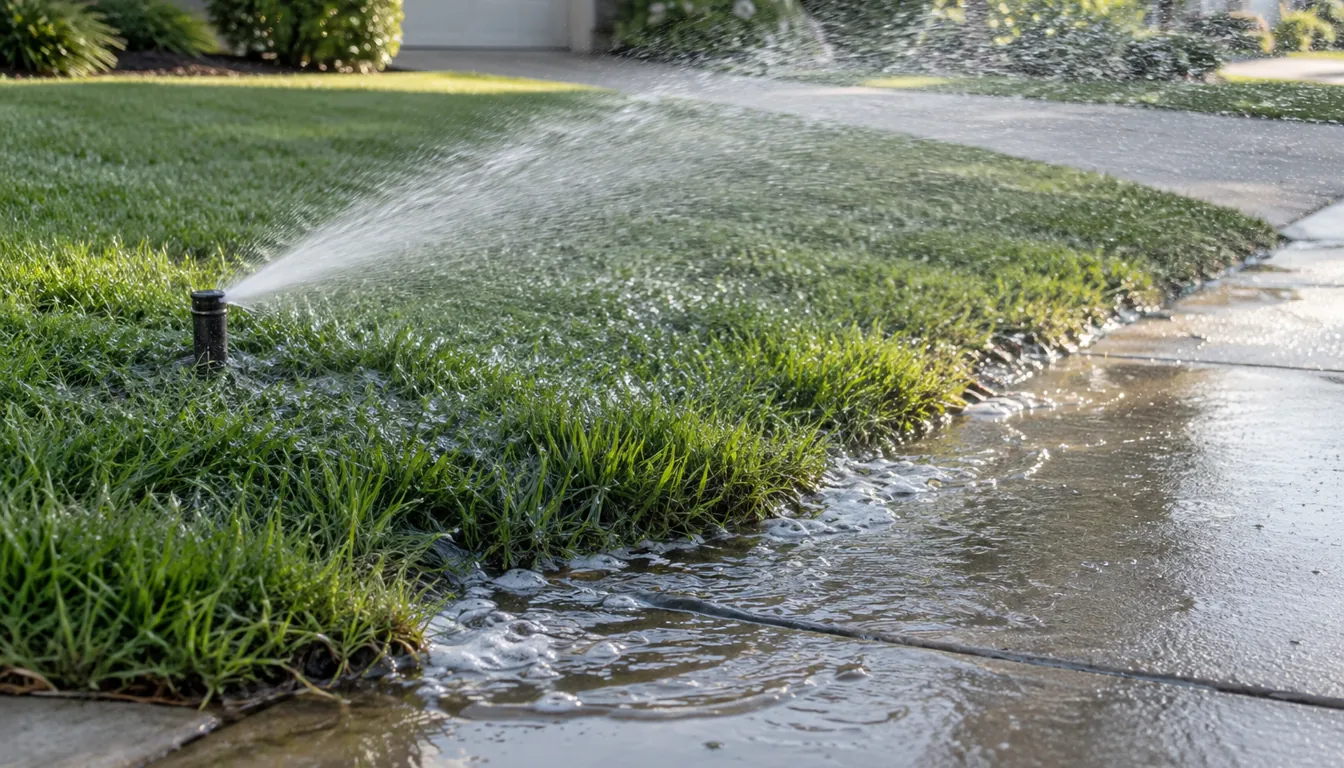
Water runs onto pavement
Shorten each cycle, correct overspray, and verify head alignment.
Water collects downhill
Reduce the application rate and divide the cycle before flow develops.
One spot bubbles or never dries
Inspect for a damaged head, stuck valve, or buried leak.
Surface puddles over hard soil
Check compaction and thatch after the lawn becomes workable.
Top is wet but soil below is dry
Slow delivery and verify penetration with a trowel after redistribution.
A sprinkler test measures distribution. A soil check proves infiltration.
You need both because evenly filled cups can still sit above soil that accepts water too slowly.
Keep runoff out of storm drains. Water leaving the lawn can carry soil, fertilizer, and pesticides with it, while the roots receive less than the controller suggests.
When Should You Aerate or Repair an Overwatered Lawn?
Aeration can improve air and water movement in compacted turf, but timing decides whether it helps. Soil should be moist but firm enough for hollow tines to remove intact plugs without the machine rutting or smearing the ground.
Wait if water rises around your shoes or the surface deforms with each step.
Aerating saturated soil can add compaction and tear weakened roots.
Core aeration does not repair a leaking valve, bad grade, buried hardpan, or water table near the surface. Correct the incoming water and identify the barrier before treating every wet problem as surface compaction.
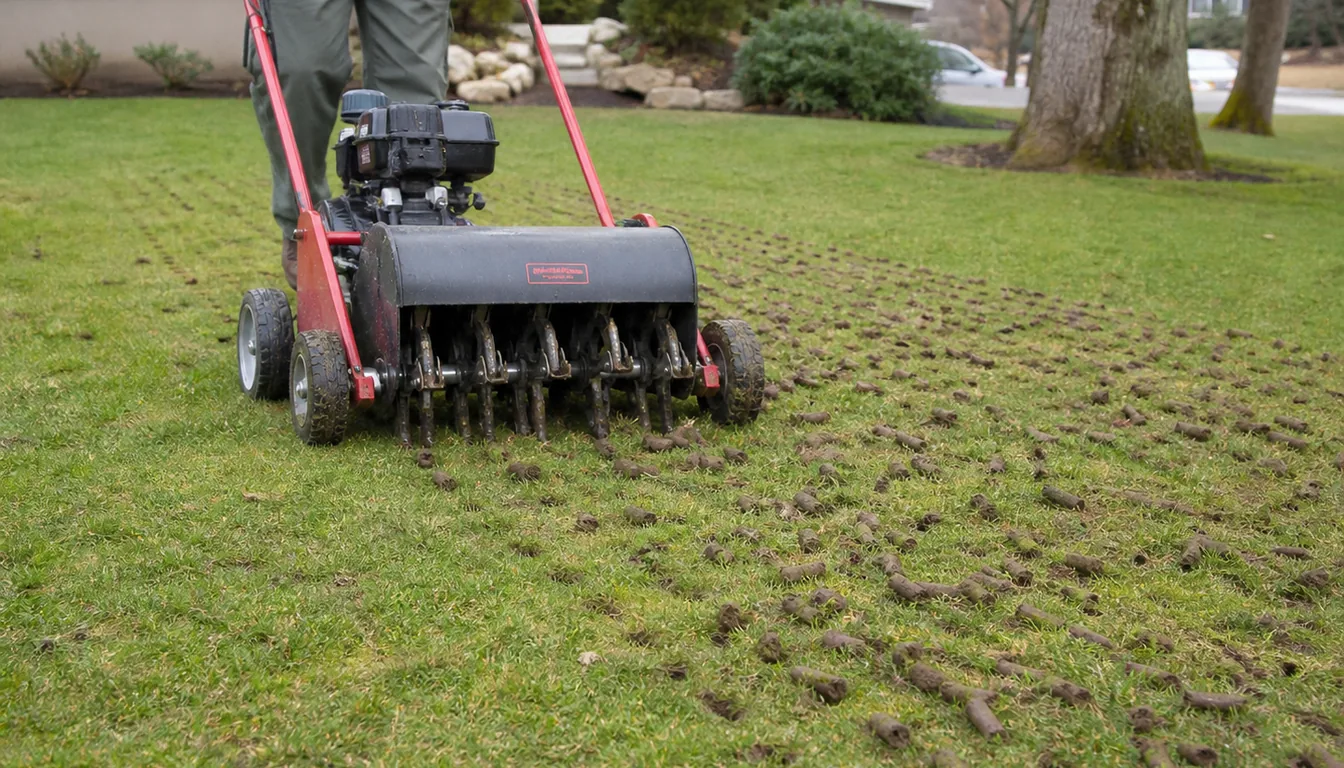
| Condition after drying | Best next action | Why |
|---|---|---|
| Turf firms up and resumes growth | Monitor before disturbing it | Living roots may recover without renovation |
| Soil is compacted but drains between rains | Core aerate during the grass's active growth period | Open cores improve exchange and rooting space |
| Thatch repels or holds water at the surface | Measure the layer and choose species-appropriate management | Aggressive removal can injure an already thin lawn |
| One depression repeatedly ponds | Regrade or correct the drainage path | Scheduling cannot remove a physical basin |
| Turf is dead but soil and drainage are sound | Reseed, plug, or sod at the proper season | New grass needs a corrected site |
| Water remains because of a high water table | Seek local drainage or landscape advice | Routine aeration cannot lower groundwater |
Topdressing belongs to a defined repair plan, not a reflex. A thin compatible material can help smooth minor unevenness after aeration, while a thick layer of unlike soil can bury crowns or create a new interface that slows water movement.
Test the drainage and sprinkler pattern again after repair. A lawn that improves only while irrigation is off still has an unresolved delivery problem.
How Do You Reset the Watering Schedule Without Causing Drought?
Do not jump from chronic saturation to deliberate neglect. Resume irrigation when the root zone has drained to the point where the grass is approaching stress, then use deep watering that reaches existing roots without runoff.
Watch for species-appropriate wilt cues such as folding blades, a dull color, or footprints that persist while the soil is actually drying. Confirm with a trowel because shade and fine soil can remain moist long after sunny edges need attention.
Separate unlike areas when the system allows.
A shaded strip, a sunny slope, new sod, and established turf should not share one schedule merely because they touch.
- Subtract useful rainfall before starting a cycle
- Check soil in the driest representative part of each zone
- Delay irrigation while the root zone remains adequately moist
- Run early enough that foliage can dry and wind losses stay low
- Use measured output rather than controller minutes from another zone
- Pause and cycle when pooling or runoff begins
- Recheck soil after water has redistributed
- Adjust after weather shifts, repairs, mowing changes, or establishment
Seasonal adjustment is essential.
Cool, cloudy weather and shorter days usually extend the interval, while heat, wind, active growth, and shallow establishment roots can shorten it.
The schedule is corrected when you can explain why the zone runs, what depth it should wet, and what evidence will delay the next cycle. That approach prevents both overwatering and the shallow daily habit that leaves turf dependent on constant irrigation.
Pro Tips
- Check the root zone before the next scheduled cycle instead of judging moisture from the surface.
- Compare a wet patch with healthy turf from the same zone so soil texture and grass type remain similar.
- Keep traffic and equipment off any lawn that squishes or takes deep footprints.
- Use several catch cups because one container cannot reveal sprinkler overlap or missed areas.
- Stop each cycle when water begins to pool or leave the lawn, then allow time for infiltration.
- Aerate only after the soil is firm enough to produce clean plugs without rutting.
- Reset irrigation from soil, weather, grass stage, and measured output instead of a universal weekly amount.
Frequently Asked Questions
How long does an overwatered lawn take to recover?
There is no fixed recovery time. Turf with living crowns and corrected irrigation may resume growth as the soil drains, while roots damaged by prolonged saturation need longer and dead patches will not regrow without reseeding, plugging, or sod.
Judge progress from firmer soil, healthy new blades, and new white roots rather than a set number of days.
Should you aerate an overwatered lawn right away?
No. Wait until the lawn supports foot and machine traffic without squishing or rutting.
Core aeration can help confirmed compaction when the soil is moist enough to pull clean plugs, but working saturated ground can smear soil, compact it further, and tear roots.
Can overwatering make grass yellow?
Yes. Saturated soil reduces oxygen around roots, and damaged roots cannot support normal green growth.
Yellowing alone is not proof, so check soil moisture, roots, odor, and the irrigation pattern before treating the lawn for excess water.
Can an overwatered lawn look dry?
Yes. Injured roots may fail to supply leaves even while the soil is wet, so blades can wilt or brown.
A root-zone check separates that condition from ordinary drought and prevents another irrigation cycle from worsening it.
Do mushrooms mean the lawn is overwatered?
Mushrooms indicate moisture and decaying organic material, but a flush after rain does not prove that turf roots are saturated.
Repeated mushrooms in an irrigated area, wet soil between cycles, sour thatch, and declining grass together make excess moisture more likely.
When is it safe to water the lawn again?
Water when the grass is approaching stress and the active root zone has dried enough to accept more moisture. Confirm both conditions with turf cues and a soil check, then apply water slowly and stop if runoff begins.
Sources & References
Related Guides

A Drought Tolerant Plant Is Not Drought Tolerant Yet
Colorado State puts it in one sentence. Drought tolerant plants are not drought tolerant until…
11 min read
An Overwatered Tree Hides It for a Year, Then Thins
A tree gives you almost no warning. Colorado State says the symptoms of root problems may appear…
12 min read
Best Time to Water Flowers for Stronger Blooms
Watering flowers at the wrong time does more damage than skipping a day.
10 min read
Best Time to Water Indoor Plants: Morning or Evening?
Morning is the better default for watering indoor plants.
6 min read
Best Time to Water Plants for Healthier Roots
Watering at the wrong time wastes water and stresses plants, even if you are generous with the…
11 min read
Deep Watering vs Frequent Watering: What Roots Need
Deep watering usually serves established lawns, vegetables, trees, and shrubs better than repeated…
17 min read