
Best Shade Plants for Gardens That Get Little Sun
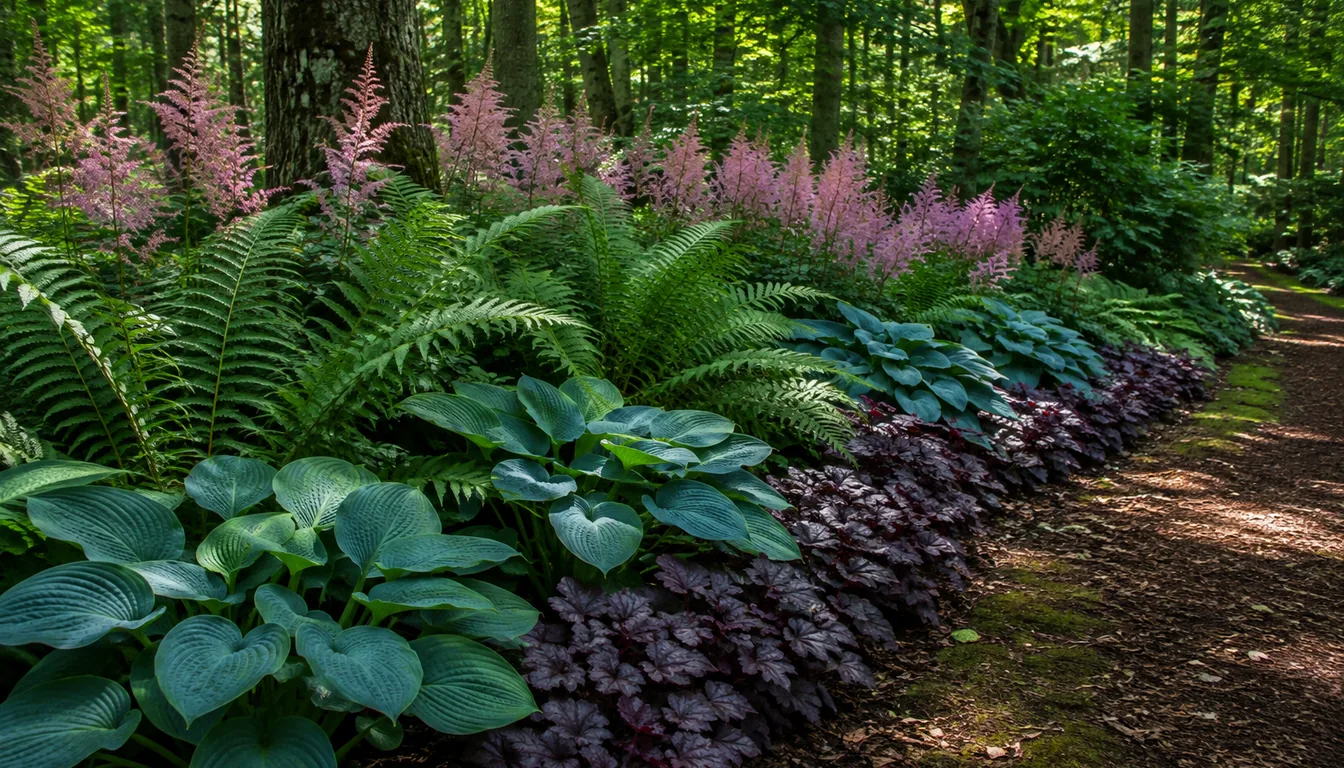
The best shade plants match both the light and the soil beneath it. In bright or dappled shade with average moisture, start with hosta, coral bells, foamflower, woodland phlox, and Christmas fern.
Moist shade can support astilbe, turtlehead, and cinnamon fern. Dry shade under mature trees needs a tougher list such as epimedium, Christmas fern, Pennsylvania sedge, and locally appropriate native ground covers.
Shade is only half the site. A north wall may stay evenly moist, while a maple canopy can leave the ground dry after rain.
For a dim room, use the low-light houseplant guide, where window distance and indoor watering change the answer.
At a glance
How Much Shade Does the Garden Actually Get?
Not all shade is the same, and the difference between partial and full shade can determine whether your plants thrive or slowly melt away. The amount and timing of light matter more than the word shade on a nursery tag.
Part shade means three to six hours of direct sun per day, usually morning sun with afternoon shade, or sun filtered through open branches. This is one of the best growing conditions in a yard because plants get enough light to fuel real growth without the scorching stress of a west-facing afternoon wall.
Full shade generally means less than about three hours of direct sun. It still receives open daylight and is not darkness.
Think of the north side of a house, the area under dense evergreens, or a space completely blocked by a fence or building.
Fewer plants succeed here, but the ones that do are genuinely tough.
Dappled shade is the shifting pattern you get under deciduous trees. Sun flickers through the canopy all day, giving plants small doses of direct light.
Many woodland natives evolved under exactly these conditions and look their best here. Before you buy a single plant, spend a day observing your shade.
Walk the area at 9 a.m., noon, and 3 p.m. and note where direct sun hits and for how long.
That observation saves money and prevents planting failures.
One more factor is reflected light. A garden bordered by a white fence or a light-colored house wall receives significantly more light than one surrounded by dark fences or dense hedges, even if the sun exposure is identical on paper.
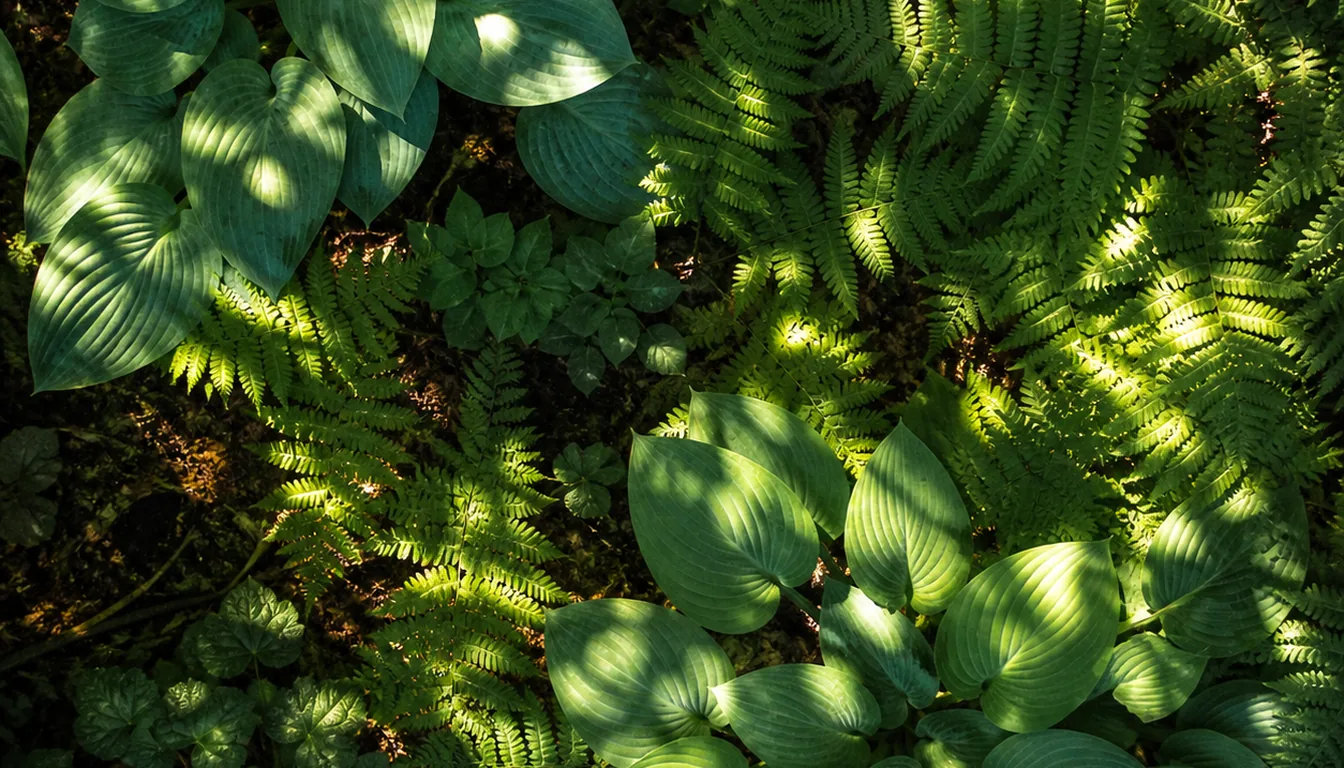
- Part shade: About 3-6 hours of direct sun, with timing and intensity considered
- Full shade: Less than about 3 hours of direct sun, but still open daylight
- Dappled shade: Excellent for woodland natives and most fern varieties
- Reflected light: Accounts for more than most gardeners realize
- Map direct lightCheck the bed in the morning, at midday, and in late afternoon on a clear day.
- Repeat after leaf-outSpring light does not describe summer shade beneath a deciduous canopy.
- Check the soilProbe several inches down after rain and note where it dries first or stays wet.
- Measure the spaceRecord usable height and width so each plant fits at maturity.
Which Perennials Work in Moist, Average, or Dry Shade?
Perennials are the backbone of any shade garden because they return every year, gradually filling in and improving with age. The best shade perennials earn their keep through foliage, structure, and seasonal interest beyond just a brief bloom window.
Hostas are the undisputed workhorses of shady landscapes.
Leaf size ranges from thumbnail miniatures to dinner-plate giants.
Color runs from deep blue-green to chartreuse gold to boldly variegated white and green.
They handle everything from partial to full shade, ask for little beyond decent soil moisture, and their foliage carries the garden all season. Slugs and deer can cause serious damage.
Use sanitation, barriers, habitat reduction, or a locally labeled control only after confirming the pest.
Astilbe brings genuine flower power to shady spots, producing feathery plumes in white, pink, red, and lavender through midsummer. It needs consistently moist soil - dry shade is its weakness - but in a good spot it spreads steadily and blooms reliably.
Plant several varieties with staggered bloom times for a longer show.
Bleeding heart is a shade classic that peaks in spring with arching stems of pendant flowers, then gracefully goes dormant by midsummer. Pair it with Hosta clumps whose expanding leaves fill the gap left behind.
Coral Bells is one of the most versatile shade perennials available today, with foliage colors spanning amber, burgundy, lime, and silver. It tolerates partial shade well, offers wispy summer flower stalks, and stays semi-evergreen in mild climates.
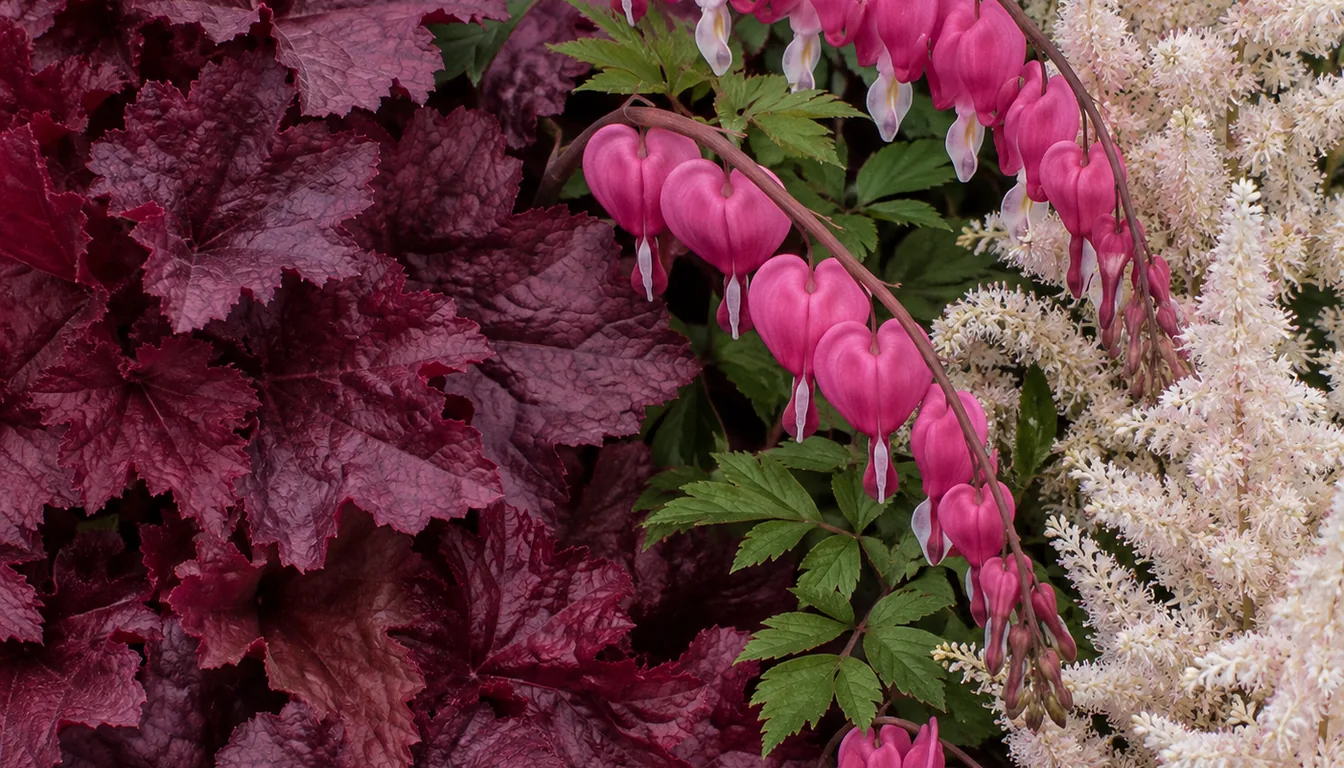
- Hostas: Best all-around foliage plant for shade
- Astilbe: Needs moisture, delivers real color
- Bleeding Heart: Spring star, pairs well with Hosta clumps
- Coral Bells: Foliage-first, wide color range, semi-evergreen
| Site | Strong candidates to check locally | Main limit |
|---|---|---|
| Bright or dappled shade, average moisture | Hosta, coral bells, foamflower, woodland phlox | Flowers and variegation weaken in deep shade |
| Moist, well-drained shade | Astilbe, turtlehead, cinnamon fern, Virginia bluebells | Most decline when the soil dries hard |
| Dry shade after establishment | Epimedium, Christmas fern, Pennsylvania sedge | New plants still need establishment water |
| Deep but open shade | Hosta, Christmas fern, locally suitable wild ginger or sedges | Expect fewer flowers and slower growth |
Which Shrubs Grow and Flower in Shade?
Shrubs give a shade garden its bones, the permanent structure that holds the design together through every season. The right shade shrub requires almost no coaxing once established.
Azaleas are one of the most reliable spring-blooming shrubs for partial shade. They perform best under tall deciduous trees where they get bright indirect light all day and a few hours of filtered sun.
Avoid deep shade, which reduces blooming considerably.
Azaleas need well-drained, acidic soil and very little pruning beyond removing dead wood immediately after bloom.
Hydrangeas offer some of the most dramatic summer flowers of any shrub, and several types do well in partial shade.
Bigleaf Hydrangeas (Hydrangea macrophylla) are well suited to morning sun and afternoon shade. PeeGee and Annabelle types tolerate more sun but also perform in bright partial shade.
Give them consistent moisture during establishment.
Camellias shine in zones 7-10 as long-lived evergreen shrubs with flowers ranging from white to deep crimson. They prefer dappled or partial shade.
Direct afternoon sun in the South scorches the foliage badly.
Their glossy evergreen leaves provide year-round structure even when they are not in bloom.
Japanese maples straddle the line between large shrub and small tree.
Most cultivars prefer partial shade, especially in hot climates where afternoon sun causes leaf scorch. Their layered branching and stunning fall color make them anchor plants in shade garden design.
For deeper shade, consider oakleaf hydrangea (Hydrangea quercifolia), mountain laurel, or a locally native viburnum, while recognizing that flowering usually decreases as light drops.
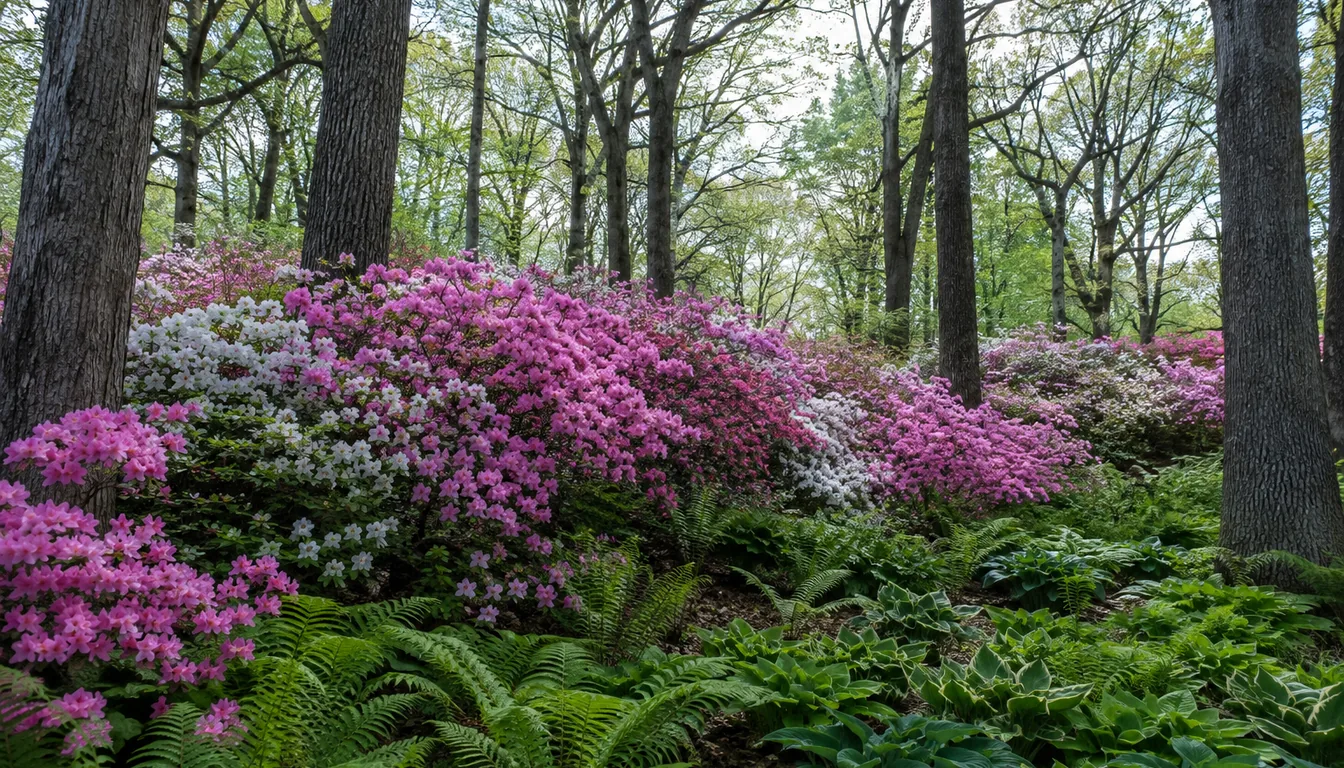
- Azaleas: Spring color, needs acidic soil, dislikes deep shade
- Bigleaf Hydrangea: Morning sun, afternoon shade, consistent moisture
- Camellia: Evergreen structure, zones 7-10
- Japanese Maple: Architectural anchor, partial shade preferred
Which Ground Covers Can Handle Shade?
A ground cover can reduce open soil and add texture, but no plant permanently eliminates weeds. Under trees, root competition and local invasive status matter as much as shade tolerance.
Pachysandra is one of the most dependable evergreen ground covers for deep shade.
It spreads by underground runners and can tolerate shade, but Japanese pachysandra can escape cultivation in parts of North America.
Check a current state list and consider Allegheny pachysandra where it is locally native and suited to the soil. The two species differ; a shared common name does not make their spread or care needs identical.
Liriope (lilyturf) is a grass-like ground cover that handles both sun and partial to full shade, making it extremely useful as a transition plant at the edge of a shaded bed. It produces lavender flower spikes in late summer and attractive dark berries through fall, adding seasonal interest most ground covers skip.
Sweet woodruff is a low-growing, delicate-looking plant that spreads into a dense mat under trees and produces tiny white flowers in spring.
Galium odoratum prefers moist, well-drained shade and can spread aggressively in favorable conditions. Its delicate appearance does not mean restrained growth; a current local invasive-plant list is relevant before planting.
Ajuga (Ajuga reptans) spreads rapidly by stolons and prefers moist conditions, although it tolerates moderately dry soil. It can escape its intended area and is invasive in parts of the country. Bronze or purple-leaved forms add foliage contrast to green-heavy shade beds, and the blue flower spikes in spring offer early-season color when little else is blooming.
For naturalistic woodland gardens, native Ferns make outstanding ground covers. Christmas Fern stays evergreen in most of its range, while cinnamon Fern and ostrich Fern create dramatic tall masses in moist shade.
- Pachysandra: Check the species, moisture needs, and local spread concerns
- Liriope: Handles full sun to full shade, great as a border edger
- Sweet Woodruff: Spring flowers; can spread aggressively in moist shade
- Ajuga: Fast spread and strong foliage color; check local invasive status and avoid wet, heavy soil
- Native Ferns: Naturalistic, many sizes, excellent woodland texture
Check English ivy, wintercreeper, periwinkle, pachysandra, sweet woodruff, ajuga, and liriope by botanical name.
Nursery availability does not prove that a fast spreader is safe near natural land.
How Do You Design a Shade Garden That Lasts?
A shade garden that looks designed rather than accidental comes down to layering, contrast, and repetition. None of those require a horticulture degree.
They just require a framework before you start planting.
Layer by height. Tall shrubs like hydrangeas or Japanese maples can anchor the back or center. Mid-height perennials like astilbes and coral bells fill the middle.
Low ground covers and edging plants like ajuga or sweet woodruff finish the front. Contrast leaf texture and size. Big bold hosta leaves look best next to fine-textured fern fronds or grassy liriope.
Avoid planting too many similar textures together because the result is visually flat even with a variety of plant species.
Use foliage color for long-season interest. Shade gardens bloom for shorter windows than sunny borders, so foliage has to do the heavy lifting.
Mix blue-green hostas with gold-leaved types, burgundy coral bells, and the silver-streaked foliage of Japanese painted ferns for a composition that stays interesting all season. Repeat key plants where the bed has room. Repeated groups can connect separate parts of a border, while one distinctive plant can also work as a focal point.
Repetition ties a garden together more effectively than any other single design move. Consider bloom sequence. Start with bleeding heart in spring, transition to astilbe in early summer, then let bold foliage carry the garden through fall. Plan for all three seasons when selecting plants rather than buying whatever looks good in the nursery on one visit.
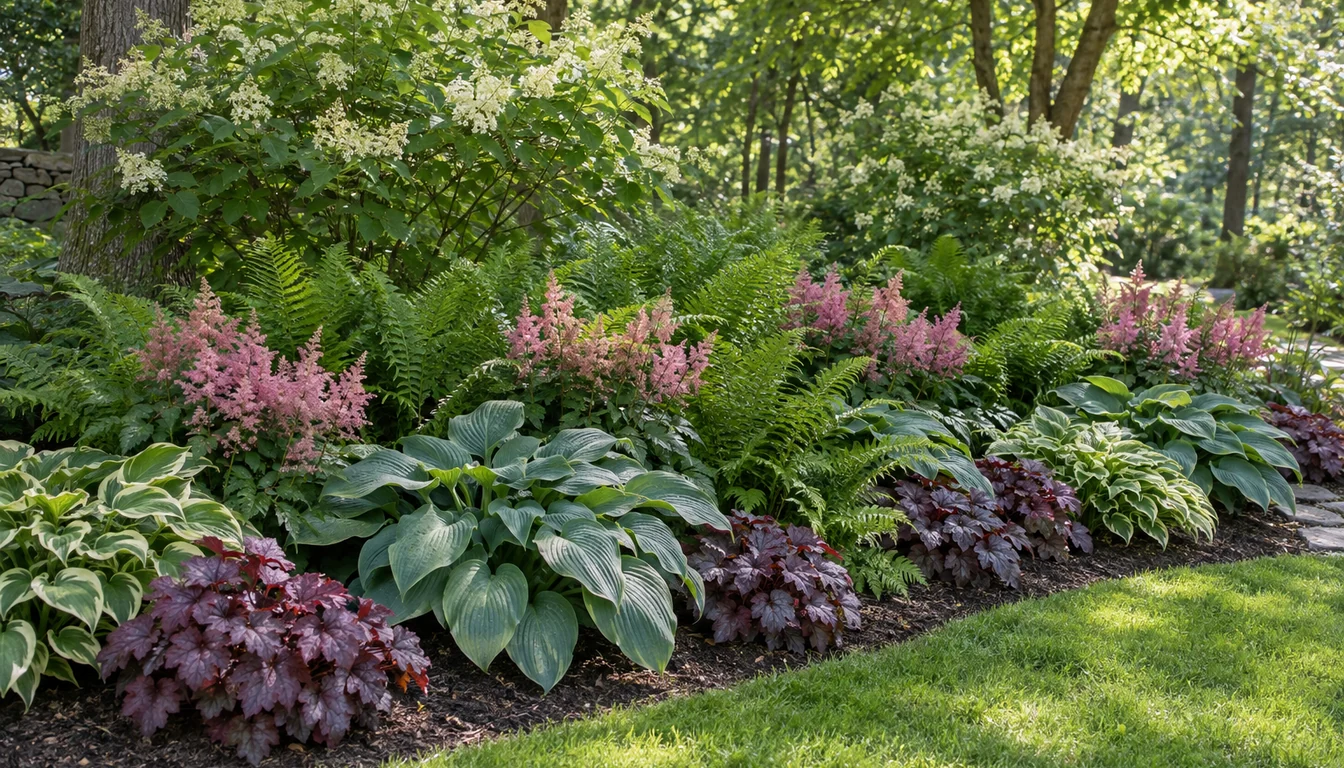
- Layer heights: Back to front, tall to low
- Contrast texture: Bold leaves next to fine ones
- Foliage color: The real season-long show in a shade bed
- Repetition: Key plants grouped and repeated for cohesion
- Bloom sequence: Plan spring, summer, and fall interest separately
Spring
Use bulbs and woodland flowers that bloom before the tree canopy closes.
Summer
Let hosta, ferns, coral bells, sedges, and shrubs carry the bed after spring flowers fade.
Fall
Use oakleaf hydrangea, Japanese maple, and locally suitable asters for color and structure.
Winter
Keep evergreen ferns, sedges, shrub branching, bark, and sound seedheads where they suit the climate.
How Should Shade Plants Be Planted and Watered?
Shade gardens have soil challenges that sunny borders do not. Tree roots compete aggressively for water and nutrients.
Dense canopy can intercept rainfall so significantly that soil under large trees stays surprisingly dry even after a rainstorm.
In an open bed, use a soil test and drainage check before broad soil improvement.
Beneath established trees, avoid tilling because most fine roots occupy the upper soil. In areas with significant tree root competition, add compost as a top dressing each spring instead of digging it in deeply.
Cutting large surface roots causes more damage than the soil improvement is worth. Mulch helps conserve moisture. A two to three inch layer of shredded bark or leaf mold conserves moisture, moderates soil temperature, and slowly improves soil structure as it breaks down.
Keep mulch an inch or two away from plant crowns and tree trunks to prevent rot.
Most shade plants need consistent moisture, especially during their first one to two growing seasons. After establishment, some hostas and ferns tolerate short dry periods, but astilbe generally needs consistent moisture.
Dense tree canopies can leave all three dry even after rain. Drip tubing or a soaker hose can deliver water beneath foliage.
It delivers water directly to root zones without wetting foliage, which reduces fungal issues that can be worse in low-air-circulation shade situations.
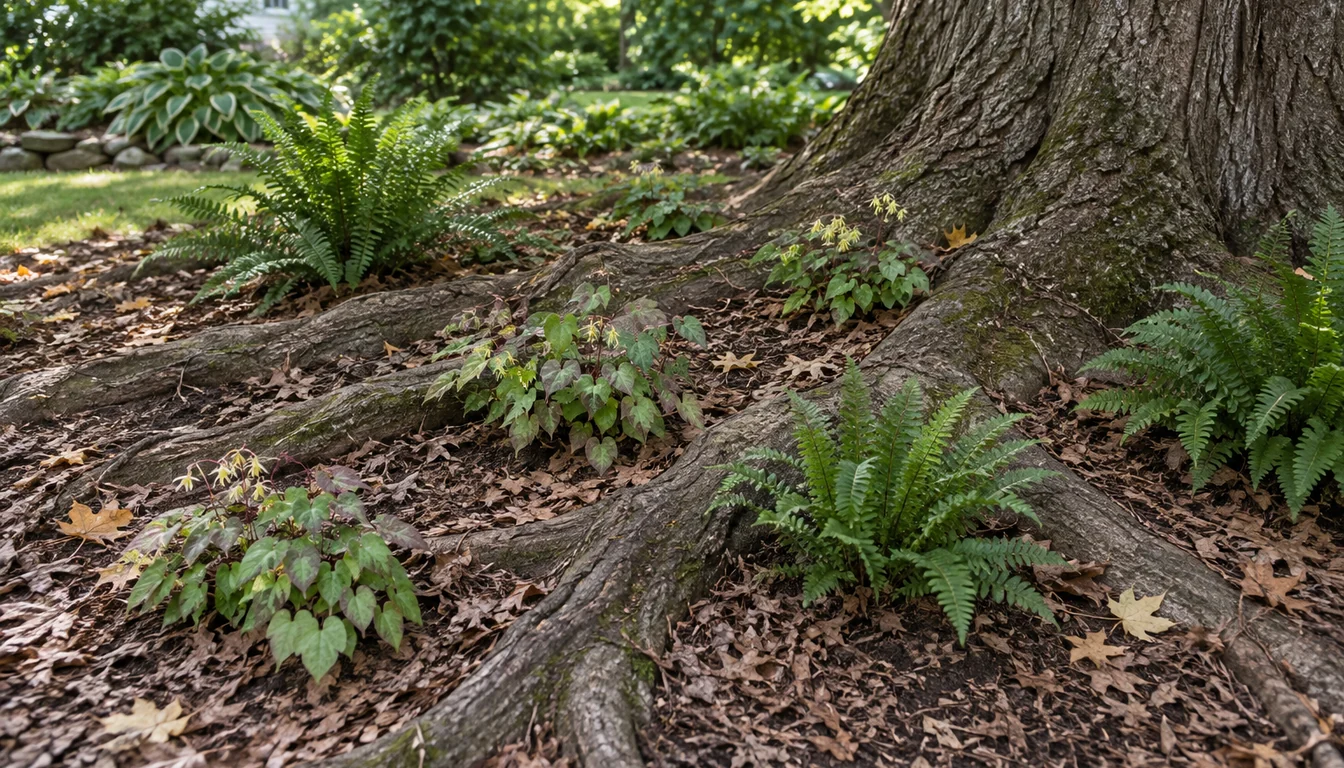
- Choose plants documented for dry shade in your region
- Start with small pots or plugs that fit between roots
- Water each root ball whenever the soil begins to dry during establishment
- Keep soil and mulch away from the trunk flare
- Leave mulch or a path where roots are too dense to plant safely
That is also why plant choice matters more than fertilizer in these beds. Once the roots are competing with mature trees, even good plants need realistic expectations and deeper watering.
- Soil improvement: Use a soil test in open beds; avoid tilling or raising soil over established tree roots
- Mulch depth: 2-3 inches, kept clear of crowns and trunks
- Watering priority: First two seasons are critical for establishment
- Drip irrigation: Best delivery method under tree canopies
- Dry shade: Match the species to moisture and root competition; leave dense roots undisturbed
Annual Shade Plants for Season-Long Color
Perennials and shrubs provide structure, but well-chosen annuals plug the color gaps and keep a shade garden looking lively from spring through frost. Impatiens were the default shade annual for decades until downy mildew devastated them.
New Guinea impatiens are largely resistant to that disease and still deliver strong, saturated color in partial shade.
The classic garden impatiens (Impatiens walleriana) has made a comeback with disease-resistant varieties.
A disease-resistant I. walleriana cultivar such as 'Beacon' is an option; New Guinea impatiens are a different group. Begonias are arguably the most underused shade annuals.
Wax begonias handle everything from partial to nearly full shade and bloom continuously from planting until hard frost without deadheading. Dragon Wing begonias offer larger flowers on trailing stems ideal for containers and bed edges under trees.
Caladiums are grown primarily for foliage rather than flowers, and few plants match their impact in a shade bed.
Large heart-shaped leaves come in combinations of white, pink, red, and green that light up dim garden corners.
They are tropical perennials treated as annuals in most climates, dug and stored in fall where winters are cold. Torenia (wishbone flower) is a heat-tolerant annual that handles full shade better than almost any other flowering plant.
Small tubular flowers resemble tiny snapdragons in purple, pink, and white combinations. For foliage contrast, coleus delivers striking color in almost unlimited combinations and thrives in partial to full shade.
Modern coleus varieties are more sun-tolerant than older types, but they still do their best work in shade where their colors stay vivid rather than bleached.
- Impatiens: Choose the species and a cultivar with documented downy-mildew resistance
- Wax Begonias: Continuous bloom, nearly zero maintenance
- Caladiums: Foliage impact, treat as annual outside zones 9-11
- Torenia: Best annual for true full shade situations
- Coleus: Foliage accent, extremely wide color range
Why Do Shade Gardens Fail?
Most shade garden failures trace back to a handful of predictable mistakes. Knowing them in advance puts you well ahead of the average gardener.
Choosing a plant for the wrong light. A flowering plant may survive in shade while producing fewer flowers than expected.
Most flowering perennials, vegetables, and ornamental grasses need at least six hours of direct sun. Forcing them into shade produces weak, flopping, pest-prone plants that look bad and die early.
Match plants to actual light conditions instead of optimistically estimating. Ignoring tree root competition. Dense roots restrict planting space and compete for moisture; deep cultivation to make room can harm the tree.
Choose plants adapted to dry shade or leave the root-dense zone mulched. Do not raise the soil grade over established tree roots.
Overwatering in low light and forgetting rainfall interception. New gardeners often water on a schedule without checking whether a canopy has already blocked a week's worth of rain.
Poke a finger into the soil before reaching for the hose.
Planting too close together. Shade gardens often feel sparse at installation, tempting gardeners to overcrowd. Most Hosta varieties eventually reach two to four feet wide.
Hydrangeas can easily hit six feet.
Give plants the space they need at maturity and fill gaps temporarily with annuals. Choosing the wrong shrub for the climate. Azaleas and camellias both plants have variety-specific cold hardiness that matters enormously.
Check USDA hardiness zone compatibility before buying based on flower color alone.
Neglecting the off-season. A shade garden designed only around spring bloom looks brown and empty by August.
Plan for foliage interest and late-season texture from the beginning.
- Sun lovers in shade: Check light requirements rigorously before buying
- Root competition: Avoid digging through established roots; use small plants where there is space or retain mulch
- Spacing: Mature size matters far more than nursery pot size
- Climate match: Verify zone hardiness for every shrub purchase
- Off-season: Foliage and structure must carry the garden through summer and fall
| What you see | Likely direction to investigate | First check |
|---|---|---|
| Healthy leaves but few flowers | Too little light or excess nitrogen | Count direct-light hours and check the plant's normal bloom season |
| Crisp edges with dry soil | Drought, reflected heat, or root competition | Probe beneath mulch and compare the outer bed with the trunk zone |
| Yellowing with wet soil | Poor drainage or damaged roots | Stop scheduled watering and inspect crown depth |
| Long weak stems | Insufficient light | Recheck summer exposure after leaf-out |
| Recurring leaf spots | Slow leaf drying, crowding, or a susceptible cultivar | Check spacing, airflow, and overhead irrigation |
Pro Tips
- Observe the yard at several times of day before buying plants because a bed that is dark at noon may receive direct morning sun.
- Add 2-3 inches of leaf mulch where appropriate, but keep it away from crowns and tree trunks.
- Use broad leaves beside fine foliage so the shade bed stays visually clear between bloom periods.
- Check mature plant width instead of spacing by the size of the nursery pot.
- Choose dry-shade plants by regional evidence and water them during establishment.
- Check every spreading ground cover against a current local invasive-plant list.
Frequently Asked Questions
What is the easiest shade plant to grow for beginners?
Hostas can be a useful starting point in suitable shade with adequate moisture, but deer and slugs may make them a poor choice in some yards. Site conditions and local pest pressure matter more than a universal easiest-plant label.
Can you grow flowers in full shade?
Yes, but the selection narrows considerably.
Astilbe blooms reliably in full shade as long as moisture is adequate.
Bleeding heart can do the same in spring before going dormant.
For annuals, torenia and wax begonias handle true full shade better than most.
Avoid expecting the same flower density you would get from a sunny border.
Foliage plants like Hostas and caladiums should carry the design in deep shade situations.
What plants grow under pine trees where nothing else survives?
The combination of dry soil, acidic pH, and dense shade under pines is genuinely difficult.
Pachysandra, epimedium, and established liriope are the most dependable options.
Native Ferns like Christmas Fern and wood Fern also handle pine conditions better than most ornamentals.
Small plants may fit between roots with less disturbance. Soil pH needs a test rather than an assumption based on pine needles, and establishment watering should follow actual soil moisture.
Do hydrangeas grow well in shade?
Bigleaf Hydrangeas are the best choice for partial shade, thriving in morning sun with afternoon shade. Flowering usually decreases in deeper shade.
Oakleaf Hydrangea (Hydrangea quercifolia) tolerates deeper shade than most and adds excellent fall foliage color and interesting exfoliating bark as seasonal bonuses.
Panicle hydrangeas generally need more light for good flowering; bright partial shade and deep shade are different conditions.
How do I fix dry shade under a large maple or beech?
Dry shade under large surface-rooting trees like maples and beeches is the hardest condition in any yard.
Avoid digging deeply into surface roots.
Keep any light top dressing and mulch away from the trunk flare; do not bury surface roots beneath a new deep soil layer.
Choose a locally suitable dry-shade species and check its spread behavior. Where roots leave no planting space, mulch or a path may be more practical.
Targeted irrigation can help establishment, but soil checks should determine when water is needed.
Sources & References
- Penn State Extension, Shade Gardening
- University of Maryland Extension, Native Plants for Shade
- University of Maryland Extension, Native Plants for Shady Slopes
- Missouri Botanical Garden, Plants for Dry Shade
- University of Minnesota Extension, Ornamental Grasses for Shady Sites
- NC State Extension Gardener Handbook, Landscape Design
- Penn State Extension, Native Plants for Shade to Part Shade and Wet to Moist Soil
- NC State Extension Plant Toolbox: Sweet Woodruff
- NC State Extension Plant Toolbox: Bugleweed
- NC State Extension Plant Toolbox: Garden Impatiens
Related Guides
Best Butterfly Garden Plants for a Complete Habitat
The best butterfly garden plants do two different jobs. Host plants feed caterpillars, while nectar…
15 min read
Best Fall-Blooming Flowers for Color Near Frost
A bed that still carries flowers in October usually was planned before temperatures fell.
9 min read
Best Fast-Growing Trees for Shade and Privacy
The best fast-growing tree is the one whose mature crown, roots, climate range, and maintenance…
16 min read
Best Fragrant Flowers for Every Yard and Season
The best fragrant flowers depend on climate, light, space, and the hours you use the yard.
15 min read
Best Full-Sun Perennials for Hot, Bright Beds
The best full-sun perennials are the ones that match the bed's soil moisture and drainage, local…
14 min read
Best Ground Cover Plants for Sun, Shade, and Slopes
The best ground cover is a plant that survives the site and performs the job without escaping into…
18 min read