
Plants That Repel Japanese Beetles in Home Gardens
Japanese beetles chew like tiny paper shredders. Fragrant herbs and rough-textured perennials can push them toward your neighbor's yard instead of your roses and grapes.
This guide focuses on plants that repel Japanese beetles, how to place them, and where they perform in zones 3–11. You will still need hand-picking or traps, but good plant choices dramatically cut damage pressure. We will mix deterrent herbs, beetle-resistant perennials, and sacrificial plants so you rely less on sprays and more on smart planting.
If you also worry about other pests, it helps to look at broader natural pest control strategies while you plan your beds.
Know What Japanese Beetles Actually Hate
The beetles do not avoid plants out of kindness. They dislike strong volatile oils, rough leaf texture, and plants that do not meet their nutrition needs.
Highly aromatic herbs like lavender clumps, woody rosemary, and spreading mint confuse their sense of smell. That makes it harder for them to home in on your roses and grapes.
Fuzzy or tough foliage slows their chewing. Perennials such as catmint borders, Russian sage, and yarrow usually show far less damage than smooth-leaved favorites like hybrid tea roses or tender grape vines.
These plants do not create an invisible force field. Instead, they reduce how attractive your yard smells and tastes; think of them as camouflage around the plants beetles crave most. Use scent and texture as a screen, not a promise of zero feeding.
In zone 5, gardeners often plant catmint in front of peony clumps to distract beetles. The same idea works when you place repellent species close to your most vulnerable plants.
Do not assume one repellent plant will protect an entire yard. Use several species around each high-value bed for the best effect.
Best Herbs to Repel Japanese Beetles
Herb borders do double duty. You get kitchen flavor and a cloud of scent that beetles avoid while searching for your rose bushes and backyard grapes.
Lavender is one of the most consistent deterrents. Plant 12-18 inches apart in a sunny strip along the upwind side of beds. In zones 5-8, varieties that overwinter become a long-term barrier.
Rosemary works well in zones 7-10 where it can survive winters. Its thick needles and pungent oils are unappealing to beetles, and the shrubs pair nicely with evergreen boxwood hedges or low stone edging.
Aggressive mint patches also help, as long as you keep them in containers or a confined trench. The menthol scent seems to confuse beetles that are flying toward tomato vines or flowering roses.
Basil plants are not as strong as lavender, but dense plantings under indeterminate tomatoes add visual interest and mild deterrence.
- Lavender spacing: 12-18 inches in full sun
- Rosemary spacing: 18-24 inches, very well drained soil
- Mint containment: Bottomless pots or raised beds
- Basil timing: Plant after soil warms above 60°F
If you already grow many herbs indoors, you can expand that habit using ideas from indoor herb growing techniques and simply harden them off for outdoor beds.
Perennials Beetles Usually Avoid
Perennial borders can be built from plants Japanese beetles rarely bother while still looking good beside classic targets like roses or grapes.
Catmint has soft gray foliage that feels fuzzy to beetles and strong fragrance that masks nearby plants. It blooms around the same time as many garden roses, so you get color without feeding the pests.
Russian sage grows with airy spires that beetles do not like to chew. Its rough leaves and camphor scent make it a good backdrop behind coneflower clumps and other softer bloomers.
Yarrow offers ferny foliage and flat flower clusters that attract beneficial insects. Beetles generally ignore both the leaves and blooms, even when they are devouring nearby grape foliage.
In shadier beds, you can mix in astilbe and bleeding heart, which often see less beetle damage than hosta leaves. Combining several of these plants builds a bed that still looks full if beetles strip a sacrificial shrub nearby.
Avoid relying on a single "beetle-proof" perennial. Local feeding patterns shift, so diversify your plantings across at least 3–5 relatively resistant species.
Trap Crops and Sacrificial Plants
Some plants are Japanese beetle magnets. You can use that tendency to your advantage by clustering them away from high-value beds and treating them as trap crops.
Roses, grapes, and raspberry canes sit near the top of the menu, along with stone fruit trees and some apples. Group a few sacrificial plants where you can easily reach them with a bucket of soapy water.
Once beetles arrive, they tend to pile onto plants already being chewed. Knocking them into soapy water daily from those sacrificial clusters can dramatically reduce pressure on nearby beds ringed with repellent herbs and fuzzy perennials.
An isolated trellis of nonessential grape vines downwind from your main planting is one common tactic. Another is a single shrub rose planted far from your main Knock Out roses and surrounded by mown turf for easy access.
Skip beetle traps right beside plants you care about. They attract more beetles than they catch, so keep them at least 30–50 feet away, near sacrificial plantings instead.
Designing a Beetle-Unfriendly Garden Layout
Plant placement does a lot of the heavy lifting for you. Put highly attractive plants, like old garden roses, toward the center of beds and surround them with stronger smelling herbs and flowers.
A thick border of 2 to 3 feet gives beetles more confusing scents to work through. Use clumps of lavender hedges, drifts of catmint, or repeated salvia clumps instead of single scattered plants.
Try to keep lawns and bare soil from running right up to your favorite shrubs. Japanese beetles prefer to lay eggs in turf, so a strip of gravel, mulch, or a 2 foot herb strip between lawn and shrubs makes life harder for them.
If you grow fruit like table grapes or raspberry canes, tuck beetle-disliked herbs at each post. The scent is strongest where beetles like to land first.
- Border width: Aim for 2–3 feet of repellent plants around prized beds
- Plant spacing: Keep herbs 12–18 inches apart so foliage touches by midsummer
- Layering: Short herbs in front, taller flowers like purple coneflowers behind
- Lawn edge: Use mulch or herb strips where turf meets roses or fruit
Timing Your Planting Around Beetle Season
Japanese beetles usually show up in early summer, once soil is warm and days are long. Your repellent plants need to be leafy and fragrant before that first wave arrives.
In cooler spots like zone 5 and 6, get hardy perennials such as yarrow clumps and catmint mounds into the ground in early spring while the soil is workable. They will be ready by late June when beetles start flying.
Warmer areas like zone 8 gardens can plant tender herbs, including basil borders and lemongrass clumps, a bit later. Just be sure the repellent border is leafy before beetles arrive. They should be at least 8 inches tall before you normally see beetles.
If you are adding new shrubs such as hydrangea shrubs, put them in the ground in fall or very early spring. That way they are not stressed when beetles and hand-picking start.
- Spring tasks: Plant hardy perennials and herbs once soil is workable
- Late spring: Direct sow fast growers where you had beetles last year
- Early summer: Top up gaps with potted herbs so there are no bare spots
- Fall: Add shrubs and improve soil while beetles are in the grub stage
Caring for Repellent Plants So They Actually Work
Healthy plants give off more scent. That strong smell is what bothers beetles, so you need to keep herbs and perennials actively growing, not limping along in dry, compacted soil.
Most repellent herbs, like rosemary hedges and thyme mats, prefer well-drained soil and moderate watering. Water deeply, then let the top 1–2 inches dry before watering again, similar to the schedule in many deep watering routines.
Do not overdo fertilizer around strongly scented herbs. Heavy nitrogen pushes soft, leafy growth, which some beetles enjoy. A light feeding in spring with a balanced product is enough for most beds.
Perennials such as coneflower clumps and black eyed susans like richer soil than Mediterranean herbs. Mix in compost at planting and refresh with a 1–2 inch compost layer every spring.
- Watering: Check soil weekly, soak to 6 inches deep when dry
- Mulch depth: Keep 2–3 inches of mulch, but pull it back from stems
- Fertilizer rate: Use half the label rate around herbs to avoid lanky growth
- Deadheading: Remove spent blooms on flowers like salvia spikes to keep new growth coming
Common Mistakes That Invite More Beetles
The right plants help, but a few simple missteps can undo that work. Many of us make these without realizing we are rolling out a welcome mat for beetles.
Planting huge blocks of beetle favorites with no variety is a big one. A long row of hybrid tea roses or a solid hedge of grape vines acts like a billboard. Mix in resistant shrubs like boxwood sections or holly shrubs to break up scent and leaf texture.
Spraying broad-spectrum insecticides over everything is another common slip. Those products wipe out beneficial predators and pollinators that help keep beetles from getting out of hand. They also drift onto your repellent herbs and stress them.
Avoid applying broad-spectrum insecticides near blooming herbs, they can kill the pollinators that keep your garden balanced.
Letting turf stay wet and overfed around beds also boosts grub survival. If you are already battling beetles on fescue turf, back off late summer fertilizer. Follow the same smarter timing you would use in ordinary lawn feeding instead of pushing growth through peak beetle season.
- Monoculture beds: Mix in resistant shrubs and herbs instead of single-species rows
- Spray overuse: Spot treat only, and avoid blooming plants entirely
- Thatch buildup: Dethatch lawns so grubs are easier targets for predators
- Late feeding: Skip heavy nitrogen on turf in midsummer beetle season
Combining Plants With Other Low-Toxicity Controls
Plants that repel Japanese beetles work best as part of a bigger plan. Relying on plants alone usually reduces feeding, but rarely stops it completely. Layer simple, low-toxicity tactics on top for better results.
Hand-picking in the cool morning is still one of the fastest ways to lower numbers on prized shrubs like panicle hydrangeas and rose of sharon. Knock beetles into a bucket of soapy water before they start calling in friends.
If grubs are a yearly headache in lawns of kentucky bluegrass, look into beneficial nematodes or bacteria like Bacillus popilliae. Spread them at the right time and they attack beetle larvae without hurting other soil life.
Row covers and fine netting can protect high-value crops such as blueberry bushes or dwarf peaches while fruit ripens. Just remove covers when you need pollinators, or combine with self-pollinating varieties.
If you are already leaning on softer approaches around the yard, such as natural pest control methods, these beetle-repelling plants slot right in.
- Morning patrols: Spend 5–10 minutes daily knocking beetles into soapy water
- Grub timing: Apply biological grub control in late summer when larvae are small
- Physical barriers: Net individual shrubs or small fruit trees for a few peak weeks
- Record keeping: Note which plants suffered most so you can add more repellents nearby next year
Pro Tips
- Cluster roses and grapes into one or two beds so you can protect them with dense herb borders.
- Plant lavender or catmint on the upwind side of prized shrubs to push beetles downwind.
- Use containers of mint or basil around decks where beetles tend to land first.
- Check sacrificial plants every warm afternoon and hand-pick beetles into soapy water.
- Favor rough, aromatic perennials in new beds instead of smooth foliage that beetles love.
- Skip broad-spectrum insecticides that will also kill beneficial beetle predators and pollinators.
- Combine repellent plants with soil-level grub control if beetle pressure stays high year after year.
Frequently Asked Questions
Do plants that repel Japanese beetles really work?
They help reduce feeding pressure but will not eliminate beetles on their own. Strongly scented herbs and certain perennials confuse and deter adults, especially when used in thick borders and combined with hand-picking and grub control.
Which plants should I avoid if I have lots of Japanese beetles?
Skip highly attractive plants like many roses, grapes, certain fruit trees, and linden trees if beetles are severe. If you grow them anyway, surround them with deterrent herbs and perennials and be ready to hand-pick daily in peak season.
Will Japanese beetles eat my vegetables even with repellent plants nearby?
They still might sample sweet corn, beans, and okra. Repellent plants make it harder for beetles to zero in, but you may still need row covers or morning hand-picking on tender crops during peak flight weeks.
When should I plant beetle-repellent flowers and herbs?
Plant hardy perennials and woody herbs in early spring or fall, and tender annual herbs after frost danger passes. Aim to have plants leafy and at least 8 inches tall before adult beetles usually appear in early summer in your area.
Can I grow repellent plants in containers to protect my patio plants?
Yes. Pots of herbs like lavender, rosemary, and basil around containers of roses or hibiscus add strong scent where beetles land. Keep container herbs well watered and trimmed so they stay full and fragrant all summer.
Sources & References
Related Guides
Companion Planting Pest Control for Any Garden
Most gardens rely on sprays once bugs show up. Companion planting flips that around so the plants…
11 min read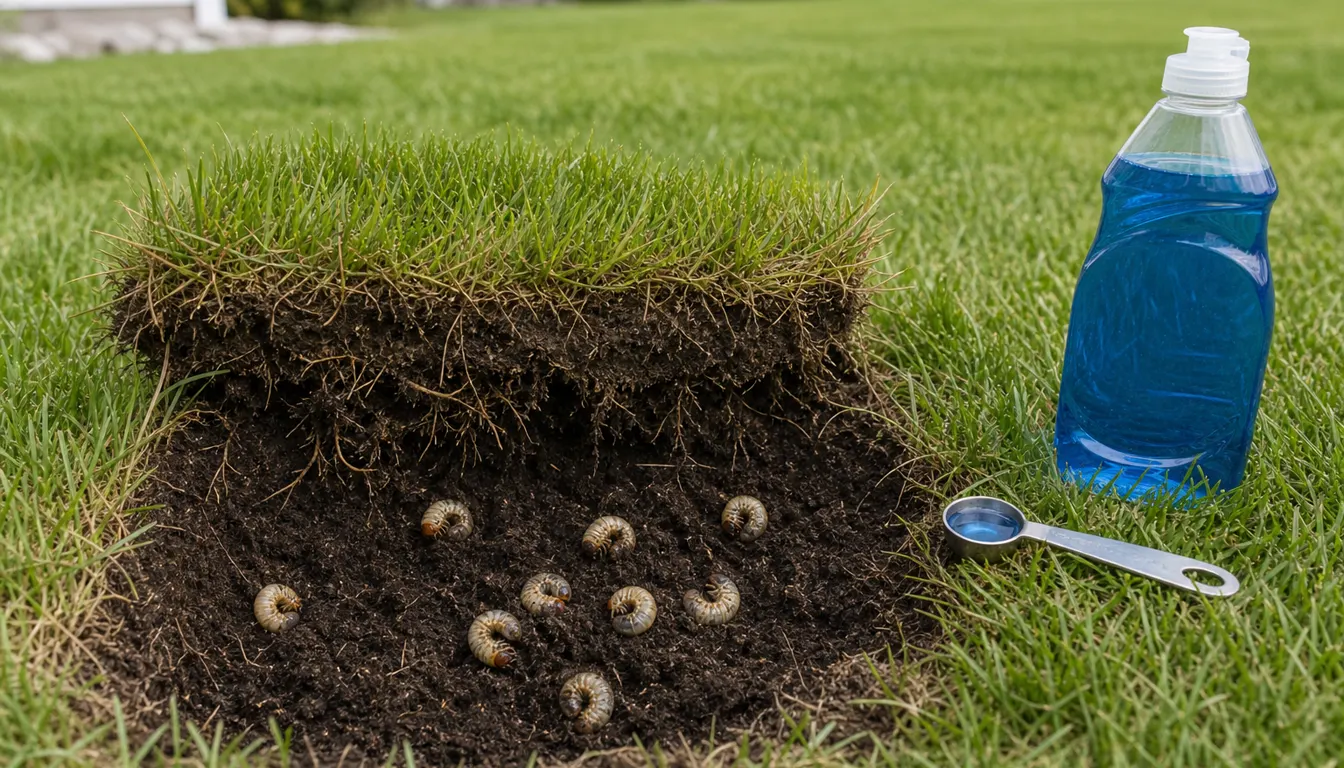
Dawn Dish Soap for Grubs: What Actually Works
Soap solutions can help you spot-check for grubs and knock back a few pests, but they are not…
10 min readDo Marigolds Keep Squirrels Away From Your Garden?
Squirrels can strip a bed of seedlings or freshly planted bulbs in a single morning. Plenty of…
11 min read