
Does Dawn Dish Soap Kill Grubs? Why It Fails and What Works Instead
No. Dawn and other dish detergents do not bring white grubs to the surface, and they do not kill grubs feeding in the root zone. UC Statewide IPM lists white grubs among the lawn insects that do not respond to a soapy-water drench, and Colorado State University Extension notes that beetle larvae are generally immune to soap sprays.
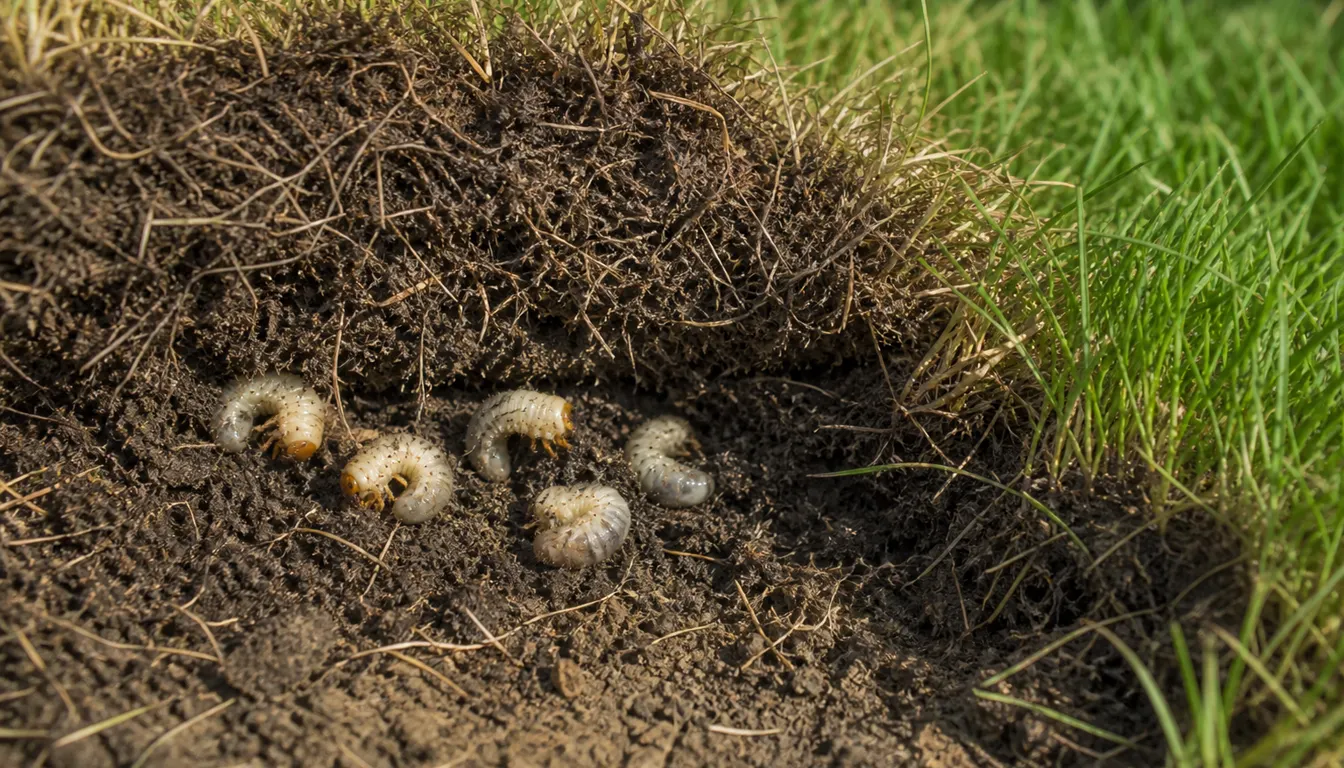
Grubs are found by lifting a square of sod and counting the C-shaped larvae in the top few inches of soil. When the count is high enough to matter, the products that control them are insecticides registered and labeled for grubs in home lawns, applied when the label says the grubs are at the right stage.
A soap drench still has one honest job on a lawn. It drives caterpillars such as sod webworms and cutworms, chinch bugs, and adult billbugs up out of the thatch, so it can show whether one of those insects is thinning the grass after a sod check has found no grubs.
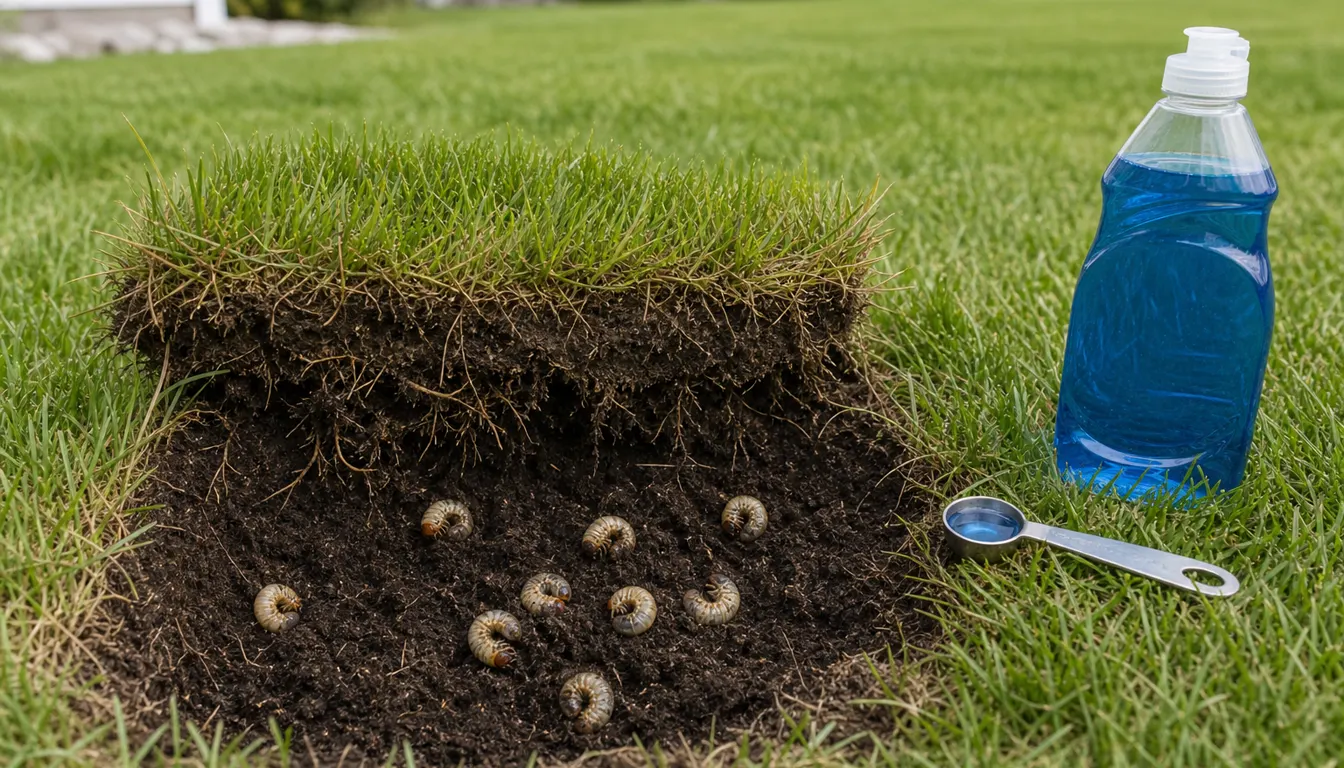
Why Does Dish Soap Fail Against Grubs?
White grubs are the larvae of scarab beetles such as the Japanese beetle, masked chafers, and May or June beetles. Rutgers Cooperative Extension describes the females laying their eggs 1 to 4 inches down in the soil, and the larvae that hatch feed on roots below the thatch.
Soap only works on what it touches. Colorado State University Extension describes soaps and detergents as contact insecticides with no residual effect, effective only when the spray covers the insect directly, and it names aphids, mealybugs, whiteflies, and mites as the small soft-bodied pests they affect. The same fact sheet says larger insects, including beetle larvae, are generally immune to soap sprays.
So a soap drench misses grubs twice. The solution has to soak through grass, thatch, and soil before it reaches the root zone, and a grub it does reach is not the kind of insect soap kills.
| Insect | Comes up in a soap drench? | Source |
|---|---|---|
| White grubs (masked chafers, May and June beetles) | No | UC Statewide IPM |
| Billbug larvae and black turfgrass ataenius larvae | No | UC Statewide IPM |
| Cutworms, sod webworm larvae, southern chinch bugs, adult billbugs | Yes, within about 10 minutes | UC Statewide IPM |
| Caterpillars, two-lined spittlebugs, mole crickets | Yes, after 3 to 5 minutes | Clemson Home & Garden Information Center |
Is a Dish Soap Drench a Safe Grub Treatment?
No dish soap is registered or labeled to control lawn grubs. Colorado State University Extension explains that household soaps are mixtures of detergents, degreasers, viscosity modifiers, preservatives, and other ingredients, so they do not qualify as the minimum-risk pesticides that federal law exempts from registration. For that reason the fact sheet says homemade soap solutions are not recommended for insect control.
University of Florida IFAS Extension makes the same point about labels. Soaps made to be pesticides are evaluated by the EPA and registered as insecticidal soaps, and when a product's directions include no garden or pesticide use, the product was not intended to be used that way.
The lawn carries the risk. UF/IFAS describes dish detergents as powerful cleaners that cut through the waxy layer on leaves and leave them dry and crispy, and it notes that soaps do not separate helpful insects from pests. Pouring detergent over grass whose roots are already being eaten adds that injury without removing a grub.
How Do You Check a Lawn for Grubs Instead?
The check that works is physical. Clemson Home & Garden Information Center describes cutting three sides of a one-square-foot section of turf with a shovel and prying it back, and University of Maryland Extension lifts the same square foot of sod to look for grubs. Count the larvae among the roots and in the top few inches of soil, then press the flap back down and water it.
Sample at the edge of a thinning patch, where roots are still being eaten, and take several squares across the yard. Grubs cluster, so one square can overstate or understate the problem. The full sampling routine, the raster pattern that separates species, and the problems that look like grub damage are covered in how to identify lawn grubs.
Extension thresholds shift with the beetle species and the condition of the grass.
| Source | Grub species | Grubs per square foot |
|---|---|---|
| University of Maryland Extension | White grubs in general | 5 to 10 suggests control may be needed |
| Rutgers Cooperative Extension | Japanese beetle, oriental beetle, European chafer | 6 to 10 |
| Rutgers Cooperative Extension | Asiatic garden beetle | 15 to 20 |
| UC Statewide IPM | Masked chafers, May and June beetles | 6 |
A count below those ranges in turf with firm roots usually means the lawn can carry the grubs. Rutgers notes that vigorous turf with a deep root system tolerates higher grub densities, and that irrigation in late summer and fall makes grass more grub tolerant, so the same count can be tolerable in a watered lawn and damaging in a drought-stressed one.
Which Grub Controls Are Labeled, and When Do They Work?
Grub insecticides fall into two groups, and timing is what separates them. Rutgers and University of Wisconsin-Madison Extension both describe preventive products, applied while beetles are laying eggs, and curative products, applied to grubs that are already feeding.
| Approach | When it goes on | Examples named by extension | Where it fits |
|---|---|---|---|
| Preventive | Chlorantraniliprole in May or June, imidacloprid from late June to early August (Maryland) | Chlorantraniliprole, imidacloprid, clothianidin, thiamethoxam | A lawn with a history of grub damage, treated before eggs hatch |
| Curative | Trichlorfon in late August or early September (Maryland), August to October in Wisconsin | Trichlorfon, carbaryl | A late-summer sod count above threshold |
| Biological | As the product label directs | Heterorhabditis bacteriophora nematodes, milky spore | Japanese beetle grubs mainly |
Spring is the weak season for all of them. Rutgers calls spring applications, from late April through May, generally the least effective and rarely justified because the grass can outgrow most grub populations once it is growing again. A brown patch found in April is usually last fall's feeding, and a sod count the following August is the better basis for a decision.
Whatever the product, its label sets the rate, the site, the grub species covered, and the watering that follows. Wisconsin's guidance calls for about half an inch of water after any grub product so the insecticide moves down to the root zone where grubs feed. Penn State Extension adds that imidacloprid belongs to the neonicotinoids, a chemical class under scrutiny for its effect on pollinators, which is one more reason to treat only the areas where counts justify it.
Biological controls are narrower than their packaging suggests. Rutgers reports that the nematode Heterorhabditis bacteriophora gives good control of Japanese beetle grubs but is less effective against other species, and that milky spore works only against the Japanese beetle. Knowing which beetle laid the eggs, explained in where lawn grubs come from, decides whether either one is worth buying.
What Can a Soapy-Water Drench Tell You?
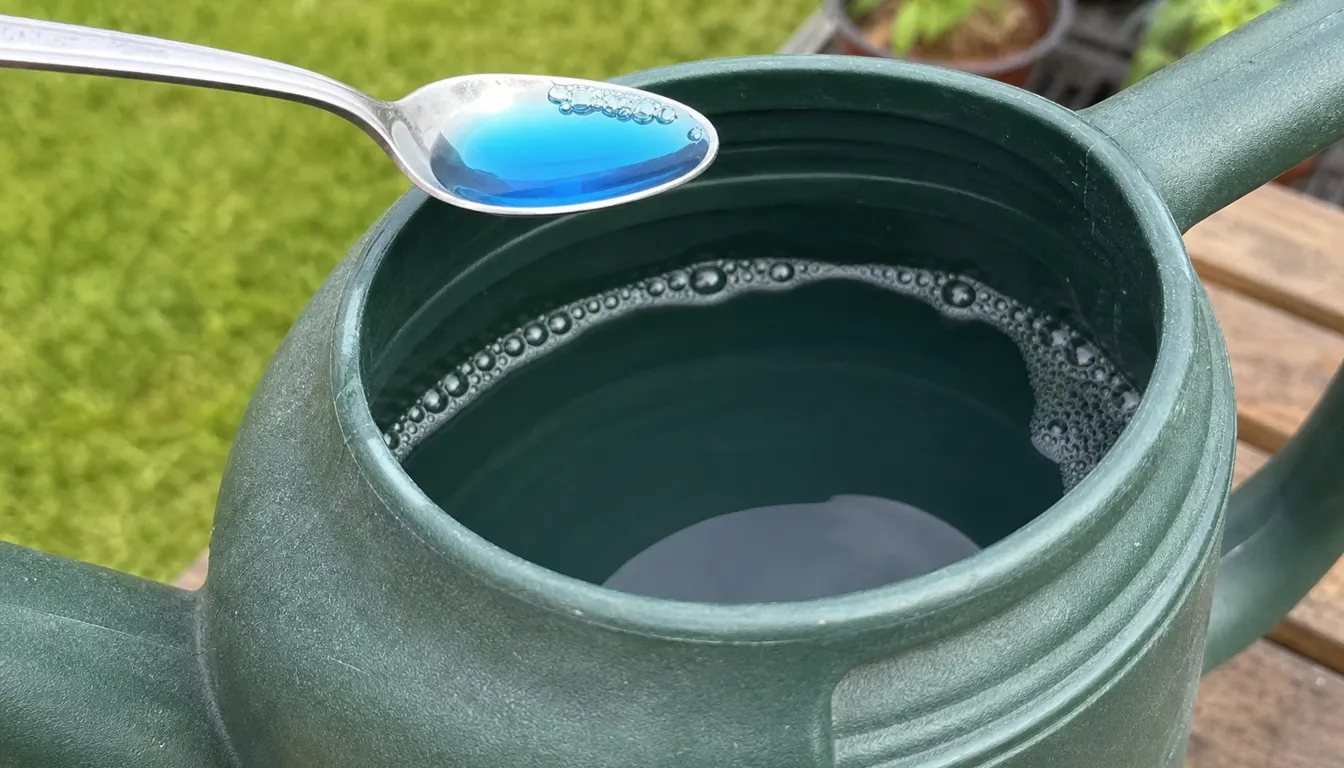
A drench is a scouting method for insects that live in the thatch and at the soil surface. UC Statewide IPM mixes 1 to 2 fluid ounces of liquid dishwashing soap in 1 gallon of water and applies it as evenly as possible to 1 square yard of turf with a sprinkling can. Clemson's version uses 2 tablespoons per gallon, which is the same 1 fluid ounce, poured over thinning or discolored grass.
Then watch the square. In the UC test, cutworms, sod webworm larvae, southern chinch bugs, and adult billbugs come up within about 10 minutes, and Clemson reports caterpillars, two-lined spittlebugs, and mole crickets surfacing after 3 to 5 minutes. On southern bahiagrass, for example, a drench is how mole crickets in a thinning lawn are confirmed.
The two checks work as a pair. A sod flap with no grubs plus a drench that brings up caterpillars points to a surface feeder, and the product and timing change with it. A drench that brings up nothing says nothing about grubs, because white grubs stay in the soil whether or not they are there.
Nothing that crawls up has been controlled. The drench samples one square yard, so the insects that surface are for identification, and Clemson suggests sending any you cannot name to a plant and pest diagnostic lab before choosing a treatment.
Pro Tips
- Lift a one-square-foot flap of sod at the edge of a thinning patch before buying any grub product.
- Sample several squares across the yard, because grubs cluster and a single square can mislead.
- Use a soapy-water drench only to check for surface insects such as sod webworms, cutworms, and chinch bugs.
- Pick a grub product whose label names white grubs and home lawns, and water it in as the label directs.
- Hold off on spring grub treatments, since actively growing grass usually outgrows the grubs that survived winter.
Frequently Asked Questions
Will Dawn dish soap kill grubs in my lawn?
No. Colorado State University Extension notes that beetle larvae are generally immune to soap sprays, and soap acts only on insects it covers directly. Grubs feed in the soil below the thatch, out of reach of a surface drench.
Why do some lawn tips say a soap flush brings grubs up?
The soap flush is a real extension scouting method, but for other insects. UC Statewide IPM lists cutworms, sod webworms, southern chinch bugs, and adult billbugs as insects that surface, and it names white grubs among the insects that do not respond.
Can I add dish soap to a grub insecticide to make it work better?
Add only what the product label directs. A labeled grub product is formulated to be mixed and watered in as its label states, and Colorado State University Extension does not recommend homemade soap solutions for insect control.
How many grubs per square foot is too many?
Extension thresholds run from about 5 to 10 grubs per square foot for most annual white grubs, and Rutgers puts the Asiatic garden beetle at 15 to 20. Deep-rooted, actively growing turf tolerates more grubs than stressed turf.
Is spring a good time to treat grubs?
Rarely. Rutgers calls spring applications the least effective and rarely justified, because actively growing grass outgrows most grub populations. A late-summer sod count guides curative treatment, and preventive products go on while beetles are laying eggs.
Sources & References
- UC Statewide IPM Program, Turfgrass Pest Management Guidelines: Monitoring and Treating Insects and Mites
- Clemson Cooperative Extension Home & Garden Information Center, Scouting for Lawn Insects
- Colorado State University Extension, Insect Control: Insecticidal Soap
- UF/IFAS Gardening Solutions, Soaps, Detergents and Pest Management
- Rutgers NJAES Fact Sheet FS1009, An Integrated Approach to Insect Management in Turfgrass: White Grubs
- University of Maryland Extension, White Grubs in Lawn and Garden Soil
- University of Wisconsin-Madison Extension, White Grub Control in Turfgrass
- Penn State Extension, White Grubs: Underground Marauders in Turf
Related Guides
Do Marigolds Keep Squirrels Away From Your Garden?
Squirrels can strip a bed of seedlings or freshly planted bulbs in a single morning.
11 min read
Do Squash Bugs Bite People?
No. A squash bug cannot bite you. Its mouthparts are a slender stylet built to pierce plant tissue…
9 min read
How Do You Get Rid of Spider Mites on Houseplants?
Spider mites on houseplants often can be reduced by repeatedly washing the leaf undersides.
11 min read
How Much Neem Oil Per Gallon? Read and Scale the Label Rate
There is no universal amount of neem oil per gallon. The rate belongs to the exact product and its…
11 min read
How to Control Fungus Gnats in Houseplant Soil
Fungus gnat control works best when it addresses the larvae in potting mix as well as the adults…
15 min read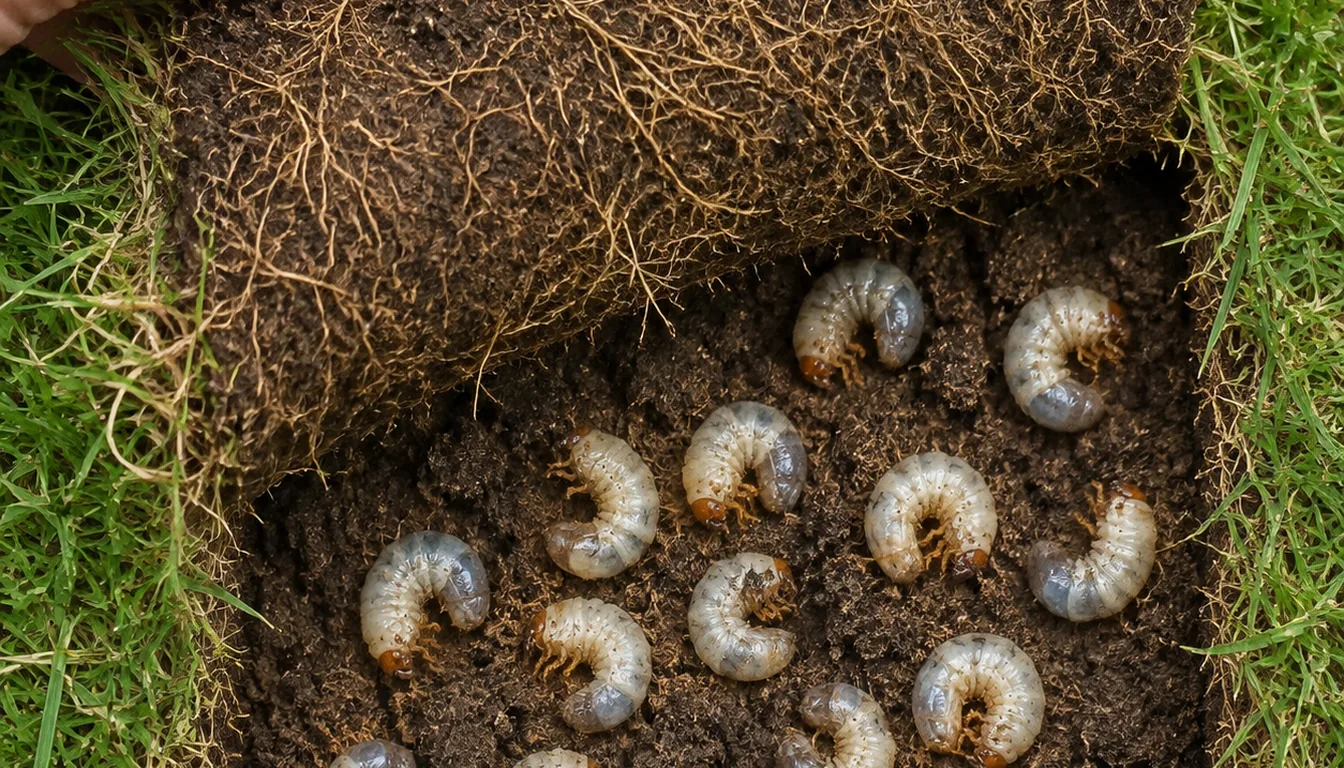
How to Identify Lawn Grubs Before You Treat the Grass
Brown grass, birds, or skunk damage can suggest white grubs, but none proves the diagnosis.
16 min read