Snake Plant vs Aloe Vera
Snake Plant tolerates lower indoor light, while Aloe Vera fits a brighter position and needs room for its spreading rosette. Both need drainage and protection from pets that chew plants.
Snake Plant
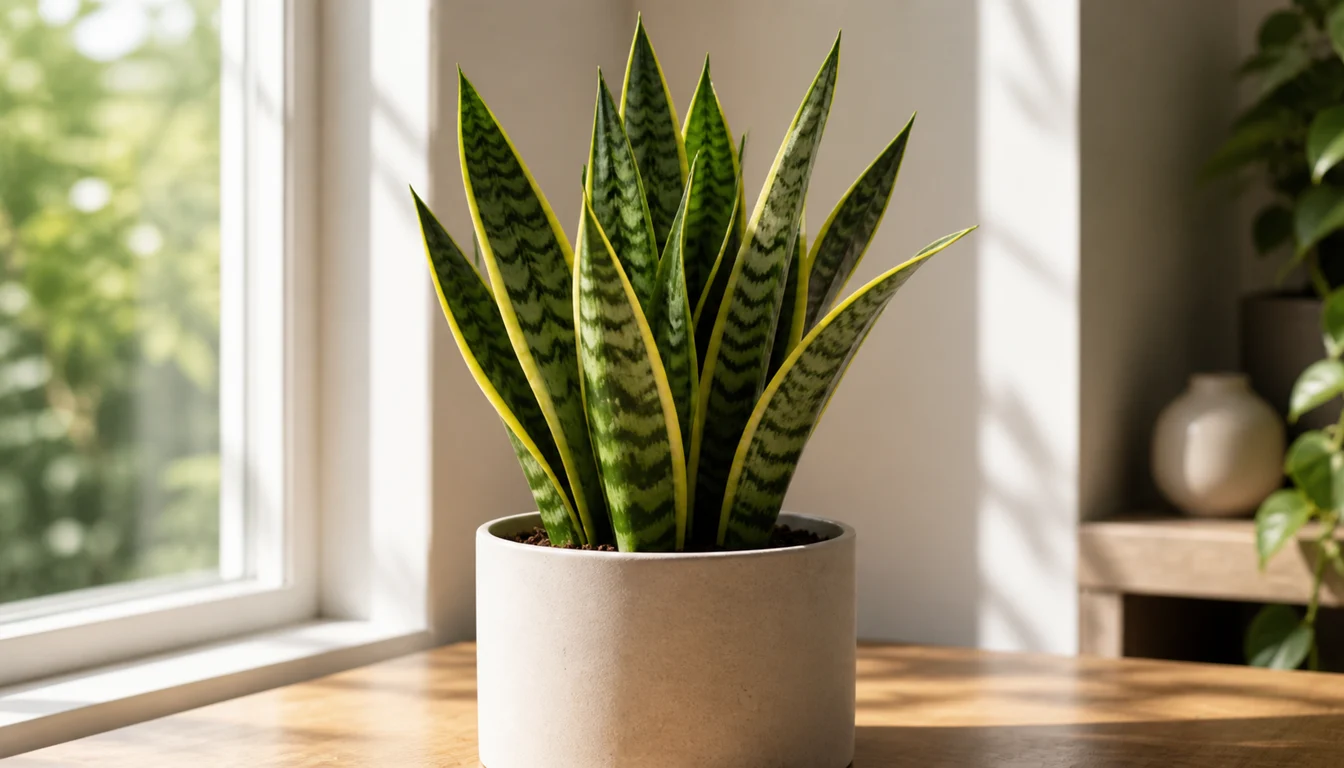
Dracaena trifasciata
Aloe Vera
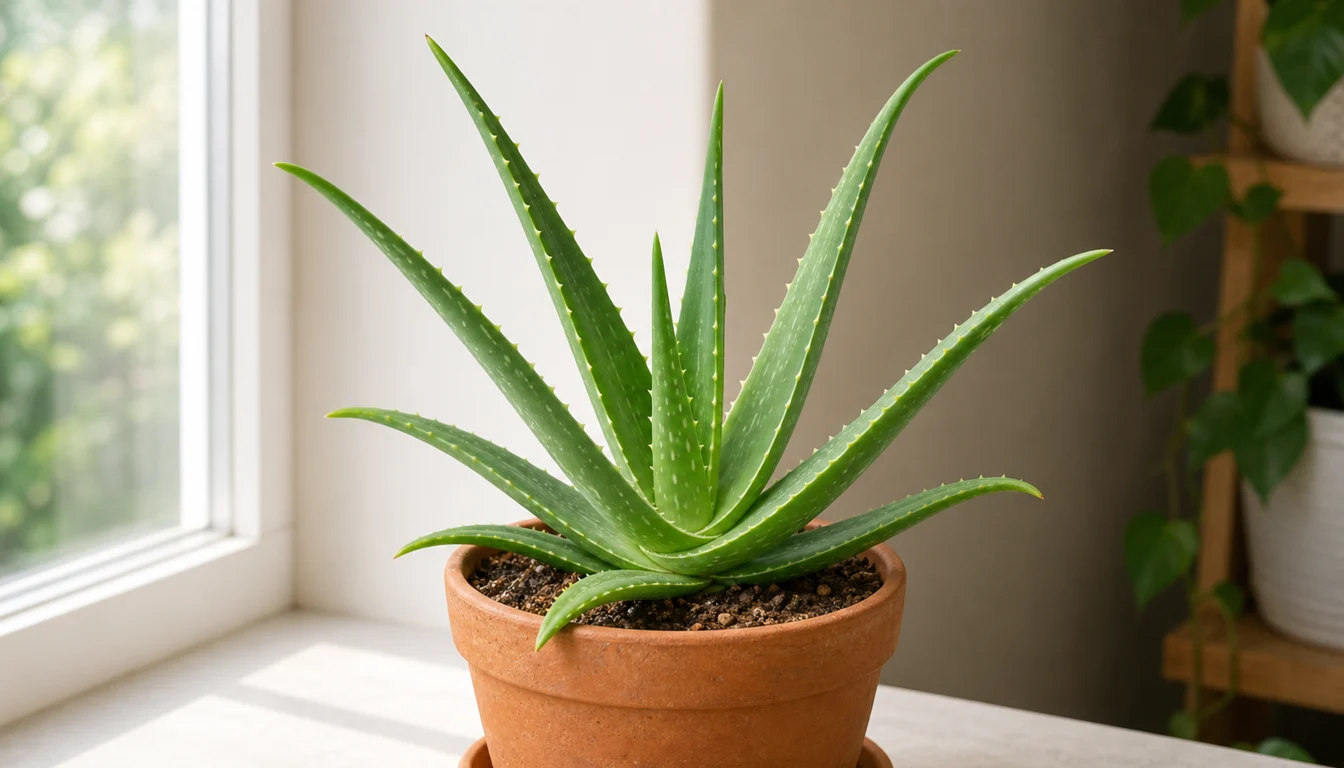
Aloe barbadensis miller
The useful choice between Snake Plant and Aloe Vera starts with the light available where the pot will actually stand. Low-light tolerance is not the same as strong growth, and neither plant thrives in a windowless corner without suitable artificial light.
Snake Plant’s upright leaves use a different footprint from Aloe’s wider rosette. That matters on a narrow shelf or sill, where leaf reach and pot stability can be as important as the plant’s eventual height.
Aloe’s use in skin products is a separate question from whether it suits the room. Owning the plant does not supply a tested treatment or make fresh leaf material interchangeable with a prepared product.
Specifications
Compare the traits that change the growing decision.
| Feature | Snake Plant | Aloe Vera |
|---|---|---|
| Family | Asparagaceae | Asphodelaceae |
| Light (indoors) | Low to bright indirect | Bright direct for part of the day |
| Moisture between waterings | Allow the mix to dry; timing varies with conditions | Allow the mix to dry; avoid prolonged saturation |
| Mature height | 1–4 ft upright | 12–24 in rosette |
| Pet toxicity | NC State lists concerns for dogs and cats | NC State lists concerns for dogs and cats |
| Propagation method | Division of established clumps | Division or separating suitable offsets |
| Soil preference | Well-drained, sandy mix | Cactus / succulent mix |
Indoor light, footprint, moisture, and pet access are the useful differences here. Other Dracaena plants may share a name or growth habit without having identical care requirements.
For Aloe propagation, separating suitable offsets or dividing the plant is the supported method described by NC State. The source does not establish an impossibility claim about every other method.
Cost & Value
Snake Plant
- A small plant needs less initial space than a tall specimen; size and cultivar affect the purchase price.
- An established clump can be divided when it has suitable rooted growth.
- A pot that stays wet can lead to root loss, making drainage and watering more important than a fixed repotting interval.
Aloe Vera
- Offsets can provide additional plants once they are developed enough to separate.
- A home without sufficient light may need a different location or a grow light, adding a real equipment decision.
- The value of the plant should not be calculated as savings on medical treatment.
Sustainability
The plant that fits the available light is less likely to need repeated replacement or extra equipment. That is a practical consideration, not a measured comparison of carbon footprints.
Both can provide new plants through division or offsets. The time until suitable growth develops depends on the specimen and conditions rather than a promised annual yield.
Best Use Cases
Choose by the job the planting needs to do.
Low light rooms
North windows, hallways, offices
Snake Plant tolerates less light than Aloe, although growth can slow in a dim position. Like ZZ plant, it is a candidate for a less sunny room when enough daylight or suitable artificial light reaches the leaves.
Aloe suits brighter light and can grow with sun when acclimated. Window direction alone does not settle the choice because shade outside, distance from the glass, and season change the exposure.
Forgetful waterers
Busy schedules, travel
Snake Plant stores water and benefits from drying between waterings. The pot, mix, temperature, and light determine the interval; a month without water is not a universal safe travel plan, even for plants such as ponytail palm.
Aloe also needs a freely draining mix that dries between waterings. A dry-looking surface can hide moisture below, so pot moisture is more useful than assigning both plants the same weekly schedule.
Aloe products and health claims
Garden plant versus treatment
Snake Plant is grown for its foliage and form. An air-cleaning promise is not a sound reason to choose it over Aloe for an ordinary room.
NCCIH reports evidence that topical aloe gel may help burn healing, while also noting possible skin reactions. Gel, latex, and whole-leaf products differ; that evidence does not justify a kitchen-sill protocol for treating an injury with a freshly cut leaf.
Homes with pets
Cats, dogs, and chewers
NC State lists Snake Plant as a concern for dogs and cats. Leaf texture does not establish that a particular pet will avoid chewing it.
NC State also lists animal-safety concerns for Aloe. Neither deserves a lower-risk ranking based on how tempting its leaves look; Spider Plant is a different candidate whose exact identity and safety listing still matter.
Visual impact
Statement piece indoors
Bold, vertical swords give Snake Plant a modern, architectural look. Tall varieties like Laurentii or Moonshine add strong lines to minimalist rooms and pair well with sleek planters, similar to the sculptural quality of other dracaena types.
Symmetrical rosettes and blue-green coloring make Aloe Vera a softer, more organic focal point. It looks natural in terracotta on a sunny sill and draws the eye differently than upright foliage.
The choice here is purely about which visual style fits your room.
Related Comparisons
Peace Lily vs Spathiphyllum: Name and Care Differences
Read Comparison
Pothos vs Monstera: Which Is Right for You?
Read Comparison
Sedum vs Succulents: Ground Cover or Houseplant?
Read Comparison