Monstera vs Heartleaf Philodendron
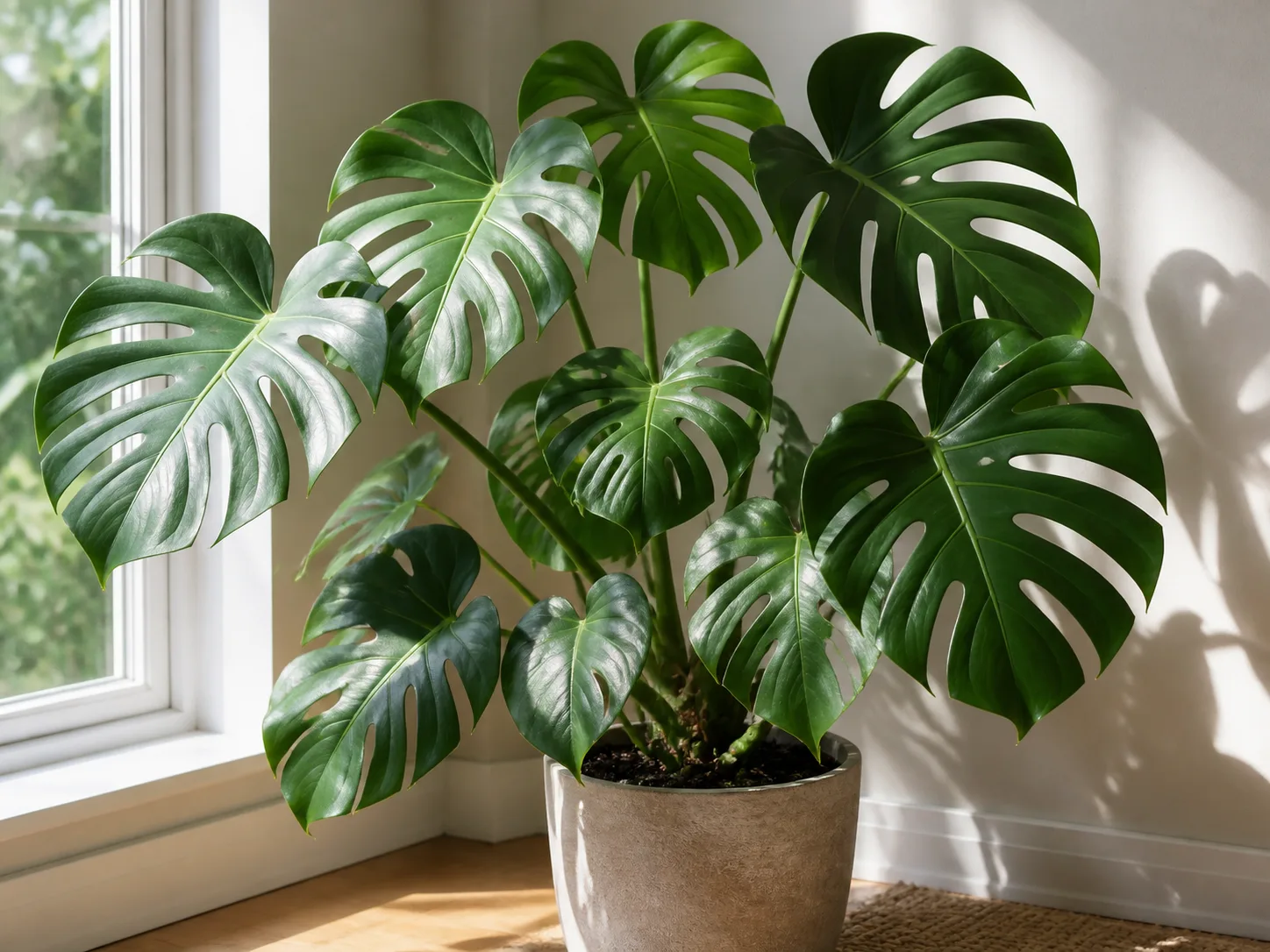
Monstera deliciosa and heartleaf philodendron are different plants in the same family. The common name split-leaf philodendron can blur their identities, but a mature Monstera's broad perforated leaves differ from the heartleaf vine sold for shelves and hanging pots.
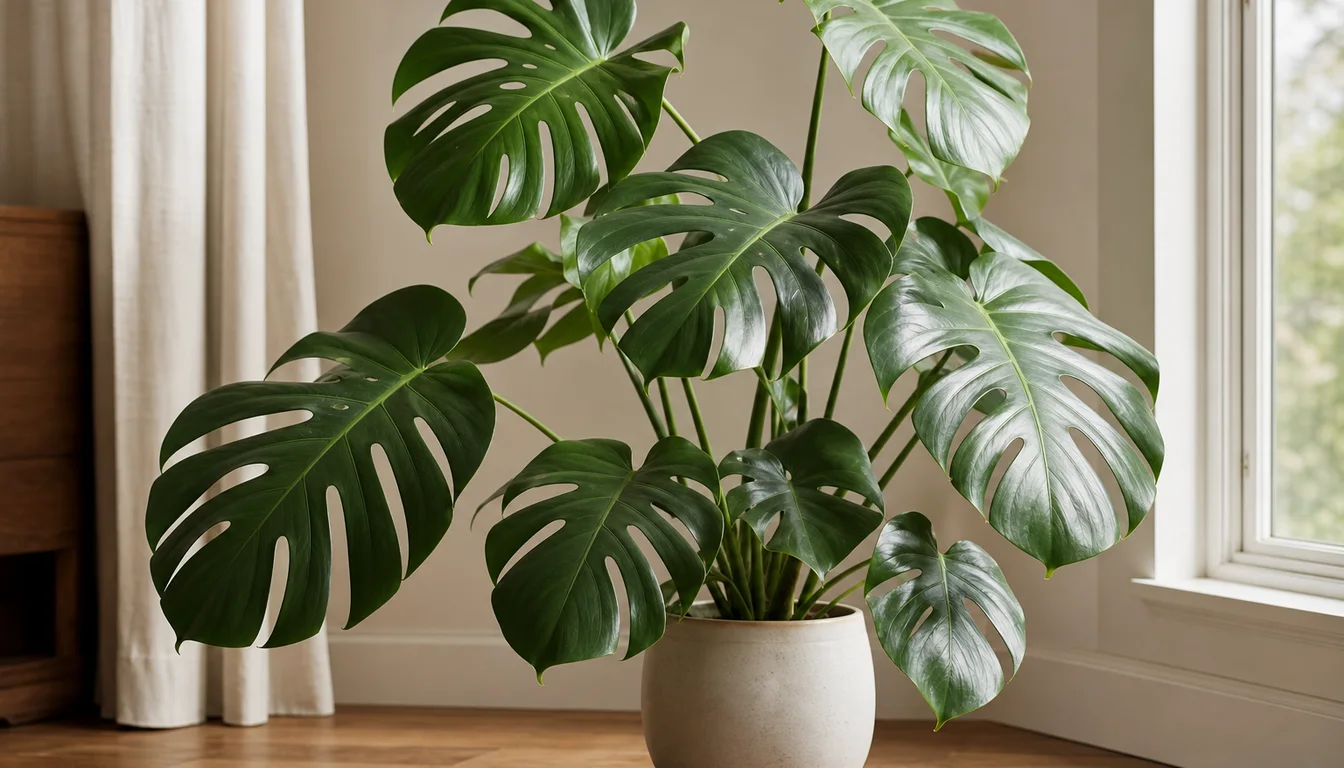
Monstera
Monstera deliciosa
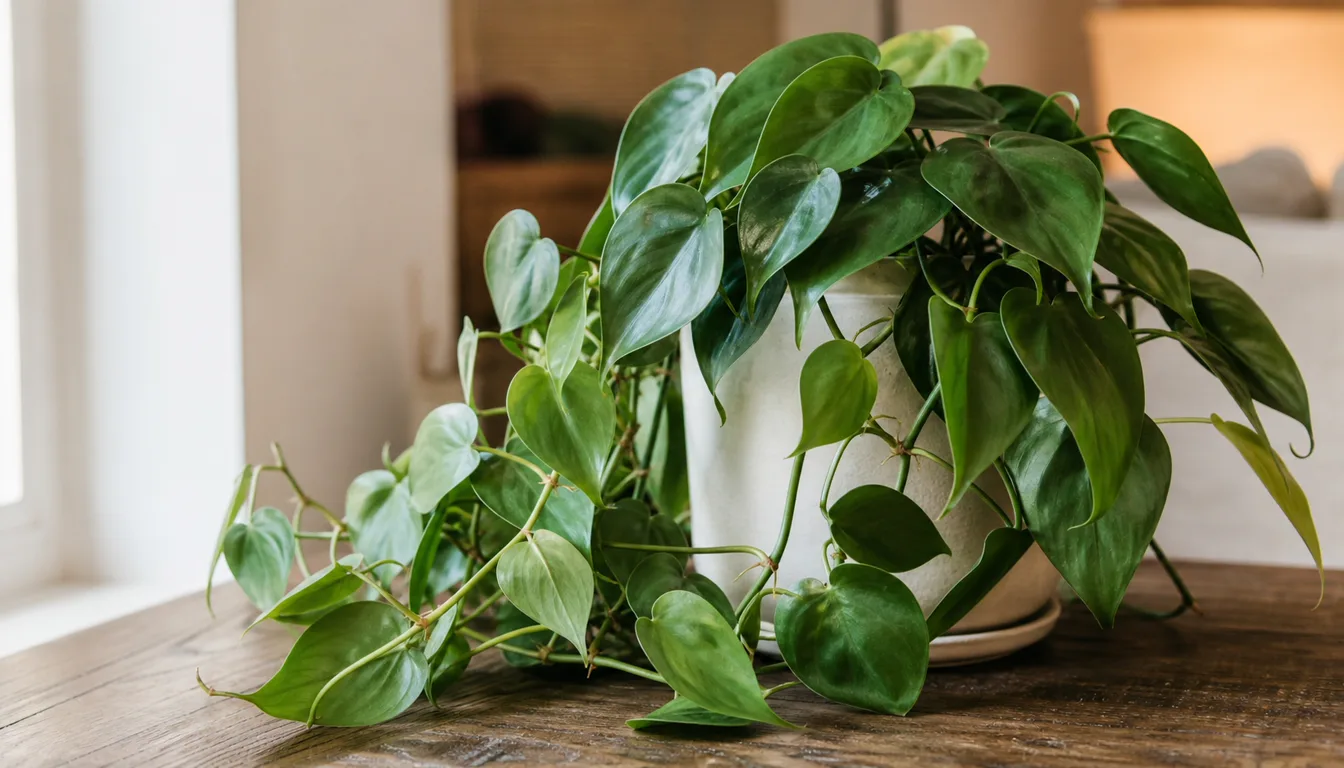
Heartleaf Philodendron
Philodendron hederaceum
A label that says "split-leaf philodendron" can refer to Monstera deliciosa, even though it belongs to the genus Monstera. Common names are the source of that confusion, not evidence that the two names describe the same botanical group.
For a useful household choice, the Philodendron here is heartleaf philodendron, Philodendron hederaceum. A statement about this trailing vine does not automatically apply to upright, self-heading, or other climbing philodendrons.
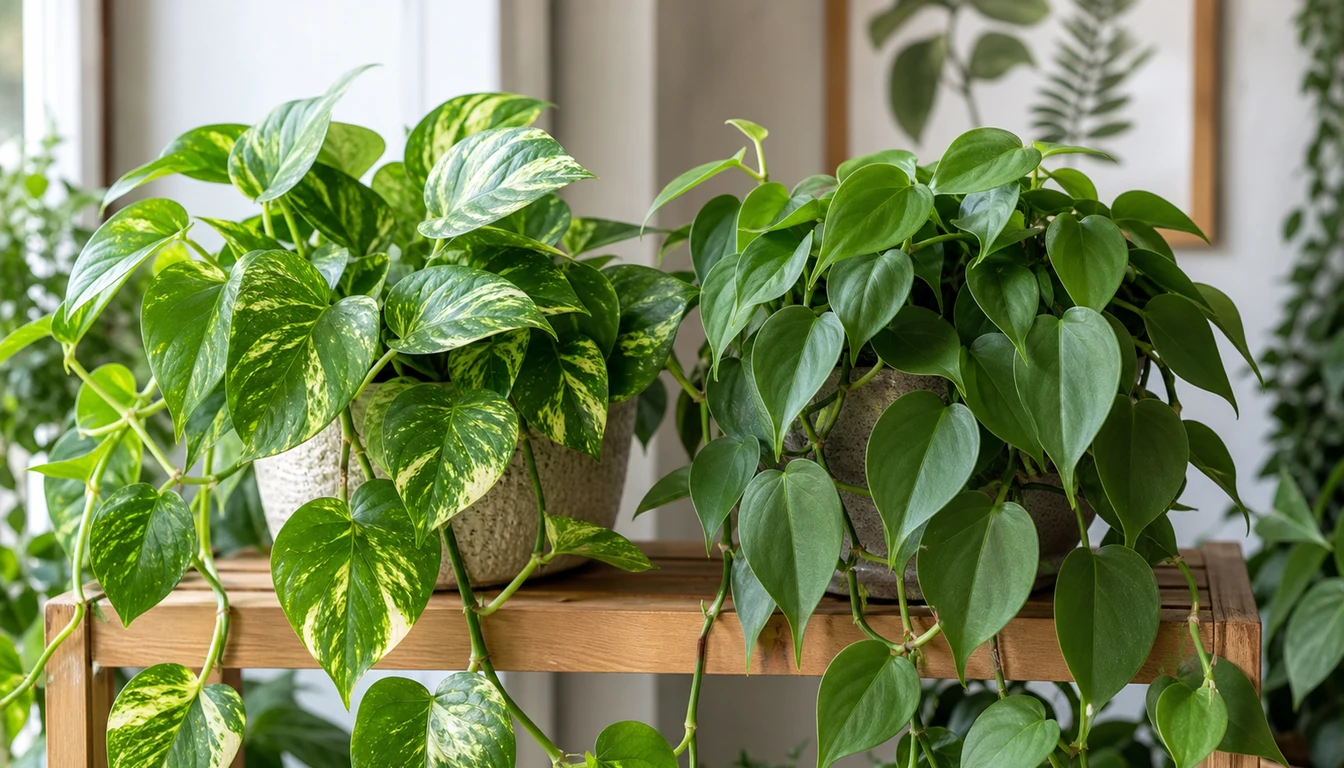
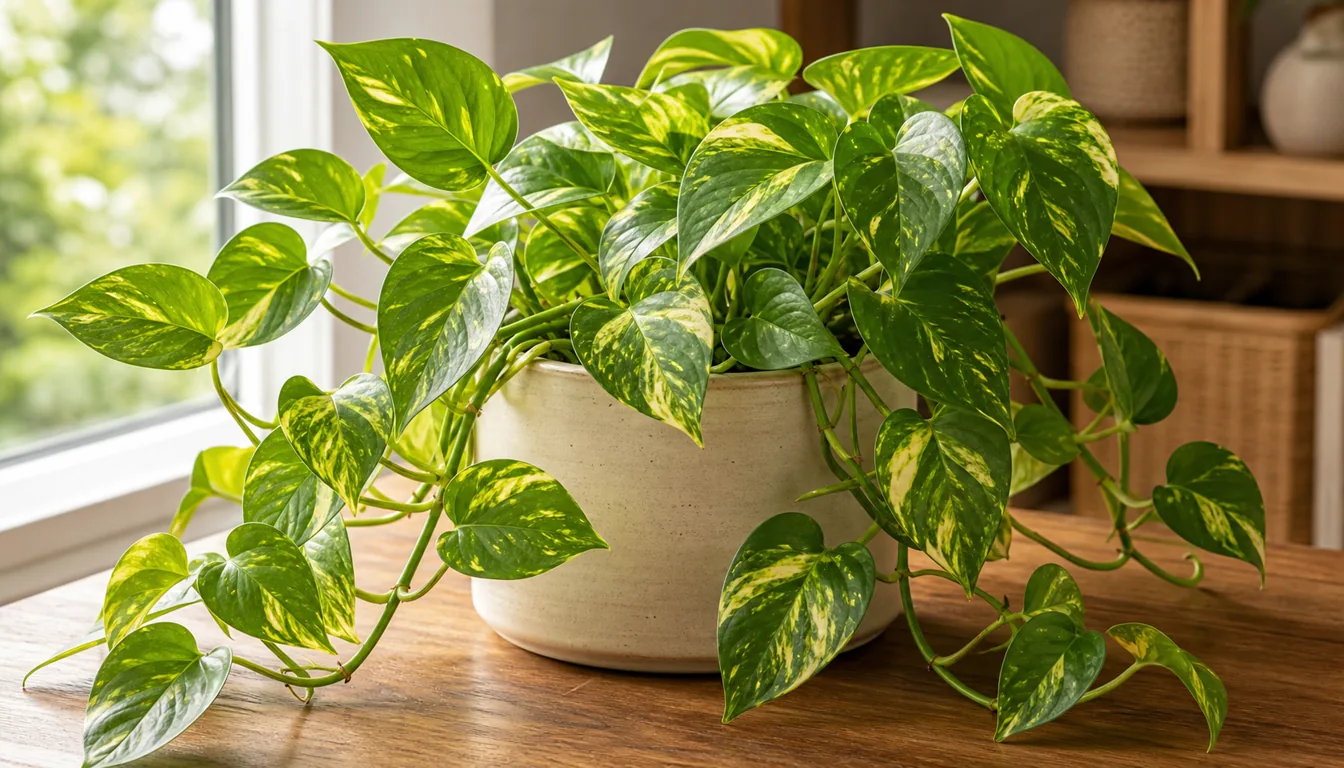
The distinction helps with both identification and placement. Monstera deliciosa can grow broad, perforated foliage on a heavy climber. Heartleaf philodendron carries smaller heart-shaped leaves and can trail from a pot or climb a support.
Specifications
Compare the traits that change the growing decision.
| Feature | Monstera | Heartleaf Philodendron |
|---|---|---|
| Botanical identity | Monstera deliciosa | Philodendron hederaceum |
| Family | Araceae | Araceae |
| Common leaf appearance | Young leaves may be whole; mature foliage develops holes and divisions | Heart-shaped leaves without the characteristic Monstera perforations |
| Growth form | Broad-leaved climber with heavy stems | Trailing or climbing heartleaf vine |
| Space to plan | Room for leaves around a supported plant | Room for trailing stems or a climbing display |
| Lower-light response | Inadequate light can limit mature perforated foliage | Tolerates lower light but prefers medium light |
| Pet access | Unsafe to chew or ingest | Unsafe to chew or ingest |
An intact young leaf does not rule out Monstera. Wisconsin describes its juvenile leaves as different from the mature foliage. The botanical label, the growing stem, and successive leaves are more useful than demanding holes in every leaf.
The heartleaf plant has conspicuous stipules around new growth and an ungrooved petiole. Those clues are especially helpful when the real confusion is pothos versus heartleaf philodendron, a closer pair of trailing look-alikes.
Both plants contain irritating calcium oxalate crystals and present a risk to chewing pets. NC State flags dogs and cats for the species compared here. Fallen leaves and propagation pieces need the same care as the standing plant, and suspected ingestion warrants veterinary advice.
Best Use Cases
Choose by the job the planting needs to do.
A purchase labeled split-leaf philodendron
Confirm the actual species
A plant identified as Monstera deliciosa remains a Monstera even if the shop uses the familiar common name. Its broad, divided mature leaves are consistent with that species, while a small plant may not yet show them.
Heartleaf philodendron is P. hederaceum. Other philodendrons can have substantially different forms, so a care table for heartleaf cannot settle a purchase of an unnamed upright plant. The species or named cultivar on the label matters before comparing size and support.
A floor corner or a hanging pot
Match the plant's eventual frame
A mature Monstera can occupy a broad area around its pot. Its growing stems need stable support, and the available light must reach the foliage. An empty corner with little light is still a poor place for the leaf display that prompted the purchase.
Heartleaf philodendron commonly trails over a container edge and can also climb. Its stems can extend well beyond the pot, but the display is easier to arrange along a shelf or support than a broad mature Monstera. Neither plant has to stay in the arrangement used at the nursery.
A room with limited natural light
Survival and appearance differ
Wisconsin notes that Monstera does not develop leaf perforations when light is inadequate. That does not mean every whole leaf diagnoses a lighting problem, since young leaves are also whole. Age and the overall growth pattern belong in the same assessment.
NC State describes heartleaf philodendron as tolerant of very low light while preferring medium light. A usable lower-light position can work, but an unlit room cannot sustain normal growth. A plant stretching toward a window gives more useful feedback than a blanket promise that it holds its shape anywhere.
Pruning, watering, and long-term handling
Both remain living vines
Monstera can be propagated from stem cuttings or layering. A large supported plant is heavier to handle than a small vine, but that does not establish a purchase price, a fixed number of cuttings per year, or a mandatory moss-pole brand.
Heartleaf stems also provide propagation material. Its preference for some moisture does not mean it tolerates a waterlogged root zone. Watering based on the pot and growing conditions is more reliable than using the same interval for every plant in the room.