
How to Propagate Houseplants by Cuttings, Division, and Layering
Most houseplants can be propagated by taking a suitable cutting, separating a rooted division or offset, or encouraging a stem to root before detaching it. The right method depends on the species and the part of the plant you have. A monstera leaf needs a piece of stem with a node and bud, while an African violet can form a new plant from a leaf cutting.
Success also depends on keeping that piece alive while it develops roots and shoots. A jar makes roots visible, but it does not correct an unsuitable cutting. A new leaf is encouraging, but it does not by itself prove that the young plant has enough roots for ordinary care.
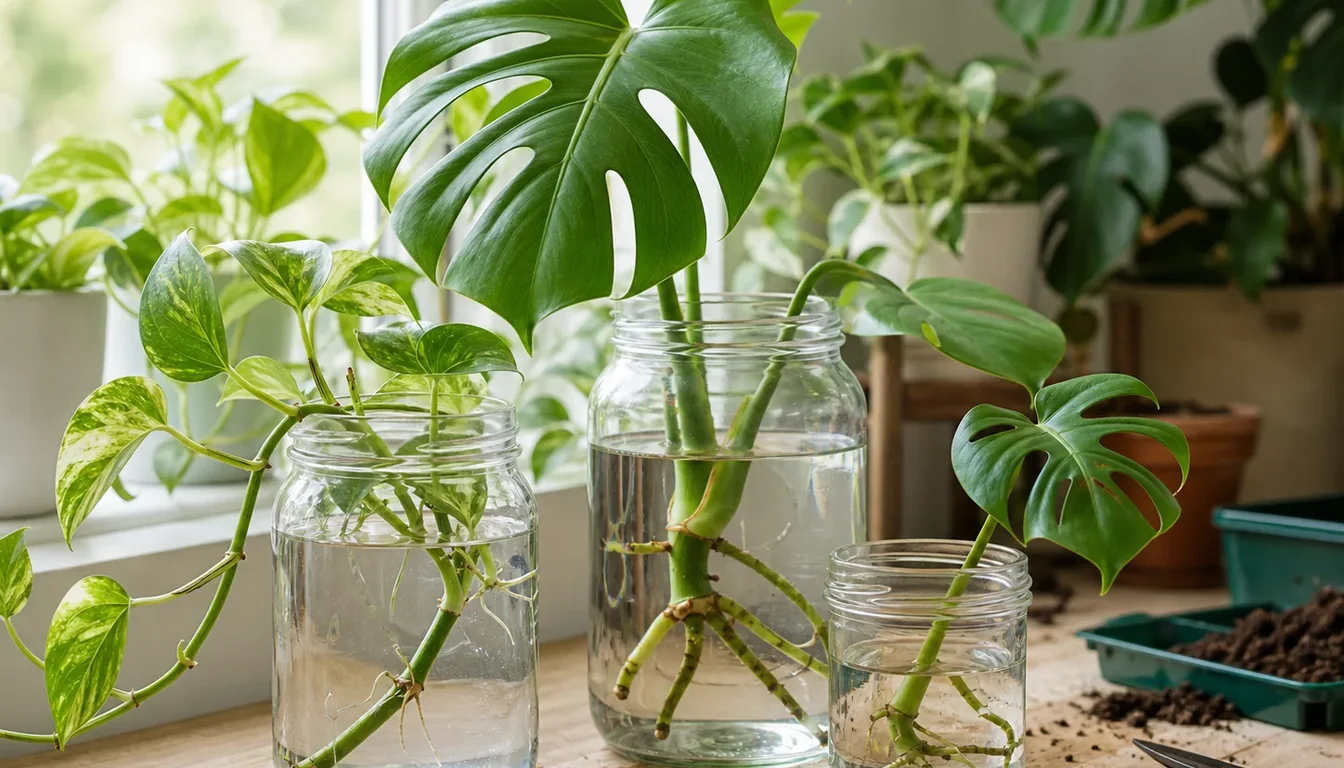
At a glance
Match the Method to the Plant
A plant's growth habit narrows the choices, but identification settles them. A visible stem is useful for a stem cutting, a rooted clump may divide, and a plantlet can sometimes establish while still attached to its parent. A clump-forming plant still has stems, even when they are short or below the surface.
| Method | Useful plant material | Examples | What must remain with the new plant |
|---|---|---|---|
| Stem cutting | A healthy leafy stem or suitable cane section | Pothos, monstera, heartleaf philodendron | The required node or bud, with the base oriented correctly |
| Division | A plant with separable crowns or rooted shoots | Peace lily, calathea, many clumping ferns | A living growing point and enough attached roots |
| Offset or plantlet | A distinct young plant beside or attached to the parent | Aloe offsets, spider plant plantlets | A viable base, with roots established or a suitable rooting method |
| Leaf cutting | A leaf or leaf section from a species that forms new shoots this way | African violet, some begonias, snake plant | The appropriate leaf tissue, vein or petiole for that species |
| Layering | A stem that can root while still attached | Rubber plant, monstera, flexible pothos stems | The rooted stem section, detached only after roots develop |
Dividing a clump or separating an offset
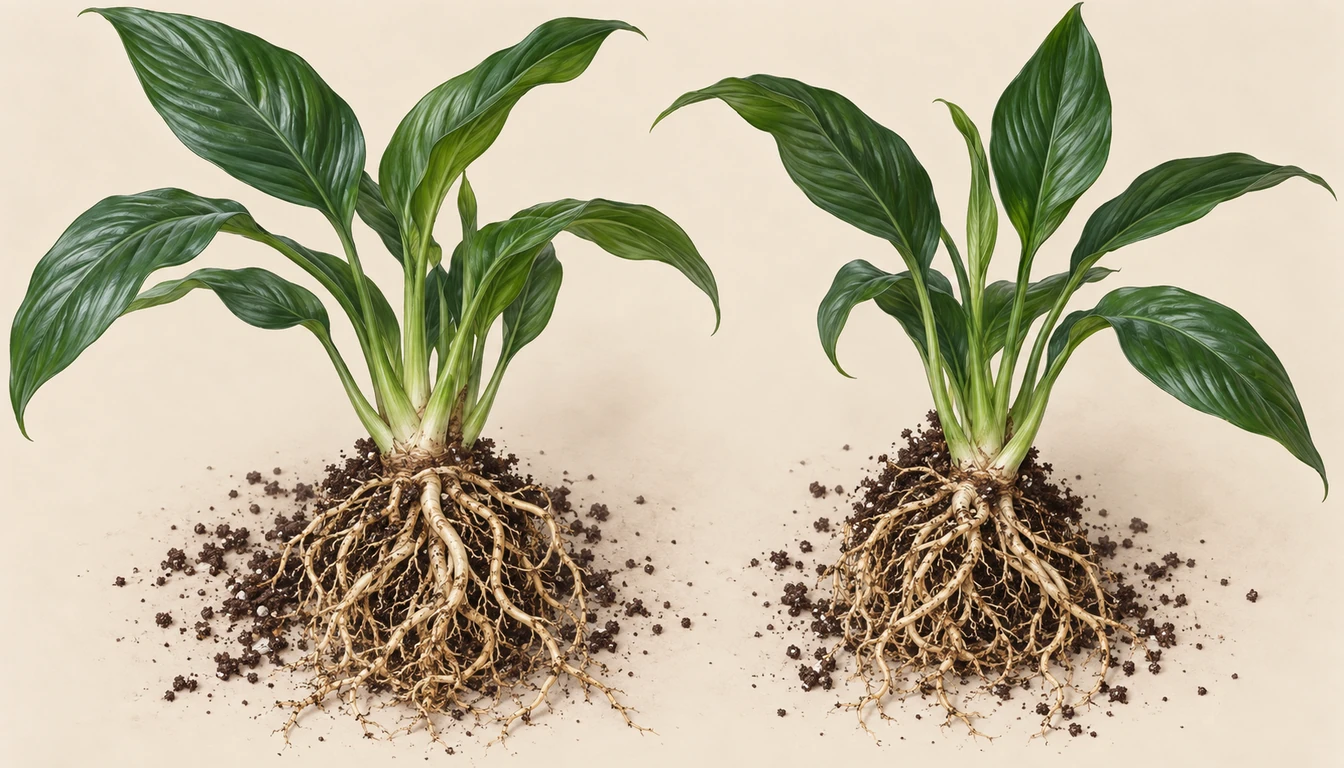
After the plant comes out of its pot, the crown and roots show where sections can separate. Each division needs a growing point and roots together. Pulling apart a leaf cluster without checking its base can leave leaves on one side and most of the root system on the other.
Roots that separate readily can be eased apart by hand. A tightly joined clump may need a clean cut through the connection. Larger viable divisions usually recover faster than many tiny pieces. Each goes into a draining pot sized to its remaining roots, with fresh suitable mix and gentle watering to settle it.
Offset readiness depends on the plant, not one universal fraction of the parent's height. A spider plant plantlet can be rooted in a neighboring pot while attached, then separated after it establishes. That reduces the demand on an unrooted piece compared with cutting it free immediately.
Growing a plant from leaf tissue
A leaf cutting works only for a suitable species. African violet commonly uses a leaf with its petiole, while snake plant can use leaf sections. The end that was nearer the base of a snake plant leaf goes down into the medium. Keeping that orientation avoids planting a section upside down.
Cultivar traits may affect the choice. Iowa State notes that leaf sections of yellow-edged snake plant cultivars such as 'Laurentii' lose that edge pattern. Division preserves those cultivars more reliably. The ability to make a plant and the ability to preserve a particular appearance are separate decisions.
Rooting before detaching
Simple layering brings a flexible stem into contact with moist medium in the same or an adjacent pot. The stem remains attached while roots develop, so it does not immediately lose its connection to the parent.
Air layering roots a wounded section of an upright stem while the top remains attached. Interrupting the downward movement of sugars at the wound encourages rooting there. It can preserve a larger top on a tall, bare-stemmed plant.
For woody plants such as rubber plant, Iowa State describes removing a narrow ring of bark and the soft tissue beneath it while leaving the woody center intact. For dracaena and similar canes, its method uses an upward-slanting cut about a third of the way through, held open with a toothpick. The stem must remain attached. Applying the ring method indiscriminately to every houseplant risks damaging the part that still supplies the top.
Moist, long-fiber sphagnum surrounds the wound, enclosed in wrapping secured above and below it. The moss needs monitoring so it does not dry out. Once substantial roots are visible through the moss, the top can be cut free below that root mass, unwrapped and potted. The decision follows root development rather than a promised number of weeks.
When a Cutting Needs a Node
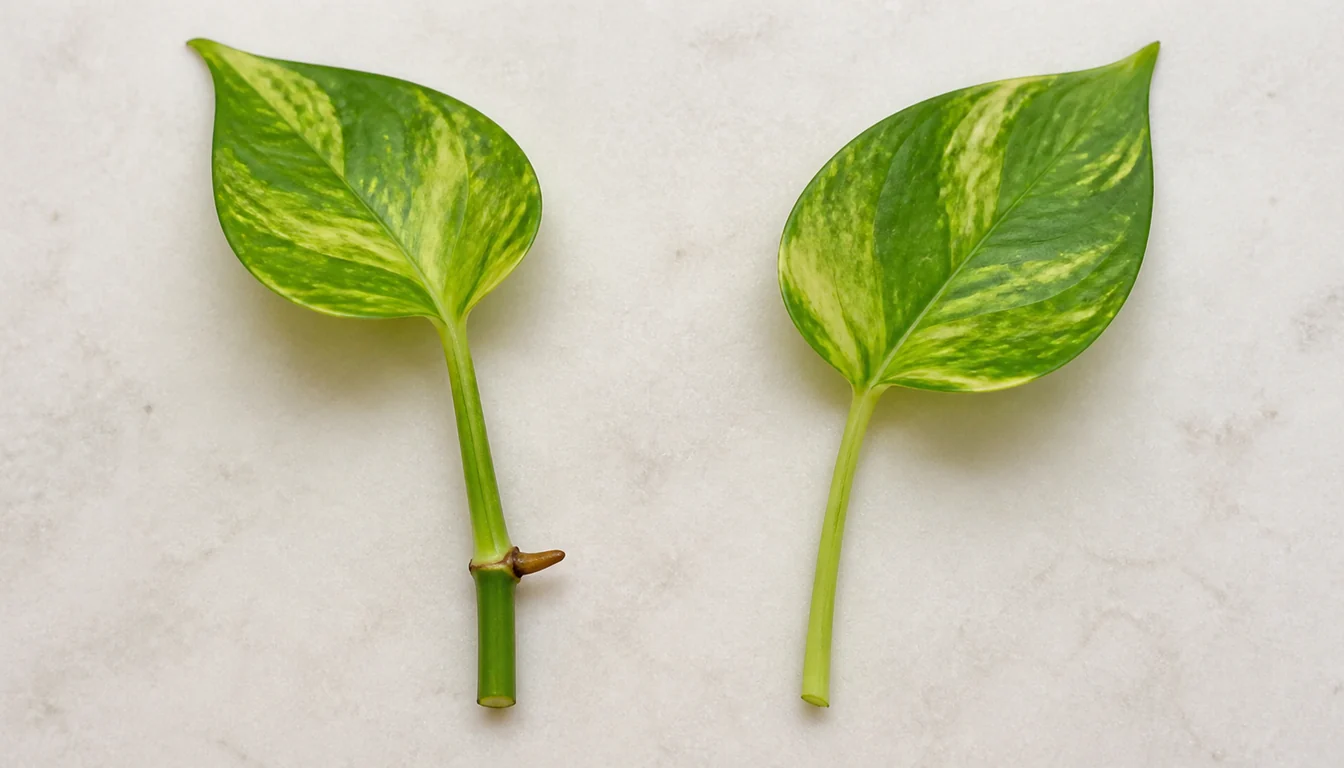
A node is the point on a stem where a leaf attaches. The leaf stalk, or petiole, joins the stem there, and an axillary bud may sit beside that junction. On climbing houseplants, an aerial root or a small root nub can help locate the area, but not every node has an obvious projecting root.
For monstera, the useful piece includes stem tissue with a node and axillary bud. University of Minnesota Extension explains that a leaf and petiole alone cannot produce the new shoot needed for another plant. Pothos and heartleaf philodendron are also commonly propagated from stem or leaf-bud cuttings rather than detached leaves alone.
That distinction does not mean roots and shoots can arise only at nodes in every plant. Some species form new buds and roots from leaf tissue. African violet, some begonias, peperomias, ZZ plant and snake plant provide familiar examples, but their cutting methods are not interchangeable.
A visible root and a viable growing point answer different questions. The root can take up water, while the growing point can produce the next shoot. Before taking a stem cutting, trace the leaf stalk back to the main stem so the piece includes the junction rather than just a long petiole.
Where to Cut and What to Leave on the Parent
For a leafy stem cutting, the lower cut must leave the needed node on the piece being rooted. On the parent, a cut just above a retained node leaves a bud from which new growth may develop. These are two different positions along the stem, so a single rule to cut “above the node” can leave the wrong piece in your hand.
A stem tip with several nodes can be taken first and its base trimmed below the lowest useful node. A single-node cutting needs a piece of stem on both sides of the leaf junction. Neither method guarantees two new branches on the parent. Regrowth depends on the species, the buds left behind and growing conditions.
- Start with a healthy plant and clean, sharp cutting tools. Avoid material with pests, rotting tissue or unexplained mottling.
- Identify the nodes on both the intended cutting and the remaining parent. Leave enough healthy foliage and growing points for the parent to recover instead of treating a fixed fraction as safe for every plant.
- Make a clean cut and keep track of which end grew toward the base. Remove leaves that would sit in water or below the rooting medium, keeping useful upper foliage.
- Prepare the container before the cutting dries out. Insert the base into a hole in premoistened rooting medium, then gently firm it so the cutting stays upright. For a suitable water-rooted species, place the lower stem and required node in water while keeping leaves above it.
Large leaves lose water while roots are absent. Reducing some leaf area can help with certain cuttings, but stripping every leaf is not a universal shortcut. Leafless cane cuttings are a separate method for plants such as dracaena, with their own node and orientation requirements.
Rooting hormone can help some cuttings, but it cannot replace a missing bud, repair rotting tissue or make an unsuitable leaf cutting viable. Concentration and application follow the product and method. A small separate portion of powder avoids dipping plant material into the original container.
Rooting in Water or an Airy Medium
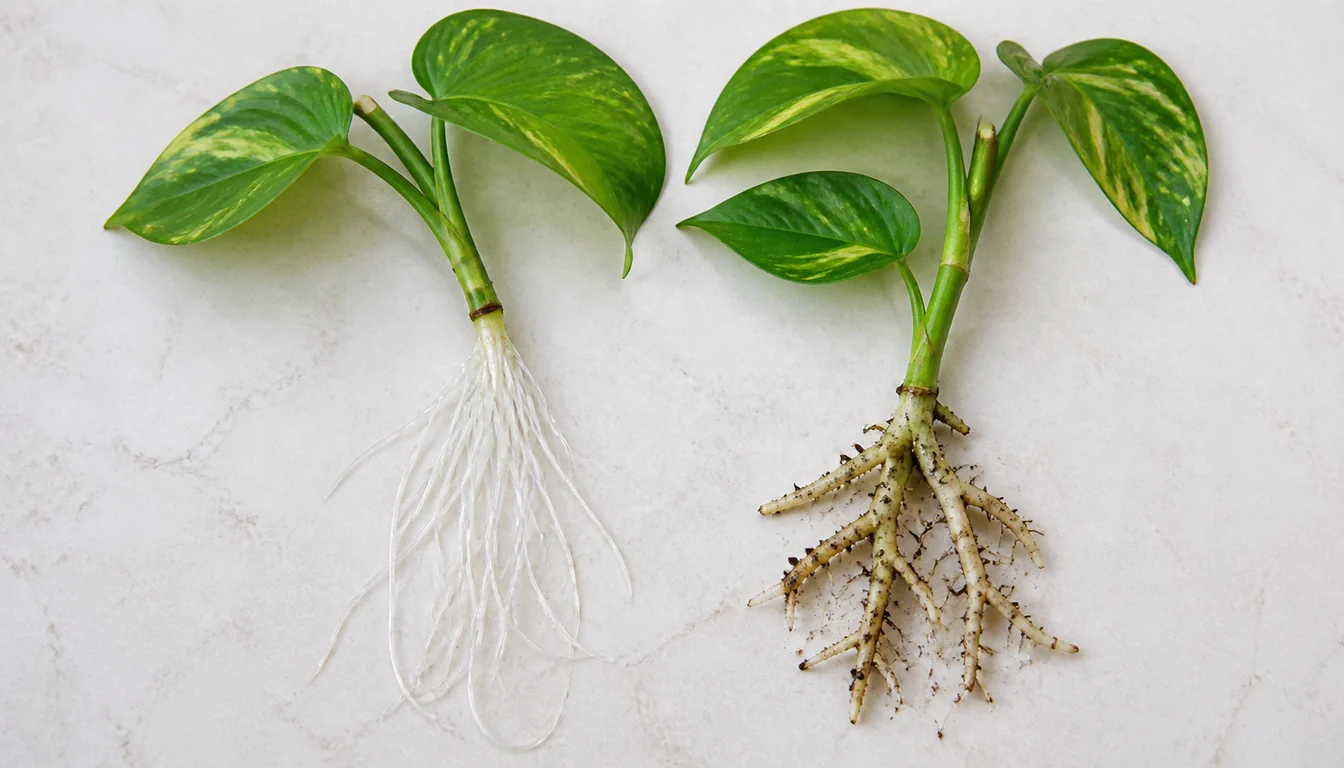
Water rooting works for many familiar foliage plants and makes progress easy to see. A moist, well-aerated medium supports the stem and lets roots develop in conditions closer to a potted plant's next home. Both methods need clean containers and attention to moisture, light and the species involved.
Roots respond to their growing environment, but their color or thickness alone does not prove how they were grown or whether they will survive transplanting. Water-rooted cuttings can experience stress after moving into mix. That does not mean all their roots must die or that the plant always starts again from scratch.
| Rooting setup | What it makes easier | What still needs attention |
|---|---|---|
| Clear jar of water | Seeing roots and keeping the lower stem wet | Leaves stay out of the water, roots remain submerged, and dirty or cloudy water is replaced |
| Perlite or a suitable airy rooting mix | Supporting the cutting while retaining both moisture and air | The medium must stay appropriately moist without sitting in runoff |
| A covered pot for a leafy cutting | Reducing water loss before roots develop | The cover needs air exchange and must stay out of hot direct sun |
Iowa State advises changing water once or twice a week for houseplant stem cuttings and potting when roots are about an inch long. That is a practical starting point for suitable cuttings, not a deadline or proof that longer roots are unusable. A firm, developing root system and the species' needs matter more than hitting an exact length.
For rooting in a solid medium, a small draining container is easier to manage than a large pot full of wet mix. Perlite or a suitable perlite-based rooting mix can hold moisture without packing tightly around the base. Ordinary heavy garden soil is a poor substitute. The potting mix used after establishment also needs to suit the plant, rather than simply matching the original jar's volume.
A loose clear cover can help leafy cuttings in dry air, with supports keeping plastic off the foliage. Moist air around leaves and permanently saturated roots are different conditions. Succulent cuttings may need a drying period and a different moisture routine, so the covered, moist setup is not a universal instruction for every houseplant.
How to Judge Progress and Pot Up
Rooting time varies with the species, cutting type and conditions. Iowa State gives about three to six weeks for many houseplant stem cuttings, while its snake plant leaf-section guidance describes new plantlets around two months. Neither estimate guarantees what a particular cutting will do.
A firm green stem that has not produced visible roots is different from a soft, collapsing base. In water, new roots can be watched without disturbing them. In mix, repeated pulling risks breaking the structures you are trying to assess. When a check is needed, supporting the cutting and surrounding medium with a small tool is gentler than tugging the stem.
New foliage alone is not a root inspection. A cutting can draw on stored resources, so its ability to make one shoot is not the same as being ready for a large pot or a dry indoor position. For leaf propagation, roots and a new plantlet are the useful combination to look for.
Once the cutting has enough roots, a modest draining pot with premoistened, suitable mix gives it room to establish without a large wet reservoir. The roots need gentle handling and contact with the mix, followed by watering that settles it and drains away. A newly potted cutting still benefits from stable bright indirect light while its water supply adjusts.
A plant rooted under a humidity cover needs gradual exposure to ordinary room air. If it wilts as the cover is removed, reducing that change is more useful than automatically soaking an already wet pot. Fertilizer does not substitute for roots. Feeding can begin as the young plant establishes, accounting for any nutrients already in its mix.
Why Cuttings Fail
A failed cutting rarely identifies its cause by appearance alone. Rot can follow contaminated material, persistent saturation or unsuitable conditions, while wilting can reflect water loss before roots form. The condition of the stem, roots and medium gives more useful evidence than a calendar date.
| Observation | What it suggests | What to check next |
|---|---|---|
| A leaf stays alive without producing a new plant | The species may require stem tissue or a bud | Whether the original piece included what that propagation method needs |
| The base becomes soft and deteriorates | Rotting tissue will not become a healthy root system | Cleanliness, moisture and whether unaffected material remains for a suitable new cutting |
| Leaves wilt but the base remains firm | Water loss may exceed uptake | Root development, direct sun, dry air and the actual moisture around the base |
| Little changes while tissue stays firm | Rooting may be slow | Species expectations, light and temperature before discarding the cutting |
| A newly potted cutting wilts | The roots may be damaged or adjusting | Moisture and root contact before adding more water or fertilizer |
Cloudy jar water is a reason to replace it and clean the container, not proof that every failure came from missing a weekly change. Likewise, a cool room can slow development without creating a universal temperature below which all cuttings rot.
Before repeating a failed attempt, the most useful change is the one supported by these observations. A missing growing point calls for different plant material. A wet, rotting base calls for a review of the rooting setup. Taking more identical cuttings does not resolve either cause.
When to Take Cuttings
Healthy active growth often makes spring through summer a convenient time to propagate indoor plants under natural light. Many houseplants can also be propagated at other times if the species and conditions are suitable. Shorter days are a reason to reassess the setup, not an automatic closing date.
The cutting needs enough light to support growth without losing water faster than it can replace it. Warmth can help rooting, but a cold windowsill, a hot enclosed cover or a drying heater changes the conditions at the plant. Room temperature alone does not describe them all.
Supplemental lighting can help during darker months. It does not remove the need for suitable temperature, moisture, humidity and healthy starting material, or guarantee winter success. Seasonal houseplant care therefore provides useful context, while the cutting's actual development decides the next step.
Sources & References
- Iowa State University Extension, Propagating Houseplants
- NC State Extension, Extension Gardener Handbook Chapter 13, Propagation
- University of Minnesota Extension, Monstera deliciosa
- Iowa State University Extension, How to Propagate Houseplants by Stem Tip Cuttings
- Iowa State University Extension, How to Propagate Houseplants by Division and Offsets
- Iowa State University Extension, How to Propagate by Air Layering and Simple Layering
- Iowa State University Extension, How to Propagate Houseplants by Leaf Section Cuttings
Related Guides
Best Butterfly Garden Plants for a Complete Habitat
The best butterfly garden plants do two different jobs. Host plants feed caterpillars, while nectar…
15 min read
Best Fall-Blooming Flowers for Color Near Frost
A bed that still carries flowers in October usually was planned before temperatures fell.
9 min read
Best Fast-Growing Trees for Shade and Privacy
The best fast-growing tree is the one whose mature crown, roots, climate range, and maintenance…
16 min read
Best Fragrant Flowers for Every Yard and Season
The best fragrant flowers depend on climate, light, space, and the hours you use the yard.
15 min read
Best Full-Sun Perennials for Hot, Bright Beds
The best full-sun perennials are the ones that match the bed's soil moisture and drainage, local…
14 min read
Best Ground Cover Plants for Sun, Shade, and Slopes
The best ground cover is a plant that survives the site and performs the job without escaping into…
18 min read