Pothos vs Monstera
Pothos usually fits a trailing shelf display more easily. Monstera deliciosa offers broader leaves and a heavier climbing frame. Both can climb, and neither plant produces its best foliage simply because a pole is present.
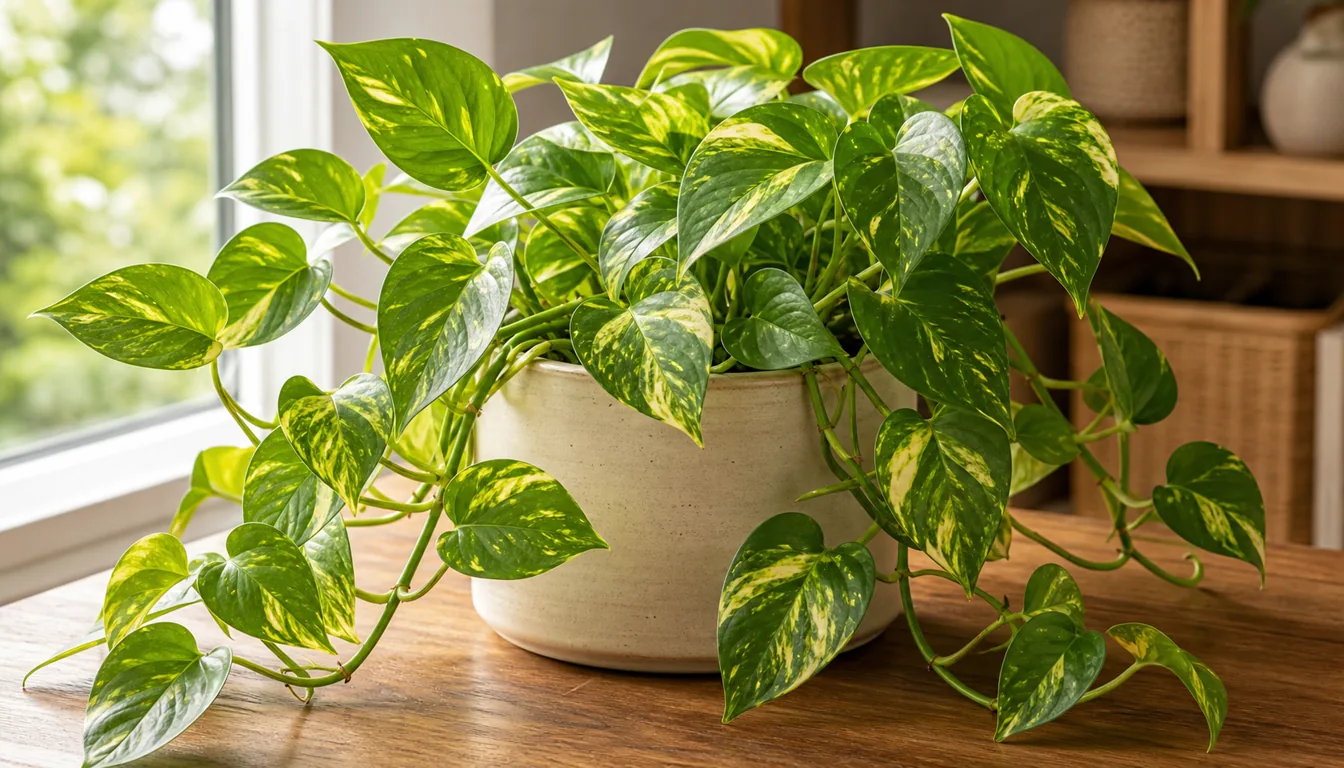
Pothos
Epipremnum aureum
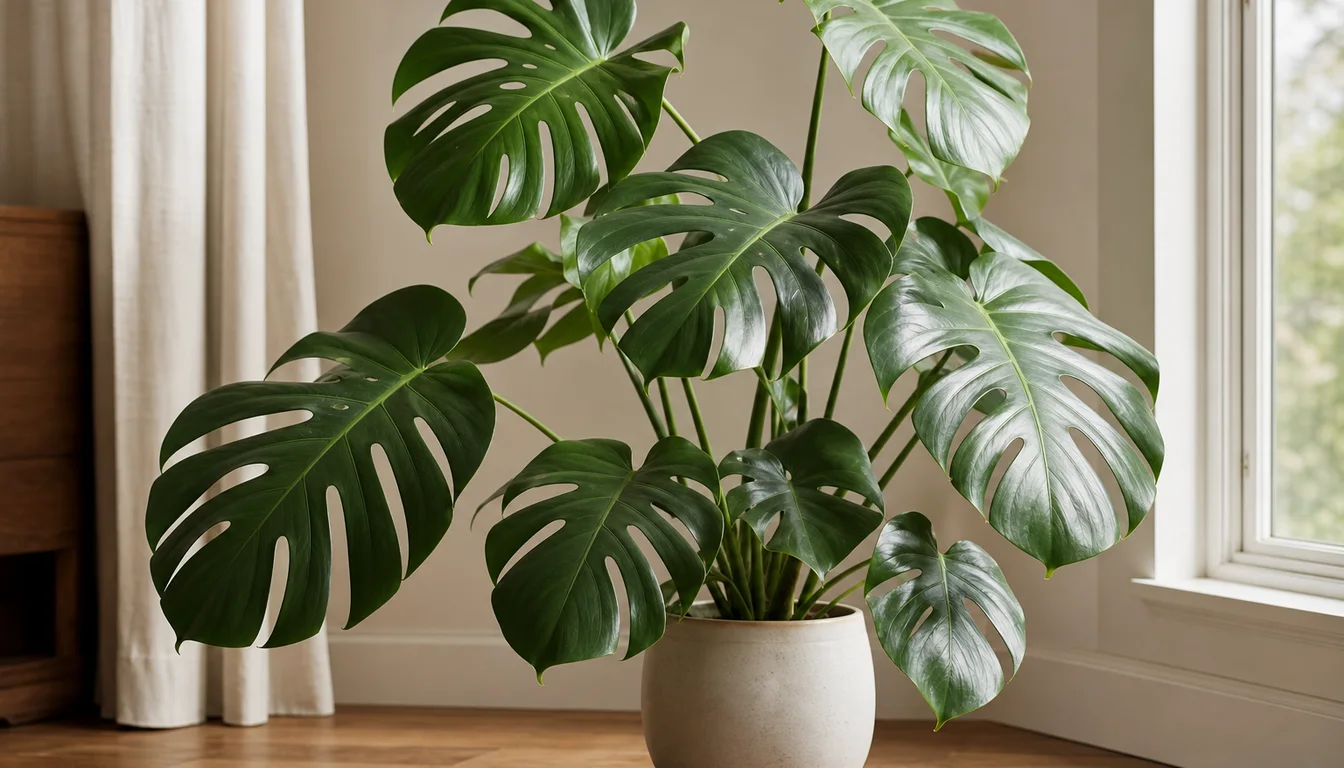
Monstera
Monstera deliciosa
The practical choice begins with the space around the pot. A trailing pothos uses the drop below a shelf, while a mature Monstera deliciosa extends broad leaves outward as well as upward.
These are both climbing aroids. Pothos can develop larger leaves on a support with adequate light, so "small trailer versus climber" describes common indoor displays rather than a fixed botanical limit.
Monstera is also a genus, but the broad-leaved plant compared here is Monstera deliciosa. The comparison with M. adansonii addresses the smaller-leaved vine often sold under the same Swiss-cheese common name.
Specifications
Compare the traits that change the growing decision.
| Feature | Pothos | Monstera |
|---|---|---|
| Common indoor display | Trailing vines from a pot or supported climbing growth | Broad-leaved climber with increasing room around the pot |
| Leaf development | Juvenile leaves commonly remain small in containers; supported growth can enlarge them | Young leaves can be entire; older growth develops holes and deep divisions |
| Support | Optional for trailing; useful for climbing | Sturdy support helps prevent heavy stems from breaking |
| Useful light | Bright indirect light preferred, with lower-light tolerance | Adequate light supports mature foliage; inadequate light can limit perforation |
| Watering decision | Drainage and drying between waterings | Thorough watering followed by partial drying |
| Pet access | Unsafe to chew or ingest | Unsafe to chew or ingest |
A moss pole is one support option, not a switch that creates leaf holes. Wisconsin describes Monstera leaves changing as the plant matures and notes that inadequate light limits perforation. A support can hold the growing plant without replacing the light and healthy roots it also needs.
Pothos changes with its growing conditions too. NC State describes larger mature leaves on supported vines with adequate light. Its ordinary hanging-basket appearance is not proof that climbing leaves remain the same size.
Neither plant is appropriate for pets to chew. Their calcium oxalate crystals can irritate the mouth and digestive tract, and NC State flags dogs, cats, and horses. Keep reachable stems and cuttings away from animals, and seek veterinary advice after suspected ingestion.
Best Use Cases
Choose by the job the planting needs to do.
A shelf with little floor room
Leave space for the whole vine
A pot of pothos can cascade over a shelf or hang from a suitable support. Long stems still need somewhere to go, and a high placement can reduce the light reaching the leaves. A secure pot and accessible watering position matter more than assuming a trailer takes no space.
A young Monstera may fit on a shelf, but its broad leaves and heavier stems can make that temporary. The likely later position matters at purchase time. A small nursery pot does not describe the space a mature plant will occupy.
A broad foliage display
Allow outward growth as well as height
Pothos can fill a vertical support and develop larger foliage, but a trailing container normally gives a different visual effect. It remains an option when the desired display is a vine rather than a broad cluster of leaves.
Mature Monstera leaves extend well beyond the pot. Clearance from a walkway, furniture, and the window helps the plant occupy the room without constant cutting. A bright empty corner can work, while a dark empty corner does not become suitable because it has enough floor area.
A plant without the expected leaf pattern
Age and growing conditions both matter
Low light can reduce pothos variegation. The choice of cultivar also matters, since a green plant is not necessarily a faded variegated one. An identification check and a better-lit position can be more useful than extra fertilizer.
A juvenile Monstera can have intact leaves without being unhealthy or mislabeled. If later growth remains small, available light and overall plant health deserve attention. Buying a particular support material does not guarantee that the next leaf will have holes.
Watering, moving, and repotting
The container changes the work
A small pothos is often easy to move, but a long vine fixed to a support needs more care. Pruning and stem cuttings can renew an overlong plant. There is no fixed replacement date for its basket or a rule that it never outgrows its position.
A mature supported Monstera can be awkward to move. The pot, wet growing medium, roots, and support all contribute weight. Its watering interval still follows the pot and conditions, rather than leaf size alone or the day another houseplant gets watered.
Related Comparisons
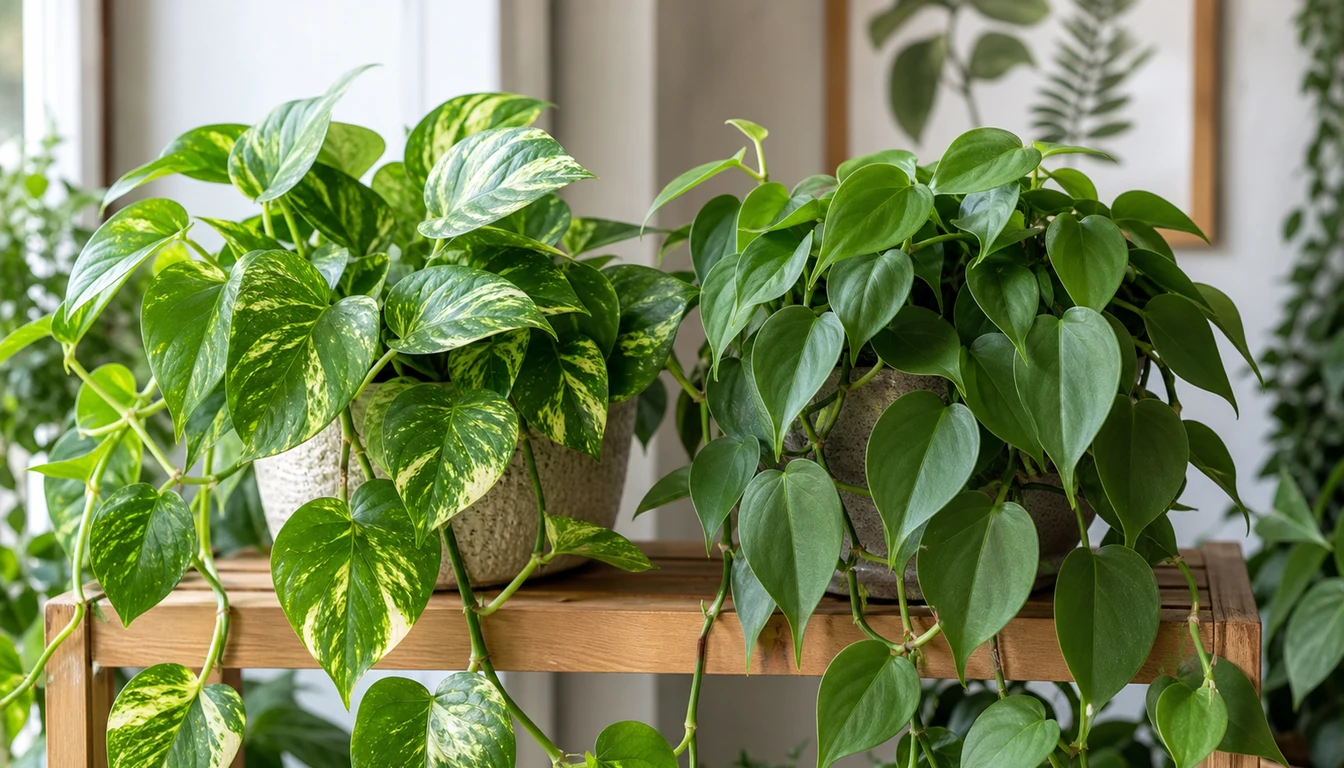
Pothos vs Philodendron: Which Trailing Vine Wins?
Read Comparison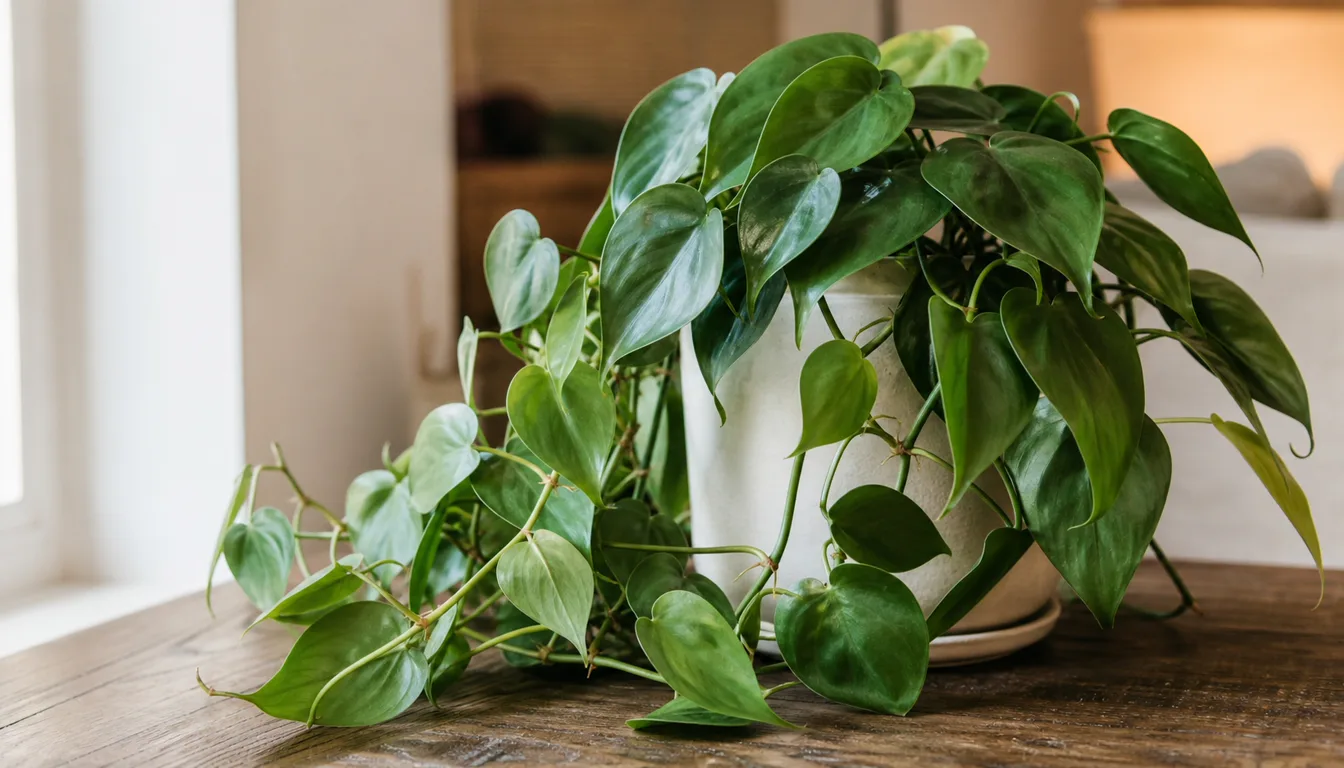
Monstera vs Philodendron: Statement Leaves Compared
Read Comparison
Snake Plant vs Aloe Vera: Tough Houseplant Choice
Read Comparison