Fiddle Leaf Fig vs Rubber Plant
Fiddle-leaf fig offers broad, sculptural leaves; rubber plant offers glossy foliage in several colors. Both need a suitable window, drainage, and protection from cold drafts.
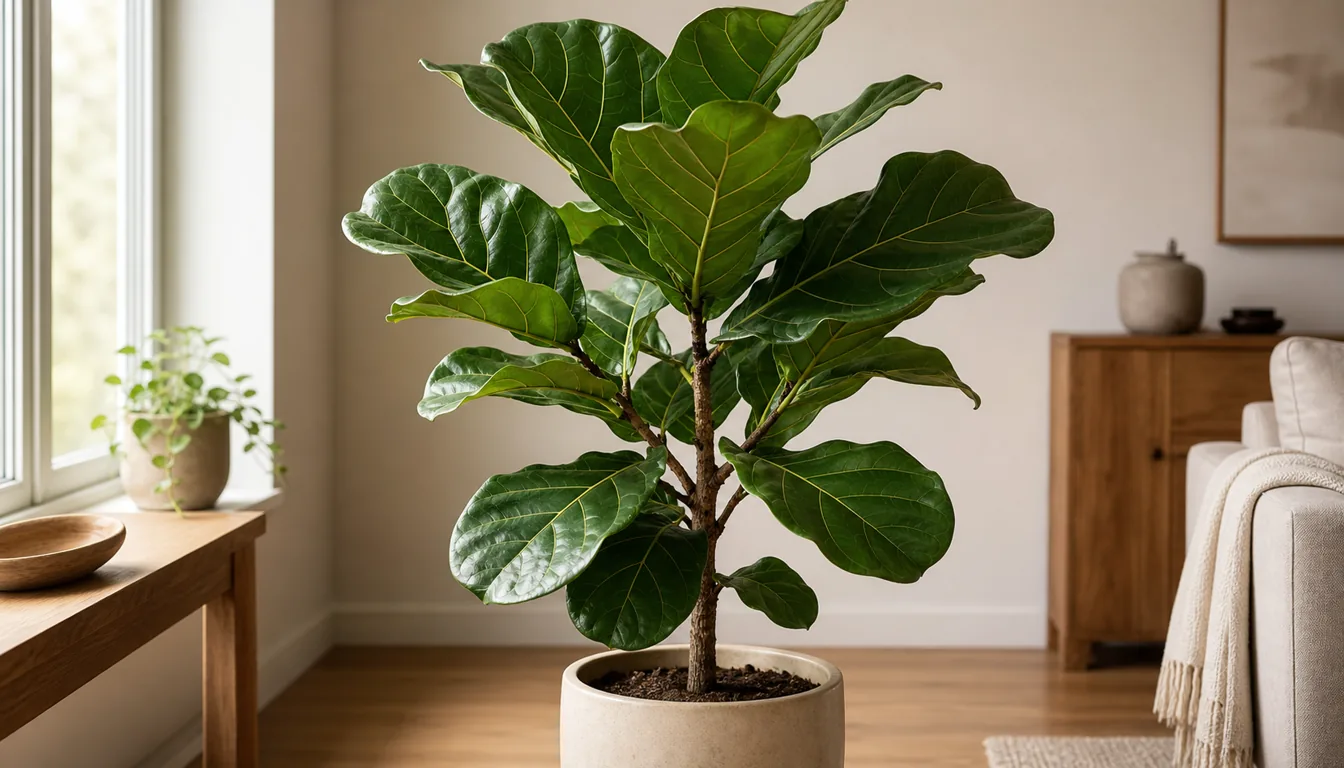
Fiddle Leaf Fig
Ficus lyrata
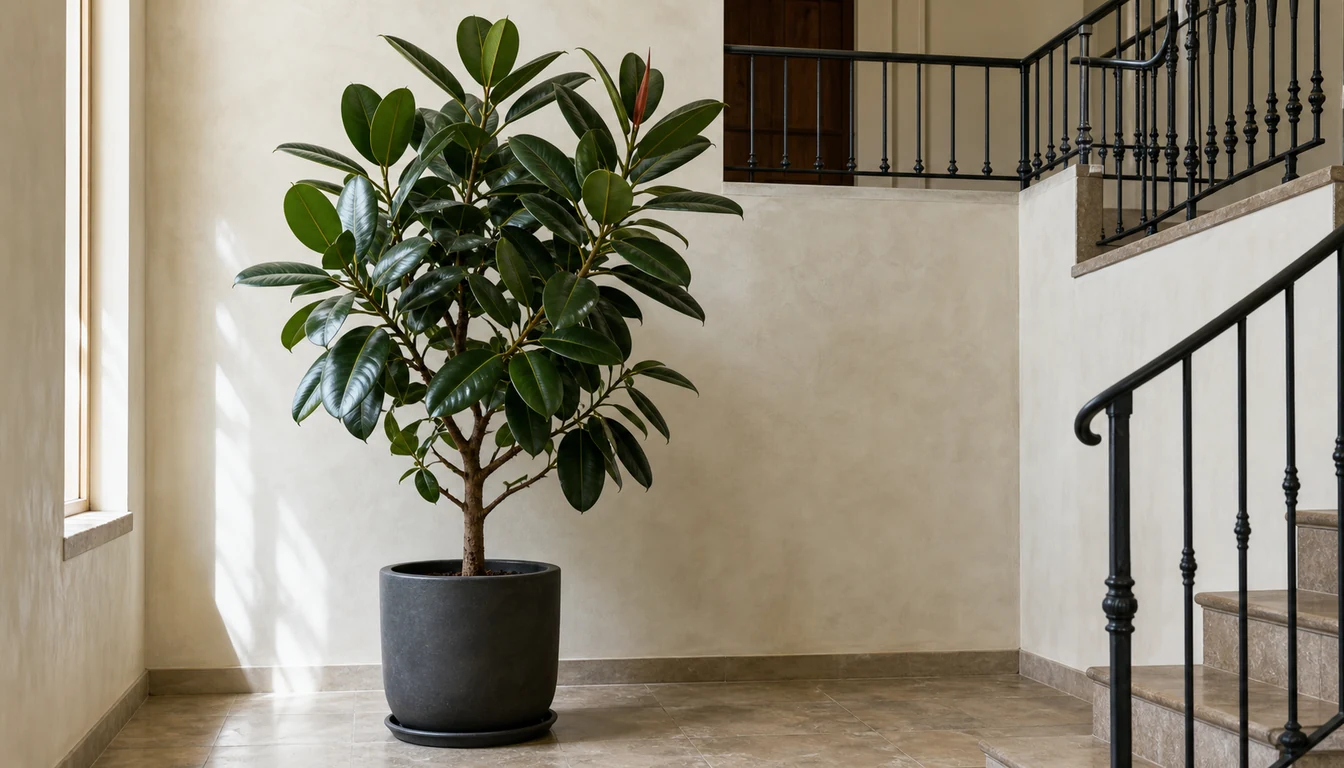
Rubber Plant
Ficus elastica
A fiddle-leaf fig and a rubber plant can each become a substantial indoor tree. The choice starts with the light and floor space you actually have, then the foliage you prefer.
Rubber plant is often presented as the forgiving alternative, but it can also drop leaves after overwatering or cold exposure. Neither tree belongs in a windowless corner simply because it is sold as a houseplant.
For a bright, stable position, leaf shape and cultivar can make the decision. For a dark or drafty position, changing the site matters more than choosing the supposedly tougher name.
Specifications
Compare the traits that change the growing decision.
| Feature | Fiddle Leaf Fig | Rubber Plant |
|---|---|---|
| Family | Moraceae (figs) | Moraceae (figs) |
| Light (indoors) | Bright, indirect | Bright indirect light; tolerates some shade |
| Watering considerations | Moisture checks; avoid overwatering | Moisture checks; avoid overwatering |
| Growth habit | Upright, narrow | Upright, branching |
| Pet toxicity | Documented ingestion concern for cats and dogs | Listed concern for cats, dogs, and horses |
| Soil preference | Well-drained, airy mix | Standard well-drained mix |
These are indoor-care comparisons. Outdoor hardiness ranges do not describe the temperature, humidity, or light available in a living room.
Cost & Value
Fiddle Leaf Fig
- Compare local quotes for the cultivar, height, branching, and condition you want; this comparison does not establish a current price range.
- A stable pot, suitable light, and space to move the plant for care are part of the purchase. Larger specimens can be harder to transport and position.
Rubber Plant
- Compare local quotes for the cultivar, height, branching, and condition you want; this comparison does not establish a current price range.
- A stable pot, suitable light, and space to move the plant for care are part of the purchase. Larger specimens can be harder to transport and position.
Sustainability
Keeping a suitable plant healthy is more useful than replacing a stressed one with the other species in the same unsuitable position. Neither species has a measured yearly water or replacement-cost advantage here.
Best Use Cases
Choose by the job the planting needs to do.
Bright window
Light at the leaves
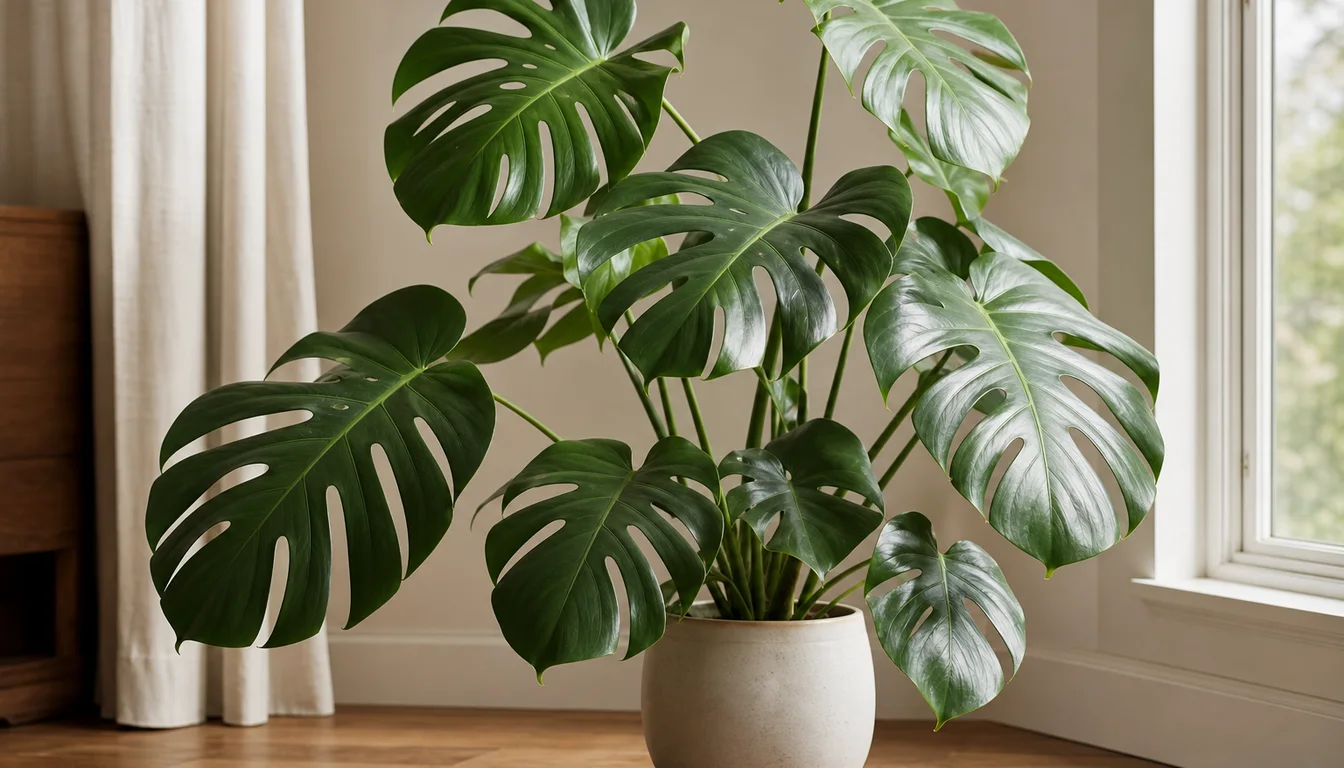
The broad, violin-shaped leaves give fiddle-leaf fig a strong outline. Bright indirect light suits it; the direction a window faces alone does not tell you how much light reaches a tree behind curtains or neighboring buildings.
Rubber plant offers glossy oval foliage, including dark-leaved and variegated cultivars. It also suits bright indirect light, so the visual difference can decide between the two in a suitable spot.
Dimmer rooms
Tolerance is not a growth guarantee
Sparse growth or leaf loss deserves a check of light, watering, and temperature together. Those signs do not identify low light on their own.
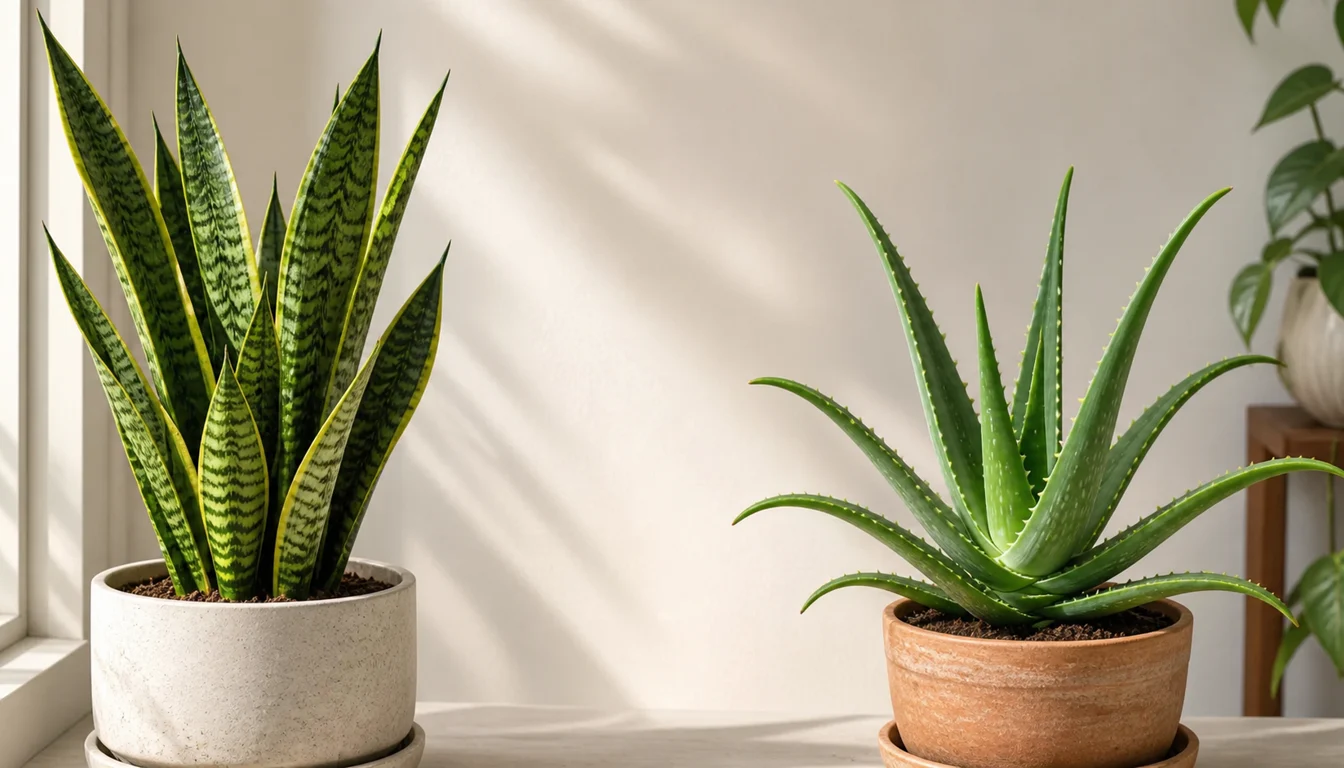
Rubber plant tolerates some shade, but that does not establish a safe distance from every window. Snake plant is another option to consider when the room cannot support the indoor tree you want.
Watering routine
Root-ball condition, not a fixed calendar
Fiddle-leaf fig is sensitive to overwatering, yet too little water can also cause leaf drop. The pot, drainage, seasonal growth, and moisture below the surface are more useful than a shorter watering cycle assigned by name.
Rubber plant also loses leaves when overwatered. A larger pot is not automatically an improvement: it changes how much moist mix surrounds the roots and how long that mix stays wet.
Shape and space
A tall stem or a branched plant
A fiddle-leaf fig’s large leaves occupy space beyond the trunk. A narrow gap may fit the pot while leaving foliage pressed against furniture or glass.
Pruning rubber plant encourages branching, while an unpruned stem gives a taller form. Buying a small specimen saves initial space, but does not establish the mature footprint or a deadline for reaching it.
Homes with pets
Chewing and sap exposure
NC State identifies ingestion risks for cats and dogs and irritating sap in fiddle-leaf fig. A small amount of damage to a leaf does not tell you the severity of an animal’s exposure.
NC State also flags rubber plant as a concern for cats, dogs, and horses. It does not establish that its tougher leaves make it safer; access to either plant matters more than a “mild” label.