
Why Aloe Vera Droops, and Which Droop Comes Back
A drooping Aloe Vera has either lost the water pressure that holds its leaves up, or grown leaves that were never able to hold themselves up. The two look alike from across the room and need opposite responses.
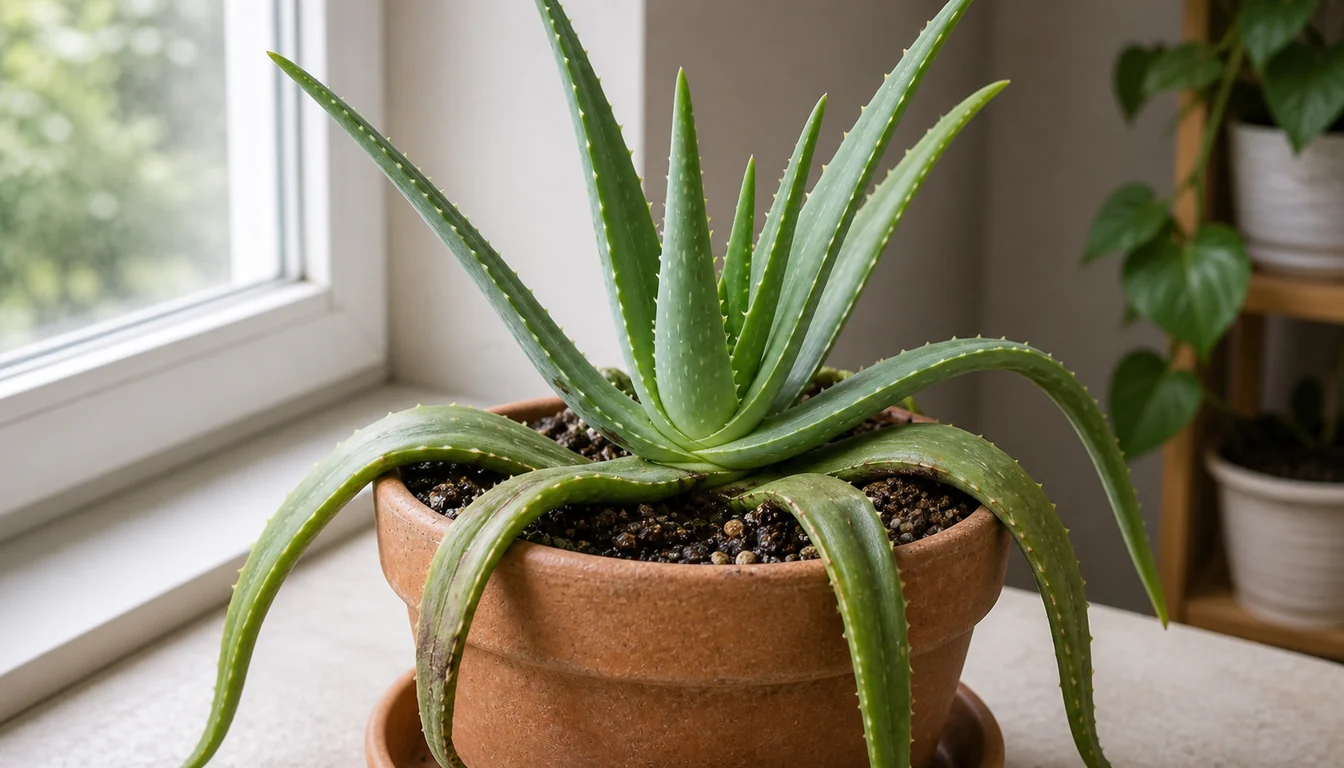
Quick diagnosis
Wet roots or weak light
Squeeze a drooping leaf and lift the pot, because soft and heavy sends you to the roots while firm and long sends you to the light.
Open the full diagnosisWhat You Are Seeing
An Aloe Vera leaf stands up because the water stored inside it presses outward against a stiff base. Take that pressure away and the leaf folds, which is why a plant can flop in soaking wet mix and in bone-dry mix alike.
The other kind of droop was built in. Leaves that grew long and thin in weak light are too heavy for their own width, and no amount of correct watering will lift them.
Only one of the two is reversible, and that decides what counts as recovery later on.
Common Causes
01 High likelihood
Wet mix and root rot
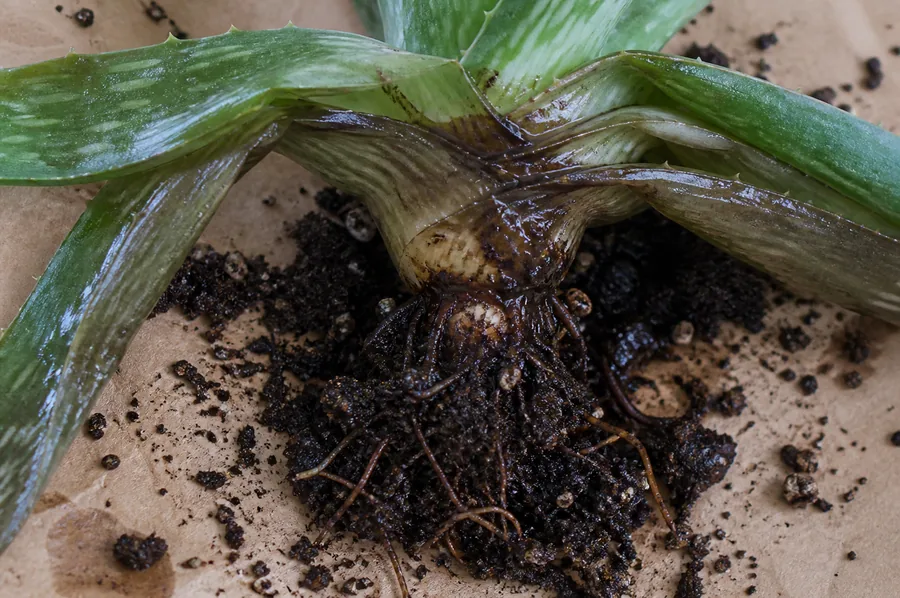
Roots sitting in wet mix rot, and rotted roots cannot move water. So the plant droops with every sign of thirst while its soil is still soaking, which is the trap that makes people water it again.
How to identify it
- Leaves are soft and slightly translucent where they meet the stem.
- The mix is still wet several days after watering and the pot feels heavy for its size.
- The whole plant lifts loosely out of the pot, because the anchoring roots have gone.
- A sour smell rises from the mix or from the drainage holes.
What to do
- Lift the plant out and find whether any firm white root is left, because that decides whether this is a repot or a restart.
- Trim back to firm tissue, then stand the plant somewhere dry and shaded for a day or two so the cuts seal.
- Replant into a gritty mix in a pot barely wider than the root ball, since a large pot holds water the damaged roots cannot use.
- Prop a heavy rosette while it re-roots, or its own weight keeps dragging the leaves down.
- Hold off water for about a week, then water only once the mix is dry the whole way down.
02 High likelihood
Weak light and stretched leaves
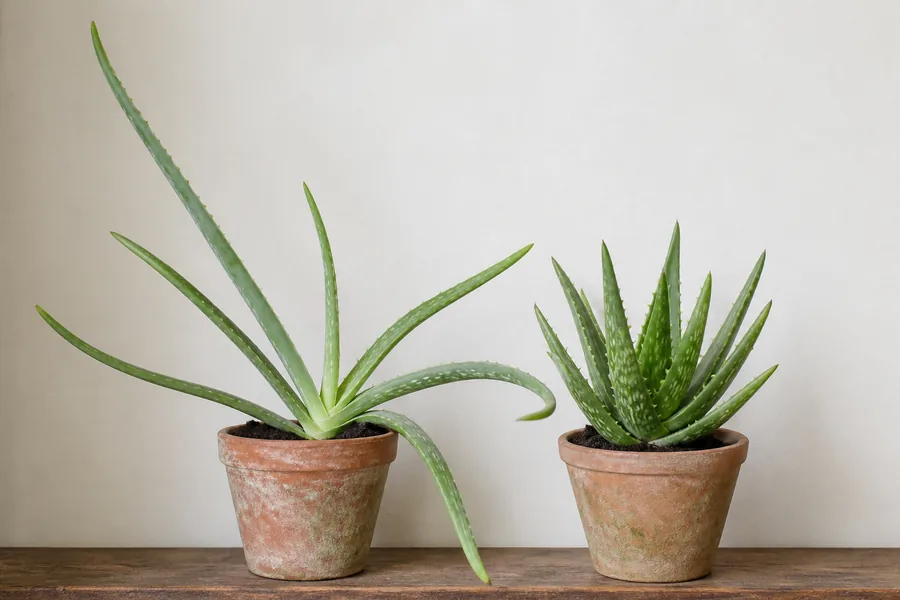
Aloe Vera answers weak light by making each new leaf longer, thinner and paler, and by opening the gaps between them.
A leaf built that way cannot hold itself horizontal, so the rosette spreads and sinks even while the roots are perfectly healthy.
How to identify it
- New leaves are noticeably longer and narrower than the ones underneath them.
- The gaps between leaves have opened, so the rosette looks loose rather than tight.
- Color has gone pale or yellow-green across the newer growth.
- The whole plant leans toward one window.
What to do
- Move the plant to the brightest window you have, adding direct sun across about two weeks rather than all at once.
- Turn the pot a quarter turn each week so the rosette stops leaning.
- Add a grow light on a timer for 10 to 12 hours if no window carries it through winter.
- Cut back watering as the light improves, because a stretched plant in a dim room uses very little.
- Leave stretched leaves in place while they stay firm, since they still feed the new growth.
03 Medium likelihood
A rosette that outgrew its base
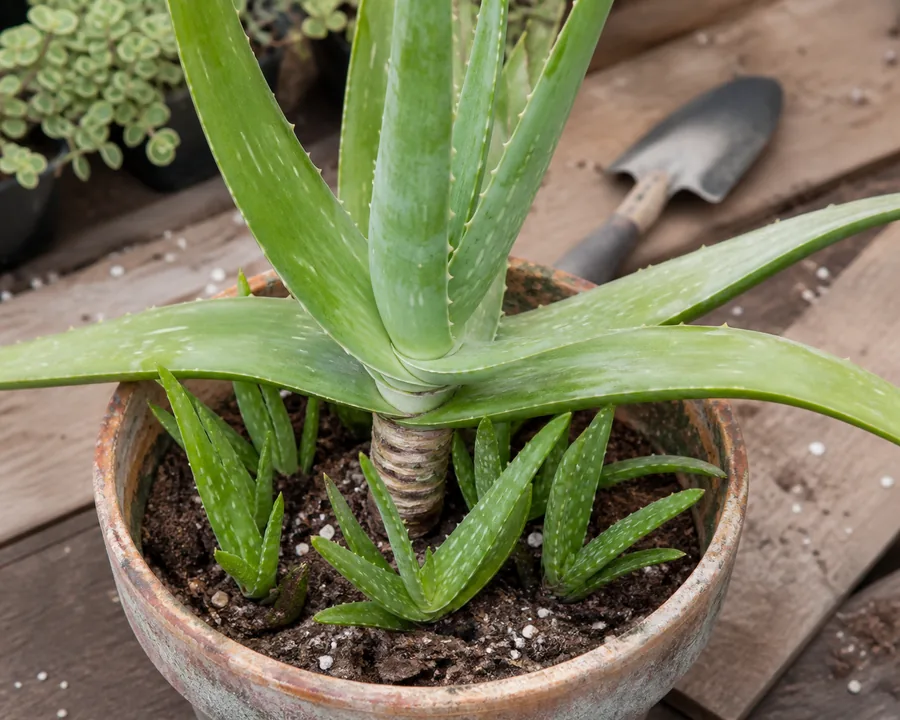
An older Aloe Vera raises its rosette on a bare woody stem and rings itself with offsets. The outer leaves then hang further from their support and splay outward under their own weight, while staying completely firm.
How to identify it
- Leaves are plump and firm when squeezed, with no soft or wrinkled tissue anywhere.
- A bare woody stem shows under the lowest leaves.
- Offsets crowd the pot and push the parent rosette open from the middle.
- The splaying came on across months rather than in a week.
What to do
- Separate the offsets and pot them on, which takes the crowding pressure off the parent.
- Repot the parent deeper so the bare stem sits below the soil line and the rosette regains support.
- Move up one pot size only, because a wide pot of damp mix undoes the gain.
- Take the crown as a cutting instead once the stem has grown too long to bury.
- Leave the plant unwatered for a few days afterward so the disturbed roots seal.
04 Low likelihood
Going too long between waterings
This is the least common way an indoor Aloe Vera droops, and the easiest to confirm. A leaf emptied by drought creases along its length and feels leathery rather than soft.
How to identify it
- Leaves are wrinkled lengthwise and feel tough instead of squashy.
- The pot is obviously light when you lift it.
- The mix has shrunk away from the sides of the pot.
- Nothing smells sour, and the roots are pale and firm.
What to do
- Soak the pot right through until water runs from the holes, then let it drain fully.
- Check again after three days, because a very dry root ball often needs a second soak to wet through.
- Go back to watering on soil dryness rather than on a set day.
- Keep the plant out of harsh afternoon sun while the leaves refill.
Which Drooping Leaves Stand Back Up
A leaf emptied by drought refills and lifts within a few days, once the root ball is wet the whole way through.
A leaf that grew long and thin in weak light never shortens. It stays down for the rest of its life, so moving the plant is about the growth that comes next rather than the leaves already lying over the rim.
That makes the center of the rosette the only honest place to look. Short, tightly packed new leaves pushing up from the middle are the signal that the cause has gone.
Can You Save a Stretched Aloe?
Once an Aloe Vera has stretched, better light protects the next leaves and does nothing for the ones already lying flat. The way back to a compact plant is to start a new one from the top.
Cut the rosette off cleanly just below its lowest healthy leaves, taking as little stem as you can while still clearing the bare section.
Stand the cutting somewhere dry and bright but out of direct sun for about a week, until the cut face has dried to a firm pale seal. Then set it on gritty mix, deep enough to stand up, and leave it alone.
If cutting feels like too much, the offsets around the base are already compact and grow into the plant you wanted anyway.
Recovery Plan
The fast answer shows up
A drought-drooped plant lifts noticeably within two or three days of a proper soak, and nothing else on this page moves that quickly.
Roots take hold again
A repotted plant that lost roots needs this long before it can carry its own leaves. Leaves that stayed firm stop sinking further, which is the first honest sign.
The rosette rebuilds
A stretched plant recovers its shape only through new growth, so give the center a full season before judging it. Old splayed leaves can come off once enough short ones have replaced them.
Light is what keeps an Aloe Vera compact enough to hold itself up, so give it the brightest spot you have all year and add a grow light through a dark winter.
Water on dryness rather than on a day of the week. A gritty mix in a pot only slightly wider than the roots lets you do that without guessing.