How to Grow a Ponytail Palm Without Keeping Its Roots Wet
Beaucarnea recurvata Asparagaceae
Ponytail palm is a slow-growing succulent with a swollen water-storing stem and long, arching leaves. A sunny position and well-drained potting mix suit it, with thorough watering followed by drying between drinks. The root-zone moisture matters more than the appearance of the trunk alone.
Care snapshot
What the Swollen Base Does
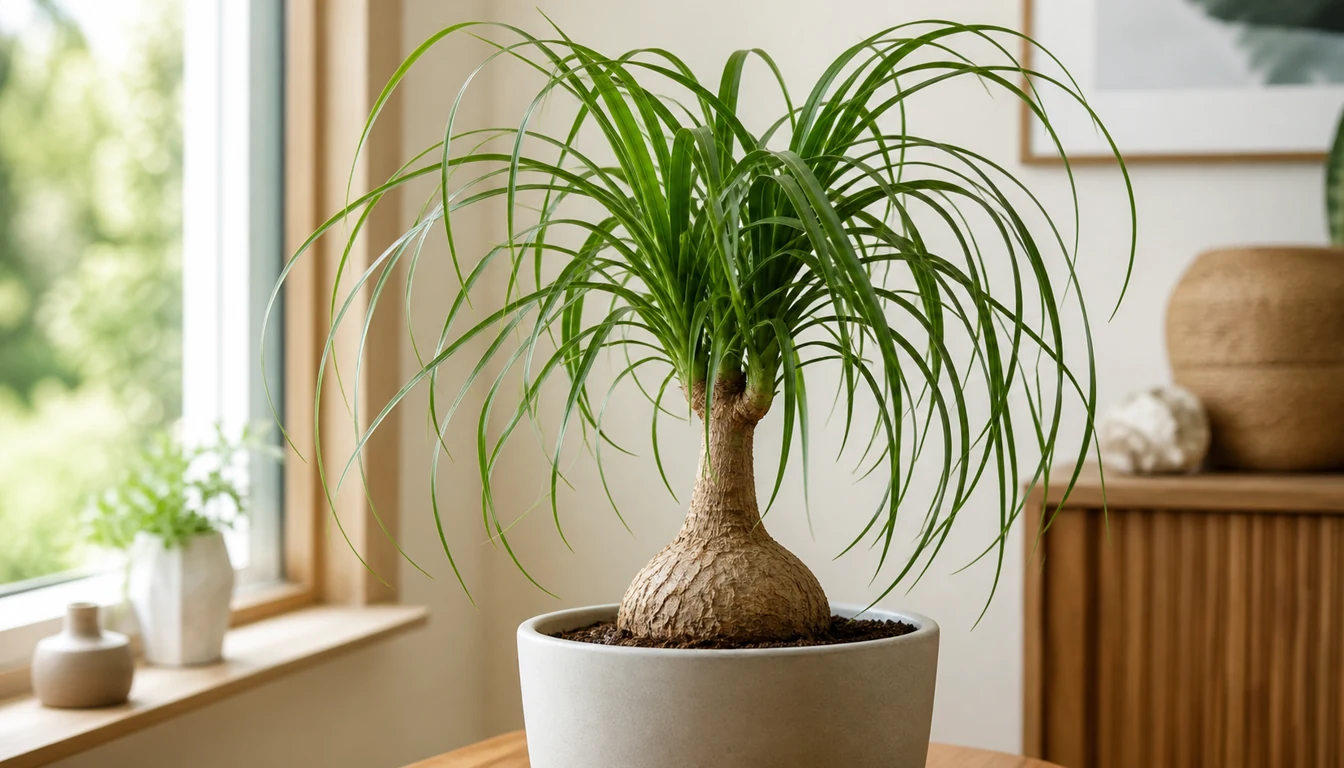
Ponytail palm is Beaucarnea recurvata, a member of the asparagus family rather than a true palm. Nolina recurvata is a synonym you may still see on labels. The narrow leaves naturally arch and curl from a crown above the enlarged stem.
That swollen base, or caudex, stores water. It helps the plant tolerate drying soil, but it does not measure how much moisture remains around the roots. A firm base cannot prove that roots are healthy, and a change in its surface does not identify a disease by itself.
The distinction matters when a plant develops brown tips. Adding water because the leaves look dry can worsen a root zone that is already wet. The useful evidence is the condition of the mix, recent watering, drainage and the pattern of change across the plant.
Indoor growth is slow, and flowering is unusual in a houseplant. A young plant with one crown need not branch or bloom to be growing normally. Outdoor plants in warm climates can become much larger and develop branching trunks, so landscape photographs are not a forecast for a desktop pot.
A true palm such as Parlor Palm has a different growth form and watering pattern. The word palm on the label is not a reason to keep this succulent’s soil continuously moist.
Size, Condition, and Room for the Leaves
The existing silhouette matters because a small ponytail palm changes slowly indoors. Trunk width, number of crowns and leaf spread describe the plant you are buying. They do not reveal an exact age or justify a promised growth rate.
A tabletop plant and a tall floor specimen have different space and lifting needs. The leaf fountain may extend well beyond the pot, and a tall narrow container can be unstable even when it looks proportionate to the trunk.
- Compact plant
- Needs a bright surface with room for leaves to arch without repeated rubbing
- Tall or multiple-crown plant
- Needs floor space, a stable container and a manageable way to move it
- Base and roots
- Soft dark areas, a loose plant or persistently wet mix need investigation, not an age or drought-reserve estimate
At purchase, a close look at the base, crown and drainage arrangement is more useful than squeezing the trunk repeatedly. Evidence of fresh watering is not itself a defect. A plant left sitting in water, or one with damaged tissue and a loose attachment to the mix, deserves a closer assessment.
Older lower leaves can dry and fall as part of normal turnover. UF/IFAS describes this in landscape plants. Rapid loss across the crown after a move should not automatically be dismissed as harmless adjustment, particularly if the mix is staying wet or the growing conditions changed sharply.
Light Without a Sudden Change
A sunny window suits ponytail palm better than a dim room corner. NC State recommends a sunny position, and RHS specifies full light under cover. A window’s compass direction alone does not establish the light reaching the leaves because trees, buildings and distance from the glass also matter.
The long leaves naturally bend and curl. Drooping leaf tips are not a stand-alone light test. Changes in new growth, the available light and moisture use provide more context than trying to make the whole crown stand upright.
A plant moving from indoors to an outdoor patio needs gradual exposure to stronger light and different temperatures. A protected position at first reduces the abrupt change. UF/IFAS recommends this transition without treating a fixed number of days as suitable for every plant and climate.
New pale or brown patches after a sharp exposure change warrant checking the side of the plant that faced the sun and when the damage appeared. That history can support a sun-injury explanation, but a pale patch by itself does not rule out other causes.
Water the Root Ball, Then Allow It to Dry
A dry surface can hide moisture deeper in the pot. Ponytail palm benefits from drying between waterings, so moisture below the top layer is part of the decision. Repeated small sips may wet only part of the mix while leaving other roots dry.
NC State recommends deep summer watering followed by drying and greatly reduced winter watering. RHS describes moderate watering during growth and keeping the plant just moist in winter. Both point away from a continuously wet pot. Reduced winter demand does not mean withholding water indefinitely.
- Assess moisture below the surface and consider how long the pot has stayed wet. A skewer or accessible drainage opening can add information without repeated deep probing through roots.
- When checks show that the mix has dried through rather than only at the surface, water the root ball thoroughly and allow excess to leave through the drainage holes.
- Empty water collected in the saucer or decorative outer pot.
- Check again according to drying conditions rather than watering because a calendar date arrived.
The weight of a small pot can help if you know how that same pot feels wet and dry. It is a supporting observation, not a universal trigger, and a heavy specimen does not need to be tipped or lifted for every check.
A soft, dark or deteriorating base calls for closer examination of drainage and root condition. Root rot is a documented problem in wet soil, but the pathogen and extent of damage cannot be identified from the base’s color alone. A firm trunk does not rule out damage among the finer roots.
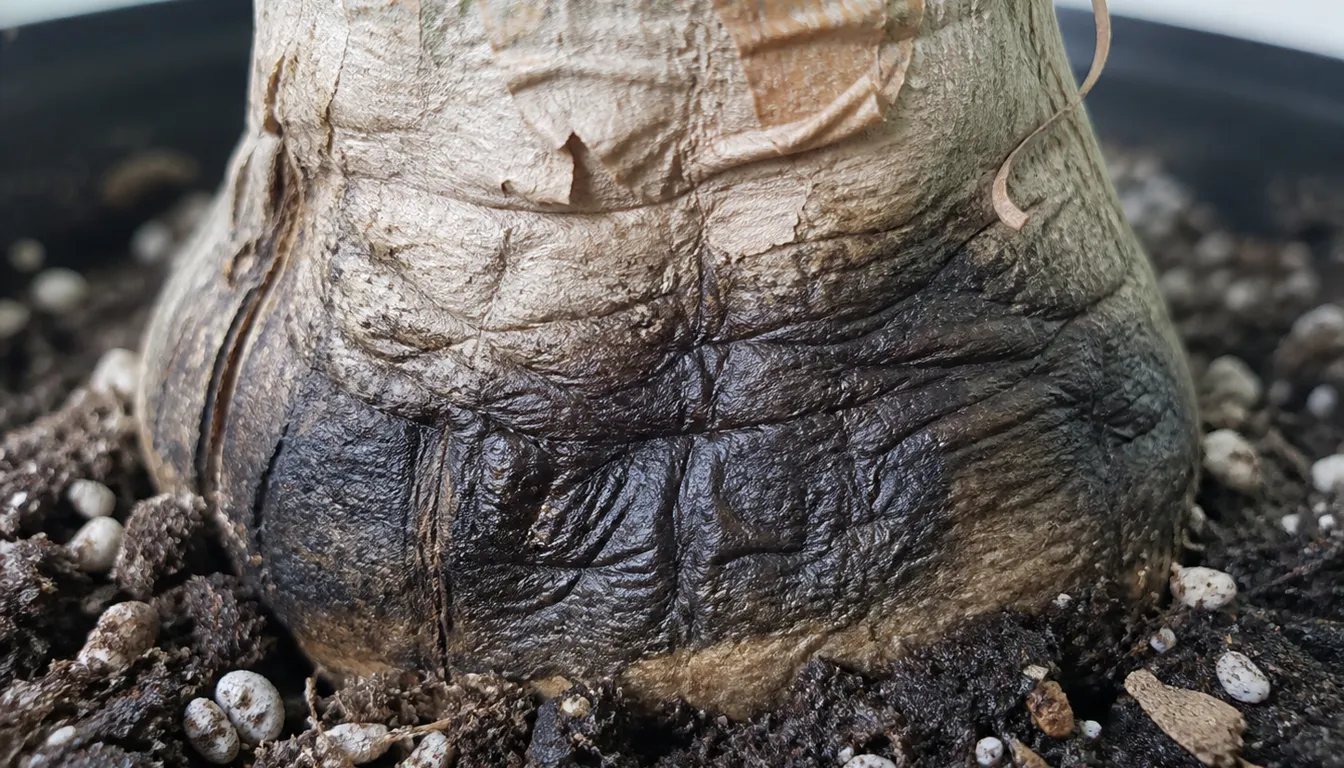
If the root zone is wet and the plant is declining, adding another soak will not answer the cause. A careful root assessment and, when the cause remains unclear, advice from a plant diagnostic service are more useful than an automatic fungicide or a watering increase.
A Stable Pot With a Draining Root Zone
The container has to support both the roots and a potentially top-heavy plant. A wide, stable base can help, but pot depth follows the root system rather than a rule that every ponytail palm needs a shallow bowl.
NC State recommends a well-drained cactus or succulent mix. The mix and drainage holes work together. Coarse material scattered on top does not establish that water moves freely through the whole root ball, and a gravel layer cannot replace an open outlet.
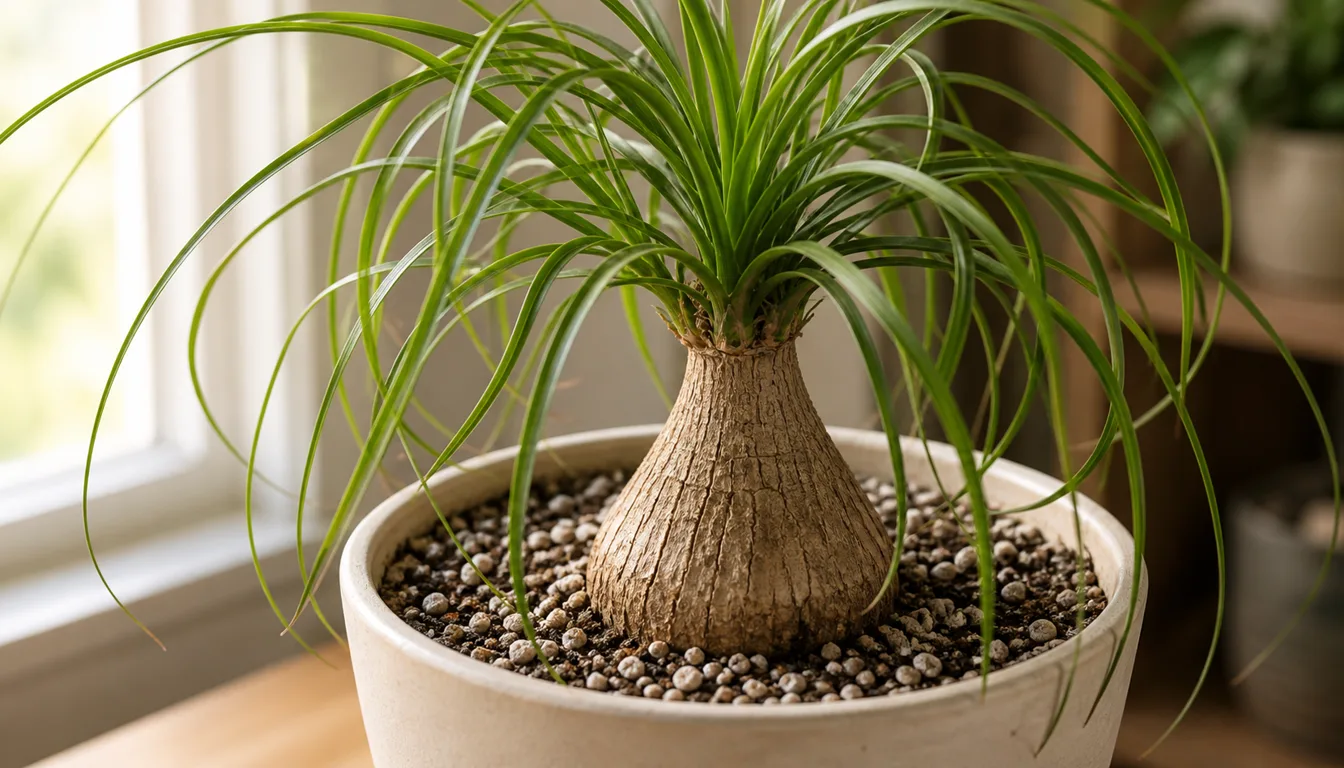
The enlarged stem normally remains visible above the mix. Repotting is not a reason to bury its shoulder to stabilize a leaning plant. A container that accommodates the existing roots and supports the plant is a better answer than piling wet mix up the trunk.
RHS places potting-on in spring, but a date is not proof that a larger container is needed. Crowded roots, damaged or poorly functioning mix and an unstable fit are concrete reasons to assess the pot. A root at one drainage hole does not, by itself, establish how crowded the entire root ball has become.
An oversized container holds a larger volume of mix around a small root system. A move that fits the roots avoids that extra wet volume. A decorative outer pot can still be used if the inner pot drains and collected water is removed.
The close view shows the exposed stem base meeting the potting mix. Its surface texture cannot reveal moisture deeper in the container or prove that the hidden roots are healthy.
Offsets and Seed
RHS lists two propagation routes, seed and rooting offsets in spring. An offset is a small shoot arising from the parent, rather than one of the long leaves. Not every indoor plant produces an offset ready for propagation.
An offset with roots and one that still needs to form roots begin with different support. New leaves alone do not prove successful rooting. Growth can use stored resources before a young plant has a root system able to supply it consistently.
For an available offset, the aim is to preserve its attachment tissue and any roots during separation, then support it in a draining propagation medium. A newly separated piece needs closer moisture attention than a mature plant with an established root ball. The parent’s drought tolerance is not a reason to leave an unrooted offset completely dry.
Seed is a separate route, not evidence that a houseplant must flower before it can be propagated. RHS gives a spring germination temperature of 18–21°C, about 64–70°F. Neither method promises a full-sized plant quickly, and a missing offset is not a reason to cut the crown off a healthy specimen.
Brown Tips and Observable Pests
Brown tips are a symptom with several possible contributors, including moisture stress, root problems and accumulated salts. The position and progression matter. A few old lower leaves drying slowly differs from damage spreading into newer growth, although neither pattern identifies a cause on its own.
NC State lists mealybugs, scales and spider mites among possible indoor pests. Visible cottony clusters, attached insects, fine stippling or webbing warrant a close look at leaf bases and undersides. Dust alone, a brown tip or naturally rough trunk bark is not an insect diagnosis.
Mealybugs and soft scales can produce sticky honeydew. Armored scales do not, so the absence of sticky residue does not clear a plant of every scale insect. Identifying what is present helps avoid treating unrelated damage.
Isolation helps keep a confirmed or suspected infestation from moving among houseplants while it is assessed. Physical cleaning or removal may help a small infestation, but pesticides need a label for the plant and target pest. Product concentration, coverage and repeat timing come from that label, not a universal one- or two-week schedule.
Trimming an already dry tip changes appearance, not the reason it browned. The remaining live leaf still contributes to the plant. Correcting moisture, root or pest conditions protects later growth rather than making dead tissue green again.
Seasonal Care Follows Current Growth
A brighter, warmer period can increase water use, while shorter days and cooler conditions can slow drying. The pot still needs observation. A warm room with supplemental light does not necessarily behave like a cool winter storage space.
Fertilizer supports active growth when the existing mix and feeding history justify it. It cannot compensate for weak light or unhealthy roots. The product label and any fertilizer already in the mix matter more than a compulsory monthly application.
Cold guidance describes growing conditions, not a precise injury switch. NC State uses 50°F as a houseplant hardiness reference. RHS classifies it for summer outdoor use under UK growing conditions. Those references do not prove that every brief reading below 50°F causes permanent soft patches.
For an indoor specimen spending summer outside, bringing it back to suitable protected conditions before cold or frost is the practical approach. Gradual adjustment and inspection for pests accompany the move. Outdoor USDA zone ranges describe landscape climates, not indoor room temperatures or a local frost date.
Rain can also change the root zone faster than an indoor watering routine suggests. Water collecting in an outer pot or saucer needs removal regardless of season. An outdoor stay is useful only when both exposure and drainage remain suitable.
Pet Listing and Physical Placement
ASPCA’s Bottle Palm entry names Beaucarnea recurvata and lists it as non-toxic to dogs, cats and horses. The scientific name matters because common names such as bottle palm can refer to different plants.
That listing does not make the foliage edible or cover products applied to it. Long leaves can attract chewing or play, and the plant still needs a stable position. Rough or finely toothed leaf margins and a heavy pot are physical considerations separate from chemical toxicity.
A bright site with room around the leaf fountain reduces repeated brushing and tipping. A different houseplant needs its own species-specific safety check. A whole genus cannot be called pet-safe simply because one familiar member is listed as non-toxic.
Sources & References
- Beaucarnea recurvata — NC State Extension Plant Toolbox
- Beaucarnea recurvata — RHS
- Bottle Palm, Beaucarnea recurvata — ASPCA
- Ponytail Palm — UF/IFAS Gardening Solutions
- Beaucarnea recurvata: Ponytail Palm — UF/IFAS ST093
- Indoor Plant Care — Purdue Extension HO-39-W
- Diagnose Indoor Plant Problems — University of Maryland Extension
- University of Minnesota Extension: Managing Insects on Indoor Plants
Related Plants
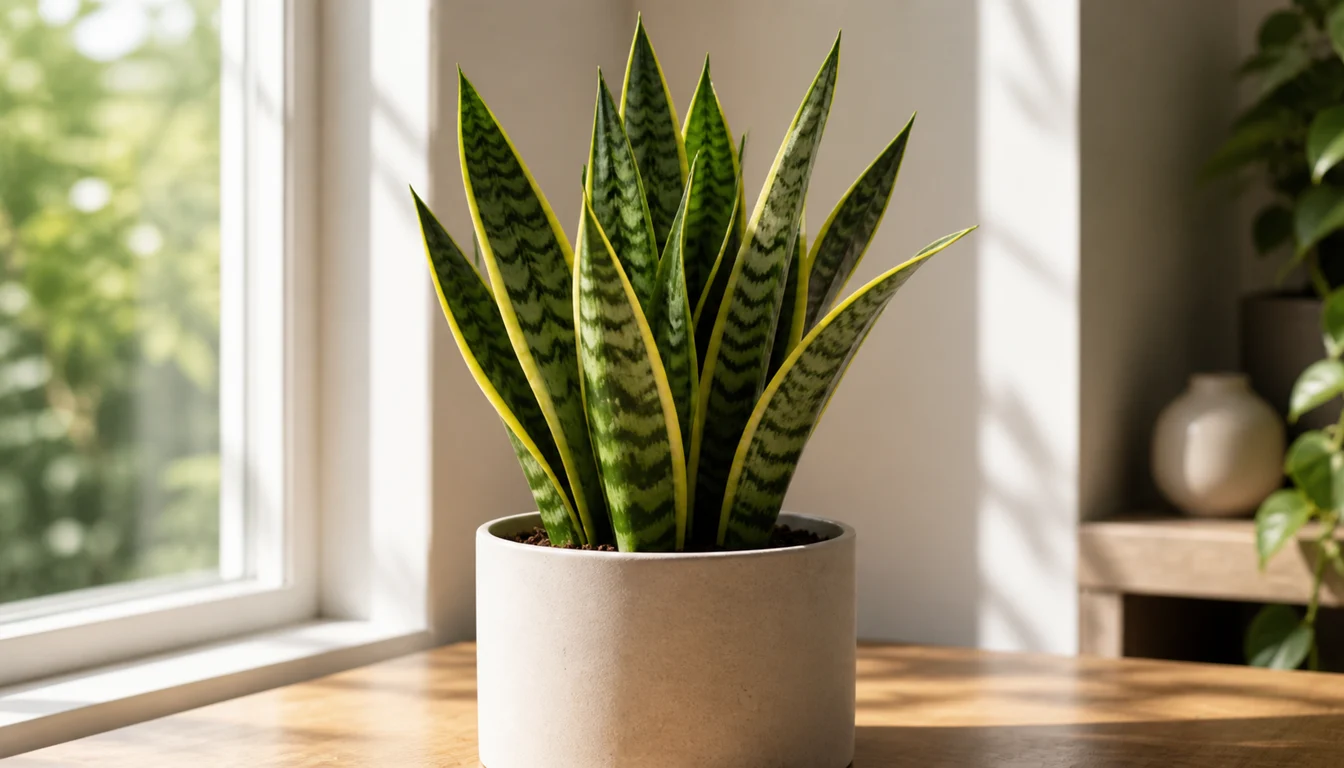
Snake Plant
Another drought-tolerant structural houseplant with upright leaves.
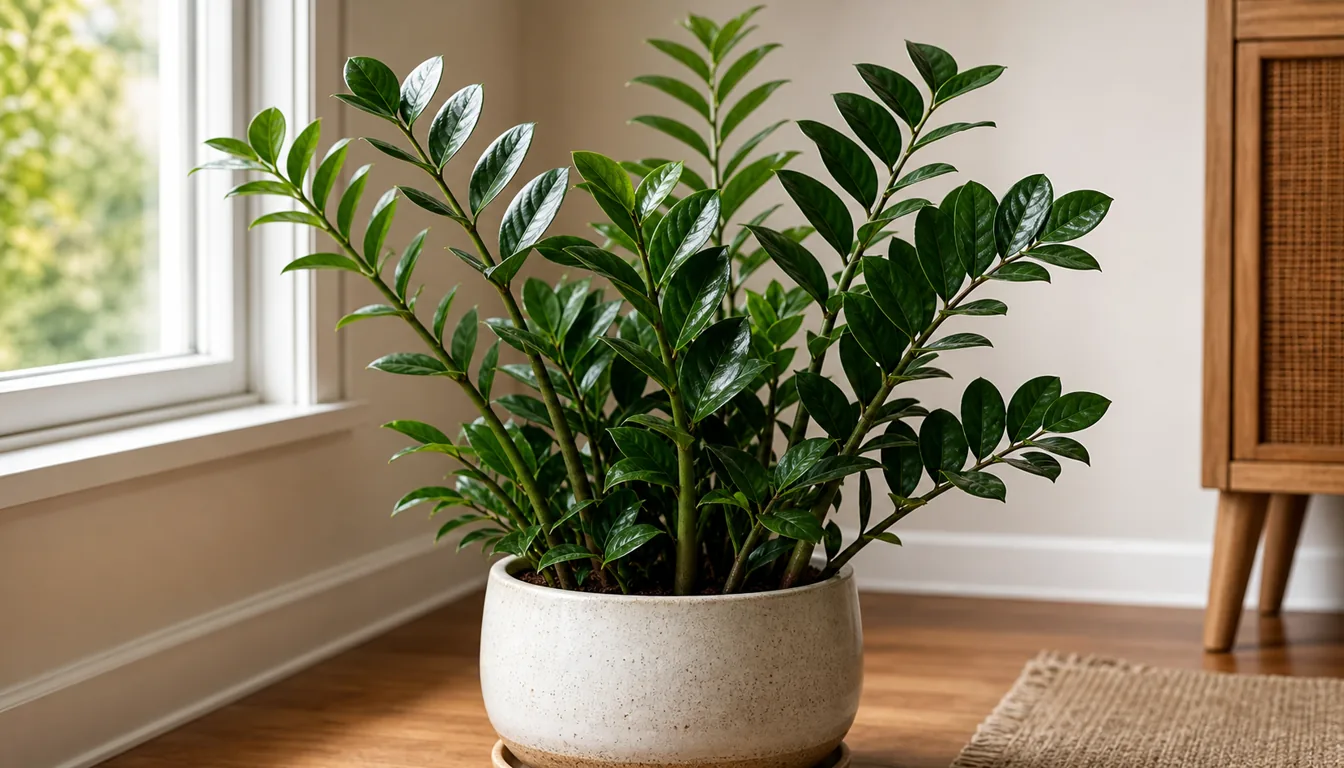
ZZ Plant
A rhizomatous houseplant with a different light and moisture pattern.
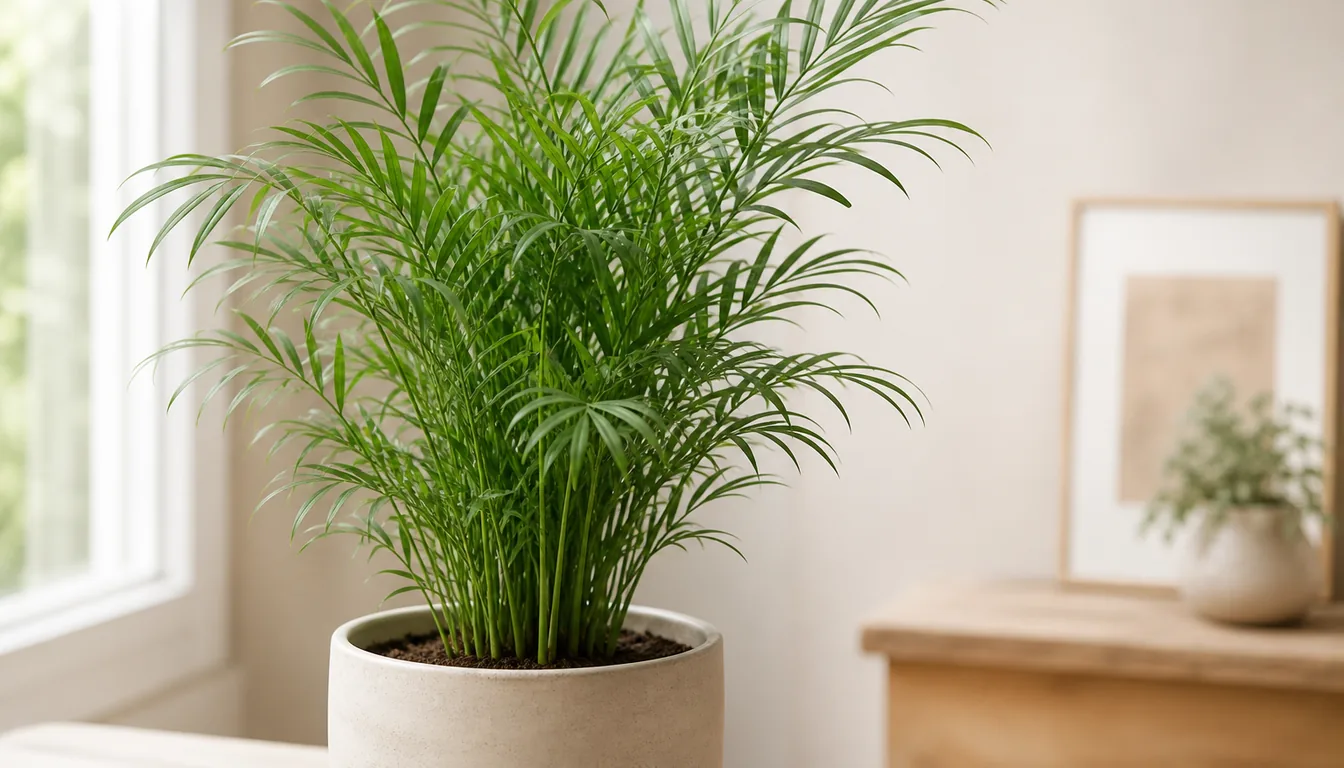
Parlor Palm
Classic indoor palm look for lower light rooms.
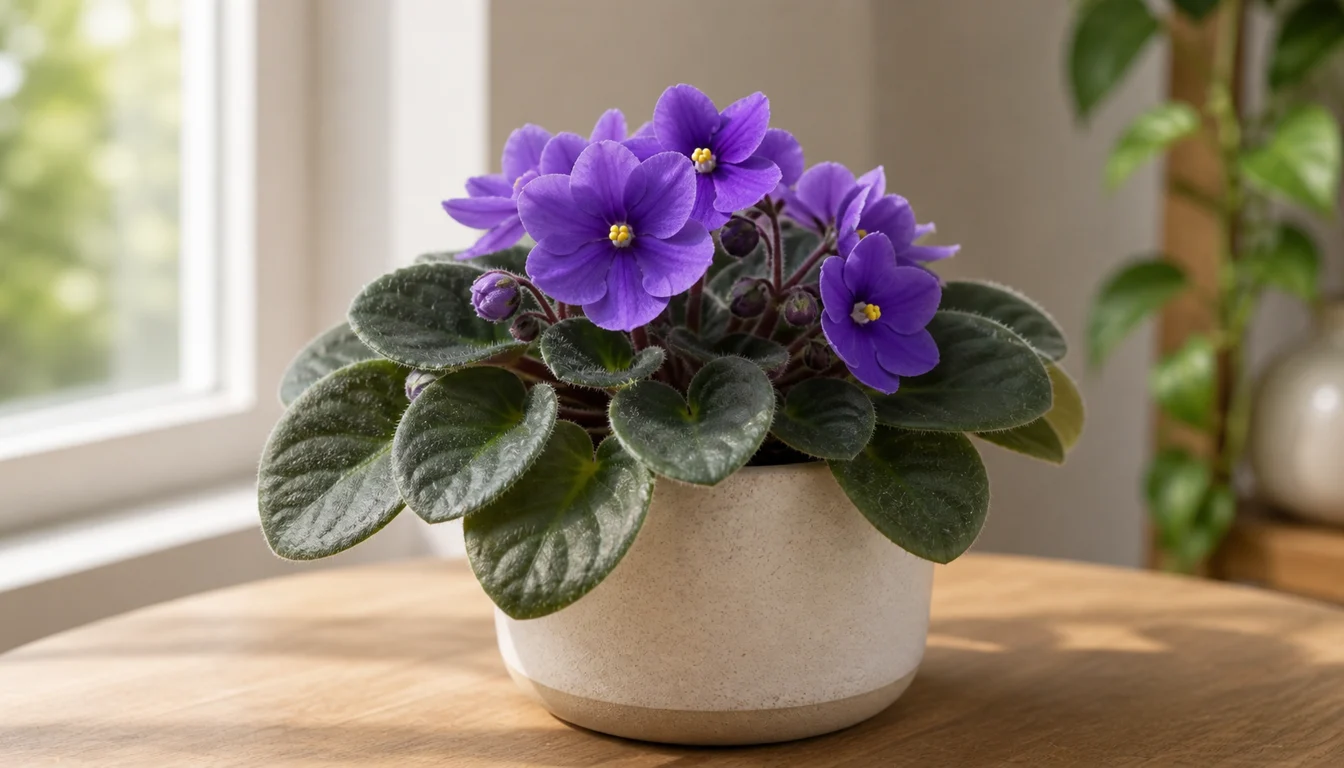
African Violet
African Violet is a windowsill bloomer that rewards steady, small-pot care.
Air Plant
Air plants are living sculptures that thrive without soil, anchoring to driftwood, rocks, or shells while drawing…
Alocasia
Alocasias include compact, textured houseplants and large elephant ears that need substantial floor space.