Pothos vs Heartleaf Philodendron
Pothos and heartleaf philodendron can look alike in a hanging pot. The leaf stalk and the small sheaths around new growth are more useful identification clues than a promise that one always tolerates cold, darkness, or missed watering better.
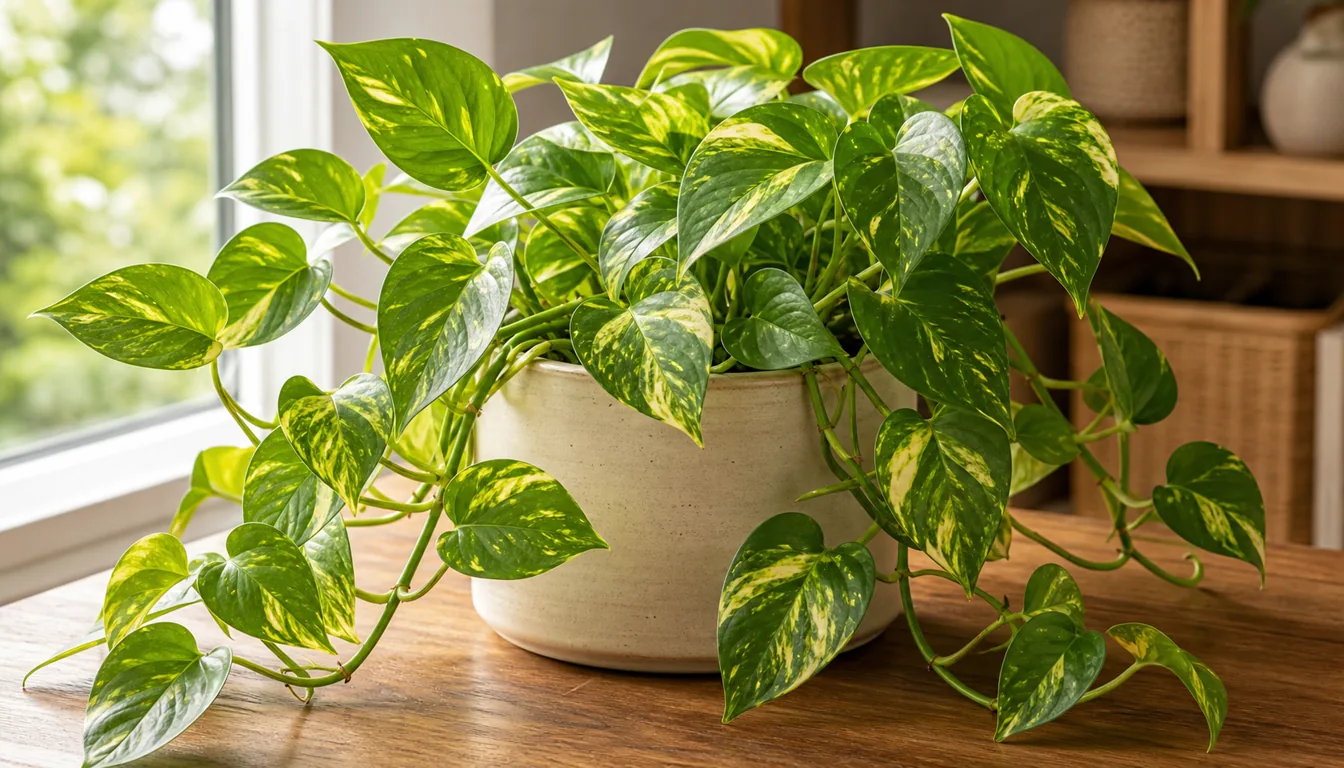
Pothos
Epipremnum aureum
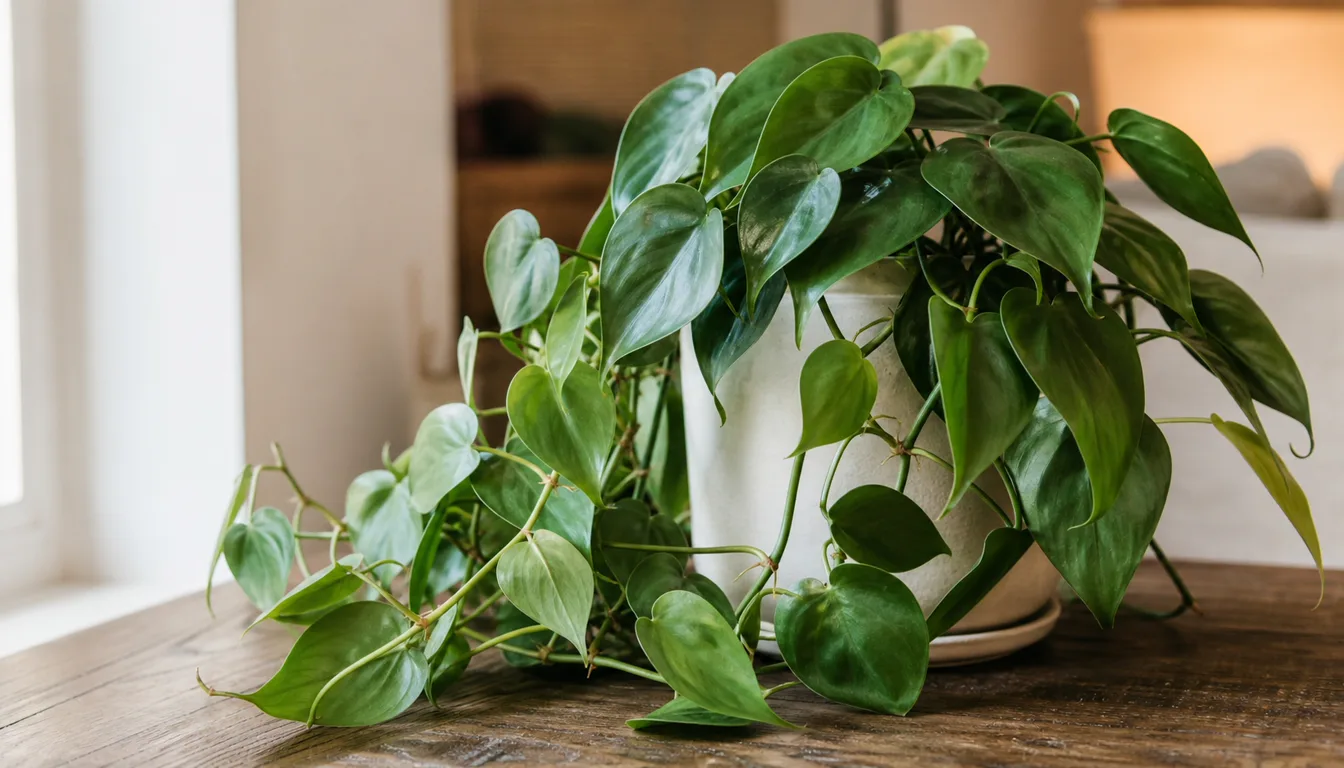
Heartleaf Philodendron
Philodendron hederaceum
This comparison concerns Epipremnum aureum and heartleaf philodendron, Philodendron hederaceum. The name Philodendron covers many other plants, so the care and leaf clues here do not describe every plant in that genus.
A pothos often has thicker-looking foliage, while heartleaf philodendron has familiar heart-shaped leaves. Cultivar, leaf age, and growing conditions can blur that impression. A leaf does not need to be pinched or damaged to identify the vine.
NC State distinguishes the two using petioles and stipules. A petiole is the stalk connecting the leaf blade to the stem. The small protective structures around new growth provide a second clue, especially when leaf color is inconclusive.
Specifications
Compare the traits that change the growing decision.
| Feature | Pothos | Heartleaf Philodendron |
|---|---|---|
| Leaf stalk | Grooved petiole | Petiole without the pothos groove |
| New-growth structures | No conspicuous free stipules; sheath tissue is associated with the petiole | Conspicuous free stipules around new growth, with older remnants drying and falling |
| Leaf outline | Heart-shaped to oval, depending on growth and cultivar | Common heartleaf form has heart-shaped leaves |
| Color choice | Golden, marbled, solid-green, and yellow-green cultivars | Green heartleaf and named variegated forms |
| Growth form | Trailing or climbing vine | Trailing or climbing vine |
| Root-zone care | Well-drained medium with drying between waterings | Slightly moist medium, never persistently waterlogged |
| Pet access | Unsafe to chew or ingest | Unsafe to chew or ingest |
The groove belongs to the leaf stalk, not a ridge that must run down the leaf blade. Pothos also has sheathing tissue, so "no wrapper of any kind" is too broad. Looking at the newest growth and several leaf stalks is more useful than classifying one old leaf by touch.
Both species contain irritating calcium oxalate crystals. NC State lists pet concerns for dogs and cats. Neither is a safe chew plant, and a pet that may have eaten either needs veterinary advice.
Best Use Cases
Choose by the job the planting needs to do.
An unlabeled vine at a store
Look beyond one leaf color
On pothos, a grooved leaf stalk and the absence of separate conspicuous stipules support the identification. Color can help narrow a cultivar afterward, but it is less reliable for separating the species.
On heartleaf philodendron, free stipules around new growth and the ungrooved petiole support the identification. Older dried remnants can be useful too. An uncertain plant label is a reason to confirm the plant, not to force a verdict from a soft or shiny leaf.
A dim shelf
Tolerance does not promise unchanged growth
Pothos can survive low light, but variegation can diminish and sparse stems may become more noticeable. A brighter indirect position is often a better match for someone buying it specifically for patterned leaves.
Heartleaf philodendron also tolerates low light and prefers medium light. A plain-green form has no contrasting pattern to lose, but that does not prove it will stay dense in a dark hallway. The low-light plant guide distinguishes a usable growing position from a room with little light.
A leggy plant or a propagation project
Correct the cause before multiplying it
Pothos vines can be shortened and rooted to rebuild a fuller pot. A cutting needs suitable stem material, healthy growth, and conditions that support rooting. Pruning does not correct inadequate light or roots kept too wet.
Heartleaf philodendron also roots from stem cuttings. The cited descriptions do not establish a universal head-to-head rooting-speed winner. Its new cuttings need moisture without saturation, rather than a promise that every trimmed piece quickly becomes a dense plant.
A drafty window and a shared watering day
Plant identity cannot remove a poor site
Wisconsin advises keeping pothos out of drafts. Cold conditions and wet potting mix are a poor combination, but a single temperature cannot diagnose why a leaf has browned.
Heartleaf philodendron prefers ordinary indoor warmth, so a leaky winter window is not a reason to declare it the safer purchase. Its soil may be kept somewhat moister than pothos, while both need drainage and watering based on the individual pot.
Can leaf color tell these vines apart?
Leaf color is a cultivar clue, not a complete species test. Golden pothos and Marble Queen differ from solid-green Jade, while Neon is yellow-green rather than a pattern of white splashes. Heartleaf philodendron also has variegated selections, so a two-tone leaf alone does not establish pothos.
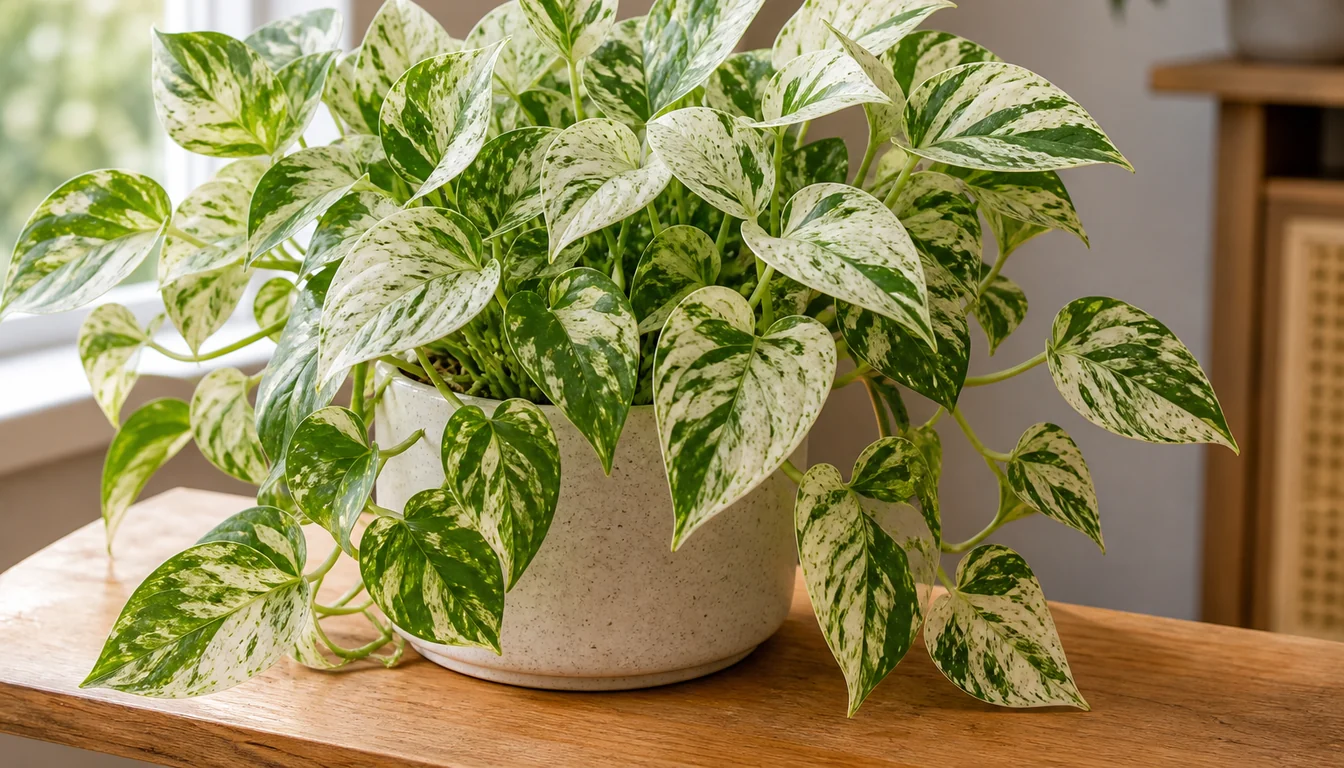
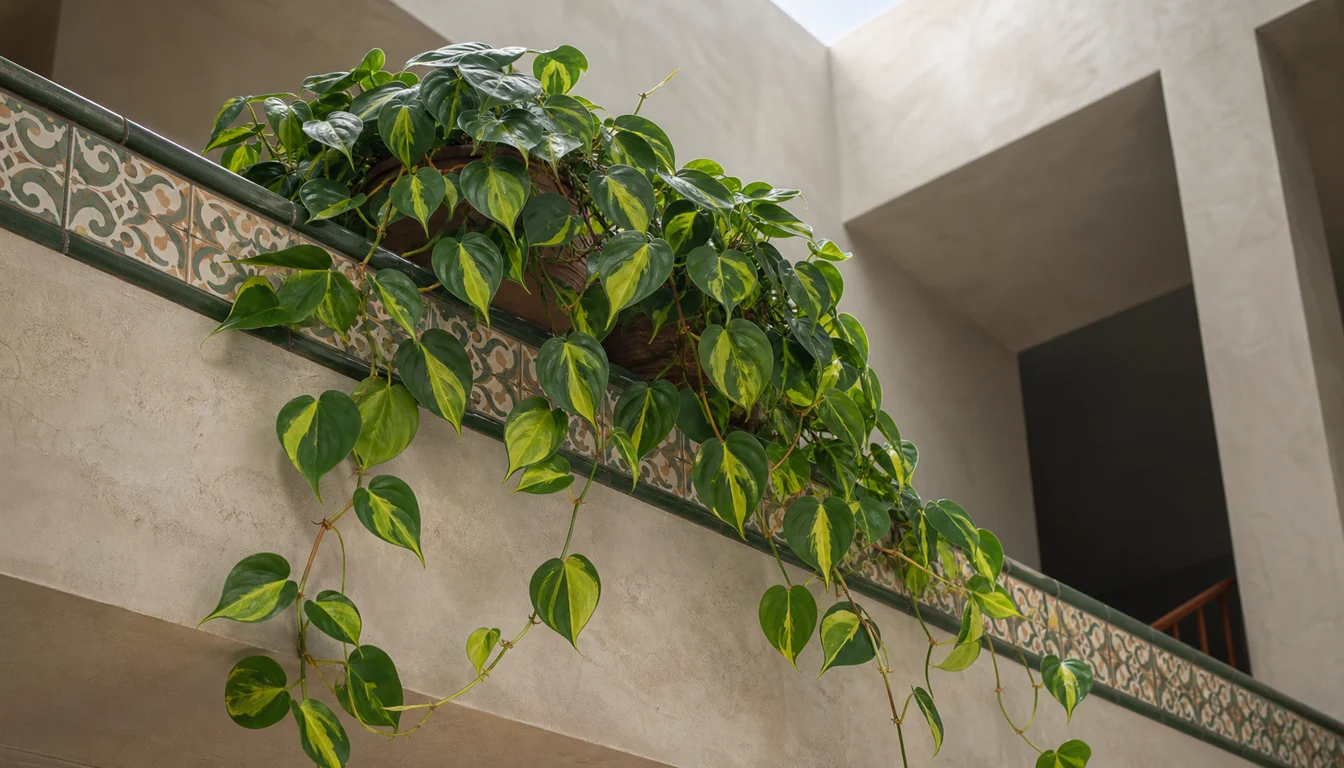
The Brasil profile and Marble Queen profile cover those cultivar choices. For identification, the petiole and new-growth structures described above provide evidence beyond the color pattern.