
How to Grow African Violets With Healthy Crowns and Blooms
Saintpaulia ionantha Gesneriaceae
African Violet is a windowsill bloomer that rewards steady, small-pot care. Keep water out of the crown, give bright indirect light, and feed lightly so the plant keeps making buds instead of wet leaves.
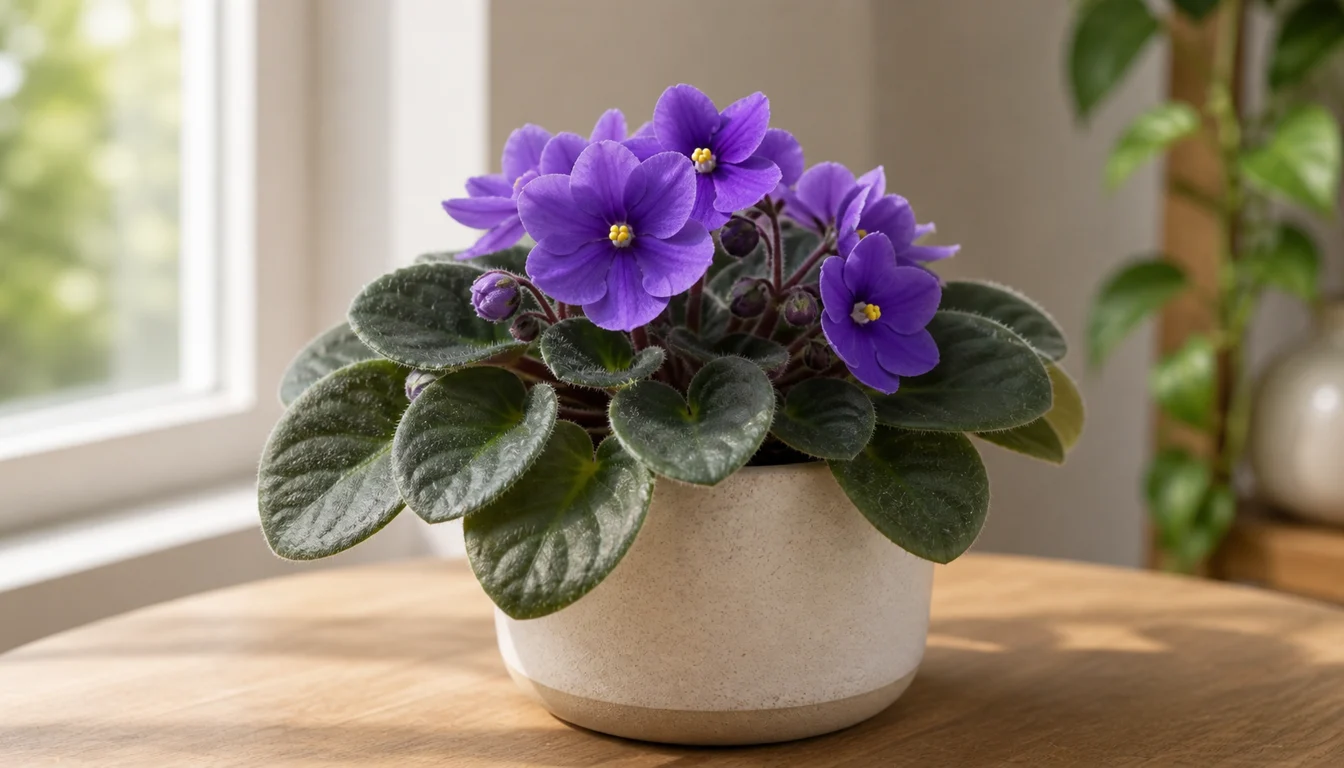
Care snapshot
Protect the Crown Before You Chase More Flowers
The center crown is the engine of an African Violet. New leaves, buds, and the next bloom cycle all come from that tight middle point, so crown health matters before fertilizer, pot color, or flower variety.
That single growing point is different from plants with multiple stems or offsets, since damage there has nowhere else to redirect growth from. A crushed or rotted crown usually means starting over rather than trimming back and waiting.
Water trapped in the crown can mark leaves or start rot. That is why the best care starts with a dry crown, a small airy pot, and light that supports bloom without baking fuzzy leaves.
The plant evolved in the humid, filtered light of Tanzania's Eastern Arc cloud forests, growing on shaded rock faces where water drains fast and never pools around the base.
Every care rule in this profile traces back to recreating that specific niche indoors, from the filtered light to the fast-draining root zone.
This is a different job from Peace Lily, which tells you loudly when it is dry. African Violet asks for small, steady choices before the plant collapses.
Standard rosettes run 8-16 inches across. Miniature and micro-mini types top out under 6 inches and suit a crowded windowsill better than a full-size plant, since several small pots fit where one large rosette would not.
Flower form varies by breeding line too, from simple single blooms to ruffled doubles, but crown care stays the same across every size and flower type. Trailing varieties branch from multiple crowns instead of one rosette, which changes the propagation approach covered later in this profile.
Use the table as a quick crown check before changing water, fertilizer, or light. A soft, dry watercolor brush clears trapped debris from the crown without introducing moisture.
- Healthy crown
- Firm center, new leaves, buds forming above the rosette
- Risky crown
- Wet center, tight debris, soft tissue, or stalled new growth
- Main rule
- Keep water and dead material out of the center
Give Bloom Light Without Scorching Fuzzy Leaves
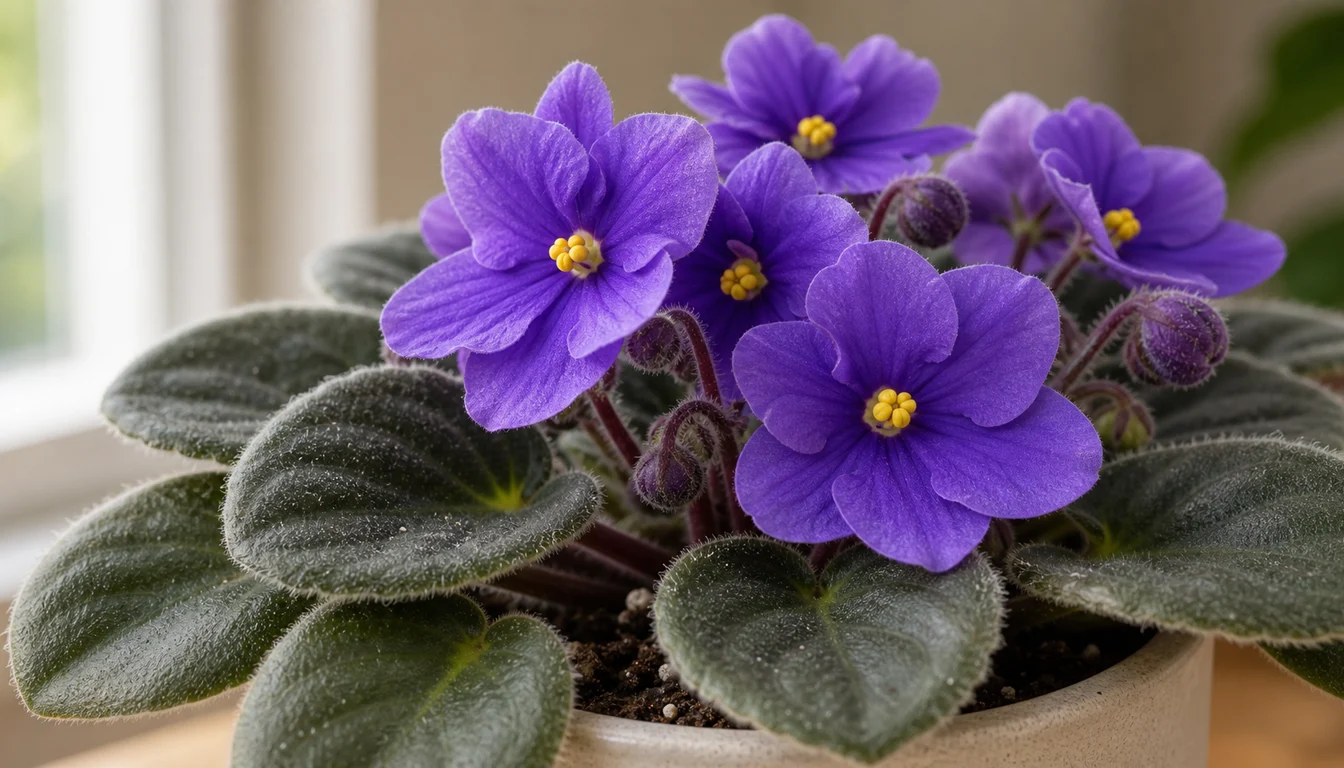
Bloom quality follows the light. Too little light gives flat leaves and few buds.
Harsh direct sun can spot or scorch the fuzzy leaf surface instead.
African Violet also wants moderate humidity, roughly 40-60 percent, higher than most dry living rooms provide on their own.
A pebble tray under the pot or grouping plants together raises humidity around the leaves without wetting the fuzzy surface directly, which misting does and this plant does not tolerate well.
An east window, a bright north window, or a filtered grow light setup usually works better than a hot west window. Rotate the pot so the rosette stays even, but do not keep moving it from room to room.
Under fluorescent or LED grow lights, aim for 8-12 inches of clearance and 12-14 hours on a timer to match steady bloom conditions.
If you want a bloom display for a dim room, Anthurium or Peace Lily may be more forgiving. African Violet needs enough light to keep making buds close to the crown.
- Flat leaves reaching outward often mean light is too weak.
- Tight pale leaves can mean light is too strong.
- Few buds with healthy leaves usually means the plant needs brighter indirect light.
- One-sided growth means the pot needs gentle rotation.
Bottom-Water the Small Pot, Then Let Air Return
Bottom-watering works because it wets the root ball without pouring water into the crown. Set the pot in room-temperature water, let the mix drink, then drain it instead of leaving the plant sitting in a saucer.
A wick system can work too, but only if the mix stays airy. Constantly wet heavy soil turns the root zone stale, even when the top of the plant still looks tidy.
Tap water sitting out overnight loses some chlorine before use, and softened water should be avoided since the added sodium builds up in the small pot faster than it would in a larger container.
Timing matters because the plant sits in a small pot. The indoor timing rules in water indoor plants still apply, but African Violet adds one stricter rule, keeping the crown dry.
If you are unsure whether the plant is wet or dry, compare the symptoms with overwatered plant signals. On African Violet, leaf limpness can come from either dry roots or damaged wet roots.
- Set the pot in room-temperature water.
- Wait until the top of the mix feels slightly moist.
- Lift the pot and let extra water drain fully.
- Keep the crown and fuzzy leaves dry.
If those steps feel fussy, remember the goal is simple, wet roots, dry crown, and no cold water on fuzzy leaves.
Keep the Pot Small Enough for Blooming
A snug root ball supports bloom better than a generous decorative pot. A large pot may look kind, but the extra wet mix slows roots and pushes the plant away from bloom rhythm.
Use a light, porous mix made for violets or a fine houseplant mix improved with perlite. The goal is even moisture with air, not swampy peat.
A self-watering violet pot, with a wick pulling from a water reservoir below, automates the bottom-watering routine and keeps the crown reliably dry.
Terra cotta dries faster than plastic and forgives a heavy hand with water, while plastic holds moisture longer and suits a drier room.
Repot when the neck gets long, the mix breaks down, or the rosette has clearly outgrown its pot. For broader repotting timing, compare repot houseplants with the stricter small-pot rhythm violets need.
- Good pot size
- About one-third the width of the leaf spread
- Good mix feel
- Fine, airy, evenly moist, never compacted
- Repot signal
- Long neck, sour mix, crowded roots, or stalled bloom cycle
Feed Lightly to Keep Buds Coming
Heavy feeding does not make African Violet bloom better. It often makes soft leaves and salt buildup instead.
Light, regular feeding during active growth supports buds without pushing the crown too hard.
Deadhead spent flowers and remove damaged leaves cleanly. The plant does not need old bloom stalks sitting in the crown while new buds try to form.
A healthy plant can bloom nearly year-round indoors under steady light, unlike many houseplants that rest through winter. That near-continuous bloom means feeding can also continue lightly through winter rather than pausing completely, as long as light stays adequate.
Shorter winter daylight still slows the cycle somewhat, so a gap between flower flushes in the darker months is normal rather than a sign of a problem.
A fertilizer labeled specifically for African violets, with a higher phosphorus ratio for bloom, works better than an all-purpose houseplant formula chosen at random.
This is where it differs from Kalanchoe, which stores water in succulent leaves and uses a different rest-and-rebloom pattern. African Violet is a steady small-pot bloomer.
- Feed only when the plant is actively growing.
- Use diluted fertilizer rather than strong occasional doses.
- Flush the pot if white crust builds up on the rim or soil.
- Remove spent flowers before they collapse into the crown.
Propagate Leaves Without Crowding the Mother Crown
A single healthy leaf can start a new African Violet, but propagation should not strip the mother plant. Take a mature leaf from the middle ring, not the oldest outer leaf or the youngest center leaf, and leave the crown balanced.
Cut the stem at an angle about an inch and a half long, then insert it far enough that the leaf blade sits just above the surface rather than resting flat on top.
Root the leaf in a light mix or water, then pot plantlets once they have their own leaves. Keep them humid but not sealed in wet, stale air.
Water rooting shows progress fastest, since roots are visible through the glass, but the young roots need a careful, gradual transition into soil once they form.
Rooting directly in a light mix skips that transition and often produces a sturdier plantlet, though progress is harder to see without lifting the leaf to check.
Expect roots in three to four weeks and visible plantlets at the leaf base by two to three months, with full separation ready a month or two after that.
A plant that has developed multiple crowns from suckering can be divided directly instead, giving an instant mature plant rather than months of waiting on a leaf cutting. Cut cleanly between the crowns, keeping roots attached to each section before potting them separately.
Suckers pulled off young, before they crowd the main rosette, also keep the mother plant blooming at its full original strength, since a crowded crown splits its energy across too many growing points.
- Best leaf
- Firm mature outer leaf with no spots or damage
- Bad leaf
- Old yellow leaf, crown leaf, or leaf with pest damage
- Best timing
- Active growth, when warmth and light are steady
Diagnose Buds, Leaves, and Crown Separately
Bud blast, spotted leaves, and a soft crown tell different stories. Diagnosis gets messy when every symptom is treated as a watering problem.
One outer leaf yellowing and dropping on its own, with the rest of the rosette full and green, is normal aging rather than a symptom.
The distinction that matters is whether the yellowing stays isolated to the oldest outer ring or spreads into younger, more central leaves.
Cyclamen mites and thrips can hide in tight new growth and flowers. If pests are likely, inspect buds and the crown before spraying the whole rosette.
Cyclamen mites are too small to see without magnification, so their damage is the real clue, twisted new leaves, brittle stunted growth, and buds that never open cleanly.
A mite-affected crown often needs the whole rosette removed and destroyed, since the pest travels between plants easily and rarely responds to a single treatment.
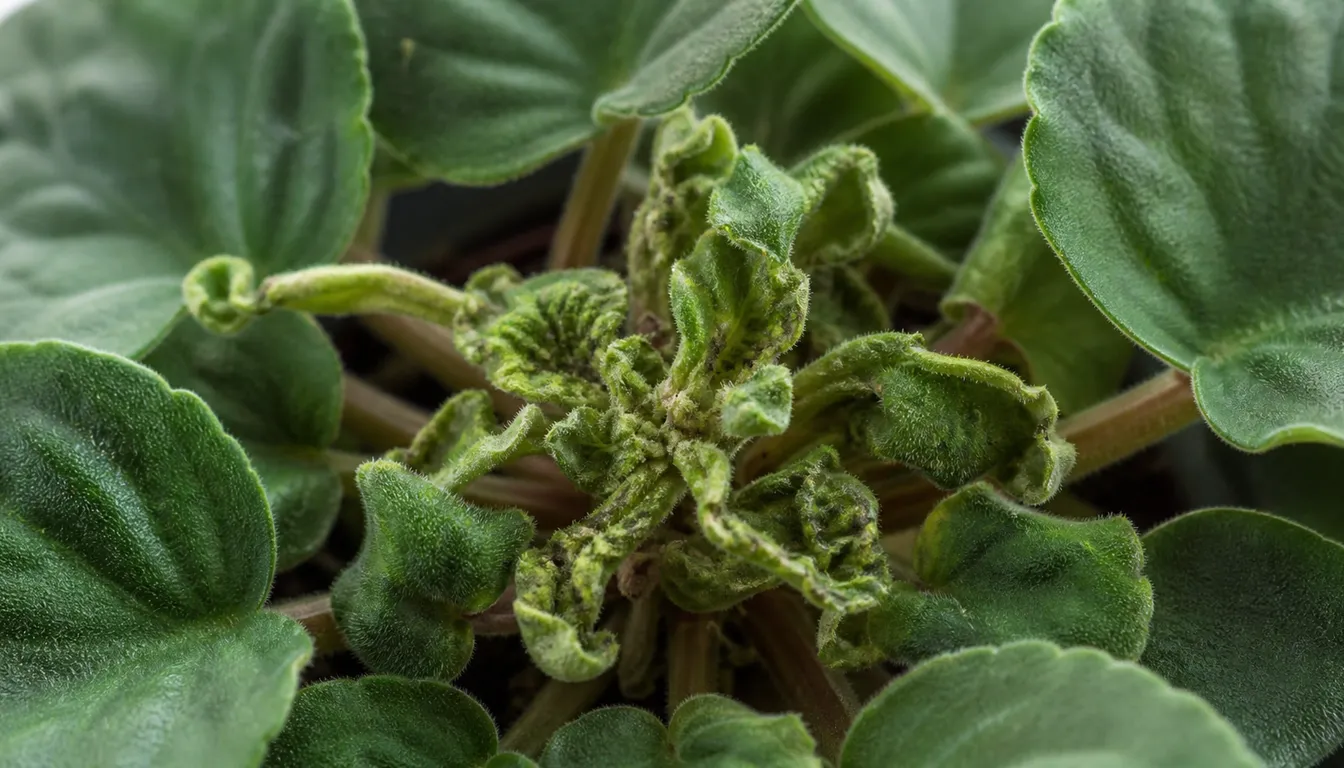
Crown rot itself usually traces to fungal pathogens that thrive in the same wet, stagnant conditions that trapped crown water creates in the first place.
A rotted crown rarely recovers, which is why prevention through a dry crown matters more here than any fungicide treatment after the fact, and catching soft tissue early is the only realistic chance at saving the plant.
The steps in houseplant neem oil need extra care on fuzzy leaves.
Usually low light, old mix, or weak feeding rhythm.
Often cold water, harsh sun, or wet fuzzy leaves.
Can point to mite pressure or crown stress.
Often crown rot from trapped water or stale wet mix.
Use It as a Pet-Safe Bloomer With Stable Shelf Space
A compact pet-safe bloomer solves a real shelf problem. Many showy indoor bloomers or foliage plants are not safe choices for homes with chewing pets.
The ASPCA lists African Violet as non-toxic to cats and dogs, with no calcium oxalate crystals or other irritants that make many popular houseplants a real risk.
That still does not make the leaves food. A curious cat chewing fuzzy foliage can trigger mild stomach upset from the plant fiber itself, just without the toxicity concern that comes with many other popular flowering houseplants.
The plant still needs a stable shelf. A tipped pot can crush the rosette, and broken leaves will not rebuild the old symmetry quickly.
If your pet ignores plants and you want larger glossy flowers, Anthurium offers a different look. If safety and compact bloom matter first, African Violet is the better fit.
Frequently Asked Questions
How often should I water an African Violet?
Water when the mix is lightly dry at the surface but before the plant wilts hard. Bottom-water, drain fully, and keep the crown dry.
Why is my African Violet not blooming?
Low light is the most common reason. Old compacted mix, weak feeding, or a crowded crown can also stop the bloom cycle.
Can African Violet leaves get wet?
A little room-temperature water is not instant disaster, but cold water or water trapped on fuzzy leaves can leave spots. Bottom-watering is safer.
Is African Violet safe for cats and dogs?
Yes, it is generally treated as pet-safe. Keep the pot stable so pets do not crush the rosette.
Can I grow African Violet from a leaf?
Yes. Root a healthy mature outer leaf with a short stem, then pot the plantlets once they form their own leaves.
Sources & References
Related Plants

Peace Lily
A lower-light bloomer with white spathes and a much larger watering signal.
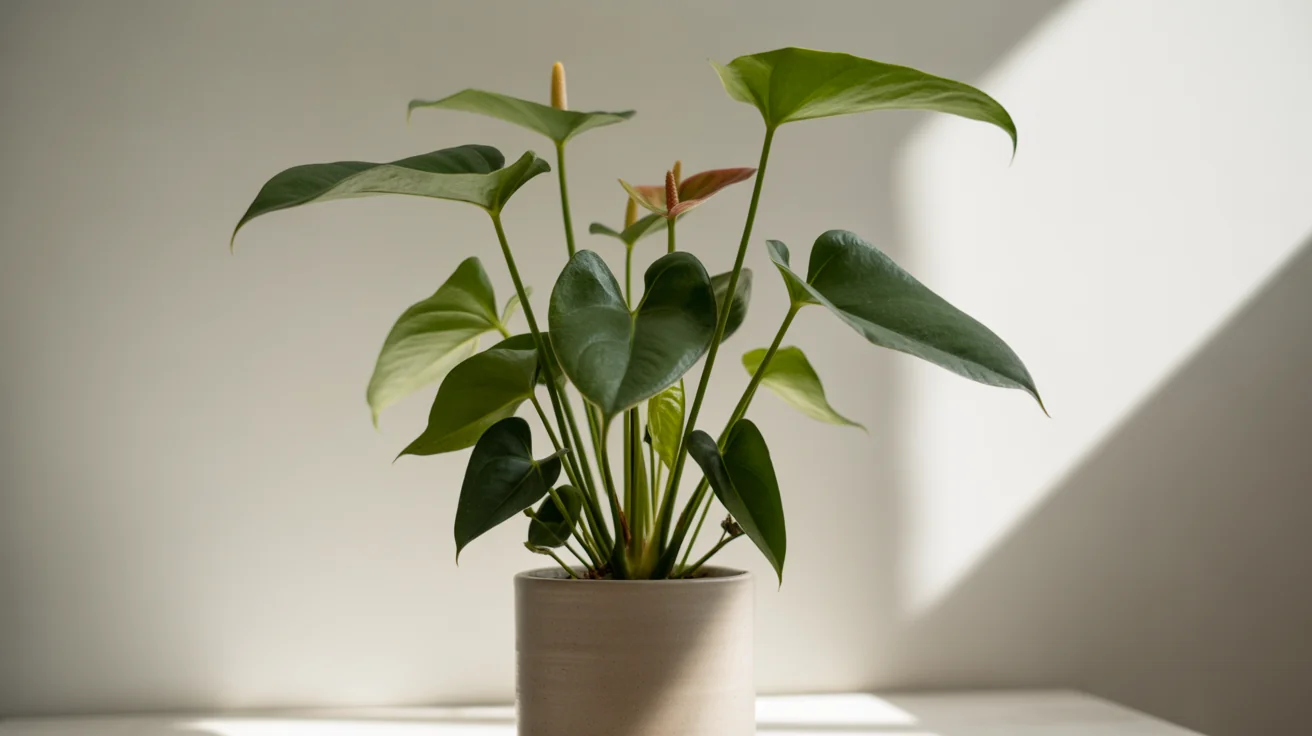
Anthurium
A humid-room aroid with waxy spathes rather than fuzzy rosette blooms.
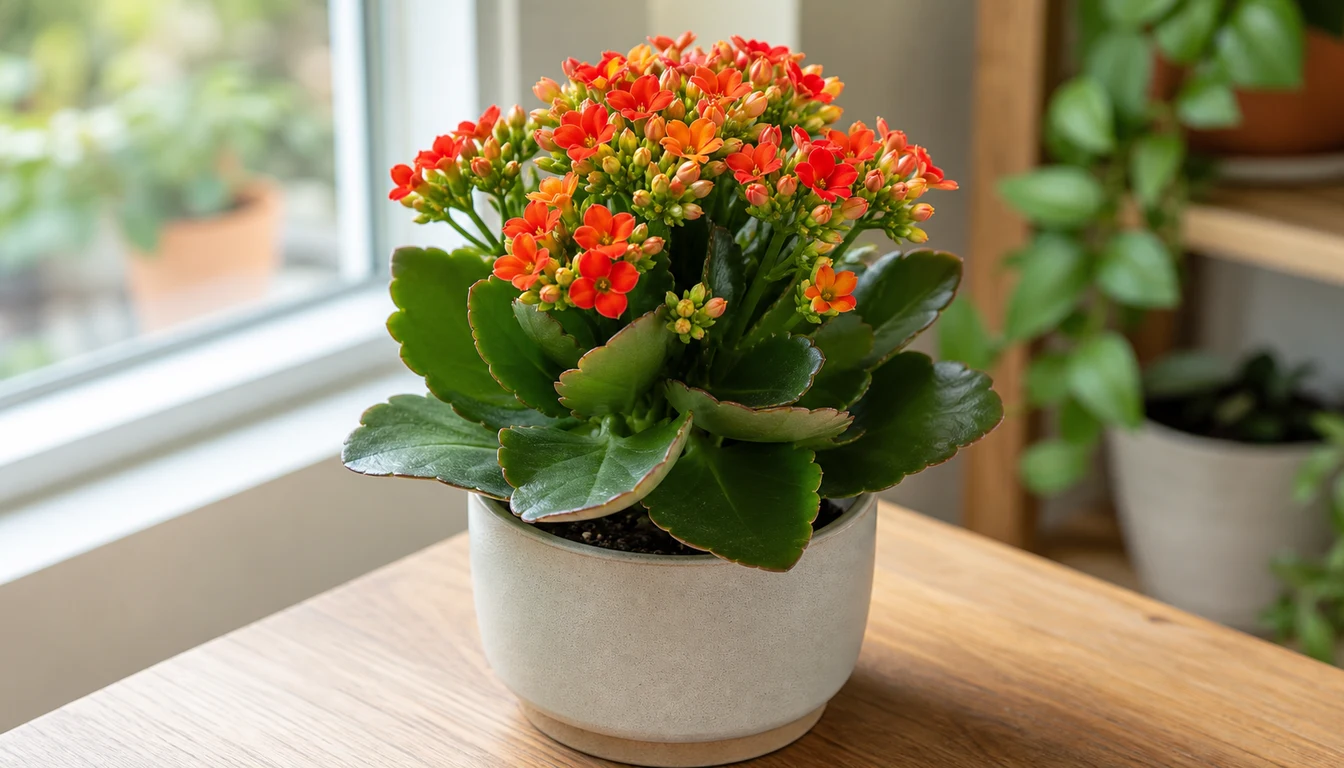
Kalanchoe
A compact flowering succulent that wants a drier root rhythm than African violet.
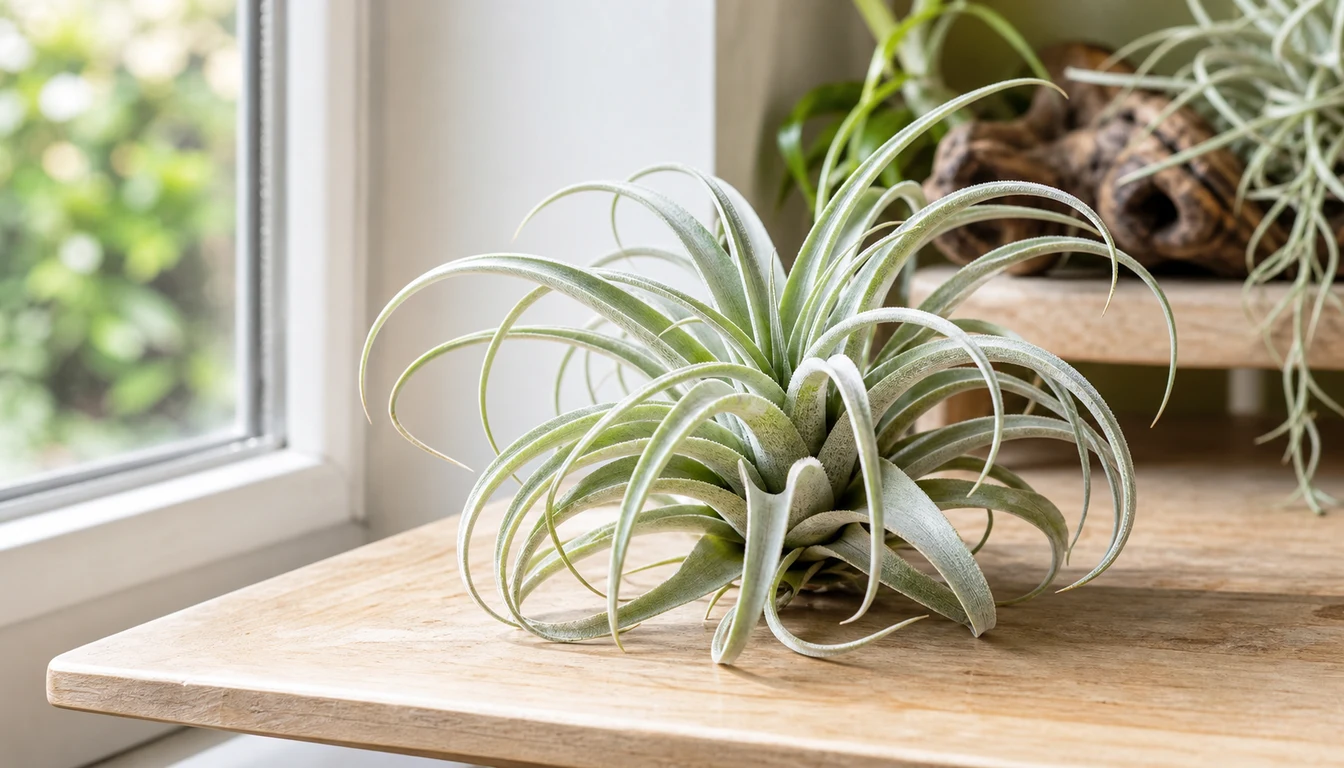
Air Plant
Air plants are living sculptures that thrive without soil, anchoring to driftwood, rocks, or shells while drawing…
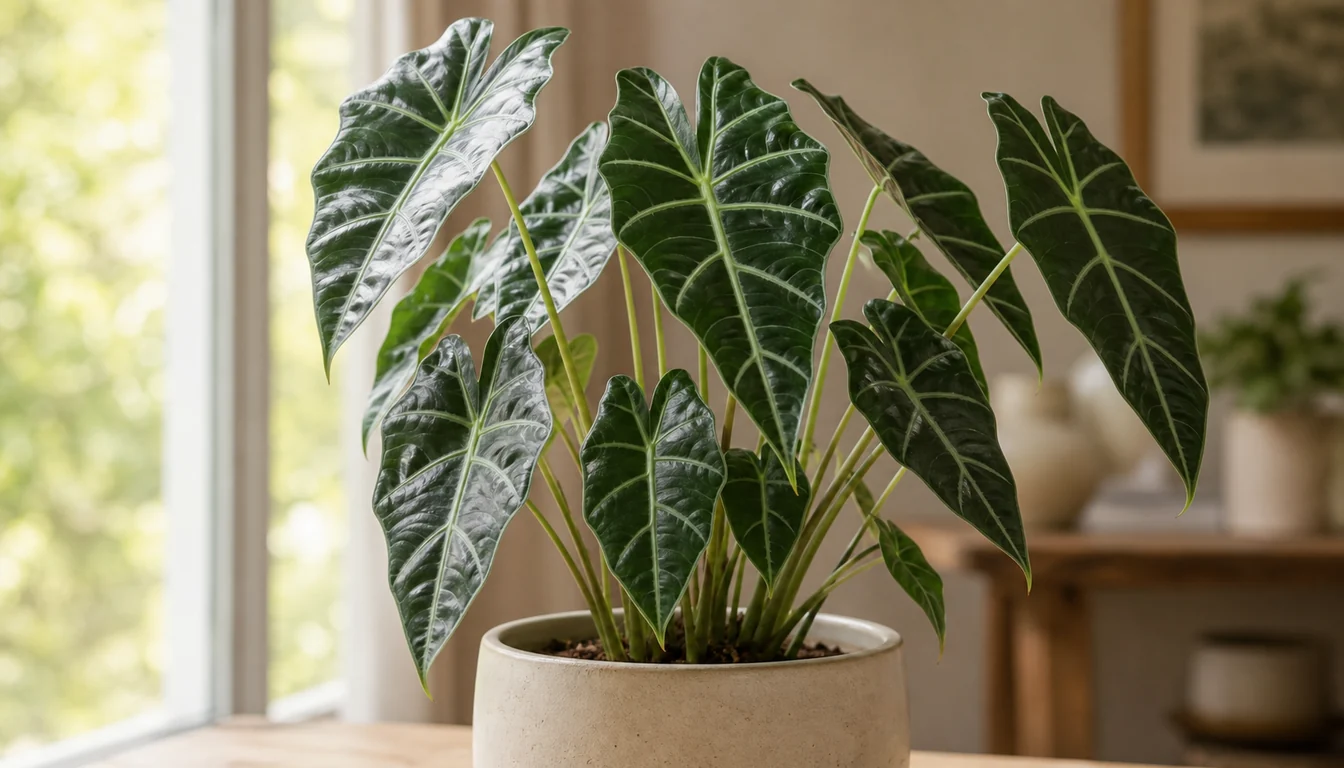
Alocasia
Alocasias include compact, textured houseplants and large elephant ears that need substantial floor space.
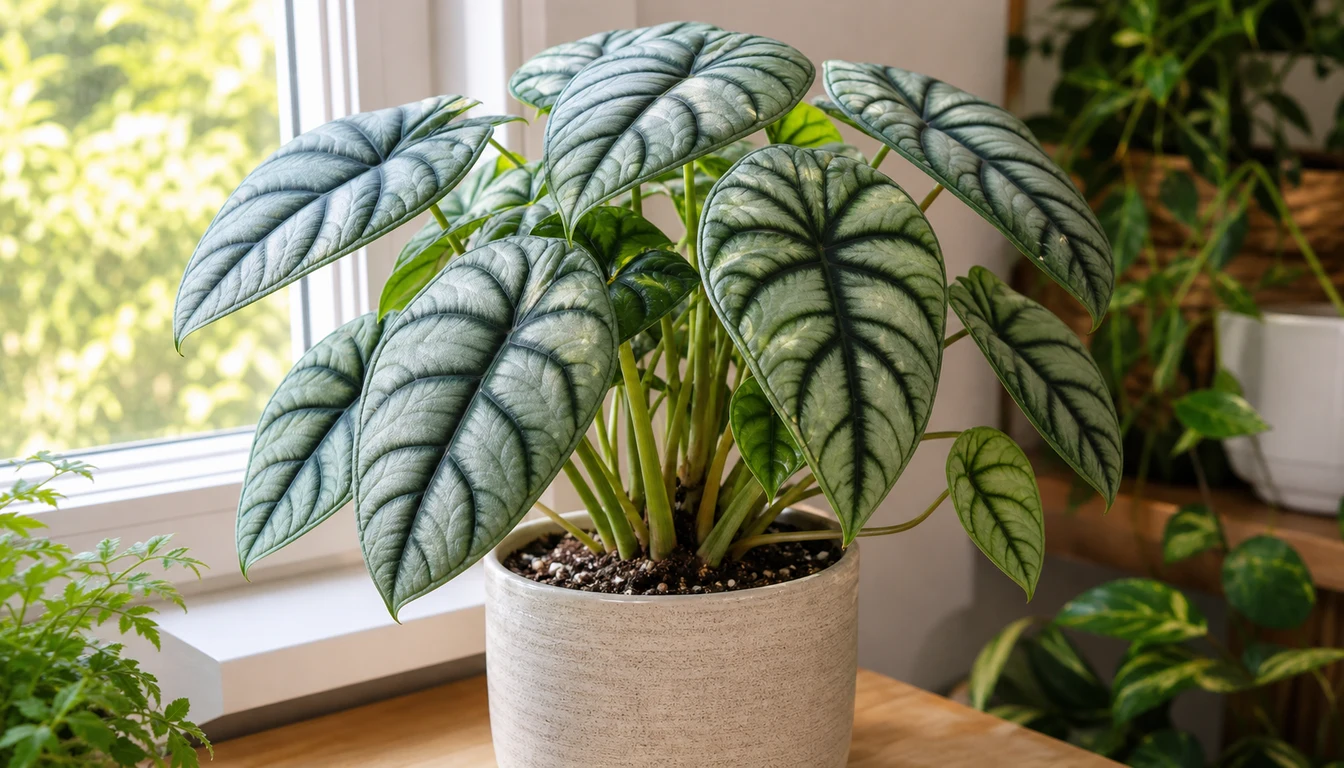
Alocasia Dragon Scale
Alocasia Dragon Scale has thick, quilted-looking leaves with dark veins.