
Do Pots Need Drainage Holes, and What If Yours Has None?
Most plants grown in ordinary potting mix are easier to manage in a container with drainage holes. The openings let excess water escape, while the mix retains some moisture for the roots. A decorative pot without holes works well as an outer pot around a removable container that drains.
The useful check is whether water can leave the growing container and be removed afterward. Hole count alone cannot answer that, and more holes will not fix every problem with wet or water-repellent potting mix.
At a glance
Do Pots Need Drainage Holes?
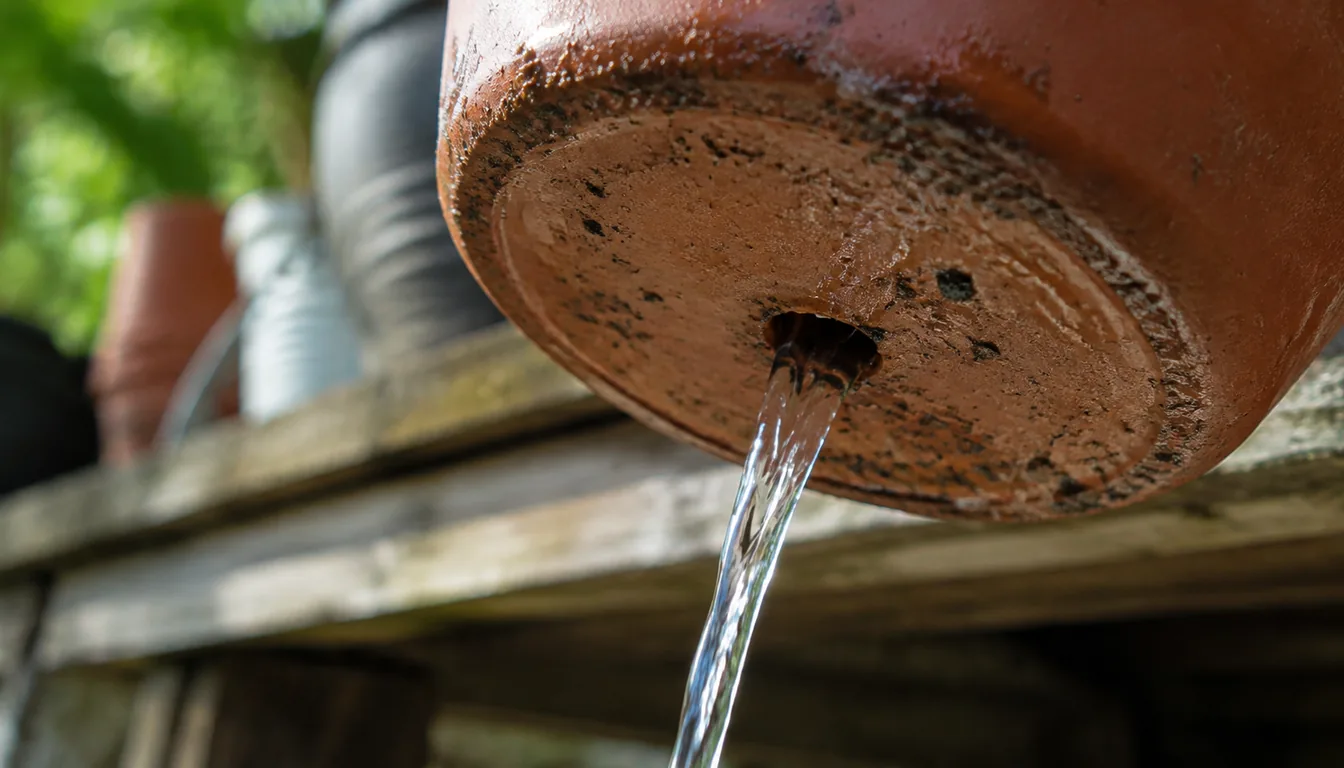
Drainage holes provide an escape route for excess irrigation or rainwater. When a mix remains waterlogged, water occupies pore spaces that would otherwise contain air, limiting oxygen around roots. A hole reduces that risk, but watering frequency and the growing medium still matter.
A pot without an outlet does not automatically become saturated after every small addition of water. Its problem is that surplus water has no convenient drainage route. Evaporation and plant use can remove moisture, but neither gives the grower the same control as a freely draining pot. The time before damage appears varies, so a fortnight of healthy-looking leaves is not a test of the setup.
The distinction also explains why a pot with holes can still stay too wet. A dense mix, a small root system in a large volume of medium, frequent watering, or trapped runoff can leave roots poorly aerated even when the openings are clear.
Designed water gardens, closed terrariums and self-watering systems manage water differently. A solid ceramic pot filled with ordinary potting mix does not become one of those systems simply because its bottom is watertight.
How Many Drainage Holes Does a Pot Need, and How Wide?
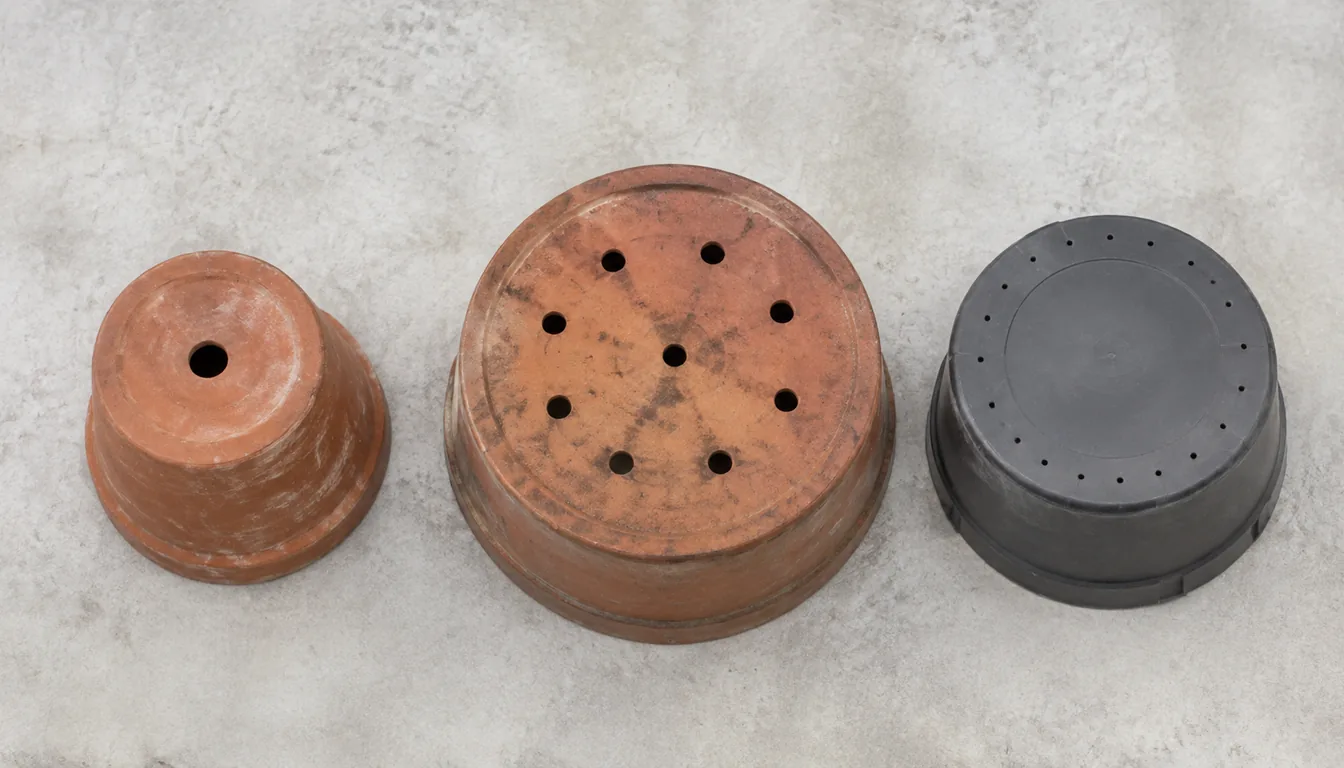
There is no reliable hole-count chart based only on the diameter of a pot. The openings must allow surplus water to escape without being covered by the supporting surface, blocked by debris, or sealed by an outer container.
A single central opening can work in a conventional pot. Several distributed holes or slots can also work. An opening's area is not a measured drainage rate for a filled planter, because the mix, outlet position and obstructions affect the path water takes.
| What you find | What to check | Practical response |
|---|---|---|
| An open central hole or several slots | Whether the openings remain clear when the pot is standing normally | Keep the outlets accessible and check runoff during ordinary watering |
| A removable plug or molded knockout | Whether the manufacturer intends it to be removed for direct planting | Follow the container's instructions before filling it |
| Small holes covered by loose debris | Whether water can pass through after the debris is removed | Clear the obstruction gently without enlarging the pot automatically |
| An outlet pressed against a flat surface | Whether the base design leaves clearance for water | Use a stable support suited to the loaded pot if clearance is needed |
| A solid decorative base | Whether a removable inner pot can fit and drain | Use an outer-pot arrangement or assess modification before planting |
Before planting, plain water in an empty container can reveal a sealed or misplaced outlet. That check cannot predict how a particular potting mix will behave once the container is full. After planting, runoff and root-zone moisture need to be considered together.
Large openings do not always need a covering. Where mix escapes, a small piece of permeable mesh can retain it without sealing the outlet. Mesh is a soil-retention aid, not a guarantee against fungus gnats or other pests.
Should you drill the pot, and how do you choose a method?
Drilling is an option for some empty containers, but it is not the best choice for a valuable, cracked or unidentified vessel. A removable inner pot avoids the risk of breaking the decorative one and may be simpler to manage.
The container material, bit and tool must be compatible. A bit intended for one kind of ceramic or tile is not automatically suitable for every glazed pot, porcelain body, stone composite or glass vessel. Follow the pot manufacturer's modification advice where available and the accessory's material list.
Cooling and speed are tool-specific. For example, Dremel's 663 diamond accessory calls for drops of water or cooling liquid and cordless tools, with its own speed and starting-angle instructions. Those directions do not support pouring water around an arbitrary powered drill or switching every glazed pot from a diamond bit to a masonry bit partway through.
- Empty the pot so the material and both sides of the drilling area can be inspected
- Confirm that the container and accessory manufacturers allow the material and method
- Secure the workpiece as directed so it cannot rock or spin, without crushing a fragile rim
- Wear eye protection and any respiratory protection specified for the material and tool
- Keep the bit away from hands and follow the specified mode, speed, pressure and cooling method
- Inspect the finished opening and pot for cracks or sharp damage before planting
Excess pressure and an unsecured workpiece can cause breakage. Heat is not the only possible cause, and adding water does not guarantee a crack-free hole. A universal “lowest speed” instruction is also misleading when different accessories specify different operating speeds.
What If the Pot Cannot Be Drilled?
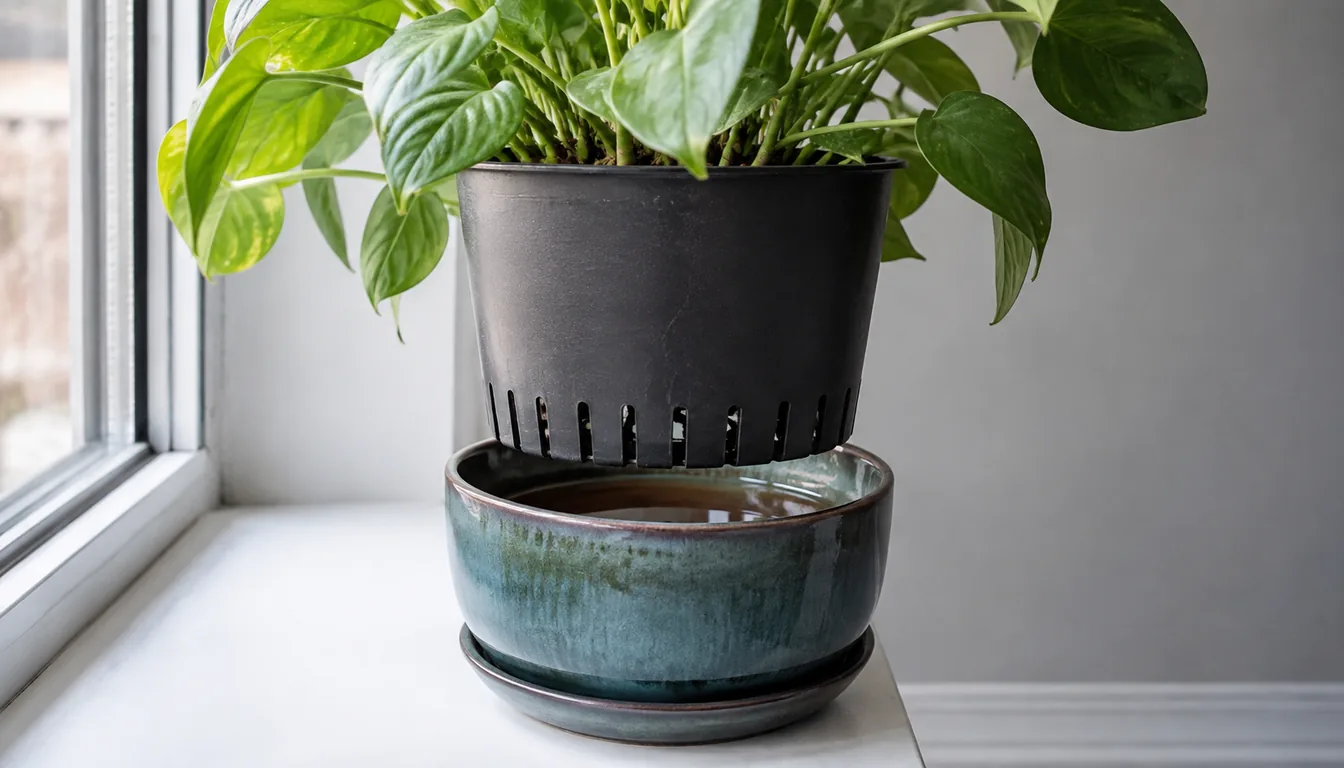
A decorative outer pot, often called a cachepot, holds a separate growing container. The plant's roots stay in the inner pot, which has its own drainage holes. The outer pot supplies the appearance and catches any accidental drips.
What makes this arrangement workable is access to the collected water. A stable spacer can hold the inner pot above the outer base, but it does not remove runoff. If the water level rises to the inner pot, the mix may absorb it again.
- Lift safelyRemove the inner pot without pulling on stems. A heavy container may need help or a different setup.
- Water the root ballWater when the plant needs it, allowing surplus water to leave the inner pot's holes.
- Allow drainageLet runoff finish somewhere suitable, then empty water from the decorative pot.
- Return and inspectReplace the inner pot with its outlets unobstructed and check that it is not standing in collected water.
For a plant too large to lift safely, plan a way to access and remove runoff before choosing the outer container. A suitable drained planter with an accessible catch tray may be more practical. Being unable to carry a pot one-handed is not a reason to risk drilling a heavy planted container.
An outdoor cachepot can collect rain even when you have not watered. Its interior still needs inspection, particularly after a wet spell. A water mark shows that water was present at some point, but it does not by itself establish how long the roots were submerged.
Can Gravel in the Base Replace a Drainage Hole?
Gravel does not create an outlet in a solid pot. Water added beyond what the growing medium and plant can use may accumulate, regardless of whether the bottom contains stones.
In a draining pot, a layer of gravel under finer mix is not a reliable way to improve drainage. Water can be retained in the finer material above the coarse layer before passing through it. The gravel also occupies space that could hold the intended root medium.
Illinois Extension distinguishes this from gravel or another support placed outside the growing pot, in a decorative outer container. External support can keep an inner pot above collected water, provided the water level remains below its base and is emptied as needed.
For ordinary direct planting, use an appropriate container mix through the rooting area and keep the outlet clear. Where soil is escaping through an unusually large hole, a permeable covering addresses that problem without adding a deep stone layer.
How Long Can Water Sit in the Saucer?
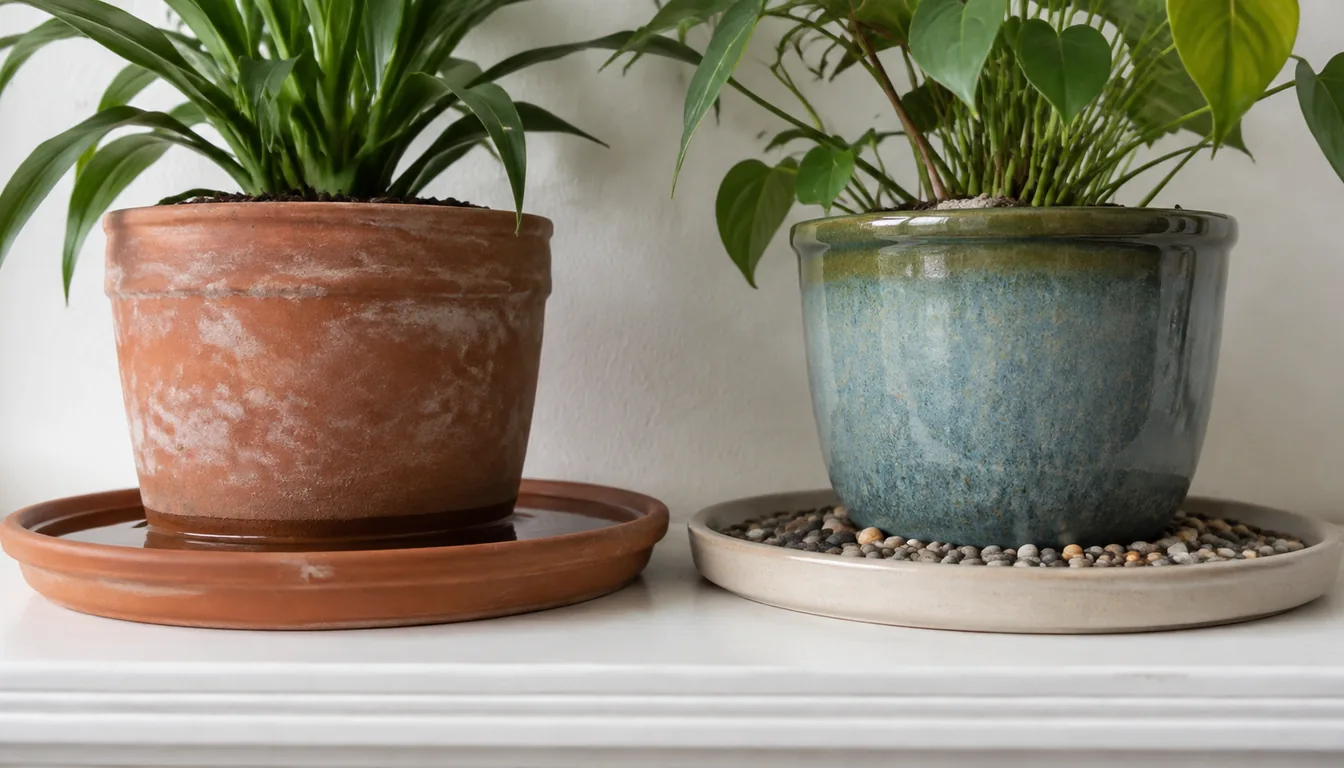
A saucer catches runoff so it does not damage furniture or paving. After ordinary top watering, empty collected water once the pot has drained. There is no universal safe waiting period before the mix starts to absorb water from below.
An immersed drainage hole is not literally sealed, but standing water changes the conditions at the base and can keep the mix wetter. Deliberate bottom watering uses that contact to rehydrate the medium, then ends by removing the pot from the water and allowing it to drain. Leaving an ordinary pot in a full saucer indefinitely is a different practice.
A pebble tray keeps a pot above water only while the waterline stays below the pot's base. It should not be treated as proof that a plant's humidity needs are met, and pebbles do not excuse leaving the inner pot immersed.
Self-watering containers use a designed reservoir and a controlled route into the growing medium. Their fill level, overflow arrangements and plant suitability come from that design. Blocking an overflow or treating an ordinary watertight pot as a reservoir can defeat those controls.
Why Do Drainage Holes Stop Working?
Water pooling on top does not uniquely diagnose a blocked bottom hole. Slow infiltration at the surface, dense or degraded medium, a crowded root ball, and dry water-repellent mix can produce different versions of poor watering. Looking underneath is useful, but it is only part of the check.
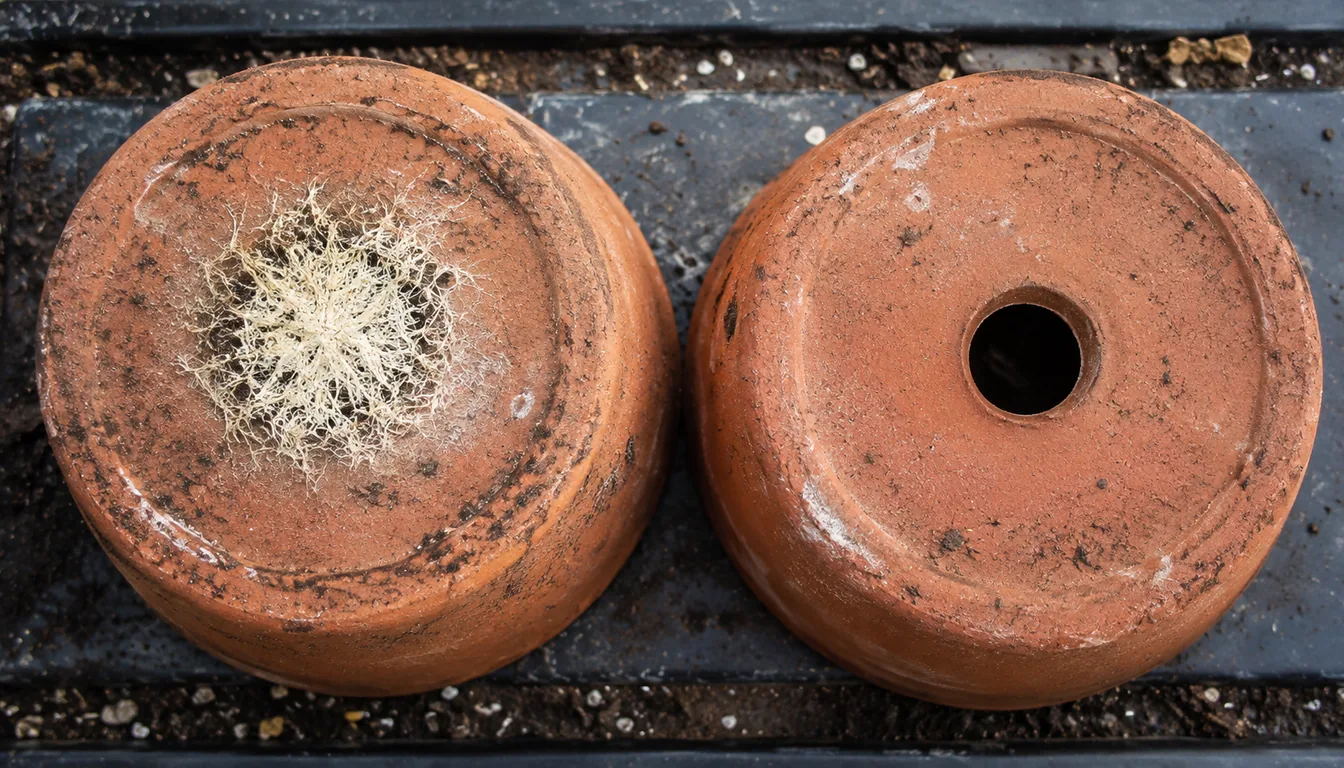
| Observation | What it may mean | Next check |
|---|---|---|
| A hole visibly covered by debris or pressed onto a solid surface | The outlet may be obstructed | Clear accessible debris or provide stable clearance, then observe drainage |
| Many roots occupy the outlet and the root ball is densely crowded | The plant may need repotting | Examine the root ball and plant needs rather than cutting blindly through the hole |
| The pot stays wet despite a clear outlet | The mix, pot size or watering routine may be unsuitable | Check moisture below the surface and how much medium the roots occupy |
| Water runs out quickly but the center remains dry | Water may be bypassing a water-repellent root ball | Rewet slowly and verify that the center actually becomes moist |
| A white crust appears on the mix or pot | Mineral or fertilizer deposits may be accumulating | Review water and fertilizer use, along with drainage |
Roots visible through a hole are a reason to investigate, not automatic proof that the plant needs a much larger pot. If repotting is warranted, match the new container and root treatment to the plant. Pushing a skewer blindly through a planted pot can injure roots without correcting unsuitable medium.
For a dry root ball that repels water, UC Master Gardeners describes slow rewetting or controlled bottom watering. A manageable pot can absorb water from a shallow basin, then be removed and drained once hydrated. Large containers may need slow, repeated watering that gives the mix time to absorb it. An arbitrary twenty-minute soak is not a test that the center has become wet.
Mineral deposits also need a separate response. Leaching soluble salts requires water to pass through a pot that drains, with runoff discarded. It does not guarantee that every visible crust dissolves, and repeatedly flushing a blocked or already waterlogged pot can worsen the original problem.
What Changes for Outdoor Pots in Rain and Winter?
Rain can add water independently of the plant's needs. Outdoor drainage therefore includes open outlets, a clear route beneath the pot, and a saucer or outer container that does not retain rain around the base.
Stable pot feet or supports can provide clearance where the outlet would otherwise be obstructed. The supports need to suit the filled planter's weight and base, with the container secure against tipping. A gap underneath helps water escape but does not compensate for a blocked hole or unsuitable mix.
Freezing can damage both the container and the plant's roots. Roots in a container have less surrounding insulation than roots in the ground. Drainage alone does not establish winter hardiness, and leaving a plant completely dry is not a reliable way to protect it from cold.
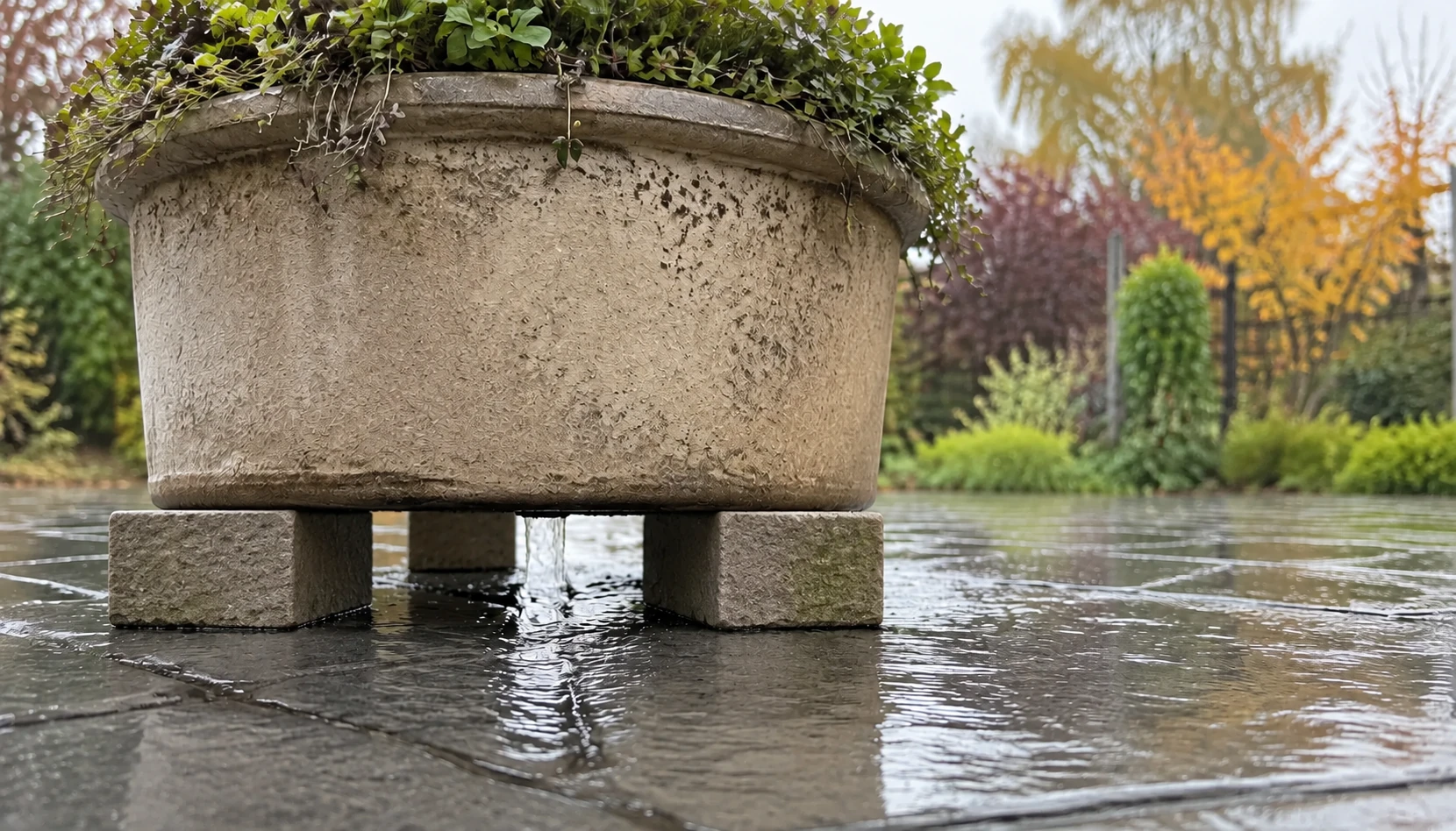
- Confirm that water can leave the pot and the surface beneath it
- Empty or remove ordinary catch saucers that repeatedly fill with rain
- Check the container manufacturer's freeze and outdoor-use guidance
- Plan plant-specific root protection or shelter for overwintering containers
- Continue moisture checks when the medium is thawed rather than assuming winter means no water
A pot standing on soil may also grow roots through its openings. Before moving it, check for that connection rather than lifting suddenly and tearing roots. Winter protection, root pruning and relocation depend on the plant and site, beyond the drainage-hole check itself.
Frequently Asked Questions
Does a plastic pot need more drainage holes than terracotta?
Not automatically. Unglazed terracotta can lose moisture through its walls, while plastic retains moisture differently, but that does not establish a universal hole-count rule. Compare the outlet, potting mix, root system and actual moisture pattern rather than adding holes solely because the material changed.
Sources & References
- University of Illinois Extension, Container Drainage Options
- University of Maryland Extension, Watering Indoor Plants
- UC Master Gardeners of Santa Clara County, Watering Hydrophobic Soil
- University of Illinois Extension, Overwintering Potted Plants
- Dremel, Glass Drilling Bit 663 material and use instructions
- Dremel, Ceramic drilling and safety in the Teapot Warmer project
- Clemson Cooperative Extension, Container Vegetable Gardening
Related Guides
Best Butterfly Garden Plants for a Complete Habitat
The best butterfly garden plants do two different jobs. Host plants feed caterpillars, while nectar…
15 min read
Best Fall-Blooming Flowers for Color Near Frost
A bed that still carries flowers in October usually was planned before temperatures fell.
9 min read
Best Fast-Growing Trees for Shade and Privacy
The best fast-growing tree is the one whose mature crown, roots, climate range, and maintenance…
16 min read
Best Fragrant Flowers for Every Yard and Season
The best fragrant flowers depend on climate, light, space, and the hours you use the yard.
15 min read
Best Full-Sun Perennials for Hot, Bright Beds
The best full-sun perennials are the ones that match the bed's soil moisture and drainage, local…
14 min read
Best Ground Cover Plants for Sun, Shade, and Slopes
The best ground cover is a plant that survives the site and performs the job without escaping into…
18 min read