
How to Grow a Rattlesnake Plant and Read Signs of Stress
Calathea lancifolia Marantaceae
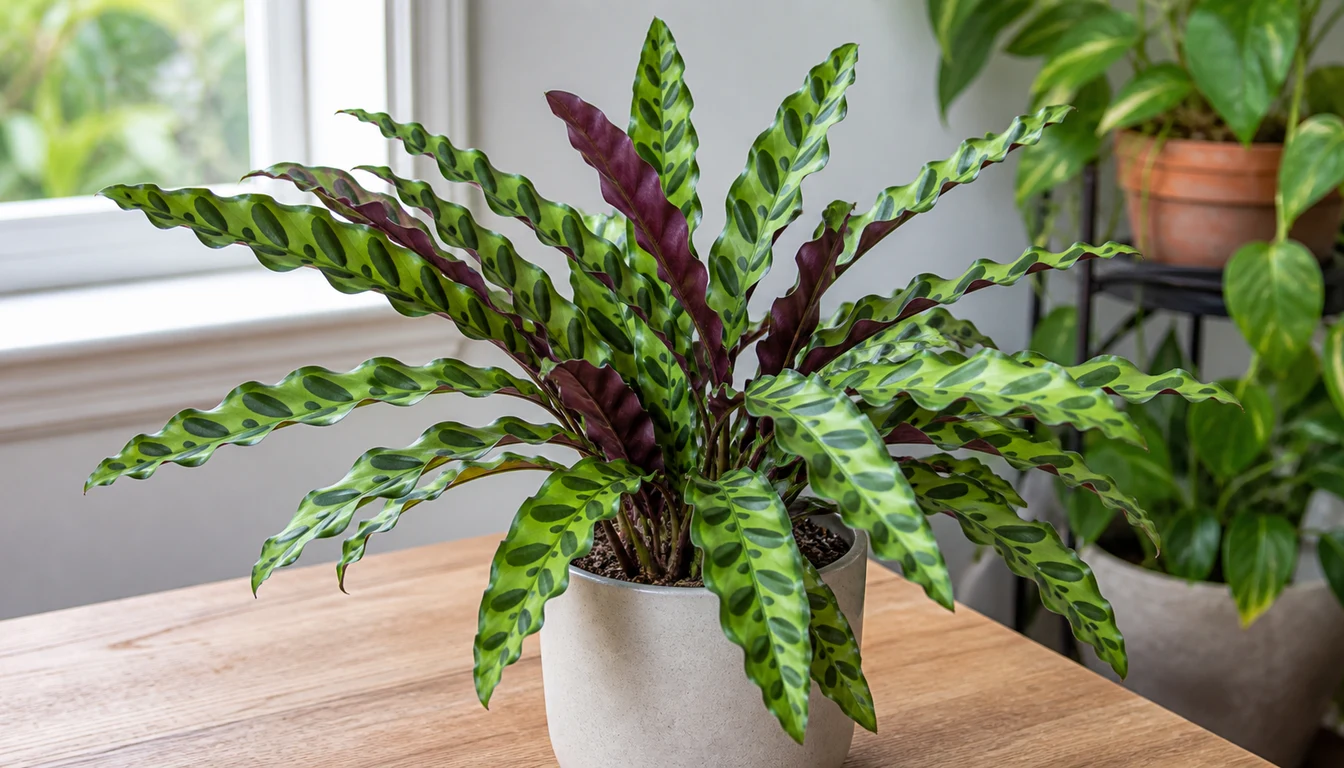
Rattlesnake Plant is a Calathea with long wavy leaves, dark oval markings, and purple undersides. Its narrow leaves roll, crisp, and speckle quickly when light, water quality, humidity, or mites drift out of range, so the best care reads the leaf shape before the whole plant declines.
Care snapshot
Rattlesnake Plant Is Two Different Species, Not One
The name Rattlesnake Plant covers two unrelated-looking plants. The compact houseplant, Calathea lancifolia, grown for its wavy patterned leaves, is the one covered here.
The other plant sharing the name is Calathea crotalifera, a much larger tropical species grown for a true rattle-shaped flower spike up to 10 inches long, not for leaf pattern at all.
If a nursery photo or listing shows a tall yellow cone-like bloom instead of narrow striped leaves, that is crotalifera, a different plant with different space and light needs. Confusing the two before buying can leave a small-apartment grower with a plant that wants outdoor tropical conditions and years to flower.
The botanical name has also shifted. Taxonomists moved this species out of Calathea and into the genus Goeppertia in 2012, so plant tags increasingly read Goeppertia insignis or Goeppertia lancifolia instead of the older Calathea lancifolia, even though the common name and care needs have not changed.
Either name works for buying the right plant, since Calathea lancifolia, Goeppertia lancifolia, and Goeppertia insignis are all synonyms for the species covered here.
Calathea crotalifera shows up mostly in the cut-flower trade and tropical landscaping, where its tall rattle-shaped spikes hold up well after cutting. It is not typically sold as a houseplant the way this species is.
This species earns its half of the name honestly, the dark blotches marching down each leaf in a staggered pattern resemble the diamond markings on a snake's back, which is the whole reason lancifolia carries the common name at all.
- Calathea lancifolia (this plant)
- Compact houseplant, wavy striped leaves, purple undersides
- Calathea crotalifera
- Large tropical species grown for a true rattle-shaped flower spike
- Current botanical name
- Goeppertia insignis, also listed as Goeppertia lancifolia
Leaf Curl Is the Plant's Early Warning System
Long narrow leaves make this plant easier to read than many of its relatives, since curling shows up fast when the leaf surface is losing water faster than the roots can replace it.
A slight lift or roll in the evening is normal movement, not a problem. Tight daytime rolling, crisp rims, or dull speckling means the current setup needs a real adjustment, not just more water.
That evening movement runs on a real mechanism, not just habit. A small hinge-like joint called a pulvinus sits where each leaf meets its stalk, and it shifts water pressure on a roughly 24-hour cycle to lift the leaf at night and lower it again once the room brightens.
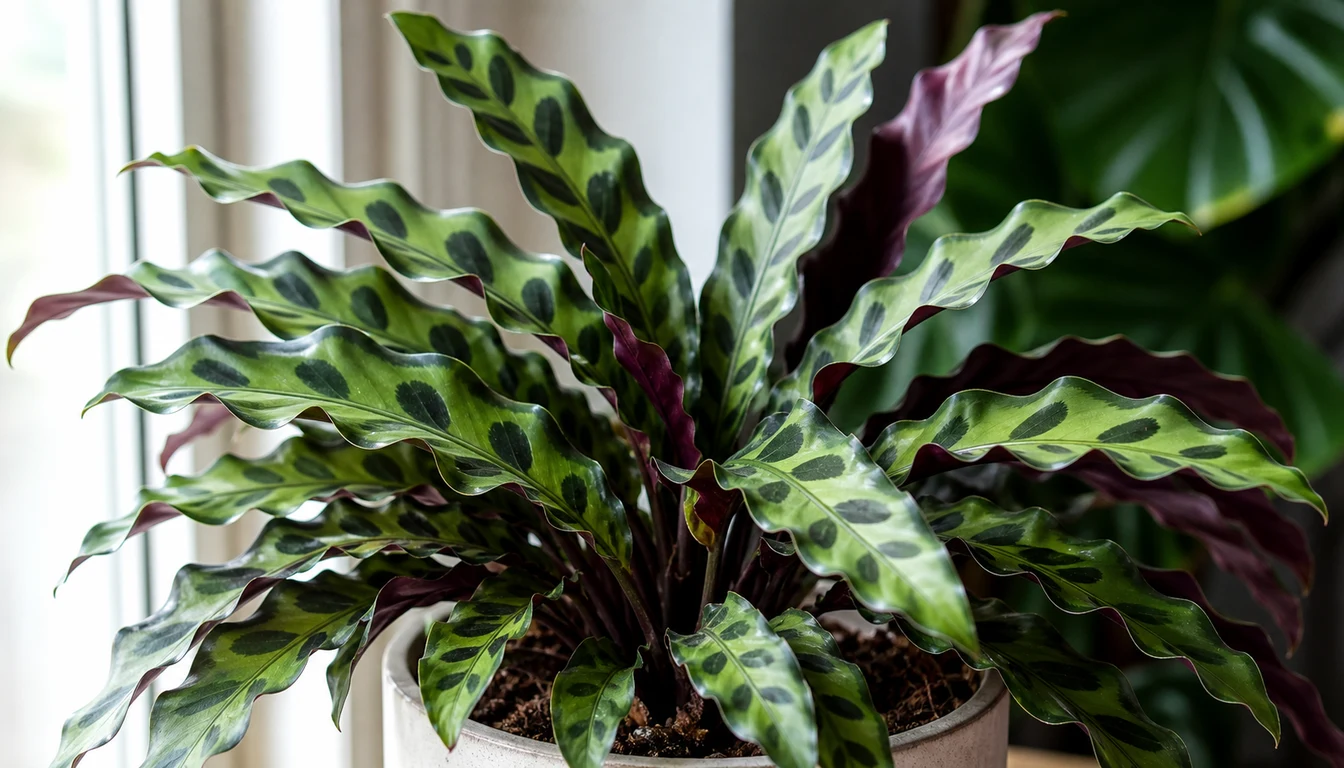
The purple underside is part of the display, but it also hides early mite damage and the first stage of edge burn, so lift leaves during routine checks instead of judging only the patterned top.
Curling that appears only on the side facing a window points to heat or direct sun rather than a whole-plant watering problem. Curling on every leaf, with a heavy pot, usually points to humidity or root stress instead.
Match Light to Pattern Without Scorching the Edges
Medium to bright indirect light keeps the wavy pattern visible without stressing the narrow leaf edges. An east window or a spot set back from a brighter window both work well.
Direct sun dries the thin edges before the roots can resupply them, while low light slows growth and leaves the soil wet for too long, which then gets mistaken for a watering problem.
If the plant leans hard toward the light source, rotate the pot a quarter turn every week or two so growth stays even. Pull it back from the glass first if curling shows up only on the window-facing side, before touching the watering routine at all.
For room placement choices, best indoor plants by room is useful only after you accept that this plant wants filtered brightness, not a dark corner.
A windowless room is not automatically off-limits either. A full-spectrum LED grow light run for 10 to 12 hours a day gets close enough to filtered window brightness that the pattern still holds up.
Humidity Drives This Plant More Than a Watering Schedule
Watering schedule matters less here than most guides suggest, since dry air pulls moisture out of these thin leaves faster than soil timing alone can fix.
Water when the top layer just starts to dry and the pot feels lighter, using room-temperature water and draining the pot fully afterward. Cold water and standing water both show up later as curled or blotched leaves.
- A soft evening roll with moist soil is normal movement, not a signal.
- A tight daytime roll with dry mix means water now.
- A tight roll with a heavy, wet pot points to roots or humidity, not thirst.
Humidity is the bigger lever most of the year, and winter heating is when it fails fastest. Grouping plants, running a small humidifier nearby, or setting the pot on a pebble tray all raise the moisture the leaf surface actually sits in, which plain watering cannot replace.
Aim for roughly 50 to 60 percent relative humidity where possible, since indoor air below that range is when edges start crisping fastest regardless of how carefully you water.
Keep leaves away from cold glass and heating vents, since both pull moisture from the leaf surface regardless of how moist the soil is underneath.
Spring and summer support the strongest growth and are the right window for repotting or division, while winter is for holding the plant steady rather than pushing new growth. Fertilizer during a dim winter feeds a plant that cannot use it, so save feeding for when new leaves are actively opening.
A half-strength balanced liquid fertilizer once a month from spring through late summer is plenty, since heavier feeding pushes growth faster than the roots and leaf surface can actually keep up with.
The broader watering frequency advice still applies as a starting point, but this plant needs closer observation than sturdy foliage plants.
Clean Water and Airy Mix Prevent Tip Burn
Mineral-heavy tap water shows up on these leaves faster than on tougher houseplants, so tip browning despite steady moisture often traces back to water quality, not the watering routine itself.
Filtered water, rainwater, or tap water left out overnight all reduce the chlorine and mineral buildup that causes that specific browning pattern.
The potting mix should stay lightly moist without turning dense or sour around the crown. A standard indoor mix cut with extra perlite and fine bark drains fast enough to keep the crown dry while the rest of the root zone stays evenly damp.
Repot only when roots crowd the pot, using a container just one size up, since a pot that is too large stays wet at the bottom long after the upper roots have dried out.
In practice that usually means repotting every 1 to 2 years for an actively growing plant. Repot sooner if roots start circling the bottom or pushing the crown up out of the mix.
- Water-quality issue
- Even tip browning across otherwise firm leaves
- Soil-mix issue
- Pot stays wet for days, lower leaves yellow
- Pot-size issue
- Wide ring of bare wet soil around a small crown
If the edge damage looks like a calathea-wide pattern, compare it with Calathea brown tips before you blame fertilizer, and check Calathea crispy leaves when symptoms overlap with other calatheas.
Buying Tips: See Past the Confusing Genus Labels
Nursery tags for this plant are inconsistent right now, some still say Calathea lancifolia, others say Goeppertia insignis or Goeppertia lancifolia, and all three point to the same plant.
Selection matters more than chasing a specific label, since most shops carry the same standard form regardless of which name is printed on the tag.
Pick the pot with the cleanest leaf backs and the firmest central crowns, and turn leaves over to check for mites, webbing, or pale stippling before buying. Reject a pot with many cut leaf tips, since that often hides chronic edge burn the seller trimmed away.
- Turn leaves over and check for mites, webbing, or pale stippling.
- Skip pots with many trimmed leaf tips, which often hides chronic burn.
- Choose several upright crowns over one loose plant in a large wet pot.
New leaves should emerge rolled, then unfurl cleanly and hold their wavy shape without brown rims. A few imperfect older leaves on an otherwise healthy plant are not a concern.
This species is one of the more affordable patterned calatheas, typically priced well below rarer relatives like Calathea Orbifolia, since wide availability keeps the standard form easy to find at most nurseries and big-box garden centers.
Divide Mature Clumps, Skip Leaf Cuttings
A single leaf will never root into a new plant here. Propagation only works by dividing an already crowded clump into separate rooted crowns.
Wait until the pot is genuinely full, since a small division has too little root mass to support its own leaves while new roots establish.
Separate a section with its own roots and at least a few active leaves during warm active growth, keeping the cut as clean as possible. Even a good division can pause and mark a leaf or two while it adjusts, so treat some setback as normal rather than a sign of failure.
Use a clean, sharp knife rather than tearing the clump apart by hand, since a torn edge takes longer to heal and invites rot at the wound.
Keep light soft and moisture steady after dividing. Skip fertilizer until new leaves confirm the roots have actually taken hold.
If you want a plant that propagates easily from cuttings instead, Pothos is a far more forgiving learning plant than this species.
Mites Are the Real Threat, Not the Usual Four Pests
Spider mites are the pest to check first, since dry indoor air is exactly what they prefer and the purple leaf underside hides them well.
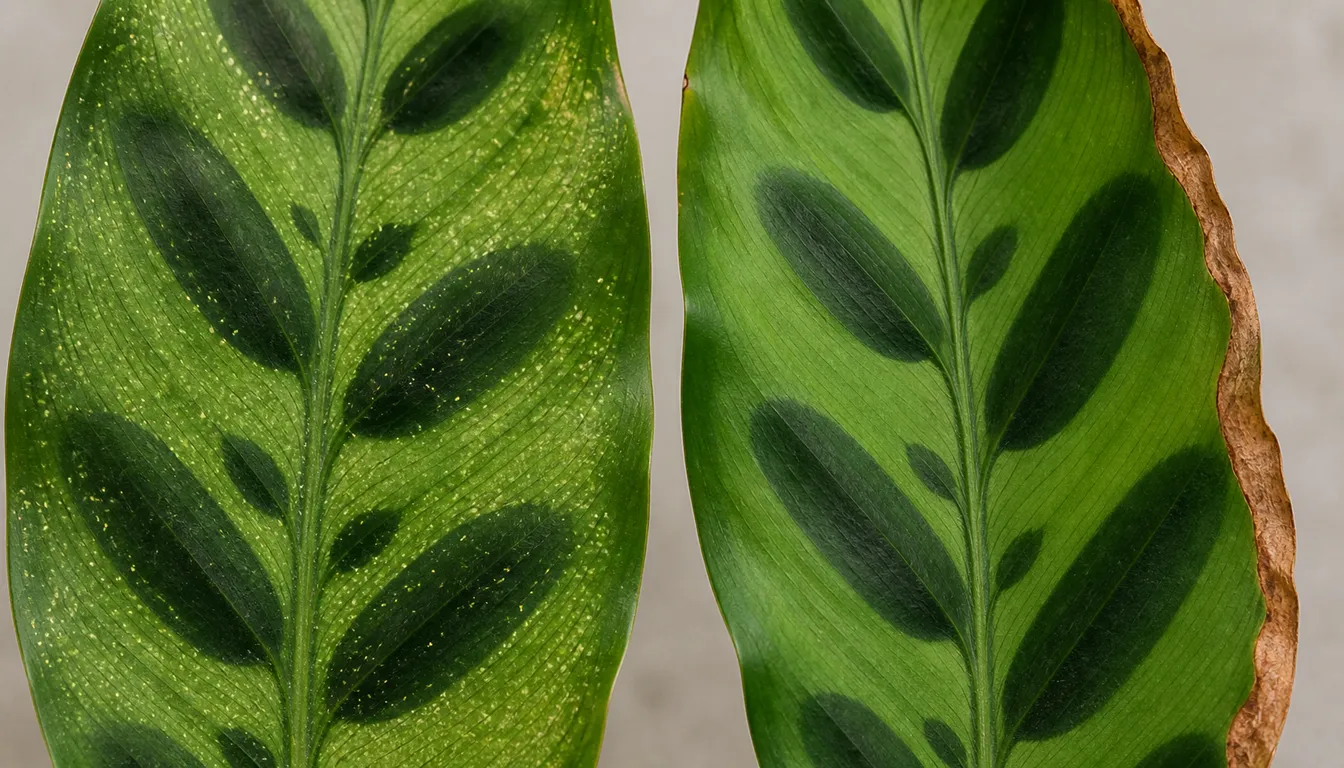
The first sign is usually dusty pale stippling rather than obvious webbing, so a weekly flashlight check under the leaves catches an infestation before it spreads. Treating spider mites works best while numbers are still low.
Edge burn from dry air follows a clean line along the rim, while mite damage breaks up the leaf surface itself in scattered pale dots, especially near the underside midrib. Those two patterns rarely overlap, so telling them apart usually settles the diagnosis without a hand lens.
- Check leaf undersides with a flashlight weekly during winter.
- Rinse both leaf sides before applying any treatment.
- Keep the plant away from dusty heat vents.
Scale and mealybugs show up far less often on this species than on tougher foliage plants, appearing as small bumps or cottony tufts in leaf joints on the rare occasion they do.
Rinse both sides of the leaves before any treatment, and keep the plant away from dusty heating vents, which both stress the leaves and favor mites at the same time.
Thrips show up occasionally too, leaving thin silvery streaks and tiny black flecks of frass on the leaf surface. That signature looks nothing like mite stippling or dry-air edge burn, so it rarely gets mistaken for either.
Pet-Safe, With One Real Caveat
This species is commonly listed as non-toxic to cats and dogs, which is a real reason people choose it over showier but riskier foliage plants.
The caveat is not toxicity but fragility, thin leaves and shallow crowns do not hold up well to a pet batting at them or knocking the pot over. A wide, stable pot and a spot away from a well-traveled path protect the plant more than any placement note about safety alone.
If the room stays dry and busy no matter what you try, Snake Plant tolerates that kind of neglect far better than this species does.
The air-purifying reputation this plant sometimes carries traces back to a sealed NASA chamber study from the 1980s, not a real living room. Treat it as a pleasant side effect of owning the plant, not a reason to skip opening a window.
Established, well-fed plants tolerate an occasional missed watering far better than they tolerate a knocked-over pot or a chewed leaf tip, so pot stability and placement matter more day to day than watering perfection ever would.
Frequently Asked Questions
Why are Rattlesnake Plant leaves curling?
Daytime curling usually means dry mix, dry air, hot light, or root stress. Check pot weight and leaf surface before adding more water.
Does Rattlesnake Plant need distilled water?
It does not always need distilled water, but filtered or rainwater helps if tips brown despite steady moisture.
Can Rattlesnake Plant grow in low light?
It can tolerate medium-low light, but too little light slows growth and keeps the soil wet too long.
How do I propagate Rattlesnake Plant?
Divide a mature clump during warm active growth. Do not try to root a single leaf cutting.
Is Rattlesnake Plant pet safe?
Yes, it is commonly listed as non-toxic, but place it where pets will not batter the leaves.
Sources & References
Related Plants
Calathea
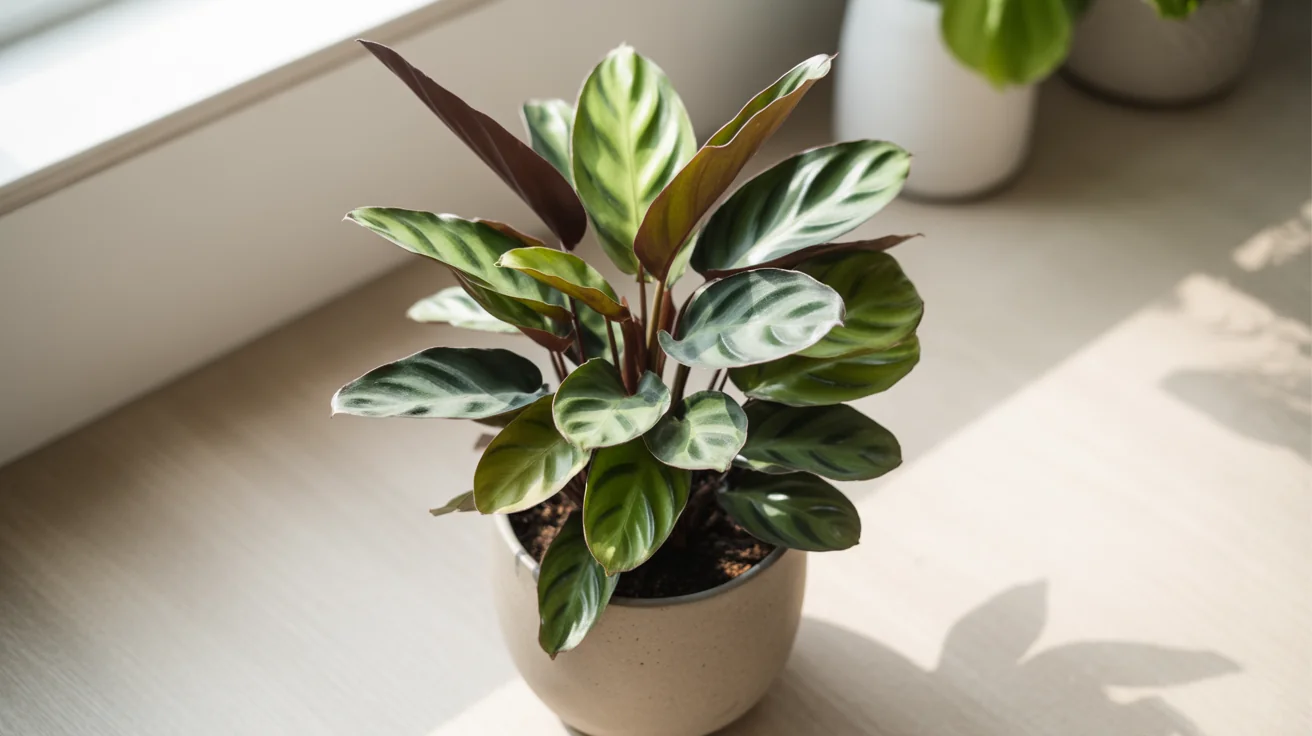
The broader calathea family with many patterned varieties and similar care needs.
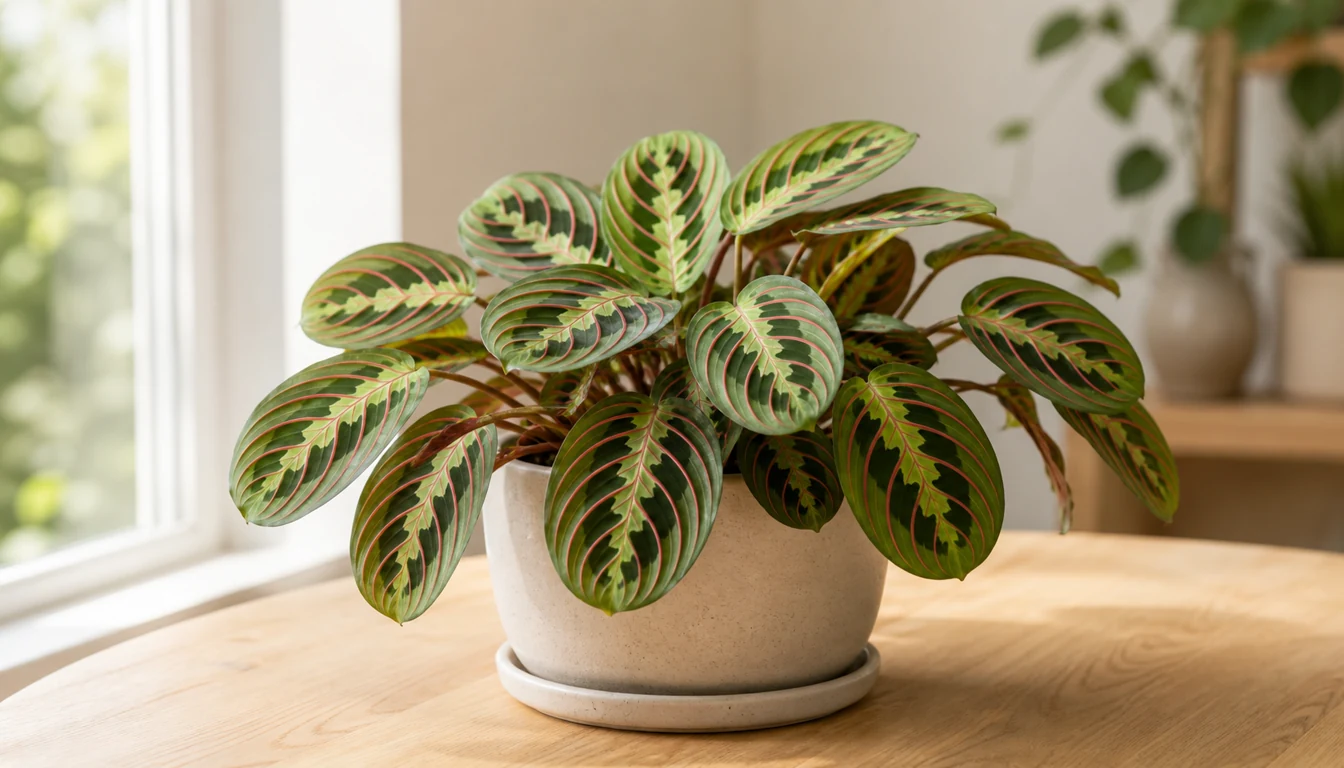
Prayer Plant
Closely related with dramatic leaf-folding at night. Slightly easier care.
Peace Lily
Another elegant houseplant that tolerates low light. Produces white blooms.
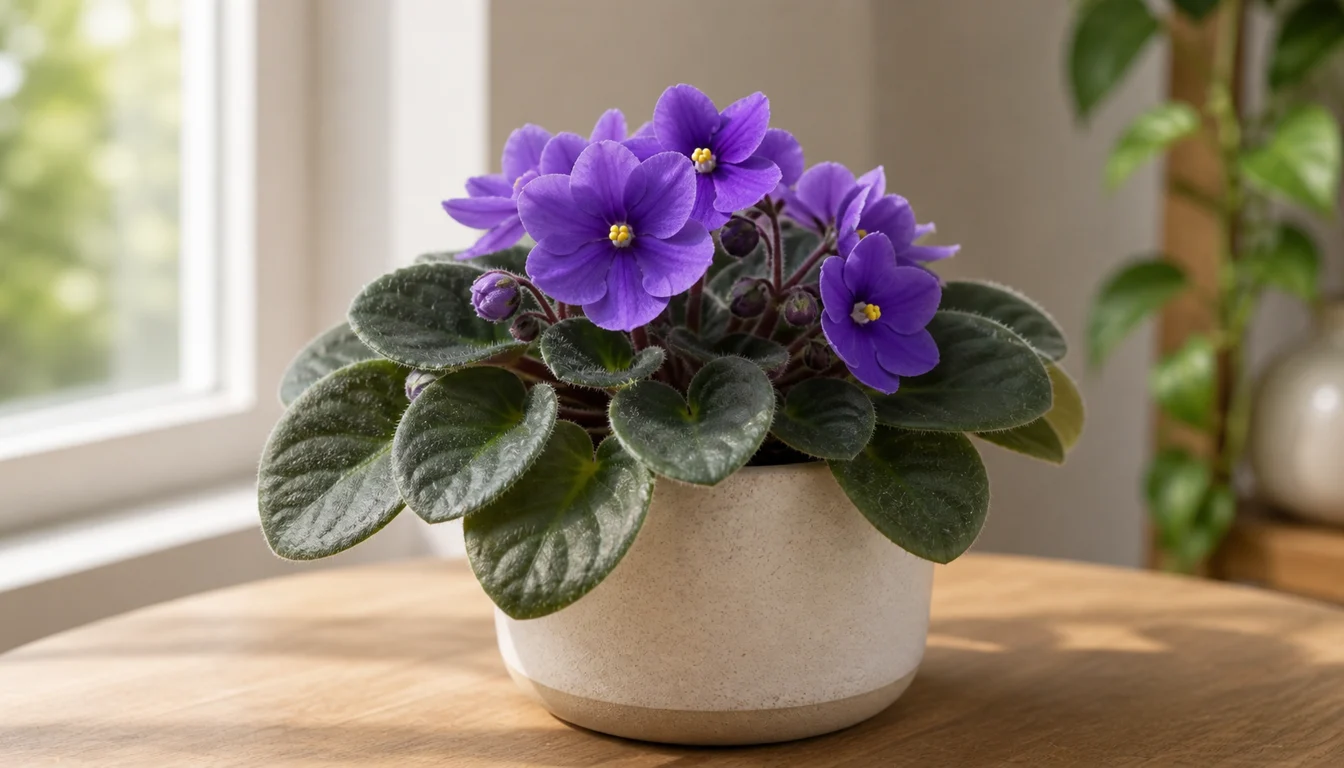
African Violet
African Violet is a windowsill bloomer that rewards steady, small-pot care.
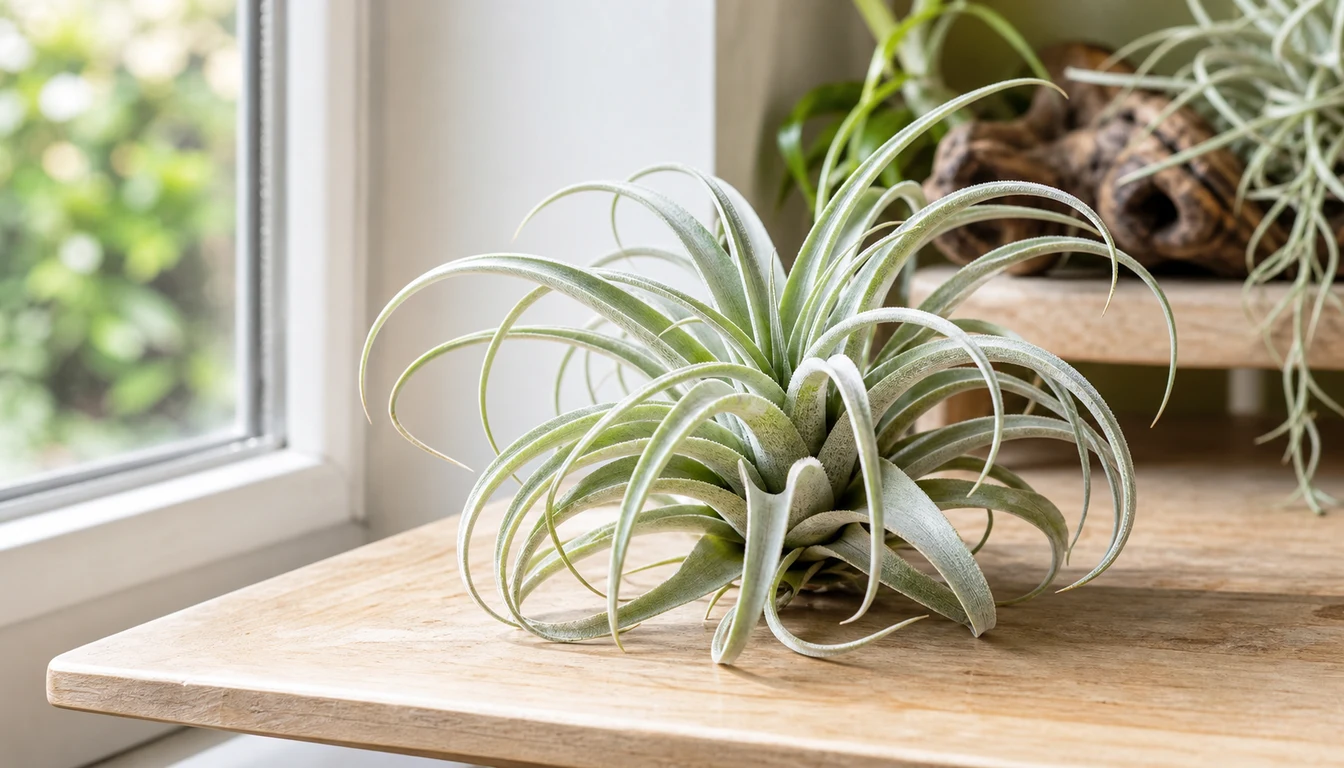
Air Plant
Air plants are living sculptures that thrive without soil, anchoring to driftwood, rocks, or shells while drawing…
Alocasia
Alocasias include compact, textured houseplants and large elephant ears that need substantial floor space.