
How to Control Fungus Gnats in Houseplant Soil
Fungus gnat control works best when it addresses the larvae in potting mix as well as the adults flying around the plants. A surface that dries within the plant’s tolerance, open drainage, and less decaying debris make breeding conditions less favorable. Yellow cards track adults, while a product specifically labeled for fungus gnat larvae can help when those changes are not enough.
Adults are mainly a nuisance. Larvae usually feed on fungi and decaying organic matter, but large populations can damage fine roots, especially on seedlings, cuttings, and already stressed plants.
All affected pots need attention during the same control effort, with monitoring continuing through emerging generations. Spraying visible adults while wet media keeps producing larvae creates a short pause rather than control.
At a glance
How Do You Confirm Fungus Gnats?
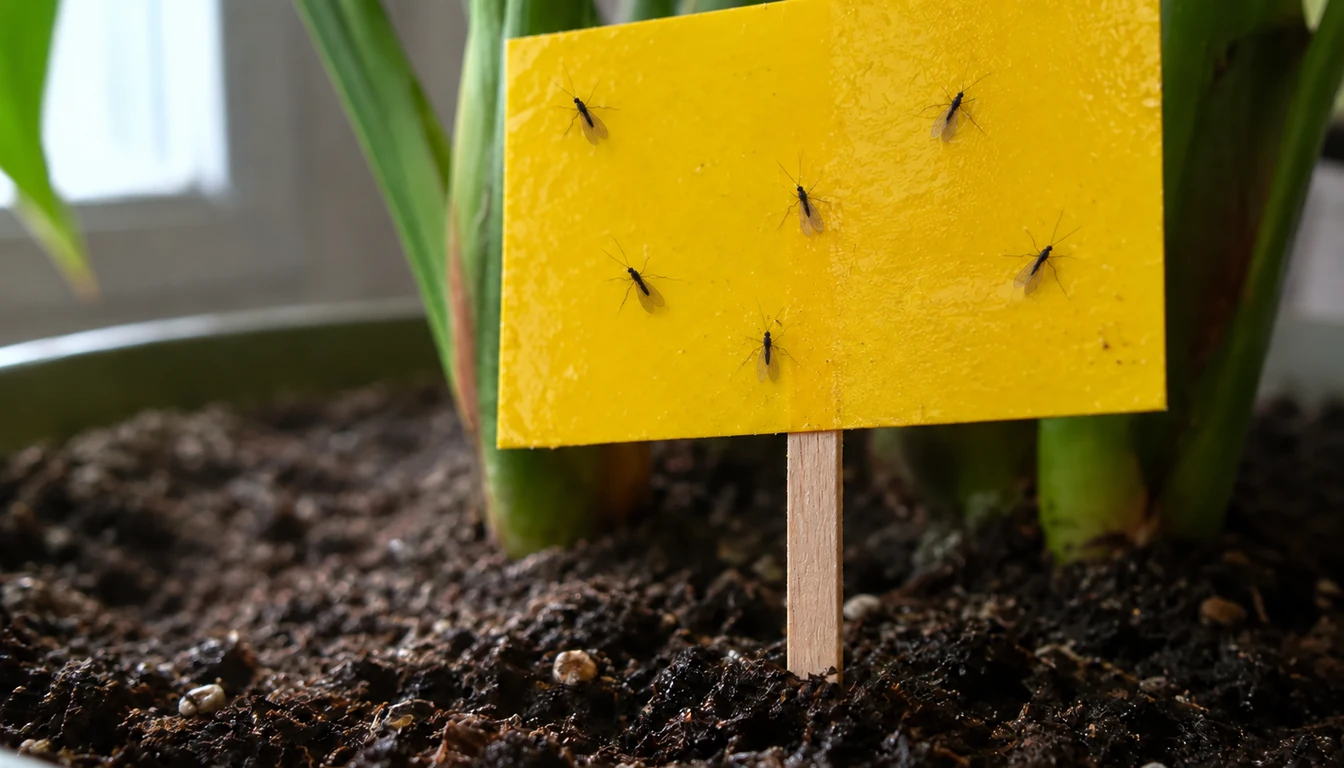
Adult fungus gnats are small, dark, mosquito-like flies with long legs and antennae.
They make short, weak flights near potting mix, collect around windows, and may run across the soil or pot rim.
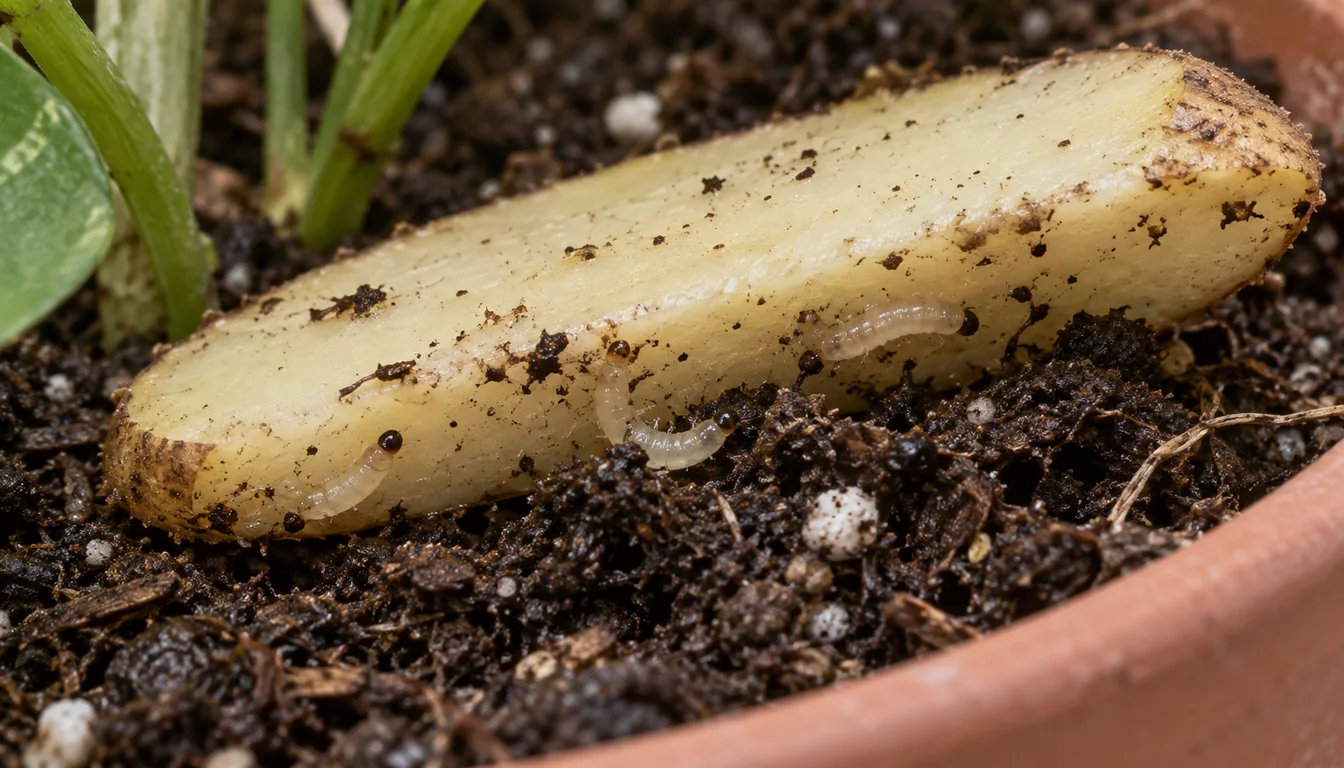
Larvae are slender, translucent to white, and legless with a distinct dark head capsule. They live mainly in the moist upper portion of growing media, where they feed on fungi, algae, decaying material, and sometimes roots.
| Small flying pest | Where it appears | Distinguishing clue |
|---|---|---|
| Fungus gnat | Potting mix, pot rims, nearby windows | Weak erratic flight and clear larvae with black heads in media |
| Fruit fly | Ripening produce, recycling, spills, or fermenting material | Stockier tan or brown fly associated with food rather than plant roots |
| Drain or moth fly | Sinks, floor drains, and wet plumbing biofilm | Fuzzy broad wings and repeated activity at a drain |
| Whitefly | Undersides of leaves | Tiny pale adults rise from foliage when the plant is disturbed |
| Shore fly | Very wet algae-covered media or greenhouse surfaces | Stouter dark fly with pale wing spots; larvae do not have the same clear black-headed appearance |
Place a yellow sticky card vertically near the media surface to detect adults. The card shows where activity is concentrated, but captures alone do not prove how many larvae remain.
For a larval check, place a raw potato slice cut-side down on the mix and inspect its underside after a few days. Clear, black-headed larvae support the identification and locate an active breeding pot. Remove the slice after inspection rather than leaving it to decay.
Why Do Fungus Gnats Keep Coming Back?
Development time varies. Colorado State describes an egg-to-adult cycle of about three to four weeks at 65–75°F, while UC IPM describes about 17 days for a generation at 75°F. These examples cannot set a finish date for every indoor infestation.
Eggs, feeding larvae, pupae, and short-lived adults can be present together. A pot may therefore produce new flies after exposed adults have been removed.
- Eggs enter moist mediaFemales choose damp organic surfaces and crevices for egg laying.
- Larvae feed below the surfaceThe stage that cultural changes, Bti, or nematodes must reach lives in the growing medium.
- Pupae remain protectedA quiet trap count does not prove every immature stage is gone.
- Adults emerge and disperseWeak fliers can still move among nearby pots and restart untreated containers.
- Monitoring continuesClean cards and repeated media checks show whether each new generation is shrinking.
Fall and winter outbreaks are common because plants use water more slowly in lower light while people continue a summer watering schedule. Media stays damp longer, and plants brought indoors can introduce an existing population.
Old potting mix can also break down and hold more water than it did when fresh. That physical change explains why adjusting the calendar alone may not solve a pot that remains saturated.
Control has to account for overlapping life stages and the separate pots that keep producing adults. A brief fall in visible flies can happen before the breeding medium has changed.
How Do You Make Potting Mix Less Suitable for Gnats?
CSU recommends drying the upper 1 to 2 inches of media between waterings. That depth needs adjustment to the plant and container. A small seedling cell, shallow cactus pan, and large tropical container have different root zones and drying patterns.
Pot weight, a gentle moisture check, and the plant’s requirements help establish when water is needed. The goal is a drier breeding surface without pushing sensitive roots into damaging drought.
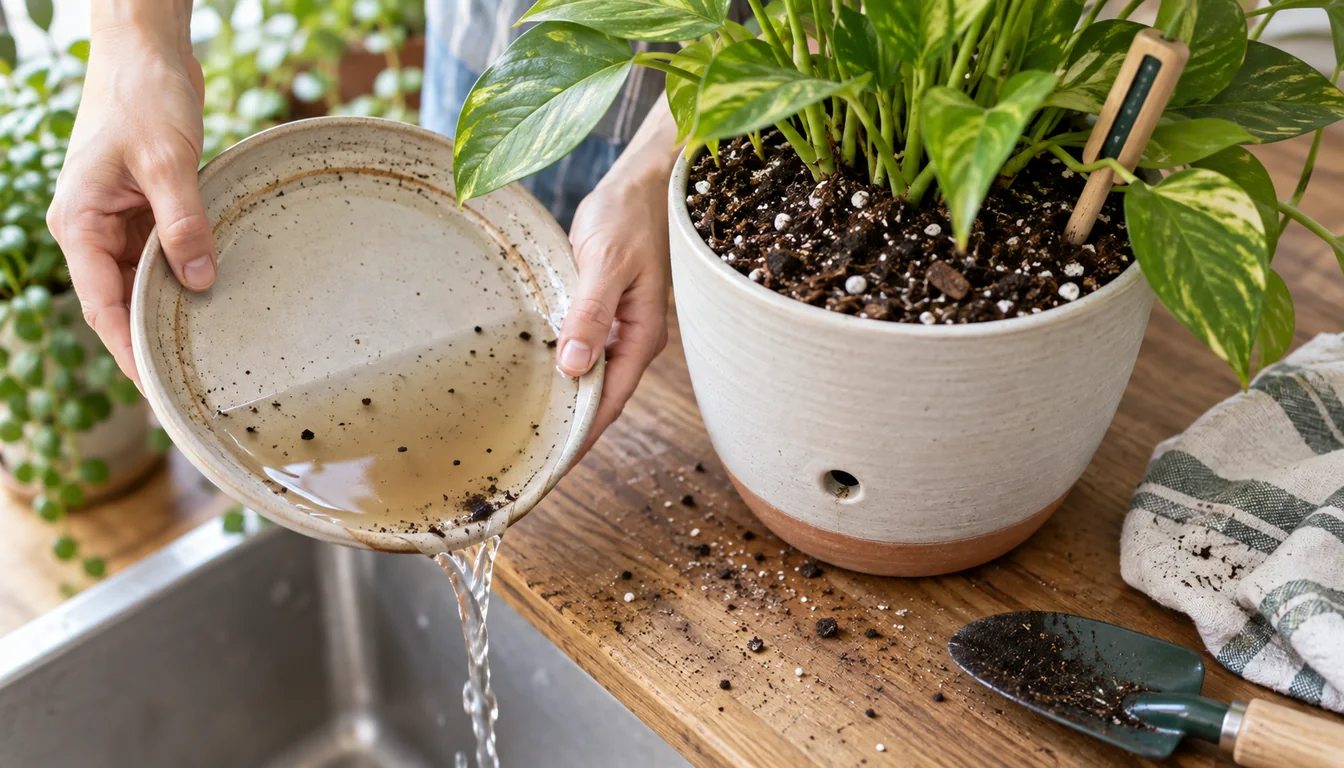
- Empty saucers and decorative cachepots after watering
- Confirm every nursery pot has open drainage holes
- Remove fallen leaves, algae, and decaying bulbs or roots from the surface
- Separate plants with different water needs instead of watering the whole shelf together
- Increase light or airflow only within the plant's safe range
- Replace badly decomposed media that remains wet far longer than expected
- Use clean container mix rather than garden soil for repotting
- Reduce winter frequency as plant growth and water use slow
Bottom watering still wets the growing medium. It does not establish that the surface or root zone is dry, so a pot needs time to drain after uptake rather than standing indefinitely in a saucer of water.
A self-watering container can maintain moist media even when the visible surface looks dry. Its reservoir instructions and the actual root-zone condition matter more than switching watering methods.
Do not poke a dense root ball repeatedly as a substitute for repotting. Holes can damage roots and do not restore a decomposed mix's stable pore structure.
Repotting is useful when degraded media remains poorly aerated or inspection confirms a root problem that needs attention. A clean container and suitable fresh mix address that condition, but adults elsewhere in the room can infest it again.
What Do Yellow Sticky Traps Accomplish?
Yellow cards capture flying adults and make population trends visible. Position them close to the media, where adults emerge and search for egg-laying sites, rather than high above the foliage.
Use a comparable card size and placement each time if you want to compare counts. Label the card with the pot or shelf and the date, then replace it when dust, water, or captured insects cover the adhesive.
| Trap pattern | What it suggests | Next check |
|---|---|---|
| Many adults at one pot | A concentrated breeding site | Inspect moisture, decomposed media, saucer, and nearby debris |
| Adults across a shelf | Multiple pots or adult movement | Treat cultural conditions across the whole group |
| Counts fall, then rebound | Immature stages survived or watering became wetter again | Continue larval control and review the moisture log |
| Cards stay clean but flies remain near a drain | The source may not be potting media | Inspect plumbing or food waste and identify the fly |
| One new plant has the first catches | Introduction with nursery media is possible | Isolate the plant and monitor the main collection |
Sticky cards can remove some egg-laying females, but they do not reach larvae and pupae. Falling counts are most useful when media checks also show that breeding conditions are improving.
Place cards where children and pets cannot contact the adhesive.
Follow the card manufacturer's handling directions and avoid sticking them directly to leaves.
Air movement can change how quickly a propagation tray dries. Tender seedlings still need moisture checks, and a fan does not replace larval control.
Which Treatments Target Fungus Gnat Larvae?
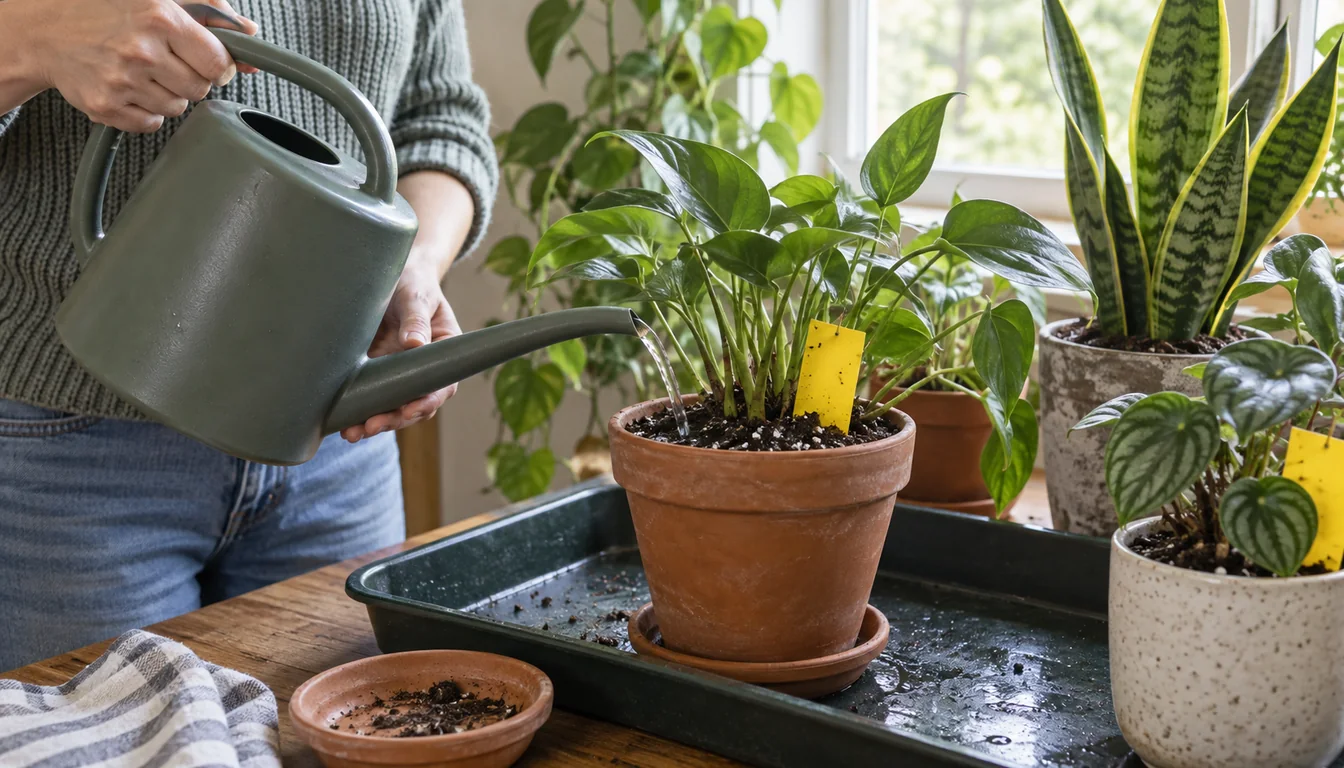
Moisture correction and sanitation address the breeding environment. Persistent larvae may also justify a biological control or pesticide intended for fungus gnats in that growing medium.
Bacillus thuringiensis subspecies israelensis (Bti) can kill larvae when a labeled formulation is applied to growing media. Other Bt strains target different insects, so the letters “Bt” alone do not establish that a product works for gnats.
| Larval option | How it works | Critical use condition |
|---|---|---|
| Bti soil treatment | Larvae ingest a specific bacterial toxin in treated media | Use a formulation labeled for fungus gnat larvae and repeat only as directed |
| Steinernema feltiae nematodes | Beneficial nematodes enter and kill larvae | Purchase a viable product, maintain specified storage and media conditions, and apply by label |
| Fresh clean media | Removes a heavily degraded or infested breeding environment | Clean the pot and protect roots; adults in the room can reinfest the new mix |
| Moisture correction | Reduces egg-laying attraction and survival of eggs and larvae | Dry only within the plant's tolerance and correct hidden standing water |
| Sanitation | Removes algae and decaying food sources | Continue throughout the treatment period |
Some mosquito-control products mention Bti but are not automatically labeled for houseplant fungus gnats or for use as a potting-media drench. Read the entire label instead of copying an online soaking recipe.
Nematodes are living organisms whose viability depends on storage and application conditions. They need suitable moisture to move through the medium. A treatment with living nematodes therefore cannot be paired with indiscriminate drying of the root ball. Supplier directions govern temperature, water quality, application, and the moisture needed afterward.
Insecticides for adults are rarely necessary in a home infestation.
If a product is considered, confirm that the exact plant and indoor site appear on the label, follow ventilation and reentry directions, and keep it away from food-preparation areas.
What Does a Complete Control Plan Look Like?
Treat the collection as one connected system. An untreated wet pot can supply adults that make every other pot appear to fail.
- Day 1, map the outbreakPlace labeled sticky cards, identify the wettest pots, inspect saucers, and use a potato slice where confirmation is needed.
- Day 1, correct breeding conditionsEmpty standing water, remove debris, separate water needs, and let surfaces dry within each plant's tolerance.
- Day 1, choose larval controlApply a labeled Bti product or compatible nematodes when the infestation justifies it.
- At each watering, reassessWater by plant and root-zone need rather than a shared calendar, then empty cachepots.
- At the label interval, repeat if directedImmature stages can survive the first pass, so follow the product schedule without increasing concentration.
- Weekly, compare cardsRecord new captures by location and investigate any pot that remains an outlier.
- After sustained low counts, continue preventionKeep sanitation and corrected watering even after the last visible wave.
Development can continue while some adults disappear. Temperature, moisture, product performance, hidden reservoirs, and reinfestation all affect how long monitoring remains necessary.
Do not declare success after one empty card. Keep monitoring long enough to detect adults emerging from immature stages that were already present.
If counts remain high after correctly applied controls, reconfirm the insect, audit every pot and propagation tray, and look for algae, floor drains, damp stored media, or decomposing organic material nearby.
How Do You Protect Seedlings and Cuttings?
Seedlings and fresh cuttings have limited roots and often require evenly moist media, which makes simple drying harder. Preventive sanitation and early detection are more important than forcing cells through a severe dry cycle.
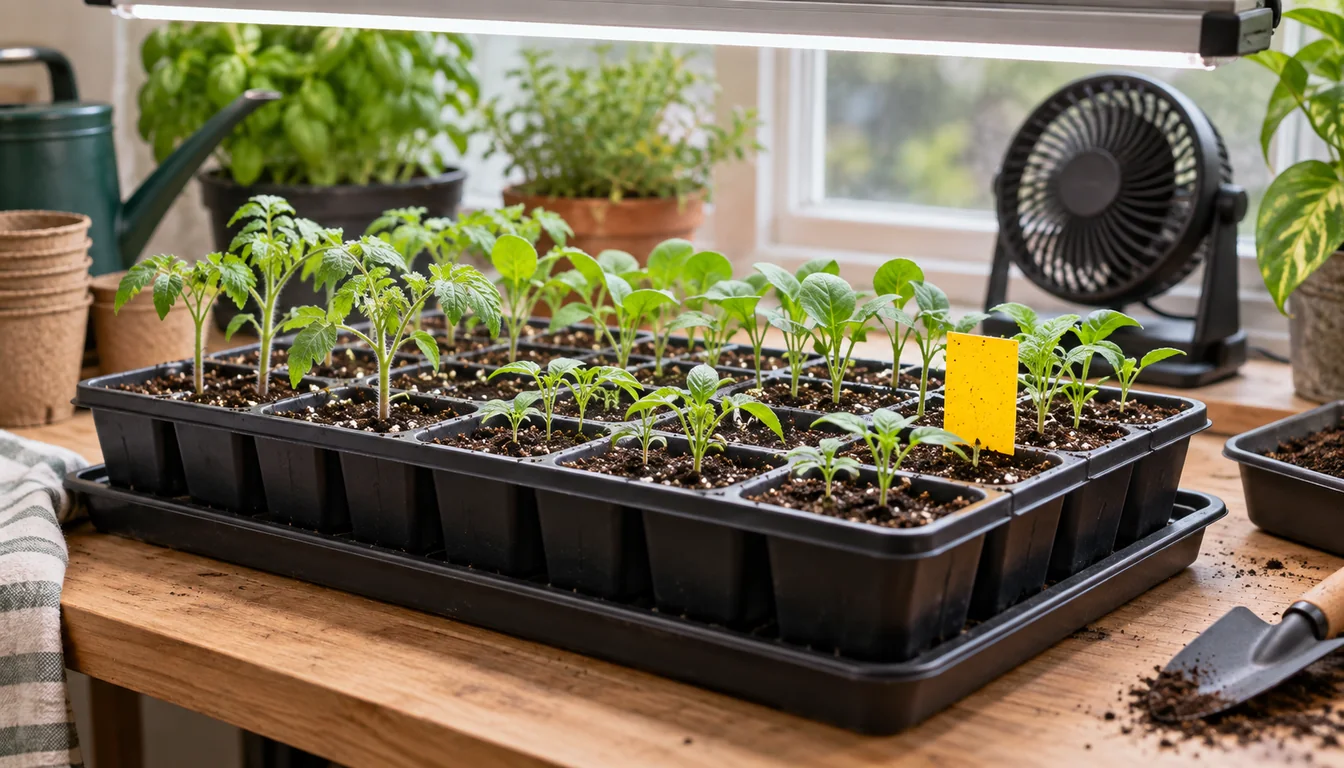
- Start with clean trays, tools, and propagation media
- Inspect new plugs and purchased starts before adding them to the growing area
- Place low sticky cards before adults become numerous
- Water evenly without leaving trays submerged after uptake
- Provide plant-safe airflow and appropriate light
- Cull collapsed or decaying cells that feed larvae and pathogens
- Use only larval controls labeled for the crop and propagation site
- Keep edible crop restrictions and harvest intervals in view
A clear lid or humidity dome may support germination, but leaving it on after emergence can hold excessive surface moisture and encourage algae. Vent or remove it according to seedling needs.
High larval pressure can prune fine roots and contribute to poor vigor, wilting, or losses. Similar symptoms also come from damping-off pathogens, salt injury, insufficient light, and overwatering, so inspect roots and stems rather than assigning every collapse to gnats.
For edible seedlings, the label must permit that crop and use site. “Natural” or “biological” does not remove application restrictions.
How Do You Keep Fungus Gnats From Returning?
New plants and summered-out containers can bring fungus gnats indoors. Isolate arrivals from the main collection, place a monitoring card near the media, and inspect during several watering cycles.
CSU recommends keeping newly acquired houseplants separate for at least three weeks and inspecting them before they join the collection. That general precaution does not guarantee freedom from a soil-breeding pest. Distance matters because adults can move between neighboring pots even if leaves do not touch.
Dry, closed storage reduces opportunities for insects to enter opened potting mix. A damp open bag beside the plant shelf can become a breeding site that escapes pot-by-pot treatment.
Wash saucers and cachepots, remove decomposing roots or bulbs, and clean spilled media from shelves and floors. Physically cleaning reused pots removes remaining roots and organic debris.
New nursery plant
Isolate, inspect, and monitor before joining the collection.
Plant returning indoors
Check media moisture and traps before the move, then keep it separate while outdoor populations emerge.
Opened potting mix
Store dry in a closed container and discard material that is wet, foul, or contaminated.
Self-watering collection
Review every reservoir and prevent constant saturation during lower-light periods.
Dense plant shelf
Group by water need, improve access for inspection, and avoid hidden shared runoff.
Propagation season
Begin with cards, sanitation, and watering controls instead of waiting for a visible swarm.
Prevention is not sterile perfection. Fungus gnats occur outdoors and can reenter, but dry-down cycles, clean media handling, and early monitoring keep a few adults from becoming a persistent indoor population.
Why Is Fungus Gnat Control Not Working?
A persistent outbreak usually means the pest was misidentified, a breeding site was missed, the media stayed wet, or the larval product did not match the label or life stage.
| What happens | Likely explanation | Corrective check |
|---|---|---|
| Adults fall for a week then rebound | Eggs or larvae continued developing | Continue the labeled larval program and moisture correction |
| One shelf stays active | A hidden wet pot, tray, cachepot, or media bag remains | Trace card counts pot by pot and inspect underneath containers |
| No larvae appear on potato slices | Wrong pot, low larval density, or a different fly | Repeat near active cards and inspect drains, fruit, and foliage |
| Plant wilts while soil stays wet | Root disease, decay, or severe media breakdown | Inspect roots and repot when appropriate rather than adding more water |
| Bti appears ineffective | Wrong strain, unlabeled formulation, poor coverage, or incorrect interval | Read the exact label and confirm storage and application |
| Nematodes fail | Poor viability, temperature, storage, or application conditions | Check supplier handling and media requirements |
Do not keep increasing concentration when a product fails. A stronger off-label mix can injure plants or people without reaching the hidden cause.
Mature healthy houseplants often experience nuisance-level fungus gnats without meaningful injury. Seedlings, cuttings, and plants with root decline deserve faster investigation because their smaller root systems are less tolerant.
Seek local Extension or pest-management help when identification remains uncertain, valuable plants decline, or indoor pesticide choices are confusing.
Bring clear photos, trap specimens, the plant name, media history, and every treatment already used.
A watering routine matched to the plants and media makes recovery easier to maintain. Larval treatment supports that change when the infestation warrants it. A hidden pot that stays saturated can still maintain a breeding site.
Sources & References
Related Guides
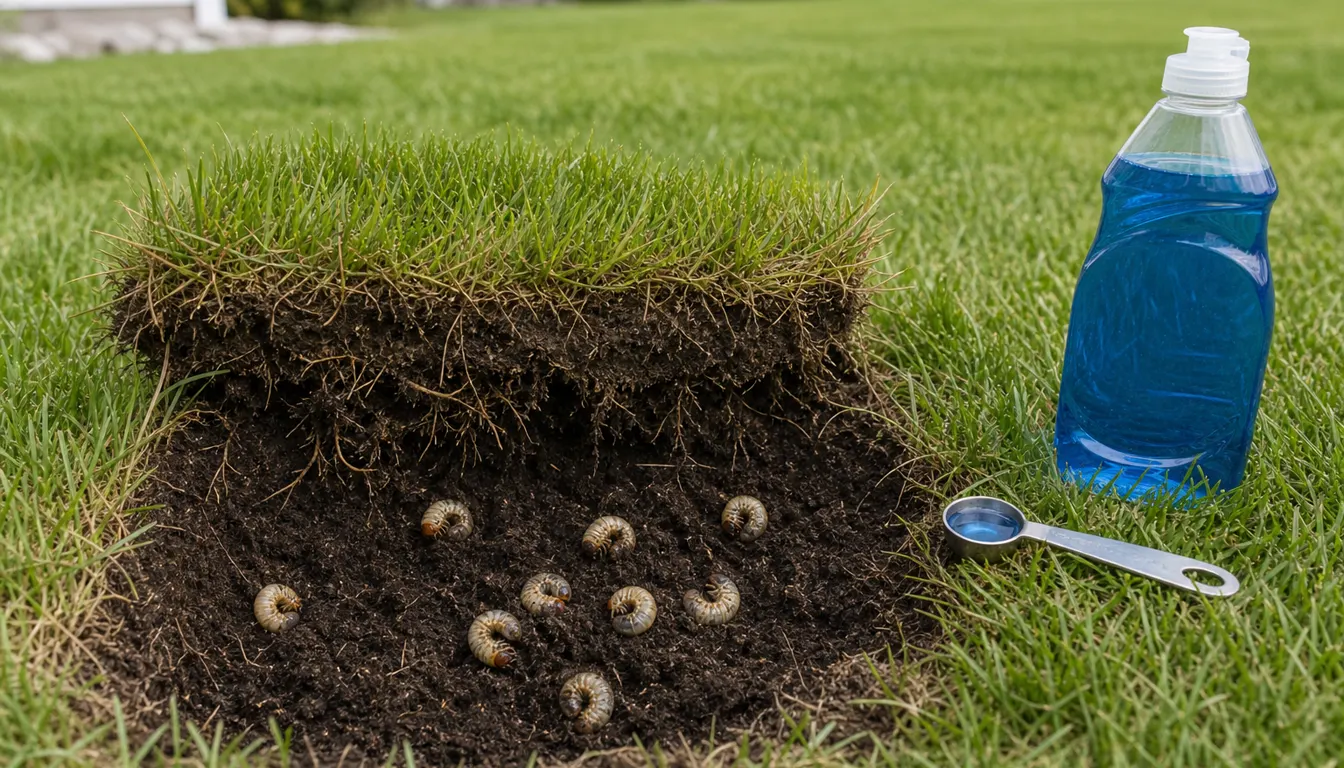
Dawn Dish Soap for Grubs: What Actually Works
Soap solutions can help you spot-check for grubs and knock back a few pests, but they are not…
10 min read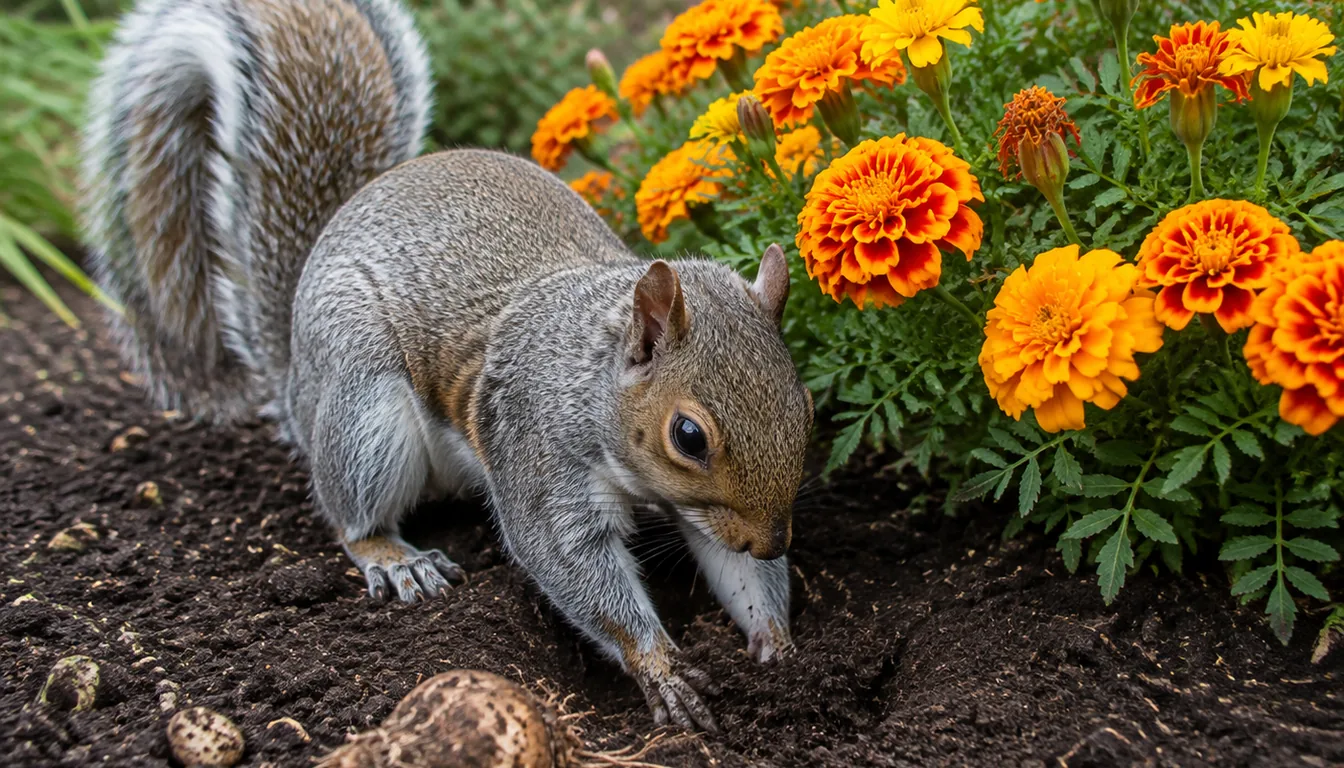
Do Marigolds Keep Squirrels Away From Your Garden?
Squirrels can strip a bed of seedlings or freshly planted bulbs in a single morning.
11 min read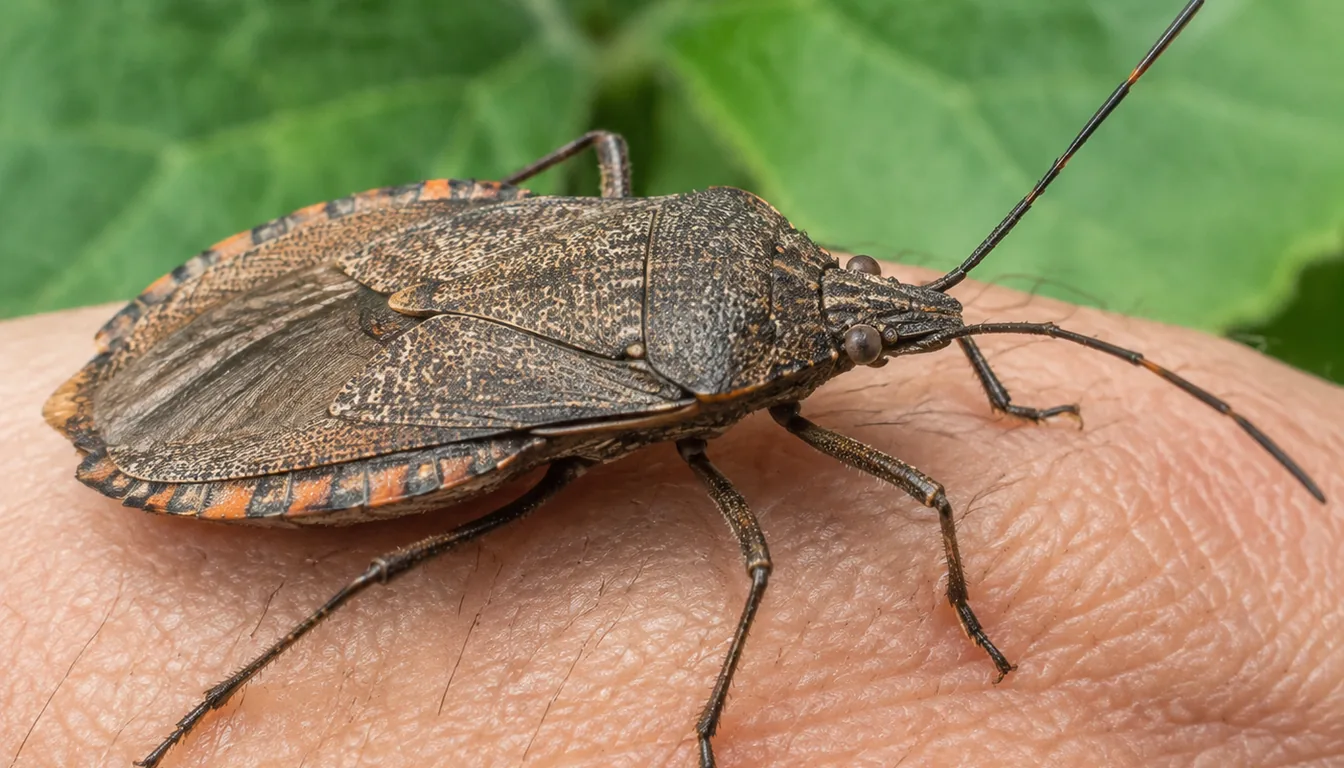
Do Squash Bugs Bite People?
No. A squash bug cannot bite you. Its mouthparts are a slender stylet built to pierce plant tissue…
9 min read
How Do You Get Rid of Spider Mites on Houseplants?
Spider mites on houseplants often can be reduced by repeatedly washing the leaf undersides.
11 min read
How Much Neem Oil Per Gallon? Read and Scale the Label Rate
There is no universal amount of neem oil per gallon. The rate belongs to the exact product and its…
11 min read
How to Identify Lawn Grubs Before You Treat the Grass
Brown grass, birds, or skunk damage can suggest white grubs, but none proves the diagnosis.
16 min read