
What's Rosemary? How to Get It Through Winter and Wet Soil
Salvia rosmarinus Lamiaceae
Rosemary is an evergreen shrub that dies far more often from wet roots and cold winters than from neglect, so the site, the watering and the cultivar decide whether it is a permanent plant or an annual purchase.
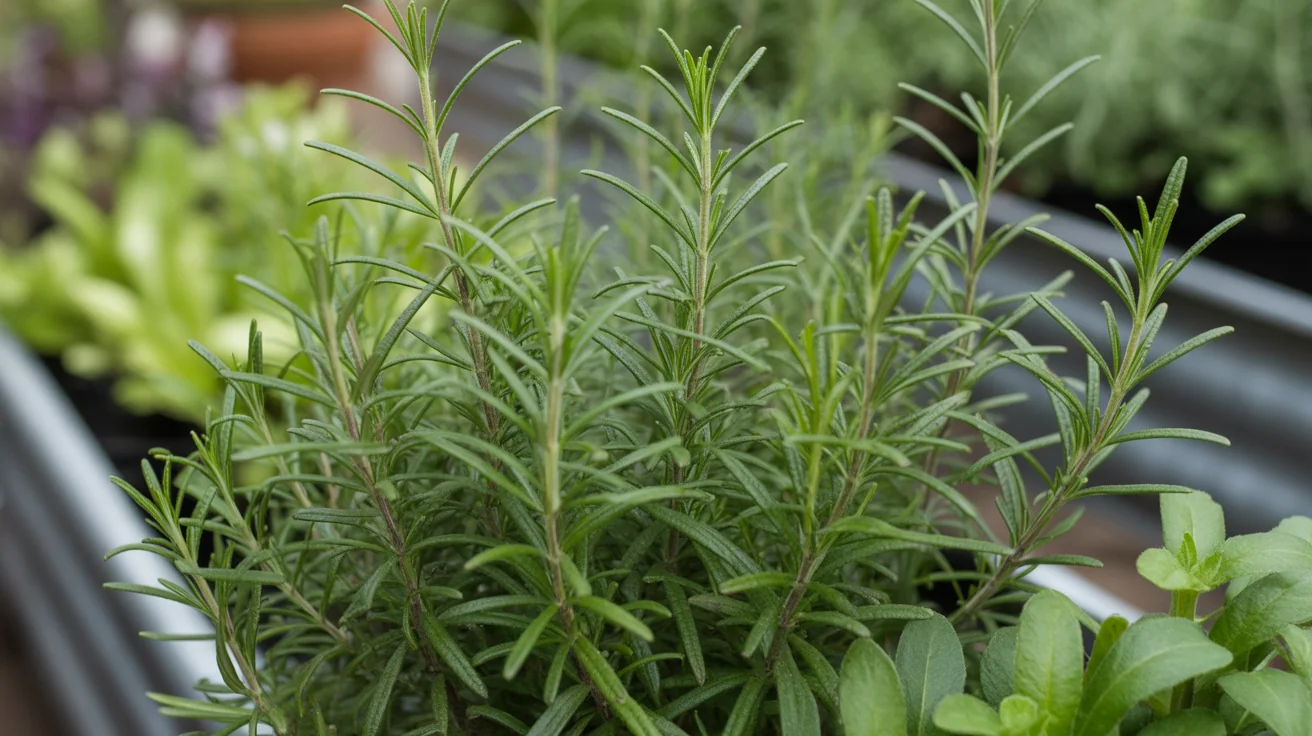
Care snapshot
What Kind of Plant Is Rosemary?
Rosemary is an evergreen woody shrub, not a soft herb. It holds its narrow needle-like leaves through the year and builds a permanent framework of stems, which is why an old plant looks nothing like the small pot it arrived in.
The size is the part the pot hides.
Penn State gives a mature plant as 2 to 6 feet tall and 2 to 6 feet wide, and Maryland gives the same range in inches, at 36 to 72. That is a shrub-sized gap in a bed rather than a slot on a herb bench.
Its botanical name is Salvia rosmarinus. It was classified as Rosmarinus officinalis for a long time, and that older name is still printed on labels and in most books, so two names for the same plant is a labeling problem rather than two different plants.
The new name is worth more than a footnote. Being a Salvia puts rosemary in the same genus as sage, and the two do behave alike, since both are gray-leaved shrubs that want drainage above everything and resent being cut into old wood.
Older plants grow one thing that reliably worries people. Maryland describes the knobby growths along the stems as adventitious roots and says plainly that they are normal and not a problem, so a bumpy stem needs nothing done about it.
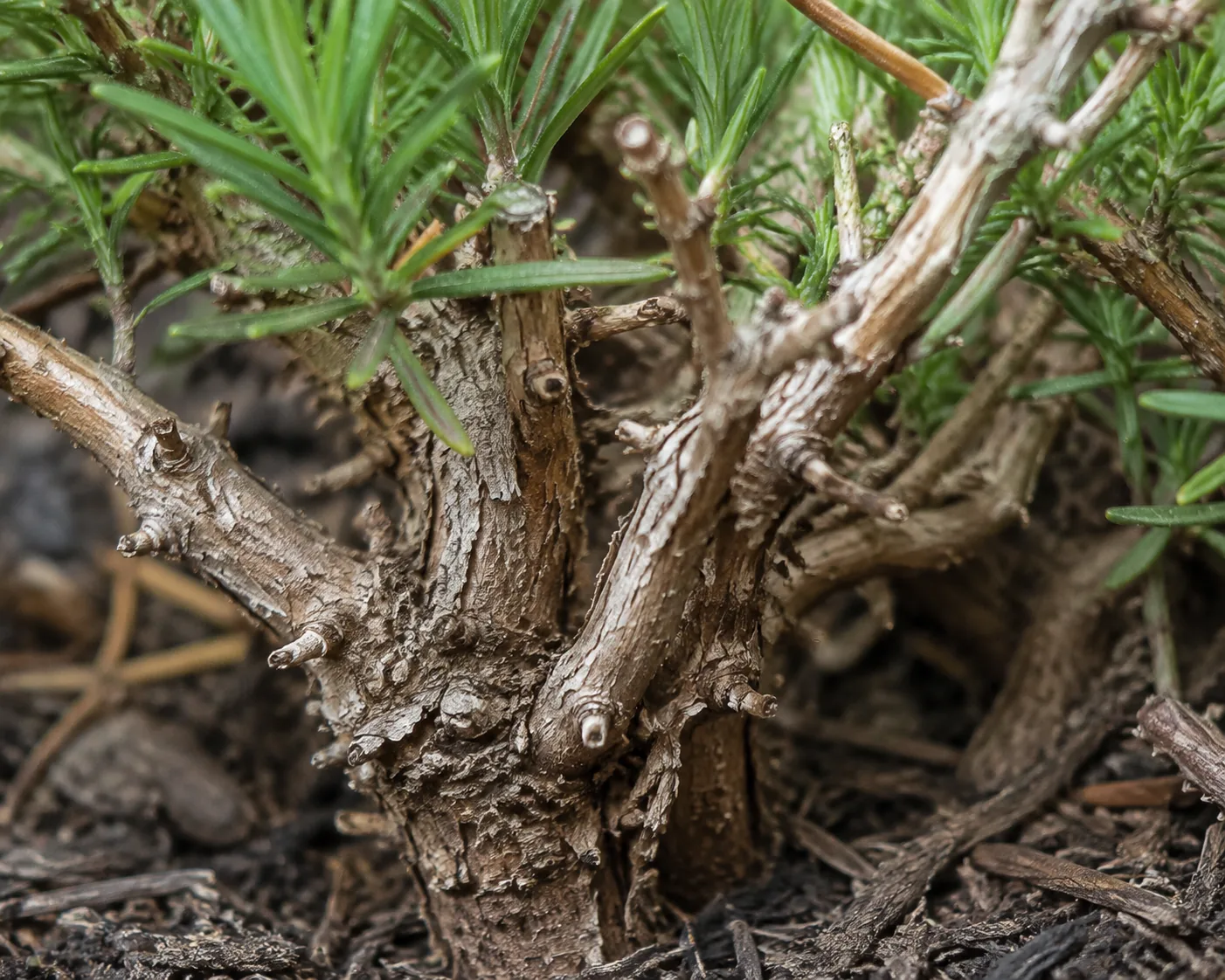
Treating it as a shrub rather than a herb changes three things at once. It wants far less water than the annual herbs beside it, it needs cutting as a plant rather than only picking as an ingredient, and it has a winter limit that a summer annual never has.
Which Rosemary Should You Buy?
Upright rosemaries grow into small shrubs and take clipping, which is what you want for a low hedge, a standard or a plant that has to hold a shape. Trailing forms spill sideways and are better over a wall or the edge of a raised bed, where their stems can hang.
The more important difference is cold hardiness, and it belongs to the named cultivar rather than to rosemary in general.
The plain species is winter hardy to zone 8a.
Four cultivars were selected to push past that.
Wisconsin Horticulture records 'Arp' as hardy to zone 7a and potentially 6a with protection, and 'Madeline Hill', also sold as 'Hill Hardy', as surviving 7a or 6a in a protected site.
Penn State names two more in the same group, 'Athens Blue Spire' and 'Miss Jessop's Upright', and puts the whole set at zone 7, or 6b with protection. That is roughly one to two zones, which is the difference between a permanent plant and an annual purchase.
- Upright species
- Hedges, standards and clipped shapes, where winters stay above zone 8a
- Trailing forms
- Wall tops and raised bed edges where the stems can hang
- 'Arp'
- Zone 7a, and potentially 6a with protection
- 'Madeline Hill' or 'Hill Hardy'
- Zone 7a, or 6a in a protected site
- 'Athens Blue Spire'
- Named by Penn State among the hardier cultivars, at zone 7 or 6b with protection
- 'Miss Jessop's Upright'
- The same group, and an upright habit for clipping
The label therefore matters. A pot marked only rosemary is the species, and in zone 7 that is a plant you are renting for a season rather than buying for the garden.
Where the choice is between rosemary and something that looks like it, lavender is the plant it gets weighed against most often, and the two want almost the same conditions.
Will Rosemary Survive Your Winter?
For most gardeners this is the only question that decides anything, so it is worth answering before the growing advice.
The plain species is winter hardy to zone 8a, and Penn State puts the species range at zones 8 to 10, calling it a tender perennial. Maryland says the same thing as a temperature, describing rosemary as a hardy evergreen shrub where winter temperatures stay above 5°F.
North of that, Wisconsin Horticulture is direct about the consequence, noting that rosemary is generally grown as a potted plant rather than as a garden shrub.
Shelter buys something, but not a lot.
A spot against a sunny south-facing wall, with a heavy mulch laid on after the first frost, can carry a plant through a winter it would not survive in the open.
What that does not survive is a hard snap, because single-digit temperatures are often fatal whatever the mulch is doing.
The reliable answer further north is a pot that comes indoors, and it is worth treating that as the plan rather than the consolation prize. A potted rosemary that spends summer outside grows perfectly well, and it is also where next year's cuttings come from.
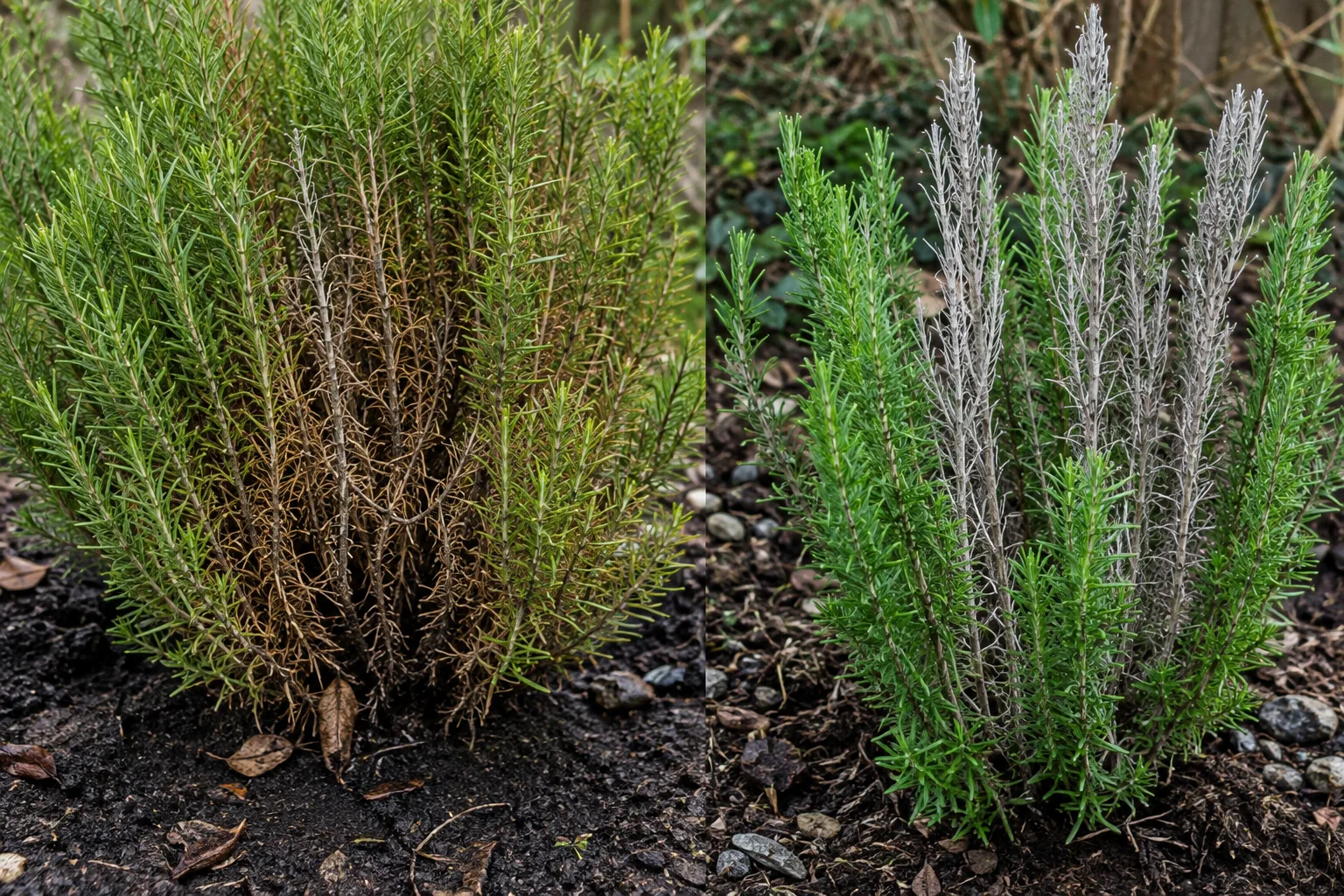
That matters when the plant browns, because a cold death and a wet one look alike from the path. Where the browning starts is what tells them apart.
Where Should You Plant Rosemary?
Full sun, six or more hours of direct light a day.
The soil matters more than the feeding.
NC State describes what rosemary wants as light, slightly acidic, dry to medium and well-drained, and notes it will take most soil types except clay.
Penn State puts the same requirement in two words, sandy or gravelly, and both it and Maryland give the pH as 6.5 to 7.0.
Clay is the one type to avoid outright, because it holds the water the plant is least able to cope with. That is also the one soil no amount of grit reliably fixes.
Air matters alongside soil, which surprises people.
Rosemary has a low tolerance for wet, humid conditions, so a still corner where foliage stays damp is a poor site even if the soil drains.
Space around the plant does real work, and Penn State's two feet between transplanted cuttings is the minimum that provides it.
- Six or more hours of direct sun, measured at the plant rather than across the garden.
- Light, sandy or gravelly soil at pH 6.5 to 7.0; clay is the one type to avoid.
- Two feet between plants, because still humid corners cause as much trouble as wet soil.
- On heavy ground, raise the plant into a bed or a pot instead of amending the clay.
Where the ground is heavy, raise the plant rather than trying to fix the bed.
A raised bed, a slope, or a container with proper drainage holes all put the roots above the wet, and any of them beats digging grit into clay and hoping.
Rosemary belongs among the drought-tolerant plants that make a poor dry strip worth planting.
How Often Should You Water Rosemary?
Most dead rosemary was watered to death, not starved. The plant is highly drought tolerant once established and has a low tolerance for wet conditions, so the instinct that keeps a basil alive is the one that kills this.
Water deeply, and then leave it alone until the soil has dried well down. Little and often keeps the surface damp and the roots shallow, which is the opposite of what a dry-climate shrub is built for.
A container changes the timing but not the rule.
Potting mix dries faster than a bed, so a pot in summer may want water twice a week while a garden plant wants none, and both are still watered thoroughly and then left.
What a pot must never do is stand in a full saucer.
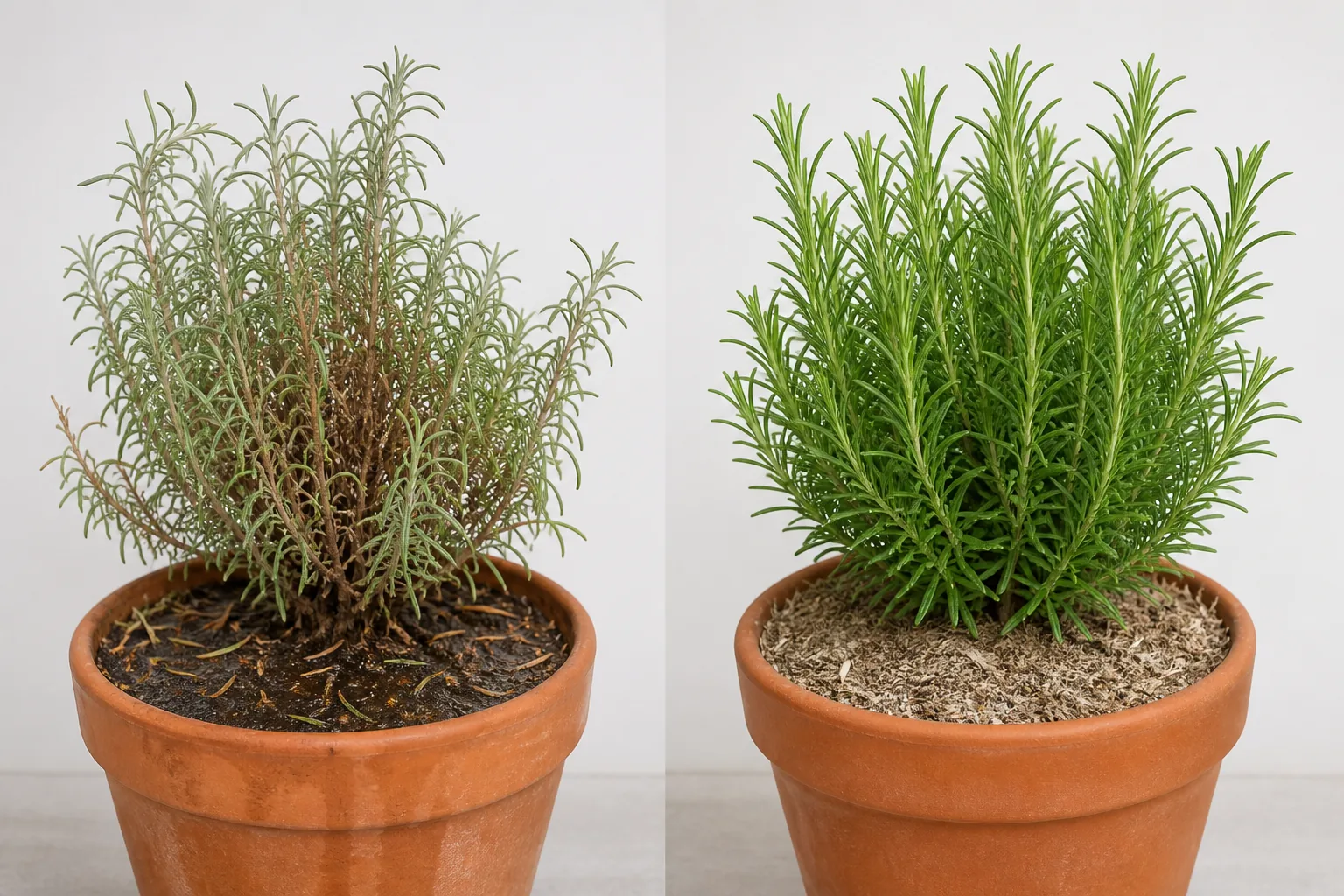
An overwatered plant tells you before it dies. The needles go dull and gray rather than crisp, the lower stems brown from the inside of the bush outward, and the soil smells sour when you push a finger in.
How Do You Cut Rosemary Without Ruining the Plant?
On a woody herb, harvesting is pruning. Every sprig taken for the kitchen is also a shaping cut, and a plant picked from regularly stays fuller than one left alone and cut back once a year.
The limit is where the stem stops being leafy.
Wisconsin Horticulture advises against cutting into the woody parts of stems except when deliberately shaping the plant, because it hinders the plant's development.
Cuts kept in the green leafy growth regrow reliably, while cuts made below it often leave a bare stub that stays bare.
That limit is also why an untouched plant becomes a problem. Left uncut, rosemary furnishes at the tips and goes bare at the base, and once the base is bare wood there is little left to cut back to.
Timing splits by what the cut is for. Penn State takes fresh leaves any time during the growing season, and harvests prior to blossoming where the rosemary is going to be dried, which is the point the oils are strongest.
Drying is the same method the other woody herbs take, hanging the bundles upside down until they are dry enough to strip. Penn State also freezes rosemary, slicing it finely into foil, freezer bags or ice cube trays, which suits a needle-leaved herb that goes into cooking rather than onto a plate.
- Cut in the leafy part of the stem, above where the wood turns gray and bare.
- Harvest little and often through the growing season rather than in one hard cut.
- Take the drying harvest before flowering, which Penn State gives as the point for it.
- Shape after flowering rather than in late autumn, so soft new growth is not pushed into cold.
Take a little often through the growing season rather than a lot once. The harvest timing guide and the rosemary pruning guide cover the year properly, including how to bring an overgrown plant back.
Why Is Your Rosemary Browning or Dying?
Brown rosemary has several causes that look identical from the path. The one that turns out to be right most often is not an insect.
Root rot from wet ground is the usual answer. It starts low and inward, browning the stems nearest the crown while the outer tips still look reasonable, and it follows a wet spell or a saucer that was never emptied.
Push a finger into the soil before assuming anything else.
Winter damage looks different in timing rather than in color. It appears after the cold rather than during it, often when growth restarts in spring and whole stems fail to come with it.
Scratch a stem, and green under the bark means it is alive so the rest can be cut away.
Insects are the third cause and the least common outdoors. Penn State says a plant in full sun outdoors is largely resistant, and lists the trouble as an indoor problem instead, naming thrips, aphids, whiteflies, mealybugs and spider mites.
That split is the useful part. A rosemary that spends summer on a patio and winter on a sill picks up its pests in the second half of the year, in the low light and still air of a heated room.
Mites leave fine pale stippling across the needles and sometimes webbing between them. Aphids do something visibly different, clustering as soft bodies on the newest growth.
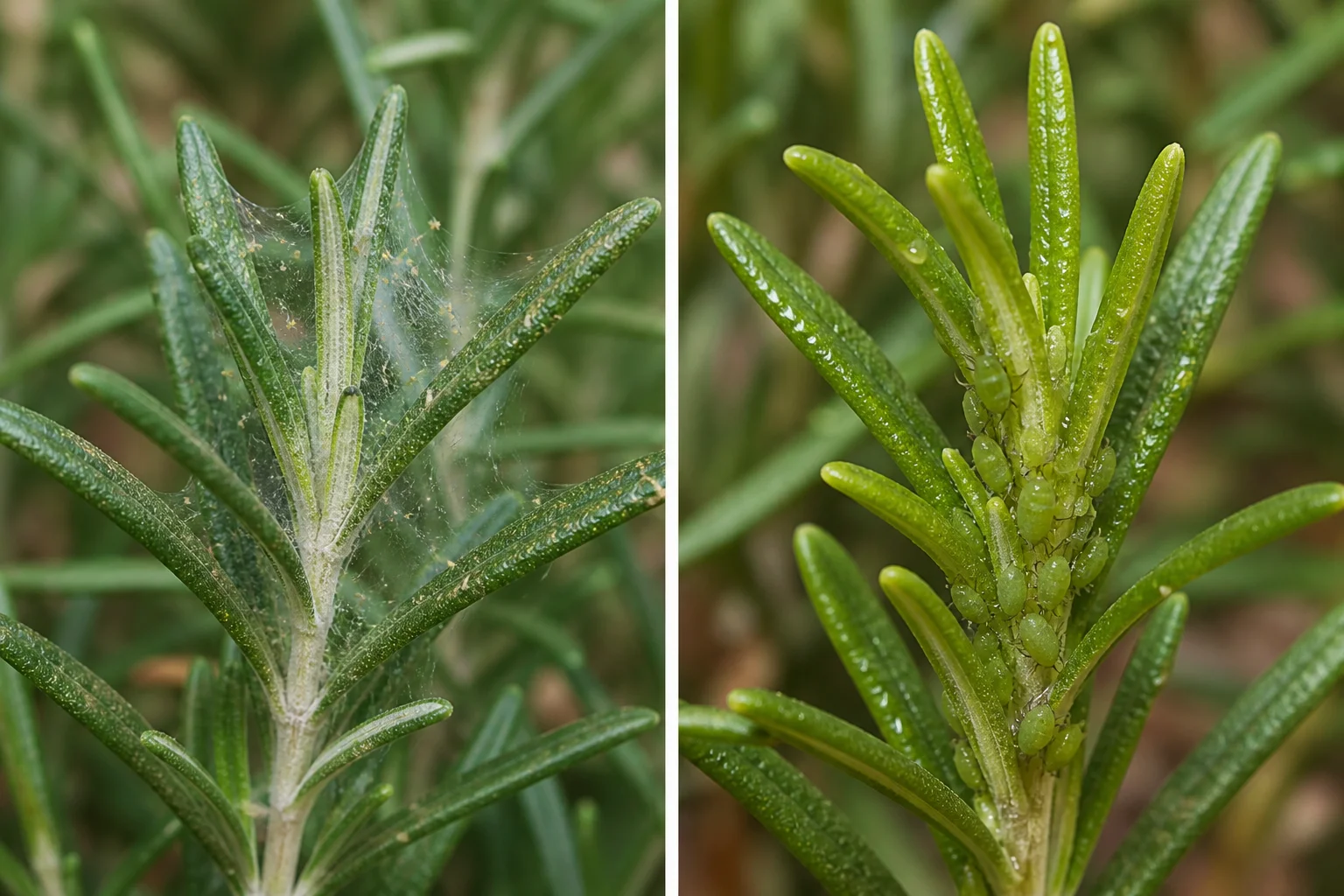
- Browning from the crown outward after wet weather. Root rot, and the drainage is the fix.
- Whole stems failing as spring growth starts. Winter damage, so scratch for green before cutting.
- Fine pale stippling, sometimes webbing. Mites, which Penn State puts among the indoor pests.
- A white dusty film on the needles. Powdery mildew, which follows still humid air.
Match the response to the cause.
Rot means improving drainage or repotting, and a plant whose crown has gone soft is finished.
Winter damage means waiting for growth and then cutting back to living wood.
Insects respond to the approach used for treating mites indoors, and the plant recovers.
How Do You Keep Rosemary in a Pot or Indoors?
The pot comes in 2 to 3 weeks before the first frost date, which is Penn State's figure and a fortnight earlier than most people manage. A plant already damaged by a cold night does not settle indoors well.
Nobody pretends this is easy.
Penn State calls overwintering rosemary difficult, and names the two reasons as low light and too little or too much water.
Iowa State puts rosemary in the same group, among the herbs that struggle indoors because of high light needs and spider mites.
Light is the harder of the two.
Iowa State asks for around eight hours of direct light a day, and Penn State names a south-facing window with full sun or supplemental lighting.
Where a window cannot do it, lights sit 6 to 12 inches from the leaves on a timer for 12 to 16 hours.
The pot itself is part of the answer. Penn State specifies clay pots for the same reason Iowa State does, which is that they dry rapidly, and a pot that dries is a pot that cannot quietly drown the plant over a slow winter.
Watering has to change with the move. Growth slows, the pot dries far more slowly than it did outdoors, and the same routine that suited a sunny patio in July will rot the plant in a heated room in January.
Nothing goes on the pot until spring. A plant on a winter sill has less light than it needs and no way to spend what it is given, and Iowa State stops feeding through those months for that reason, resuming at half or quarter strength once the days lengthen.
On rosemary the cost of ignoring that is specific rather than general. Fertilizer in low light produces soft, pale, stretched growth, and soft growth in still warm air is exactly what the spider mites named above breed on.
- Bring the pot in 2 to 3 weeks before the first frost date, not after the first warning.
- Give it a south-facing window and around eight hours of direct light, or lights 6 to 12 inches away for 12 to 16 hours.
- Use a clay pot so the mix dries rather than staying wet through a slow winter.
- Cut watering and stop feeding, checking the soil rather than the calendar.
Cuttings are the insurance, and they have a published recipe. Penn State takes a 6-inch stem tip, strips the lower leaves, dips the base in rooting hormone and sets it in a sterile soilless mix with bottom heat of 70 to 75°F, where it roots in 10 to 20 days.
Seed is not the route.
Penn State says propagation from seed is difficult because viability is poor, which is why the propagation guide is written around cuttings.
Layering and division both work as well.
ASPCA lists rosemary, under its older name Rosmarinus officinalis, as non-toxic to dogs, cats, and horses. NC State identifies that name as a synonym of Salvia rosmarinus. This plant listing does not cover concentrated rosemary oil or every product made from the herb.
Frequently Asked Questions
Can rosemary survive winter in Zone 7?
In Zone 7, rosemary sits on the edge of its hardiness, with plants in raised, well-drained beds and winter protection often surviving while wet, exposed spots die back. Container plants can be overwintered in a cool, bright, frost-free area.
How often should I water rosemary in a pot?
Water when the top 2-3 inches of soil are dry, not on a schedule. That works out to roughly every 3-5 days in hot summer weather, stretching to every week or two in cooler months depending on pot size and sun exposure.
Does rosemary grow better in pots or in the ground?
In warm Zones 8–10 with well-drained soil, rosemary usually performs best in the ground and can reach several feet tall. In heavier soils or colder areas, large containers with gritty mix and sharp drainage give you tighter control over moisture and winter protection.
How often should I replace rosemary in containers?
Potted plants usually stay at their best for 3-5 years, before roots fill the pot and stems get woody and sparse. You can renew them by taking cuttings from younger shoots and restarting fresh plants every few seasons.
Is rosemary a perennial or an annual?
In Zones 7-10, rosemary is a woody perennial shrub. In colder zones it is often grown like an annual or brought indoors for winter, so compare care with other perennials using annual vs perennial basics.
Why does my rosemary turn brown at the base?
Browning at the base usually means chronic overwatering or poor drainage, and once stems turn brown and brittle, that part will not recover. Improve drainage, water less often, and rely on younger green shoots or new cuttings to rebuild the plant.
Sources & References
- North Carolina State Extension: Rosmarinus officinalis
- University of Wisconsin Horticulture: Rosemary, Salvia rosmarinus
- Penn State Extension: Herb Garden Plants, Rosemary
- University of Maryland Extension: Rosemary
- Iowa State Extension: Growing Herbs Indoors
- ASPCA — Rosemary (animal toxicity listing)
Related Plants
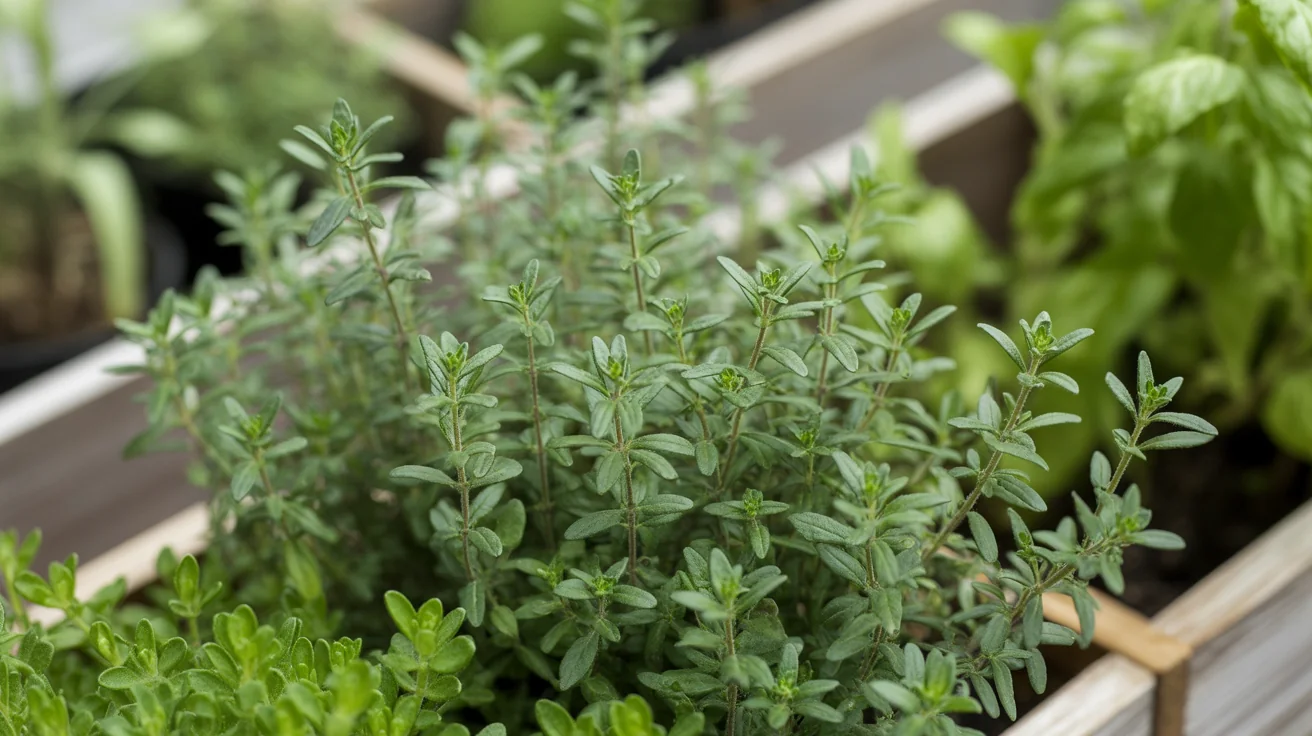
Thyme
Another low, woody Mediterranean herb that shares rosemary's love of lean soil, full sun, and rare deep watering.
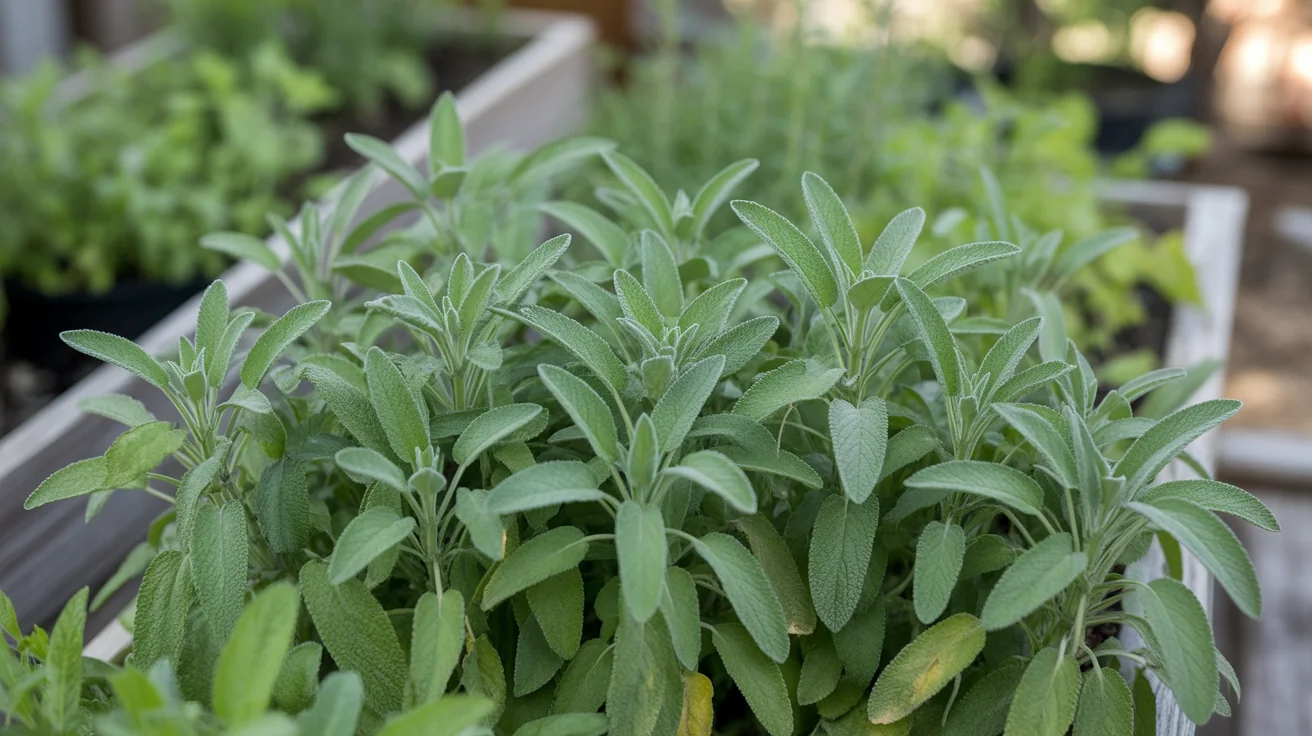
Sage
A fellow Lamiaceae shrub with the same square stems and drought tolerance, good for pairing in a sunny herb bed.
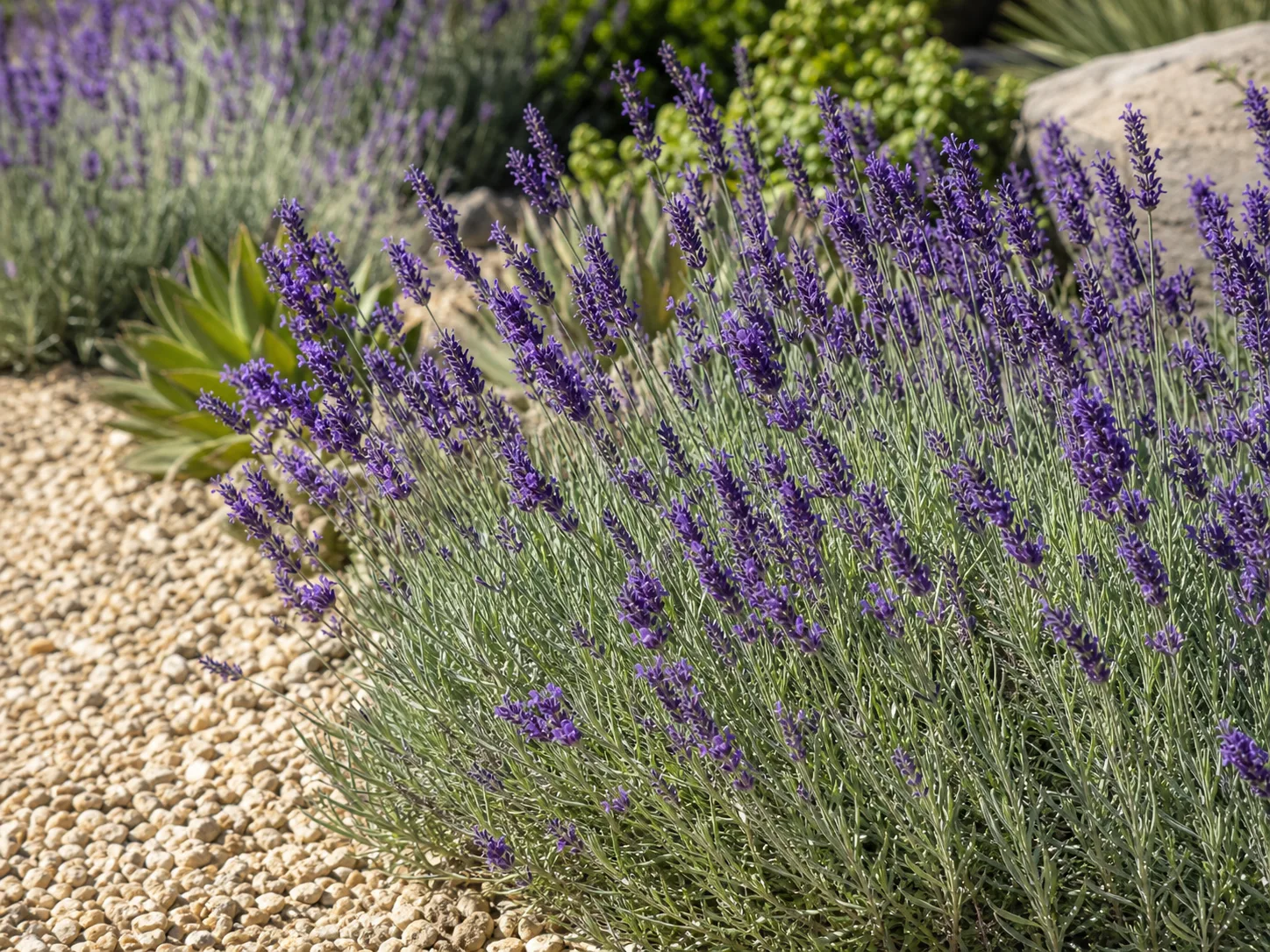
English Lavender
A sun-loving Mediterranean shrub that pairs well with rosemary in a hot, dry border and draws the same pollinators.
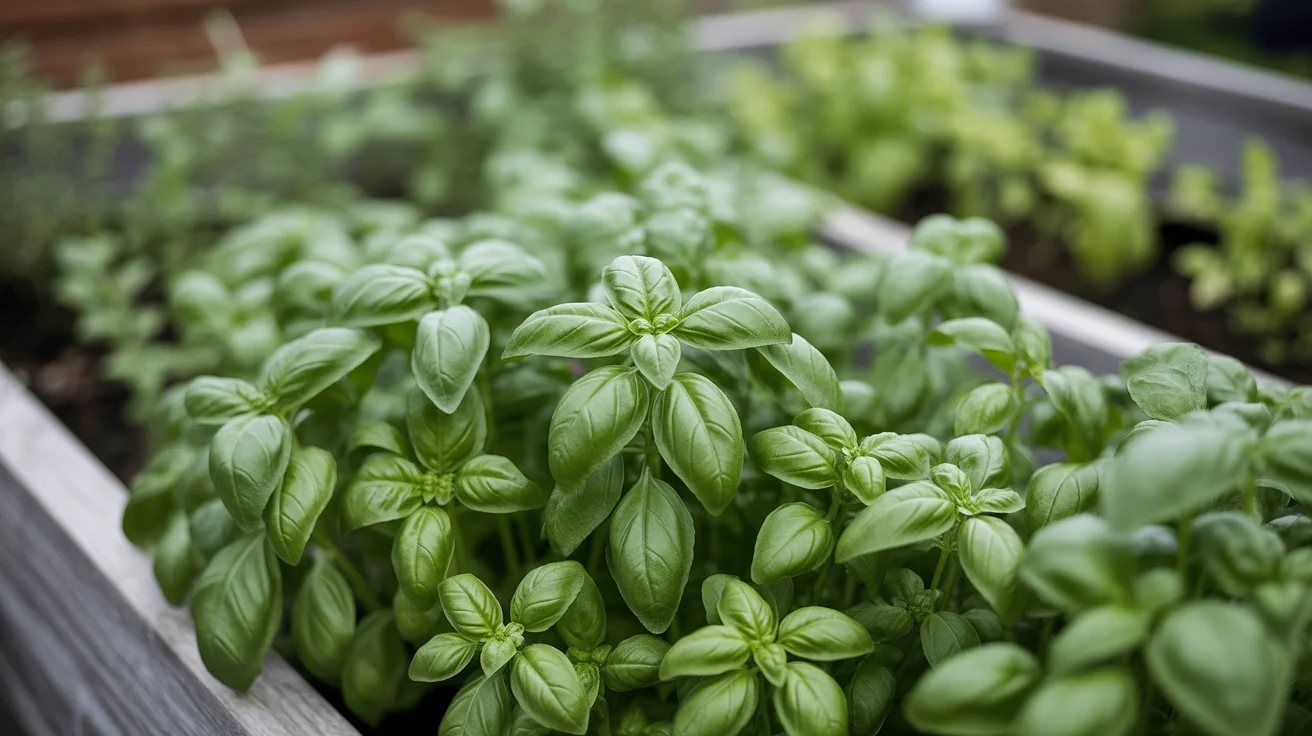
Basil
Basil is a tender annual that turns a warm season into armfuls of soft leaves, as long as it goes out into warm soil…
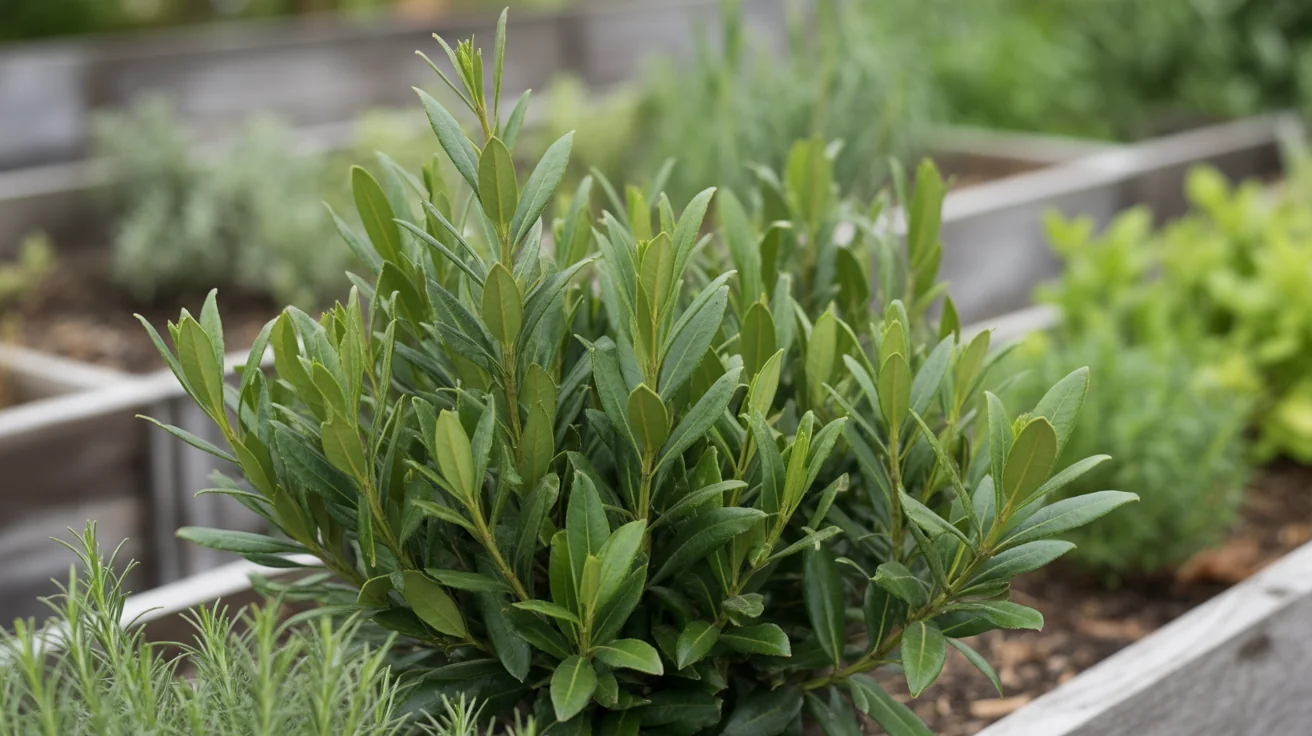
Bay Laurel
Bay laurel is a tree grown as a container plant, which is why every decision about it looks the way it does.
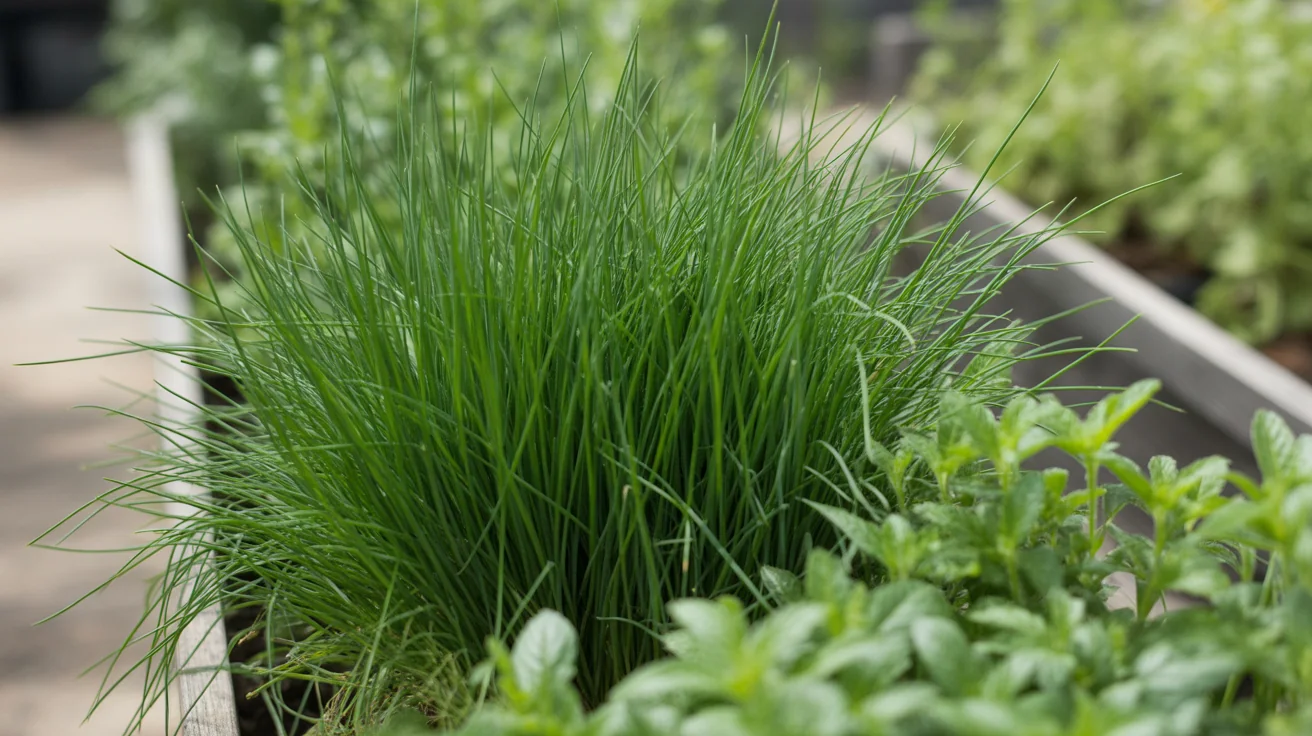
Chives
Chives are an Allium, in the same genus as onion and garlic, and that explains the flavor, the clump of small bulbs…