Rosemary vs Thyme
Common thyme usually fits a smaller herb bed and tolerates colder winters than rosemary. Rosemary offers larger upright or trailing forms, depending on the cultivar. Both need sun and drainage, while indoor winter growing adds a light and watering problem that a hardiness label cannot solve.
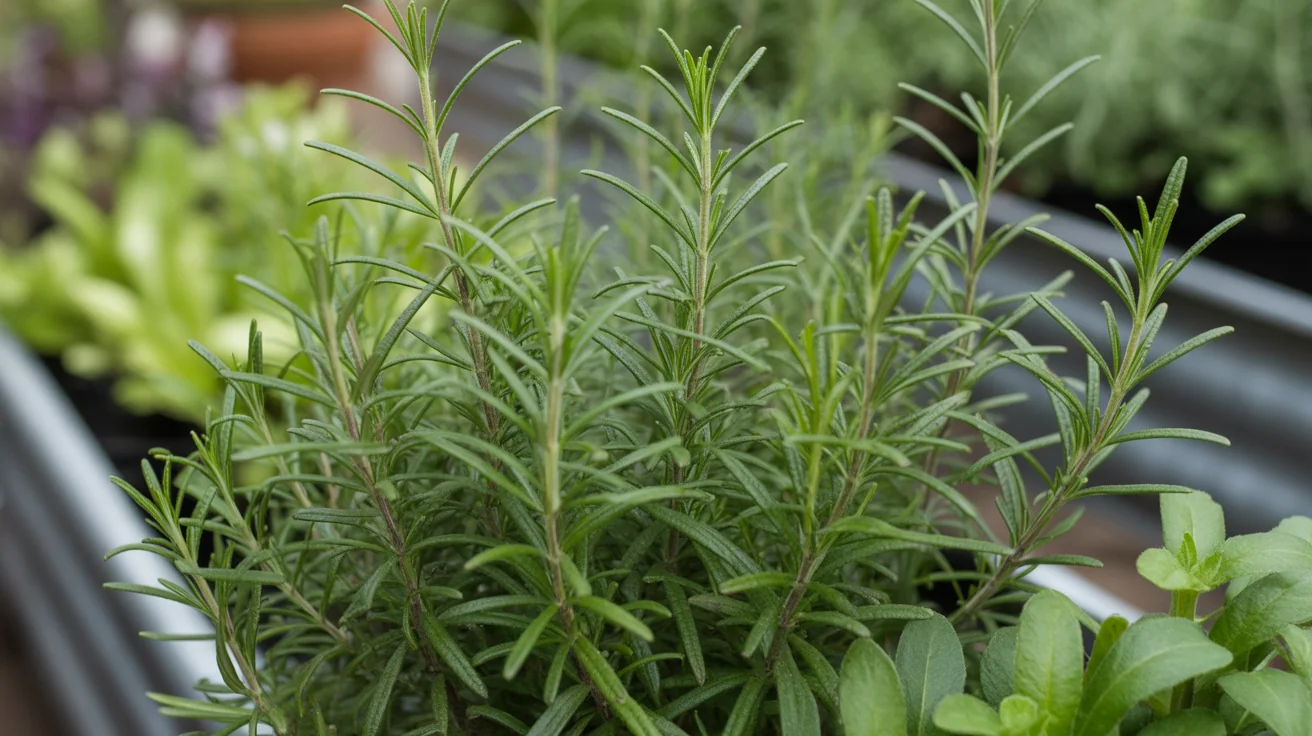
Rosemary
Salvia rosmarinus
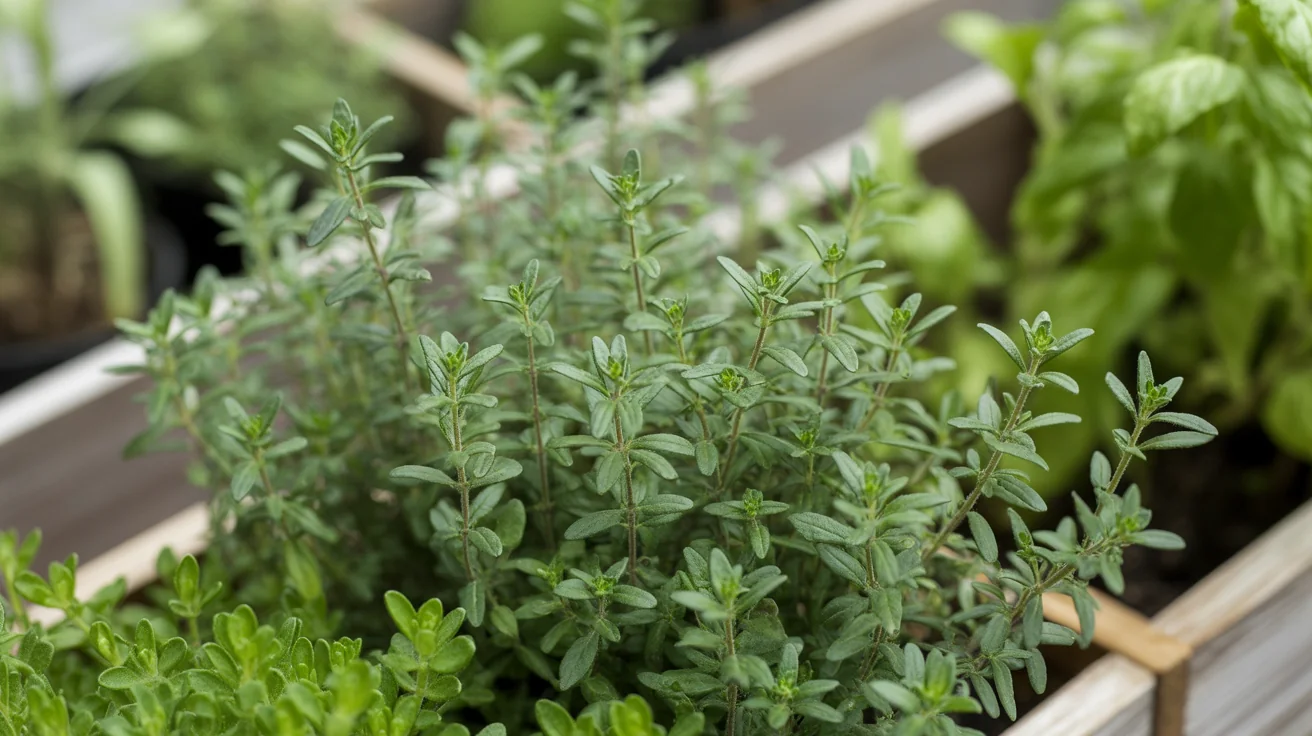
Thyme
Thymus vulgaris
This comparison uses Salvia rosmarinus, also known as Rosmarinus officinalis, and common culinary thyme, Thymus vulgaris. It does not treat every creeping thyme or rosemary cultivar as the same plant.
The useful choice combines the herb you want to cook with and the space you can maintain. A small thyme mound, an upright rosemary shrub and a rosemary spilling over a wall have different footprints even though all can supply aromatic leaves.
Specifications
Compare the traits that change the growing decision.
| Feature | Rosemary | Thyme |
|---|---|---|
| Typical form | Woody shrub; upright and prostrate cultivars | Small woody mound of common thyme |
| Size reference | NC State lists about 4–5 feet tall for typical shrubs; cultivar range is wider | About 6–12 inches tall and 6–16 inches wide in NC State’s description |
| Outdoor winter fit | Generally warmer climates; named cultivars differ | NC State lists common thyme for zones 5–9 |
| Indoor winter growing | Can be difficult when light is limited or pests develop | Iowa State includes thyme among its easier indoor herbs |
| Harvested material | Aromatic leaves and leafy shoot tips | Small leaves and leafy tops |
| Site requirement | Sun and well-drained rooting conditions | Sun and well-drained rooting conditions |
Best Use Cases
Choose by the job the planting needs to do.
A small culinary herb container
Its compact mound uses less space than a typical upright rosemary. Harvesting a few leafy tips can supply cooking without maintaining a large shrub.
The pot still needs sufficient light and drainage. Small size alone does not make a dim kitchen counter suitable.
A larger edible landscape plant
An upright form can add height, while a trailing form can soften an edge. The cultivar’s width and winter tolerance determine whether it fits.
Rosemary is not limited to upright shrubs, and low forms are not automatically substitutes for a surface people walk on.
Keeping an herb through a cold winter
Common thyme is the more practical outdoor candidate across many colder regions where rosemary cannot reliably survive. Local conditions and drainage still matter.
Rosemary can remain a seasonal crop or move to a suitable bright indoor space. Neither option guarantees lower lifetime cost.
The cultivar changes the rosemary side of the comparison
Common thyme is a small woody plant, not simply a soft carpet. Its stems and leaves suit harvesting from a bed edge or container. NC State tags the species as tolerant of foot traffic, but that broad trait does not specify how much repeated walking a particular planting can take.
For an area used as a path, the walking surface and the plant’s role need separate thought. A low herb beside a stepping stone is different from an herb expected to replace the stone. Culinary thyme need not be assigned that second job to be useful.
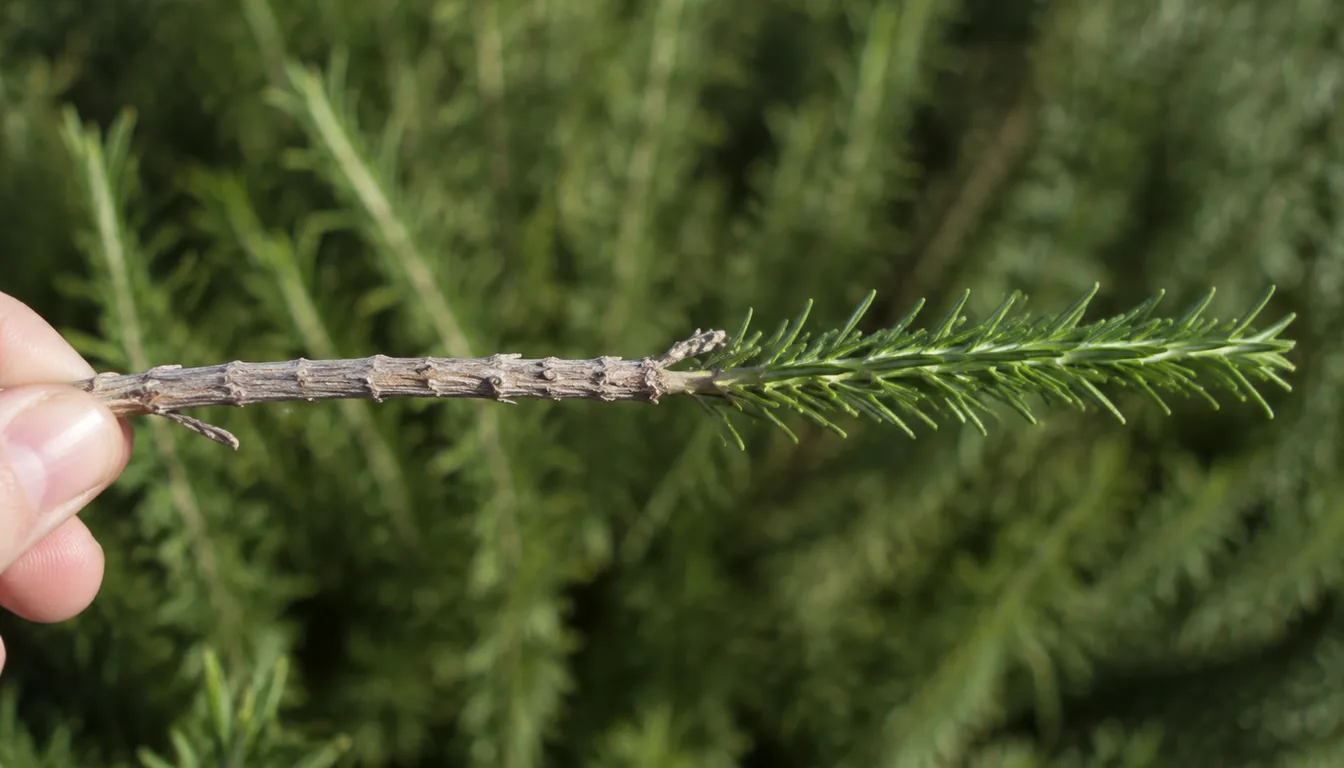
Rosemary also has exceptions to its familiar upright outline. Wisconsin Extension describes prostrate cultivars and much wider trailing selections. Their low height can work above a wall or in a container, but spreading width still consumes space.
Cooking preference remains a legitimate deciding factor. Rosemary has a resinous, strongly aromatic leaf, while common thyme contributes small leaves widely used in soups, stews and other savory dishes. The herb you regularly use is the more useful harvest for your kitchen.
A cold-climate rosemary needs somewhere to go
Wisconsin Extension treats rosemary as a container crop in its climate and describes some named cultivars as hardier than the general species. Those exceptions do not turn every rosemary into a reliable outdoor plant through a Wisconsin winter.
Common thyme has the broader cold-climate fit. A surviving plant still needs suitable soil, and a pot exposed on every side does not offer roots the same protection as the ground. Winter survival and a steady indoor harvest are separate expectations.
Iowa State identifies light as the main indoor limitation and includes thyme among its easier indoor herbs. Rosemary can also grow indoors, but higher light needs and pests such as spider mites can make it more demanding. A window’s direction alone does not prove that the plant receives enough usable light.
When light is inadequate, supplemental lighting can help. The space, container weight and care involved belong in the choice before buying a large rosemary to move every fall, rather than appearing as a surprise after the weather changes.
Neither herb benefits from staying wet
Both perform best with good drainage. That makes a waterlogged bed a problem for either choice, even when one plant is described as more drought tolerant. Drought tolerance concerns coping with limited water, not surviving a saturated root zone.
An established plant has access to more soil than a recent transplant. In containers, the rooting volume stays limited, so irrigation follows how the pot is drying rather than a universal interval assigned to the species.
Indoor growth changes the balance again. Iowa State recommends appropriately sized containers, a well-drained mix and allowing the soil to dry between watering. An oversized pot can remain wet long after a small plant has used the water near its roots.
Separate pots make it easier to adjust care to each herb. A combined planter can be attractive, but a compact appearance does not prove that every plant in it needs the same irrigation or light. The practical water demand belongs to the planting and its conditions, not just the herb’s name.
Harvest leaves while preserving a leafy plant
Both herbs develop woody stems, but routine harvesting focuses on useful leafy growth. Removing a few shoots is a different operation from trying to shrink a large, bare-centered shrub.
Wisconsin Extension recommends small rosemary harvests and light pruning of older plants. Retaining healthy leafy shoots avoids relying on a bare woody section to rebuild the plant after a severe cut. A rosemary kept at a suitable size from the start is easier to manage than one repeatedly forced into too little space.
For indoor perennial herbs including thyme, Iowa State advises taking the upper part of the growth rather than cutting as heavily as one might cut a leafy annual. The size and condition of the actual plant matter, so a fixed five-inch cutting rule should not be copied onto every young or low-growing thyme.
Maryland Extension describes harvesting thyme’s leafy tops and flower clusters as bloom begins for drying. Occasional cooking harvests and a larger drying harvest need not happen on the same schedule. Leaving enough foliage for continued growth is the common concern.
Replacement, propagation and safety have their own limits
Common thyme may become woody or thin with age. Maryland Extension recommends renewing plants periodically and lists cuttings and division among the available methods. A patch with useful leafy growth can remain in place, while a thin center may justify renewal.
Rosemary cuttings preserve a selected cultivar more reliably than variable seedlings. Starting from seed can be slow, while a rooted plant supplies known traits sooner. Visible root development, rather than elapsed days alone, shows whether a cutting is ready for its next stage.
NC State lists rosemary as non-toxic to dogs, cats and horses, and ASPCA lists common thyme as non-toxic to the same animals. Those plant listings do not establish the safety of concentrated essential oils, pesticides or unrestricted ingestion.
Neither medicinal tradition nor the fact that people season food with an herb provides a veterinary treatment instruction. For the garden, correctly identifying the plant and keeping applied products within their labeled uses are separate from deciding which flavor you prefer.