Basil vs Rosemary
Choose basil for tender leaves, pesto, and repeated harvests during warm weather. Choose rosemary for a stronger woody herb, a drier root zone, and a shrub that can persist where the cultivar and winter climate match.
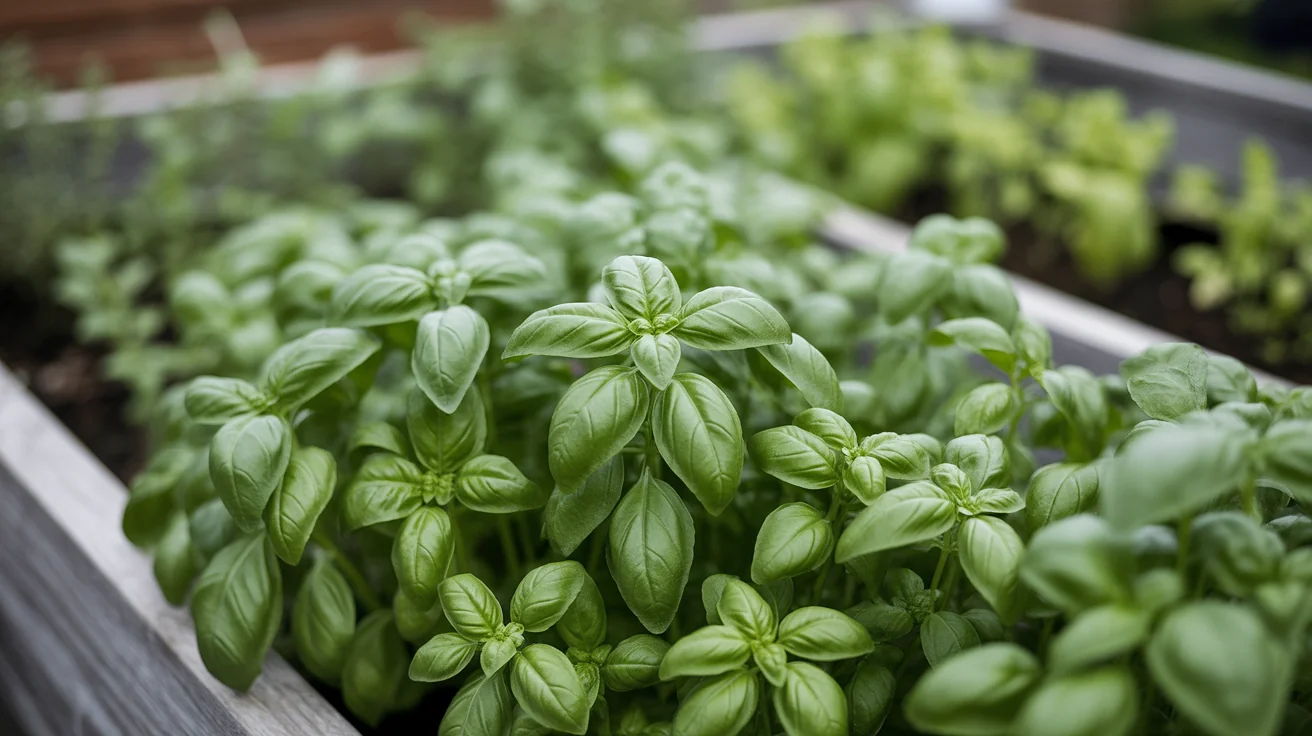
Basil
Ocimum basilicum
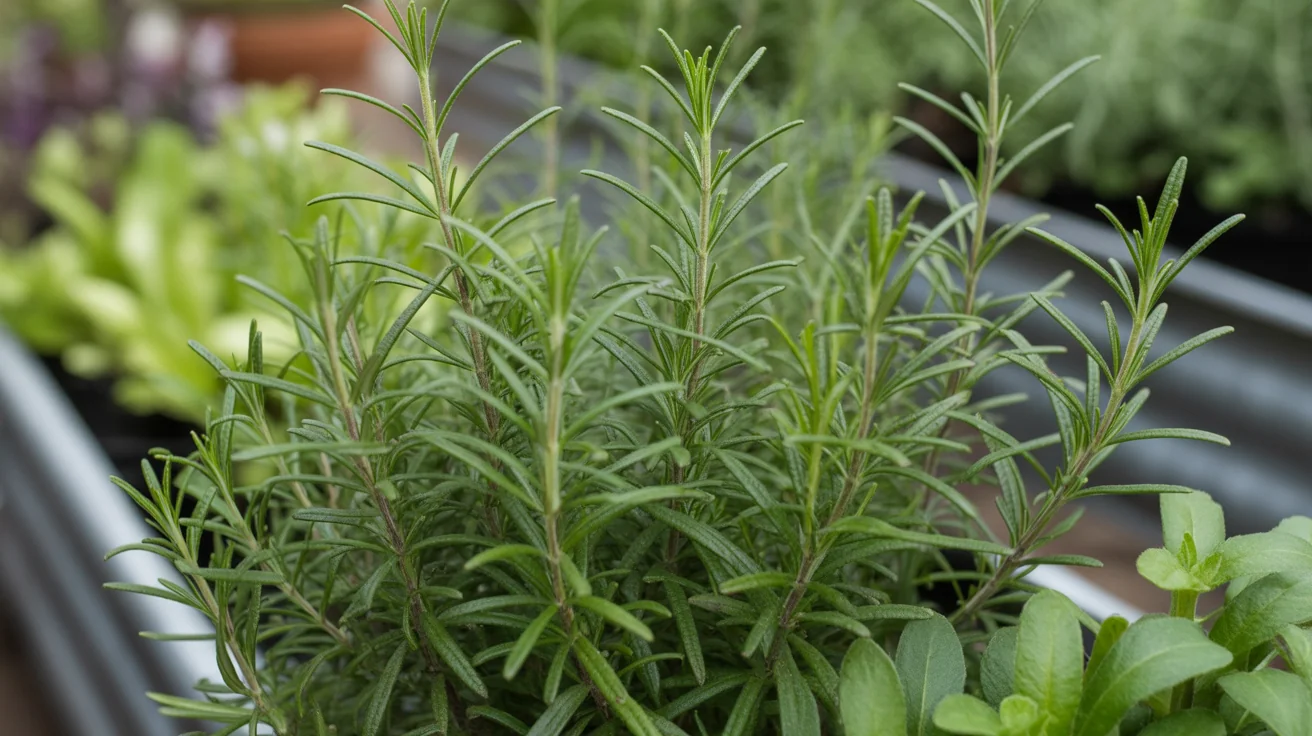
Rosemary
Salvia rosmarinus
Basil and rosemary belong to the mint family, but they solve different cooking and garden jobs.
Basil behaves like a warm-season leafy crop.
It grows soft stems, branches after a well-placed cut, and usually leaves the outdoor garden when frost arrives.
Rosemary behaves like a small evergreen shrub.
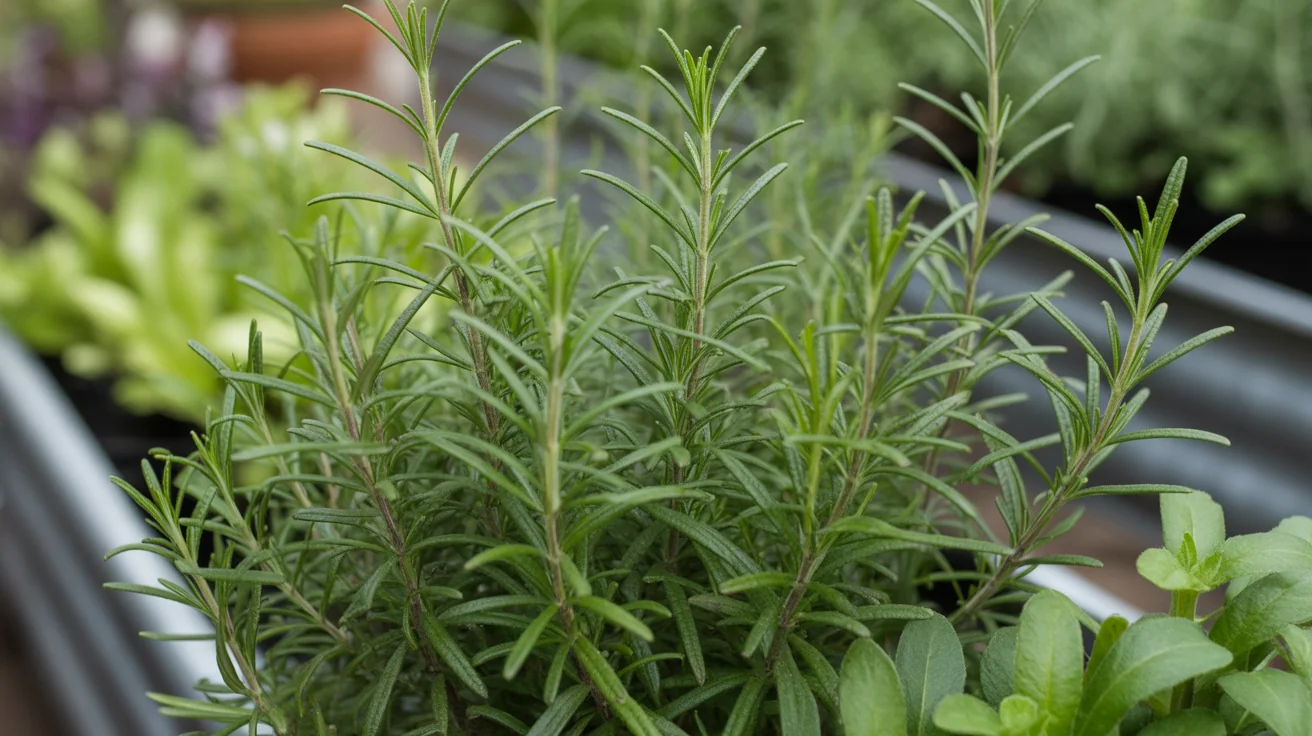
Its narrow leathery leaves, increasingly woody stems, and sensitivity to wet roots call for a different container, harvest, and winter plan.
They can share a sunny patio without sharing one root zone. Separate pots make it much easier to keep basil evenly supplied with water while rosemary dries appropriately between checks.
For many cooks, growing both is more useful than naming one universal winner. The deciding questions are which flavor the kitchen uses, how the site drains, whether rosemary can overwinter, and how often tender leaves are needed.
Specifications
Compare the traits that change the growing decision.
| Feature | Basil | Rosemary |
|---|---|---|
| Plant form | Soft-stemmed tender herb | Woody evergreen shrub |
| Typical outdoor cycle | Warm season until cold or disease ends growth | Multi-season where cultivar and climate match |
| Primary kitchen role | Tender fresh leaves and basil-centered sauces | Potent leaves and sprigs for savory cooking |
| Root-zone preference | Drained soil with reasonably steady moisture | Light, sharply drained soil that is never waterlogged |
| Harvest response | Node cut encourages branching | Selective green-tip harvest preserves framework |
| Starting route | Seed, cutting, or transplant | Named transplant or cutting is usually more dependable than seed |
| Container priority | Enough volume to avoid rapid drying | Drainage, light, airflow, and winter mobility |
| Main preventable risk | Poor cultivar choice and long periods of wet foliage | Saturated roots, weak indoor light, or unsuitable winter exposure |
Start with the kitchen job, then check whether the site can support the plant behind that flavor.
The most consequential differences are stem type, root-zone moisture, harvest response, mature form, and winter survival.
Best Use Cases
Choose by the job the planting needs to do.
Pesto and fresh sauces
Tender leaves in useful volume
A recipe built around tender basil leaves needs the texture and aroma of the correct basil cultivar.
Rosemary can season another sauce, but its firm leaves and stronger resinous flavor do not reproduce basil pesto.
Roasting and grilling
Flavor that holds through cooking
Basil is usually most expressive fresh or added late, although the exact timing depends on the dish.
Rosemary sprigs and finely chopped leaves suit potatoes, breads, marinades, roasted vegetables, poultry, and other longer-cooked foods.
Hot, fast-draining bed
Dryer Mediterranean-style site
Basil can grow in heat, but tender leaf production declines when its root zone repeatedly dries to wilting.
Established rosemary fits a sunny, sharply drained bed better, provided local winter cold and humidity also suit the selected cultivar.
Frequent summer harvest
New branches after each cut
Cutting a basil stem above a healthy leaf pair encourages new branches and keeps the crop easy to pick.
Rosemary supplies useful sprigs, but every cut removes part of a slower woody framework that must remain well clothed in green growth.
Do basil and rosemary taste alike, and can you substitute one for the other?
No. Sweet basil has tender leaves and a sweet-spicy aroma often described as clove-like or anise-like, while rosemary has firm narrow leaves and a stronger pine, eucalyptus, and camphor character.
Cultivar identity matters on both sides. Thai basil, lemon basil, purple basil, upright rosemary, and trailing rosemary do not offer identical flavor, texture, or plant form simply because the label contains basil or rosemary.
| Cooking job | Better starting herb | What changes with the other herb |
|---|---|---|
| Genovese pesto | Sweet or Genovese basil | Rosemary makes a stronger, firmer-textured sauce |
| Caprese or fresh tomato salad | Sweet basil | Rosemary turns the dish toward a savory woody note |
| Roasted potatoes | Rosemary | Basil loses much of its fresh character during long cooking |
| Grilled vegetables or meat | Rosemary sprigs or chopped leaves | Basil works better as a late sauce or garnish |
| Thai recipe | Recipe-specific basil | Rosemary does not replace Thai basil's anise-like profile |
| Fresh garnish | Basil by recipe | Raw rosemary can feel tough unless minced very finely |
Rosemary is potent enough that Penn State advises using it judiciously. Whole sprigs can flavor a dish and be removed, while finely chopped leaves distribute a smaller amount more evenly.
Basil usually enters near the end when fresh aroma is the goal. Drying and freezing both extend its use, but University of Minnesota notes that freezing often preserves a flavor closer to fresh basil than air drying.
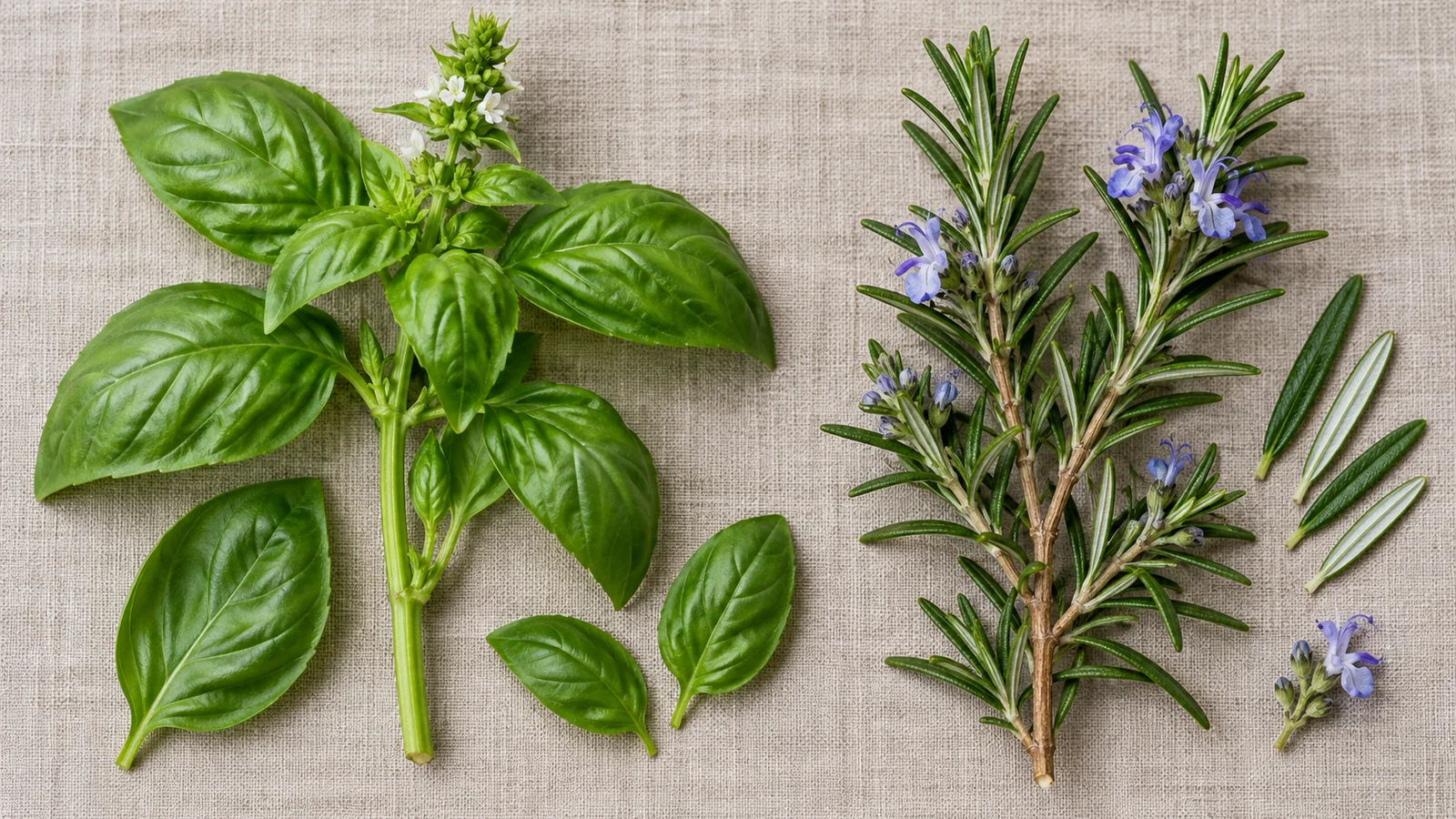
The identification image pairs each plant with a representative leaf and stem texture. Broad tender foliage and narrow leathery leaves require different handling, even before flavor enters the choice.
Can basil and rosemary grow together in the same pot?
They can survive together temporarily in a large sunny container, but separate pots are easier to manage well.
The problem is not a mysterious companion-plant conflict between the roots.
Basil makes its best tender growth with reasonably steady moisture. Rosemary needs excellent drainage and is vulnerable when roots remain wet, especially during slow indoor growth or cool weather.
A single watering decision therefore creates a compromise. Water often enough for crowded basil and the rosemary side may stay damp, or wait for the rosemary root zone to dry and the basil may wilt.
- [ ] Give each herb a container with an open drainage hole
- [ ] Use a potting mix rather than dense garden soil
- [ ] Size the basil pot so it does not dry within a few sunny hours
- [ ] Keep rosemary in a pot that can move before damaging cold
- [ ] Check moisture in each pot instead of watering both automatically
- [ ] Leave airflow around the foliage
- [ ] Rotate indoor pots so every side receives useful light
In a bed, both can occupy full sun, but place rosemary where runoff does not collect. Basil can sit nearer other regularly watered warm-season crops without forcing the woody herb into the same wettest zone.
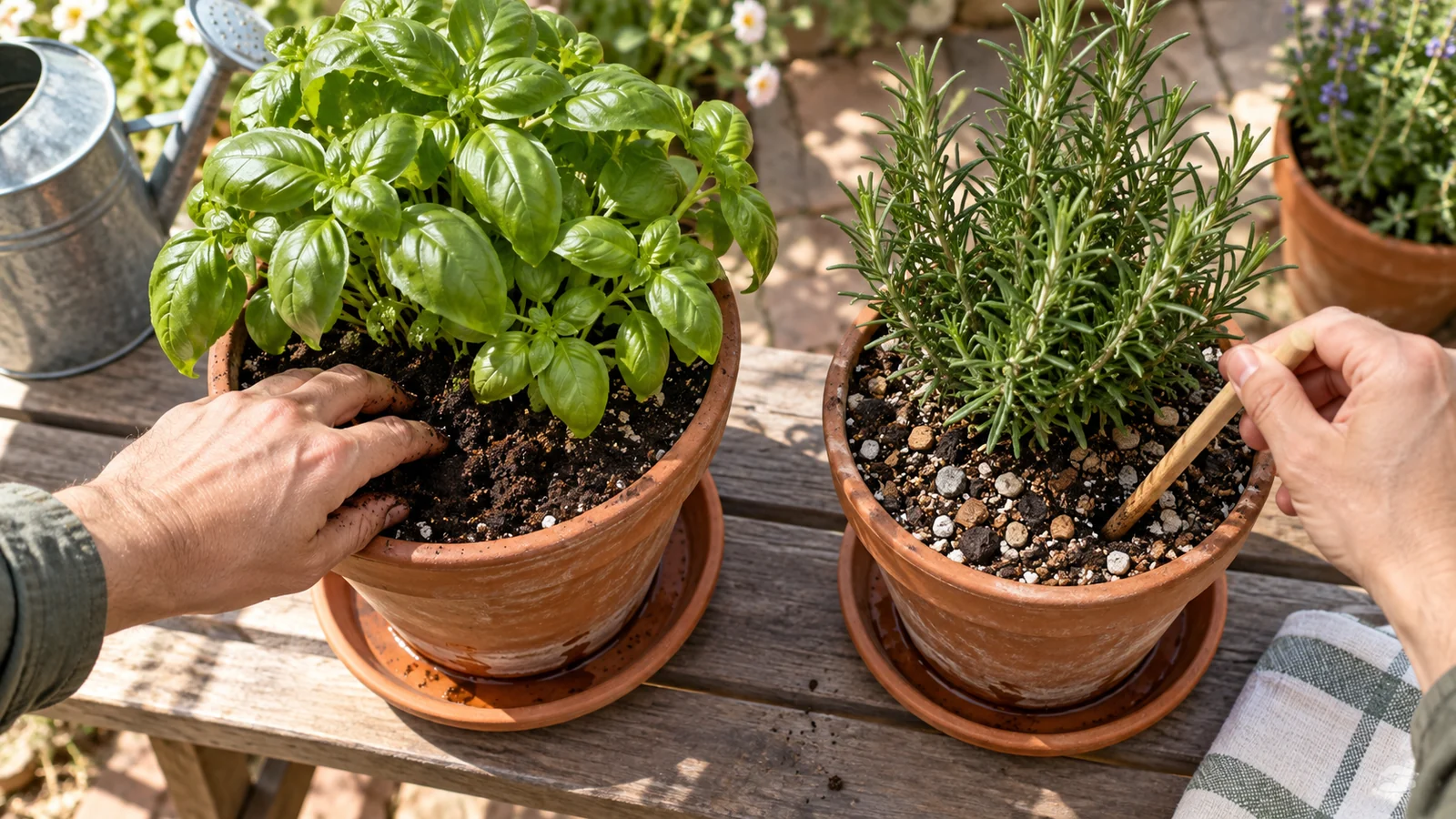
The overhead image shows two pots receiving different moisture decisions on one bench. Separate drainage decisions are more useful than squeezing both herbs into a decorative mixed planter.
Which herb comes back next year?
Basil is a tender annual in the ordinary home-garden cycle. Sow or plant it after frost danger, harvest through warm weather, then expect cold or disease to end the outdoor crop.
Rosemary is a tender perennial evergreen shrub.
Penn State lists the species for USDA Zones 8 to 10, while named cultivars such as 'Arp,' 'Athens Blue Spire,' and 'Madalene Hill' may extend the practical range with protection.
A zone number is a screening tool, not a survival promise. Cultivar identity, duration of cold, winter wetness, wind exposure, root-zone drainage, and whether the plant is in a vulnerable pot all affect the outcome.
- 1. Read the plant label: Record the rosemary cultivar rather than relying on the common name alone.
- 2. Check local winter evidence: Use regional Extension guidance and nearby established plants to judge exposure.
- 3. Choose the location: Keep in-ground rosemary away from low wet areas and cold runoff paths.
- 4. Decide before frost: Move a portable plant indoors or accept rosemary as an annual where outdoor survival is doubtful.
- 5. Inspect before bringing it inside: Look under leaves and along stems so pests do not move into the house.
- 6. Supply winter light and restraint: Keep the pot bright, drained, and out of a fixed summer watering routine.
Indoor survival is not automatic.
Penn State describes overwintering rosemary as difficult because low light and too much or too little water can all cause decline.
Starting fresh can be the sensible option when the house lacks a bright cool position or the plant is already diseased. Basil seed and a healthy rosemary cutting or transplant may require less space than keeping weak plants alive through winter.
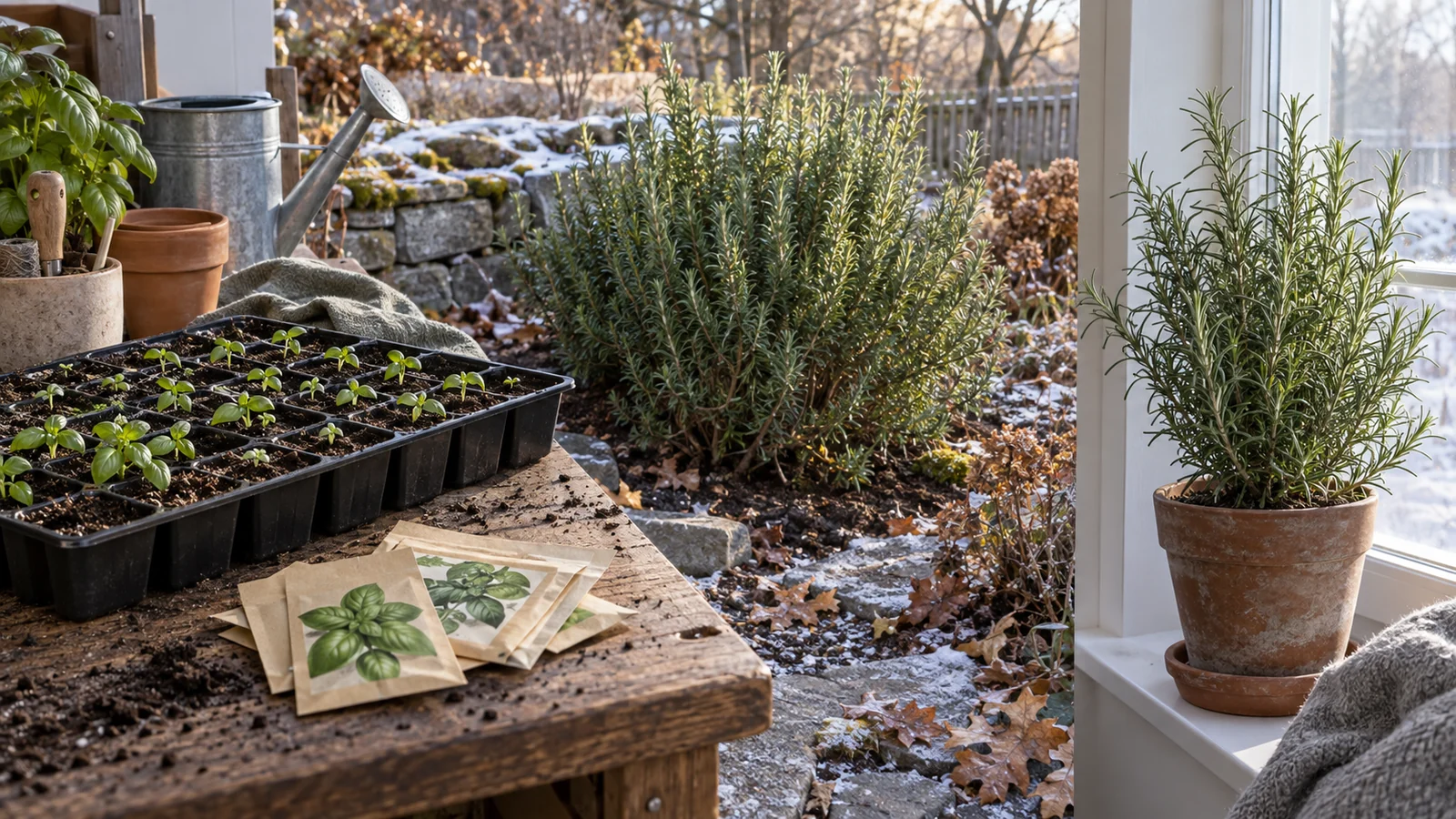
The winter image shows the distinct plans side by side. Basil returns to seed or a new start, while rosemary either remains in a suitable site or moves to a bright protected place.
How do variety and mature size change the choice?
A generic herb label leaves out information that affects both cooking and placement.
Choose basil for the intended flavor, and choose rosemary for the intended habit, hardiness evidence, and eventual space.
Traditional sweet or Genovese basil fits pesto and tomato dishes. Lemon, cinnamon, purple, compact, and Thai types can serve different recipes or ornamental uses, and disease resistance may matter where basil downy mildew is common.
Rosemary cultivars range from upright shrubs used as accents or low hedges to prostrate plants that trail over a wall or container.
Penn State lists species dimensions of roughly 2 to 6 feet in both height and width, but the cultivar label should control the actual spacing decision.
| Label question | Why it matters for basil | Why it matters for rosemary |
|---|---|---|
| Exact cultivar | Flavor, leaf form, flowering, and disease resistance vary | Habit, flower color, mature size, and hardiness evidence vary |
| Intended use | Pesto, Thai cooking, garnish, or ornament may need different plants | Hedge, upright pot, trailing wall, or kitchen harvest needs a matching habit |
| Mature dimensions | Prevents crowding and poor airflow in a summer planting | Prevents a shrub from blocking a path or outgrowing a container |
| Propagation | Seed can produce a useful crop economically | Cuttings preserve named cultivar traits more reliably than seed |
| Disease note | DMR identifies downy mildew resistance on some seed lines | Root rot risk points back to drainage rather than a resistant label |
Do not assume a small nursery rosemary will remain a windowsill herb. The woody framework and root system continue to occupy space even when regular sprig harvests keep the outside compact.
Basil also needs room around leaves. Dense planting and wet foliage slow drying, which increases the opportunity for diseases such as downy mildew to spread through a planting.
Which herb needs more water, richer soil, and fertilizer?
Basil usually needs the more even water supply because the harvest is made of soft new growth. It still requires drainage, since a constantly saturated pot denies roots the air they need.
Rosemary tolerates dry periods after establishment, but drought tolerance does not mean a newly planted root ball can be ignored. Water to settle the entire root zone, then let actual soil moisture guide the next application.
| Observation | Basil response | Rosemary response |
|---|---|---|
| Surface is dry but mix is moist below | Recheck soon during active warm growth | Usually wait and check deeper before watering |
| Water runs down the pot wall | Rewet slowly in passes | Rewet slowly, then confirm the drain hole flows |
| Saucer stays full | Empty it and correct the routine | Act promptly because saturated roots invite rot |
| Leaves wilt at midday | Check root moisture before assuming drought | Check roots, drainage, and stem health before adding water |
| Very rich feeding | Can make excessive soft growth | Often unnecessary in a lean well-drained site |
| Dense clay stays wet | Amend the site choice or use a suitable container | Move to a better-drained position rather than masking the problem |
A finger check, pot weight, or a small inspection hole gives better evidence than a weekday schedule.
Containers change quickly with sun, wind, plant size, and pot material, so the same pot may need a different interval later in the season.
Feed from a soil test or a known potting-mix program. University of Minnesota recommends sparing fertilizer for basil, while rosemary sources emphasize a light well-drained root zone instead of rich moisture-retentive ground.
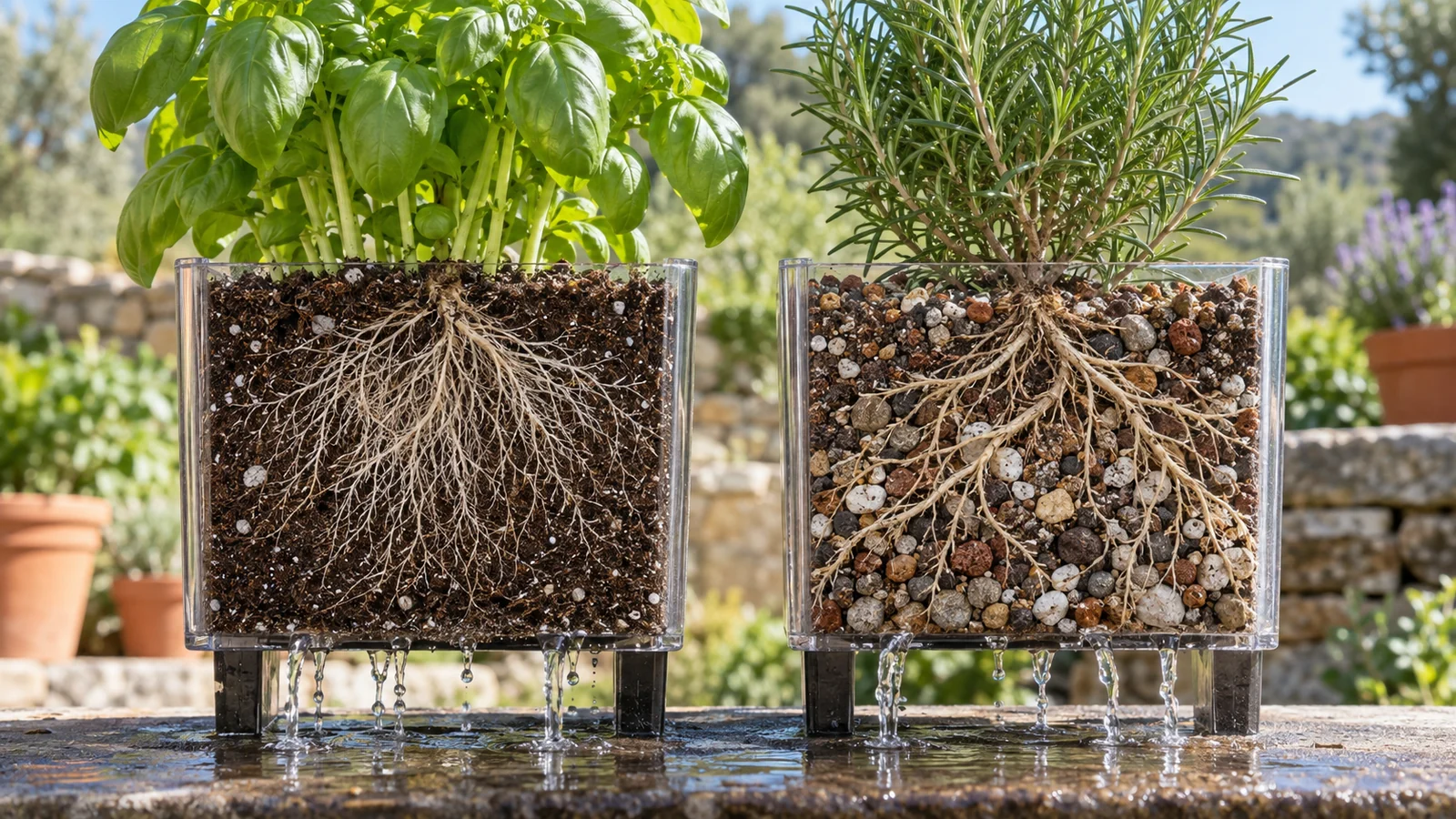
The root-zone image compares moist but aerated basil mix with the larger air spaces rosemary needs. Water should pass through both pots, while the timing of the next watering can remain different.
Where should you cut basil and rosemary?
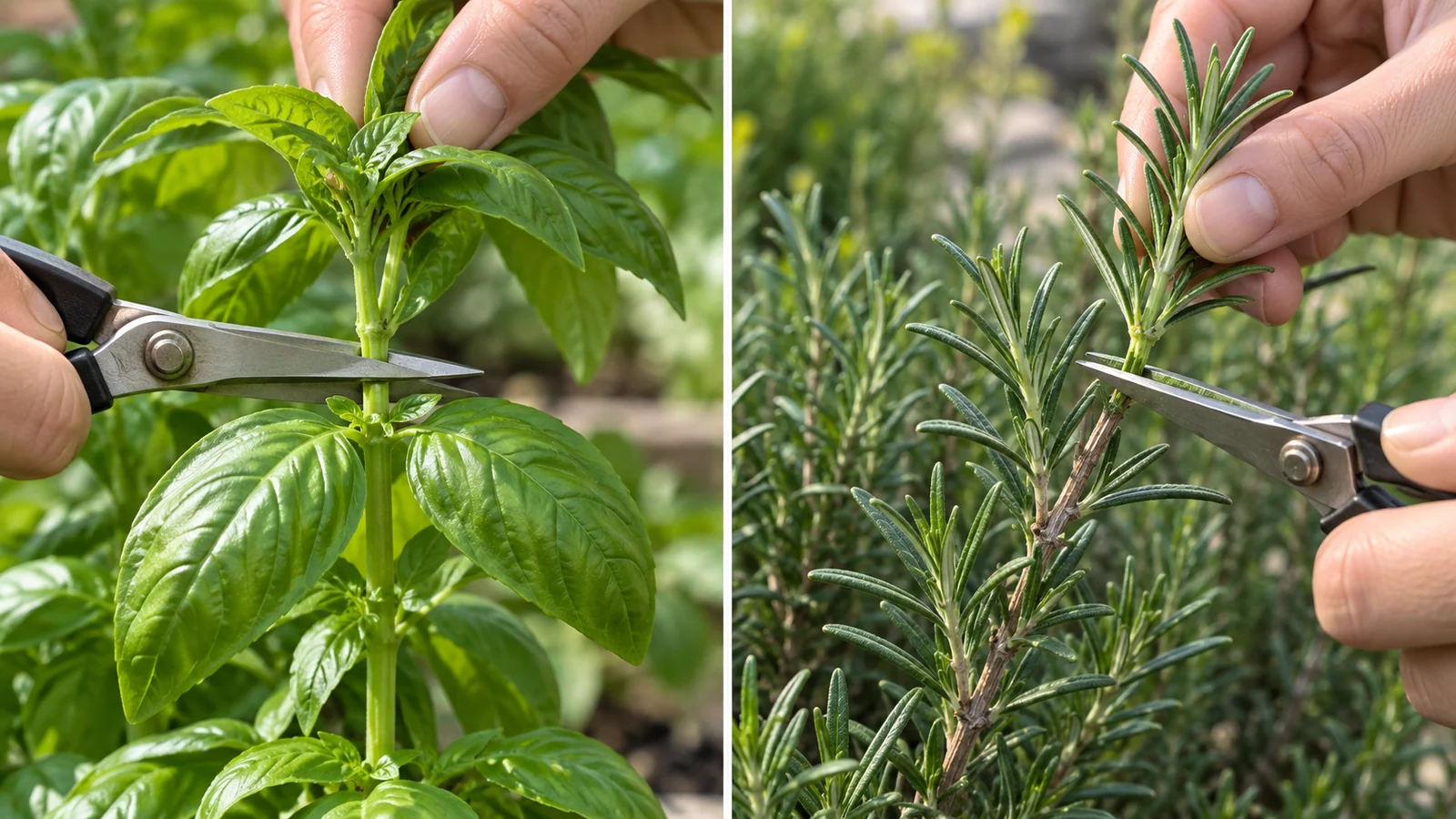
For basil, cut a tender stem just above a healthy pair of leaves. Buds at that node can extend into two branches, making the next harvest easier to reach.
Taking only scattered large leaves leaves long bare stems and does little to shape the crop.
Periodic stem harvest also removes developing flower tips when tender leaves are the main goal.
Rosemary needs a more conservative cut because the plant maintains a woody framework. Harvest green flexible tips and leave useful foliage below the cut rather than repeatedly stripping one branch or cutting every stem back to old bare wood.
- 1. Choose healthy material: Skip diseased, pest-damaged, wet, or soil-splashed growth.
- 2. Find the plant's structure: Locate a basil leaf pair or a rosemary shoot that still carries green foliage.
- 3. Make a clean cut: Use clean sharp snips instead of tearing the stem.
- 4. Spread the harvest: Take from several rosemary branches or several basil stems to preserve a balanced plant.
- 5. Sort for the recipe: Keep tender basil leaves, mince rosemary leaves, or leave a rosemary sprig whole for later removal.
- 6. Recheck the plant: Stop before the remaining framework becomes sparse or unable to support regrowth.
A mature rosemary plant can tolerate pruning, but cultivar habit and growth condition still set the limit.
Severe renovation is a different job from gathering dinner, so do not use a harvest cut to force an oversized shrub into a narrow space.
The close-up image places the two safe harvest zones at hand scale. A basil node and a rosemary green tip are different targets, even when the same scissors serve both plants.
Which problems commonly damage basil and rosemary?
Basil downy mildew and rosemary root decline can both end with discolored foliage, but the first useful observations differ. Diagnose the pattern before changing water or applying a product.
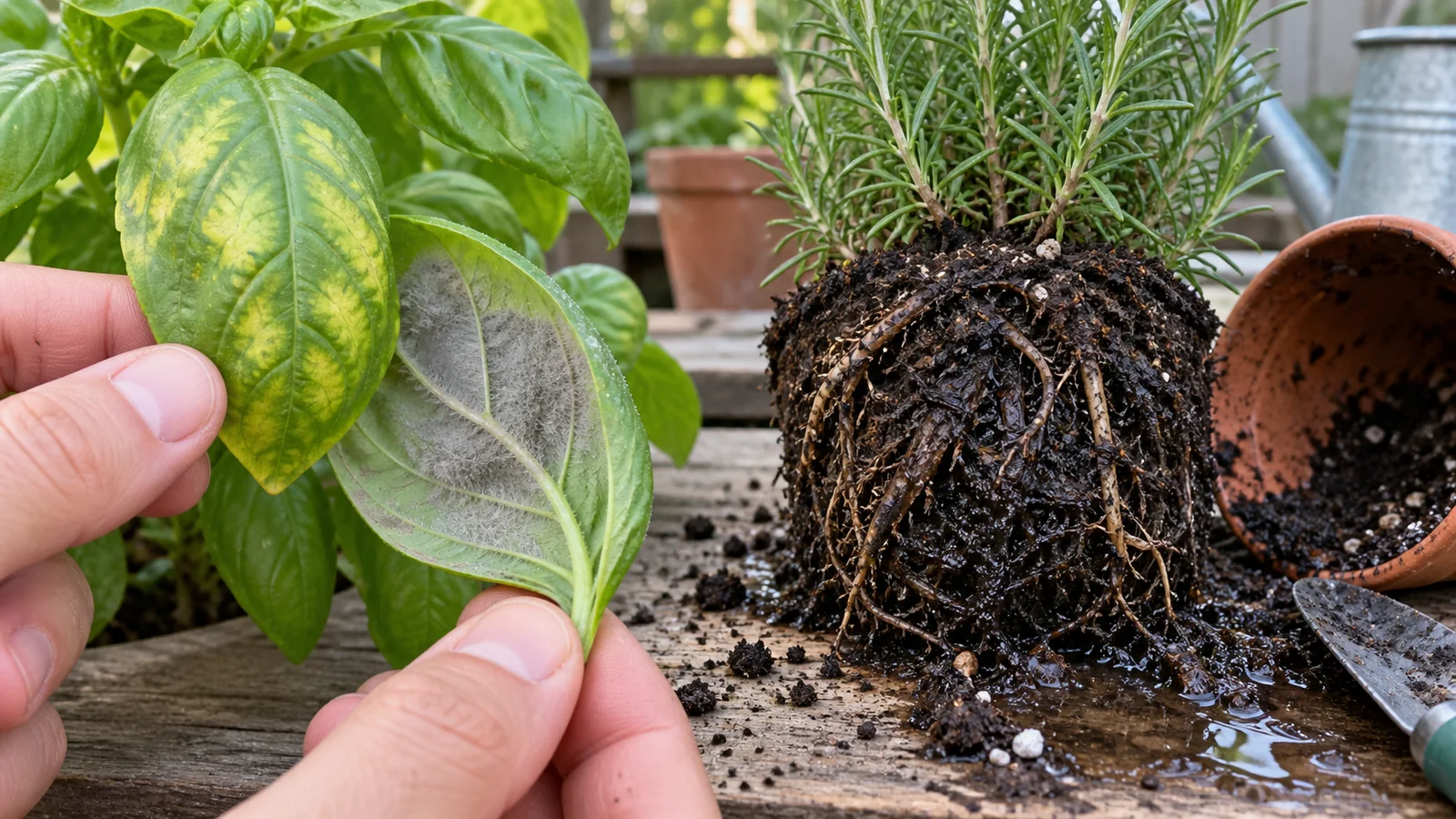
University of Minnesota describes basil downy mildew as pale yellow areas bounded by leaf veins, followed by gray fuzzy growth on the underside and later dark spots.
Resistant varieties, wider spacing, rapid leaf drying, and removal of infected plants are more useful than treating every yellow basil leaf as thirst.
Rosemary is generally trouble-free outdoors in a suitable site.
Wet poorly drained soil raises the risk of root rot, while indoor plants may encounter powdery mildew, thrips, aphids, whiteflies, mealybugs, or spider mites.
| What you see | First check on basil | First check on rosemary |
|---|---|---|
| Yellow areas between major veins | Inspect lower leaf surfaces for gray downy growth | Check root-zone moisture, drainage, and recent cold |
| Gray or white growth | Compare underside pattern with downy mildew symptoms | Check for powdery mildew and stagnant air |
| Sudden whole-plant wilt | Inspect stem base, roots, heat, and water supply | Inspect roots before assuming the dry-site plant needs water |
| Fine stippling or webbing | Check leaf undersides for mites | Check indoor foliage and stem joints for mites |
| Sticky leaves or white insects | Identify the insect before control | Inspect indoor shoots for aphids or whiteflies |
| Blackened or collapsed tips | Check cold injury and stem disease | Check cold exposure, wet roots, and living tissue below |
Do not compost a basil plant heavily covered with active downy mildew if local guidance calls for destruction. Clean cutting tools and avoid carrying wet infected leaves through the rest of the herb planting.
For an indoor rosemary, improve the cause as well as removing a pest. More usable light, airflow, clean drainage, and isolation from healthy plants can matter as much as the chosen control.
The diagnostic image contrasts the underside of a basil leaf with downy growth against a rosemary root ball darkened by excess moisture. Check the affected tissue and root zone first, because similar top growth can come from different failures.
Should you grow basil, rosemary, both, or neither?
Grow basil when the household uses pesto, fresh tomato dishes, Thai basil, tender garnishes, or another basil-specific flavor often enough to justify a warm-season crop.
Choose the cultivar from the recipe and local disease pressure.
Grow rosemary when the kitchen uses robust savory seasoning and the site offers strong light with dependable drainage.
An upright or trailing named cultivar can also provide evergreen structure where winter conditions fit.
Grow both when both flavors are useful, but give each herb a root zone that can be managed on its own. Separate pots are especially practical when rosemary must move for winter or basil needs more frequent summer water.
- [ ] List the dishes cooked during a normal month
- [ ] Confirm the exact basil flavor or rosemary habit required
- [ ] Measure the available sun rather than guessing from one hour
- [ ] Check where water drains after a thorough soaking
- [ ] Decide whether each herb will grow in a pot or the ground
- [ ] Verify the rosemary cultivar against local winter conditions
- [ ] Plan the basil restart and the rosemary winter location
- [ ] Choose harvest points that preserve future growth
- [ ] Reject any plant already carrying unexplained spots, pests, or weak roots
Choose neither when the site is too dark, the containers lack drainage, or the kitchen rarely uses either flavor.
Buying a small fresh amount for an occasional recipe can be more sensible than maintaining unwanted plants.
The best answer can also change with the season. Basil may carry summer meals while rosemary holds a well-drained position through several years, provided the winter and cultivar truly match.
Sources & References
- Growing Basil in Home Gardens, University of Minnesota Extension
- Basil Downy Mildew, University of Minnesota Extension
- Salvia rosmarinus, North Carolina Extension Gardener Plant Toolbox
- Herb Garden Plants: Rosemary, Penn State Extension
- Growing Herbs in the Garden, Penn State Extension
- Growing Herbs Indoors, Penn State Extension
- Growing Vegetables in Containers and Salad Tables, University of Maryland Extension