
Take a Fifth of a Rosemary, and Never the Bare Wood
Two numbers decide most of what happens to a rosemary bush.
The first is 20 percent, which is the share of growth Wisconsin Horticulture says to take at any one time. That is stricter than the third most pages quote, and it matters on a plant that does not reliably come back from bare wood.
The second is zone 8a, which is as far north as rosemary is winter hardy. A great many of the plants people set out to renovate in spring were not overgrown at all, they were killed back by the cold, and the pruning is what finishes them.
This page starts with which of those two you are actually holding, then covers where the cut can land and how much can come off at once.
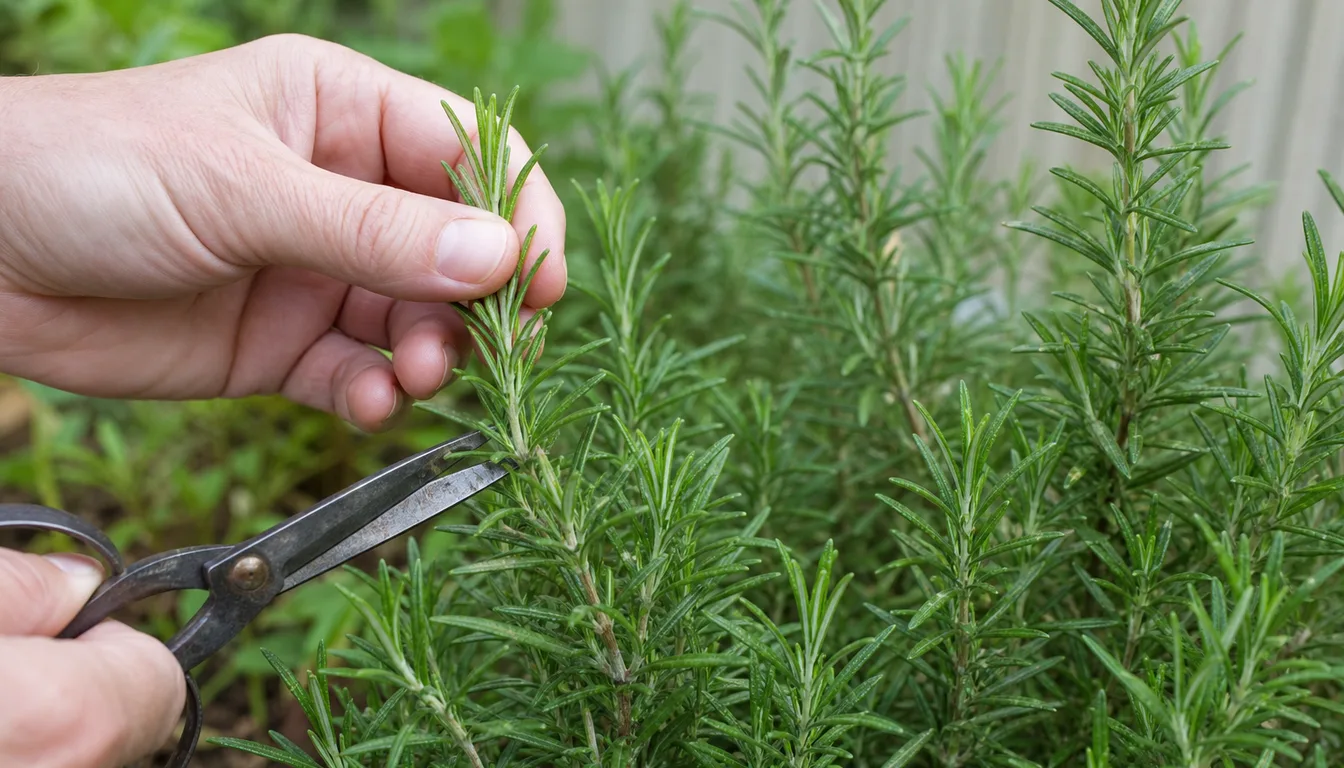
At a glance
Is the Problem the Pruning, or the Winter?
Rosemary is sold everywhere, which makes people assume it is hardy everywhere. It is not.
The species is winter hardy only to zone 8a. Named cultivars stretch that a little, with Arp rated to zone 7a and potentially 6a with protection, and Madeline Hill to 7a or 6a in a protected site, but the base plant is a warm climate shrub.
In colder regions it is a pot rather than a shrub, brought inside before the first frost and put back out in spring. That is a different plant to own and a different plant to cut.
A rosemary that browned off over a hard winter looks exactly like a rosemary that has got away from you. Both are gray, open and sparse in March, and only one of them will answer a cut.
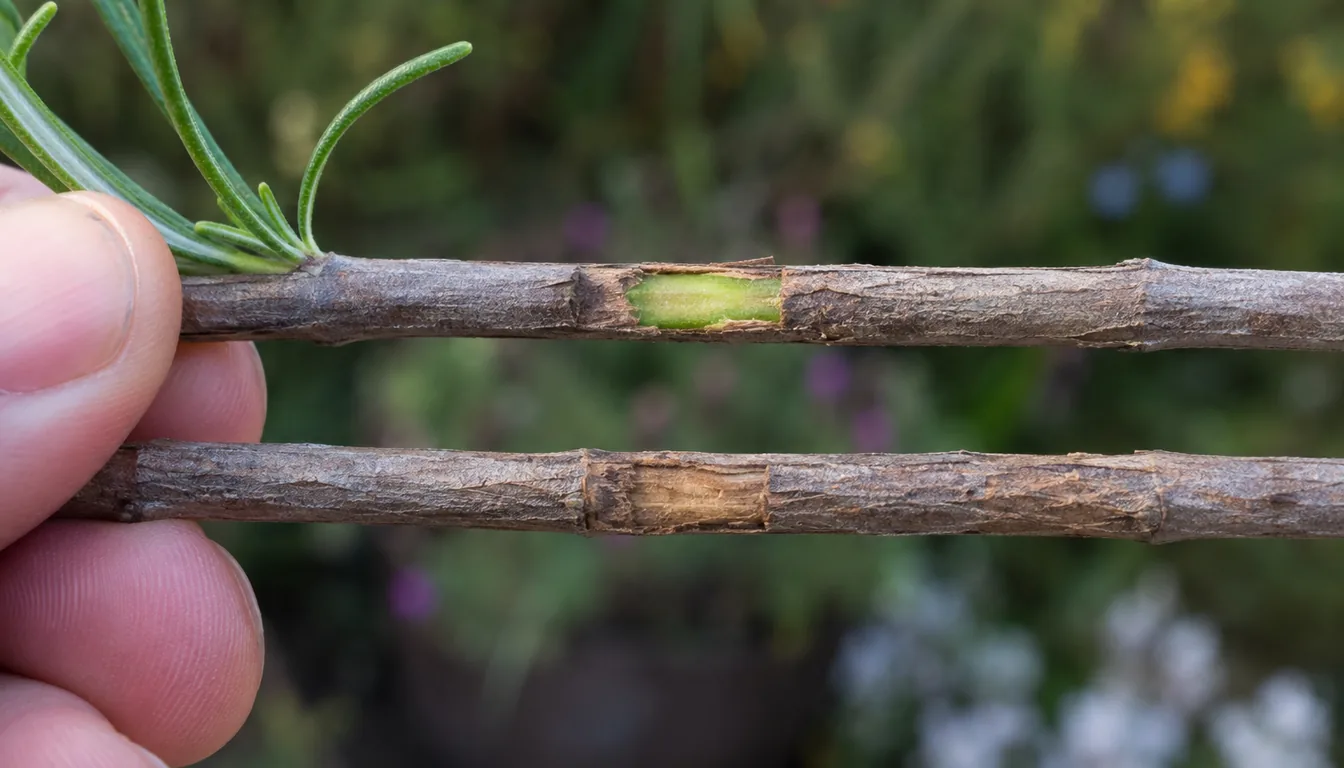
The test takes a second and settles it. Scrape a little of the thin outer bark off a stem with a thumbnail, and look at what is underneath.
Bright green under the bark means live tissue and a plant worth working on. Dry pale brown means that stem is dead, and cutting it back does nothing for the plant except remove what was propping it up.
- Species hardiness
- Zone 8a
- Hardier cultivars
- Arp to 7a, potentially 6a with protection
- Also hardier
- Madeline Hill, 7a or 6a in a protected site
- Colder than that
- Grow it in a pot and bring it in before frost
Where on the Stem Can You Safely Cut?
Every cut stays in the leafy green part of the stem.
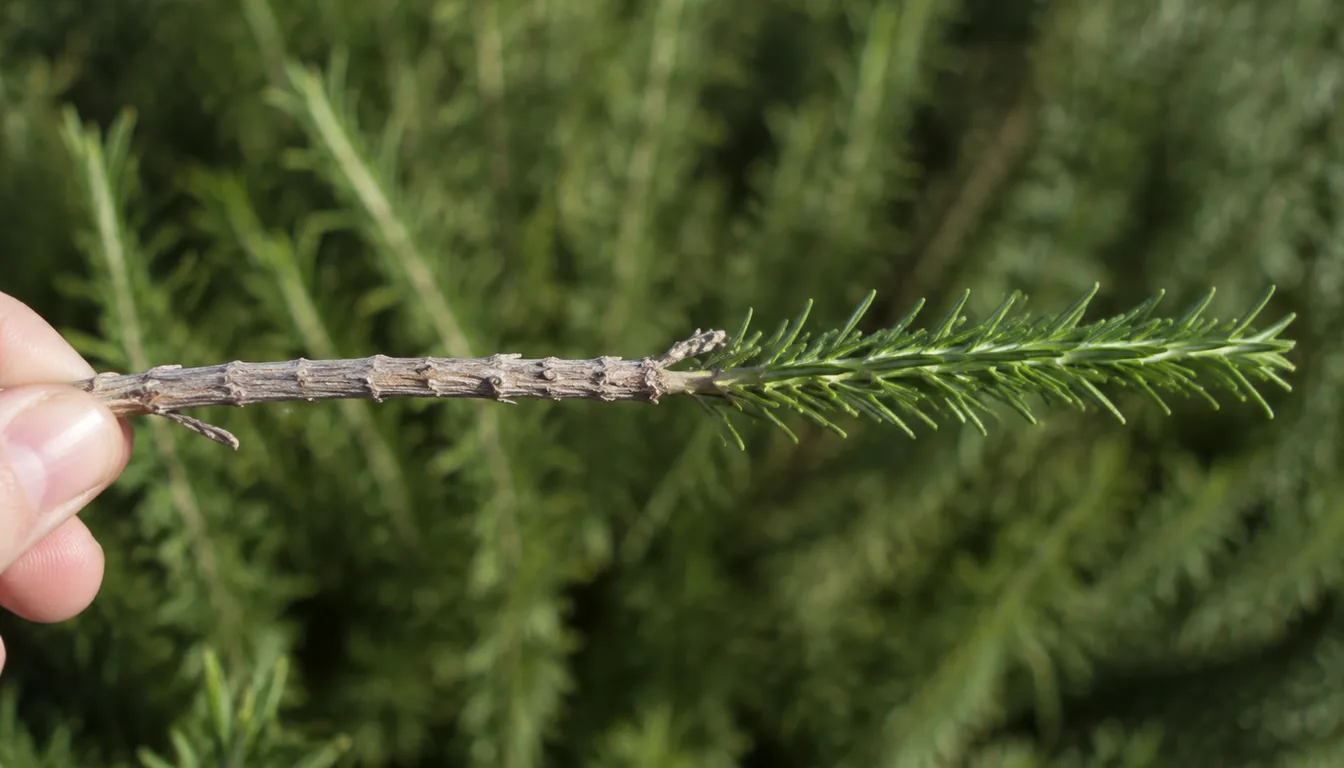
Trace any branch inward from its tip and you reach a point where the needle leaves stop and bare gray wood begins. That line is the whole rule, and it moves outward a little further from the crown every year the plant is left alone.
Wisconsin Horticulture puts it directly, advising against cuts into the woody parts of stems unless the plant is being shaped. A cut below that line rarely produces a new shoot, and the stub simply stays a stub.
The reason is that rosemary carries very few dormant buds in old wood, so there is nothing there for a cut to release. It is not sulking, it has nothing left to grow from.
That is also why light regular cutting matters more than any single big one. A plant trimmed often keeps green growth low down on its stems, so the safe line stays close to the crown and the plant stays reducible.
How Much Can You Take at Once?
Less than most people think, and less than most pages say.
Wisconsin Horticulture puts the ceiling at 20 percent of the growth at a time. The figure that circulates elsewhere is a third, and the difference is not academic on a plant that cannot regrow from what is left behind if you overshoot.
A big reshaping therefore becomes several sessions rather than one. Take a fifth, let the plant respond, and come back a few weeks later in the same growing season.
Shaping is done early rather than late. Frequent tip pinching while a plant is small builds a dense habit from the start, and does more for the final shape than any cut made years afterwards.
Dead and damaged growth sits outside the ceiling. It comes off whenever you find it, and it does not count against the 20 percent, since it was contributing nothing anyway.
- Ceiling per session
- About 20 percent of the growth
- A big job
- Several sessions across one growing season
- Best shaping method
- Frequent tip pinching while the plant is young
- Dead and damaged wood
- Any time, and it does not count toward the 20 percent
How Do You Harvest Rosemary So It Keeps Shape?
On rosemary these are the same job.
Both harvesting and pruning remove soft green growth from the outside of the plant, so a cook taking sprigs through the season is running the pruning routine without calling it one.
The cut goes a few inches back from a tip, well inside the leafy part, leaving needle foliage on the piece that stays behind. That is a harvest and a tip pinch at the same time, and the plant branches at the cut.
Move around the plant while you pick. Taking every sprig from the side nearest the kitchen door leaves a lopsided bush within a season, and the bare side takes years to fill.
Frequency does the shaping. A plant picked from regularly through the growing season rarely needs a separate pruning job, and it never gets far enough away to need one.
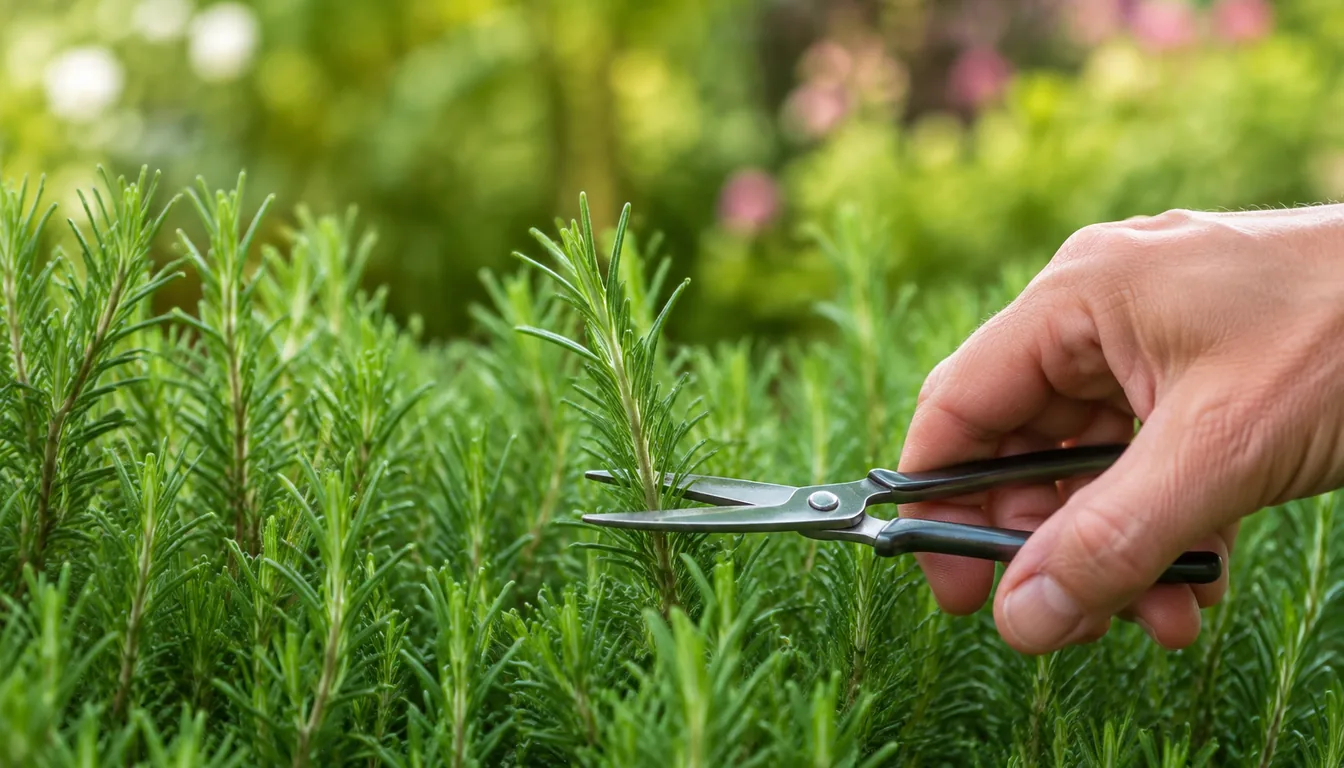
- Pick the shootChoose a soft green shoot rather than a woody one, and take it from whichever side of the plant you cut from least recently.
- Find the greenLook along the shoot to where the needle leaves are still dense, since the cut has to land inside that stretch.
- Cut a few inches backTake the tip and a few inches of stem, leaving plenty of foliage on the piece that remains on the bush.
- Move roundTake the next sprig from a different part of the plant, so the shape stays even as the season goes on.
Can a Woody, Leggy Rosemary Be Brought Back?
Slowly, and only if there is enough green left to work with.
An old rosemary opens out from the middle. The thick stems splay outward, the center becomes bare gray wood, and the green retreats to the ends of the branches.
That geometry is the problem. If the only foliage is at the tips then every safe cut is at the tips too, which means the plant cannot be made much smaller no matter how much you want it to be.
What is available is a slow tightening. Take 20 percent from the outside each season, pinch whatever new growth appears to force it to branch, and the plant thickens up over several years rather than one.
Some plants are past it. A rosemary with almost no green below the branch tips has nothing to rebuild from, and no amount of patience changes that.
The replacement is free, which softens the decision. Rosemary roots readily from cuttings, so the plant being given up on can supply the plant that replaces it.
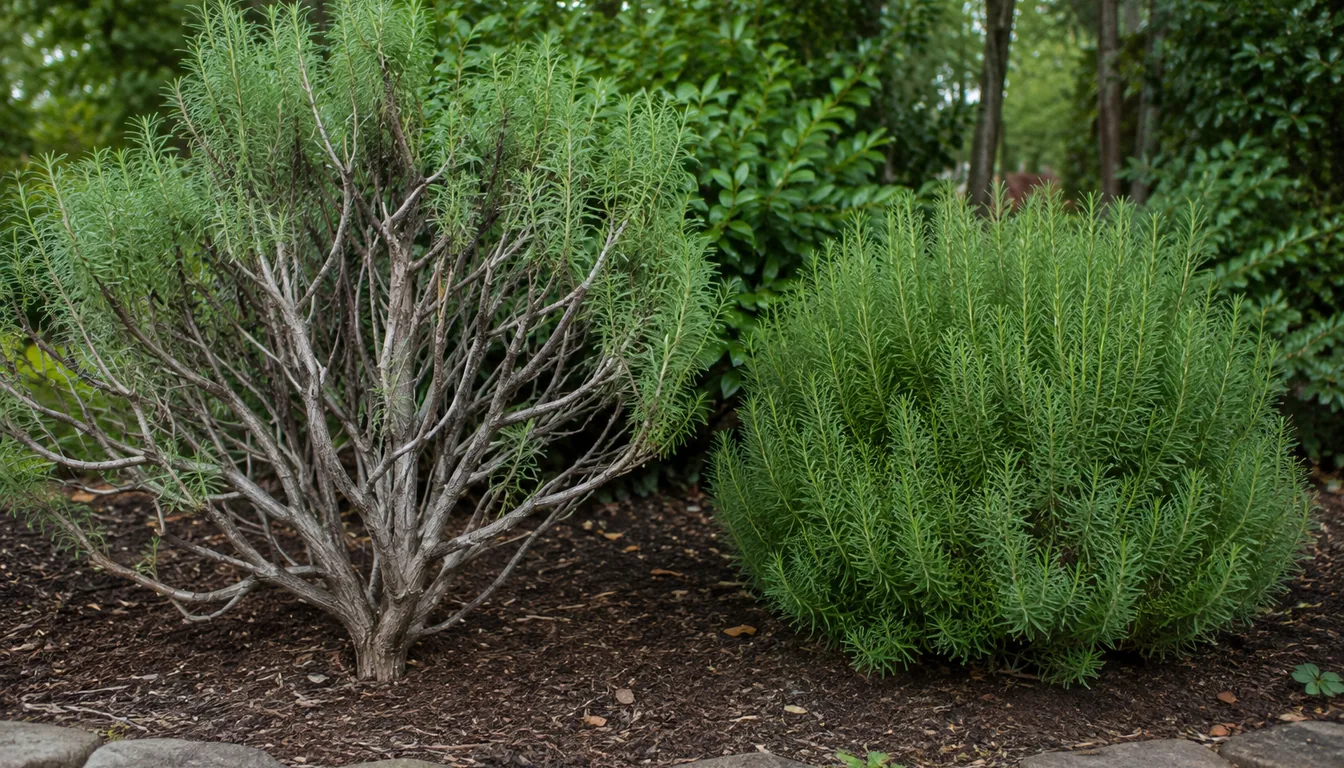
Mostly green, some bare wood at the base
Normal for an established plant. Keep taking 20 percent a season from the outside and pinching the new growth, and it will stay dense for years.
Green at the tips, bare wood through the middle
Workable but slow. Reduce the outside gradually across several seasons and expect the shape to improve rather than transform, and take cuttings as insurance.
Almost no green below the tips
Past reviving. There is nothing for new growth to come from, so take cuttings now and plant the replacement while the old bush is still standing.
When Should You Cut, and What About a Potted Plant Indoors?
Cut while the plant is growing, and stop before the cold.
Cutting belongs in the growing season, when there is enough warmth and light for the plant to replace what came off. A cut made as the season closes leaves an opening the plant cannot answer until spring.
A potted plant comes inside before the first frost rather than after it. Waiting for damage and then rescuing the plant is how most of them are lost.
The indoor spot wants two things that rarely come together. Cool temperatures around 50 to 60 degrees Fahrenheit and very bright sunlight, which usually means an unheated room with a good window rather than the warm kitchen it came out of.
The thing that kills it indoors is not the cutting. The biggest cause of decline and death on an indoor rosemary is overwatering, and root rot and botrytis are the diseases that follow.
Dry indoor air complicates the reading, because it produces brown leaf tips and dieback that look like thirst.
Watering harder in response is how a plant that was drying out at the tips ends up drowning at the roots.
The overwatering guide covers the check that separates them.
- Bring the pot indoors before the first frost rather than after the damage appears
- Find a cool bright spot at around 50 to 60F, not a warm room
- Check the mix before every watering, since overwatering kills more indoor rosemary than anything else
- Stop cutting as the season closes, and leave the shaping until growth restarts
Pro Tips
- Scrape a stem with a thumbnail before cutting in spring, since green under the bark means alive and brown means dead.
- Keep every cut inside the leafy green part of the stem, because bare rosemary wood rarely produces a new shoot.
- Stop at about 20 percent in one session and come back later in the same season.
- Harvest from a different side of the plant each time, so the bush stays even.
- Bring a potted plant in before the first frost and give it a cool bright spot rather than a warm one.
Frequently Asked Questions
How much rosemary can I cut at once?
No more than about 20 percent of the growth at a time, according to Wisconsin Horticulture. That is stricter than the third often quoted, and it matters because rosemary does not reliably regrow from bare wood.
Can you cut rosemary back to the wood?
No.
Extension guidance advises against cutting into the woody parts of stems, and a cut below the leafy growth rarely produces a new shoot.
Keep every cut inside the green.
How do I revive a woody, leggy rosemary?
Slowly, and only if green foliage remains below the branch tips.
Take 20 percent from the outside each season and pinch the new growth.
A plant with almost no green left has nothing to rebuild from.
How cold can rosemary survive?
The species is hardy to zone 8a.
Arp is rated to 7a and potentially 6a with protection, and Madeline Hill to 7a or 6a in a protected site.
Colder than that and it is a container plant.
Why did my rosemary die indoors over winter?
Most likely overwatering, which is the biggest cause of decline and death on an indoor rosemary, with root rot and botrytis following. Dry indoor air causes brown tips that look like thirst and tempt people to water more.
When should I prune rosemary?
During the growing season, while the plant has the warmth and light to replace what comes off. Stop as the season closes, since a late cut leaves an opening the plant cannot answer until spring.
Sources & References
Related Guides
Cutting Back a Leggy Houseplant Does Not Fix It
Most people cut a houseplant back because it has gone long and bare.
11 min read
Deadheading Daffodils Matters Less Than the Six Weeks After
Almost every page about spent daffodils tells you to remove the seed pod so the bulb is not…
11 min read
French Lavender Pruning Depends on the Plant and Season
French lavender needs light trimming within its leafy growth, rather than a hard cut into bare…
6 min read
Fruit Tree Pruning Starts With Where the Crop Forms
A fruit tree that gives small, crowded, scabby fruit is usually not underfed.
11 min read
How Deep Can You Cut a Spent Lavender Spike?
Deadheading lavender is the lightest cut you will ever make on the plant, and the one place people…
7 min read
How Do You Prune Spanish Lavender for a Second Flush?
Spanish lavender is the one that flowers first and the one that keeps going.
7 min read