
What's a Crepe Myrtle? How to Prune It Without Ruining Its Form
Lagerstroemia indica Lythraceae
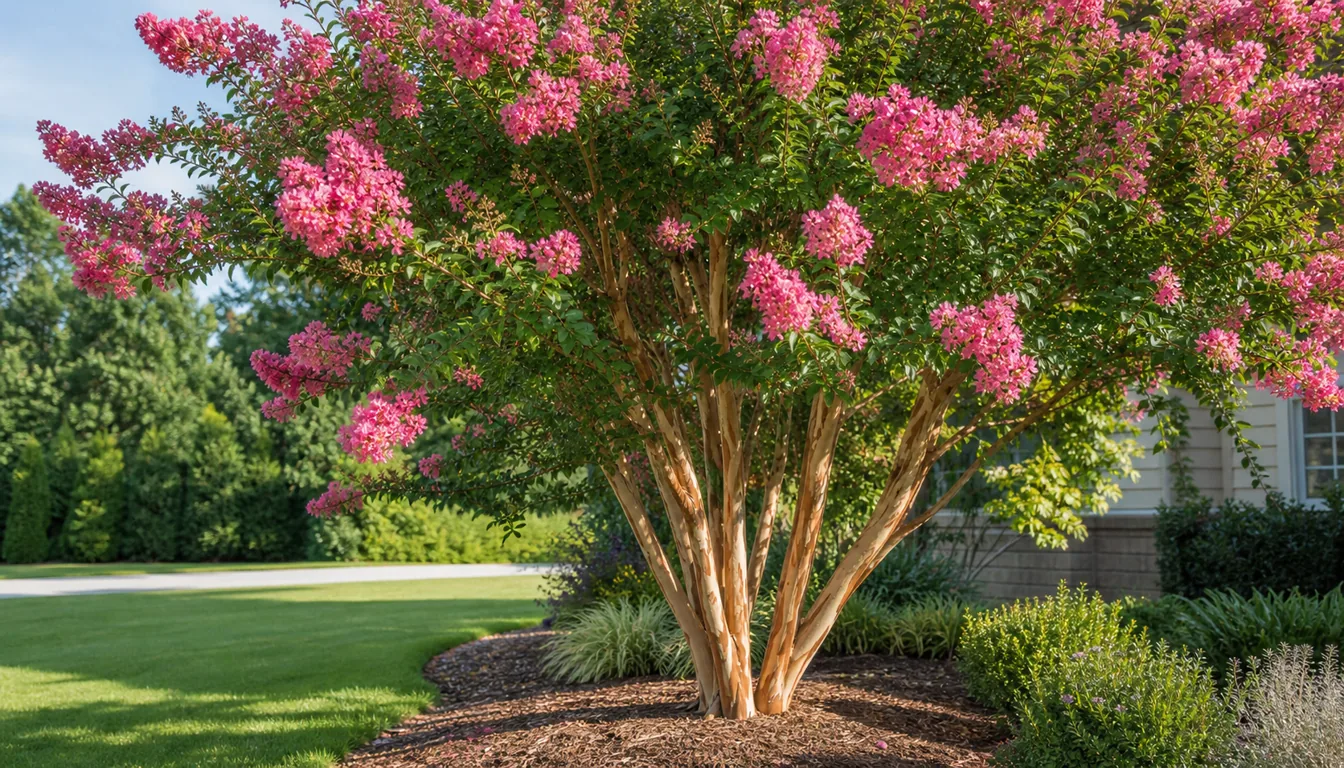
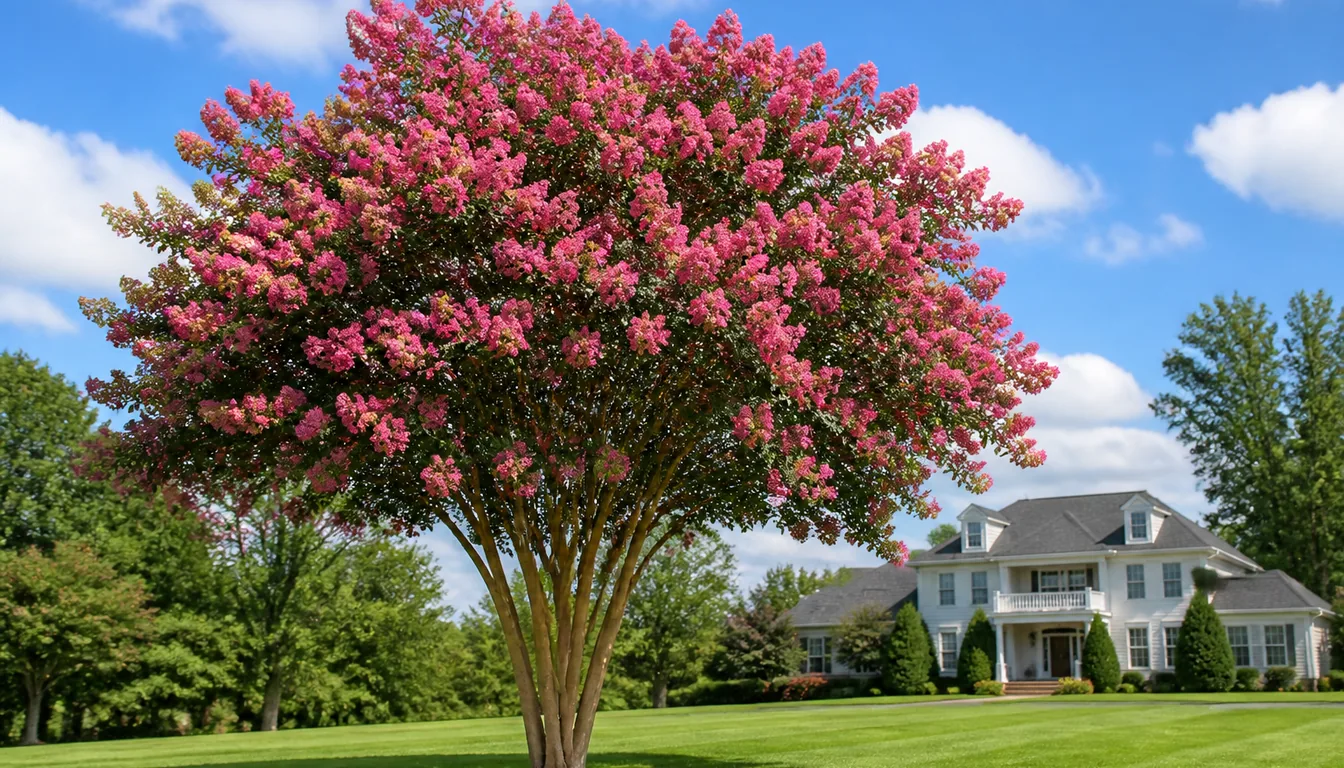
Crepe myrtle (Lagerstroemia indica, often spelled crape myrtle) is a summer-flowering shrub or small tree that ranges from 3 feet to more than 30 feet by cultivar. Choosing a cultivar whose mature height fits the space is what makes topping unnecessary, and late-winter cuts that remove only suckers, crossing limbs, and inward growth keep the trunks clean.
Care snapshot
How Big Will a Crepe Myrtle Get?
The size of a crepe myrtle is set by its cultivar, and it varies more than most shrubs. Clemson Extension groups them as dwarf to semi-dwarf at about 10 feet, medium at 15 to 20 feet, and tall at 25 to 30 feet, with old specimens reaching 40 feet. NC State's Brunswick County extension office puts the range at 3 feet to more than 30.
That range is why the mature height on the tag decides more than the flower color does. Most crepe myrtle pruning problems trace back to a tree-sized cultivar planted where a shrub-sized one belonged.
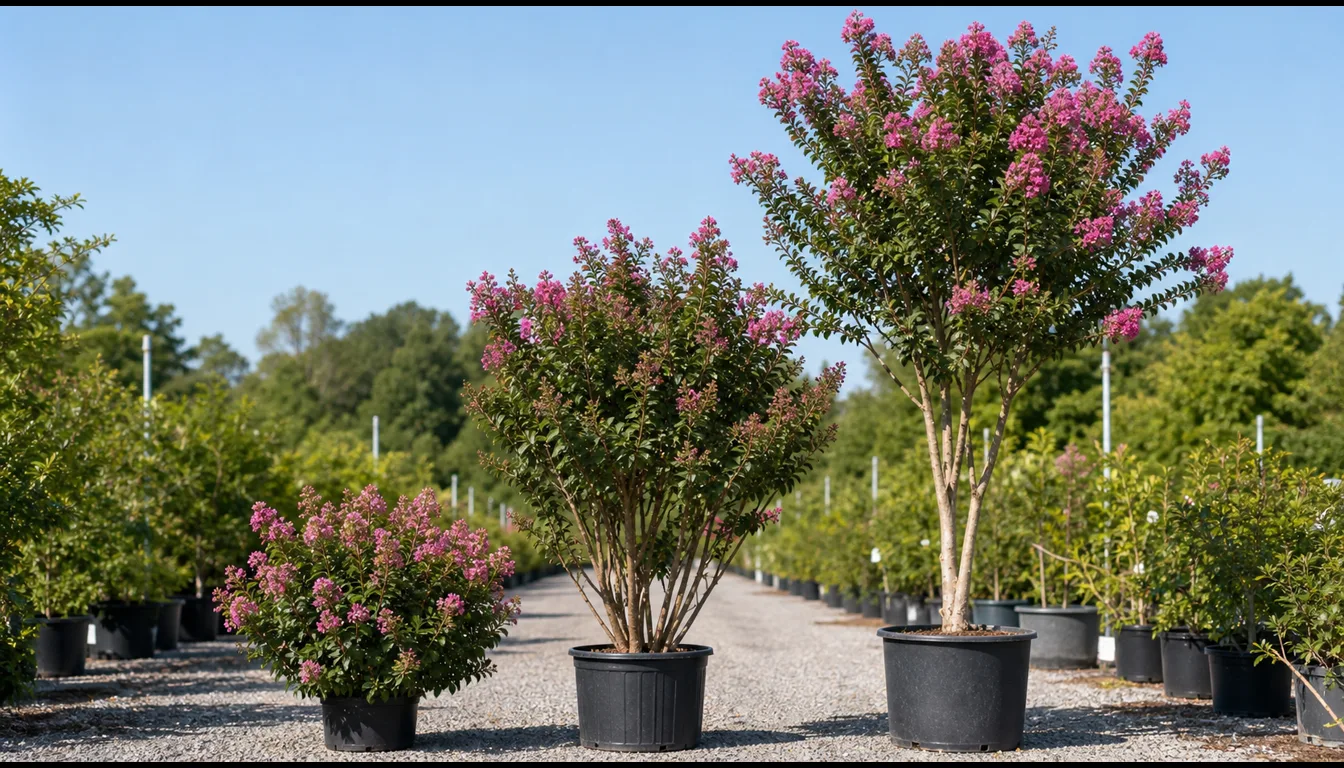
- 3-5 ft
- 'Chickasaw' (pink, 3 ft), 'Centennial' (purple, 4 ft), 'Victor' (deep red, 5 ft).
- 7-10 ft
- 'Caddo' (pink, 7 ft), 'Hopi', 'Pecos', 'Zuni', and 'Tonto' (about 9 ft), 'Cherokee' (red, 10 ft), 'Acoma' (white, 10 ft).
- 15 ft
- 'Sioux' (dark pink) and 'Tuskegee' (deep rose).
- 20-25 ft
- 'Tuscarora' (dark coral pink, 20 ft), 'Muskogee' (light lavender-pink, 21 ft), 'Natchez' (white, 25 ft, with exceptional bark).
Clemson lists 'Acoma', 'Muskogee', 'Natchez', 'Sioux', 'Tuscarora', and 'Tuskegee' as resistant to powdery mildew, and 'Catawba', 'Cherokee', and 'Seminole' as somewhat resistant. In a humid summer that resistance matters as much as the color, since powdery mildew heads Clemson's list of crepe myrtle problems.
Cold limits the tree form in the north. NC State rates the species for Zones 6 through 9 and warns of winter injury in Zones 5 and 6, where top growth can die back. A plant that freezes back regrows as a multi-stemmed shrub, so a dwarf or medium cultivar suits those gardens better than a 25-foot tree form.
Why Shouldn't You Top a Crepe Myrtle?
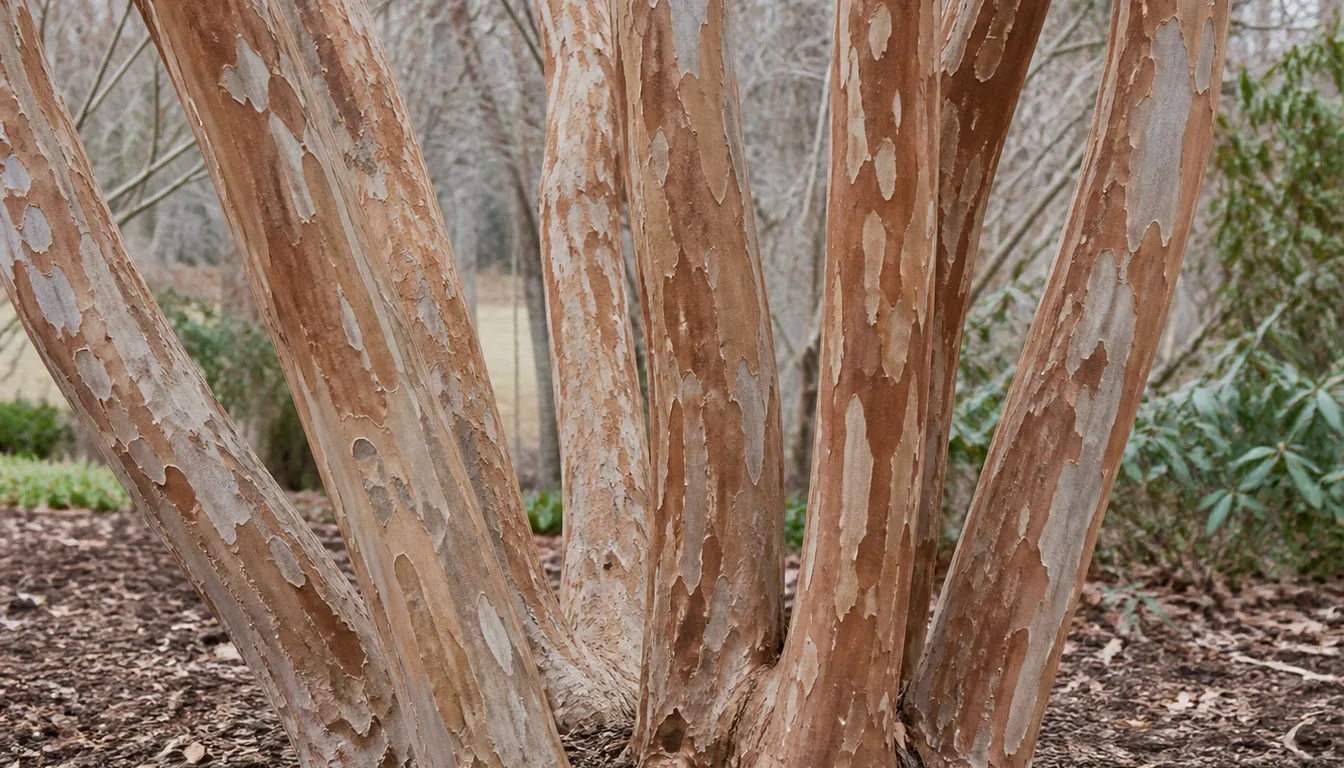
Topping means cutting every trunk back to the same height, and Clemson notes it has become a common practice. NC State's Brunswick County office lists what follows from it, which is a shorter bloom time, later flowering, weaker branching, and more insect and disease trouble. The swollen "knuckles" that form at the cut points are the tree trying to close those wounds.
NC State's plant toolbox is direct about it, saying severe pruning or topping should not be needed to control the plant's size. Clemson adds that the practice ruins the plant's natural form and points to dwarf cultivars as the way to get a smaller plant.
There is a pest reason too. The University of Florida's factsheet on crapemyrtle bark scale notes that the insect tends to settle around pruning wounds, so the dozens of cuts on a topped tree give it more places to start.
A tree that has already been topped can be rebuilt over several seasons by keeping the best-placed shoots from each knuckle and removing the rest. The step-by-step repair is in how to prune an overgrown crape myrtle.
How and When Should You Prune a Crepe Myrtle?
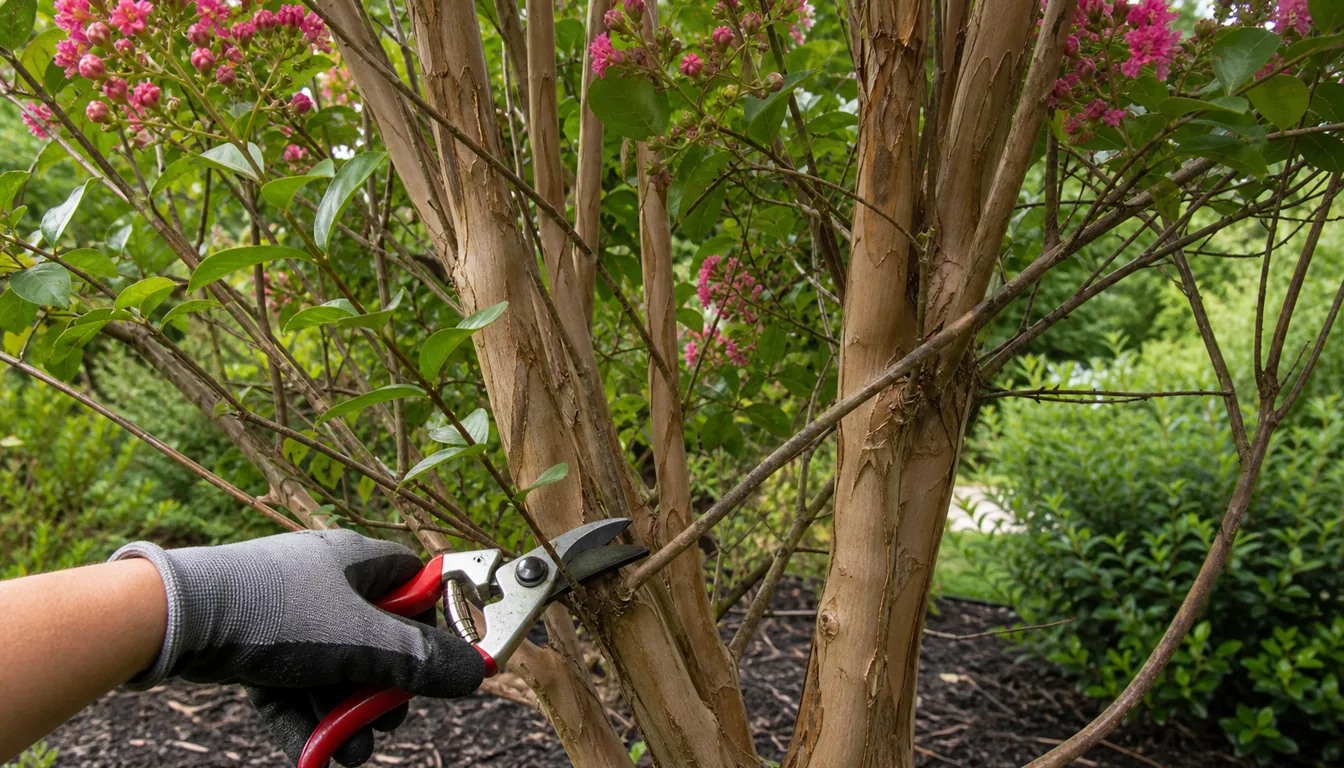
Late winter, while the tree is dormant, is the time for structural cuts. Brunswick County's extension office notes that the branch structure is easiest to read without leaves, and Clemson's pruning guide places summer-flowering shrubs such as crepe myrtle before spring growth begins, since they flower on the current season's shoots. Dead or damaged branches can come out at any time of year.
- Remove water sprouts and suckers coming from the base or the trunks.
- Cut out branches that cross or rub against another branch.
- Remove limbs that grow inward toward the center of the canopy.
- Shorten a branch that is too tall by cutting it back to a side branch, never in the middle of a bare stem.
The last step is a reduction cut, and it is what separates good pruning from topping. Cutting a tall branch back to a side branch leaves a growing tip in place, so the branch stays tapered and does not sprout a cluster of weak shoots at the cut.
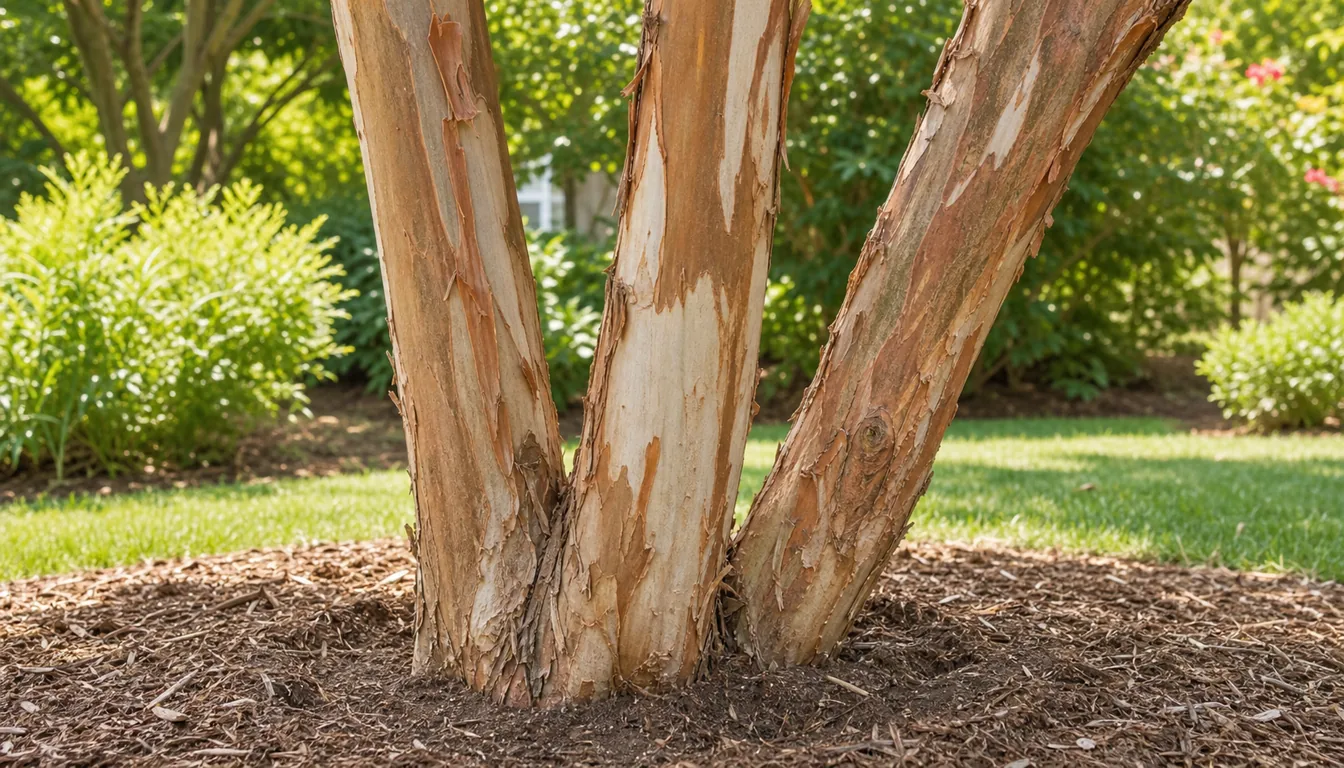
Young plants need training more than correction. Choosing the trunks to keep in the first few years, and removing rubbing shoots while they are pencil-thin, avoids the large cuts that later scar the bark. Deciding early whether the plant will be a multi-stemmed shrub or a small tree keeps the choice from changing every winter.
Where Should You Plant a Crepe Myrtle?
Crepe myrtle needs full sun, six or more hours of direct light a day in NC State's listing. Clemson adds well-drained soil and good air circulation, and both of those connect directly to the two biggest problems, since shade and still air raise powdery mildew, and the University of Florida links shade with heavier bark scale infestations.
Soil is rarely the limit. NC State lists clay, loam, and sand, with pH from acidic to alkaline. Fertilizer should be light, because Clemson notes that light spring and summer feeding is enough and heavy nitrogen should be avoided.
Two placement details are easy to miss. NC State points out that fallen flowers can stain walkways and car paint, so a spot directly over a driveway or patio brings cleanup through July and August. Clemson notes that the thin bark is easily damaged, which makes a mulched ring that keeps mowers and string trimmers away from the trunks worth the space.
For summer color in colder gardens, rose of Sharon fills the same late-season slot and is hardy to Zone 5. When the choice is between summer and spring bloom, the crepe myrtle vs lilac comparison works through the climate and pruning differences.
What Causes White Leaves, Black Bark, and Sticky Residue?
Four problems account for most damaged crepe myrtles, and each leaves a different clue. Clemson lists powdery mildew in spring and fall, Cercospora leaf spot in warm, moist weather, aphids that lead to sooty mold, and crapemyrtle bark scale, an insect from Asia. NC State adds flea beetles.
- White powder on leaves and buds
- Powdery mildew. Worse in shade and still air, and least common on resistant cultivars.
- Leaf spots in warm, wet weather
- Cercospora leaf spot, which Clemson ties to warm, moist conditions.
- Sticky leaves with black coating
- Aphids on new growth, with sooty mold growing on their honeydew.
- White felt patches and black bark
- Crapemyrtle bark scale on the trunks and branches.
Bark scale needs the closest look of the four. The University of Florida describes the adults as white to gray felt-like patches up to about 2 millimeters long, often on the undersides of branches and around pruning wounds, while the crawlers are pink. A live scale crushed with a fingernail gives a ruby pink fluid, which separates it from dead scale and from the white mildew.
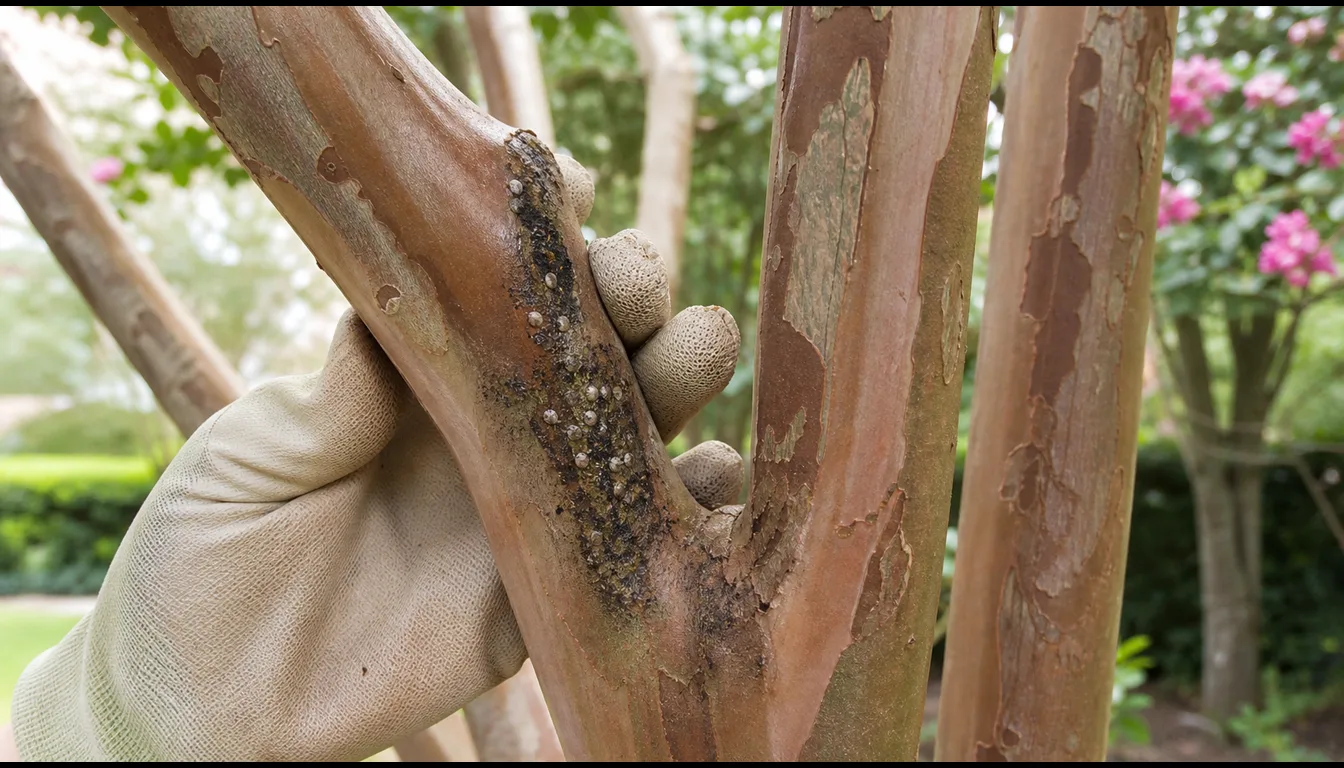
The honeydew the scale drips feeds black sooty mold, which blackens the tree, the mulch, the lawn, and any concrete below, and heavy infestations reduce flower quality. The insect spreads about 5 to 10 miles a year on its own and much farther on nursery stock, so checking the bark of a new plant before buying is the cheapest control.
UF's management steps start with full sun and washing reachable branches with a mild soap solution and a soft brush. For chemical control, it names systemic insecticides applied as a drench or soil injection to the root zone in early summer, before crawler activity peaks, as the most effective option. The product label sets the rate and confirms the product is allowed on crape myrtle.
Frequently Asked Questions
Should I cut crepe myrtle back hard every year?
No. NC State Extension says topping leads to shorter bloom time, later flowering, weaker branching, and more pest and disease trouble. Choose a cultivar that fits the space and prune only suckers, crossing limbs, and inward growth.
When is the best time to prune crepe myrtle?
Late winter, while the plant is dormant and before spring growth begins. Dead or damaged branches can be removed any time.
Which crepe myrtles resist powdery mildew?
Clemson Extension lists 'Acoma', 'Muskogee', 'Natchez', 'Sioux', 'Tuscarora', and 'Tuskegee' as resistant.
What is the black coating on my crepe myrtle bark?
Usually sooty mold growing on honeydew from aphids or crapemyrtle bark scale. White felt-like patches that bleed pink when crushed point to bark scale.
Is crepe myrtle safe for dogs and cats?
The ASPCA lists crape myrtle as non-toxic to dogs, cats, and horses. That listing does not cover plants treated with insecticides.
Sources & References
- Crape Myrtle, Clemson Cooperative Extension Home & Garden Information Center
- Crape Myrtle Cultivars, Clemson Cooperative Extension Home & Garden Information Center
- Lagerstroemia indica, NC State Extension Gardener Plant Toolbox
- Crape Myrtle Pruning, N.C. Cooperative Extension, Brunswick County Center
- Crapemyrtle Bark Scale, UF/IFAS Extension (EENY-711/IN1218)
- Pruning Shrubs, Clemson Cooperative Extension Home & Garden Information Center
- Crape Myrtle, ASPCA Toxic and Non-Toxic Plants
Related Plants
Lilac
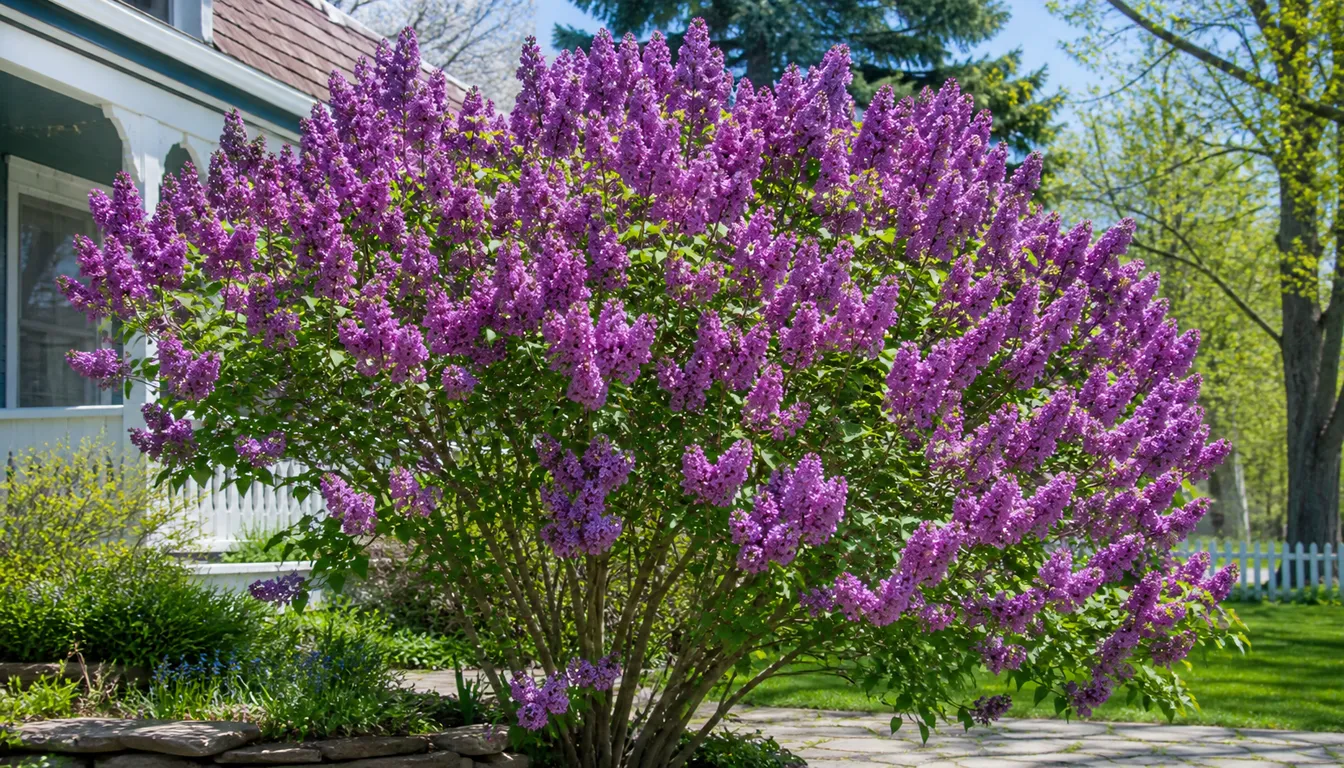
Spring-blooming shrub with fragrant flower clusters, a cooler-climate counterpart to crepe myrtle.
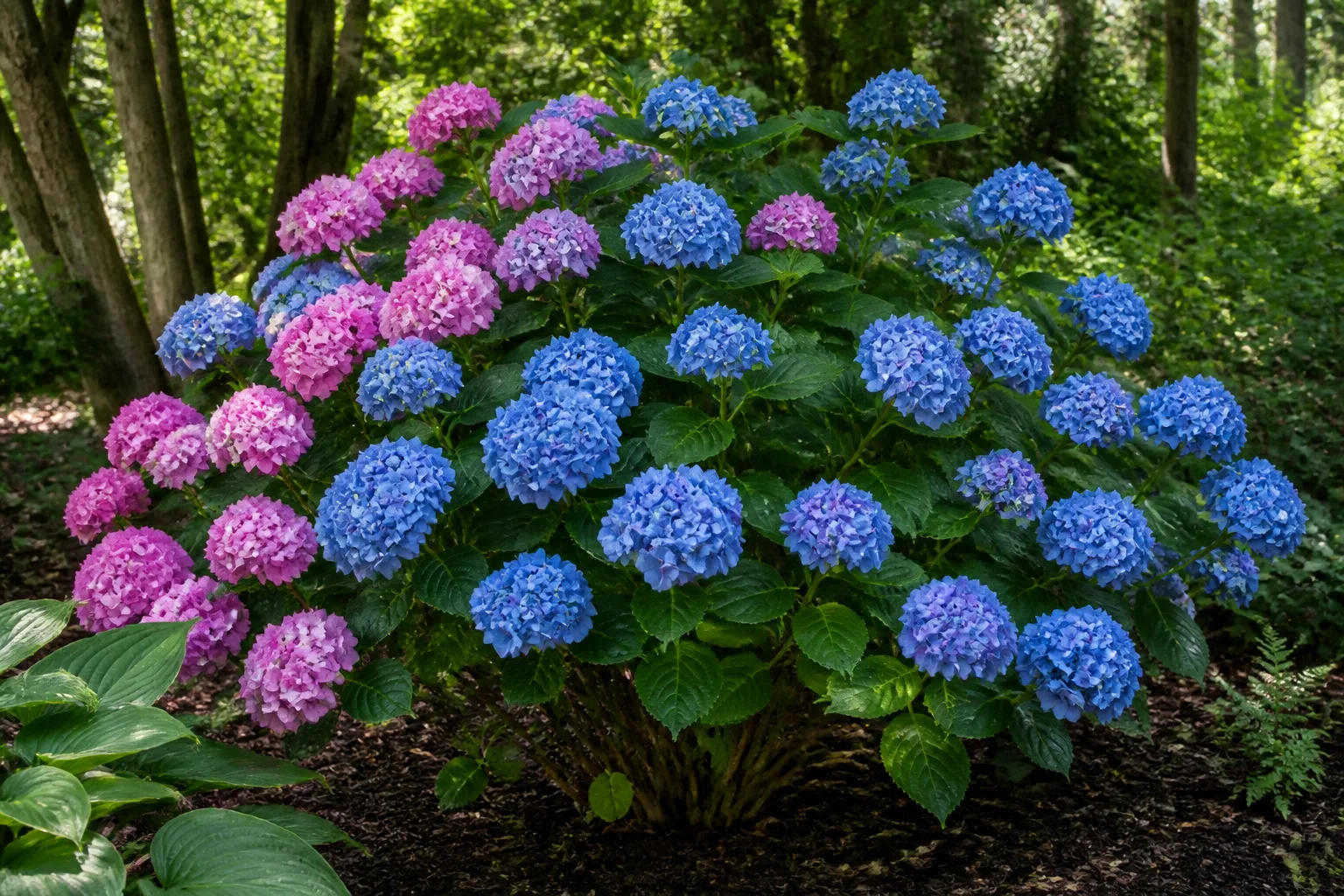
Bigleaf Hydrangea
Large summer-blooming shrub that pairs well with crepe myrtles in mixed borders.
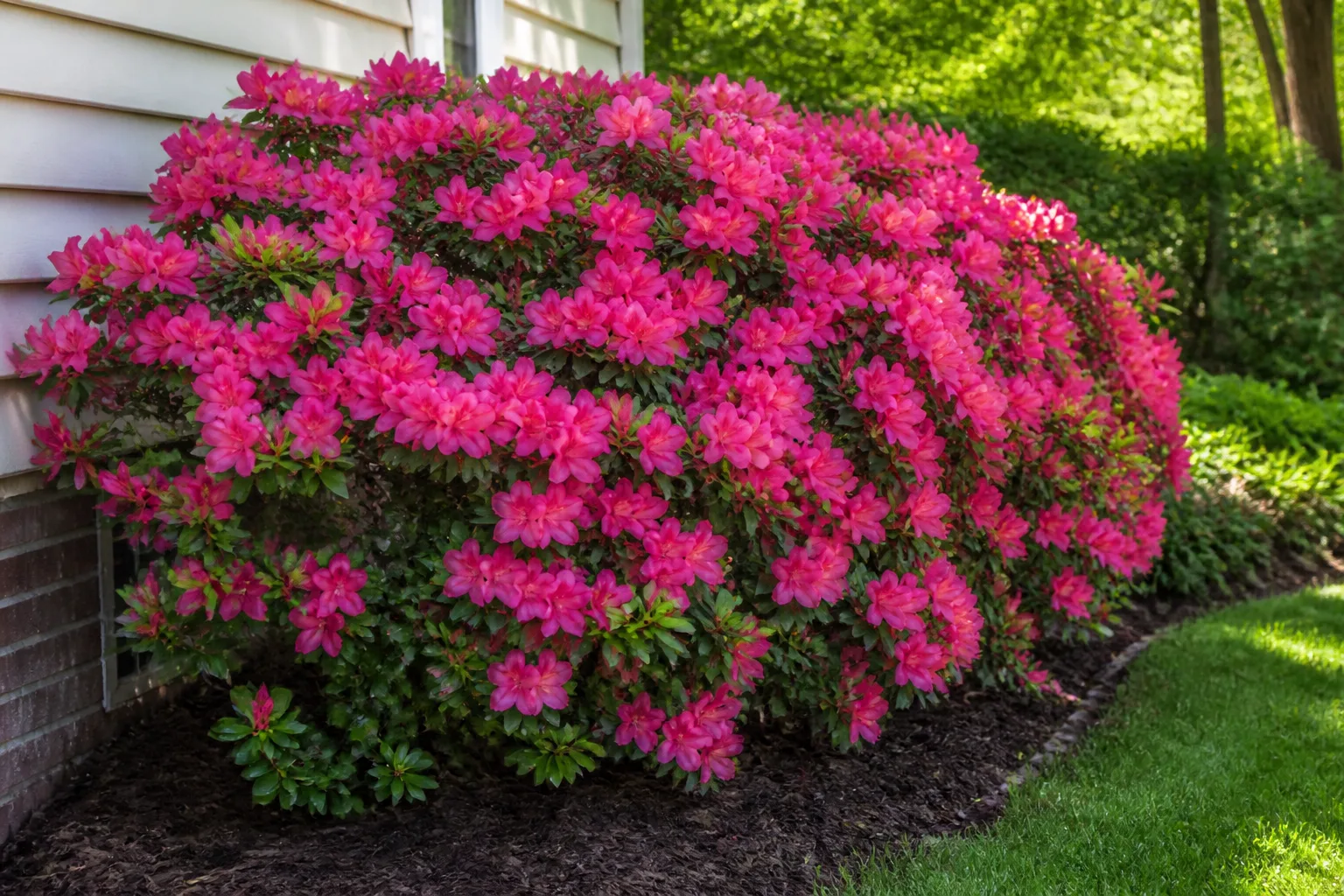
Azalea
Shrub for early-season color that complements crepe myrtle's summer show.
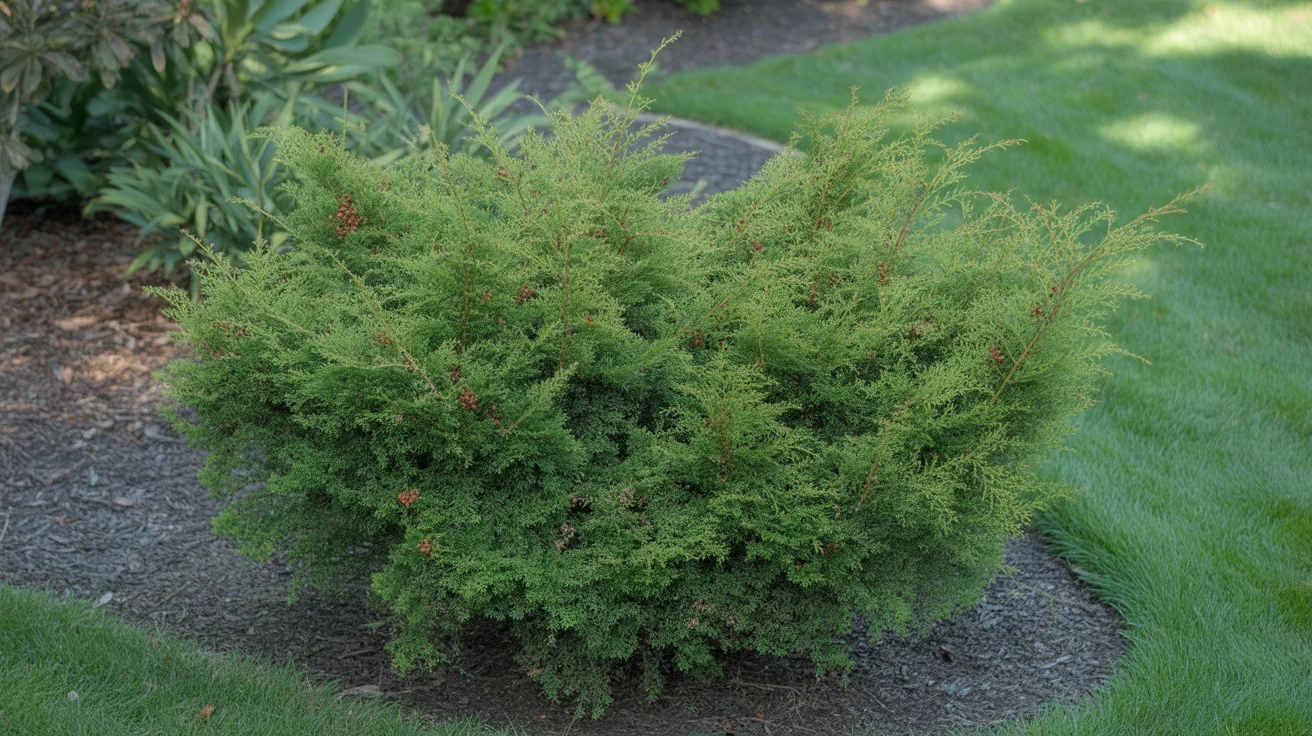
Arborvitae
Arborvitae can form a dense living screen where its mature width, exposure, and water needs fit the site.
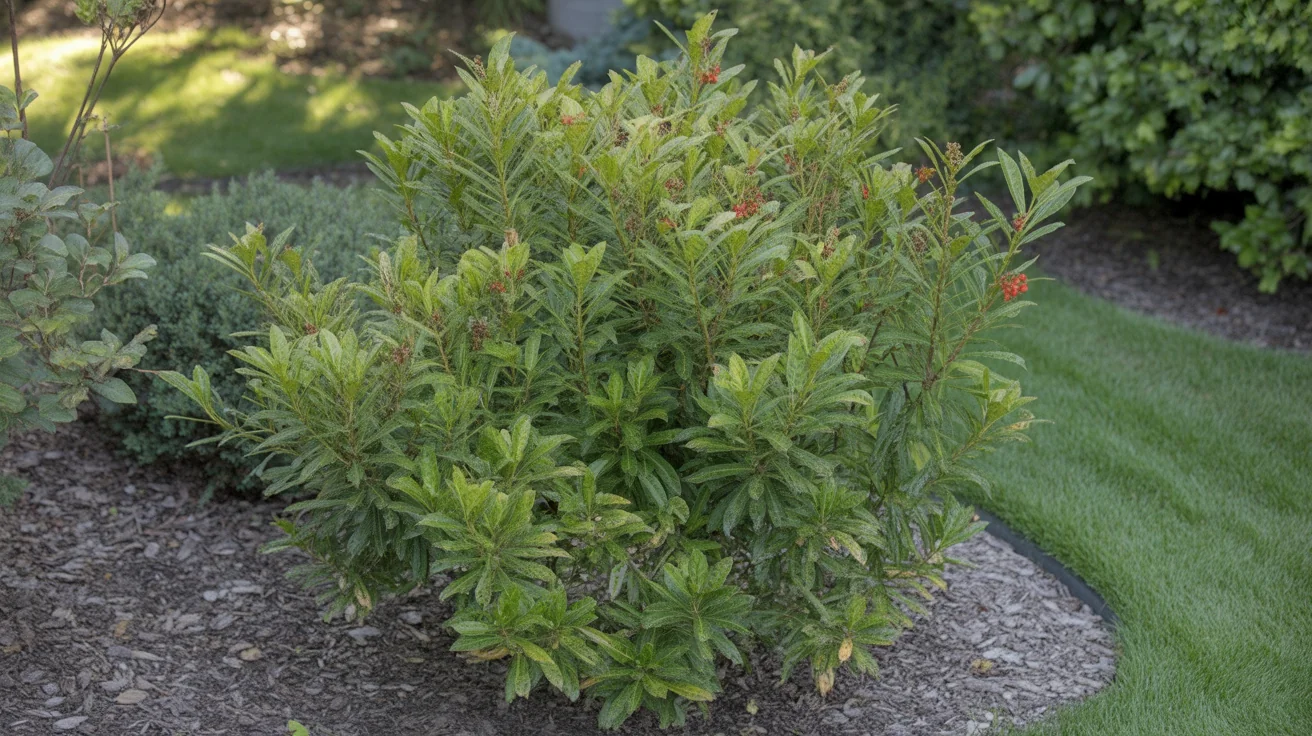
Aucuba
Aucuba is the shrub for bright shade with dry root competition. It keeps evergreen structure near north walls, porches…
Barberry
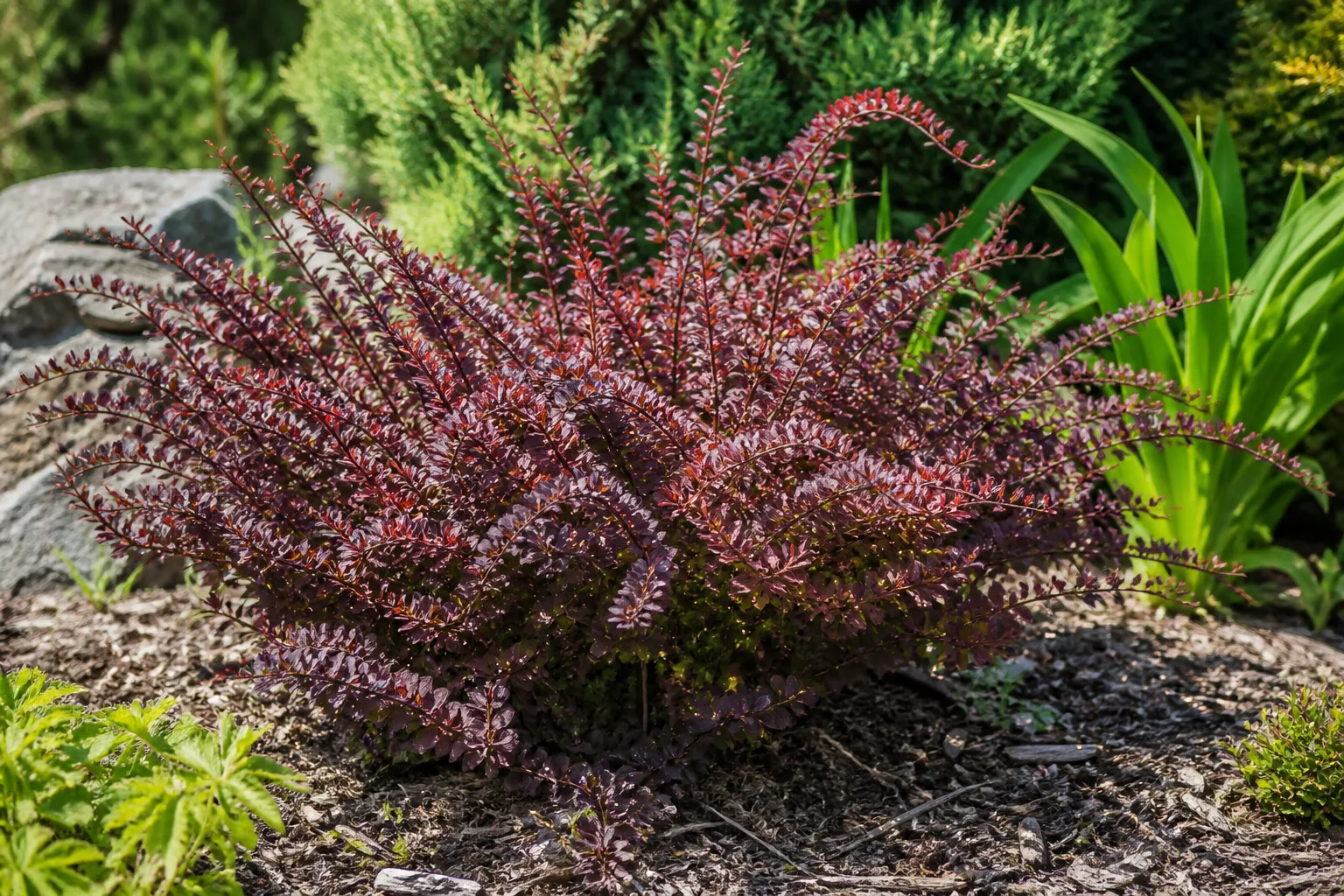
Japanese barberry (Berberis thunbergii) is a thorny, deer-resistant shrub whose berries birds carry into woods, so…